Options for disposing of an old broken sleeper sofa in South Riding
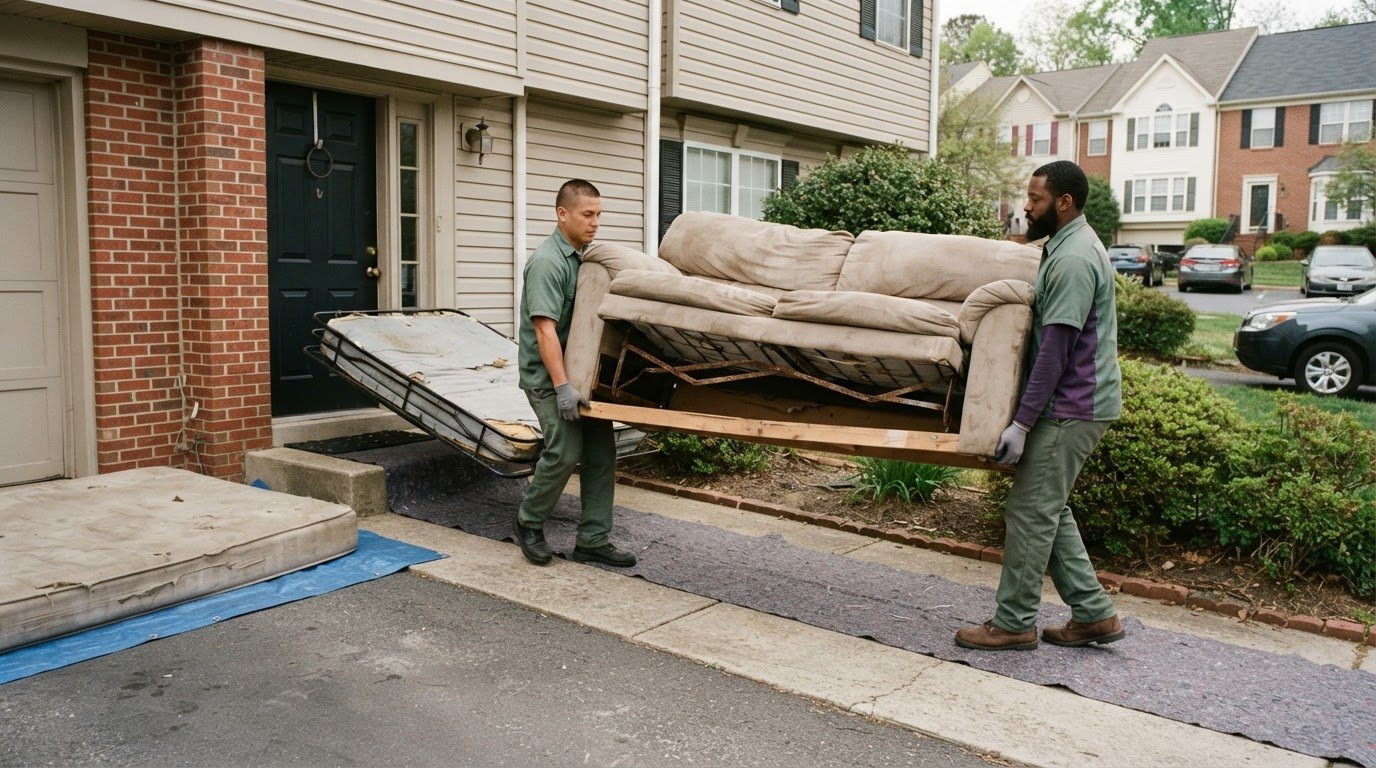
A broken sleeper sofa isn’t suitable for donation just because its upholstery looks decent. Donation may be an option only if the sofa is clean, fully functional, and in good condition.
Before moving a heavy, awkward sofa, you need to know how to dispose of it and what the process involves. The right route depends on its condition, local pickup rules, and how difficult it is to get the sofa out of your home.
This guide covers when donation or recycling makes sense, what to know about curbside disposal and pickup timing, and which factors affect removal costs. You’ll also find practical tips for handling the sleeper mechanism and choosing a way to get the sofa out without unnecessary hassle.
Key Takeaways
- Donate the sofa only if it’s functional, clean, and in good condition; damage or a faulty sleeper mechanism can rule out reuse.
- Separate recyclable parts where possible: the mattress and metal frame may have different disposal routes.
- Compare curbside collection with other removal options, and learn the pickup schedule and set-out rules before moving the sofa outside.
- Disposal costs depend on the method, sofa condition, access, and whether stairs or tight spaces make removal harder.
- Prepare for removal by clearing cushions and bedding, measuring the exit path, and keeping the folding mechanism secured.
1. Donation and recycling options
Start with the sofa’s condition, not its age. Donation may be suitable if the sofa works properly, the mattress is clean and unstained, and the fold-out mechanism opens and closes smoothly. Thrift shops that accept furniture may resell usable pieces, while charities and community groups may welcome a clean sofa. Each organization sets its own condition requirements.
Inspect the upholstery, frame, mattress, and mechanism before offering the sofa. Rips, burns, pet odors, water stains, a sagging frame, or a history of bed bugs are reasons not to donate it. It may look presentable from across the room but fail a closer inspection. Open and close the bed mechanism, check for visible damage, and make sure the mattress is clean and stain-free.
If it passes that check, take clear photos and describe its condition honestly. Include the sofa’s dimensions, the mattress condition, and whether the sleeper mechanism opens and closes. You can offer it to a charity or community group, or list it for free so someone can reuse it. State that transport is the recipient’s responsibility if you can’t move it. A free pickup arrangement can make a bulky sofa easier to pass on, but agree on the handoff details before setting it outside.
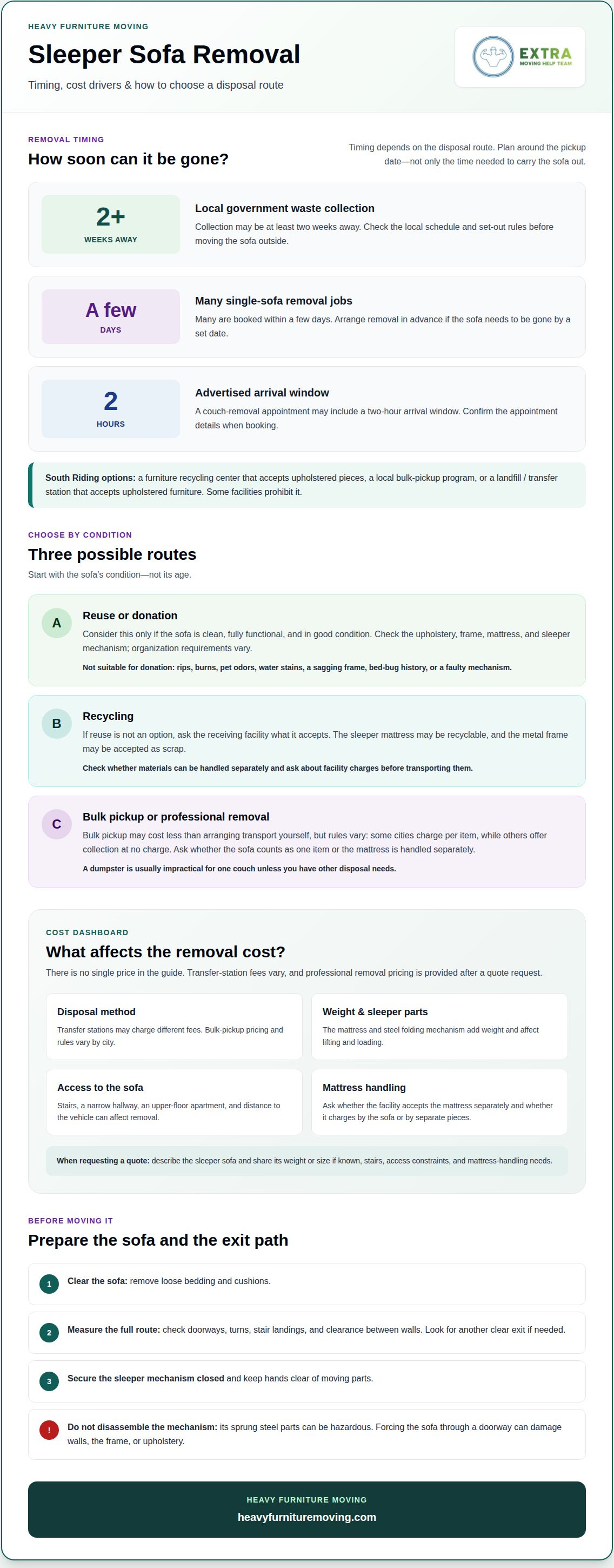
If the sofa can’t be reused, separate recyclable materials where practical. The sleeper mattress may be recyclable, and the metal frame may be accepted as scrap. Before transporting the sofa or its parts, ask the recycling facility what materials it accepts and how to deliver them. Compare any facility charges with the effort of separating the mattress and frame, especially if the sofa is hard to move.
Reuse, recycling, and junk removal are different options. A broken sofa with stained upholstery or a faulty mechanism is usually unsuitable for donation. Recycling may recover some materials, but the whole item may still need removal. Don’t disassemble the sleeper mechanism yourself: its sprung steel parts can be hazardous. Remove loose bedding and cushions, then find out whether the frame and mattress can be handled separately. These checks help you avoid arranging a donation pickup for an item that won’t pass inspection and give a recycling facility a clearer picture of what you’re bringing.
2. How quickly can you haul away a couch in your area?
In South Riding, you can take an old sofa to a furniture recycling center that accepts upholstered pieces or use a local bulk-pickup program. A landfill or transfer station may also be an option, but only if it accepts upholstered furniture. Some facilities prohibit it.
Timing depends on the disposal route. Local government waste collection may be at least two weeks away, while many single-sofa removal jobs are booked within a few days. An advertised couch-removal appointment may include a two-hour arrival window. Plan around the pickup date, not just the time it takes to carry the sofa outside, especially if it blocks a room or hallway.
Before choosing a removal route, assess whether the sofa can be reused. Check the frame for sagging, look for upholstery rips or stains, and test the sleeper mechanism. A sofa in good condition could be sold or offered for free, but describe any damage plainly and include photos. Show its measurements, the mattress condition, and whether the bed folds out smoothly. If you can’t move it, say that the buyer must arrange transport. Charities and community groups may accept usable furniture, but a broken frame or damaged mattress can make the sofa unsuitable for donation.
Measure the entire exit route before moving the sofa. Check doorways, turns, stair landings, and clearance between walls. Remove cushions and bedding, secure the fold-out mechanism closed, and keep your hands clear of moving parts. Don’t disassemble the mechanism, since its sprung steel can be hazardous. Forcing the sofa through a doorway can damage the walls, frame, or upholstery. Check whether another exit route is clear before you start.
For a damaged sofa, recycling or disposal is more practical than resale. Separate the mattress and metal frame only if the receiving center accepts them separately. If the sofa is intact and clean, list it for sale or give it away with an honest description. Set a pickup deadline that fits your disposal schedule, since a buyer’s transport plans may take longer than expected. If you need the sofa gone by a set date, arrange removal in advance. This avoids relying on a listing when the sofa’s condition, weight, or difficult access makes collection uncertain.
3. Sleeper sofa disposal costs
The disposal route determines the starting cost. A transfer station may charge different fees, so check its pricing before deciding whether a trip is worthwhile.
Separate the mattress and metal frame only if the recycling center accepts them as individual materials. That may affect how the facility handles the load and whether it charges by the sofa or by separate pieces. Before paying for transport, describe the sleeper sofa and ask what the facility accepts. Its mattress, steel mechanism, and upholstery can make it heavier and harder to handle than an ordinary couch.
A full-size sleeper has a steel folding mechanism and mattress, which add weight and affect lifting and loading. Stairs, a narrow hallway, an upper-floor apartment, and the distance to the vehicle can also affect removal. Share those access details when requesting a quote. For professional removal, the price depends on the job and is provided after a quote request. Relevant factors include the sofa’s weight, access, stairs, and mattress handling.
Bulk pickup can cost less than arranging transport yourself, but the program’s rules matter. Some cities charge per item, while others offer collection at no charge. Find out whether a sleeper sofa counts as one item or whether its mattress must be handled separately. Consider the pickup date too: if it doesn’t fit your schedule, the sofa may need to stay indoors until collection.
A dumpster is usually impractical for one couch unless you have other disposal needs. Include transport, loading help, and any facility charge when comparing the total cost. Before renting a container just for a sleeper sofa, weigh those options. Comparing pickup rules, facility acceptance, access, and lifting needs helps you choose a practical route.
4. Curbside furniture disposal
Municipal bulk pickup may take a sleeper sofa, but collection timing and set-out rules vary. In some locations, government waste collection may be as far away as six weeks. Don’t move the sofa to the curb until you know its scheduled collection day. Some programs limit the number of items residents may set out or count the mattress separately. A broken or stained sofa belongs in a removal or disposal route, not a donation pile.
Prepare the sofa for collection without dismantling its frame. Remove cushions and bedding, then wrap the upholstered furniture in plastic before curbside pickup. This helps keep the fabric and cushions together during handling. Some municipal programs require the sleeper mattress to be removed and set out separately; others prohibit mattresses in regular trash. Follow the program’s instructions for the sofa and mattress. Don’t disassemble the sprung steel mechanism, as its parts can be hazardous.
Plan the set-out time carefully. Place the sofa outside the night before pickup, and keep it clear of sidewalks, fire hydrants, and driveways. This leaves room for pedestrians, emergency access, and vehicles. Secure cushions and loose fabric so they don’t scatter before the truck arrives. If rain is forecast, plastic wrapping can help shield the upholstery while it waits outside. Don’t put the sofa out days early, since an uncollected item may block shared access.
Before setting the sofa out, compare its size and condition with the municipal program’s instructions. A sleeper sofa may need more preparation than a chair because the mattress and fold-out frame may be handled separately. Leave the sofa assembled for curbside pickup unless the program says otherwise. Don’t apply instructions for cabinets or appliances to a sofa. Keep the mattress with it only if the program permits.
If you’ll have several items ready within the next month, one combined removal may be more practical than separate pickups. Make a short inventory of the sofa, mattress, and other furniture, then plan around the program’s item limit. For disposing of an old broken sleeper sofa in South Riding, schedule bulk pickup, follow the mattress instructions, wrap the upholstery, and set the sofa out at the right time. These steps can help prevent a missed collection or an item left at the curb.
5. Does Loudoun County offer bulky-item pickup for sofas, and how do residents schedule it?
Check local bulk-trash pickup guidelines and scheduling information before setting out the sofa. Ask specifically whether sofa collection serves your address, how to reserve a pickup, and whether the sleeper mattress counts separately. Some cities offer scheduled collection for large furniture, either free or for a small fee, but program details vary. Don’t assume a general trash day includes a sofa.
Have the sofa details ready before scheduling pickup. Describe it as a broken sleeper sofa and say whether the mattress is still inside. Some municipal programs exclude sleeper sofas because of their weight, while others require the mattress to be separated. A clear description helps you find out how to list and prepare the item. If you have other furniture to dispose of, ask about the weekly item limit before adding it to the request.
Schedule ahead and record the pickup window, set-out instructions, and item limit. In some locations, designated large-item pickup days occur only once every three months. Planning early matters if the sofa is blocking a room or you’re preparing an apartment for a move. Scheduling a pickup window in advance costs nothing extra. Keep the appointment details handy so everyone in the household knows when the sofa can go outside.
When arranging pickup, clarify four practical points: whether the program accepts upholstered furniture, whether the mattress must be removed, how many pieces you may set out, and where the sofa should wait. The mattress may count as a separate item, so include it when asking about limits. Find out what to do if the pickup date changes. Keep the sofa indoors until the scheduled set-out period, then follow the placement and access instructions.
If the municipal schedule doesn’t fit your move or the sofa is difficult to carry outside, arrange help with the heavy lifting rather than dragging it through a narrow hallway. Get help moving a heavy sofa when the route from the apartment or home to the pickup point makes handling the item difficult. Before arranging removal, have the sofa’s location, stairs, and exit route in mind. That information helps make the next step clearer while you follow the municipal pickup process.
Heavy Furniture Moving: Movers Near Me
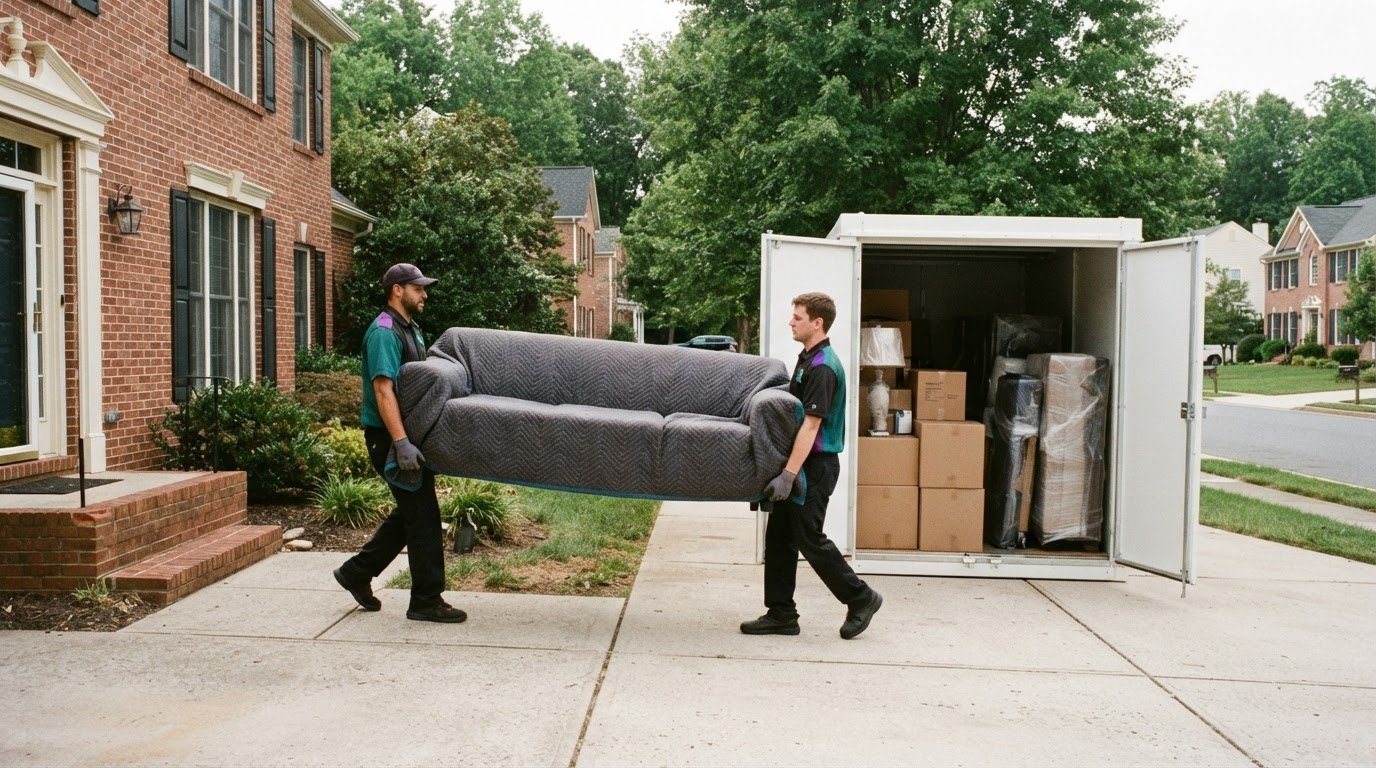
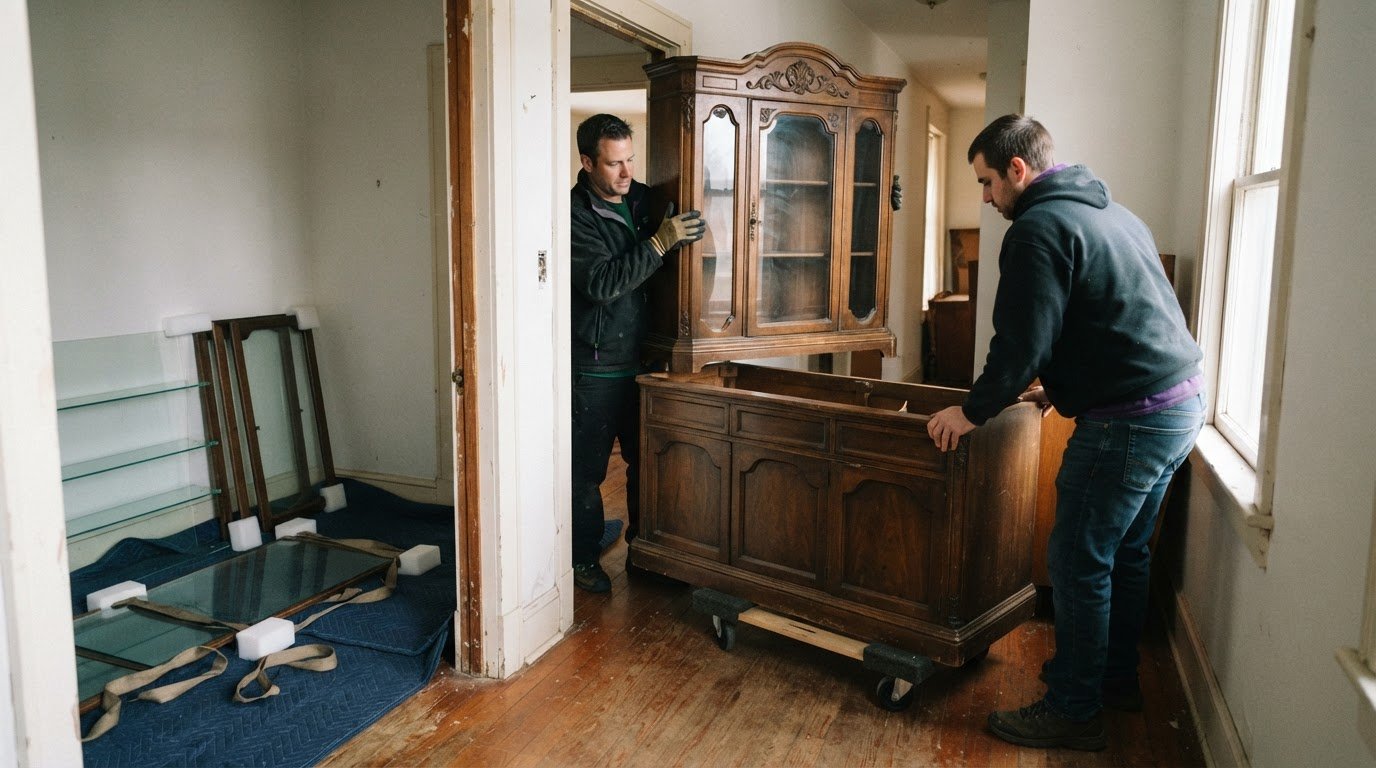
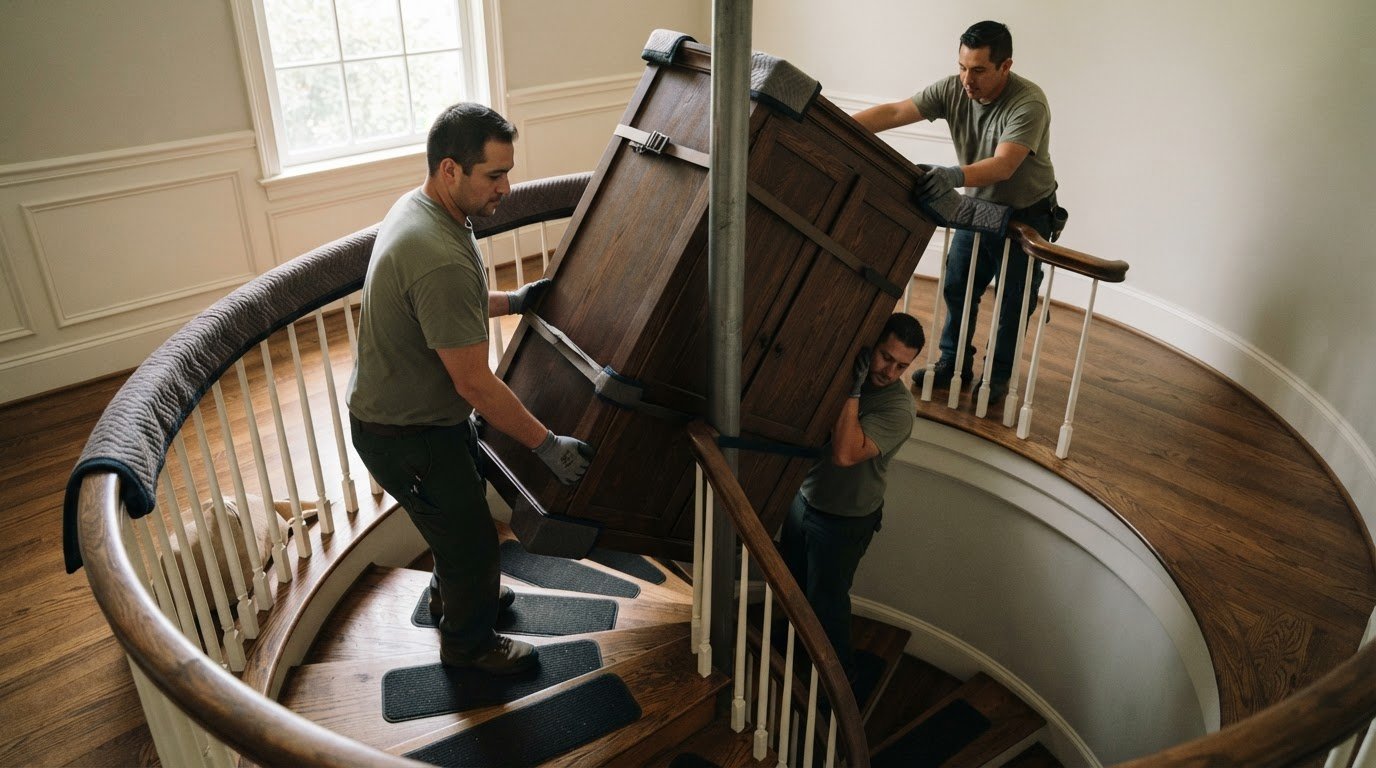
Heavy Furniture Moving helps with difficult in-home furniture moves, including maneuvering a sleeper sofa through tight hallways, doorways, or stairs to your chosen pickup point. If you’ve arranged municipal pickup or another disposal route, the team can handle the challenging carry. This can be useful when the sleeper mechanism adds weight or the exit route makes lifting awkward. You choose the disposal destination; Heavy Furniture Moving helps with the move. Wrap, blankets, and straps are included on every job.
If the sofa won’t fit through a doorway, Sofa Hoisting may provide another way to move it through a suitable opening. Choose help based on the route and lifting involved, and share the sofa’s location and access details when you reach out.
Visit Heavy Furniture Moving to learn more.
Make room for what comes next
Once you’ve chosen a disposal route, plan for more than just getting the sofa out. Decide how you’ll use the space next, then clear a path that protects nearby furniture and keeps the exit accessible. Move loose items out of the way, identify the best route, and prepare the destination area before the carry.
For disposing of an old broken sleeper sofa in South Riding, the next step is to make your chosen option manageable. If lifting or maneuvering the sofa is the obstacle, Heavy Furniture Moving can help. Share the access details and what kind of help you need to plan the move.
Contact Heavy Furniture Moving to discuss your furniture-moving needs. You’re one clear decision away from reclaiming the space and moving forward.
Frequently Asked Questions
Questions about sleeper sofa removal?
First decide whether you need the sofa carried to a pickup point or moved through a difficult exit. Remove loose items, keep the fold-out bed closed, and clear the route before lifting. Heavy Furniture Moving handles heavy furniture moves and sofa hoisting. Wrap, blankets, and straps are included on every job. The team helps with lifting and moving; you choose the sofa’s disposal destination.
Can I get my couch picked up today?
Same-day heavy-item jobs are often available, and calling before 2 PM can help you book same-afternoon service. That applies to moving help, not a municipal waste-collection schedule. For a sofa headed to curbside pickup, use the date assigned through the local program. If you’re arranging a move instead, have the sofa’s location, access route, and destination ready when you call.
Can I put a couch out at the curb for trash pickup in your area?
Put it out only as part of a scheduled bulk pickup, not with ordinary trash by assumption. Call 311 for local guidelines and scheduling details. Before set-out, find out whether the sleeper mattress counts as a separate item and whether the program limits how much furniture you can leave. Keep the sofa clear of sidewalks, driveways, and fire hydrants, and follow the collection program’s placement instructions.
Can You Leave Furniture on the Curb?
Leave furniture curbside only for its scheduled collection, and follow the program’s timing and placement instructions. An unplanned sofa can block a sidewalk or driveway and may not be collected. If pickup is scheduled for the next collection day, for example, keep the sleeper sofa inside until the permitted set-out period. Wrap the upholstery and secure loose cushions so the furniture stays together while awaiting pickup.
Do you take couches that are damaged, moldy, or torn?
Donation centers generally require furniture to be clean, usable, and functional, so a torn or damaged sofa is unlikely to qualify. A moldy sofa isn’t suitable to offer as clean, usable furniture. Separate the question of moving it from whether it can be donated: Heavy Furniture Moving can help relocate a heavy sofa, while you decide how to dispose of it. Describe its condition accurately when arranging the move.
How much does it cost to remove an old couch in your area?
Disposal costs depend on the route and the receiving facility’s fees. Include the mattress in your comparison, since a program may count it separately from the sofa.
How quickly can you haul away a couch in your area?
Municipal collection can take longer than a privately arranged move, and local waste pickup may be at least two weeks away. Many single-sofa removal jobs are booked within a few days. To avoid delay, decide whether you need curbside collection or help moving the sofa to an exit or pickup point. Keep the sofa accessible and share details about stairs or tight turns when arranging moving help.
What are the rules for disposing of a broken sleeper sofa in South Riding, Virginia?
Use 311 to get local bulk-pickup instructions, then ask whether the sofa is accepted, whether its mattress must be separated, and how many items you can set out. Don’t treat a broken sleeper as donation-ready. If curbside collection is scheduled, follow its set-out timing and placement directions. For a difficult carry from an apartment or upper floor, arrange moving help separately from the disposal service.
Frequently Asked Questions
First decide whether you need the sofa carried to a pickup point or moved through a difficult exit. Remove loose items, keep the fold-out bed closed, and clear the route before lifting. Heavy Furniture Moving handles heavy furniture moves and sofa hoisting. Wrap, blankets, and straps are included on every job. The team helps with lifting and moving; you choose the sofa’s disposal destination.
Same-day heavy-item jobs are often available, and calling before 2 PM can help you book same-afternoon service. That applies to moving help, not a municipal waste-collection schedule. For a sofa headed to curbside pickup, use the date assigned through the local program. If you’re arranging a move instead, have the sofa’s location, access route, and destination ready when you call.
Put it out only as part of a scheduled bulk pickup, not with ordinary trash by assumption. Call 311 for local guidelines and scheduling details. Before set-out, find out whether the sleeper mattress counts as a separate item and whether the program limits how much furniture you can leave. Keep the sofa clear of sidewalks, driveways, and fire hydrants, and follow the collection program’s placement instructions.
Leave furniture curbside only for its scheduled collection, and follow the program’s timing and placement instructions. An unplanned sofa can block a sidewalk or driveway and may not be collected. If pickup is scheduled for the next collection day, for example, keep the sleeper sofa inside until the permitted set-out period. Wrap the upholstery and secure loose cushions so the furniture stays together while awaiting pickup.
Donation centers generally require furniture to be clean, usable, and functional, so a torn or damaged sofa is unlikely to qualify. A moldy sofa isn’t suitable to offer as clean, usable furniture. Separate the question of moving it from whether it can be donated: Heavy Furniture Moving can help relocate a heavy sofa, while you decide how to dispose of it. Describe its condition accurately when arranging the move.
Disposal costs depend on the route and the receiving facility’s fees. Include the mattress in your comparison, since a program may count it separately from the sofa.
Municipal collection can take longer than a privately arranged move, and local waste pickup may be at least two weeks away. Many single-sofa removal jobs are booked within a few days. To avoid delay, decide whether you need curbside collection or help moving the sofa to an exit or pickup point. Keep the sofa accessible and share details about stairs or tight turns when arranging moving help.
Use 311 to get local bulk-pickup instructions, then ask whether the sofa is accepted, whether its mattress must be separated, and how many items you can set out. Don’t treat a broken sleeper as donation-ready. If curbside collection is scheduled, follow its set-out timing and placement directions. For a difficult carry from an apartment or upper floor, arrange moving help separately from the disposal service.