How to Position and Carry a Heavy Armoire Down McLean Spiral Stairs
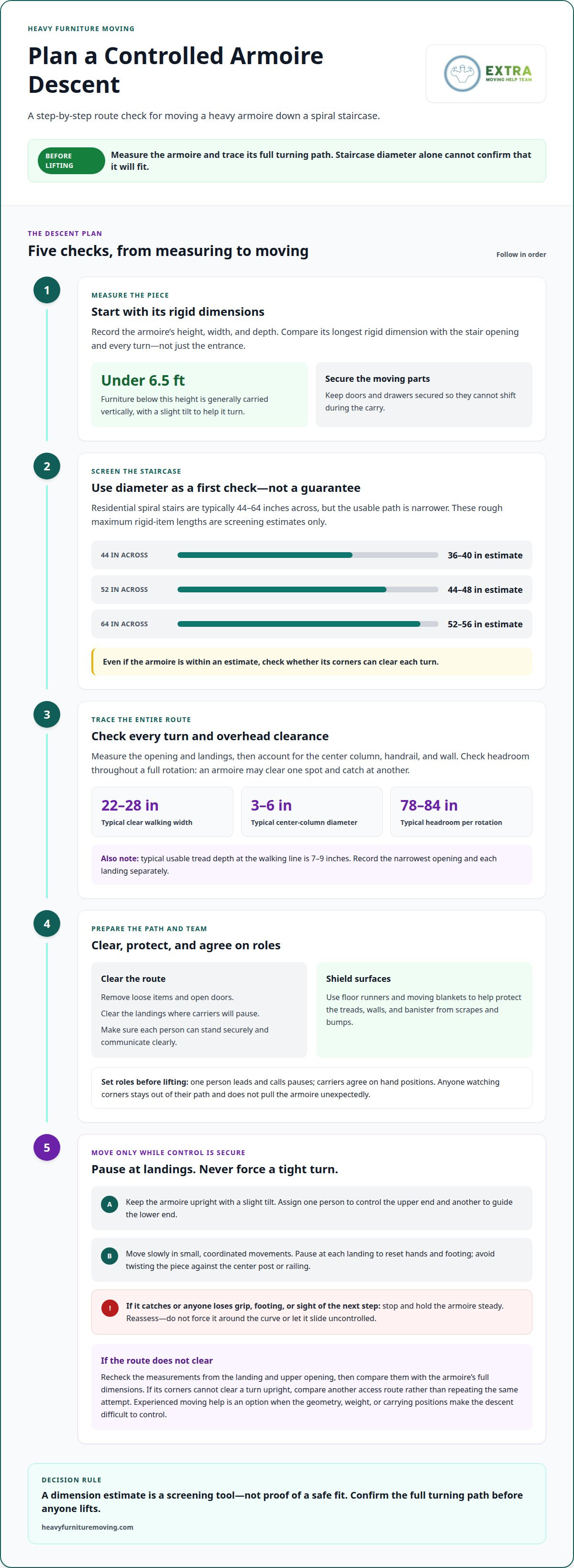
A heavy armoire should come down a spiral staircase only if its dimensions and turning path allow a controlled descent. For moving a heavy armoire down a spiral staircase in McLean, measure the piece and the staircase first; furniture under 6.5 feet tall is generally moved vertically with a slight tilt to help it turn on landings.
It’s tempting to focus on the staircase’s width, but the armoire’s rigid shape and the tight turns matter just as much. Residential spiral staircases are typically 44 to 64 inches in overall diameter, with a clear walking width of 22 to 28 inches. Those measurements are a starting point, not proof that a particular piece will fit.
This guide explains how to check alternate access before attempting the stairs, protect the treads and rail, and position the armoire for each turn. You’ll also learn when the descent calls for experienced lifting help and when another route is safer. Measure, clear the path, and make a plan before anyone lifts.
Key Takeaways
- Measure the armoire and trace its full turning path before lifting; a staircase’s open space alone won’t tell you whether the piece can make each turn.
- Plan the carrying position in advance, and keep the load steady rather than forcing it around a tight landing.
- Use floor runners and moving blankets to help shield the stairs, walls, and banister from scrapes and bumps.
- Compare the stair route with other access options before moving day, especially if the armoire cannot turn safely.
- Bring in experienced moving help when the load, route, or coordination feels difficult to manage safely.
Carrying furniture vertically
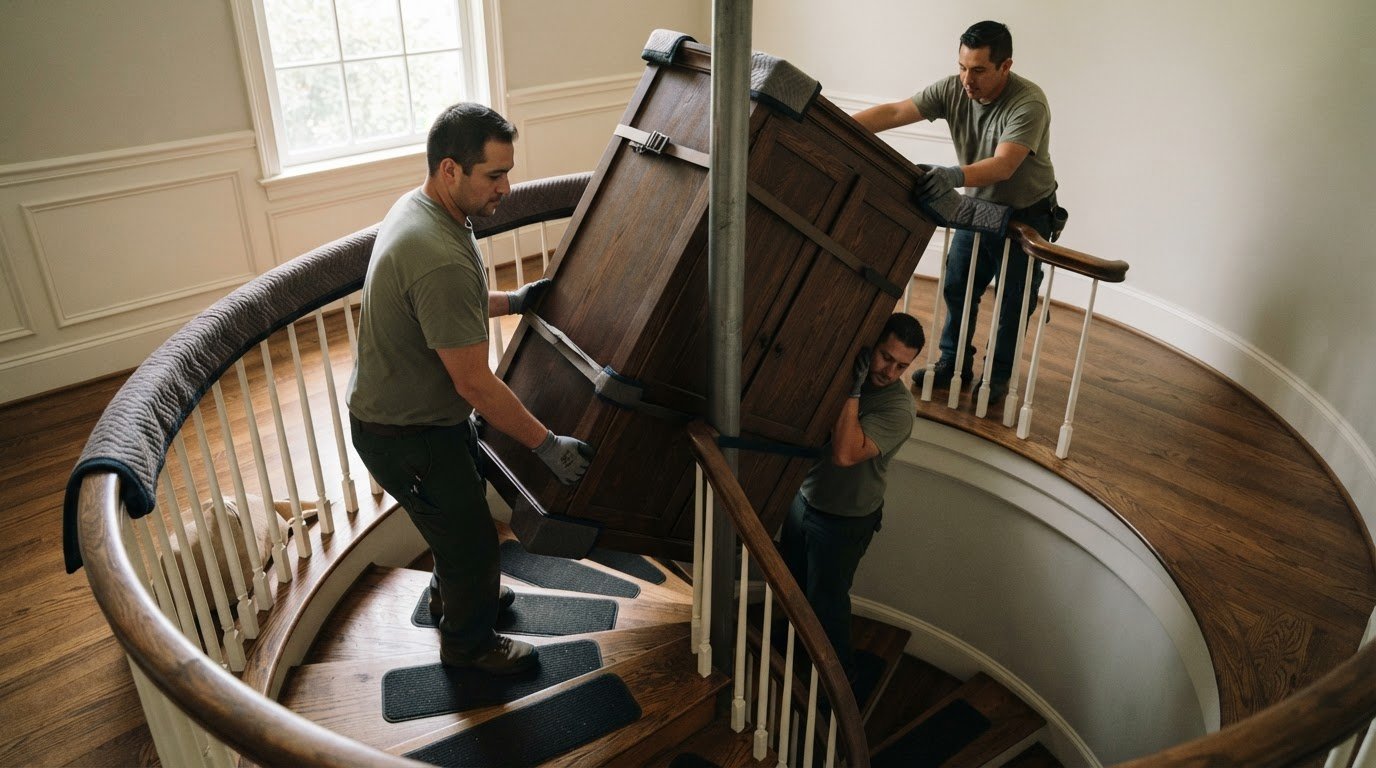
On a narrow spiral staircase in McLean, carry a heavy armoire upright only after checking its height, width, and turning path. Move slowly, keeping it slightly tilted for stability, with each person supporting a secure part of the load.
-
Plan the Vertical Carry
Measure the armoire’s rigid dimensions, then compare them with the stair opening and each turn. Furniture under 6.5 feet high should be carried vertically, with a slight tilt for stability and easier turning at landings. Check the top clearance through a full rotation, not just at the stair entrance. Keep doors and drawers secured so they can’t shift during the carry.
-
Move the Armoire Down the Spiral Staircase
Assign one person to control the upper end and another to guide the lower end. Keep the armoire upright and slightly tilted, pausing at each landing to reset hands and footing. Turn it in small, coordinated movements rather than twisting it against the center post or railing. If it catches, stop and reassess instead of forcing it around the curve.
- Compare the longest rigid dimension with the staircase diameter. Residential spiral staircases typically measure 44 to 64 inches across, but their usable path is narrower. A 44-inch staircase has a rough maximum rigid item length of 36 to 40 inches. At 52 inches across, the estimate is 44 to 48 inches; at 64 inches, it is 52 to 56 inches. These are screening estimates, not proof the armoire will turn.
- Trace the full route before lifting. Include the center column, handrail, wall, and landing in your measurements. A spiral stair’s center column is typically 3 to 6 inches in diameter, which can affect the space available for turning. Check headroom through the rotation too: code-compliant spiral staircases typically provide 78 to 84 inches per rotation. A tall cabinet may clear one spot and catch at another.
- Use a different plan when carrying furniture upstairs. A gate has been suggested for moving an item up stairs, while sliding has been suggested for descent. That is not permission to let a heavy armoire slide down uncontrolled. Its weight and rigid shape require steady support at every turn. In either direction, agree on commands before lifting, and stop if anyone loses a secure grip.
- Decide whether the armoire fits before committing to the carry. If it exceeds the rough length estimate or its corners cannot clear a turn while upright, don’t force it down the stairs. Recheck the measurements from the landing and upper opening, then compare them with the armoire’s full dimensions. Trying again without changing the position or route won’t fix a clearance problem.
Getting help from friends or professional movers
Without experienced help, a heavy armoire can slip, hit the railing, damage a wall, or injure someone carrying it. For a McLean move, read the written agreement for coverage details, exclusions, and claim steps before work begins.
- Choose help based on the route, not just the armoire’s weight. A tight spiral stair calls for coordinated movement, steady control, and clear communication at every turn. Friends may manage a carry if the item is manageable and the path is clear, but don’t rely on anyone who cannot safely grip or guide it.
- Consider professional moving help for a move from the third floor or higher. More stair turns mean more chances to pause, reset, and coordinate the load. A professional crew can plan who controls each end and how the armoire will move between landings before anyone lifts it.
- Assign roles before lifting. One person should lead and call each pause, while the carriers keep their hands in agreed positions. Anyone clearing doors or watching corners should stay out of the carriers’ path and never pull the armoire unexpectedly.
- Agree on a clear stop command before carrying. If someone loses grip, footing, or sight of the next step, everyone should stop and hold the armoire steady. Don’t let one person turn or lower it while another is still moving in the opposite direction.
- Prepare the route for the whole team. Remove loose items, open doors, and clear the landings where carriers will pause. Check that everyone can stand securely and communicate clearly. If the route forces a carrier to twist or reach around the armoire, change the plan.
- Read the moving agreement before the appointment. Check the stated coverage, exclusions, valuation terms, and steps for reporting damage or loss. Don’t assume coverage automatically equals the armoire’s full replacement value. The written terms explain what applies to the move.
- Use hands-on help when the stair geometry, item weight, or carrying positions make the descent difficult to control. Share the armoire’s dimensions and describe the spiral route when arranging moving help for a heavy armoire. A clear description helps the team plan the lift, roles, and path before carrying begins.
For furniture going to the 3rd floor or higher, professional moving help is an option to weigh alongside the route and carrying demands.
Positioning furniture for maneuvering
Measure the armoire and every turn before choosing how to carry it. On McLean spiral stairs, the item’s rigid shape can matter more than its weight.
-
Measure Furniture and Stairways
Measure the armoire’s height, width, and depth, then note the narrowest opening and each landing. Residential spiral stairs usually have 22 to 28 inches of clear walking width, with 7 to 9 inches of usable tread depth at the walking line. Record these measurements separately. A doorway that clears the cabinet won’t prove it can make the next turn.
-
Assess Whether Furniture Will Fit
Compare the armoire’s longest rigid dimension with the stair’s curve and turning space. Chairs and small armchairs under 36 inches in any rigid dimension usually fit more easily. A 36-inch-wide, 60-inch-tall dresser is an example that may be carried vertically. Standard couches measuring 72 to 84 inches long are generally too rigid for spiral stairs.
- Use smaller furniture examples to judge the route, not as a guarantee for an armoire. A loveseat under 60 inches long may be more manageable than a standard couch. Full-length bookshelves over 48 inches tall may not clear the curve. These examples show why height and length matter alongside width. Check the armoire’s widest points, including trim and protruding handles.
- Plan the carrying position around the tightest turn. Check whether the armoire can stay upright without its upper corners hitting the wall or ceiling. A slight change in angle may help it pass a landing, but test the movement with the route clear before lifting. Don’t assume a straight stair section has the same clearance as the spiral.
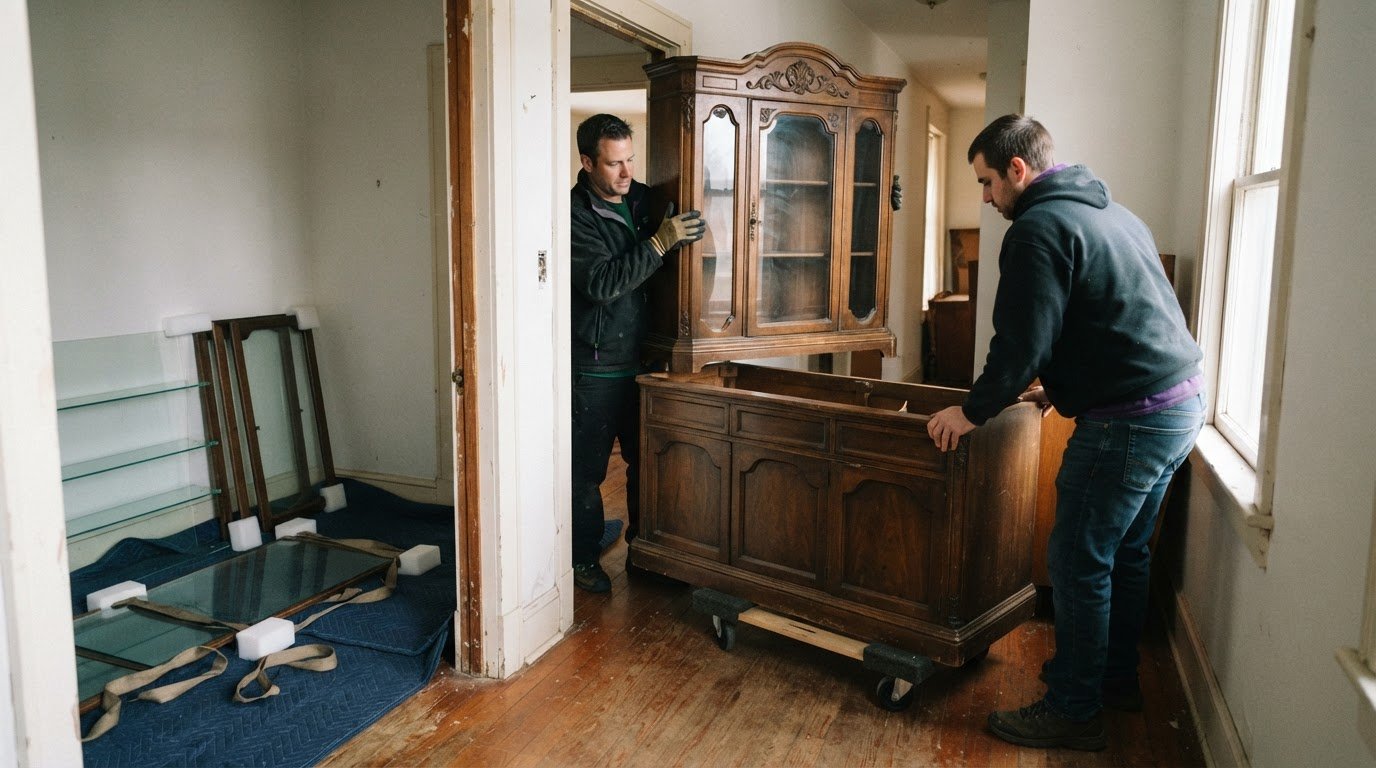
- Take the armoire apart only where its construction allows. Remove detachable shelves, legs, or doors if they come off without force, then measure each piece separately. Furniture components should be under 48 inches individually for spiral stairs. Keep screws and fittings together, and protect exposed edges so separated pieces don’t scrape the stair rail or walls.
- Measure before arranging delivery or moving day. Record each component’s dimensions, the narrowest opening, and the tightest turn, then compare them. For example, a cabinet body may fit through a doorway but still be too deep to rotate at a landing. Use the measurements to choose an upright carry, disassembly, or another access route before lifting.
Protecting stairs and banisters
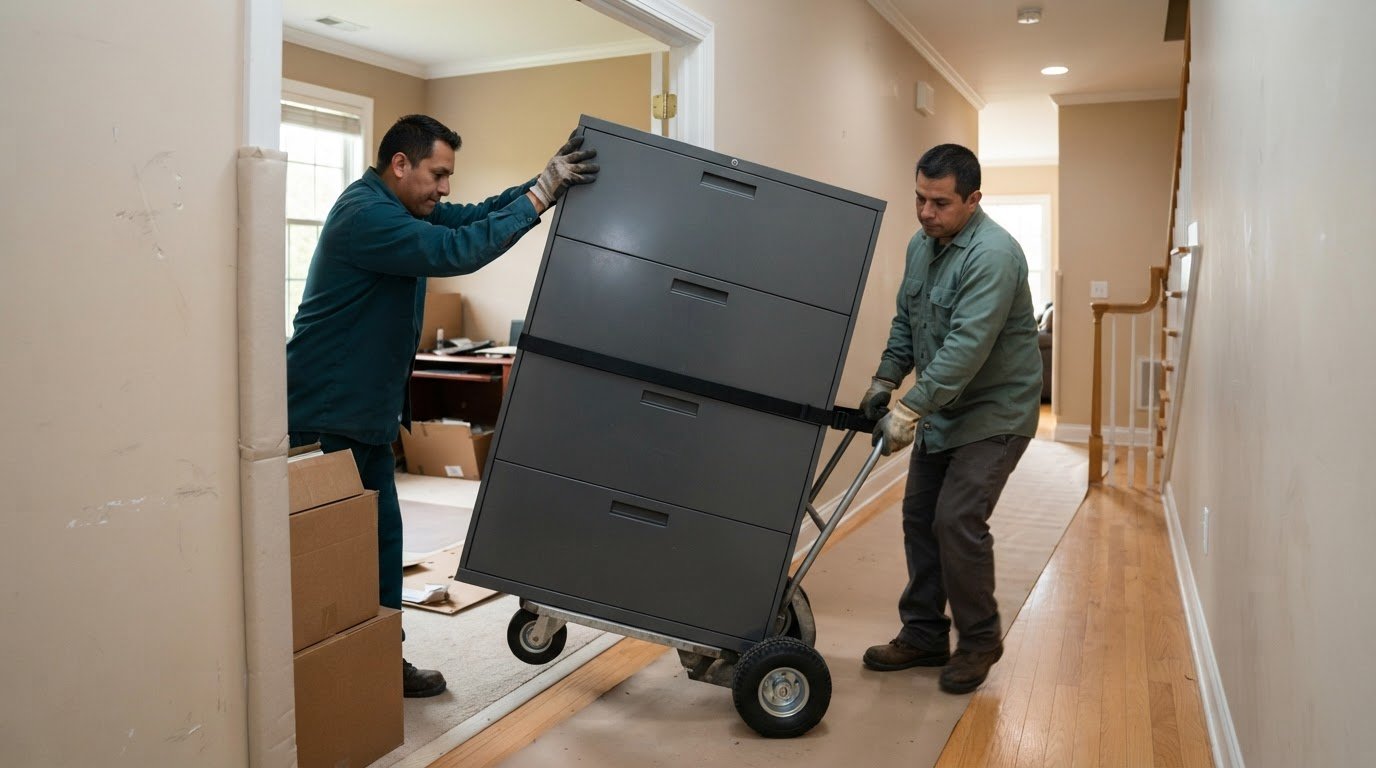
Use floor runners on walking surfaces and moving blankets on stair rails. Set up protection before bringing the armoire onto the staircase, and keep it in place throughout the move.
- Clear the route before laying down protection. Remove loose rugs, shoes, and small objects from every tread and landing. A runner won’t protect a spiral stair if a loose item shifts underfoot. Keep the path open so carriers can pause and turn without stepping around clutter.
- Cover the floor and treads with runners along the armoire’s route. Align each runner with the direction of travel so it won’t bunch at a turn. Cover the landing too, where carriers may need to set the armoire down briefly. Keep enough of the walking surface visible to spot a curled edge or shifted covering.
- Wrap the banister and stair rail in moving blankets before lifting. Cover the inside curve and outside rail where the armoire’s corners could swing during a turn. Check the blankets at every landing, since a gap can expose the rail where the cabinet is hardest to guide.
- Inspect the protection from the top and bottom of the spiral staircase. Look for exposed rail, uncovered floor, and shifted runner edges. Have one person watch the coverings while the armoire is moving, and pause if a blanket slips or a runner bunches underfoot.
- Keep the armoire clear of walls and railings rather than using them as a brace. Moving blankets can help reduce the risk of accidents and property damage, but they don’t make it safe to push the cabinet against a surface. At each turn, pause and reset the position if a corner presses against the rail.
- Account for concentrated weight on spiral treads. A 150-pound dresser plus two movers can concentrate significant weight on the stairs. Keep the load controlled and avoid crowding one tread.
- Once the armoire reaches the bottom, remove the coverings carefully and inspect every landing, tread, and rail. Check for scuffs, shifted runners, or snags before moving other items. This final walk-through can reveal a loose edge or damage while the route is still clear and easy to inspect.
Checking alternate access
Compare the staircase with other possible routes before committing to the carry. In a McLean home, check each opening and transition between the armoire’s room and its destination.
- Walk the route from the room to an exterior door. Note every doorway, hallway turn, and threshold that could interrupt the move. Measure the tightest passage and consider whether carriers can guide the armoire through without hitting trim or losing a secure hold. A clear bedroom doorway won’t solve a narrow hallway just beyond it.
- Check access through a deck, patio, or another ground-level entrance. Measure the doorway, approach, and space available to turn the armoire once it passes outside. A bathroom or deck may connect rooms differently from the stair route, so trace the entire path, not just one opening. Keep the destination and the carriers’ working space in mind.
- Assess windows as possible access points. Measure the clear opening, accounting for frames and anything that limits usable space. Check both sides: the armoire needs room to approach the window and a clear place to land beyond it. A window that looks wide enough may still leave no practical way to control the item during the transition.
- Look for a ceiling opening that could provide a more direct route. An iron spiral staircase can be disassembled so a sofa can pass through a ceiling opening. That example suggests one possible access approach, but it doesn’t mean every staircase can be dismantled. Consider the structure and whether the furniture can pass through without hitting the opening’s edges.
- Compare every step of each possible route. List the openings, turns, and landing areas in order, then identify the narrowest point. A large exterior doorway may lead to a tight interior hall, while a ceiling opening may leave too little room to position the item. Reject any route that leaves no workable space to control the armoire.
- Plan how carriers will guide the armoire through the chosen access point. Identify where they can pause, change hand positions, and prepare for the next turn. Clear the path beyond the opening, including the area where the piece will be set down. Don’t start the carry if getting through requires an uncontrolled shift.
- If a deck, window, or ceiling opening seems more practical than the spiral stairs, share the armoire’s dimensions and route details when you get help planning a heavy-item move. A clear description gives the team useful context for discussing the access challenge before the move begins.
Heavy Furniture Moving: Movers Near Me
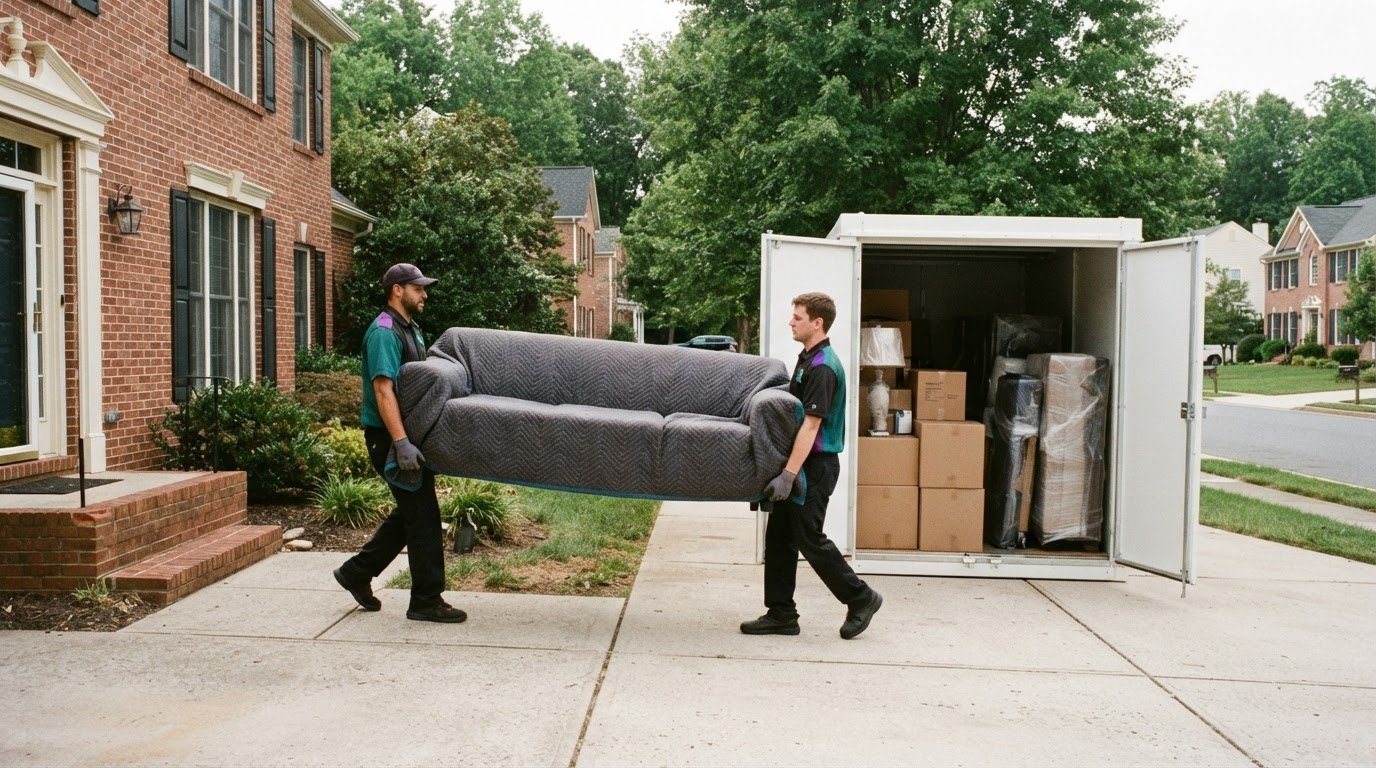
Heavy Furniture Moving helps with difficult armoire moves involving heavy loads, tight turns, or alternate access. Its in-home furniture moving and heavy lifting services support bulky household moves. The team also offers sofa hoisting when furniture needs a different route.
Share the armoire’s dimensions, staircase layout, and any access challenges when describing the job. These details help the moving team plan how to handle the item and its route. If you’ve measured the stairs but still can’t identify a controlled path, get experienced help before attempting the descent.
For help with a heavy furniture move, contact Heavy Furniture Moving.
Make the Next Move Deliberate
A challenging carry is a reason to pause, not force progress. Before the armoire leaves its room, decide what a successful move looks like: a controlled transfer, no rushed turns, and a clear backup plan if the route stops working. That decision helps keep pressure from taking over once people are holding the load.
When moving a heavy armoire down a spiral staircase in McLean, let the route and the team’s control guide your next step. If the planned path requires awkward reaches or sudden shifts, choose another approach before lifting. A careful change of plan protects the carriers and the home.
When you’re ready for help with the move, contact Heavy Furniture Moving to discuss the armoire and its access route. Take the next step with a clear plan, and move forward at a pace that feels controlled.
Frequently Asked Questions
Can I hire professional movers in McLean, VA, to move a heavy armoire down spiral stairs?
Yes. Heavy Furniture Moving provides residential help with heavy, bulky furniture. For an armoire move in McLean, share the item’s dimensions and describe the staircase, landings, and any alternate access. Mention removable parts and delicate surfaces, too. These details help the moving team understand how the item needs to be handled and plan the move.
How should I measure an armoire and spiral staircase before moving it?
Measure the armoire’s height, width, and depth, including protruding trim and handles. Record the staircase’s narrowest clear opening, walking width, ceiling clearance, and landing space. Measure at every turn, not just at the entrance. Sketching the stair path from above can help show where the armoire must rotate; compare those points with its largest dimensions.
Can a large armoire be disassembled to fit down a spiral staircase?
Removable parts may make an armoire easier to handle, but only detach components designed to come off. Remove loose contents and any shelves or doors that lift off easily, and keep the hardware in a labeled bag. Don’t force glued joints or structural panels. Removing a projecting door may improve clearance, while dismantling the cabinet frame could weaken it.
What equipment works best for moving an armoire down a spiral staircase?
Use moving blankets to cushion contact points and floor runners to protect the walking surface. A hand truck is a two-wheeled upright dolly that tilts backward, but that doesn’t automatically make it suitable for narrow spiral steps. Keep the route clear and use equipment only if it allows steady control at every turn. Wheels and straps are no substitute for a secure grip.
What alternatives are there to carrying an armoire down spiral stairs, such as hoisting it through a window?
Check a ground-level door, deck, wide window, or ceiling opening as an alternate route. Measure the opening and approach on both sides, then consider how the armoire can be guided through and set down. A window route needs a clear exterior landing area and controlled handling. Don’t assume sofa hoisting is suitable for an armoire: the item and access route are different.
How can I protect walls, floors, and stairs while moving heavy furniture?
Before moving, remove grit and loose objects that could scratch the floor or shift underfoot. Cover vulnerable doorjambs and wall corners, especially at tight turns where cabinet edges may swing. Secure the protective coverings so they can’t slide into the walking path. Afterward, inspect the route from the room to the exit for scuffs, loose coverings, or debris.
Frequently Asked Questions
Yes. Heavy Furniture Moving provides residential help with heavy, bulky furniture. For an armoire move in McLean, share the item’s dimensions and describe the staircase, landings, and any alternate access. Mention removable parts and delicate surfaces, too. These details help the moving team understand how the item needs to be handled and plan the move.
Measure the armoire’s height, width, and depth, including protruding trim and handles. Record the staircase’s narrowest clear opening, walking width, ceiling clearance, and landing space. Measure at every turn, not just at the entrance. Sketching the stair path from above can help show where the armoire must rotate; compare those points with its largest dimensions.
Removable parts may make an armoire easier to handle, but only detach components designed to come off. Remove loose contents and any shelves or doors that lift off easily, and keep the hardware in a labeled bag. Don’t force glued joints or structural panels. Removing a projecting door may improve clearance, while dismantling the cabinet frame could weaken it.
Use moving blankets to cushion contact points and floor runners to protect the walking surface. A hand truck is a two-wheeled upright dolly that tilts backward, but that doesn’t automatically make it suitable for narrow spiral steps. Keep the route clear and use equipment only if it allows steady control at every turn. Wheels and straps are no substitute for a secure grip.
Check a ground-level door, deck, wide window, or ceiling opening as an alternate route. Measure the opening and approach on both sides, then consider how the armoire can be guided through and set down. A window route needs a clear exterior landing area and controlled handling. Don’t assume sofa hoisting is suitable for an armoire: the item and access route are different.
Before moving, remove grit and loose objects that could scratch the floor or shift underfoot. Cover vulnerable doorjambs and wall corners, especially at tight turns where cabinet edges may swing. Secure the protective coverings so they can’t slide into the walking path. Afterward, inspect the route from the room to the exit for scuffs, loose coverings, or debris.