Antique Breakfront China Cabinet Moving in Dumfries
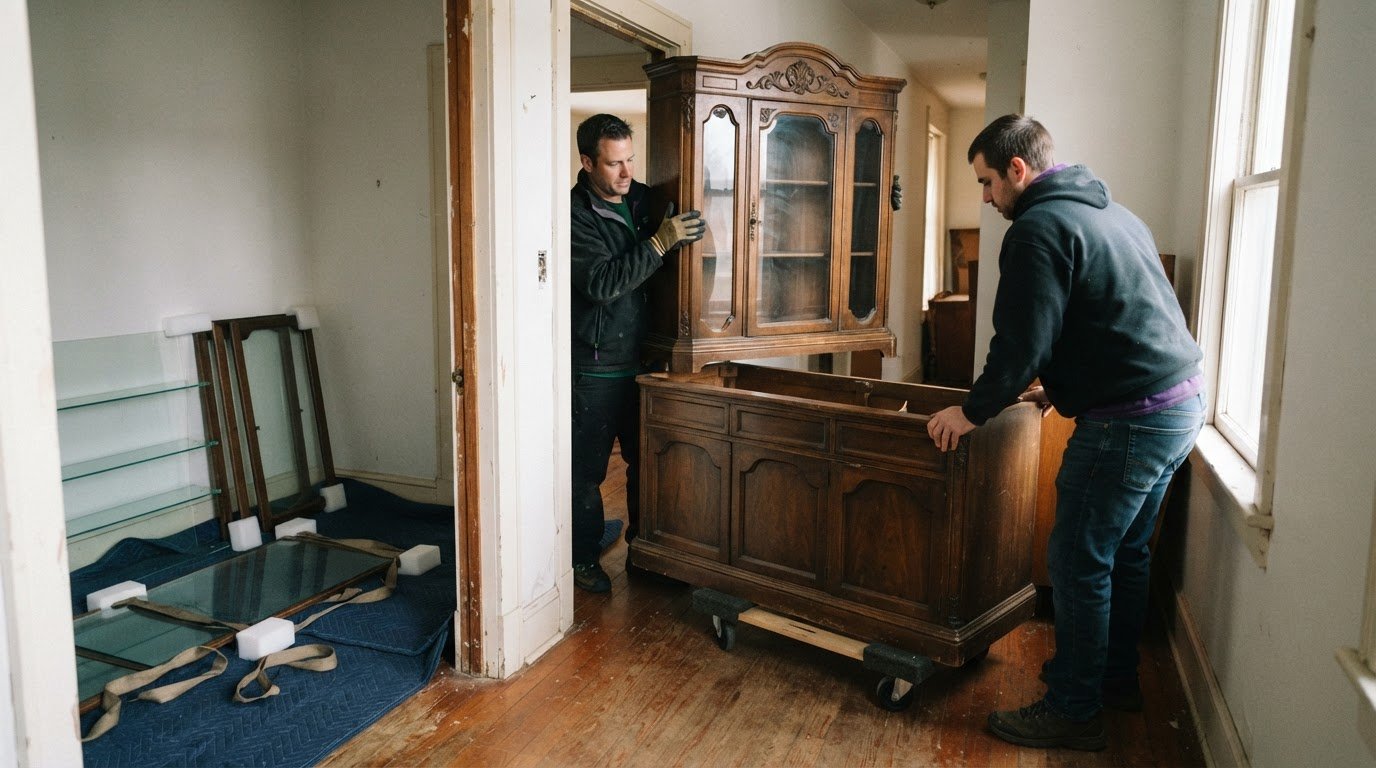
Moving an antique breakfront intact can put its glass, joints, and aged finish at risk. Antique breakfront china cabinet moving specialists in Dumfries assess whether glass doors, removable shelves, or a separate top should come off, especially if the cabinet must pass through a narrow route. Careful handling and suitable disassembly help protect delicate parts in transit.
It’s understandable to worry about a cabinet that is both fragile and difficult to maneuver. This guide explains how to prepare its glass and shelves, protect the frame and finish, transport separate sections, and reassemble the piece at its destination. You’ll also learn why moving a breakfront in one piece can create avoidable strain and risk damage.
Key Takeaways
- Learn why removable glass doors and shelves should be protected separately when possible.
- See how moving a breakfront in one piece can strain its joints and put delicate features at risk.
- Follow the key steps for transporting cabinet sections and checking their fit during reassembly.
- Understand what to look for in moving coverage for an antique or vintage cabinet.
- Find out when local furniture-moving help can make a difficult move easier to manage.
Glass panel and shelf protection
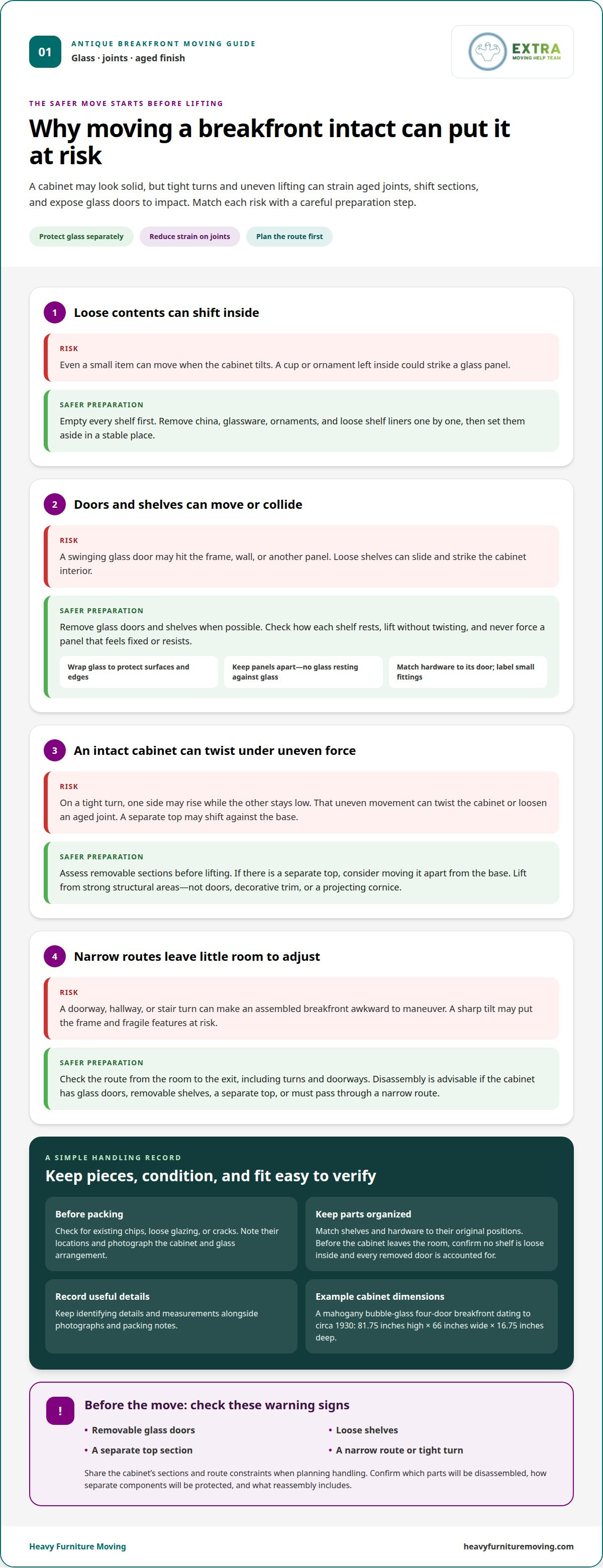
Start by emptying every shelf before moving an antique breakfront. Remove china, glassware, ornaments, and loose shelf liners one by one. Even a small item can shift when the cabinet tilts. A porcelain cup left inside could strike a glass panel during handling. Set the contents aside in a separate, stable place.
Next, inspect which glass parts can be removed safely. Take off glass doors and removable shelves when possible to reduce the risk of shifting, cracking, or impact damage. Check how each shelf rests on its supports, then lift it carefully without twisting. If a panel feels fixed or resists, don’t force it.
Keep each removed piece separate from the cabinet frame. Wrap glass to protect its surfaces and edges, then secure the wrapping so it won’t shift. Don’t place shelves loosely together, where one edge could press against another. Group door hardware with its matching door, and keep small fittings in a labeled container. Labels make reassembly easier.
Original glass may need extra care. A breakfront can have clear panes, leaded glass, or distinctive bubble glass, such as that found in some older mahogany cabinets. Check for existing chips, loose glazing, or cracks before packing. Note their locations and handle those areas gently. A condition record helps distinguish prior wear from damage noticed after transport.
- Protect the edges: Keep corners from pressing against hard surfaces.
- Separate each panel: Don’t let glass rest directly against glass.
- Keep parts organized: Match shelves and hardware to their original positions.
- Check before lifting: Make sure a removable shelf isn’t caught or secured.
Protect the cabinet’s finish around glass openings, too. Older wood may have delicate edges near door frames and shelf supports. Avoid dragging a door across the frame as you remove it. Set each part on a prepared, stable surface away from foot traffic. Keep handles and decorative fittings from rubbing against finished wood.
Before the cabinet leaves the room, compare the packed pieces with the empty cabinet. Check that no shelf remains loose inside and that every removed door is accounted for. A photo of the arrangement can help with placement later. These steps give antique breakfront china cabinet moving specialists in Dumfries a clear plan to protect the glass and match each part at its destination.
For planning records, keep any listing details separate from observations about the glass itself. The sold listing for an antique Craftsman leaded glass china cabinet by Faribault displayed a price of 2,450. These details can help identify comparable cabinet descriptions, but they do not replace a careful record of the individual piece’s condition.
When noting dimensions for handling, a mahogany bubble-glass four-door breakfront china cabinet dating to circa 1930 measures 81.75 inches high, 66 inches wide, and 16.75 inches deep. Record measurements alongside photographs so the cabinet’s proportions and glass arrangement are easier to review. A large mahogany bubble-glass-pane breakfront china cabinet is attributed to Baker Furniture Company and Kittinger Furniture Company. Keep such identifying details with the packing notes, while treating each pane as a separate, fragile component.
Risks of moving china cabinets without disassembly
A breakfront can look solid while concealing vulnerable joints and separate sections. Moving it as one piece transfers force through the frame, doors, and shelves. On a tight turn, one side may rise while the other stays low. That uneven movement can twist the cabinet or loosen an aged joint. Antique and vintage pieces need a route plan before lifting begins.
Glass doors add another risk. A door that swings during a lift can strike the frame, a wall, or another panel. Even if the glass stays intact, the hinges and surrounding wood can take the impact. Remove doors when practical and secure them separately from the cabinet. Carrying an assembled breakfront can be especially awkward in a narrow hallway or doorway.
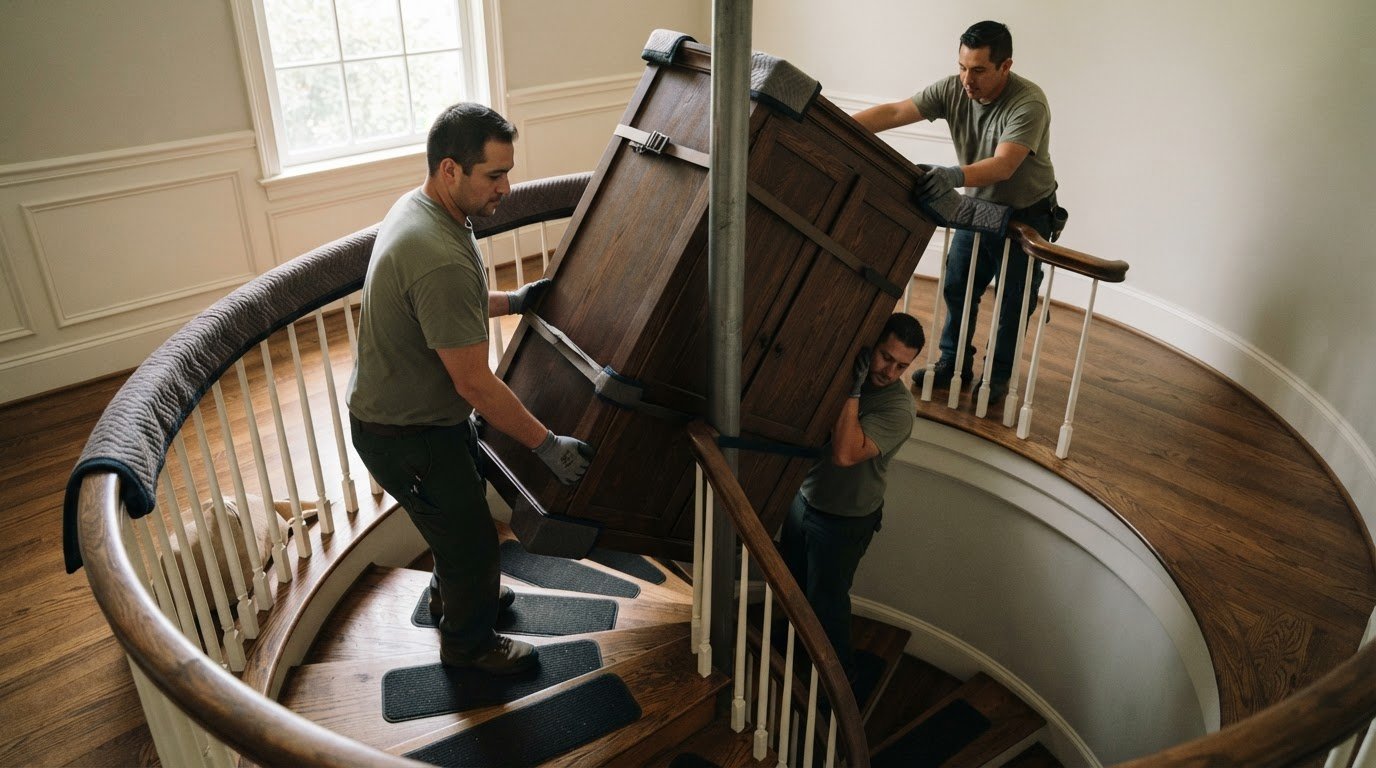
Weight and leverage matter, too. The upper section may shift against the base when the cabinet is tilted. If it has a separate top, moving both sections together can strain their connection. A sudden change in grip can throw the load off balance. Don’t use doors, decorative trim, or a projecting cornice as handholds. Lift from strong structural areas instead.
Consider these warning signs before deciding to move the cabinet intact:
- Removable glass doors: They can swing or catch during a turn.
- Loose shelves: They may slide inside and strike the frame.
- A separate top section: The connection can shift under uneven pressure.
- A narrow route: Walls and doorframes leave less room to adjust.
Disassembly is advisable if the cabinet has glass doors, removable shelves, a separate top, or must pass through a narrow route. These features affect how the cabinet moves, not just how it looks. Check the route from the room to the exit, including turns and doorways. If the assembled piece cannot pass without a sharp tilt, separate suitable components first.
Antique breakfront china cabinet moving specialists in Dumfries can plan handling around fragile joints, original glass, and aged finishes. For a heavy piece that needs careful lifting, heavy lifting moving service can be a practical next step. Share details about the cabinet’s sections and the route, such as a tight doorway or stair turn. That information helps shape a safer handling plan before the move starts.
Office display cabinets and commercial glass cases can receive disassembly, protection, and reassembly services. When discussing a cabinet move, describe its construction and identify any parts that may need to come off before carrying. Ask which components are included in disassembly and how each will be protected while separate from the main unit. Clarify what reassembly covers, including the placement of removable parts and any checks expected before the case is used again. Focus the handling plan on the actual cabinet and route rather than assuming every display unit should be treated alike. A clear discussion of the requested work can help you decide whether to move the case assembled or arrange the stated services. Share concerns about glass, joints, and access before settling the plan, and confirm who is responsible for each stage.
Safe transport and reassembly
Plan the cabinet’s route, protective packing, and reassembly before moving its sections. A clear sequence keeps each component organized from pickup through placement.
Breakfront Packing and Protection
Begin by checking the frame, joints, finish, and original glass. Remove fragile doors and shelves when possible, then protect each piece separately from shifting and impact. Keep hardware grouped with the section it belongs to. For an antique with a weak joint or aged finish, use controlled handling and light disassembly rather than forcing a connection apart.
Protect exposed surfaces without pressing hard against carved details, trim, or delicate edges. A carved pediment, for example, needs careful coverage that won’t catch on packing material. Arrange the cabinet sections and removable parts so their positions remain clear. This makes unpacking more orderly and helps prevent a misplaced shelf or fitting from delaying reassembly.
Safe Cabinet Transport
Move each prepared section with a steady grip and a planned route. Keep the path clear of furniture, doorways, and other obstacles before lifting. A separate upper section should travel independently from its base, rather than shifting against it during a turn. In transit, arrange the pieces so they stay stable and protected from contact with other cargo.
At the destination, bring the components into the room where the cabinet will stand before reconnecting them. Check the floor space and intended position first. Avoid assembling the breakfront in a doorway or narrow passage, where there may be little room to handle its sections safely. Keep doors, shelves, and fittings nearby but outside the work area.
Reassembly involves more than putting the cabinet back together. Reconnect the sections, reinstall removable parts, and check that the frame sits correctly. If the top appears attached but sits unevenly, address it before reinstalling shelves or doors. Follow the cabinet’s original arrangement, using photos or labels made before transport to match each component.
- Set and reconnect: Position the base, then join separate sections securely.
- Check the frame: Look for an even fit before adding removable parts.
- Replace shelves: Return each shelf to its original support points.
- Rehang doors: Confirm that doors sit properly and move without catching.
Finish with a visual and movement check. Look along the frame for gaps or misalignment, then carefully open and close each door. Confirm that shelves rest correctly on their supports and that no fitting remains unused. These final checks can reveal an assembly issue before the cabinet is loaded with china or returned to everyday use.
How do professional movers pack and protect a breakfront china cabinet?
A careful packing plan starts with the cabinet, not the moving truck. Movers inspect its frame, finish, joints, doors, shelves, and decorative details, noting existing chips or loose parts before handling begins. A carved cornice, for example, needs different attention from a plain, flat side panel. This initial inspection guides preparation and handling.
Next, empty the cabinet and remove suitable parts. Take off glass doors and shelves when possible to reduce shifting, cracking, and impact damage. Protect each piece separately, keeping its edges from pressing against hard surfaces. Gather hardware and match it to its section. A labeled bag or container keeps small fittings organized during the move.
Movers then protect the cabinet’s wood and finish. Protective covering should shield broad surfaces without catching on carvings or pressing against delicate trim. A projecting pediment, for example, needs care during wrapping and handling. Avoid placing adhesive directly on an aged finish. Secure padding so it doesn’t slip as the cabinet is carried or positioned.
Before lifting, movers plan the route from the room to the exit, accounting for doorways, tight turns, and floor obstacles. Where appropriate, handle a separate upper section independently rather than letting it shift against the base. The team also identifies sturdy gripping points. Doors, decorative moldings, and delicate trim aren’t suitable handholds.
In the moving vehicle, each protected section needs a stable position. Keep cabinet pieces from knocking into other items and prevent loose parts from shifting during travel. If removed, keep the glass separate from the frame. A stable arrangement matters more than squeezing extra items around a fragile cabinet. At the destination, unload sections in the order needed for reassembly.
A practical packing sequence looks like this:
- Inspect: Note existing marks, loose joints, and delicate details.
- Prepare: Empty the cabinet and remove suitable glass parts.
- Protect: Cover the frame and separate fragile components.
- Secure: Keep hardware grouped and sections stable in transit.
- Reassemble: Reconnect sections and check the frame, shelves, and doors.
At delivery, movers reconnect separate sections, reinstall removable parts, and check that the frame sits correctly. Doors should align and move without catching, and shelves should rest properly on their supports. These final checks can catch misplaced fittings or uneven assembly before the china goes back in. A clear record of the original condition and part locations helps keep the process orderly.
Are antique furniture movers in Virginia insured for damage?
Insurance and damage protection depend on the mover’s written terms. The word “insured” alone doesn’t explain what protection applies to an antique cabinet or how damage to a door, finish, or original glass would be handled. For a Dumfries move, read the coverage details before the cabinet is packed.
Separate two questions: what coverage exists and what it covers. A mover’s insurance does not automatically mean full reimbursement for an antique’s appraised value. The contract may specify limits, exclusions, claim steps, or different valuation terms. Read those sections carefully. For example, damage to a carved edge and a cracked glass panel may be assessed differently under the written terms.
Before moving day, create a clear record of the cabinet’s condition. Photograph the front, sides, top, glass, shelves, and visible wear. Take close-ups of existing chips or loose joints. Keep the images with your moving documents and note which parts are original or removable. This record gives you a useful reference if you later need to describe a change.
Review the paperwork for specific details:
- Coverage scope: Identify which stages of handling the terms address.
- Limits or exclusions: Look for language affecting antiques, glass, or existing damage.
- Valuation method: Understand how the document describes a loss or repair.
- Claim process: Find the required reporting steps and supporting records.
Describe the cabinet precisely before signing. Identify it as an antique or vintage breakfront, and list features such as a separate upper section, leaded glass, or removable shelves. Keep condition photos with your records, along with a copy of the signed inventory and written coverage terms. Clear descriptions help avoid confusion about which item or component a document covers.
If damage appears after delivery, document it promptly. Photograph the affected area before moving or repairing the cabinet. Keep packaging and loose pieces together, and write down what you noticed. Follow the claim instructions in the signed documents. Don’t discard a damaged shelf or glass fragment before recording its condition.
For an antique breakfront, treat careful handling and written protection terms as separate parts of the plan. Review both before pickup, especially if the cabinet includes original glass or delicate woodwork. If the move involves a heavy cabinet that needs hands-on handling, arrange furniture-moving help and keep the cabinet’s condition notes ready.
Heavy Furniture Moving: Movers Near Me
Heavy Furniture Moving can help when a breakfront needs careful handling through a tight doorway or across your home. Its Movers Near Me and in-home furniture-moving services support residential moves, including bulky pieces that are difficult to maneuver alone.
When arranging help, share details about the cabinet’s sections, glass features, and route. Mention stairs, narrow turns, or a separate upper section so the move can be planned around the item and space. For other challenging household lifts, Heavy Furniture Moving also offers Exercise Equipment Moving and Sofa Hoisting.
Contact Heavy Furniture Moving to discuss moving your antique or vintage cabinet.
Plan the Cabinet’s Next Place
Choose the cabinet’s final position before moving day and clear space around it for careful placement and setup. Note any doorway, corner, or stairway that could affect access. A simple room plan can show where the piece belongs and help avoid shifting it repeatedly after arrival.
Prepare a short handoff for the moving team. Include the cabinet’s overall dimensions, separate sections, fragile details, and existing marks. Add a few photos showing its current condition and intended location. These details help turn a complex furniture move into a practical plan, with fewer last-minute decisions about a valued family piece.
If you’re looking for antique breakfront china cabinet moving specialists in Dumfries, use those notes to start a focused conversation about your move. Share the cabinet’s features and the access details that matter most. Contact Heavy Furniture Moving to discuss the next step, and give your cabinet a thoughtful start in its new home.
Frequently Asked Questions
Does an antique china cabinet need to be disassembled before moving?
Remove parts designed to come off when the cabinet has glass doors, removable shelves, a separate top, or must pass through a narrow route. These features affect balance and can make an assembled cabinet harder to maneuver. Keep fixed sections intact unless they are designed to separate. For example, a breakfront with a distinct upper section may travel more securely in separate pieces.
Can antique cabinet movers handle stairs, narrow doorways, and fragile glass?
Yes. Heavy Furniture Moving measures stairs, doorways, and item dimensions before lifting to help plan the cabinet’s route. Wrap, blankets, and straps are included on every job, along with floor and corner protection. Share details about stairs, tight turns, and glass features when describing the move so the crew can plan around your home’s access points.
How to compare antique furniture moving companies near Dumfries VA
Ask how the movers assess the cabinet’s glass, joints, finish, separate sections, and route before lifting. Find out how removable parts are protected and organized, how weak joints are handled, how fit is checked during reassembly, and what coverage applies to an antique cabinet.
Frequently Asked Questions
Remove parts designed to come off when the cabinet has glass doors, removable shelves, a separate top, or must pass through a narrow route. These features affect balance and can make an assembled cabinet harder to maneuver. Keep fixed sections intact unless they are designed to separate. For example, a breakfront with a distinct upper section may travel more securely in separate pieces.
Yes. Heavy Furniture Moving measures stairs, doorways, and item dimensions before lifting to help plan the cabinet’s route. Wrap, blankets, and straps are included on every job, along with floor and corner protection. Share details about stairs, tight turns, and glass features when describing the move so the crew can plan around your home’s access points.