Moving Heavy Items in Dumfries Rain: Safety Guide
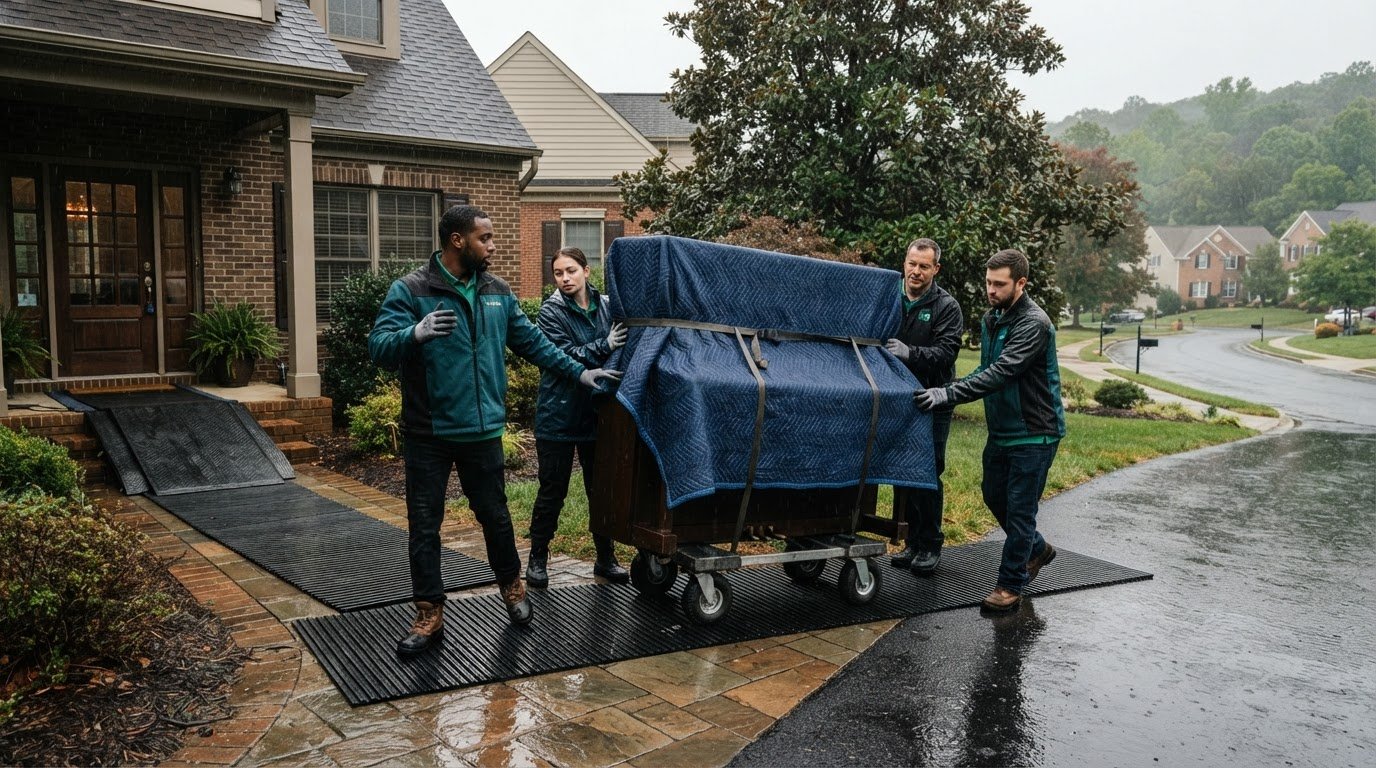
Rain changes the route, not just the forecast. A slick step, wet threshold or muddy path can turn a familiar carry into a risky one. If you’re searching “how to move heavy items in the rain Dumfries,” check conditions along the entire route, from where the item sits to its destination, rather than judging by the rain outside.
Wet floors can cause slips, while rain can soak upholstery, damage moisture-sensitive items and make loads harder to grip. Sometimes the safest plan is to wait for a drier window. If you proceed, check every surface, prepare a clear route and protect the item without compromising your grip or visibility.
This guide explains how to decide whether to go or wait, prepare a safer path and protect furniture, electronics and other vulnerable items from moisture. It also covers when a heavy, awkward or delicate load may be better handled with experienced moving help. Assess the weather and route before lifting, and reassess if conditions change.
Key Takeaways
- Rain alone doesn’t determine whether a move is safe. Check the route, footing, visibility and weather conditions before lifting.
- Use an inspect, clear, protect and stage sequence to prepare the full path.
- Choose between DIY, postponing and professional help based on the item, access route and weather. Heavy or awkward loads may need experienced handling.
- For how to move heavy items in the rain Dumfries, make a final route check and agree on clear communication before lifting.
- Stop if footing, visibility or weather worsens. Waiting may be the safer choice.
Moving Heavy Items in Dumfries Rain: Assess Conditions
Postponing a heavy-item move can be the safest practical choice, not a failure to plan. Light rain doesn’t automatically make every move unsafe, but it can affect visibility, grip and balance. Before deciding how to move heavy items in the rain Dumfries, check the current Dumfries forecast and any active weather alerts, then inspect the actual route you’ll use.
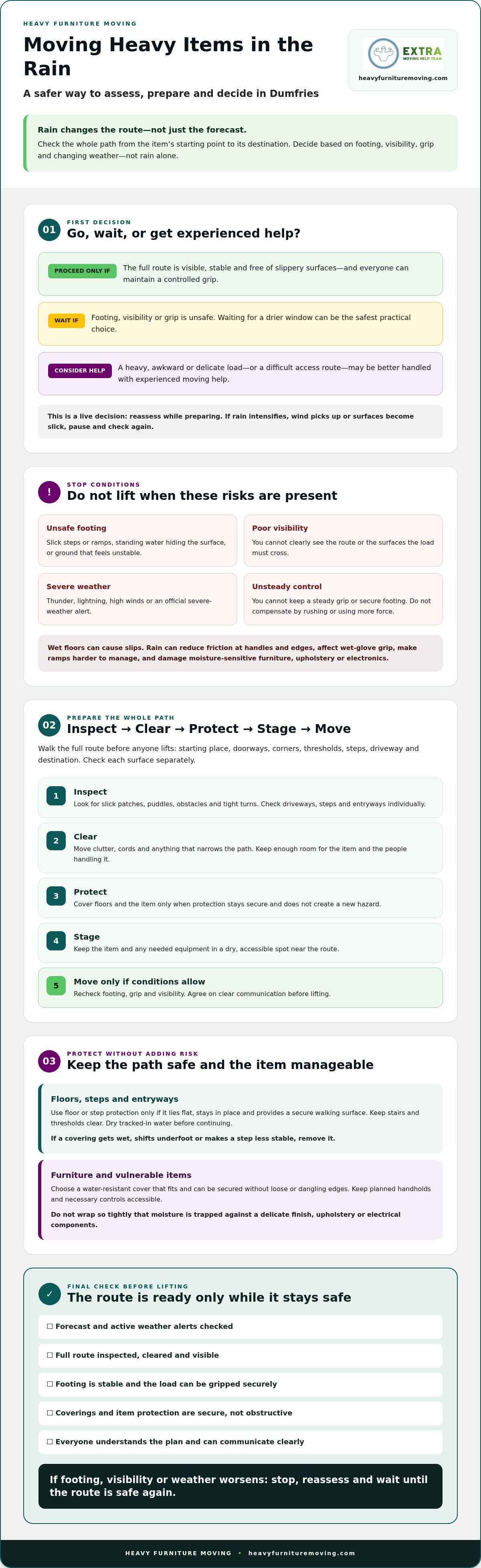
Proceed only if the full route is visible, stable and free of slippery surfaces, and everyone can maintain a controlled grip. If any of those conditions fail, wait. Treat this as a live decision, not a one-time check. Rain may intensify, surfaces may become slick, or wind may pick up while you prepare.
Manual handling depends on more than strength. The load’s shape, the people carrying it and the surrounding conditions all affect risk. Review safe lifting techniques for general context, but don’t let general guidance override a poor grip or unsafe route.
Which rain and weather conditions mean you should wait?
Stop if steps or ramps are slick, visibility is poor, standing water hides the surface, or the ground feels unstable underfoot. Don’t proceed during thunder, lightning, high winds or an official severe-weather alert. Check the forecast before planning, then keep reassessing conditions. If the weather or footing worsens, pause and continue only when the route is safe again.
What makes a heavy-item move riskier in wet weather?
Water can reduce friction between your hands and an item’s handles or edges. Wet gloves may also affect grip, and a damp ramp can make both the load and the people handling it harder to control. A slip or dropped item could injure someone or damage furniture, walls or floors. Inspect Dumfries driveways, steps and entryways separately. A safe-looking entrance doesn’t mean the whole route is clear.
Pay attention to the item, too. Smooth surfaces and awkward shapes can be difficult to hold securely, while moisture may harm some furniture, upholstery or electronics. If you can’t keep a steady grip, see the route clearly or maintain secure footing, don’t try to compensate by rushing or using more force. Wait for safer conditions and reassess before lifting.
Prepare a Rain-Safe Route for Heavy Items in Dumfries
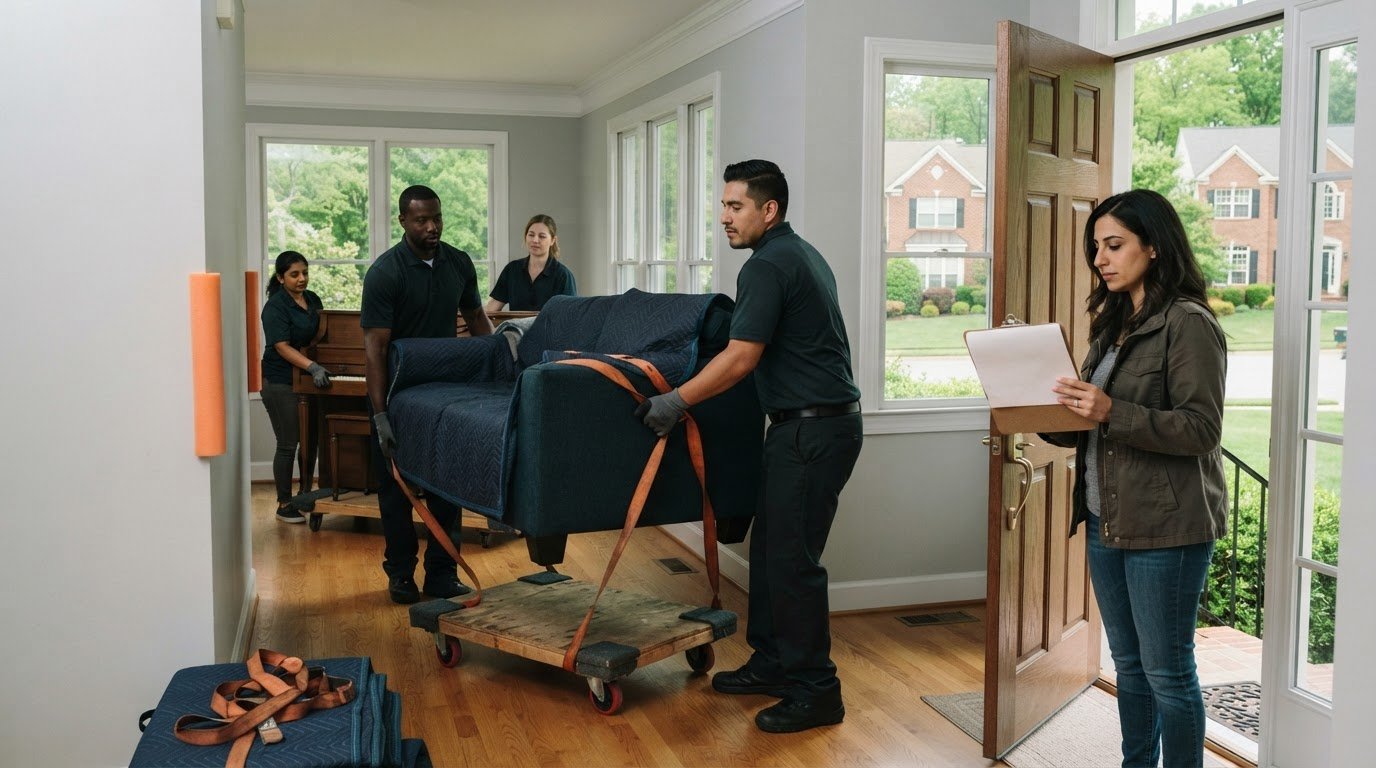
A safe carry starts before anyone lifts. Check the full path from where the item sits to the vehicle or destination, including doorways, corners, thresholds, steps and the driveway. Rain can affect each surface differently, so don’t assume a clear indoor hallway means the whole route is ready.
Inspect, clear, protect, stage, then move only if conditions allow. This sequence gives you time to spot hazards and address them before the item is in motion. A prepared route is more useful than a rushed carry: every clear, stable step helps keep people and belongings under control.
- Inspect: Walk the route and look for slick patches, puddles, obstacles and tight turns.
- Clear: Move clutter, cords and anything that narrows the path.
- Protect: Cover floors and the item without creating new hazards.
- Stage: Keep the item and any needed equipment in a dry, accessible spot near the route.
- Move: Proceed only if footing, grip and visibility remain steady.
How should you protect floors, steps, and entryways?
Use floor or step protection only if it lies flat, stays in place and provides a secure walking surface. A loose sheet or shifting mat can become a slip or trip hazard. Keep stairs and thresholds clear of coverings, cords and standing water. If the route passes indoors, have someone check for water tracked onto the floor and dry it before the carry continues.
Check ramps and outdoor surfaces as well as indoor flooring. If a protective covering gets wet, shifts underfoot or makes a step less stable, remove it rather than carrying over it. Keep the route wide enough for the item and the people handling it.
How can you cover the item without blocking safe handling?
Choose a water-resistant cover that fits the item and can be secured without loose or dangling edges. Keep handles, planned handholds and necessary controls accessible. Don’t wrap an item so tightly that moisture is trapped against a delicate finish, upholstery or electrical components. For general guidance on body position and handling, see Stanford’s proper lifting and handling guidelines.
If you’re unsure how to protect or manage a bulky load on a wet route, consider whether heavy-item moving help suits your needs. For how to move heavy items in the rain Dumfries, preparation is part of the job. If the path still feels slippery or cramped after you’ve prepared it, wait rather than forcing the carry.
DIY or Professional Help: Choosing the Safer Rainy-Day Option
Choose a plan that fits the item, route and weather, not the one that feels fastest. A manageable load on a short, clear path may suit a careful DIY move in mild rain. A difficult route or bulky item may call for experienced help. If footing, visibility or wind makes the carry unsafe, postpone it. Professional movers shouldn’t be expected to work through dangerous conditions either.
More hands don’t automatically make a move safer. People need room to move together and communicate clearly, and a tarp won’t fix slick steps or poor footing. A loose cover can get in the way. Before deciding how to move heavy items in the rain Dumfries, consider whether the load and route can be controlled from start to finish.
- DIY: Consider it only for a manageable item, a clear route, stable footing and mild conditions.
- Postpone: Wait if the weather is worsening or the route can’t be made secure.
- Ask for help: Consider experienced handling if the item is heavy or awkward, or access is difficult.
When is a small DIY move reasonable?
Keep DIY to loads you can handle without straining, on a route with secure footing and enough room to move. Don’t lift a heavy item alone or improvise with unsuitable equipment. If the load shifts, your grip becomes uncertain or anyone loses stable footing, stop and make a safer plan. A tarp or extra helpers can’t make an unstable carry safe.
When should you ask for heavy-item moving help?
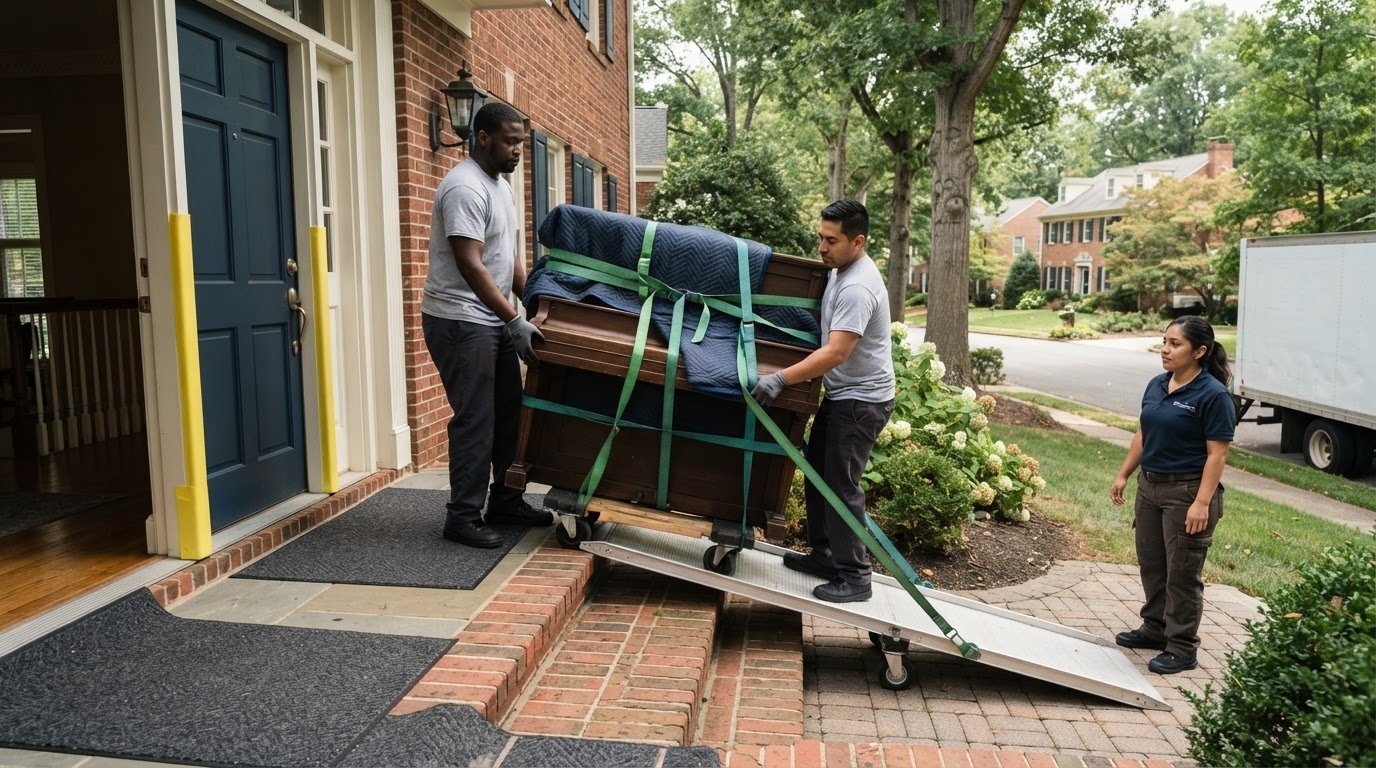
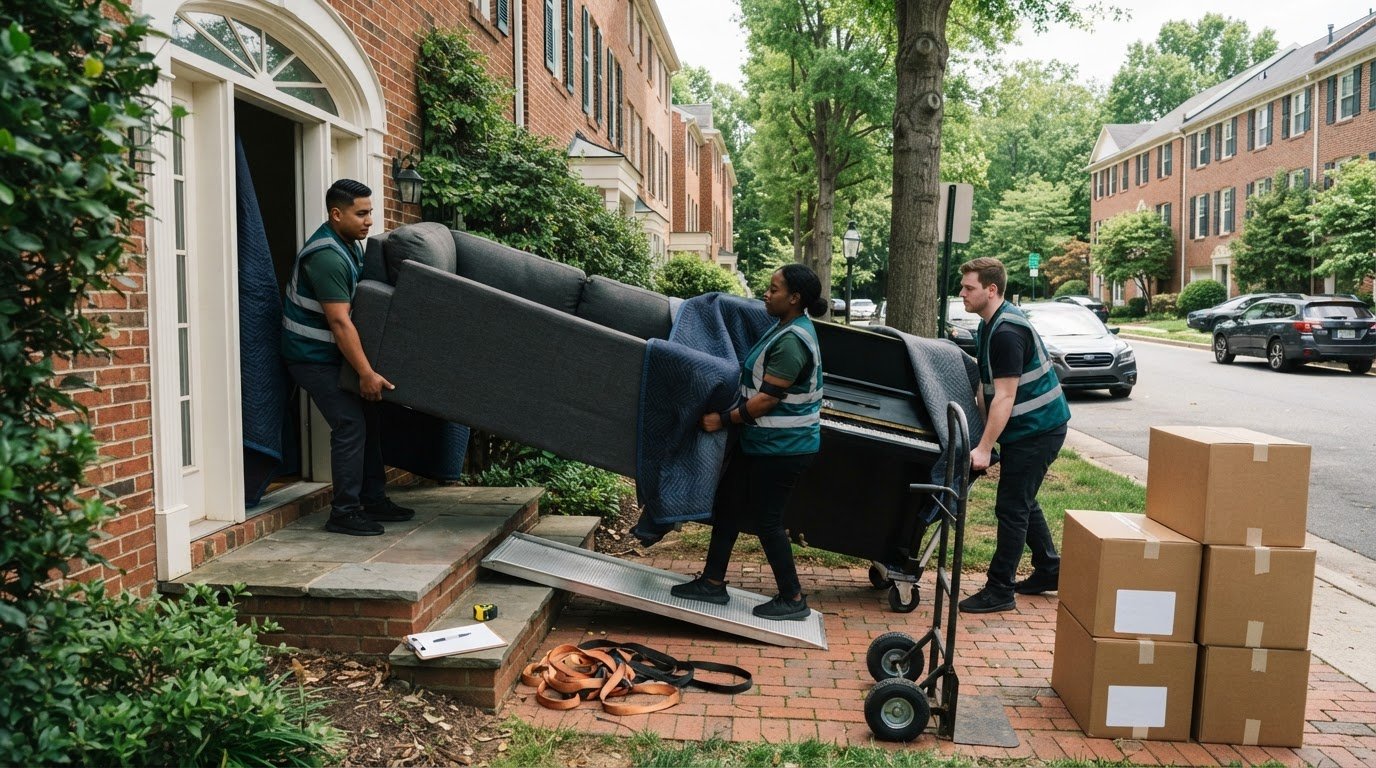
Pianos, safes, exercise equipment and awkward furniture can be difficult to handle, especially on stairs or through narrow access. An exposed transfer between a doorway and vehicle adds another stretch where rain can affect footing and grip. If the route includes tight turns or steps, or leaves little room to coordinate, ask a mover about the specific item and access before scheduling.
Tell any mover the item’s size and type, the route and the weather constraints. Ask how they assess conditions and what happens if the weather makes the move unsafe. Don’t assume a booking means they’ll proceed regardless. For broader local mover guidance, see reliable movers in Fairfax and Northern Virginia. Check current Dumfries availability and accepted items directly before making plans.
Move Heavy Items in the Rain: A Careful Step-by-Step Process
Once the route is ready, keep the move deliberate. Agree who will guide the item and who will watch the path. Don’t begin unless the weather, footing and teamwork still feel safe. These steps can help you decide how to move heavy items in the rain Dumfries without letting pressure to finish override good judgment.
- Make a final weather and route check. Recheck the forecast and alerts, then walk the full route again. Look for fresh puddles, slick thresholds, new obstacles or reduced visibility. If conditions have worsened, wait.
- Prepare the people and destination. Clear the landing space and confirm where the item will go. Wear footwear with reliable traction and gloves that are dry and suitable for the item. Agree on simple commands such as “stop” before anyone lifts.
- Check the cover and handholds. Secure a suitable water-resistant cover for exposed sections, but keep lifting points and necessary controls accessible. Make sure loose edges can’t catch or block anyone’s view.
- Coordinate before moving. Everyone should understand the route and be ready to move together. Lift only if the load feels manageable and the team can communicate clearly. If the path, weather or coordination feels unsafe, don’t lift.
- Move at a controlled pace. Take care at wet thresholds and ramps. Keep the item steady and avoid sudden changes in direction. Don’t rush to get out of the rain. Rushing can make it harder to respond if grip or footing changes.
- Pause and reassess whenever conditions change. If rain intensifies, hands get wet, the item shifts or footing becomes uncertain, stop in a safe place. Under safe cover, dry hands, check the route and reassess before continuing. If control can’t be restored, postpone the move.
During an exposed transfer, keep the item covered where practical, but don’t let the cover interfere with visibility or secure handling. If there’s no safe covered place to pause, don’t start a carry that could leave the team exposed in worsening conditions.
Heavy, bulky or awkward items can make rainy-day handling harder to manage. If you’d rather have experienced help with a heavy-item move, ask about heavy-item moving help and confirm current Dumfries availability, accepted items and weather constraints before scheduling.
Dumfries Rainy-Day Moves: Know When to Stop and Get Help
Continue only while the route and handling stay controlled. If the load slips, footing feels unreliable, or the weather makes it harder to see and communicate, stop. You don’t have to finish a move in worsening conditions. Postponing is sensible when you can’t restore a safe route and steady handling.
What are the clear signs to stop the move?
Pause the carry if anyone slips, loses grip, feels unwell or can’t clearly hear and respond to instructions. Stop if the item shifts, visibility worsens or water begins collecting on the route. Don’t push through a wet step or exposed section just to get the item moved.
Resume only after conditions improve and you’ve reassessed the route from the item’s location to its destination. Check the surfaces, visibility and team communication again. If any part still feels uncertain, wait for a safer opportunity.
How can local movers help with a difficult heavy item?
Experienced help may be worth considering for a piano, safe, exercise equipment or bulky furniture, especially if the route includes stairs, tight access or an exposed transfer. When asking a mover about the job, describe the item, its location, access points, steps and how much of the route is exposed to rain. Share your weather concerns and confirm the item is accepted and Dumfries service is currently available.
Heavy Furniture Moving handles heavy household items and offers specialized handling for pianos, safes and exercise equipment, as well as sofa hoisting. Before arranging a move, confirm availability, accepted items and how weather may affect the plan. The safest answer to how to move heavy items in the rain Dumfries may be to wait or ask for help with a load your team can’t control safely.
If you’d like to discuss the item and access details, Ask Heavy Furniture Moving about your move.
Make Your Next Move Safer
Rain doesn’t automatically rule out a heavy-item move, but safe handling depends on a clear route, secure footing and manageable conditions. Check the whole path, protect the item without compromising your grip, and pause if visibility, footing or control gets worse. Sometimes the safest plan for how to move heavy items in the rain Dumfries is to wait for a better window.
Heavy Furniture Moving serves Dumfries and nearby communities, including Fairfax, Woodbridge, Manassas, Manassas Park, Aldie, Ashburn, McLean, Vienna, Reston, Centreville, Chantilly, Clifton, South Riding, Fairfax Station, Haymarket and Gainesville. The company handles items such as pianos, safes and exercise equipment, and offers sofa hoisting. Confirm current availability, accepted items and weather arrangements before scheduling.
Ask Heavy Furniture Moving about your heavy-item move. Make safety the priority, and you can approach the next step with more confidence.
Frequently Asked Questions
Can you move heavy furniture in the rain?
Sometimes, but it depends on footing, visibility, wind, the route and the item. For advice on how to move heavy items in the rain Dumfries, assess the entire path and check the current forecast and alerts before lifting. Stop for slippery steps, standing water, lightning or severe-weather alerts. A cover alone can’t make an unsafe carry safe. Recheck conditions just before starting, and postpone if the route or handling feels uncertain.
Is it safe to move a heavy item during a thunderstorm?
No. Don’t carry a heavy item outdoors during thunder or lightning. Pause the move, get everyone to a safe indoor place and follow current official weather alerts. Don’t try to beat the storm by carrying a load across an exposed path. Wait until the storm has passed and conditions are safe, then reassess the forecast, route and footing before deciding whether to resume.
How do you protect furniture when moving it in the rain?
Use a suitable water-resistant cover secured for the exposed part of the route, but leave grips and handling points accessible. Avoid loose material that could snag, block the team’s view or create a trip hazard. Delicate finishes and electrical components may need item-specific care, so follow the manufacturer’s guidance. If you can’t protect the item without compromising safe handling, wait for drier conditions.
What happens if furniture gets wet during a move?
Move the item to a dry, sheltered place and follow care instructions for its material. Upholstery, wood and electrical components may need different treatment, so don’t assume one method suits every item. Avoid applying heat or cleaning products unless the manufacturer recommends them. For valuable or delicate furniture, contact a qualified restoration or repair professional for advice rather than risking further damage with an unsuitable fix.
Should I postpone a move if rain makes the driveway slippery?
Yes, postpone if you can’t keep stable footing or make the route safe. Don’t carry a heavy item over slick steps, ramps or standing water. Schedule pressure isn’t a reason to take that risk. Once conditions improve, inspect the full route again, including the driveway and entryway. If a mover is involved, contact them to discuss rescheduling and confirm the plan before attempting the move.
Can professional movers help with heavy items in Dumfries when it rains?
They may be able to help, but accepted items, weather decisions and availability vary, so confirm details directly. Heavy Furniture Moving serves Dumfries and nearby communities, including Fairfax, Woodbridge, Manassas, Manassas Park, Aldie, Ashburn, McLean, Vienna, Reston, Centreville, Chantilly, Clifton, South Riding, Fairfax Station, Haymarket and Gainesville. Ask about your piano, safe, exercise equipment or sofa-hoisting needs. Share access details, stairs and weather exposure; movers may delay work if conditions are unsafe.
Frequently Asked Questions
Stop if steps or ramps are slick, visibility is poor, standing water hides the surface, or the ground feels unstable underfoot. Don’t proceed during thunder, lightning, high winds or an official severe-weather alert. Check the forecast before planning, then keep reassessing conditions. If the weather or footing worsens, pause and continue only when the route is safe again.
Water can reduce friction between your hands and an item’s handles or edges. Wet gloves may also affect grip, and a damp ramp can make both the load and the people handling it harder to control. A slip or dropped item could injure someone or damage furniture, walls or floors. Inspect Dumfries driveways, steps and entryways separately. A safe-looking entrance doesn’t mean the whole route is clear. Pay attention to the item, too. Smooth surfaces and awkward shapes can be difficult to hold securely, while moisture may harm some furniture, upholstery or electronics. If you can’t keep a steady grip, see the route clearly or maintain secure footing, don’t try to compensate by rushing or using more force. Wait for safer conditions and reassess before lifting. A safe carry starts before anyone lifts. Check the full path from where the item sits to the vehicle or destination, including doorways, corners, thresholds, steps and the driveway. Rain can affect each surface differently, so don’t assume a clear indoor hallway means the whole route is ready. Inspect, clear, protect, stage, then move only if conditions allow. This sequence gives you time to spot hazards and address them before the item is in motion. A prepared route is more useful than a rushed carry: every clear, stable step helps keep people and belongings under control.
Use floor or step protection only if it lies flat, stays in place and provides a secure walking surface. A loose sheet or shifting mat can become a slip or trip hazard. Keep stairs and thresholds clear of coverings, cords and standing water. If the route passes indoors, have someone check for water tracked onto the floor and dry it before the carry continues. Check ramps and outdoor surfaces as well as indoor flooring. If a protective covering gets wet, shifts underfoot or makes a step less stable, remove it rather than carrying over it. Keep the route wide enough for the item and the people handling it.
Choose a water-resistant cover that fits the item and can be secured without loose or dangling edges. Keep handles, planned handholds and necessary controls accessible. Don’t wrap an item so tightly that moisture is trapped against a delicate finish, upholstery or electrical components. For general guidance on body position and handling, see Stanford’s proper lifting and handling guidelines. If you’re unsure how to protect or manage a bulky load on a wet route, consider whether heavy-item moving help suits your needs. For how to move heavy items in the rain Dumfries, preparation is part of the job. If the path still feels slippery or cramped after you’ve prepared it, wait rather than forcing the carry. Choose a plan that fits the item, route and weather, not the one that feels fastest. A manageable load on a short, clear path may suit a careful DIY move in mild rain. A difficult route or bulky item may call for experienced help. If footing, visibility or wind makes the carry unsafe, postpone it. Professional movers shouldn’t be expected to work through dangerous conditions either. More hands don’t automatically make a move safer. People need room to move together and communicate clearly, and a tarp won’t fix slick steps or poor footing. A loose cover can get in the way. Before deciding how to move heavy items in the rain Dumfries, consider whether the load and route can be controlled from start to finish.
Keep DIY to loads you can handle without straining, on a route with secure footing and enough room to move. Don’t lift a heavy item alone or improvise with unsuitable equipment. If the load shifts, your grip becomes uncertain or anyone loses stable footing, stop and make a safer plan. A tarp or extra helpers can’t make an unstable carry safe.
Pianos, safes, exercise equipment and awkward furniture can be difficult to handle, especially on stairs or through narrow access. An exposed transfer between a doorway and vehicle adds another stretch where rain can affect footing and grip. If the route includes tight turns or steps, or leaves little room to coordinate, ask a mover about the specific item and access before scheduling. Tell any mover the item’s size and type, the route and the weather constraints. Ask how they assess conditions and what happens if the weather makes the move unsafe. Don’t assume a booking means they’ll proceed regardless. For broader local mover guidance, see reliable movers in Fairfax and Northern Virginia. Check current Dumfries availability and accepted items directly before making plans. Once the route is ready, keep the move deliberate. Agree who will guide the item and who will watch the path. Don’t begin unless the weather, footing and teamwork still feel safe. These steps can help you decide how to move heavy items in the rain Dumfries without letting pressure to finish override good judgment. During an exposed transfer, keep the item covered where practical, but don’t let the cover interfere with visibility or secure handling. If there’s no safe covered place to pause, don’t start a carry that could leave the team exposed in worsening conditions. Heavy, bulky or awkward items can make rainy-day handling harder to manage. If you’d rather have experienced help with a heavy-item move, ask about heavy-item moving help and confirm current Dumfries availability, accepted items and weather constraints before scheduling. Continue only while the route and handling stay controlled. If the load slips, footing feels unreliable, or the weather makes it harder to see and communicate, stop. You don’t have to finish a move in worsening conditions. Postponing is sensible when you can’t restore a safe route and steady handling.
Pause the carry if anyone slips, loses grip, feels unwell or can’t clearly hear and respond to instructions. Stop if the item shifts, visibility worsens or water begins collecting on the route. Don’t push through a wet step or exposed section just to get the item moved. Resume only after conditions improve and you’ve reassessed the route from the item’s location to its destination. Check the surfaces, visibility and team communication again. If any part still feels uncertain, wait for a safer opportunity.
Experienced help may be worth considering for a piano, safe, exercise equipment or bulky furniture, especially if the route includes stairs, tight access or an exposed transfer. When asking a mover about the job, describe the item, its location, access points, steps and how much of the route is exposed to rain. Share your weather concerns and confirm the item is accepted and Dumfries service is currently available. Heavy Furniture Moving handles heavy household items and offers specialized handling for pianos, safes and exercise equipment, as well as sofa hoisting. Before arranging a move, confirm availability, accepted items and how weather may affect the plan. The safest answer to how to move heavy items in the rain Dumfries may be to wait or ask for help with a load your team can’t control safely. If you’d like to discuss the item and access details, Ask Heavy Furniture Moving about your move. Rain doesn’t automatically rule out a heavy-item move, but safe handling depends on a clear route, secure footing and manageable conditions. Check the whole path, protect the item without compromising your grip, and pause if visibility, footing or control gets worse. Sometimes the safest plan for how to move heavy items in the rain Dumfries is to wait for a better window. Heavy Furniture Moving serves Dumfries and nearby communities, including Fairfax, Woodbridge, Manassas, Manassas Park, Aldie, Ashburn, McLean, Vienna, Reston, Centreville, Chantilly, Clifton, South Riding, Fairfax Station, Haymarket and Gainesville. The company handles items such as pianos, safes and exercise equipment, and offers sofa hoisting. Confirm current availability, accepted items and weather arrangements before scheduling. Ask Heavy Furniture Moving about your heavy-item move. Make safety the priority, and you can approach the next step with more confidence.
Sometimes, but it depends on footing, visibility, wind, the route and the item. For advice on how to move heavy items in the rain Dumfries, assess the entire path and check the current forecast and alerts before lifting. Stop for slippery steps, standing water, lightning or severe-weather alerts. A cover alone can’t make an unsafe carry safe. Recheck conditions just before starting, and postpone if the route or handling feels uncertain.
No. Don’t carry a heavy item outdoors during thunder or lightning. Pause the move, get everyone to a safe indoor place and follow current official weather alerts. Don’t try to beat the storm by carrying a load across an exposed path. Wait until the storm has passed and conditions are safe, then reassess the forecast, route and footing before deciding whether to resume.
Use a suitable water-resistant cover secured for the exposed part of the route, but leave grips and handling points accessible. Avoid loose material that could snag, block the team’s view or create a trip hazard. Delicate finishes and electrical components may need item-specific care, so follow the manufacturer’s guidance. If you can’t protect the item without compromising safe handling, wait for drier conditions.
Move the item to a dry, sheltered place and follow care instructions for its material. Upholstery, wood and electrical components may need different treatment, so don’t assume one method suits every item. Avoid applying heat or cleaning products unless the manufacturer recommends them. For valuable or delicate furniture, contact a qualified restoration or repair professional for advice rather than risking further damage with an unsuitable fix.
Yes, postpone if you can’t keep stable footing or make the route safe. Don’t carry a heavy item over slick steps, ramps or standing water. Schedule pressure isn’t a reason to take that risk. Once conditions improve, inspect the full route again, including the driveway and entryway. If a mover is involved, contact them to discuss rescheduling and confirm the plan before attempting the move.
They may be able to help, but accepted items, weather decisions and availability vary, so confirm details directly. Heavy Furniture Moving serves Dumfries and nearby communities, including Fairfax, Woodbridge, Manassas, Manassas Park, Aldie, Ashburn, McLean, Vienna, Reston, Centreville, Chantilly, Clifton, South Riding, Fairfax Station, Haymarket and Gainesville. Ask about your piano, safe, exercise equipment or sofa-hoisting needs. Share access details, stairs and weather exposure; movers may delay work if conditions are unsafe.