Moving Heavy Commercial Ice Makers Into Woodbridge Basements
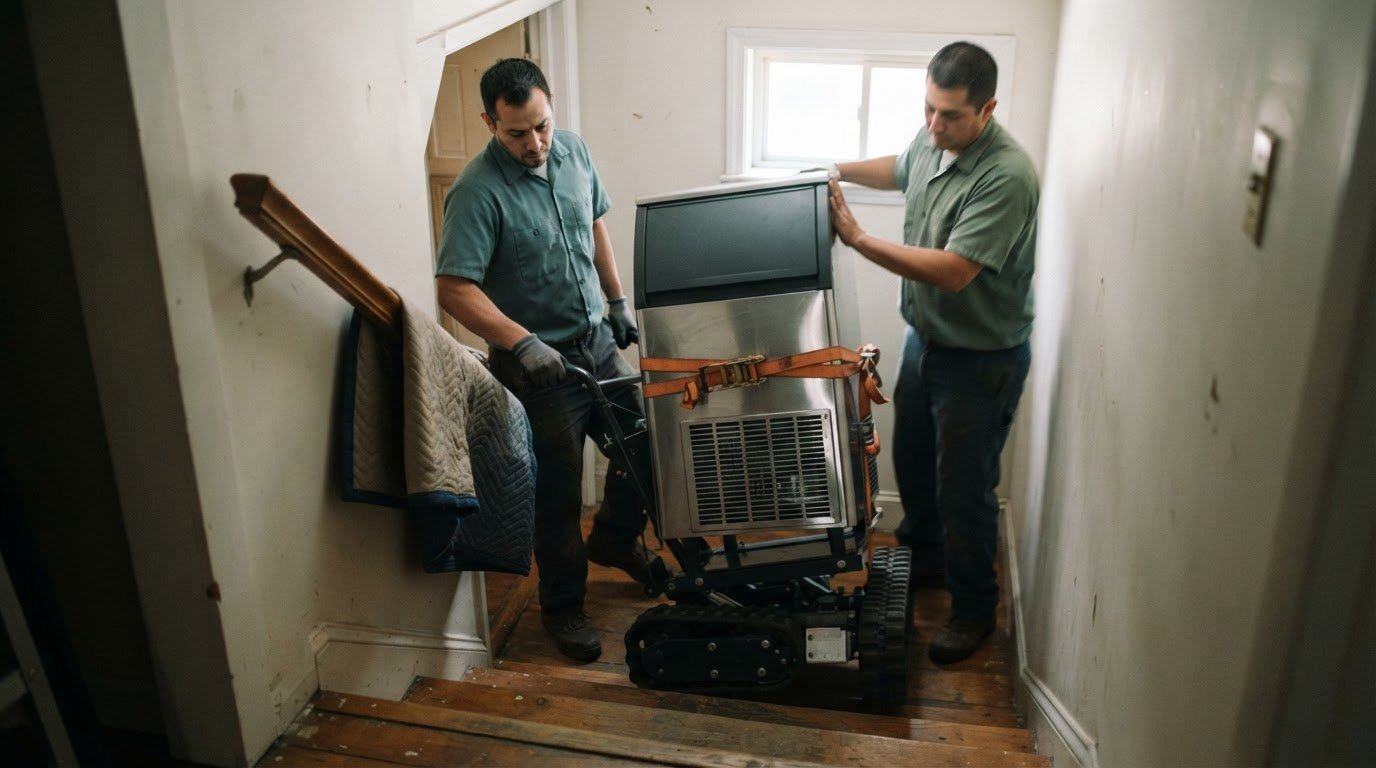
The hourly labor total for moving a heavy commercial ice maker into a residential basement in Woodbridge depends on the time and handling the job requires. The price is given after a quote request, with factors like the machine’s size and weight, staircase access, tight turns, and the distance it must be carried shaping the work.
A bulky appliance can be difficult to maneuver even when the route looks straightforward. Basement stairs, narrow landings, and limited doorway clearance all affect the plan. Sharing these details before the move helps set expectations and prepare for the work.
This guide explains how moving labor is priced and what can affect the time needed for a difficult basement move. It also covers route measurements, safe handling, and when professional help can make moving a heavy item easier.
Key Takeaways
- Hourly labor costs depend on the work involved, including the appliance’s size, handling needs, and route into the basement.
- Measure and assess doorways, stair turns, landings, and basement access to understand what could make the move more complex.
- For oversized items that cannot fit through the stairs, hoisting may be an option when the property layout allows it.
- Plan the move around the appliance and the access challenges, rather than assuming every heavy item can be handled the same way.
- Heavy Furniture Moving offers heavy-item help, exercise equipment moving, and sofa hoisting for demanding moves at home.
Moving heavy items within a home or business
A heavy ice maker needs a planned route from its current position to the basement. In Woodbridge, Virginia, review the equipment, access through the home, and utility connections before moving day.
Moving Items Between Floors
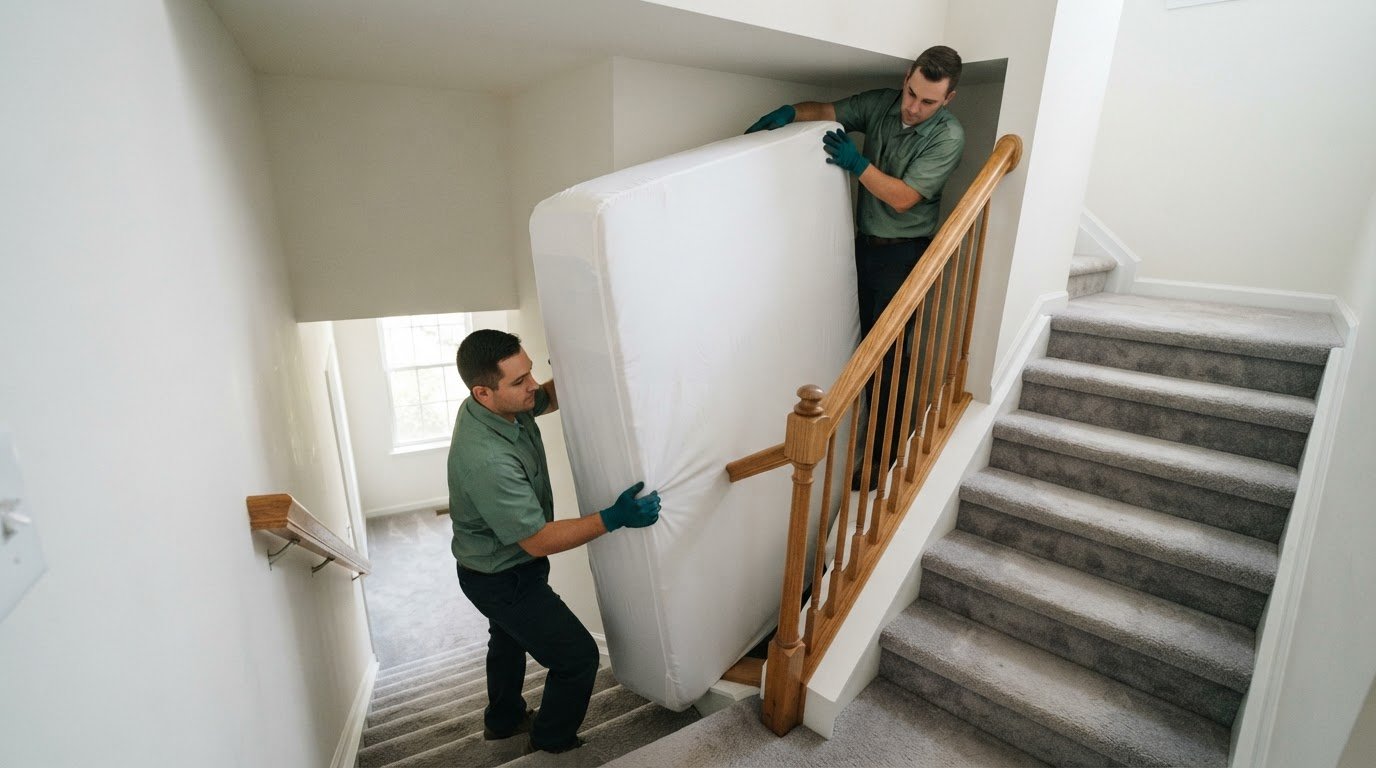
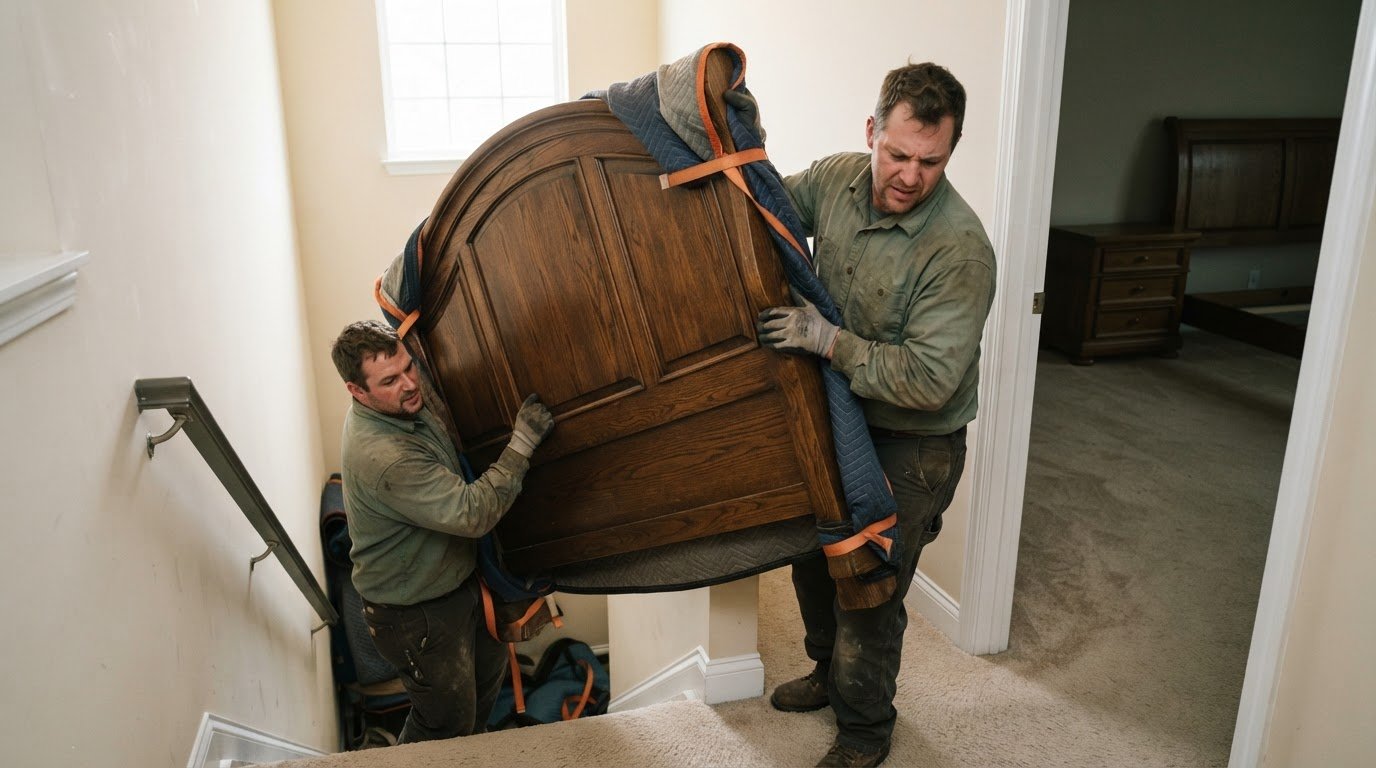
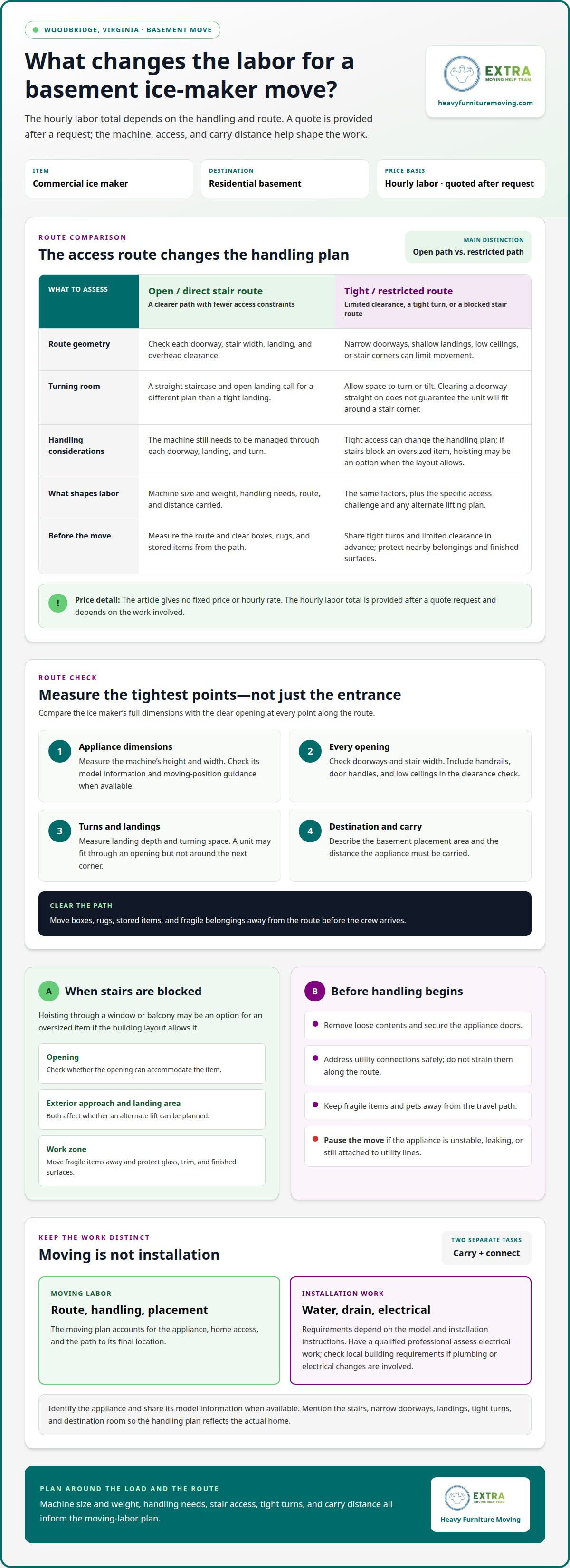
Moving an appliance up or down stairs means managing its weight through each doorway, landing, and turn. Measure the machine’s height and width, then compare them with the clear opening at every point. Include handrails, door handles, and low ceilings in the route check. Before the crew arrives, clear boxes, rugs, and stored items from the path. A straight staircase and a tight landing call for different handling plans.
Electrical, water, and drain requirements depend on the ice maker’s model and installation instructions. Have a qualified professional assess electrical work, and identify the water and drain connections before the move. The moving route should not strain those connections.
Moving equipment and installing it are separate tasks. Whether Woodbridge building codes or permits apply depends on the installation work and local requirements, especially if electrical or plumbing changes are involved. Clarify those requirements with the local building authority before work begins.
If stairs block an oversized item, hoisting it through a window or balcony may be an option when the building layout allows. The opening, exterior approach, and landing area all affect the plan. Move nearby fragile items out of the work zone and protect glass, trim, and finished surfaces. Sofa hoisting is another example of moving a bulky item through an alternate opening.
There is no single safety checklist for every move. An ice maker that is unstable, leaking, or still attached to utility lines creates added handling risks. Pause the move until loose contents are removed, doors are secured, and utility connections are safely addressed. Keep fragile items and pets away from the route while the crew handles the load.
Access and Structural Checks
Check the machine’s full dimensions against the narrowest doorway, stair width, landing depth, and overhead clearance. Allow room to turn or tilt it: a unit that clears a doorway straight on may not fit around a stair corner. These measurements can reveal a blocked route before the appliance is lifted.
A heavy machine can scrape stair edges, damage flooring, or concentrate pressure on a landing. The floor’s construction and the machine’s weight affect the risk, so don’t assume a basement floor or foundation can support any load. Protect vulnerable surfaces, and address structural concerns before moving the appliance downstairs.
For crews driving in, commutes from Woodbridge, Virginia, to the Pentagon or downtown Washington, DC, are estimated at about 30-40 minutes via I-95 or Route 1.
Virginia DMV requires vehicle registration updates within 30 days.
Appliances the company says it can move
A commercial ice maker differs from a household refrigerator in size, shape, and handling needs. The model’s installation guide identifies its approved moving position and any parts that need securing. Use that guidance to plan the move rather than assuming every appliance travels the same way. A residential basement adds a stair route and final placement area to consider.
Planning a heavy appliance move starts with a clear description of the item and its route. Specify whether it is a commercial ice maker, safe, piano, or exercise machine. Each has a different shape and balance. Movers need to know what must pass through the home, including tight turns and narrow doorways, before selecting a handling plan.
For an ice maker, separate the physical move from installation work. Water, drain, and electrical connections affect placement, but moving labor does not replace qualified installation. Clear loose objects and fragile belongings from the route. If the appliance has removable parts, follow its instructions to secure or remove them before transport.
Homes in Woodbridge and Prince William County have varied layouts, so the item alone does not determine the workload. A direct, open stair route presents a different job from one with a tight landing or limited turning space. When arranging moving help, describe the stairs, doors, and final room accurately. Specific details help match the plan to the home.
- Identify the item: Name the appliance and share its model information when available.
- Describe the route: Include stairs, narrow doorways, landings, and the destination room.
- Separate installation: Identify utility work as distinct from carrying and placement.
- Protect nearby belongings: Move fragile objects away from the travel path.
Is a machinery mover, appliance mover, or rigging company cheaper or safer? The label alone does not determine cost or safety. The key factors are the item’s handling needs, the access route, and whether specialized lifting equipment is required. A straightforward carry and a difficult hoist call for different plans, so the approach should match the load and home.
Share the appliance type, stairs, and destination when arranging help. That gives the moving plan concrete details instead of guesswork. For a heavy-item move, plan the basement move around the equipment and route.
Some Woodbridge routes may call for a different approach when oversized furniture cannot make a staircase turn. The moving company identifies staircase turns that block oversized furniture as a situation that may require hoisting in Woodbridge. Window or balcony lifting is another option the moving company identifies when a Woodbridge move requires it. Share these access details when arranging help so the moving plan can account for the item and the route. A difficult turn may change how the item needs to be moved, so describe the stairs and any window or balcony access clearly.
Timing can also matter when arranging a Woodbridge move. The moving company advises booking a Woodbridge move 4-6 weeks ahead, especially for summer moves. Sharing the item details and access needs while booking gives the company information about the move in advance. Include whether oversized furniture faces a blocked staircase turn and whether window or balcony lifting may be needed.
Heavy-item and tight-space moves
A commercial ice maker combines awkward dimensions with a concentrated load. A careful plan accounts for the machine, its route, and the final destination.
Equipment Size and Basement Entry Fit
Commercial ice makers vary by model, so there is no single dimension or weight that applies to every unit. Find the specific measurements on the manufacturer’s nameplate or in the manual, then compare them with the basement entrance and route.
Measure the narrowest doorway, stair opening, and landing, including room to turn the machine. A unit may fit through an entrance but still fail at a basement corner. Include packaging or protective materials in the clearance plan.
Compare the appliance’s actual measurements with every tight point, not just the front door. For example, a deep machine may clear a doorway straight on but fail to rotate through a narrow hall. Share the route and model details before loading begins.
Specialists in Heavy Commercial Equipment
In Woodbridge, look for moving help suited to heavy-item lifting and planning around equipment size, weight, and access. The right approach depends on the task: a direct carry differs from a move that requires hoisting or another opening.
Ask for a plan based on the actual route, including stairs, turns, and the destination. A moving crew should explain how it will control the load and protect nearby furniture. Those details matter more than a broad label such as “machinery mover.”
For a difficult route, Heavy Furniture Moving can assess whether the appliance can pass through the basement entrance or needs another approach. Hoisting through a window or balcony may be an option when the building layout allows. The opening, exterior access, and landing space all shape the plan.
Good loading practice starts before the appliance leaves its current position. The crew can clear the path, secure loose doors or components, and keep smaller items out of the carry zone. At the destination, prepare a placement area that does not block stairs or access to other rooms.
- Identify the model: Use its nameplate or manual for dimensions and weight.
- Map the route: Include the entrance, turns, stairs, and final placement.
- Match the moving method: Consider a carry or hoist based on access.
- Protect the path: Move furniture and loose items before loading.
These steps help distinguish a manageable basement delivery from one that needs specialized lifting. Clear model and access details give the moving plan a practical starting point.
Hourly labor pricing
Hourly labor pricing ties the total to the time spent on the move. In Woodbridge, the price depends on the case and is given after a quote request. For a commercial ice maker, the estimate can reflect the work involved, the access route, and the handling plan. No single hourly total fits every basement move.
A Woodbridge moving labor booking includes two local labor professionals. The time needed depends on how the unit travels from pickup to destination. A clear route can take less labor than stairs with a tight turn, a narrow landing, or an alternate opening. Share those details when requesting an estimate so the planned work matches the home.
Separate labor from transport. Labor-only help covers the physical work; truck and transportation arrangements are separate. If you have arranged a truck or another transport method, clarify where the crew will meet it and how the ice maker will move between the vehicle and basement. Carrying it a short distance from pickup differs from taking it down stairs.
Several details can shape the time estimate:
- Item handling: The appliance’s dimensions, weight, and balance affect how it can be carried.
- Home access: Doorways, stair turns, landings, and basement clearance affect the route.
- Preparation: A cleared path and secured loose parts help avoid pauses during loading.
- Placement: The final position and room to maneuver influence the last stage.
Preparation helps keep hourly work efficient, but rushing is not the way to shorten a move. Removing boxes from a stair landing before the crew arrives can prevent an avoidable obstacle. Prepare the destination area, too. A clear placement space lets the crew finish without shifting other items mid-carry.
An exceptional access challenge may call for another handling plan, such as hoisting through a suitable window or balcony. That involves different work from carrying the appliance downstairs. Describe the opening and exterior access when requesting a quote, and clarify whether you need transport or installation work in addition to labor.
For a useful quote, provide the appliance details, pickup location, basement route, and intended destination. Point out stairs, tight turns, and obstacles. These specifics help the labor plan reflect the actual handling and transport instead of treating the job as a generic appliance move.
In-home appliance moving and rearranging
Moving an ice maker inside a Woodbridge home involves two distinct tasks: preparing it for transport and setting it up again. Keep the appliance manual handy for both.
Disconnecting and Preparing the Ice Maker
Before transport, follow the manufacturer’s instructions to shut off power and water, disconnect the lines, and drain the unit. The manual explains how to prepare that model; have a qualified professional handle utility connections when needed.
After disconnection, secure doors and removable parts as the manufacturer directs. Clear belongings from the route and protect nearby furniture from contact. Keep disconnected hoses and small parts together so they are easy to identify at the destination.
Don’t guess about draining. Water left in the machine or lines may spill during a move, while forcing a connection can damage it. Follow the manual’s draining procedure, and keep the appliance upright or position it only as the manufacturer permits. If the guide calls for service work, arrange it before moving day.
A moving crew handles the physical carry, not automatically the plumbing or electrical work. Make the responsibilities clear: who disconnects and prepares the ice maker, and who reconnects it. Separating these tasks helps prevent a last-minute utility problem.
Releveling and Testing After the Move
At the basement destination, place the ice maker according to its installation instructions. Follow the manufacturer’s leveling method, then have qualified professionals reconnect water, drainage, and power as required. Use the model’s start-up and testing directions before relying on the machine.
Check the area around the unit during setup. It should sit in its intended position, with connections routed without pulling or pinching. After reconnection, follow the manual’s test procedure and watch for leaks or unusual operation. Address any problem before regular use.
In-home rearranging also means planning around the room’s purpose. For example, placing an ice maker beside stored belongings may block access or leave little room for servicing. Decide where the unit belongs before the crew arrives, and keep the area clear. This makes final positioning more direct.
Use this sequence to coordinate the move:
- Prepare: Follow the manual for shutdown, disconnection, and draining.
- Move: Keep loose parts secured and protect the route and nearby furniture.
- Set up: Place and level the unit as directed, then arrange qualified reconnection.
- Test: Follow the model’s instructions before putting the ice maker back into use.
For help with the physical move and basement placement, arrange heavy-item moving help.
Heavy Furniture Moving
Heavy Furniture Moving helps plan physical moves when a bulky appliance must pass through a Woodbridge home and reach a basement. Share the ice maker’s dimensions, route, and tight turns so the plan reflects the actual access conditions.
Turn to Heavy Furniture Moving when an appliance is too heavy to handle safely without help, or when stairs and narrow spaces complicate the carry. The service covers lifting and placement, not electrical or plumbing installation. Keep those tasks separate and follow the manufacturer’s instructions for preparation and setup.
For help moving a heavy item, contact Heavy Furniture Moving to discuss the appliance and its route.
Set Up the Move With a Clear Plan
Moving a heavy commercial ice maker into a residential basement in Woodbridge starts with one practical decision: who will handle the physical move, and who will manage installation? Keep those responsibilities clear. Share the appliance details and access plan when arranging help, and schedule utility disconnection and reconnection separately with qualified professionals.
Heavy Furniture Moving helps with demanding household moves, including heavy-item moving, exercise equipment moving, and sofa hoisting. These services involve bulky items and difficult access. The right moving plan depends on the appliance and the home’s layout.
Prepare the next step by gathering the model information, noting the route, and identifying the intended placement area. Then Contact Heavy Furniture Moving to discuss the move and the support you need.
A clear plan makes a challenging basement move more manageable. Take it one step at a time.
Frequently Asked Questions
How much does moving labor cost in Woodbridge, VA?
Hourly labor has a two-hour minimum, and the total depends on the work involved. Heavy Furniture Moving offers hourly labor and flat-rate pricing for most single heavy items. The quote reflects the job details, including whether you need labor only or transport as well. Share the appliance and access information to get pricing tailored to the move.
How soon can labor help arrive?
Same-day and next-day heavy-item appointments are often available. For same-afternoon service, call before 2 PM, subject to open slots. Have the item and stair photos ready, along with your preferred date and Woodbridge address. Those details help match the request to the move and clarify the pickup location before scheduling.
How much does it cost to move a heavy commercial ice maker to a residential basement in Woodbridge?
The price depends on the job, so there is no fixed total for every ice maker. Hourly labor has a two-hour minimum; flat-rate pricing applies to most single heavy items. The appliance’s handling needs, stairs, and landings affect the quote. Send a photo of the machine and stairs to get a job-specific estimate.
What equipment and crew are needed to move a commercial ice maker down basement stairs?
The crew and handling setup should match the appliance’s measured size, weight, and stair route. Don’t assume another item’s crew size applies to an ice maker. Wrap, moving blankets, and ratchet straps are included on every job, along with floor and corner protection. The plan accounts for stair access and the appliance’s shape before lifting begins.
Frequently Asked Questions
Hourly labor has a two-hour minimum, and the total depends on the work involved. Heavy Furniture Moving offers hourly labor and flat-rate pricing for most single heavy items. The quote reflects the job details, including whether you need labor only or transport as well. Share the appliance and access information to get pricing tailored to the move.
Same-day and next-day heavy-item appointments are often available. For same-afternoon service, call before 2 PM, subject to open slots. Have the item and stair photos ready, along with your preferred date and Woodbridge address. Those details help match the request to the move and clarify the pickup location before scheduling.
The price depends on the job, so there is no fixed total for every ice maker. Hourly labor has a two-hour minimum; flat-rate pricing applies to most single heavy items. The appliance’s handling needs, stairs, and landings affect the quote. Send a photo of the machine and stairs to get a job-specific estimate.
The crew and handling setup should match the appliance’s measured size, weight, and stair route. Don’t assume another item’s crew size applies to an ice maker. Wrap, moving blankets, and ratchet straps are included on every job, along with floor and corner protection. The plan accounts for stair access and the appliance’s shape before lifting begins.