Moving Heavy Bunk Beds Between Rooms in Chantilly

A room-to-room bunk-bed move doesn’t need a moving truck, but a solid-wood frame still calls for a clear route and controlled lifting. Moving heavy solid wood bunk beds between rooms in Chantilly can include taking the bed apart when needed, protecting floors and walls, and carrying the pieces through the home. Labor may be booked hourly or for a half-day or full-day project.
Tight doorways, stair turns, and the risk of damaging a heavy bed or your home can make this job stressful. A careful crew plans around the frame’s dimensions and the route’s narrowest points, then uses blankets, straps, and floor protection to help protect the furniture and home.
This guide explains how to plan an in-home bunk bed move, what affects the labor estimate, and how movers handle the carry without a truck. You’ll also learn what to expect if the frame needs disassembly and reassembly.
Key Takeaways
- Learn which bed and route measurements help crews plan a smoother room-to-room move.
- See how movers protect floors, walls, and furniture along the carrying path.
- Understand what can shape labor planning, including hourly and project-based options.
- Find out how a bunk bed can be moved within the home without a truck.
- Explore how crews coordinate equipment and lifting for bulky furniture and tight turns.
Moving furniture between rooms
Start by assessing the bunk bed, its components, and the route to the destination room. Measuring first helps determine whether the frame can be carried intact or should be disassembled.
Furniture Wrapping and Handling
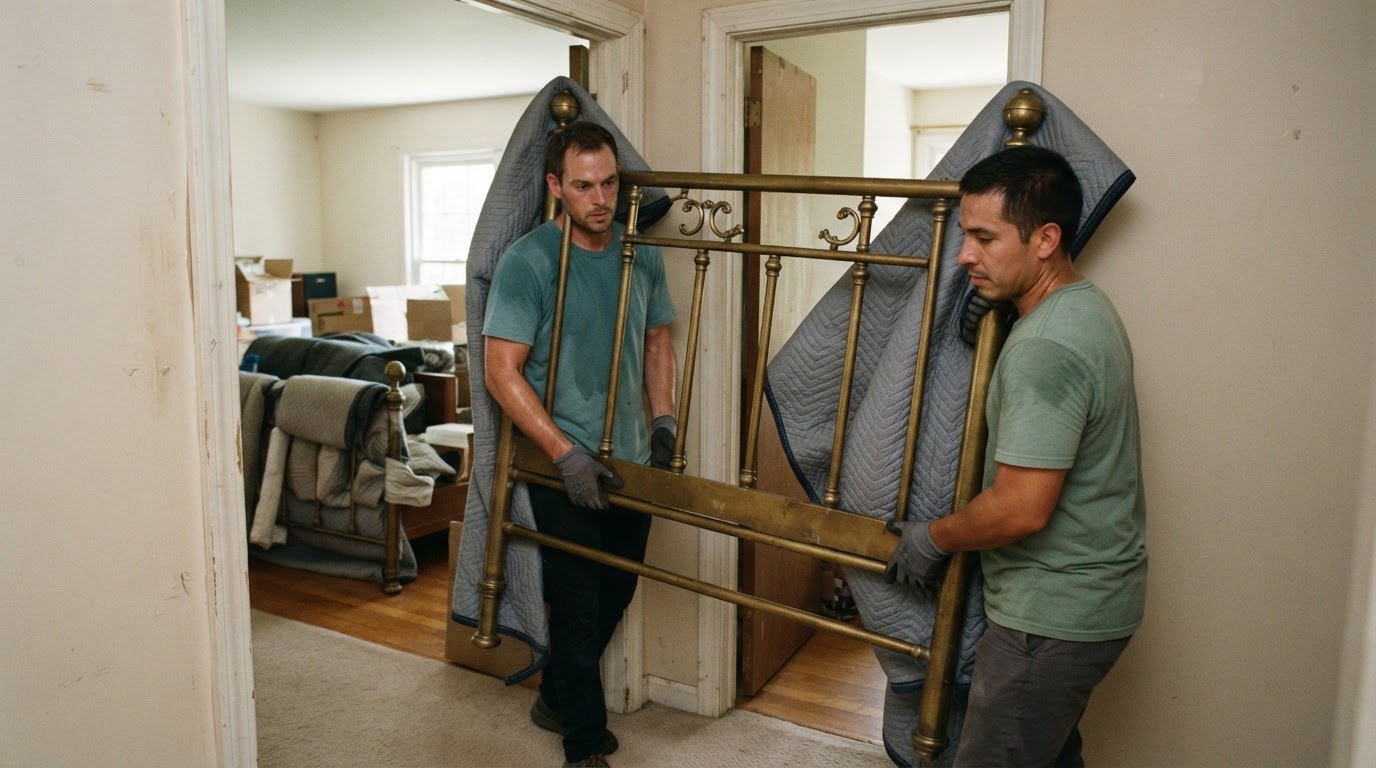
Before carrying, movers protect exposed surfaces with blankets and keep the separated bed parts and hardware together. Organizing the components in carrying order helps prevent fittings from getting mixed up or misplaced.
During an in-home move, loading means arranging wrapped parts for a controlled carry, not necessarily putting them in a truck. At the destination, movers unload each piece into the planned room, remove its wrapping, and inspect the surfaces. Look for careful handling from the first wrap through final unwrapping.
Route and Furniture Measurements
Measure the bunk bed’s height, width, and depth, then compare them with the tightest points along the route. Doorways, stairs, and landings can limit how a long rail or bulky panel can turn. Those measurements help determine whether the bed can pass intact or needs partial disassembly.
A landing needs particular attention: a component may fit through a doorway but still lack room to turn on the stairs. Movers plan where to pause and reposition instead of forcing a turn. This route assessment helps make moving heavy solid wood bunk beds between rooms in Chantilly safer and more controlled.
Stair and Floor Carrying
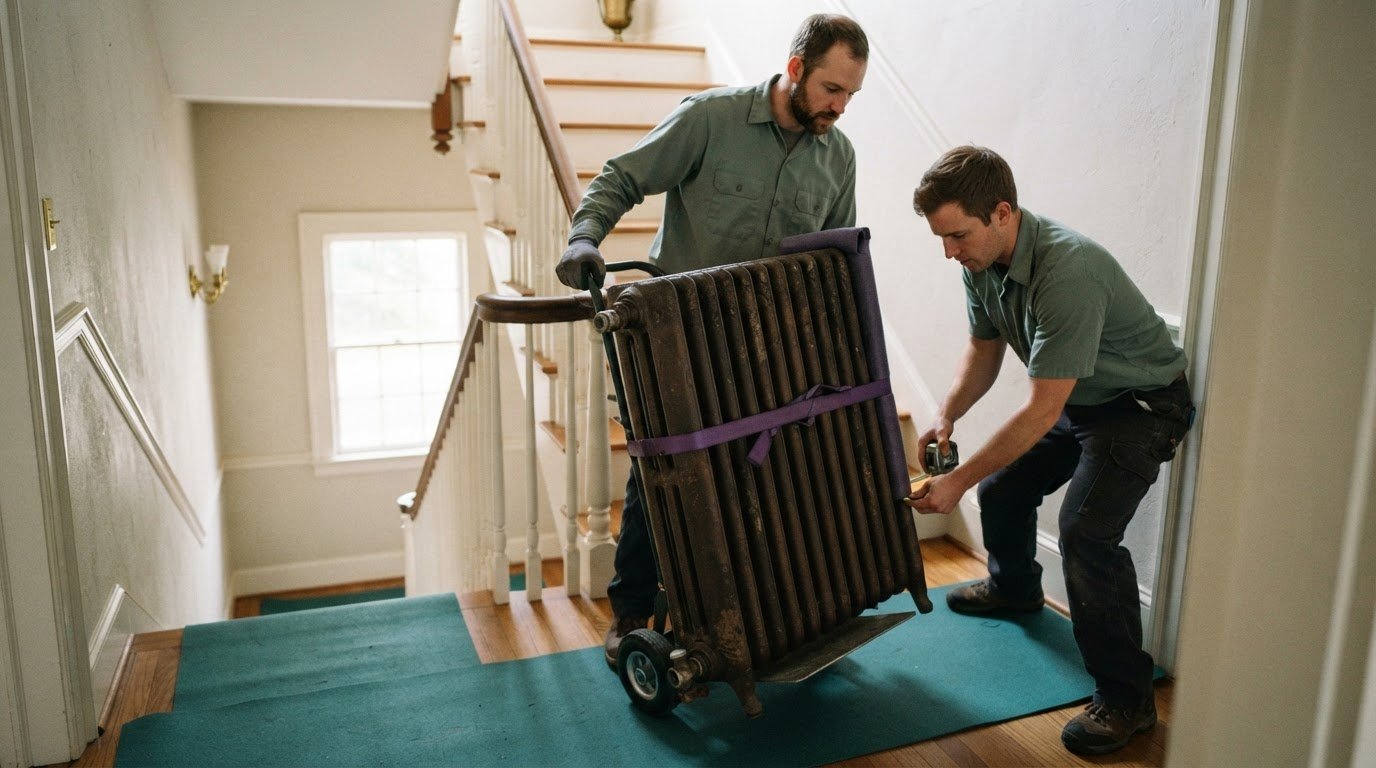
When carrying a large piece upstairs, the person above typically carries the higher end while the person below supports the lower end. The movers coordinate their pace and keep the furniture aligned with the stair path. At a landing, they stop and reposition before turning.
A third person can help guide a large or awkward component around a landing. That additional support can help with communication and positioning during the turn. For moves between floors, the crew also plans where each piece can pause, keeping the carry controlled from room to room.
Bunk Bed Disassembly and Hardware
If the frame won’t clear the route intact, movers can disassemble it into manageable pieces. They keep hardware organized with the relevant connections, such as rails, guardrails, and ladder fittings, so the parts can be matched during reassembly. Keeping fasteners with their components makes setup easier at the destination.
After moving, should bunk beds be anchored to the wall? Follow the manufacturer’s instructions for the specific bed and its anchoring guidance. Movers can reassemble the frame with its hardware, following those instructions before the bed is used.
Clearing and protecting the moving route
A clear route lets movers carry each component without weaving around household items. Plan the path from the current room to the destination, including doorways, hallways, stairs, and landings. A bedside table, loose rug, or open closet door can narrow a passage, so clear the entire route, not just the rooms.
Clear the Full Carrying Path
Remove trip hazards and movable obstacles before carrying begins. Shift a hallway bench, pick up toys, and move a floor lamp away from the doorway. Open doors fully and keep them clear so long rails don’t catch on handles or doors swinging back into the crew.
Plan the destination as carefully as the starting point. A clear staging area gives movers space to set down a wrapped component without blocking the next piece’s path. For example, bed rails can be placed along a wall while larger frame sections are carried in. This keeps the route open and reduces repeated handling.
Protect Floors, Walls, and Doorways
Blankets and pads help protect the bunk bed during handling, while floor protection helps guard against scratches and scuffs along the route. Cover the areas where components will be carried, set down, or turned, such as a hardwood hallway, stair landing, or bedroom threshold.
At tight doorways, movers control each component’s angle and pace instead of dragging it across the frame. Long rails can catch on wall corners or door trim, so the crew guides their ends deliberately. If a piece needs a pause, set it down in a clear, protected spot, not against a wall or across a walking path.
Keep the Route Usable During the Move
A room-to-room move works best when the crew separates the carrying route from the staging area. Wrapped parts can be brought through and placed in the destination room while the hall stays open for the next piece. This order prevents rails from blocking a staircase or doorway needed for reassembly.
Movers adjust the route as the work progresses. A door that was clear can become blocked by staged furniture, so they maintain a usable passage between trips. For coordinated in-home furniture moving help, the crew can manage the heavy pieces and protect the carrying path from room to room.
Hourly or project-based labor
Room-to-room bunk bed work can be arranged around the task, not a truck journey. On-site moving labor may be booked hourly or for a half-day or full-day project. The right format depends on what the crew needs to do, from preparing the frame to placing it in another room. No transport between addresses is involved.
Hourly labor suits a focused move with a clear route and limited preparation. When the work has several stages, such as disassembly, carrying components through hallways, and reassembly, describe each task when requesting a quote. The estimate should reflect the actual home and job rather than assume every bunk bed move is the same.
The estimate depends on the work requested and conditions inside the home. Relevant factors include the bed’s size and construction, whether it needs disassembly, the distance between rooms, stairs, tight doorways, and the protection needed. A stair turn or narrow hall can affect the handling plan, even when the rooms are close together.
- Preparation: Whether movers need to separate bed sections and organize hardware.
- Route: Whether the move crosses a hallway, stairs, landings, or tight doorways.
- Placement: Whether the bed only needs carrying or also requires reassembly in the new room.
These details help distinguish a short, contained task from a more involved project. Moving an already separated frame across one level differs from disassembling a bunk bed, carrying its parts upstairs, and reassembling it. Each stage adds handling and coordination to the work.
The quote is based on the job details, including disassembly, route access, carrying distance, protection, and reassembly. This gives the labor plan a practical basis in the actual rooms and tasks, rather than an assumed standard job. Before work begins, the quote should make clear which requested stages are included.
Labor-only movers are a practical choice when furniture needs to move within the home rather than to another address. The crew focuses on the agreed indoor work, which can include carrying the bed between rooms and handling its planned disassembly or reassembly. You provide the vehicle for any move that requires transportation.
For a smoother booking, describe the bed, its current and destination rooms, and any stairs or narrow hallways. Say whether the frame is assembled and whether you need reassembly. These details help shape the labor plan around the actual job.

In-home moves without a truck
A room-to-room move happens inside the home, so no truck is needed for transportation. Movers carry the bunk bed from its current location to the chosen room and place each component where it belongs. The work centers on handling the furniture and navigating the indoor route, not transporting belongings elsewhere.
This service can suit a room rearrangement, a bedroom change, or a renovation. Movers can shift a bunk bed out of a room before work begins, then return it once the room is ready. The move may be to the next bedroom or between floors.
The crew plans the sequence around the rooms and furniture. They identify where each component will go and keep the path clear as pieces move through the home. If the bunk bed is disassembled, carrying the sections in a planned order helps prevent the destination room from filling up before there’s space to arrange them.
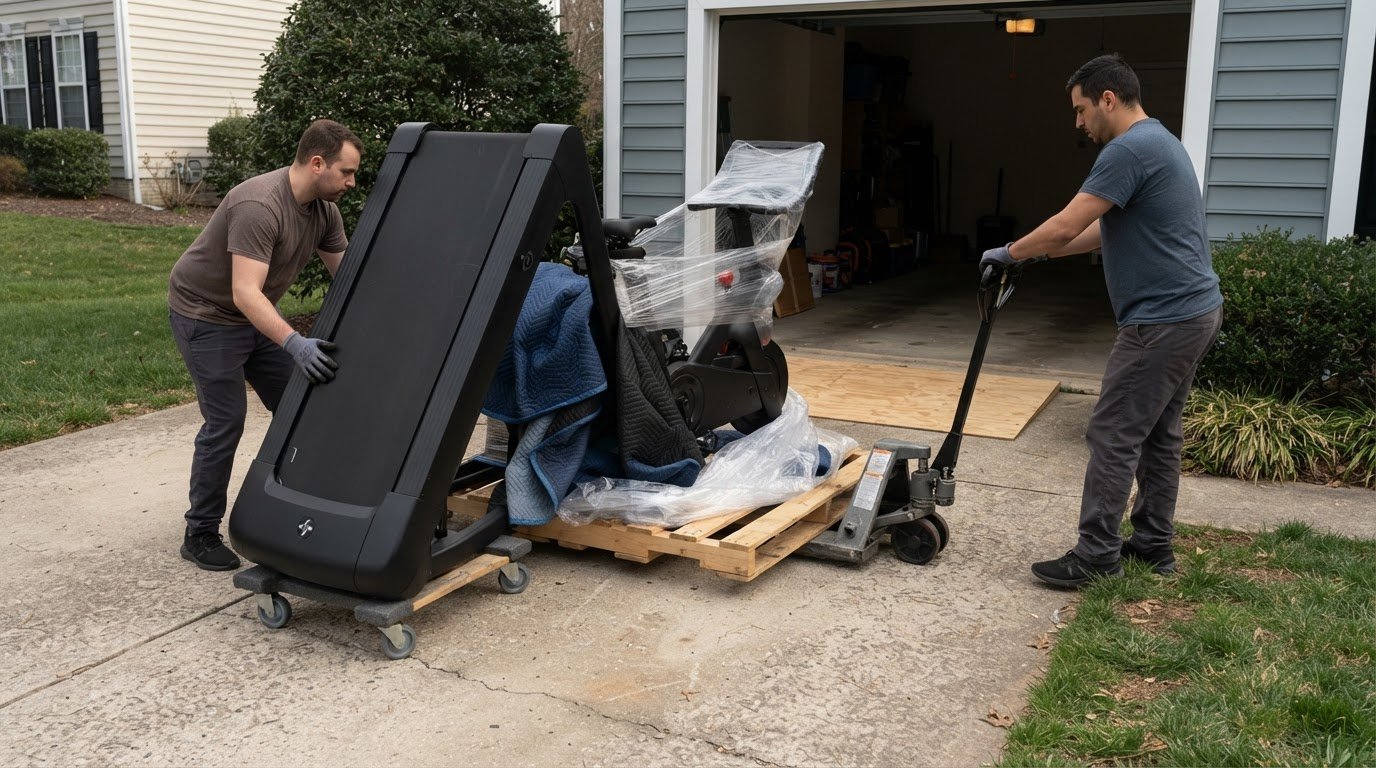
Heavy Furniture Moving also handles in-home moves of pianos, sofas, and exercise equipment. The crew carries the item to its new position without a truck journey. A sofa may move to another wall, or exercise equipment may be carried to a different room.
For a bunk bed move, the destination matters as much as the starting point. Movers need a clear place to set down components and enough access to position the frame where it belongs. A new layout may call for placing the bed along another wall while keeping a closet accessible. Share the intended placement so the crew can plan the carry around it.
Moving furniture for a renovation means planning a return move as well. The crew can clear the work area, then bring the items back after the project is complete. Plan both the temporary location and the final placement. For example, a bed moved out before flooring work can return once the room is ready.
A truck-based move is relevant when furniture has to travel to another address. For an indoor move, share the item, its current and destination rooms, any stairs, and whether it needs disassembly. Those details help shape the plan, whether you’re moving one bunk bed or rearranging several pieces.
Moving equipment and safe lifting practices
Safe handling starts with planning for the bed’s separate pieces, not rushing the lift. Movers use blankets to protect wood surfaces and floor protection along the carrying route. They plan how each section will be picked up, carried, set down, and repositioned. Long rails and bulky end panels need particular care when moving a solid-wood bunk bed.
When carrying a large piece upstairs, the person above carries the higher end while the person below supports the lower end. Movers coordinate and communicate before changing direction. At a landing, they stop and reposition the furniture before turning, rather than pivoting while walking. This helps keep the piece controlled through the tightest part of the stairs.
A landing may call for another set of hands. A third person can guide a large or awkward component around the turn while the carriers maintain their positions. The crew plans how that person can help without crowding the stairs or blocking the route. Clear communication tells everyone when to lift, pause, or set a piece down.
Protection needs to stay in place as the furniture moves between rooms. Movers pad exposed surfaces, protect floors where components may be set down, and prevent pieces from scraping walls. They can stage each section in a clear spot before carrying the next one. Keep temporary staging areas from blocking the stairs or route to the destination.
- Before lifting: Movers position pads and floor protection along the planned route.
- During carrying: The crew coordinates each lift and pauses before a landing turn.
- At the destination: Movers set pieces down in the planned area, ready for placement or reassembly.
The goal is controlled movement, not speed. Padding protects surfaces, planned hand positions support the carry, and a deliberate pause helps manage a landing turn. These practices matter especially when a bed section is long, the stairway is narrow, or the route has a sharp turn.
For a heavy bunk bed that needs careful in-home handling, arrange professional heavy lifting help for the move.
Heavy Furniture Moving
Heavy Furniture Moving handles in-home furniture moves when a solid-wood bunk bed is too bulky or awkward to shift alone. The crew plans the carry, protects the route, and moves the bed’s components between rooms, including through stairs and tight turns.
Choose professional help when the frame needs careful handling, the route is narrow, or the job includes disassembly and reassembly. Share the bed’s current and destination rooms, stair access, and the work you need done. These details help shape the move around your home and furniture.
Contact Heavy Furniture Moving to discuss moving your bunk bed between rooms.
Plan the Bunk Bed’s Next Room
A room change is a good opportunity to place the bed where it suits the space and your household’s routine. Decide where the frame should go and what access needs to remain clear. Share your intended placement when planning moving heavy solid wood bunk beds between rooms in Chantilly, so the crew can organize the work around the destination as well as the route.
If the move is part of a larger heavy-item task, Heavy Furniture Moving also offers Movers Near Me, Exercise Equipment Moving, and Sofa Hoisting. These services address other furniture and equipment needs, while the right plan for your bunk bed depends on its route and handling requirements.
Ready to put the room change in motion? Contact Heavy Furniture Moving to discuss your in-home move and the work you need done. A clear plan can make the next step feel manageable, and your bunk bed can be placed where it serves the room best.
Frequently Asked Questions
How much does it cost to move heavy solid wood bunk beds between rooms in Chantilly, VA?
The quote is based on the job details and provided upfront before work begins. Key factors include the bed’s size, whether it needs disassembly, the route between rooms, stair access, and whether reassembly is requested. Labor is billed hourly with a two-hour minimum; most single heavy items are priced at a flat rate. Share the move details to request a quote.
What local movers in Chantilly, VA move heavy furniture within a home?
Heavy Furniture Moving provides residential furniture moving in Chantilly, including moves within a home. Its in-home moving service can help carry a bunk bed to another bedroom or floor without transporting it to a new address. Describe the bed, its current and destination rooms, and any stairs when requesting service.
How do professional movers safely disassemble and reassemble a solid wood bunk bed for moving between rooms?
Movers can disassemble and reassemble bed frames as part of the work. They separate the frame into components, keep fittings organized with the relevant pieces, and rebuild the bed in the destination room. When moving a heavy solid-wood bunk bed between rooms in Chantilly, provide the manufacturer’s assembly instructions if you have them. These help guide reassembly for the specific model.
Can professional movers move a heavy bunk bed without disassembly, and what equipment do they use?
Movers may carry a bunk bed intact if its size and route allow; otherwise, they can disassemble the frame. The decision depends on doorway clearance, turns, stair access, and the bed’s shape. Blankets, shrink film, straps, floor protection, and door-jamb covers help protect the furniture and home during handling. The crew chooses an approach suited to the route.
How many people are needed to move a solid wood bunk bed safely?
Crew size depends on the bed, how it is being moved, and the route. Most jobs are covered by two movers; larger items may require three or four movers as specified. Long rails and stair turns can affect coordination, so the crew size should reflect the actual handling plan. There isn’t one fixed crew size for every bed or home.
What are the risks of moving a heavy bunk bed upstairs or through narrow hallways?
A tight stair turn leaves little room to change the bed’s angle, while a narrow hallway can bring rails close to walls and door trim. An uncontrolled shift may damage the bed or home, and awkward handling can strain the people carrying it. Movers reduce these risks by planning where to pause, coordinating each lift, and avoiding rushed turns or blocked paths.
How do professional movers measure doorways, stairs, and hallways before moving a bunk bed?
Movers compare the bed’s height, width, and depth with the route’s tightest openings. They assess doorway clearance, stair width, landing space, and turns, including whether a long rail can rotate without catching. A frame may fit through a bedroom doorway yet need disassembly to navigate a stair landing. These measurements help determine the carrying approach before the move.
Are there furniture moving or handyman services serving Chantilly and Fairfax County?
Heavy Furniture Moving serves Chantilly and Fairfax County with residential and in-home furniture moving. For a bunk bed relocation, the crew can carry the bed between rooms rather than handle general handyman tasks. The company also offers Exercise Equipment Moving and Sofa Hoisting for separate heavy-item needs. Share the item and move location to request service.
Frequently Asked Questions
The quote is based on the job details and provided upfront before work begins. Key factors include the bed’s size, whether it needs disassembly, the route between rooms, stair access, and whether reassembly is requested. Labor is billed hourly with a two-hour minimum; most single heavy items are priced at a flat rate. Share the move details to request a quote.
Heavy Furniture Moving provides residential furniture moving in Chantilly, including moves within a home. Its in-home moving service can help carry a bunk bed to another bedroom or floor without transporting it to a new address. Describe the bed, its current and destination rooms, and any stairs when requesting service.
Movers can disassemble and reassemble bed frames as part of the work. They separate the frame into components, keep fittings organized with the relevant pieces, and rebuild the bed in the destination room. When moving a heavy solid-wood bunk bed between rooms in Chantilly, provide the manufacturer’s assembly instructions if you have them. These help guide reassembly for the specific model.
Movers may carry a bunk bed intact if its size and route allow; otherwise, they can disassemble the frame. The decision depends on doorway clearance, turns, stair access, and the bed’s shape. Blankets, shrink film, straps, floor protection, and door-jamb covers help protect the furniture and home during handling. The crew chooses an approach suited to the route.
Crew size depends on the bed, how it is being moved, and the route. Most jobs are covered by two movers; larger items may require three or four movers as specified. Long rails and stair turns can affect coordination, so the crew size should reflect the actual handling plan. There isn’t one fixed crew size for every bed or home.
A tight stair turn leaves little room to change the bed’s angle, while a narrow hallway can bring rails close to walls and door trim. An uncontrolled shift may damage the bed or home, and awkward handling can strain the people carrying it. Movers reduce these risks by planning where to pause, coordinating each lift, and avoiding rushed turns or blocked paths.
Movers compare the bed’s height, width, and depth with the route’s tightest openings. They assess doorway clearance, stair width, landing space, and turns, including whether a long rail can rotate without catching. A frame may fit through a bedroom doorway yet need disassembly to navigate a stair landing. These measurements help determine the carrying approach before the move.
Heavy Furniture Moving serves Chantilly and Fairfax County with residential and in-home furniture moving. For a bunk bed relocation, the crew can carry the bed between rooms rather than handle general handyman tasks. The company also offers Exercise Equipment Moving and Sofa Hoisting for separate heavy-item needs. Share the item and move location to request service.