Moving After a Divorce in Fairfax Station: Support and a Practical Checklist

What if your next move didn’t have to be another problem to solve alone? After a divorce, deciding what to keep, lifting heavy belongings, and coordinating shared responsibilities can feel like too much. Finding moving after a divorce support Fairfax Station residents can turn to starts with breaking the work into manageable steps.
It makes sense if you’re unsure what to tackle first. Begin by clarifying household decisions and shared responsibilities, then set a realistic moving timeline. If you’re moving out of a marital home, consider speaking with a Virginia family law attorney before you go. For the physical work, trusted friends, family, or professional movers may help with tasks such as heavy lifting, packing, and clearing unwanted items.
This guide offers a practical checklist to help you set priorities, organize belongings, and plan a safer transition to your new home. You’ll also find ways to think through personal, community, and professional support, so you can ask for the right help at the right time. Take it one step at a time. You don’t have to carry every part of the move by yourself.
Key Takeaways
- Build a move plan around confirmed dates, housing, and clear decisions about shared belongings.
- Keep a record of agreed arrangements, and seek qualified legal guidance when ownership or agreements are unclear.
- Explore moving after a divorce support Fairfax Station options by matching each need with personal, community, or professional help.
- Use a staged checklist to prepare for booking, packing, moving day, and settling into your new home.
- Before arranging moving help, clarify the work involved and check access, parking, stairs, elevator rules, and item requirements.
Moving After a Divorce Support Fairfax Station: Start With What You Need Most
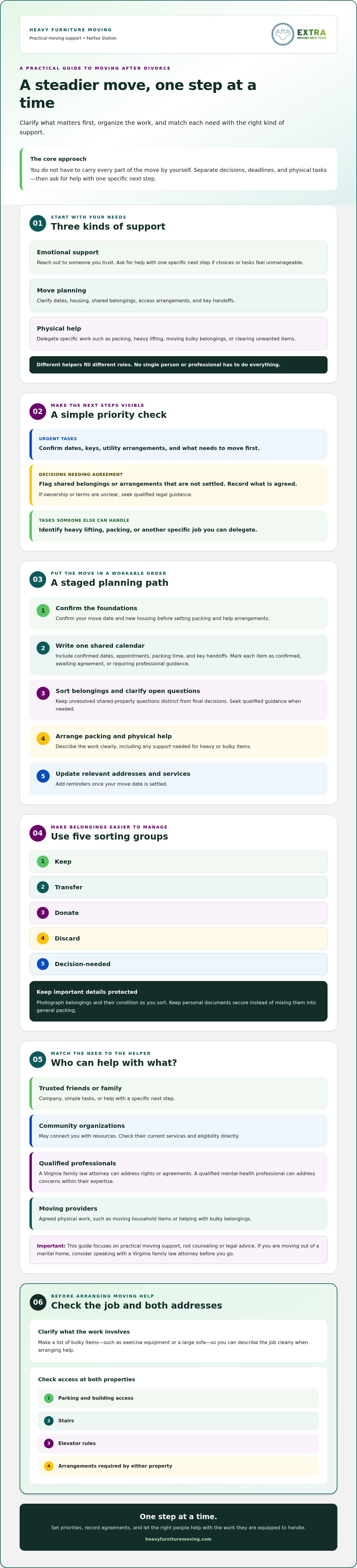
Coordinating a move while a marriage is ending can feel like several difficult jobs landing at once. You may be sorting belongings, confirming where you’ll live, and keeping everyday responsibilities on track. This guide focuses on practical moving support, not counseling or legal advice. For general background on the process of terminating a marriage, see this overview, and consult a qualified Virginia attorney about questions that affect your rights or agreements.
Start by checking three needs: emotional support, move planning, and physical help. You don’t need to solve them all today. A supported move brings together emotional, practical, and logistical help, with each person or professional taking on the work they’re equipped to handle.
Try this quick priority check. Write down:
- Urgent tasks: Confirm dates, keys, utility arrangements, and what needs to be moved first.
- Decisions needing agreement: Flag shared belongings or arrangements that aren’t settled. Record what’s agreed, and seek qualified legal guidance if ownership or terms are unclear.
- Tasks someone else can handle: Identify heavy lifting, packing, or other specific jobs you can delegate.
This simple split turns a tangled transition into a short list of next steps. You can keep the details private. The aim is to see what needs attention now and where another person’s help could make the load lighter.
Which parts of the move feel hardest right now?
Pause and name the hardest part, even if only to yourself. Is it the emotional strain, a decision about belongings, or a time-sensitive task such as arranging keys or utilities? Treat your well-being and move deadlines as separate needs. One doesn’t have to wait until the other feels resolved. If choices or tasks feel unmanageable, reach out to someone you trust and ask for help with one specific next step.
What kind of support can help?
Different helpers fill different roles. Friends or family may offer company or help with simple tasks. Community organizations may connect you with resources, but check their current services and eligibility directly. A qualified legal or mental-health professional can address concerns within their expertise. Moving providers handle agreed physical work, such as moving household items or helping with bulky belongings. No single helper has to do everything. Choose one next step, such as listing urgent tasks or asking someone to help sort what needs to move.
Finding moving after a divorce support Fairfax Station residents can use starts with matching the need to the right kind of help. Clarify what matters first, then build the plan from there.
Plan a Fairfax Station Move Around Timing, Privacy, and Shared Belongings
Once you know what needs attention first, put the move in a workable order. Confirm the move date and new housing before setting packing and help arrangements. Then sort belongings, book the support you need, and update relevant addresses and services once your date is settled. Planning ahead gives you more time to make decisions before moving day.
How can you organize move timing and essential tasks?
Use one written calendar for confirmed dates, appointments, packing time, and key handoffs. Mark each item as confirmed, awaiting agreement, or requiring professional guidance. This helps prevent an unresolved question about shared property from being mistaken for a final decision. Add reminders to update relevant addresses and services after confirming the move date.
- Confirm: Move dates, housing, access arrangements, and key handoffs.
- Clarify: Shared belongings or agreements that still need discussion or qualified guidance.
- Arrange: Packing and physical help, including support for heavy items.
Check both addresses before moving day. Note parking and building access, stairs, elevator rules, and any arrangements required by either property. Make a list of bulky items, such as exercise equipment or a large sofa, so you can describe the job clearly when arranging help.
How should you handle belongings and privacy?
Sort items into five groups: keep, transfer, donate, discard, and decision-needed. Photograph belongings and their condition as you sort, and keep personal documents secure rather than mixing them into general packing. Share your move date and address only with people who need the information to coordinate necessary tasks. If privacy or personal safety is a concern, consider what information you share and with whom.
For belongings whose ownership or handling is disputed, pause before moving or disposing of them. Keep a record of decisions that have been agreed, and seek qualified legal guidance when ownership or agreements are unclear. A written record can help keep practical plans separate from unresolved questions.
A clear scope also makes physical help easier to arrange. If bulky furniture or equipment is part of the move, you can review heavy household moving help as one practical option. For moving after a divorce support Fairfax Station residents may need, combine logistical help with the right personal or professional guidance rather than expecting one helper to cover every need.
Compare Personal, Community, and Professional Moving Support Near Fairfax Station
Moving after a divorce support Fairfax Station residents can use may come from several places, and each has a different role. A trusted friend can keep you company while packing. A community organization may point you toward current local resources. A qualified professional can advise on legal or mental-health concerns, while a moving provider can take on agreed physical work. Build a team around specific needs rather than expecting one helper to manage everything.
When is personal or community support a good fit?
Ask someone you trust for a concrete task, such as checking in, bringing a meal, keeping you company while you pack, or handling a practical errand. Community organizations may be able to share referrals or information about support groups. Contact Fairfax County or 211 Virginia to look for local options, then confirm current services, eligibility, and details directly with the organization. If you’re in immediate danger, contact emergency services or a verified specialist resource.
| Support type | Suitable need | What to ask | What it doesn’t replace |
|---|---|---|---|
| Trusted friends or family | Check-ins, meals, packing company, errands | “Could you help with this specific task?” | Legal or mental-health advice |
| Community organization | Referrals or information about local support | What services are current, and who is eligible? | Moving labor or professional advice |
| Qualified professional | Legal, counseling, or mental-health concerns | Does your expertise cover this question? | Physical moving work |
| Moving provider | Agreed lifting, transport, packing, or junk removal, depending on confirmed services | What work is included, and what access or item details do you need? | Counseling, legal advice, or divorce support |
When should you consider professional moving help?
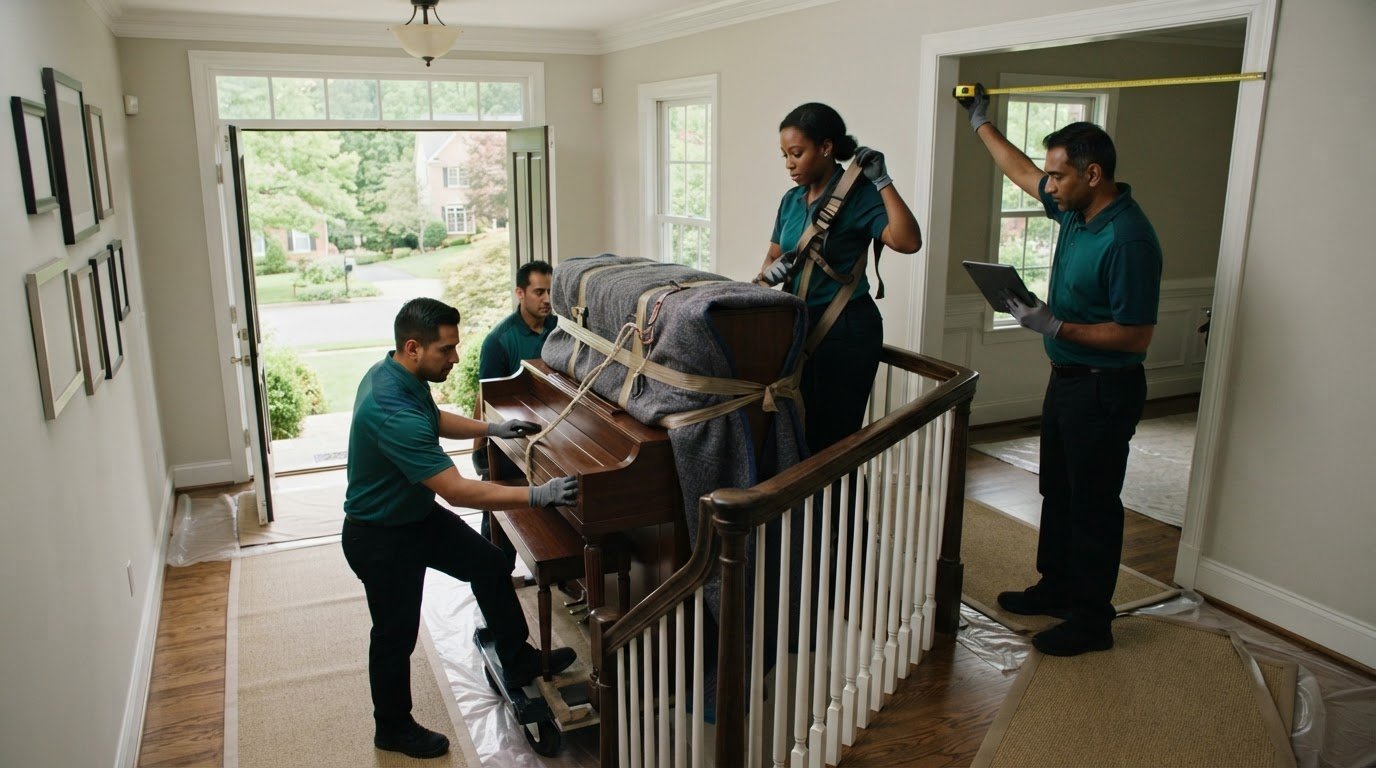
Consider a mover if the physical workload is too much to handle alone, especially with heavy or bulky belongings. Ask for a clear written scope, confirm scheduling and access needs, and describe items that may need special handling, such as exercise equipment or a piano. Check that the provider serves your location and confirm the specific work before making arrangements. For an overview of reliable movers in Fairfax and Northern Virginia, review the service details and verify what applies to your move.
Keep the plan manageable. Choose the kind of help that fits the next task, then add support as your needs become clearer.
Fairfax Station Post-Divorce Moving Checklist: Prepare One Step at a Time
A checklist can keep the move on track without asking you to plan everything at once. Use these stages as a starting point, then adjust them to fit your circumstances and any guidance from qualified professionals. Focus first on confirmed dates, clear arrangements, and tasks that will make moving day easier.
Before booking
- Confirm the move date, both addresses, and who will be present. Keep a written note of access instructions and key handoffs.
- Check parking, entrances, stairs, elevator rules, and any building arrangements at both locations. Ask about restrictions before setting the plan.
- Decide what help you need, such as moving household items, packing, or handling bulky belongings. Confirm the work scope and scheduling directly with the provider.
- Set up a private check-in plan with someone you trust, if that would be helpful. Agree on how and when you’ll check in, based on your preferences and circumstances.
Before packing
Sort items according to the decisions already made. Label boxes by destination and priority, such as “bedroom” or “open first,” without writing sensitive contents on the outside. Keep important records secure, and arrange separate help for questions or services outside a mover’s role. If an item’s ownership or handling is unresolved, pause and seek qualified guidance rather than treating the checklist as permission to move it.
Moving day
- Keep identification, medications, chargers, keys, important records, and basic supplies with you, not in the moving load.
- Use a short written task list for key handoffs, access details, and final checks. Choose one designated contact for practical questions if that makes coordination easier.
- Review access limitations and any heavy items with the moving provider in advance. Confirm how bulky belongings should be handled, and raise questions before the crew begins work.
Keep the essentials bag within reach. A change of clothes, water, and simple cleaning supplies can also help you manage the first hours without opening multiple boxes.
First days in your new home
Unpack priority items first, check that you have your keys and essential records, and update relevant addresses or services as needed. Make a short list of what still needs attention rather than trying to finish everything immediately. Your version of moving after a divorce support Fairfax Station should fit your needs, not a rigid schedule.
If heavy lifting or moving household items is part of your plan, ask about practical moving help and confirm the scope, access details, and item requirements before arranging service.
Choose Practical Moving Help in Fairfax Station and Make the Next Step Easier
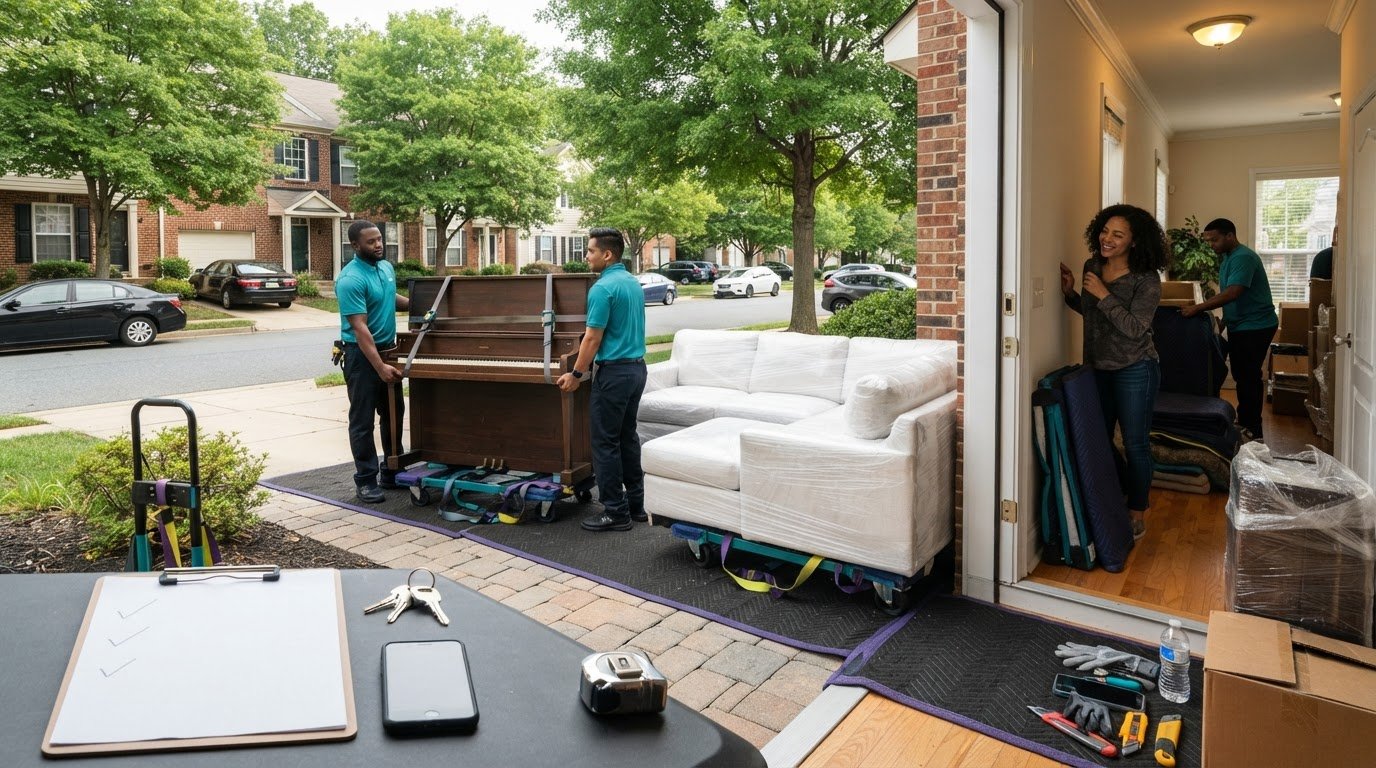
The right moving arrangement depends on what still needs doing. If you’re relocating most household belongings, compare providers who can describe the residential move they can handle. If transportation is already arranged, ask whether targeted labor fits your needs. Packing support may reduce prep work, while bulky items such as exercise equipment or a piano may call for specialized handling. Confirm that the provider offers the specific service you need; don’t assume every mover covers every task.
For moving after a divorce support Fairfax Station residents are arranging, keep the request practical and specific. List the items, addresses, access details, and tasks you want covered. Then ask for a clearly defined scope so you understand what is included before making a decision.
What should you ask a moving provider before booking?
Describe the job accurately. Mention stairs, narrow entryways, parking limits, building access rules, heavy belongings, and the timing you’re working with. Ask which tasks are included and which need separate arrangements. Confirm the written scope, schedule details, and how to raise questions or discuss changes. Also verify the provider’s service area and any item requirements that could affect the plan.
A clear conversation helps you compare options without sharing personal details that aren’t needed to plan the work. Keep the focus on the move itself: what needs to be handled, where it’s going, and what conditions the crew should know about.
How can Heavy Furniture Moving help with the logistics?
Heavy Furniture Moving provides residential moving assistance, packing and unpacking, junk removal, and specialized handling for bulky household items. Fairfax Station is listed among its service-area communities, but confirm current availability and whether your requested tasks are a fit. Ask how the work can be scoped around your belongings and access conditions.
Practical moving help can take some of the physical work off your list. It doesn’t replace support from trusted people, community resources, or qualified legal or therapeutic professionals. Each has a different role, and you can choose the combination that suits your situation.
If you’re ready to discuss the logistics, share your moving needs with Heavy Furniture Moving and ask which requested tasks may be a fit.
Take Your Next Moving Step With Confidence
A post-divorce move doesn’t need to be solved all at once. Start with the next practical decision, keep unresolved agreements separate from confirmed plans, and draw on different kinds of help for different needs. That’s the foundation of moving after a divorce support Fairfax Station residents can shape around their own circumstances.
For the physical side, Heavy Furniture Moving lists residential moving, packing and unpacking, junk removal, and specialized handling for heavy, bulky household items. Fairfax Station is included in its stated service area, but confirm current availability and whether the requested work fits your move. Practical moving help can ease the workload, while personal, community, legal, or therapeutic support can address other needs.
Keep the next step manageable: decide which tasks need help, make a list of access details and bulky items, and confirm what a provider can handle. You don’t need to share personal details that aren’t relevant to the moving work.
Frequently Asked Questions
How do I start planning a move after a divorce?
Start with your move date, confirmed housing, and the tasks that have a deadline. Write down what’s settled, what needs agreement, and what you can ask someone else to handle. Then sort belongings and decide whether you need help with packing, lifting, or transport. Keep personal documents and essentials secure, and seek qualified legal guidance if a moving decision could affect an agreement or ownership question.
Where can I find support after a divorce in Fairfax Station?
Look to trusted people, community resources, and qualified professionals for different kinds of support. Fairfax County and 211 Virginia can be starting points for finding local resources, but contact organizations directly to confirm current services and eligibility. This approach can help people seeking moving after a divorce support Fairfax Station, as well as in Fairfax, Woodbridge, Manassas, Manassas Park, Aldie, Ashburn, McLean, Vienna, Reston, Centreville, Chantilly, Clifton, Dumfries, South Riding, Fairfax Station, Haymarket, and Gainesville.
Can movers help after a divorce if I only need help with heavy furniture?
Yes, you can ask a moving provider whether it can handle a targeted heavy-item job rather than a full household move. Describe the furniture, both addresses, stairs, entrances, and any access limits so the provider can assess the request. Heavy Furniture Moving lists specialized handling for bulky items, including pianos, safes, and exercise equipment. Confirm current Fairfax Station availability and the exact scope before arranging service.
What should I do with belongings when my former spouse and I disagree?
Pause before moving, donating, or discarding an item if ownership or handling is disputed. Make a note of the unresolved decision and keep a record of any arrangements you both confirm. Don’t treat a moving plan as a decision about who owns property. If you’re unsure what you may move or how an agreement applies, ask a qualified Virginia family law attorney for guidance.
How can I make moving day less stressful after a divorce?
Prepare a short task list and keep identification, medications, keys, chargers, important records, and basic supplies with you. Confirm the move date, addresses, building access, parking, stairs, and elevator rules ahead of time. If helpful, arrange a private check-in with someone you trust and name one contact for practical questions. Keep the plan flexible, and focus on the next essential task instead of unpacking everything at once.
Should I hire movers or ask friends for help after a divorce?
Choose based on the work, the time available, and what feels manageable to delegate. Friends may be a good fit for packing company, errands, or light tasks. A moving provider may suit transport, packing, or heavy lifting, depending on its confirmed services. You can combine both: ask friends for personal support and hire help for a defined physical job. Clarify the scope and access details with any provider beforehand.
Can a moving company provide emotional or legal support during a divorce?
No. A moving company can help with agreed logistics, such as residential moving, packing, unpacking, junk removal, or handling heavy belongings when those services are confirmed. It doesn’t replace emotional support, counseling, or legal advice. Turn to trusted people or qualified professionals for those needs. Keep each helper’s role clear so you get practical moving assistance without relying on a mover to resolve personal or legal questions.
Frequently Asked Questions
Pause and name the hardest part, even if only to yourself. Is it the emotional strain, a decision about belongings, or a time-sensitive task such as arranging keys or utilities? Treat your well-being and move deadlines as separate needs. One doesn’t have to wait until the other feels resolved. If choices or tasks feel unmanageable, reach out to someone you trust and ask for help with one specific next step.
Different helpers fill different roles. Friends or family may offer company or help with simple tasks. Community organizations may connect you with resources, but check their current services and eligibility directly. A qualified legal or mental-health professional can address concerns within their expertise. Moving providers handle agreed physical work, such as moving household items or helping with bulky belongings. No single helper has to do everything. Choose one next step, such as listing urgent tasks or asking someone to help sort what needs to move. Finding moving after a divorce support Fairfax Station residents can use starts with matching the need to the right kind of help. Clarify what matters first, then build the plan from there. Once you know what needs attention first, put the move in a workable order. Confirm the move date and new housing before setting packing and help arrangements. Then sort belongings, book the support you need, and update relevant addresses and services once your date is settled. Planning ahead gives you more time to make decisions before moving day.
Use one written calendar for confirmed dates, appointments, packing time, and key handoffs. Mark each item as confirmed, awaiting agreement, or requiring professional guidance. This helps prevent an unresolved question about shared property from being mistaken for a final decision. Add reminders to update relevant addresses and services after confirming the move date. Check both addresses before moving day. Note parking and building access, stairs, elevator rules, and any arrangements required by either property. Make a list of bulky items, such as exercise equipment or a large sofa, so you can describe the job clearly when arranging help.
Sort items into five groups: keep, transfer, donate, discard, and decision-needed. Photograph belongings and their condition as you sort, and keep personal documents secure rather than mixing them into general packing. Share your move date and address only with people who need the information to coordinate necessary tasks. If privacy or personal safety is a concern, consider what information you share and with whom. For belongings whose ownership or handling is disputed, pause before moving or disposing of them. Keep a record of decisions that have been agreed, and seek qualified legal guidance when ownership or agreements are unclear. A written record can help keep practical plans separate from unresolved questions. A clear scope also makes physical help easier to arrange. If bulky furniture or equipment is part of the move, you can review heavy household moving help as one practical option. For moving after a divorce support Fairfax Station residents may need, combine logistical help with the right personal or professional guidance rather than expecting one helper to cover every need. Moving after a divorce support Fairfax Station residents can use may come from several places, and each has a different role. A trusted friend can keep you company while packing. A community organization may point you toward current local resources. A qualified professional can advise on legal or mental-health concerns, while a moving provider can take on agreed physical work. Build a team around specific needs rather than expecting one helper to manage everything.
Ask someone you trust for a concrete task, such as checking in, bringing a meal, keeping you company while you pack, or handling a practical errand. Community organizations may be able to share referrals or information about support groups. Contact Fairfax County or 211 Virginia to look for local options, then confirm current services, eligibility, and details directly with the organization. If you’re in immediate danger, contact emergency services or a verified specialist resource.
Consider a mover if the physical workload is too much to handle alone, especially with heavy or bulky belongings. Ask for a clear written scope, confirm scheduling and access needs, and describe items that may need special handling, such as exercise equipment or a piano. Check that the provider serves your location and confirm the specific work before making arrangements. For an overview of reliable movers in Fairfax and Northern Virginia, review the service details and verify what applies to your move. Keep the plan manageable. Choose the kind of help that fits the next task, then add support as your needs become clearer. A checklist can keep the move on track without asking you to plan everything at once. Use these stages as a starting point, then adjust them to fit your circumstances and any guidance from qualified professionals. Focus first on confirmed dates, clear arrangements, and tasks that will make moving day easier.
Describe the job accurately. Mention stairs, narrow entryways, parking limits, building access rules, heavy belongings, and the timing you’re working with. Ask which tasks are included and which need separate arrangements. Confirm the written scope, schedule details, and how to raise questions or discuss changes. Also verify the provider’s service area and any item requirements that could affect the plan. A clear conversation helps you compare options without sharing personal details that aren’t needed to plan the work. Keep the focus on the move itself: what needs to be handled, where it’s going, and what conditions the crew should know about.
Heavy Furniture Moving provides residential moving assistance, packing and unpacking, junk removal, and specialized handling for bulky household items. Fairfax Station is listed among its service-area communities, but confirm current availability and whether your requested tasks are a fit. Ask how the work can be scoped around your belongings and access conditions. Practical moving help can take some of the physical work off your list. It doesn’t replace support from trusted people, community resources, or qualified legal or therapeutic professionals. Each has a different role, and you can choose the combination that suits your situation. If you’re ready to discuss the logistics, share your moving needs with Heavy Furniture Moving and ask which requested tasks may be a fit. A post-divorce move doesn’t need to be solved all at once. Start with the next practical decision, keep unresolved agreements separate from confirmed plans, and draw on different kinds of help for different needs. That’s the foundation of moving after a divorce support Fairfax Station residents can shape around their own circumstances. For the physical side, Heavy Furniture Moving lists residential moving, packing and unpacking, junk removal, and specialized handling for heavy, bulky household items. Fairfax Station is included in its stated service area, but confirm current availability and whether the requested work fits your move. Practical moving help can ease the workload, while personal, community, legal, or therapeutic support can address other needs. Keep the next step manageable: decide which tasks need help, make a list of access details and bulky items, and confirm what a provider can handle. You don’t need to share personal details that aren’t relevant to the moving work.
Start with your move date, confirmed housing, and the tasks that have a deadline. Write down what’s settled, what needs agreement, and what you can ask someone else to handle. Then sort belongings and decide whether you need help with packing, lifting, or transport. Keep personal documents and essentials secure, and seek qualified legal guidance if a moving decision could affect an agreement or ownership question.
Look to trusted people, community resources, and qualified professionals for different kinds of support. Fairfax County and 211 Virginia can be starting points for finding local resources, but contact organizations directly to confirm current services and eligibility. This approach can help people seeking moving after a divorce support Fairfax Station, as well as in Fairfax, Woodbridge, Manassas, Manassas Park, Aldie, Ashburn, McLean, Vienna, Reston, Centreville, Chantilly, Clifton, Dumfries, South Riding, Fairfax Station, Haymarket, and Gainesville.
Yes, you can ask a moving provider whether it can handle a targeted heavy-item job rather than a full household move. Describe the furniture, both addresses, stairs, entrances, and any access limits so the provider can assess the request. Heavy Furniture Moving lists specialized handling for bulky items, including pianos, safes, and exercise equipment. Confirm current Fairfax Station availability and the exact scope before arranging service.
Pause before moving, donating, or discarding an item if ownership or handling is disputed. Make a note of the unresolved decision and keep a record of any arrangements you both confirm. Don’t treat a moving plan as a decision about who owns property. If you’re unsure what you may move or how an agreement applies, ask a qualified Virginia family law attorney for guidance.
Prepare a short task list and keep identification, medications, keys, chargers, important records, and basic supplies with you. Confirm the move date, addresses, building access, parking, stairs, and elevator rules ahead of time. If helpful, arrange a private check-in with someone you trust and name one contact for practical questions. Keep the plan flexible, and focus on the next essential task instead of unpacking everything at once.
Choose based on the work, the time available, and what feels manageable to delegate. Friends may be a good fit for packing company, errands, or light tasks. A moving provider may suit transport, packing, or heavy lifting, depending on its confirmed services. You can combine both: ask friends for personal support and hire help for a defined physical job. Clarify the scope and access details with any provider beforehand.
No. A moving company can help with agreed logistics, such as residential moving, packing, unpacking, junk removal, or handling heavy belongings when those services are confirmed. It doesn’t replace emotional support, counseling, or legal advice. Turn to trusted people or qualified professionals for those needs. Keep each helper’s role clear so you get practical moving assistance without relying on a mover to resolve personal or legal questions.