Moving a Sleeper Sofa in Reston: Safe Steps and When to Call Movers
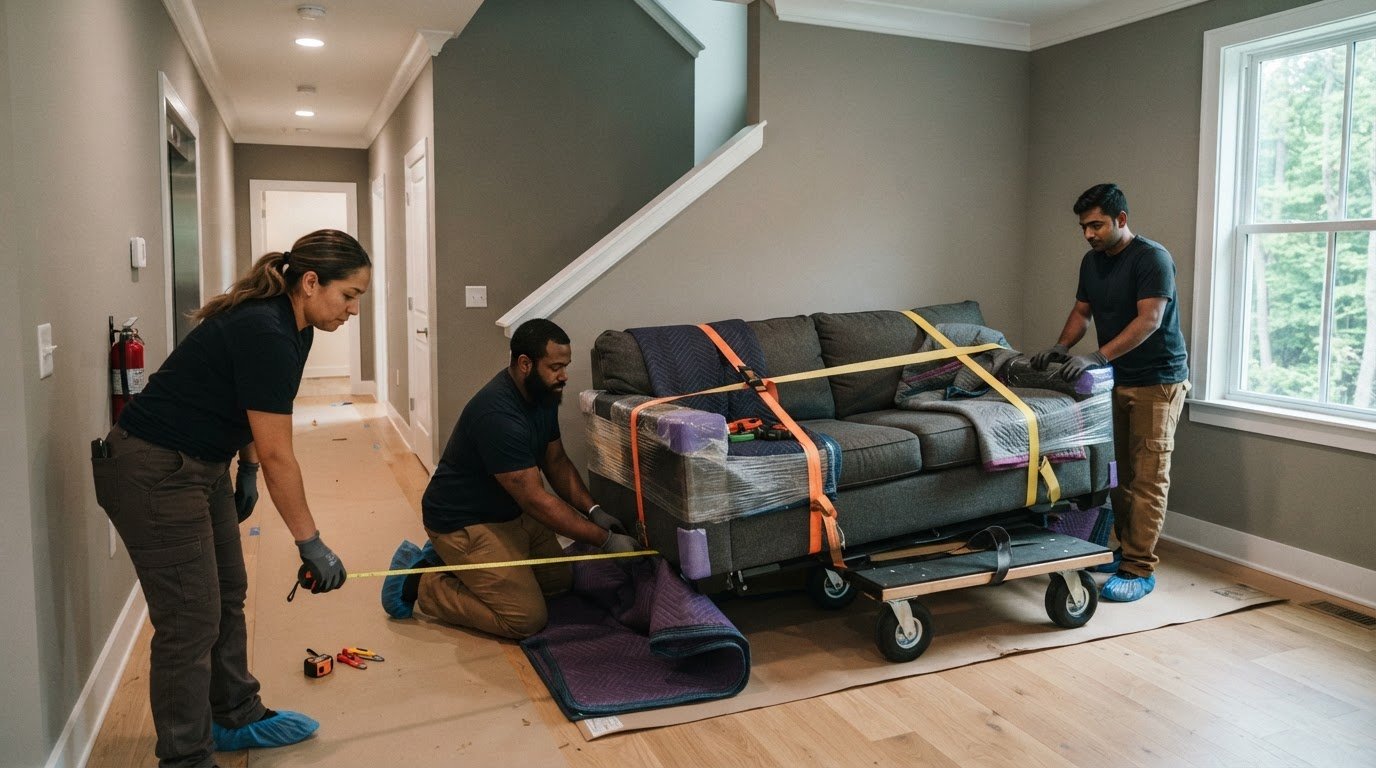
The first step in moving a sleeper sofa in Reston isn’t lifting. It’s measuring. A sofa may look as though it will fit through a doorway, then catch at a turn or become harder to control because of its folding bed mechanism. If you’re concerned about scraping walls, straining your back, or getting stuck halfway, plan the route before you move it.
Measure the sofa and the full path, including doorways, hallways, stairs, and elevator openings. Check what needs to be cleared or protected, and review the manufacturer’s instructions for the mechanism and any removable parts. This guide will help you prepare your Reston home and decide whether a do-it-yourself move is manageable.
You’ll also learn when the sofa’s size or route calls for experienced help. If it won’t pass through a standard entryway or elevator, sofa hoisting may be an option after a site assessment. Take measurements first, then choose the safest next step.
Key Takeaways
- Moving a sleeper sofa in Reston starts with checking its folding mechanism and measuring the sofa, not guessing whether it will fit.
- Prepare the sofa and home by removing bedding and personal items, securing loose parts, and clearing the route.
- Compare the sofa’s dimensions with doorways, hallways, turns, stairs, and elevator openings before choosing how to move it.
- Keep the sofa balanced and controlled, and stop if an obstacle makes the carry unsafe.
- If the sofa cannot pass through the route, professional in-home help or a sofa-hoisting assessment may be worth considering.
Moving a Sleeper Sofa in Reston: Why It Needs a Different Plan
A sleeper sofa is more than a bulky couch. It combines seating with a folding bed mechanism, often including a hidden frame and mattress. As described in this overview of the sleeper sofa, those parts are built into the sofa’s structure. They can affect its balance and shape during a move, particularly if the bed section shifts or is not secured according to the manufacturer’s instructions.
There’s no single safe weight or lifting method for every model. Frames, mattresses, and construction vary, so don’t judge the load by appearance or assume a particular number of people can handle it. First define the move: is the sofa going across one room, between floors, or to another address? Each option involves different distances, access points, and obstacles.
What makes a sleeper sofa harder to move than a regular couch?
The concealed bed frame can make a sleeper sofa feel uneven or shift its balance when lifted. Don’t lift by the mechanism, arms, or loose upholstery. These may not provide a secure grip and could be damaged. Check the manufacturer’s instructions before folding, locking, or securing moving parts. If you can’t confirm how to handle the mechanism, don’t force it.
When should you pause before trying to move it yourself?
Reassess if the route includes a narrow turn, stairs, unstable footing, or too few capable helpers. Stop if the sofa shifts, catches, or leaves you without a secure grip. A sofa that clears a doorway may still be difficult to turn in the hallway, stair landing, or elevator entrance, where there may be less room to adjust its angle.
Before moving a sleeper sofa in Reston, identify the sofa and map the route. Note the model or mechanism, if known, the type of move, and the tightest points between the starting room and destination. A room-to-room move may have a simple path, while changing floors or moving to another address can add stairs, building access, and transport considerations. Don’t begin the carry until you know where helpers can stand, how to grip the sofa, and where you can pause safely.
Prepare the Sleeper Sofa and Home Before Moving Day
Preparation helps reveal problems before the sofa is in motion. Work through these steps before lifting, and follow the manufacturer’s guidance for your specific model.
- Clear the area. Remove bedding, pillows, remote controls, and personal items from the sofa and nearby surfaces. Move small objects and nearby furniture out of the planned path.
- Inspect the sofa. Check for loose cushions, detachable legs, or parts that could shift. Look in the product manual for instructions on the bed mechanism and removable components.
- Secure loose parts. Set removable pieces aside or secure them separately so they can’t fall during handling. Don’t fold, lock, or strap the bed mechanism unless the manufacturer explains how.
- Protect the route. Clear rugs and trip hazards, and protect vulnerable floors and door edges with suitable materials. Keep walkways clear so protection does not obstruct helpers.
- Measure the moving configuration. Measure the sofa’s width, height, and depth in the form you plan to carry it. Don’t assume it will fit based on how it sits in the room.
How should you secure a sleeper sofa for moving?
Start with the manual. It may explain how the bed folds and whether any parts should be secured before moving. Keep removable cushions and loose components together, but separate them from the sofa if they could slide or fall. Avoid strapping across delicate upholstery or the folding mechanism without suitable guidance. Any cover or padding should protect the sofa without hiding handholds or making it harder to control.
What should you clear and protect inside the home?
Walk the entire route, from the sofa’s current spot to its destination. Move small objects, rugs, and nearby furniture out of the way. Protect vulnerable floor areas and door edges, while keeping the walking surface clear and stable. In an apartment or shared building, ask management about elevator reservations, move procedures, and access arrangements before the planned day.
Preparation won’t make a tight route safe by itself, but it can expose problems before the carry begins. If moving a sleeper sofa in Reston still looks difficult after you’ve cleared and measured the path, consider getting experienced heavy furniture moving help before attempting it.
Measure the Reston Route Before Choosing How to Move the Sofa
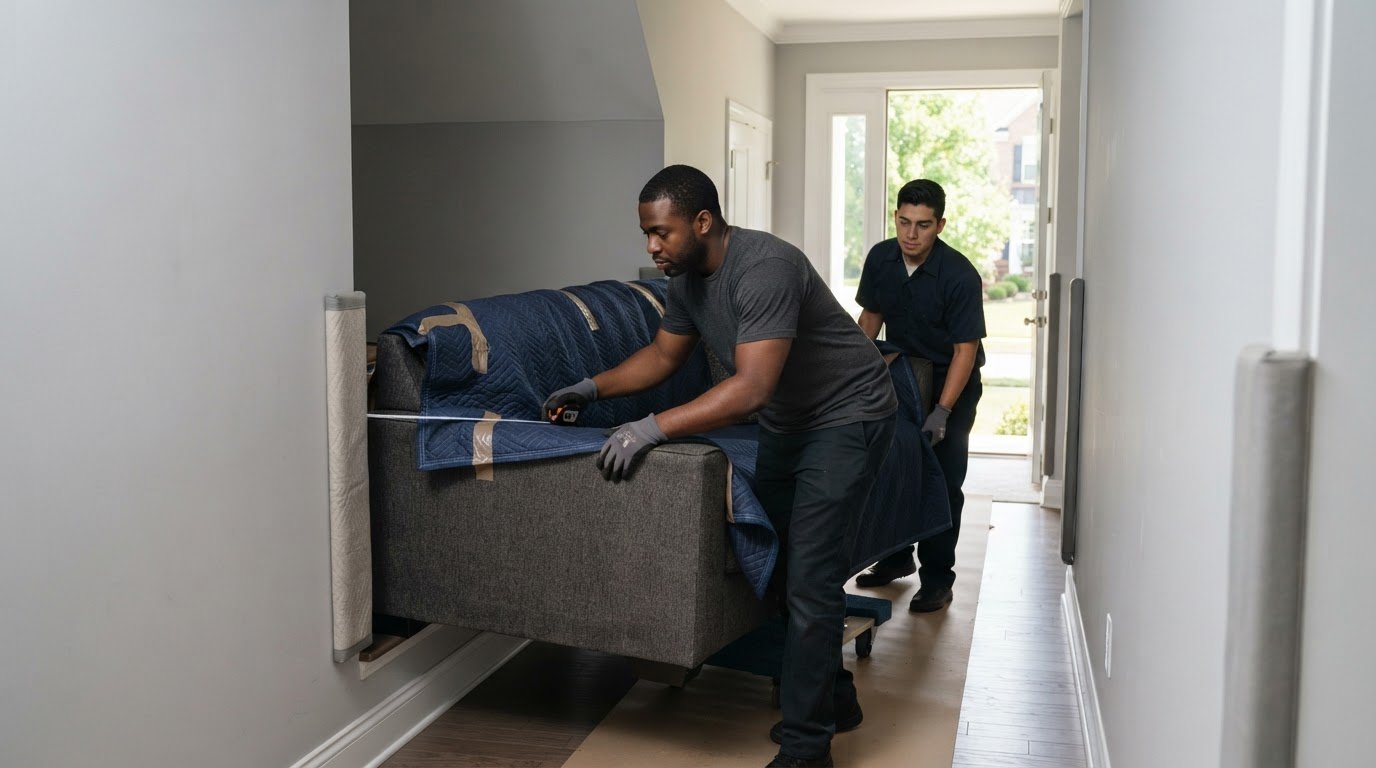
Measure the sleeper sofa in the manufacturer-approved moving configuration, then check every part of its route. Record its width, height, and depth. Compare those measurements with the clear openings and maneuvering space along the way, not just the destination doorway. A tape measure can flag likely trouble, but measurements alone can’t guarantee that the sofa will fit or turn safely.
Which measurements matter for doors, hallways, stairs, and elevators?
Measure the narrowest clear opening at each doorway, accounting for trim, handles, and other obstructions. Then check hallway width, tight turns, stair rails, ceiling clearance, landings, and elevator interior dimensions if they are part of the route. Check exterior access too if the sofa may need to leave through a patio or another opening. Compare the full path with the sofa’s actual moving configuration.
A doorway may be wide enough while the turn just beyond it is not. Consider how the sofa could be angled and where helpers could stand. Don’t remove doors or building fixtures without permission, and don’t treat a close measurement as proof that the carry is safe.
How do you compare carrying, moving help, and hoisting?
Use the route check to weigh your options. A do-it-yourself carry is reasonable to consider only if the sofa can be gripped securely, the path is manageable, and helpers can keep it under control. If stairs, awkward handling, or uncertainty about the load raise safety concerns, consider professional in-home moving help. If the sofa can’t safely pass through the available access, a hoisting assessment may be an option, subject to a site assessment.
| Option | Consider it when | Check before deciding |
|---|---|---|
| DIY carry | The route and handling appear manageable. | Grip, helper capacity, turns, and control at each obstacle. |
| Professional in-home moving help | Stairs, awkward handling, or the sofa’s load make a DIY move feel unsafe. | Share the sofa dimensions and route details when asking about help. |
| Hoisting assessment | The sofa can’t safely pass through standard entryways or elevators. | Have access conditions assessed before treating hoisting as a solution. |
For moving a sleeper sofa in Reston, use measurements to make a decision, not to force a tight fit. If the route looks doubtful, pause and get an assessment before lifting.
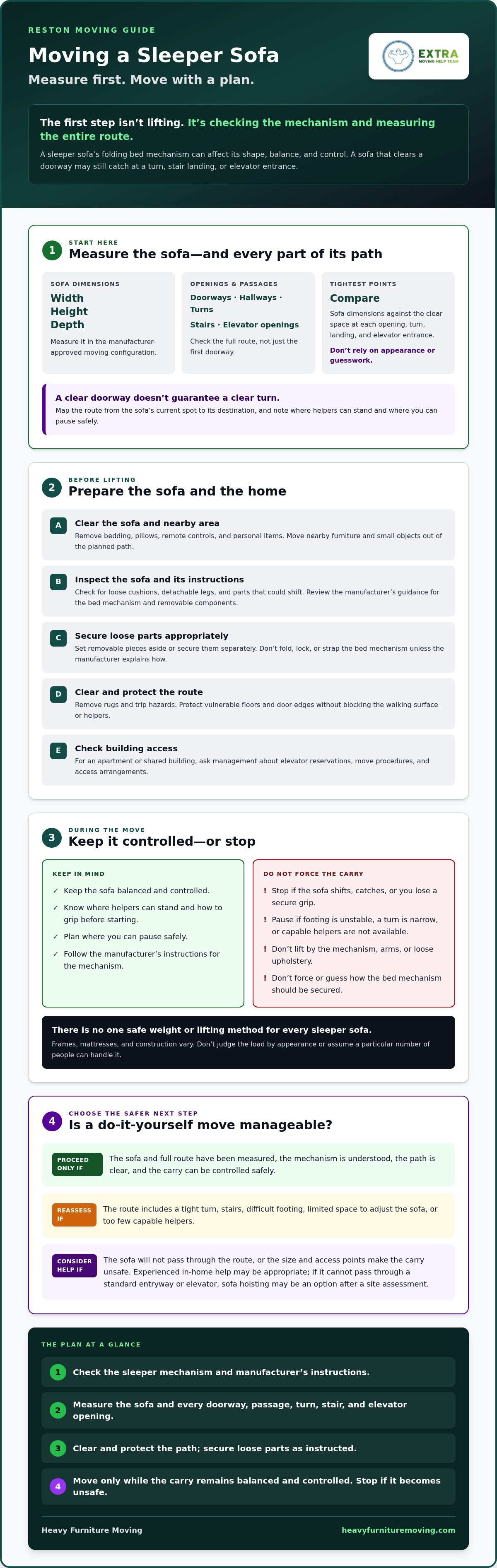
Move a Sleeper Sofa Safely, or Recognize When to Stop
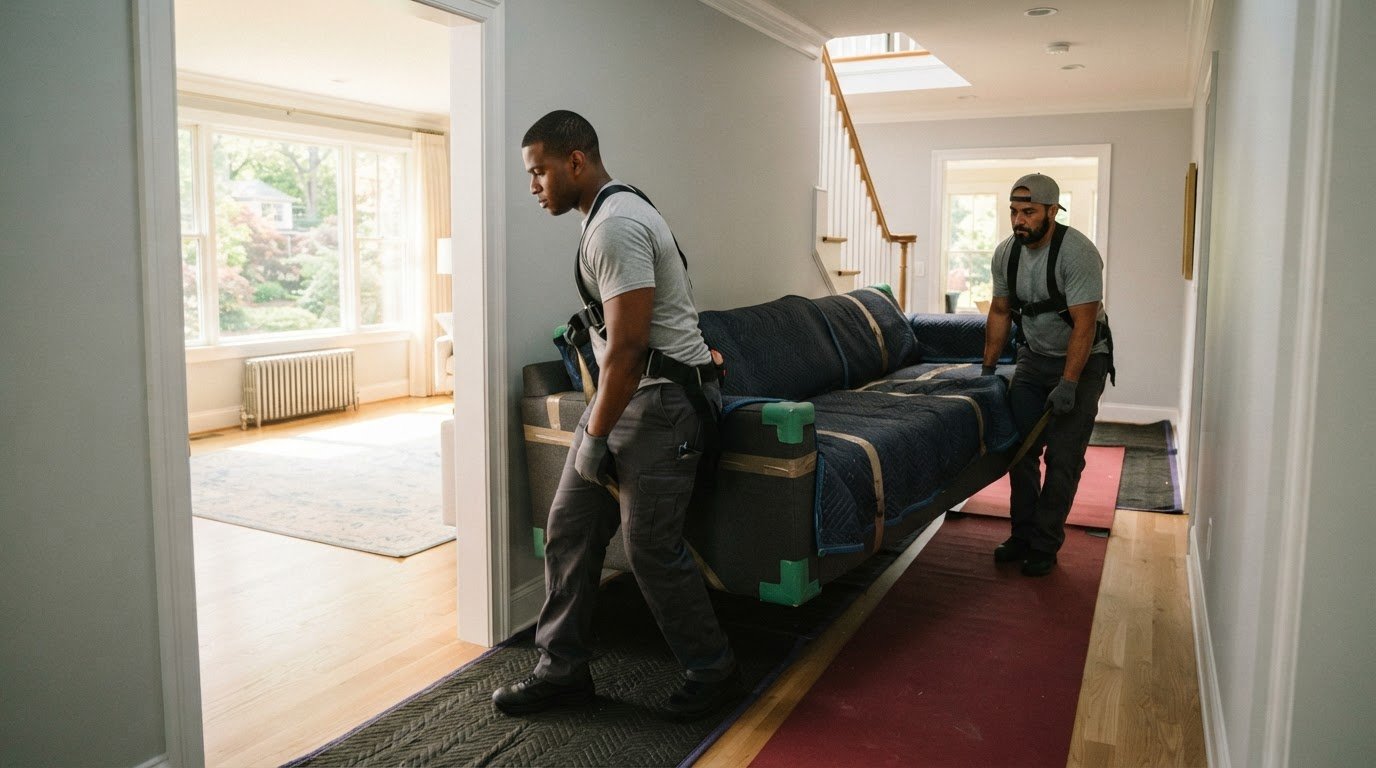
Even a straightforward move takes coordination. Before lifting, confirm you have enough capable helpers for this sofa and route. Clear the path, agree on who will guide each movement, and choose simple commands such as “lift,” “pause,” and “set down.” Move only when everyone is ready.
Keep the sofa balanced and under control. Take small, coordinated steps, and pause before turns or changes in level. Don’t rush, twist your body while carrying, or force the sofa through a tight spot. Keep hands and feet clear of pinch points around the frame, legs, and folding parts. If you need to change your grip, set the sofa down only where it can rest steadily.
What are safer practices for a short, straightforward move?
For a short carry across an open room, have one person call the movements so helpers don’t pull in different directions. Lift and lower together, and stop to reset if the sofa tilts or someone loses a secure hold. Keep the route clear and avoid placing fingers beneath the frame or near moving components. Don’t continue simply because the destination is close.
When is professional moving help the safer choice?
Stairs, tight turns, an awkward frame, and limited helpers can turn a manageable-looking move into an unsafe one. Stop if anyone feels pain, loses grip, has unstable footing, or finds an exit blocked. Stop if the sofa won’t clear an opening without force. A professional assessment can help determine whether in-home moving help is suitable or whether sofa hoisting should be considered because interior access won’t work. Hoisting depends on the site and requires an assessment.
If the carry no longer feels controlled, don’t push through. Heavy Furniture Moving serves Reston and handles bulky household items, including sofa hoisting when a sofa cannot pass through standard entryways or elevators. You can review local movers in Fairfax and Northern Virginia or ask about sleeper sofa moving help. Share the sofa’s dimensions, mechanism details, floor level, and route concerns so the available options can be discussed.
Get Sleeper Sofa Moving Help in Reston When the Route Is Too Tight
If the sofa won’t pass safely through a doorway, stairwell, or elevator, don’t force it. Heavy Furniture Moving serves Reston and handles heavy, bulky household items, with sofa hoisting as a possible access solution. The right approach depends on the sofa and property, so the route needs to be assessed before deciding whether carrying or hoisting is suitable.
What information should you share when requesting help in Reston?
Describe both the sofa and the move. Share its width, height, and depth, explain the folding-bed mechanism, and note whether parts are removable or have manufacturer handling instructions. Include the pickup and destination floors, stairs, elevator access, and the tightest turns or openings. If requested, send clear photos or measurements to help assess the route. Confirm service availability for your specific Reston address.
How can sofa hoisting help when indoor access is limited?
Hoisting may be considered if the sleeper sofa cannot safely pass through standard entryways or elevators. It isn’t automatically the right choice: feasibility depends on the building, exterior access, and a professional site assessment. Share any access restrictions and ask what details are needed to evaluate the option. Don’t assume an exterior route is usable until it has been assessed.
A useful request includes the sofa’s dimensions and mechanism details, the floor level at each end, and measurements of the route’s narrow points. Add photos if requested, and explain where the move begins and ends. These details help the provider consider whether an interior carry or a hoisting assessment makes sense.
For moving a sleeper sofa in Reston, get the access question answered before moving day. Ask Heavy Furniture Moving about sofa hoisting and share the sofa and route details so the team can assess the options.
Make a Safe Plan for Your Sleeper Sofa Move
Moving a sleeper sofa in Reston starts with knowing what you’re moving and where it needs to go. Check the manufacturer’s guidance, measure the sofa in its moving configuration, and assess the full route before lifting. If the sofa shifts, catches, or leaves you without a secure grip, stop. A difficult turn isn’t worth risking an injury or damage to your home.
When the route or load feels uncertain, professional help can take pressure off the move. Heavy Furniture Moving serves Reston and focuses on heavy, bulky household items. Sofa hoisting is also an option for sofas that can’t pass through standard access, subject to a site assessment. Confirm availability for your address when you reach out.
Have your sofa dimensions, mechanism details, floor level, and measurements of tight points ready. Then contact Heavy Furniture Moving to discuss your Reston sleeper sofa move and the safest next step.
Frequently Asked Questions
How do I move a sleeper sofa through a narrow doorway?
Measure the doorway’s clear opening and the sofa in its manufacturer-approved moving configuration before attempting the turn. Check for trim, handles, nearby walls, and space to angle the sofa on both sides. Follow the product instructions for securing its bed mechanism, and don’t force the frame through a tight opening. If it catches or you can’t keep a secure grip, stop and reassess the route.
Can you move a sleeper sofa without taking it apart?
Often, a sleeper sofa can be moved without disassembly, but it depends on the model and route. Check the manufacturer’s instructions before folding or securing the bed mechanism, removing legs, or detaching parts. Take off bedding and personal items, and secure loose cushions separately. If the sofa won’t clear the route in its approved moving configuration, don’t dismantle it based on guesswork. Ask the manufacturer or a moving professional for guidance.
Is it safe to move a sleeper sofa upstairs yourself?
It may be unsafe if the stairs are narrow, the landings are tight, footing is unstable, or you don’t have enough capable helpers. Sofa weight and balance vary by model, so don’t assume the load is manageable for a particular number of people. Plan how to pause and change direction before lifting. Stop if anyone loses grip, feels pain, or can’t keep the sofa controlled.
When should I hire movers to move a sleeper sofa in Reston?
Hire professional help if stairs, tight turns, awkward handling, limited helpers, or an uncertain grip make the move feel unsafe. Heavy Furniture Moving focuses on heavy and bulky household items and serves Reston. Its local service area also includes Fairfax, Woodbridge, Manassas, Manassas Park, Aldie, Ashburn, McLean, Vienna, Centreville, Chantilly, Clifton, Dumfries, South Riding, Fairfax Station, Haymarket, and Gainesville. Confirm availability for your specific address.
Can a sleeper sofa be hoisted through a window or balcony?
Possibly, if the sofa can’t safely pass through standard entryways or elevators, but hoisting isn’t suitable for every building. Feasibility depends on the sofa, exterior access, and site conditions. A professional assessment is needed before deciding whether hoisting is an option. Check building requirements and share details about the window or balcony access when asking Heavy Furniture Moving about its sofa-hoisting service.
What should I measure before moving a sleeper sofa?
Measure the sofa’s width, height, and depth in its approved moving configuration. Compare those dimensions with the narrowest clear door openings, hallways, turns, stair rails, landings, ceiling clearance, and elevator interior, if applicable. Include trim, handles, and other obstructions. Check exterior access if the route may lead outside. Measurements can identify tight spots, but they can’t guarantee the sofa will fit or maneuver safely.
Frequently Asked Questions
The concealed bed frame can make a sleeper sofa feel uneven or shift its balance when lifted. Don’t lift by the mechanism, arms, or loose upholstery. These may not provide a secure grip and could be damaged. Check the manufacturer’s instructions before folding, locking, or securing moving parts. If you can’t confirm how to handle the mechanism, don’t force it.
Reassess if the route includes a narrow turn, stairs, unstable footing, or too few capable helpers. Stop if the sofa shifts, catches, or leaves you without a secure grip. A sofa that clears a doorway may still be difficult to turn in the hallway, stair landing, or elevator entrance, where there may be less room to adjust its angle. Before moving a sleeper sofa in Reston, identify the sofa and map the route. Note the model or mechanism, if known, the type of move, and the tightest points between the starting room and destination. A room-to-room move may have a simple path, while changing floors or moving to another address can add stairs, building access, and transport considerations. Don’t begin the carry until you know where helpers can stand, how to grip the sofa, and where you can pause safely. Preparation helps reveal problems before the sofa is in motion. Work through these steps before lifting, and follow the manufacturer’s guidance for your specific model.
Start with the manual. It may explain how the bed folds and whether any parts should be secured before moving. Keep removable cushions and loose components together, but separate them from the sofa if they could slide or fall. Avoid strapping across delicate upholstery or the folding mechanism without suitable guidance. Any cover or padding should protect the sofa without hiding handholds or making it harder to control.
Walk the entire route, from the sofa’s current spot to its destination. Move small objects, rugs, and nearby furniture out of the way. Protect vulnerable floor areas and door edges, while keeping the walking surface clear and stable. In an apartment or shared building, ask management about elevator reservations, move procedures, and access arrangements before the planned day. Preparation won’t make a tight route safe by itself, but it can expose problems before the carry begins. If moving a sleeper sofa in Reston still looks difficult after you’ve cleared and measured the path, consider getting experienced heavy furniture moving help before attempting it. Measure the sleeper sofa in the manufacturer-approved moving configuration, then check every part of its route. Record its width, height, and depth. Compare those measurements with the clear openings and maneuvering space along the way, not just the destination doorway. A tape measure can flag likely trouble, but measurements alone can’t guarantee that the sofa will fit or turn safely.
Measure the narrowest clear opening at each doorway, accounting for trim, handles, and other obstructions. Then check hallway width, tight turns, stair rails, ceiling clearance, landings, and elevator interior dimensions if they are part of the route. Check exterior access too if the sofa may need to leave through a patio or another opening. Compare the full path with the sofa’s actual moving configuration. A doorway may be wide enough while the turn just beyond it is not. Consider how the sofa could be angled and where helpers could stand. Don’t remove doors or building fixtures without permission, and don’t treat a close measurement as proof that the carry is safe.
Use the route check to weigh your options. A do-it-yourself carry is reasonable to consider only if the sofa can be gripped securely, the path is manageable, and helpers can keep it under control. If stairs, awkward handling, or uncertainty about the load raise safety concerns, consider professional in-home moving help. If the sofa can’t safely pass through the available access, a hoisting assessment may be an option, subject to a site assessment. For moving a sleeper sofa in Reston, use measurements to make a decision, not to force a tight fit. If the route looks doubtful, pause and get an assessment before lifting. Even a straightforward move takes coordination. Before lifting, confirm you have enough capable helpers for this sofa and route. Clear the path, agree on who will guide each movement, and choose simple commands such as “lift,” “pause,” and “set down.” Move only when everyone is ready. Keep the sofa balanced and under control. Take small, coordinated steps, and pause before turns or changes in level. Don’t rush, twist your body while carrying, or force the sofa through a tight spot. Keep hands and feet clear of pinch points around the frame, legs, and folding parts. If you need to change your grip, set the sofa down only where it can rest steadily.
For a short carry across an open room, have one person call the movements so helpers don’t pull in different directions. Lift and lower together, and stop to reset if the sofa tilts or someone loses a secure hold. Keep the route clear and avoid placing fingers beneath the frame or near moving components. Don’t continue simply because the destination is close.
Stairs, tight turns, an awkward frame, and limited helpers can turn a manageable-looking move into an unsafe one. Stop if anyone feels pain, loses grip, has unstable footing, or finds an exit blocked. Stop if the sofa won’t clear an opening without force. A professional assessment can help determine whether in-home moving help is suitable or whether sofa hoisting should be considered because interior access won’t work. Hoisting depends on the site and requires an assessment. If the carry no longer feels controlled, don’t push through. Heavy Furniture Moving serves Reston and handles bulky household items, including sofa hoisting when a sofa cannot pass through standard entryways or elevators. You can review local movers in Fairfax and Northern Virginia or ask about sleeper sofa moving help. Share the sofa’s dimensions, mechanism details, floor level, and route concerns so the available options can be discussed. If the sofa won’t pass safely through a doorway, stairwell, or elevator, don’t force it. Heavy Furniture Moving serves Reston and handles heavy, bulky household items, with sofa hoisting as a possible access solution. The right approach depends on the sofa and property, so the route needs to be assessed before deciding whether carrying or hoisting is suitable.
Describe both the sofa and the move. Share its width, height, and depth, explain the folding-bed mechanism, and note whether parts are removable or have manufacturer handling instructions. Include the pickup and destination floors, stairs, elevator access, and the tightest turns or openings. If requested, send clear photos or measurements to help assess the route. Confirm service availability for your specific Reston address.
Hoisting may be considered if the sleeper sofa cannot safely pass through standard entryways or elevators. It isn’t automatically the right choice: feasibility depends on the building, exterior access, and a professional site assessment. Share any access restrictions and ask what details are needed to evaluate the option. Don’t assume an exterior route is usable until it has been assessed. A useful request includes the sofa’s dimensions and mechanism details, the floor level at each end, and measurements of the route’s narrow points. Add photos if requested, and explain where the move begins and ends. These details help the provider consider whether an interior carry or a hoisting assessment makes sense. For moving a sleeper sofa in Reston, get the access question answered before moving day. Ask Heavy Furniture Moving about sofa hoisting and share the sofa and route details so the team can assess the options. Moving a sleeper sofa in Reston starts with knowing what you’re moving and where it needs to go. Check the manufacturer’s guidance, measure the sofa in its moving configuration, and assess the full route before lifting. If the sofa shifts, catches, or leaves you without a secure grip, stop. A difficult turn isn’t worth risking an injury or damage to your home. When the route or load feels uncertain, professional help can take pressure off the move. Heavy Furniture Moving serves Reston and focuses on heavy, bulky household items. Sofa hoisting is also an option for sofas that can’t pass through standard access, subject to a site assessment. Confirm availability for your address when you reach out. Have your sofa dimensions, mechanism details, floor level, and measurements of tight points ready. Then contact Heavy Furniture Moving to discuss your Reston sleeper sofa move and the safest next step.
Measure the doorway’s clear opening and the sofa in its manufacturer-approved moving configuration before attempting the turn. Check for trim, handles, nearby walls, and space to angle the sofa on both sides. Follow the product instructions for securing its bed mechanism, and don’t force the frame through a tight opening. If it catches or you can’t keep a secure grip, stop and reassess the route.
Often, a sleeper sofa can be moved without disassembly, but it depends on the model and route. Check the manufacturer’s instructions before folding or securing the bed mechanism, removing legs, or detaching parts. Take off bedding and personal items, and secure loose cushions separately. If the sofa won’t clear the route in its approved moving configuration, don’t dismantle it based on guesswork. Ask the manufacturer or a moving professional for guidance.
It may be unsafe if the stairs are narrow, the landings are tight, footing is unstable, or you don’t have enough capable helpers. Sofa weight and balance vary by model, so don’t assume the load is manageable for a particular number of people. Plan how to pause and change direction before lifting. Stop if anyone loses grip, feels pain, or can’t keep the sofa controlled.
Hire professional help if stairs, tight turns, awkward handling, limited helpers, or an uncertain grip make the move feel unsafe. Heavy Furniture Moving focuses on heavy and bulky household items and serves Reston. Its local service area also includes Fairfax, Woodbridge, Manassas, Manassas Park, Aldie, Ashburn, McLean, Vienna, Centreville, Chantilly, Clifton, Dumfries, South Riding, Fairfax Station, Haymarket, and Gainesville. Confirm availability for your specific address.
Possibly, if the sofa can’t safely pass through standard entryways or elevators, but hoisting isn’t suitable for every building. Feasibility depends on the sofa, exterior access, and site conditions. A professional assessment is needed before deciding whether hoisting is an option. Check building requirements and share details about the window or balcony access when asking Heavy Furniture Moving about its sofa-hoisting service.
Measure the sofa’s width, height, and depth in its approved moving configuration. Compare those dimensions with the narrowest clear door openings, hallways, turns, stair rails, landings, ceiling clearance, and elevator interior, if applicable. Include trim, handles, and other obstructions. Check exterior access if the route may lead outside. Measurements can identify tight spots, but they can’t guarantee the sofa will fit or maneuver safely.