Moving a Safe Across Tile Floors in Centreville: Protect Your Home
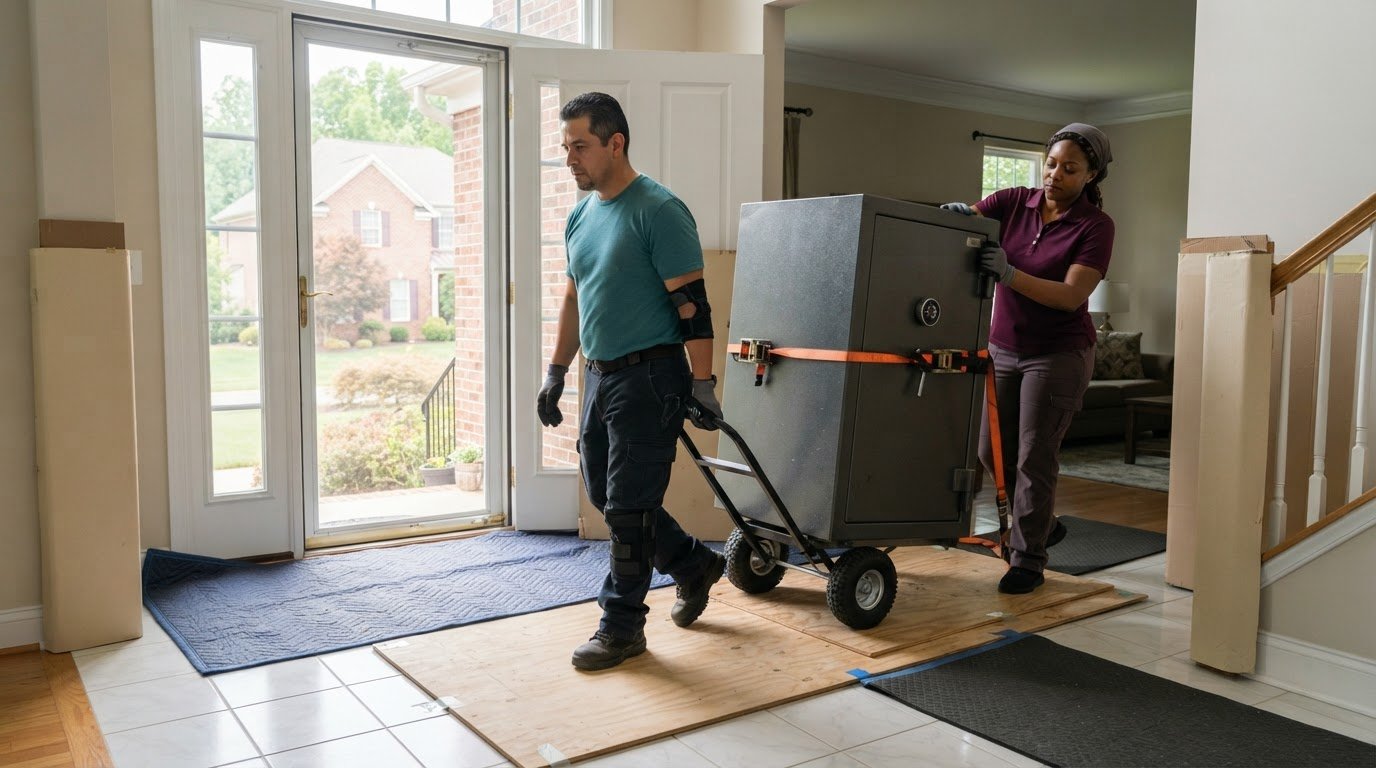
A safe’s greatest risk to your tile may not be its weight alone, but a sudden shift that’s hard to control. Moving a safe across tile floors Centreville homeowners want to protect means managing concentrated weight, keeping the load balanced, and steering it through tight spaces without scraping nearby surfaces.
It’s reasonable to ask whether a dolly and a few helpers will be enough. Before deciding, find out the safe’s approximate weight, whether it’s anchored, and whether the route includes tight doorways or vulnerable tile. If you can’t confirm those details or control the load, a DIY move could put people and property at risk.
This guide explains how to assess the safe and its path, reduce the chance of tile damage, and recognize when to ask for professional help. You’ll also learn what information to share with a local provider, including the safe’s estimated weight and dimensions, anchoring, and route. Heavy Furniture Moving offers specialized handling for heavy items, including safes, and serves Centreville. Contact the company to ask whether your specific move fits its services.
Key Takeaways
- Learn why a safe’s concentrated weight, sudden stops, and debris can put tile at risk.
- Before moving a safe across tile floors Centreville, measure the safe, route, doorways, turns, and destination area.
- Use the safe’s weight, anchoring, access, and tile condition to decide whether a DIY move is too risky.
- Prepare the route, keep children and pets clear, and don’t alter or unanchor the safe unless directed.
- If you ask a local provider for help, share the safe’s estimated weight, dimensions, anchoring, and route.
Moving a Safe Across Tile Floors in Centreville: Understand the Risks First
A safe’s weight may press through a few small contact points rather than spread evenly across the floor. As the safe moves, that concentrated force shifts. Dragging, sudden stops, an uneven load, or grit caught beneath a wheel or edge can increase the chance of scratches, chips, or cracks. Even a short move calls for careful planning.
Tile type and condition matter. Some tiles may be more vulnerable to impact or pressure than others, and the support beneath them also affects how well the surface holds up. You may not be able to judge the subfloor by sight, but visible damage is a reason to pause and reassess the route. Controlled movement over a clear route lowers the risk of surface damage.
Why tile can be vulnerable beneath a safe
A surface scratch is different from a chip or crack. Grit dragged across the finish can leave marks, while impact or concentrated pressure may damage the tile itself. Don’t assume all tile will respond the same way. Before planning the move, look for existing cracks, loose tiles, worn or crumbling grout, and uneven transitions. Note any problem areas rather than treating them as a reliable path.
What to find out about the safe before moving it
Record the safe’s model, approximate weight, and dimensions. Check whether shelves or contents can be removed, but follow the manufacturer’s guidance before changing the contents, door, or any removable part. Find out whether the safe is anchored, then identify narrow turns, thresholds, and the exact stopping point. These details help you assess the route and explain the job clearly if you ask for help.
Inspect the entire path, not just the tile beside the safe. Look for loose debris, tight clearances, floor edges, and changes in height that could interrupt smooth movement. A hand truck is a wheeled device for moving loads, but knowing what it is doesn’t tell you whether a particular safe, route, or floor is suitable for a DIY move. The safe’s weight and balance, access, and tile condition all matter.
If you can’t confirm the safe’s weight or anchoring, or you’re unsure how it will pass through a turn without tipping or scraping, pause. Moving a safe across tile floors Centreville homeowners want to protect starts with an honest risk assessment, not guesswork. Next, map and prepare the route before deciding who should handle the move.
How to Prepare a Centreville Tile-Floor Route Before Moving a Safe
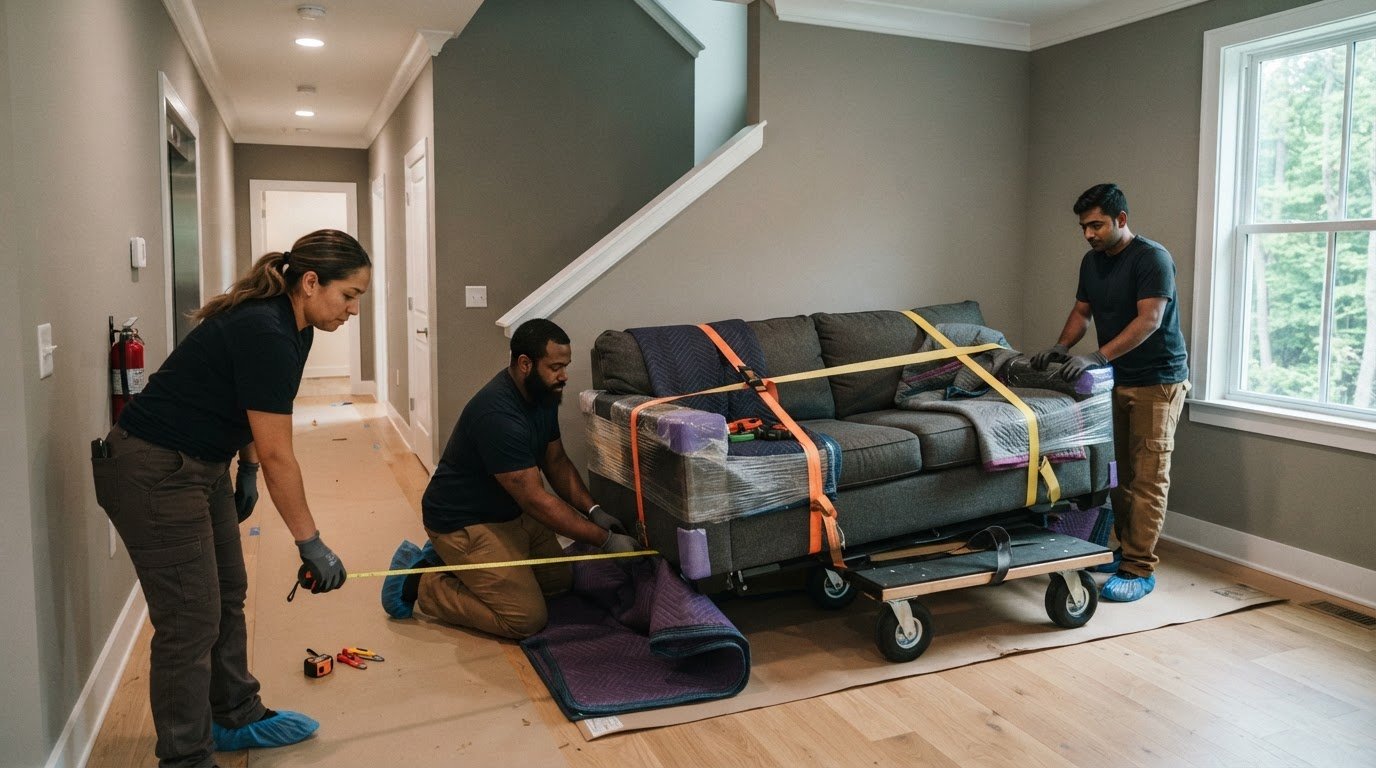
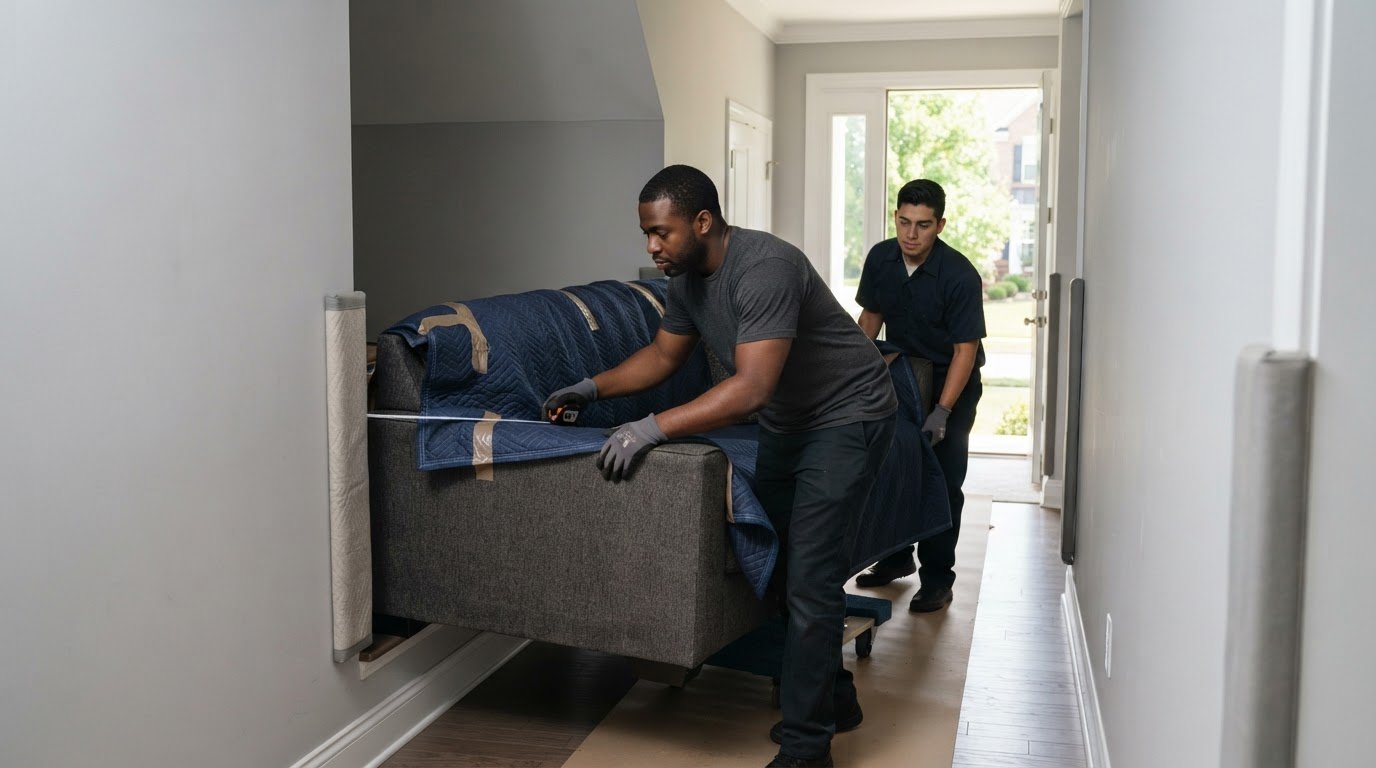
Plan the whole path before moving day, not just the space around the safe. Measure the safe’s width, depth, and height, then check door openings, tight turns, thresholds, and the final placement area. Account for door swings and narrow approaches where the safe may need to change direction. A route that looks open from across the room may still be too tight to navigate safely.
A safe route is clear, measured, and free of abrupt transitions. Use this checklist to prepare:
- 1. Assess: Trace the route from the safe to its destination. Check tile, grout, transitions, and floor level along the way.
- 2. Clear: Remove rugs, furniture, clutter, and loose grit. Secure pets and keep bystanders out of the path.
- 3. Protect: Ask a qualified mover which protective materials suit your tile and the planned moving method.
- 4. Confirm: Recheck measurements, the safe’s destination, door swings, and clearances through every turn.
- 5. Pause: Don’t proceed if the route requires an uncontrolled tilt, lift, or sharp turn, or if you’re unsure the floor can handle the move.
Inspect and clear the complete path
Walk the route from start to finish, checking every area the safe or moving equipment must cross. Watch for loose tiles, damaged grout, raised thresholds, uneven flooring, and tight corners. Remove debris that could get caught beneath a moving load. If a doorway or turn leaves no clear way to maneuver without an uncontrolled shift, stop and reassess rather than trying to force the safe through.
Plan protection for floors and nearby surfaces
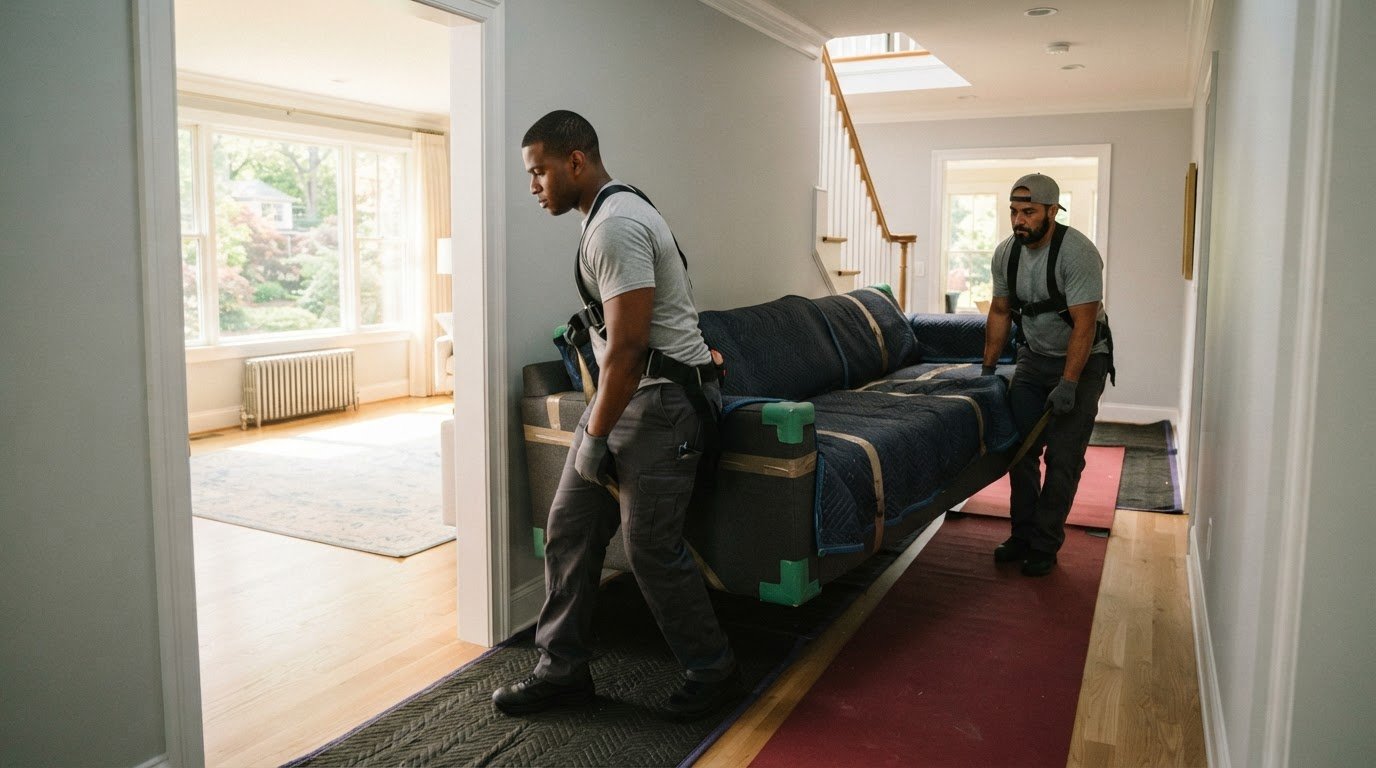
The right tile protection depends on the surface and how the safe will be moved. Ask a qualified mover what materials are appropriate. Don’t assume blankets or thin sheets can support or stabilize a heavy load. Consider nearby walls and door frames too, especially at corners and narrow openings. Any covering needs to stay secure without creating a trip hazard or an unstable surface underfoot or beneath moving equipment.
Before moving a safe across tile floors Centreville, make sure everyone involved understands the route and planned stopping point. If you’re considering professional help, share the safe’s measurements, known weight, and route details with a heavy-item moving provider. Ask whether the move fits the provider’s services and capabilities.
DIY or Professional Safe Movers in Centreville: Compare the Risks
A safe can present a serious control challenge even when it only needs to move a few feet. A short distance doesn’t make it easy to grip, balance, or steer, especially across tile or through a doorway. Use the comparison below to evaluate the whole job, not just the distance.
| Factor | DIY may be especially risky if... | Ask a professional provider... |
|---|---|---|
| Control | You can’t keep the safe steady or stop it smoothly. | How will you assess whether the move can be controlled? |
| Route complexity | The route includes a tight turn, stairs, narrow doorway, or raised threshold. | Can you evaluate the full route and clearances? |
| Safe weight | The weight is unknown or the safe feels difficult to manage. | What information do you need to assess its weight and dimensions? |
| Anchoring | The safe may be fixed to the floor or wall. | Can you handle the move as requested, and should an anchor be addressed first? |
| Floor condition | Tile is cracked, loose, uneven, or has damaged grout. | What property-protection approach fits this floor and route? |
When a DIY move may still be inappropriate
Pause if you can’t confirm the safe’s weight, if it’s anchored, or if the route includes stairs, tight turns, thresholds, or visible tile damage. Don’t improvise by pulling it, tipping it without control, or trying to move it alone. These are reasons to seek a professional assessment. Don’t assume a particular crew size or equipment is right without a qualified person evaluating the safe and access.
What to ask a professional safe-moving provider
Centreville residents can ask whether a provider handles in-home safe moves across tile, then explain the safe’s approximate weight, dimensions, anchoring, and full route. Ask how the provider assesses access and floor conditions, what preparation they expect from you, and what protection they recommend. Confirm the requested scope directly before booking. Heavy Furniture Moving offers specialized handling for heavy items, including safes. Verify that your specific in-home move is within the company’s capabilities.
When moving a safe across tile floors Centreville homeowners should consider uncertainty as carefully as distance. If you can’t confidently explain how the safe will stay balanced through every turn and transition, don’t begin a DIY move. Have the safe and route assessed first.
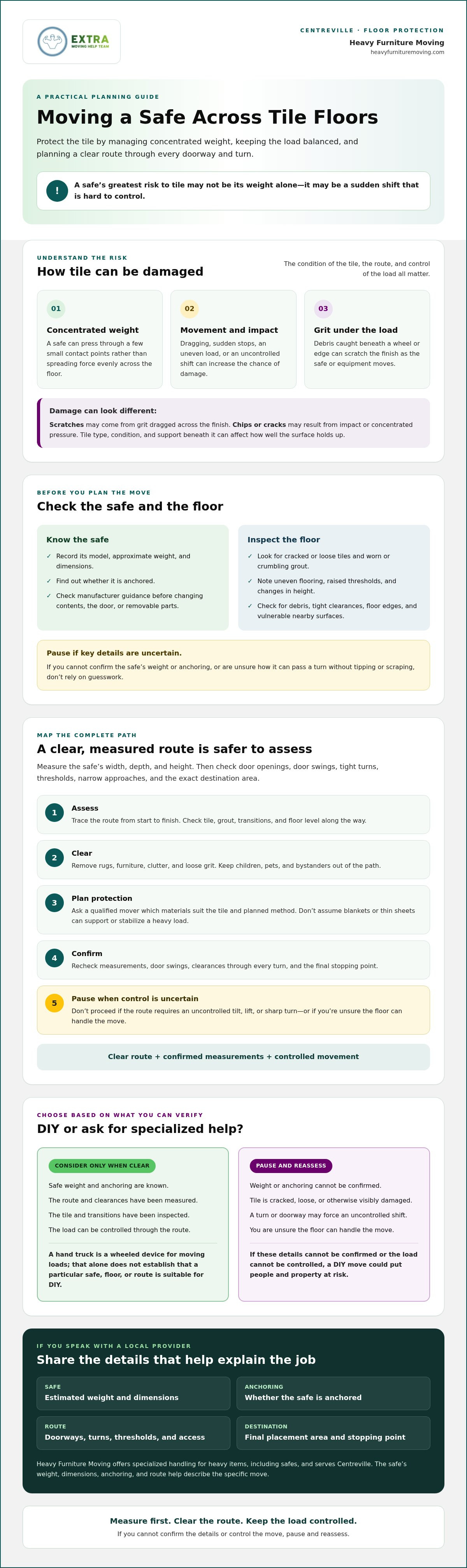
A Safer Move Across Tile: Centreville Homeowner Preparation Steps
Good preparation gives the moving team a clearer picture of the job and keeps household traffic out of the way. Confirm exactly where the safe will go, clear the route, and keep children and pets away from the work area. Before handling begins, ask the team to walk the path with you, point out concerns, and agree on where they may need to pause or reassess.
Before the moving team arrives
Send the provider the safe’s dimensions, estimated weight, photos, known anchoring details, and intended destination. Mention uncertainty rather than guessing. Clear access around the safe, doorways, the full route, and the placement area so the team can assess the space. Don’t remove anchors or alter the safe, its door, or its contents unless the provider or manufacturer directs you to do so.
Point out cracked tile, raised transitions, damaged grout, and previous floor repairs before work starts. Photograph existing damage and nearby walls or door frames in good light. These images can document the area’s condition before the move and help you compare surfaces afterward.
During the move and after placement
Once the route is agreed on, keep it clear. Follow the moving team’s instructions, and don’t try to guide or steady the load yourself. If the safe shifts, catches, or seems difficult to control, ask the team to pause and reassess. A planned stop is safer than pushing ahead through a problem.
After placement, inspect the tiles and grout along the route, nearby walls, and the final location. Compare them with your photos and note any changes promptly. Check that the safe is positioned where you agreed. Don’t assume the move should continue if the destination or route no longer seems suitable.
For moving a safe across tile floors Centreville homeowners can help avoid surprises by sharing accurate details and flagging vulnerable spots early. If you’re considering professional assistance, ask Heavy Furniture Moving about safe-moving help. Describe the safe, anchoring, tile condition, and route to confirm whether the requested move fits the company’s services.
Get Professional Safe-Moving Help for Your Centreville Home
Let the safe’s weight, anchoring, access, and the tile’s condition guide your next step. If the safe is difficult to control, may be anchored, or must pass through a tight turn or over vulnerable tile, ask about a professional assessment rather than guessing. Heavy Furniture Moving offers specialized handling for heavy items, including safes, and serves Centreville. Confirm directly whether the team can take on your specific in-home move.
What details to include when requesting help
Give the provider a clear picture of both the safe and its route. Share the safe’s approximate dimensions, estimated weight, model, and anchoring status if known. If you’re unsure, say so. Photos can show the safe, nearby access points, and visible floor concerns.
Describe where the safe starts and where you want it placed. Mention the tile’s condition, narrow turns, doorways, thresholds, and any stairs. Then ask directly: Do you handle this specific in-home safe move in Centreville? Even a short move within one home can involve access or floor concerns that need review before the job is accepted.
Make the next step straightforward
Before deciding, ask how the provider assesses the safe’s weight, anchoring, access, and tile. Find out what preparation they expect from you and how they plan to protect the floor and nearby surfaces. Confirm any limits, equipment, availability, and applicable coverage directly. Don’t assume a particular method will suit your tile, and don’t rely on a promise of damage-free results.
For more guidance on evaluating local moving options, read this guide to reliable movers in Fairfax and Northern Virginia. Keep the details together when contacting a provider: safe model and measurements, estimated weight, anchoring information, photos, route, tile concerns, and desired destination. That gives the provider practical information to assess your request.
If you’re considering moving a safe across tile floors Centreville, contact Heavy Furniture Moving to ask about safe-moving help. Describe the safe and route, then confirm whether your requested move fits the team’s services and capabilities.
Protect Your Tile With a Planned, Controlled Move
Moving a safe across tile floors Centreville homeowners should begin by assessing the safe, its route, and the tile’s condition. Confirm its weight and anchoring if you can, measure doorways and turns, and clear the path. If the load feels hard to control or the route includes vulnerable tile, tight access, or uncertain transitions, pause before attempting a DIY move.
Heavy Furniture Moving offers specialized handling for heavy items, including safes, and serves Centreville. The veteran-family owned and operated business is an option to ask about when you need help with a heavy move. Share the safe’s details, route, tile concerns, and intended destination, then confirm whether the specific in-home move is within the company’s capabilities.
Ask Heavy Furniture Moving about safe-moving help in Centreville. Share clear details about the safe and route so the company can confirm whether it can help with the requested move.
Frequently Asked Questions
Can I move a safe across tile floors without damaging them?
It may be possible, but the risk depends on the safe’s weight, the tile’s condition, and whether you can control the load throughout the route. Before moving a safe across tile floors Centreville homeowners should clear the path and check for cracks, loose grit, and raised transitions. Don’t drag the safe or improvise a move. If it’s heavy, anchored, hard to grip, or needs to turn, ask a qualified safe mover to assess it.
How do you protect tile floors when moving a heavy safe?
Check the route for loose grit, cracks, raised transitions, and tight turns. Ask the moving provider what floor-protection method suits your tile and the planned handling approach. Don’t assume a blanket or thin sheet can safely support the load. Keep the path clear, and ask the team to pause if the safe shifts or can’t be controlled. Point out existing damage before the move so it can be considered during planning.
Should I empty a safe before moving it across the room?
Check the safe manufacturer’s instructions and ask the moving provider before removing contents or components. Taking items out may reduce the load, but valuables or sensitive contents could need secure handling elsewhere. Don’t remove the door, shelves, or anchors unless the manufacturer or a qualified provider advises it. When requesting an assessment, share the safe’s approximate weight and explain what will remain inside so the provider can consider its configuration.
Can I use a dolly to move a safe over tile?
A dolly isn’t automatically suitable for every safe or tile route. The safe’s weight and balance, its contact points, doorway clearance, floor transitions, and tile condition all affect whether a particular setup is appropriate. Unstable equipment or handling can let the load shift or damage the floor. Before attempting the move, have a qualified safe mover assess the route and advise on a suitable handling method.
When should I hire professional safe movers in Centreville?
Consider professional help if the safe’s weight is unknown, it’s anchored, the route has turns or thresholds, tile is damaged, or you can’t control the load confidently. A short move still carries handling and floor risks. Heavy Furniture Moving offers specialized handling for heavy items, including safes, and serves Centreville, Fairfax, Woodbridge, Manassas, Manassas Park, Aldie, Ashburn, McLean, Vienna, Reston, Chantilly, Clifton, Dumfries, South Riding, Fairfax Station, Haymarket, and Gainesville. Ask whether the company handles your in-home move.
What information should I give Centreville safe movers before they arrive?
Share the safe’s model, approximate dimensions and weight, anchoring status, and whether contents or removable parts will stay inside. Describe the starting point, destination, tile condition, turns, thresholds, and any stairs. Photos of the safe, route, and destination can help explain access and floor concerns. Confirm that the provider handles in-home moves across tile in Centreville, then ask what assessment and preparation it recommends for your specific move.
Frequently Asked Questions
It may be possible, but the risk depends on the safe’s weight, the tile’s condition, and whether you can control the load throughout the route. Before moving a safe across tile floors Centreville homeowners should clear the path and check for cracks, loose grit, and raised transitions. Don’t drag the safe or improvise a move. If it’s heavy, anchored, hard to grip, or needs to turn, ask a qualified safe mover to assess it.
Check the route for loose grit, cracks, raised transitions, and tight turns. Ask the moving provider what floor-protection method suits your tile and the planned handling approach. Don’t assume a blanket or thin sheet can safely support the load. Keep the path clear, and ask the team to pause if the safe shifts or can’t be controlled. Point out existing damage before the move so it can be considered during planning.
Check the safe manufacturer’s instructions and ask the moving provider before removing contents or components. Taking items out may reduce the load, but valuables or sensitive contents could need secure handling elsewhere. Don’t remove the door, shelves, or anchors unless the manufacturer or a qualified provider advises it. When requesting an assessment, share the safe’s approximate weight and explain what will remain inside so the provider can consider its configuration.
A dolly isn’t automatically suitable for every safe or tile route. The safe’s weight and balance, its contact points, doorway clearance, floor transitions, and tile condition all affect whether a particular setup is appropriate. Unstable equipment or handling can let the load shift or damage the floor. Before attempting the move, have a qualified safe mover assess the route and advise on a suitable handling method.
Consider professional help if the safe’s weight is unknown, it’s anchored, the route has turns or thresholds, tile is damaged, or you can’t control the load confidently. A short move still carries handling and floor risks. Heavy Furniture Moving offers specialized handling for heavy items, including safes, and serves Centreville, Fairfax, Woodbridge, Manassas, Manassas Park, Aldie, Ashburn, McLean, Vienna, Reston, Chantilly, Clifton, Dumfries, South Riding, Fairfax Station, Haymarket, and Gainesville. Ask whether the company handles your in-home move.
Share the safe’s model, approximate dimensions and weight, anchoring status, and whether contents or removable parts will stay inside. Describe the starting point, destination, tile condition, turns, thresholds, and any stairs. Photos of the safe, route, and destination can help explain access and floor concerns. Confirm that the provider handles in-home moves across tile in Centreville, then ask what assessment and preparation it recommends for your specific move.