Moving a Heavy Sculpture in Ashburn: A Safe, Practical Guide
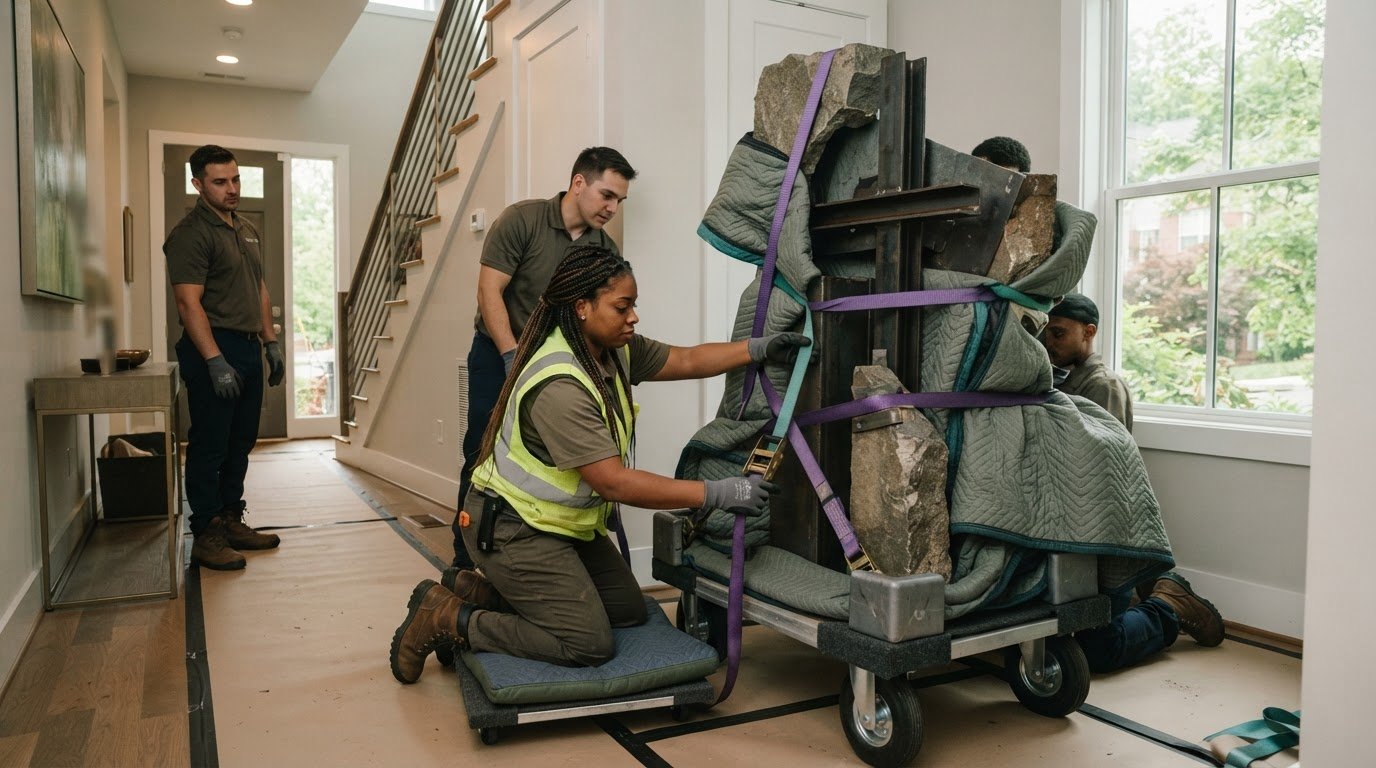
A sculpture can clear the front door and still be too awkward to turn safely in a hallway. Moving a heavy sculpture in Ashburn takes more than muscle: its material, shape, weight, and balance all affect how it should be handled. Stairs, tight corners, or a narrow entry add challenges, and guessing can put the artwork and your home at risk.
It’s reasonable to be unsure what equipment or experience the job requires, or whether a mover is prepared to assess an unusual item. Start with the sculpture and its route. This guide explains what to check, how to prepare, and how to compare moving options. You’ll also learn what to share with a local moving team so it can assess whether the sculpture’s materials, dimensions, weight, and access needs fit its scope. A little planning helps you choose practical support and approach the move with clearer expectations.
Key Takeaways
- Document the sculpture’s size, approximate weight, shape, and current condition so you can explain the job clearly.
- For moving a heavy sculpture in Ashburn, compare DIY help and professional options against the sculpture’s needs, route, equipment, and protection plan.
- Check the full path at both locations, including tight turns, stairs, entryways, and any building requirements.
- Before moving day, confirm the provider’s scope, access and parking arrangements, protection plan, and key contacts.
- Heavy Furniture Moving serves Ashburn and handles heavy, bulky items. Ask whether your sculpture’s materials, dimensions, weight, and route fit its scope.
Moving a Heavy Sculpture in Ashburn: What Makes the Job Different?
A heavy sculpture can be valuable, fragile, awkward to grip, or all three. It’s understandable to worry about a chipped edge, a shift in balance, or damage to a wall or floor. A sculpture move needs an item-specific plan for the object, its protection, the route, and the handling team, not guesswork based on weight alone.
Weight matters, but it doesn’t tell the whole story. A broad base, protruding details, delicate attachments, or an uneven center of balance can affect how the piece should be approached. Moving a heavy sculpture in Ashburn starts with confirming the pickup and destination addresses, then checking access at both locations. A ground-floor entry and a stair landing call for different planning.
How material, shape, and condition affect the move
Share what you know about the sculpture before anyone proposes a handling plan. Identify its materials, fragile or removable components, approximate dimensions and weight, and any existing cracks, chips, loose parts, or repairs. Stone, bronze, glass, and mixed-material sculptures can have different strengths and vulnerabilities. Don’t assume a method that suits one piece will suit another.
Take clear photos from several angles, including the base and any damaged areas. Let the mover assess the specific sculpture before deciding how it should be protected or handled. Equipment and methods for lifting heavy objects vary. Rigging for heavy objects can involve different tools and arrangements, so the right approach depends on the item and the move.
Why the route matters as much as the sculpture
Measure the sculpture at its widest and tallest points, then check the path it must travel. Note doorways, hallway width, tight turns, staircases, entry steps, elevators, and the intended placement at the destination. Fitting through an opening does not necessarily mean there is enough room to turn or carry the sculpture safely beyond it.
Check both addresses, not just the home where the sculpture currently sits. Record narrow approaches, access restrictions, and building requirements that could affect arrival or movement through shared spaces. Photos of the full route can reveal details measurements alone may miss. Send images and measurements when discussing the job, and ask the provider to review them before confirming the plan. Clear information helps determine whether the sculpture and access conditions fit the mover’s scope.
How to Assess and Prepare a Sculpture Move in Ashburn
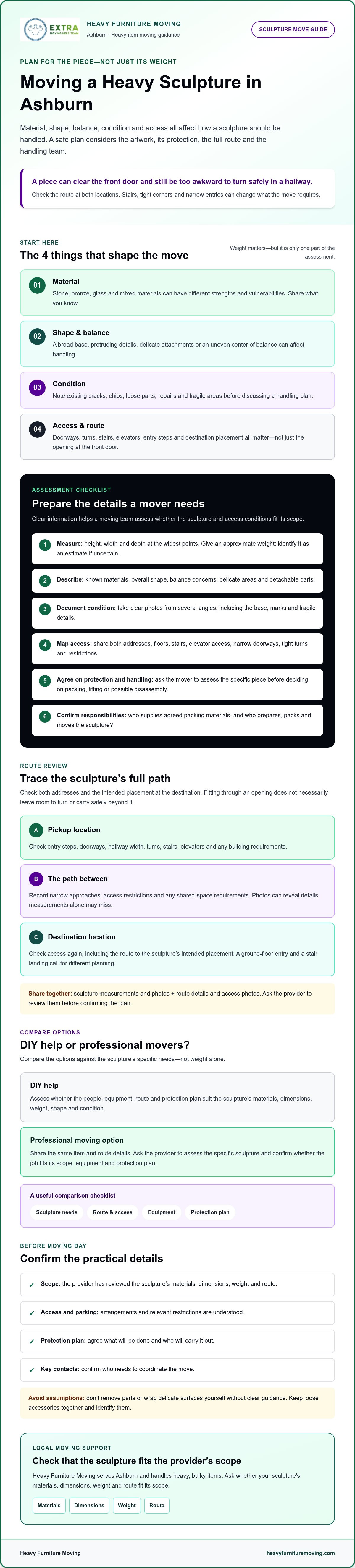
A clear assessment helps a moving team understand the job before confirming whether it fits its scope. For moving a heavy sculpture in Ashburn, share practical details rather than relying on a rough description like “large” or “fragile.” Use this checklist to get organized.
- Record dimensions and approximate weight. Measure the sculpture’s height, width, and depth at its widest points. If you don’t know the weight, label it as an estimate rather than presenting it as exact.
- Describe the piece. Note known materials, overall shape, balance concerns, delicate areas, detachable parts, and any existing damage or repairs.
- Take condition photos. Photograph the sculpture from several angles, including its base and any marks or fragile details. Keep the images as a record of its condition before moving day.
- Map access at both addresses. Share the pickup and destination details, floors, stairs, elevator access, narrow doorways, tight turns, and access restrictions. Identify where the sculpture needs to go at the destination.
- Agree on protection and handling. Ask the mover to assess the specific piece before deciding on packing, lifting, or possible disassembly. Don’t remove parts or wrap delicate surfaces yourself without clear guidance.
- Confirm who handles each task. Ask who supplies any agreed packing materials and who is responsible for preparing, packing, and moving the sculpture. Keep loose accessories together and identify them, but don’t dismantle the piece.
What to share and confirm before moving day
Give the mover the material, measurements, weight estimate, shape, fragile areas, condition concerns, route details, and destination placement. Add clear photos of both the sculpture and the access path. If a measurement or weight is uncertain, say so. These details give the team a useful basis for reviewing the job and identifying what still needs to be checked.
Preparation is not the same as choosing a packing method. A custom crate may be appropriate in some situations, but the sculpture and move need to be assessed first. The National Park Service’s guide to building a custom crate offers background to discuss with a mover. Agree on the actual protection plan and who will carry it out.
Before moving day, clear the agreed route and make sure the intended placement area is ready. If you’re considering local heavy-item moving help, ask Heavy Furniture Moving about your sculpture move and confirm whether its materials, size, weight, and access needs fit the service scope.
DIY or Professional Movers for a Heavy Sculpture in Ashburn?
The right choice depends on more than how many people can lift the piece. Consider its material, stability, shape, route, and protection plan. A general moving crew may handle heavy household items, but that doesn’t automatically mean it’s prepared for every sculpture. Ask about the specific object and both Ashburn addresses before deciding.
| Option | When it may fit | What to check |
|---|---|---|
| DIY handling | A stable, manageable piece with an uncomplicated route and capable helpers. | Can everyone move together without awkward grips or tight turns? Do you have a clear plan to protect the sculpture and home? |
| General moving help | A heavy item that needs lifting support, provided the mover confirms the sculpture is within scope. | Ask what comparable items the team has handled, what equipment and protection are included, and how it will manage the route. |
| Heavy-item assistance | A piece that needs careful review because of its weight, shape, balance, or access challenges. | Confirm the provider accepts this sculpture, its material and dimensions, and the pickup and destination conditions. |
When might professional help be the safer choice?
Seek an assessment if the sculpture is very heavy, has a delicate surface, shifts unexpectedly, or has an unusual balance. Stairs, restricted routes, and tight turns add challenges. Lifting straps or a larger crew alone don’t prove the team has a suitable plan for this particular object.
If the sculpture shifts during handling or you can’t see a clear way through the route, stop. Don’t try to solve the problem mid-lift. Set the move aside and consult a mover about the item and access conditions before proceeding.
Questions to ask before choosing a moving team
Ask for examples of comparable heavy or fragile items the team has handled. Be clear that you’re asking about relevant experience, not assuming sculpture-specific expertise. Then confirm:
- Does the provider serve both Ashburn addresses and accept this specific sculpture?
- What equipment, wrapping, packing, and transport are included in the agreed scope?
- How will the team protect the sculpture, floors, walls, and entryways?
- Who is responsible for packing or preparing the item, and what should you handle?
Heavy Furniture Moving serves Ashburn and handles heavy, bulky items, but acceptance of a sculpture and service fit must be confirmed. Share the sculpture’s details and route, then ask whether the move is within scope before making arrangements.
How to Coordinate the Sculpture Move at Your Ashburn Home
Good coordination turns an agreed plan into a smoother handoff at both ends. Before the move, confirm that the provider accepts the specific sculpture and both Ashburn addresses. Share any changes to the piece or route, agree on protection and responsibilities, then prepare the pickup and destination. Don’t assume a crew size, schedule, or handling method until the provider confirms what the job requires.
What to confirm with the mover before the appointment
Get the scope in writing so everyone understands what’s included and what isn’t. Confirm item acceptance, transport arrangements, agreed tasks, and exclusions. Ask who is responsible for packing, loading, unloading, and placing the sculpture at its destination. If a task is not clearly assigned, clarify it before moving day.
Send updated photos if the sculpture has changed or new information affects access. Report changes such as a blocked entrance, a newly restricted elevator, or a different placement location. Clear updates let the mover review whether the plan still fits, rather than encountering a surprise during handling.
How to prepare the Ashburn pickup and destination
Check arrival details at both locations. Confirm where the team can enter and park, whether a building or property manager requires permission, and how to access elevators or shared spaces. Share contact details for the people coordinating the move, including anyone who needs to authorize entry or answer questions on site.
- Clear the agreed route at pickup and delivery. Move nearby furniture, decorations, and other belongings out of the way.
- Keep pets and people away from the route while the sculpture is being handled. Avoid last-minute traffic through the work area.
- Make sure the intended placement area is ready, and tell the team where the sculpture should go before handling begins.
- Have someone authorized available at both ends to answer questions and confirm access.
Before the team leaves, review the sculpture in its destination spot and raise any visible concerns promptly. Point out the issue and ask what the agreed next step is. Clear communication helps prevent uncertainty after the move.
For moving a heavy sculpture in Ashburn, sharing the item details, access plan, and task responsibilities can help you confirm whether the arrangement suits the job. Discuss your sculpture move with Heavy Furniture Moving and ask whether the item and access conditions fit its scope.
Finding the Right Heavy-Item Moving Help in Ashburn
The right provider reviews the sculpture and its route, then clearly confirms whether the job fits its scope. Don’t rely on a general claim about moving heavy items as proof that a team can handle every sculpture. The material, condition, weight, shape, and access at both addresses all matter.
Heavy Furniture Moving serves Ashburn and handles heavy and bulky items through its heavy-item moving service. The team may be a local option to contact, but sculpture acceptance, materials handled, available equipment, and protection options need to be confirmed for your specific move. Ask for a clear explanation of what the provider will do and what you’ll need to arrange.
How to check whether a mover is a fit
Share the sculpture’s dimensions, material, weight estimate, condition concerns, and photos. Include pictures of the route at pickup and delivery, especially stairs, tight turns, narrow entries, or other access limits. Then confirm that the provider serves both addresses and accepts this particular item.
Before scheduling, agree on the proposed protection plan, equipment, tasks, and responsibilities. Ask who handles packing, loading, transport, unloading, and placement, and clarify anything excluded. Compare providers by how specifically they answer these questions, not by broad promises or confidence alone. A clear written scope helps you understand what has actually been agreed.
What to share when requesting help in Ashburn
Prepare the pickup and destination addresses, preferred timing, access notes, and a short description of the sculpture. Include its estimated dimensions and weight, known materials, fragile areas, condition concerns, and clear photos. If a detail is uncertain, label it as an estimate. This gives the provider useful information to assess the move and identify what still needs confirmation.
If you’re also reviewing general service options, Heavy Furniture Moving’s website offers broader information about its moving help. For a sculpture-specific discussion, describe the piece and route directly, then ask whether the job is within scope. You don’t need to commit before understanding the proposed responsibilities and arrangements.
Ask Heavy Furniture Moving about your Ashburn sculpture move by sharing the sculpture’s details, both addresses, and any access challenges. Clear information is the first step toward setting practical expectations for the move.
Make Your Sculpture Move a Clear, Practical Plan
Moving a heavy sculpture in Ashburn starts with understanding the piece and its route, then finding a provider that confirms the specific job is within scope. Share the sculpture’s materials, dimensions, estimated weight, condition, and access details. Agree on protection, responsibilities, and placement before moving day.
Heavy Furniture Moving lists Ashburn among its service areas and handles heavy and bulky items. The company may be a local option to contact, but ask directly whether it accepts your sculpture and can accommodate its materials, size, weight, and access conditions. Confirm the available equipment and service scope before scheduling.
Ready to discuss the details? Ask Heavy Furniture Moving about your sculpture move. Share the item and route details to start a practical conversation about whether the job fits its scope.
Frequently Asked Questions
Can professional movers move a heavy sculpture in Ashburn?
Some professional movers handle heavy or bulky items, but that doesn’t mean they accept every sculpture. For moving a heavy sculpture in Ashburn, share its materials, dimensions, approximate weight, condition, and route, then ask if it fits the team’s scope. Confirm the protection plan and responsibilities before scheduling. Heavy Furniture Moving serves Ashburn, but verify acceptance and suitability for your specific sculpture.
How do you move a heavy sculpture without damaging it?
Start by recording the sculpture’s condition and identifying its material, shape, fragile areas, and balance concerns. Measure it and check the full route, including doorways, turns, and stairs. Don’t guess how to lift or pack it. Ask a mover to assess the particular piece, then agree on how the sculpture and nearby floors, walls, and entryways will be protected before work begins.
Should I move a heavy sculpture myself or hire movers?
That depends on the sculpture’s weight, stability, fragility, route, and your experience handling it. An awkward shape, delicate finish, or difficult stairway can make a DIY move risky. Ask potential movers about comparable items and how they would assess the job. If you can’t confidently judge the lift or route, pause and seek professional guidance rather than attempting it.
What information do movers need to move a sculpture?
Provide the sculpture’s known materials, height, width, depth, approximate weight, condition, and any fragile or detachable parts. Send clear photos of the piece and its route. Describe stairs, tight turns, elevators, entry access, and where it should be placed at delivery. If you’re uncertain about a measurement or material, label it as an estimate instead of guessing. Clear details help the mover assess the job.
Can movers take a sculpture up stairs or through a narrow doorway?
It depends on the sculpture’s dimensions, shape, handling needs, and the clear space along the route. Measure doorways, turns, stairs, landings, and handrails, then send photos before requesting service. Don’t assume the sculpture can be tilted, turned, or taken apart safely. Ask the mover to review the access conditions and confirm a workable plan before moving day.
How do I choose a sculpture mover in Ashburn?
Choose a provider that serves the address and assesses the sculpture, not one that relies only on a broad heavy-item claim. Ask about comparable items, equipment, protection, packing, route handling, and transport, then confirm responsibilities in writing. Heavy Furniture Moving lists local service in Ashburn, Fairfax, Woodbridge, Manassas, Manassas Park, Aldie, Ashburn, McLean, Vienna, Reston, Centreville, Chantilly, Clifton, Dumfries, South Riding, Fairfax Station, Haymarket, and Gainesville. Confirm item acceptance before booking.
Frequently Asked Questions
Seek an assessment if the sculpture is very heavy, has a delicate surface, shifts unexpectedly, or has an unusual balance. Stairs, restricted routes, and tight turns add challenges. Lifting straps or a larger crew alone don’t prove the team has a suitable plan for this particular object. If the sculpture shifts during handling or you can’t see a clear way through the route, stop. Don’t try to solve the problem mid-lift. Set the move aside and consult a mover about the item and access conditions before proceeding.
Some professional movers handle heavy or bulky items, but that doesn’t mean they accept every sculpture. For moving a heavy sculpture in Ashburn, share its materials, dimensions, approximate weight, condition, and route, then ask if it fits the team’s scope. Confirm the protection plan and responsibilities before scheduling. Heavy Furniture Moving serves Ashburn, but verify acceptance and suitability for your specific sculpture.
Start by recording the sculpture’s condition and identifying its material, shape, fragile areas, and balance concerns. Measure it and check the full route, including doorways, turns, and stairs. Don’t guess how to lift or pack it. Ask a mover to assess the particular piece, then agree on how the sculpture and nearby floors, walls, and entryways will be protected before work begins.
That depends on the sculpture’s weight, stability, fragility, route, and your experience handling it. An awkward shape, delicate finish, or difficult stairway can make a DIY move risky. Ask potential movers about comparable items and how they would assess the job. If you can’t confidently judge the lift or route, pause and seek professional guidance rather than attempting it.
Provide the sculpture’s known materials, height, width, depth, approximate weight, condition, and any fragile or detachable parts. Send clear photos of the piece and its route. Describe stairs, tight turns, elevators, entry access, and where it should be placed at delivery. If you’re uncertain about a measurement or material, label it as an estimate instead of guessing. Clear details help the mover assess the job.
It depends on the sculpture’s dimensions, shape, handling needs, and the clear space along the route. Measure doorways, turns, stairs, landings, and handrails, then send photos before requesting service. Don’t assume the sculpture can be tilted, turned, or taken apart safely. Ask the mover to review the access conditions and confirm a workable plan before moving day.
Choose a provider that serves the address and assesses the sculpture, not one that relies only on a broad heavy-item claim. Ask about comparable items, equipment, protection, packing, route handling, and transport, then confirm responsibilities in writing. Heavy Furniture Moving lists local service in Ashburn, Fairfax, Woodbridge, Manassas, Manassas Park, Aldie, Ashburn, McLean, Vienna, Reston, Centreville, Chantilly, Clifton, Dumfries, South Riding, Fairfax Station, Haymarket, and Gainesville. Confirm item acceptance before booking.