Moving a Heavy-Duty Lathe to an Ashburn Basement: Costs
Moving a heavy-duty home workshop lathe to a basement in Ashburn involves more than an hourly rate. Heavy Furniture Moving provides upfront quotes before work begins. The lathe’s weight and dimensions, access route, crew needs, and handling requirements shape the estimate.
It’s reasonable to focus on labor costs, but a basement move also depends on whether the route can accommodate the machine safely. Stairways, turns, doorways, floor support, and basement clearance all matter. Sharing these details early helps the crew plan the job accurately.
Here, you’ll learn what affects labor and scheduling, how a moving crew plans for heavy-item handling, and what to measure before moving a lathe into a basement. You’ll also find which details help create a clear moving plan, so you can make your next decision with less guesswork.
Key Takeaways
- Hourly service cost depends on the move plan, including the lathe’s size, access route, crew needs, and handling time.
- Professional handling helps reduce risks from unstable loads, unsuitable lifting methods, and inadequate equipment.
- Scheduling the move around household access and other site constraints can help limit delays and disruption.
- Basement suitability depends on the lathe’s dimensions and weight, plus stairways, turns, doorways, floor limits, and overhead clearance.
- Sharing accurate machine details and access information helps shape a practical moving plan and estimate.
Risks of moving machinery without trained crews
A heavy machine can shift unexpectedly during a basement move. Poor control can injure workers, damage the lathe, or harm the home. Stairs, tight turns, and uneven transitions make each movement more demanding, so the crew needs to plan those transitions before lifting begins.
Weight changes the handling requirements. These examples show why appearance alone cannot guide a lifting plan. The crew needs the machine’s actual weight, shape, and balance points.
Improper lifting can damage equipment or cause structural failure. Inadequate rigging can let a load drop, while an untrained crew may injure itself or others trying to correct a shift. Even a small movement can trap hands or send a machine toward a wall, stair edge, or doorway.
Team coordination matters. Moving large machinery with bars and round stock calls for at least two people in the approach described here. More people do not automatically make a move safer. Each worker needs a clear role, agreed signals, and a shared understanding of when to stop. A sudden pull or uneven push can upset the load.
Anchors create another hazard when used to pull heavy loads. A failed attachment can release force toward the crew, and improvised rigging makes load control less predictable. Professionals assess the machine and route, then choose suitable equipment and a controlled sequence. They avoid relying on a single attachment or an untested lifting point.
Licensing, insurance, and training address different concerns. A license or insurance policy alone does not show that a crew can safely handle a machine tool. Relevant training should cover load control, communication, and recognizing when a planned movement becomes unsafe. Insurance terms concern covered losses, while licensing relates to applicable permissions. Neither replaces hands-on skill with heavy machinery.
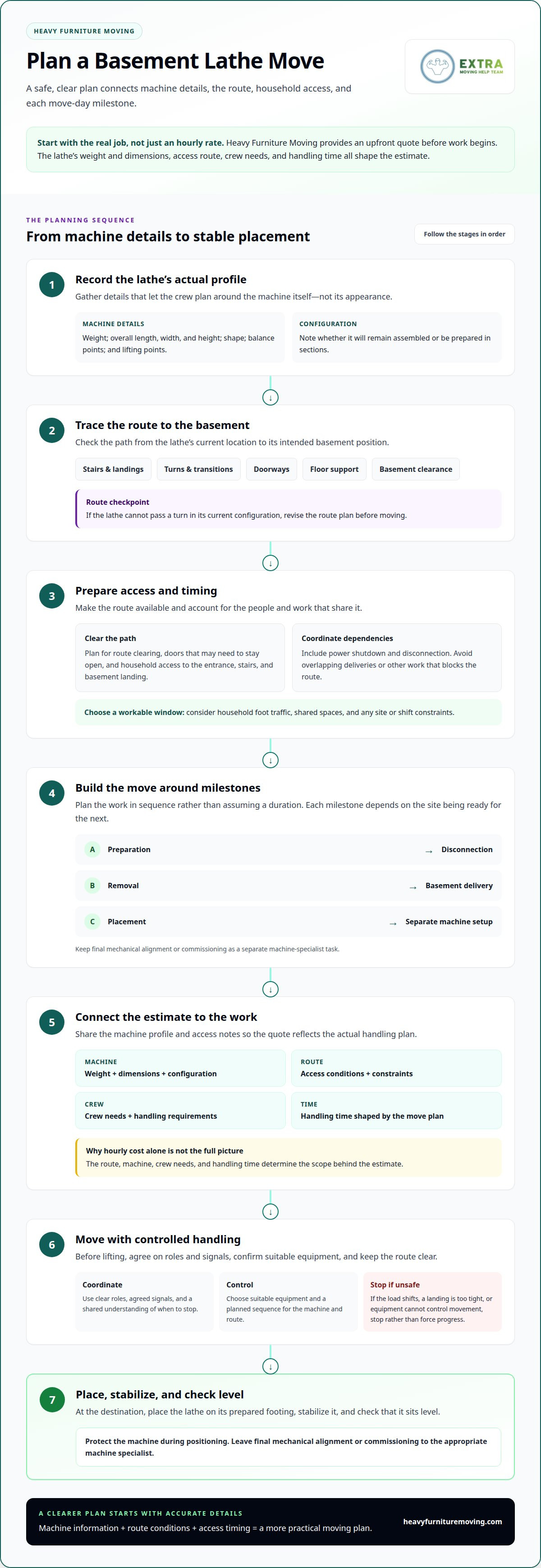
After basement delivery, professional movers place the lathe on its prepared footing, stabilize it, and check that it sits level. They protect the machine during positioning and leave final mechanical alignment or commissioning to the appropriate machine specialist.
Before work begins, identify the machine’s weight, balance, lifting points, and route hazards. Agree on stop signals and keep the path clear. If the load shifts, a stair landing proves too tight, or the equipment cannot control the movement, stopping is safer than forcing progress. That decision protects the crew, the lathe, and the basement.
Downtime and move scheduling
Start scheduling with the lathe’s current use and destination. Note the last work session before disconnection and the first planned session after installation. That gap reflects practical downtime, not just the time spent carrying the machine. A basement route that needs clearing or preparation adds tasks before moving day. List those tasks alongside the move so the workshop isn’t treated as ready too early.
Next, coordinate the move with power shutdowns and household access. The lathe may need to be disconnected before it can be handled, so include that step in the sequence. Keep the path clear from the pickup point to the basement entrance. Avoid scheduling deliveries or other work through the same hallway during the move. Fewer overlapping activities leave the crew a clear route.
Access timing matters in Ashburn homes, especially when the route passes through shared spaces. Identify when family members, visitors, or other workers use the entrance, stairs, or basement landing. Then choose a window that reduces foot traffic along the planned path. If a door must stay open during handling, account for that in the household plan. Avoid scheduling other tasks that block the route or compete for the same space.
Build the sequence around milestones, not an assumed duration. The plan should cover preparation, disconnection, removal, basement delivery, placement, and any separate machine setup. Each step depends on the one before it. If the lathe cannot pass a turn in its current configuration, revise the route plan before proceeding. Keeping those decisions in the schedule prevents later steps from starting before the site is ready.
For a workplace or shared shop, coordinate with shift schedules, power shutdowns, and site traffic. These factors can affect when equipment can be disconnected and which routes remain open. For a home workshop, plan around household access, other deliveries, and electrical work. Record each constraint before choosing the move window.
Assign one person to communicate schedule changes and keep the move sequence current. That person can relay access updates, confirm when the route is clear, and tell household members when the basement area is in use. If a delivery or power-related task shifts, update the linked steps instead of leaving conflicting plans in place. Clear communication keeps everyone working from the same schedule.
For a smoother planning conversation, gather the lathe’s basic details and access notes before arranging help with a heavy move. Include its location, intended basement position, and any timing constraints. A complete outline helps connect the move window to the real work, rather than treating delivery as the only milestone.
Service estimates and hourly pricing factors
The price depends on the case and is given after a quote request. The lathe’s weight and dimensions, access, crew needs, and handling time shape the work. An hourly rate alone cannot show the full scope. A clear estimate connects labor time to the actual machine and route. That makes the assumptions behind the estimate easier to understand.
Machine details affect the work plan. A lathe that stays assembled may need different handling from one prepared in sections. Its overall length, width, height, and weight help determine how the crew can move it. Shape matters too: a long bed can be difficult to turn through a narrow passage, even when its weight is manageable.
Access can affect labor time. A straight route from the entrance to the basement differs from stairs with a tight turn or low clearance. Each threshold, landing, and doorway can affect how the crew controls the machine. Repositioning at a landing, for example, requires different handling from moving along an open, direct path. The estimate should reflect the actual route.
The requested work also matters. Moving the lathe to the basement is distinct from disconnecting it, taking it apart, or preparing it for operation. These tasks require different work and should be described separately. A useful estimate states what is being moved, where it is going, and which handling steps are included.
Share practical details when requesting an estimate. Provide the lathe’s make and model, dimensions, weight, and current configuration if available. Describe the pickup location and basement route, including stairs, turns, and doorways. Photos can help show the machine and access points. Mention any parts already removed and identify the intended placement area.
Compare estimates by scope, not just hourly rate. Check whether each covers the same lathe, route, preparation, and delivery point. A lower hourly rate may not mean less total work if important handling steps are unclear. Ask for the estimate to explain its assumptions and covered work. A clear scope helps prevent mismatched expectations.
For a heavy-item moving service, the most useful starting point is an accurate picture of the job. Gather the machine details and route information together. This gives the estimate a practical basis and helps match labor to the demands of moving the lathe into an Ashburn basement.
Site assessment, floor limits, and clearance planning
For moving a heavy-duty home workshop lathe to a basement in Ashburn, assess both the route and the intended position. A careful review considers machine size, floor support, stair access, and overhead clearance before selecting a handling plan.
Lathe Weight and Dimensions
Measure the lathe in its actual moving configuration, including attached motors, cabinets, and protruding controls. Length, width, and height determine whether it can pass through doorways and turn on stair landings. Compare the machine’s weight and support points with the planned floor location. A basement’s capacity depends on its construction and condition, so the machine’s weight alone cannot establish whether a particular floor can support it.
For Loudoun County, distinguish machinery delivery from planned building alterations. Structural, electrical, or egress work can raise permit and code questions, depending on the project’s scope. The move itself does not determine which requirements apply. Keep any planned building work separate from the lathe’s handling and placement plan.
Basement Stair Moving Method
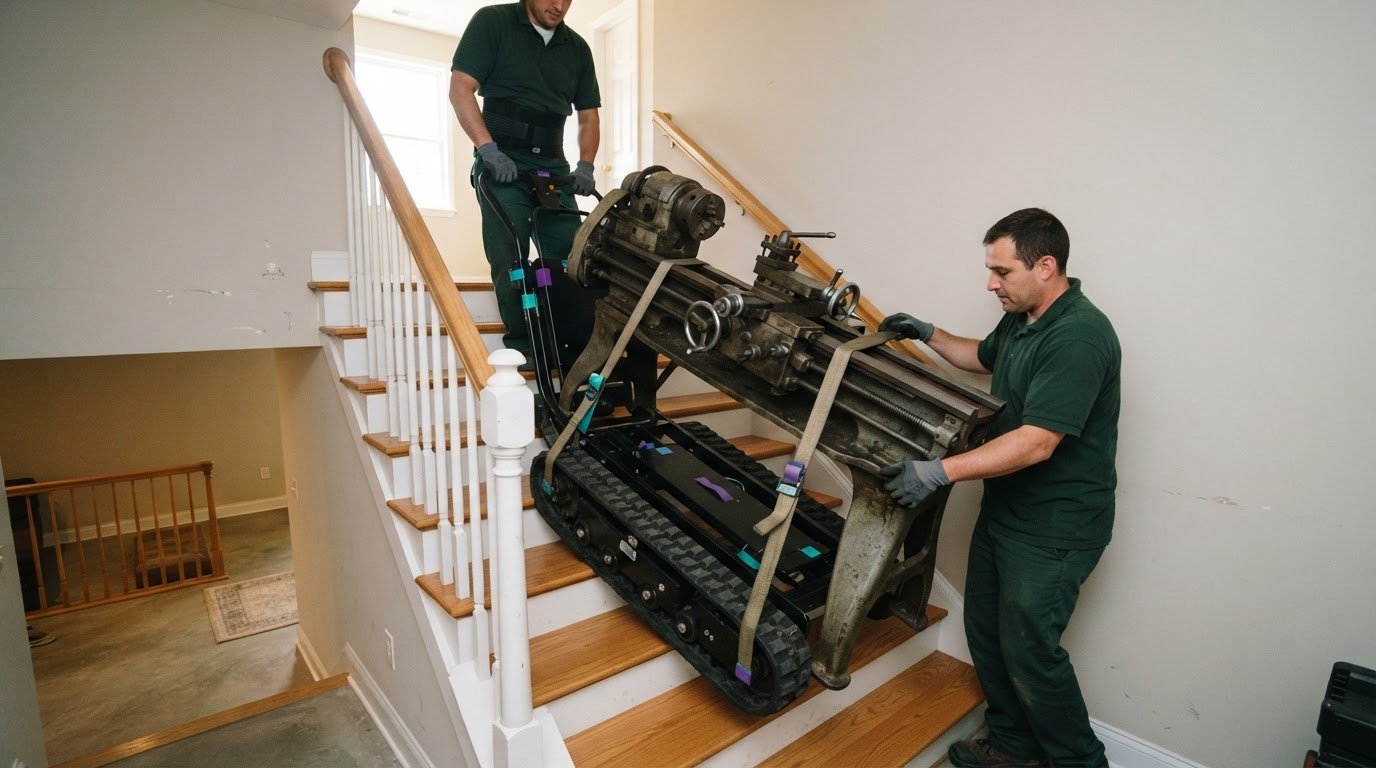
A moving crew plans the descent around stair width, landings, turns, and the lathe’s balance. Workers control the machine’s movement and coordinate each transition. Depending on the machine and route, equipment may include machinery skates for suitable level surfaces, a gantry for lifting, or a stair-climbing dolly. No single tool suits every basement layout.
Planning to move a heavy-duty home workshop lathe into an Ashburn basement means checking the entire path, not just the stair opening. Measure clear stair width, headroom, landing length and width, doorway openings, and the tightest turning space. Account for handrails, pipes, fixtures, and door hardware that reduce clearance.
Equipment dimensions matter too. In one basement setup, a gantry support beam was five inches too low to travel across the room. That example shows why the crew must consider working height and travel space, not just lifting capacity. The assessment should also identify the final footprint and any low beams or ducts above it.
Share the lathe’s dimensions and route layout before the move. For moving a heavy-duty home workshop lathe to a basement in Ashburn, those details help the crew assess access, floor support, and placement as one connected plan. If the route or destination needs building changes, address that work separately before scheduling delivery.
How much does a heavy-duty home workshop lathe weigh and what are its dimensions?
Lathe weight varies by model and configuration. These examples show why a model name alone cannot replace the machine’s actual weight and setup details.
Parts can change the load considerably. An Oneway lathe bed weighed 300 pounds with its motor removed. That figure describes the bed in that configuration, not the complete lathe. For planning, identify which components remain attached and which move separately. A motor, cabinet, or stand can affect both handling and the space needed.
Dimensions matter just as much as weight. A 12-by-37-inch lathe was described by its size, but that measurement doesn’t establish every outside dimension or the clearance needed to carry it. Record the full machine’s length, width, and height, including protruding parts. Then capture measurements for any sections moved separately.
For a basement route, compare the machine’s measurements with every access point. A doorway may fit the lathe’s width but not its height when tilted. A stair landing may leave too little room to turn a long bed. The crew needs the narrowest opening and tightest turn, not just the entrance measurement.
Use a machine-specific information sheet. Include the make and model, current configuration, known weight, and overall dimensions. Add separate measurements for a bed, motor, cabinet, or stand if those parts will travel separately. Note where the machine can be lifted and which sensitive controls or protrusions need protection.
Examples help show why estimates need exact details:
- An Oneway bed weighed 300 pounds with its motor removed.
- A 12-by-37-inch lathe provides a size description, not every clearance measurement.
These figures describe different machines and configurations. Don’t use one as a stand-in for another. Accurate weight and dimensions help determine handling, route fit, and placement requirements. They also help the crew prepare for moving the machine through the home.
For a heavy lifting moving service, provide the machine’s details and basement access measurements. That information gives the moving plan a clear starting point.
Fenton advises assessing equipment weight and size, floor load limits, entry and exit points, and obstructions or clearance issues before a move. A Bridgeport mill column and a Sheldon lathe motor and drive cabinet each weighed a little over 1,000 pounds.
A forum participant reported controlling machinery weighing up to about 800 pounds using pipe rollers.
Heavy Furniture Moving: in home furniture movers near me
Heavy Furniture Moving helps with bulky household moves that require careful planning and skilled handling. Its heavy lifting moving service suits jobs where a heavy item must pass through tight indoor access or reach a basement. Share the lathe’s dimensions, weight, configuration, and route details so the moving plan reflects the actual job.
Use in-home moving help for heavy items that need careful placement inside the house. If your project also involves other bulky household belongings, Movers Near Me can support a broader local move. The right next step is to describe the item and destination clearly, including stairs, turns, and the intended basement location.
Contact Heavy Furniture Moving to discuss your move.
Get Your Basement Workshop Ready for Its Next Chapter
Moving a heavy-duty home workshop lathe to an Ashburn basement is a chance to plan the workshop around how you’ll use it. Think beyond getting the machine inside. Consider where you’ll stand, how you’ll reach the controls, and whether nearby equipment leaves room to work. A clear destination helps make the delivery a useful step toward setting up your home workshop.
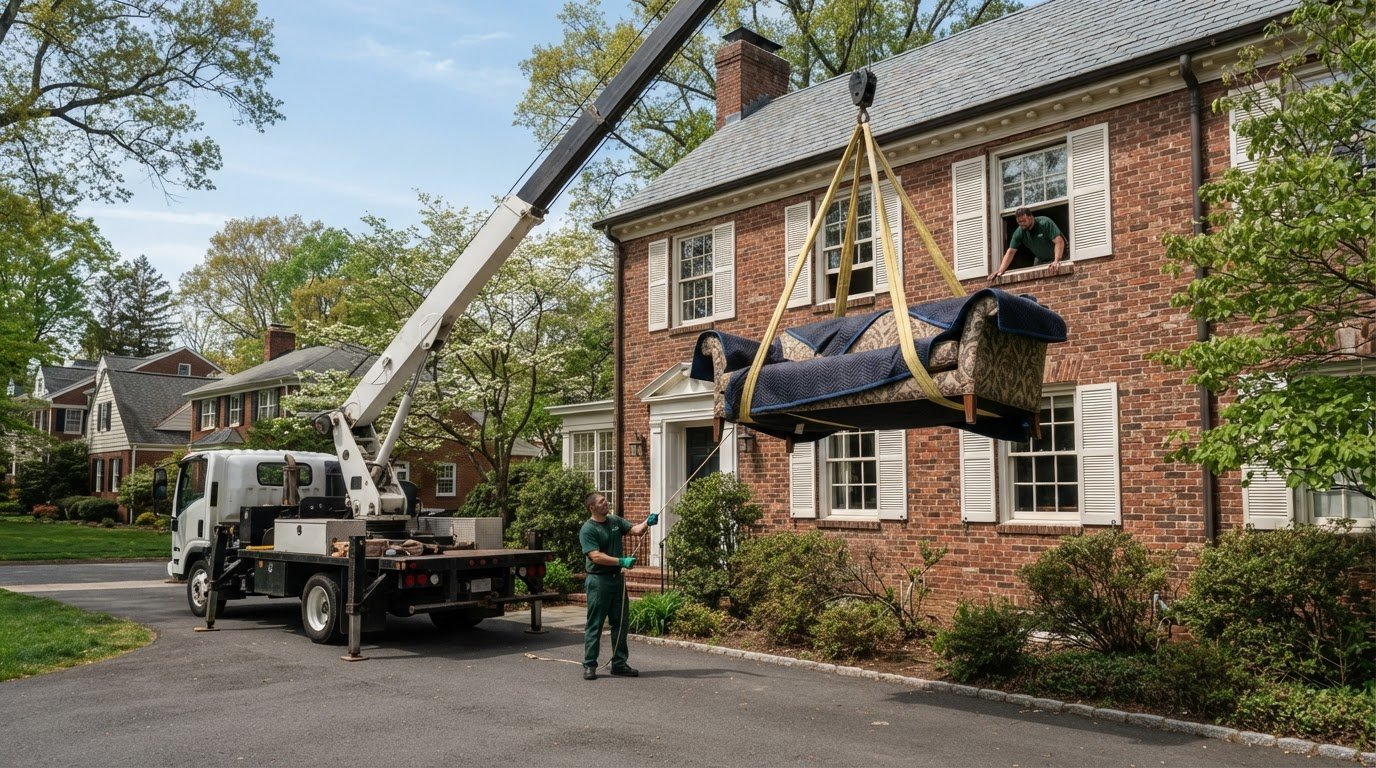
Heavy Furniture Moving provides residential moving help for bulky items, including Exercise Equipment Moving and Sofa Hoisting. These services offer practical support when heavy objects need careful handling around the home. For a lathe move, share the machine and access details so the plan can address your specific job.
Take the next step when you’re ready. Contact Heavy Furniture Moving to discuss your move and plan a clear path toward your basement workshop.
Frequently Asked Questions
How much do professional machinery movers charge to move a lathe into a basement near Ashburn, Virginia?
The estimate depends on the lathe, access route, crew needs, and handling work. Heavy Furniture Moving charges hourly labor with a two-hour minimum, while most single heavy items are priced at a flat rate. Quotes are provided upfront before work begins. Explain whether the lathe will remain assembled and describe the basement access so the estimate reflects the actual job.
Which machinery moving companies serve Ashburn and Loudoun County, Virginia?
Heavy Furniture Moving serves Ashburn and nearby Northern Virginia communities with residential moving help for heavy and bulky items. Its local service area includes Fairfax, Woodbridge, Manassas, Manassas Park, Aldie, Mclean, Vienna, Reston, Centreville, Chantilly, Clifton, Dumfries, South Riding, Fairfax Station, Haymarket, and Gainesville. Describe the lathe and basement route when discussing your move so the handling requirements are clear.
Can a basement floor support the weight of a heavy-duty lathe and its point loads?
That depends on the floor’s construction and condition, and on how the lathe’s weight bears on its feet or supports. Total weight alone does not establish how the load affects a specific basement floor. If floor capacity is uncertain, share the machine’s weight and support layout with a qualified building professional. Their assessment can account for the structure and planned placement.
What measurements should you provide so professional movers can check basement stair width, headroom, landing size, and turning clearance before moving a lathe?
Provide the narrowest clear stair width, lowest overhead clearance, landing length and width, and tightest turn. Include doorway openings along the route, plus the lathe’s full length, width, and height in its moving configuration. Note obstructions such as handrails, pipes, or door hardware. Photos taken from each landing can help show how the route changes direction.
What can go wrong when moving a heavy lathe without professional movers, including injury, equipment damage, and basement or stair damage?
An uncontrolled lathe can tip, slide, or strike a person, wall, stair edge, or doorway. A sudden shift can trap hands or damage controls and other exposed machine parts. On stairs, poor load control may also harm treads, railings, or nearby walls. Improvised lifting makes those risks harder to manage, especially when the machine must turn at a landing.
How should a lathe be secured, leveled, and reinstalled after basement delivery?
Place the lathe on its prepared footing, stabilize it, and check that it sits level. Leave final mechanical alignment or commissioning to the appropriate machine specialist.
Frequently Asked Questions
The estimate depends on the lathe, access route, crew needs, and handling work. Heavy Furniture Moving charges hourly labor with a two-hour minimum, while most single heavy items are priced at a flat rate. Quotes are provided upfront before work begins. Explain whether the lathe will remain assembled and describe the basement access so the estimate reflects the actual job.
Heavy Furniture Moving serves Ashburn and nearby Northern Virginia communities with residential moving help for heavy and bulky items. Its local service area includes Fairfax, Woodbridge, Manassas, Manassas Park, Aldie, Mclean, Vienna, Reston, Centreville, Chantilly, Clifton, Dumfries, South Riding, Fairfax Station, Haymarket, and Gainesville. Describe the lathe and basement route when discussing your move so the handling requirements are clear.
That depends on the floor’s construction and condition, and on how the lathe’s weight bears on its feet or supports. Total weight alone does not establish how the load affects a specific basement floor. If floor capacity is uncertain, share the machine’s weight and support layout with a qualified building professional. Their assessment can account for the structure and planned placement.
Provide the narrowest clear stair width, lowest overhead clearance, landing length and width, and tightest turn. Include doorway openings along the route, plus the lathe’s full length, width, and height in its moving configuration. Note obstructions such as handrails, pipes, or door hardware. Photos taken from each landing can help show how the route changes direction.
An uncontrolled lathe can tip, slide, or strike a person, wall, stair edge, or doorway. A sudden shift can trap hands or damage controls and other exposed machine parts. On stairs, poor load control may also harm treads, railings, or nearby walls. Improvised lifting makes those risks harder to manage, especially when the machine must turn at a landing.
Place the lathe on its prepared footing, stabilize it, and check that it sits level. Leave final mechanical alignment or commissioning to the appropriate machine specialist.