Moving a Heavy Cast Stone Fountain to Your Chantilly Garden
A cast-stone fountain is safer to move in separate, protected sections than as one heavy structure. For moving a heavy cast-stone water fountain to a garden in Chantilly, first assess its weight and dimensions, then choose equipment with enough capacity and prepare a level spot for the basin.
It’s understandable to worry about cracked stone, awkward turns, or a fountain that won’t sit evenly in the garden. A careful plan helps: drain and disassemble the fountain, protect delicate pieces, and clear the route before moving anything.
This guide explains how to measure the fountain, protect and label its parts, and choose equipment for the route. You’ll also learn how to position and level the basin before reassembling the fountain. Taking these steps in order makes the move easier to manage.
Key Takeaways
- Assess the fountain’s size and weight before choosing how to move it.
- Separate and protect delicate pieces to help prevent chips and make reassembly easier.
- Choose moving equipment with enough capacity, and plan how to handle uneven ground and tight turns.
- Prepare a firm, level base so the basin sits steadily in its new garden spot.
- Move heavy sections with controlled support rather than trying to handle the full fountain at once.
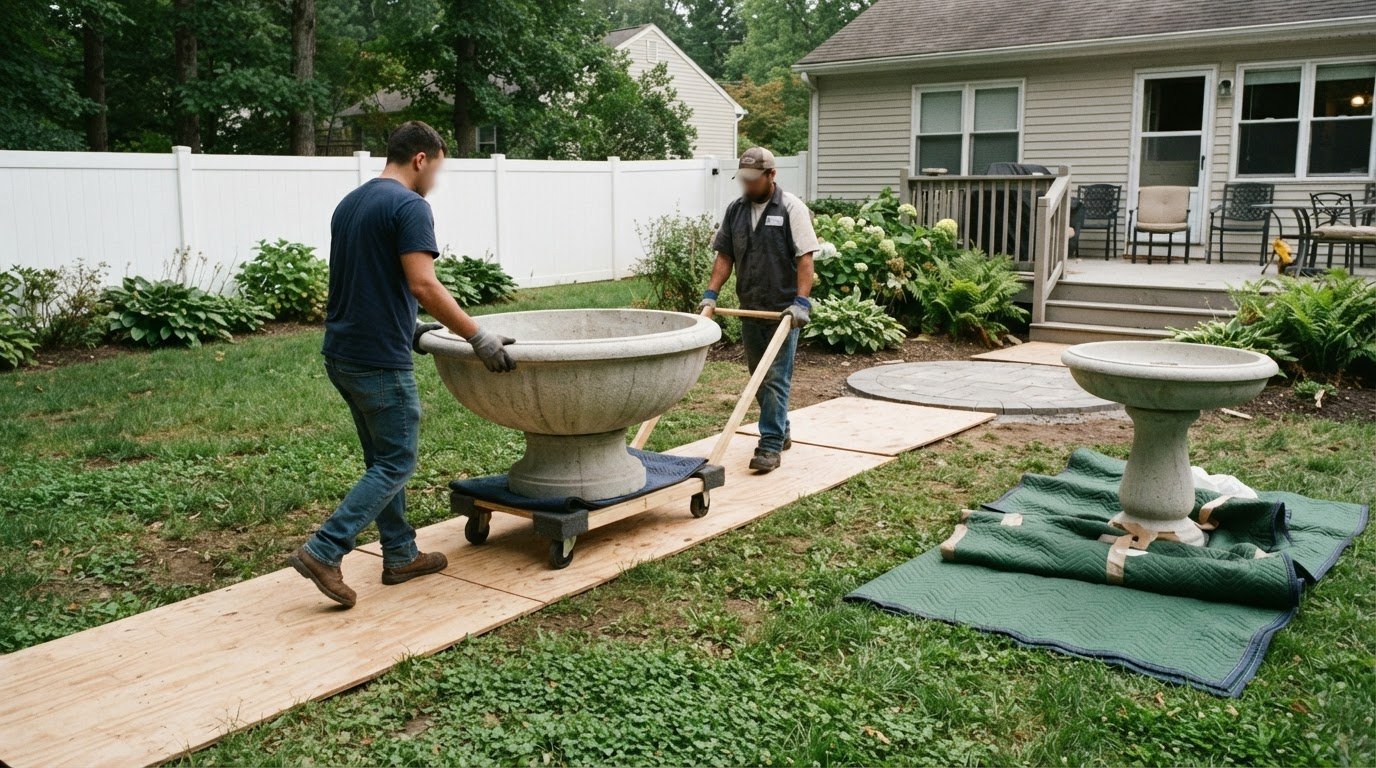
Moving heavy fountain parts with a furniture dolly
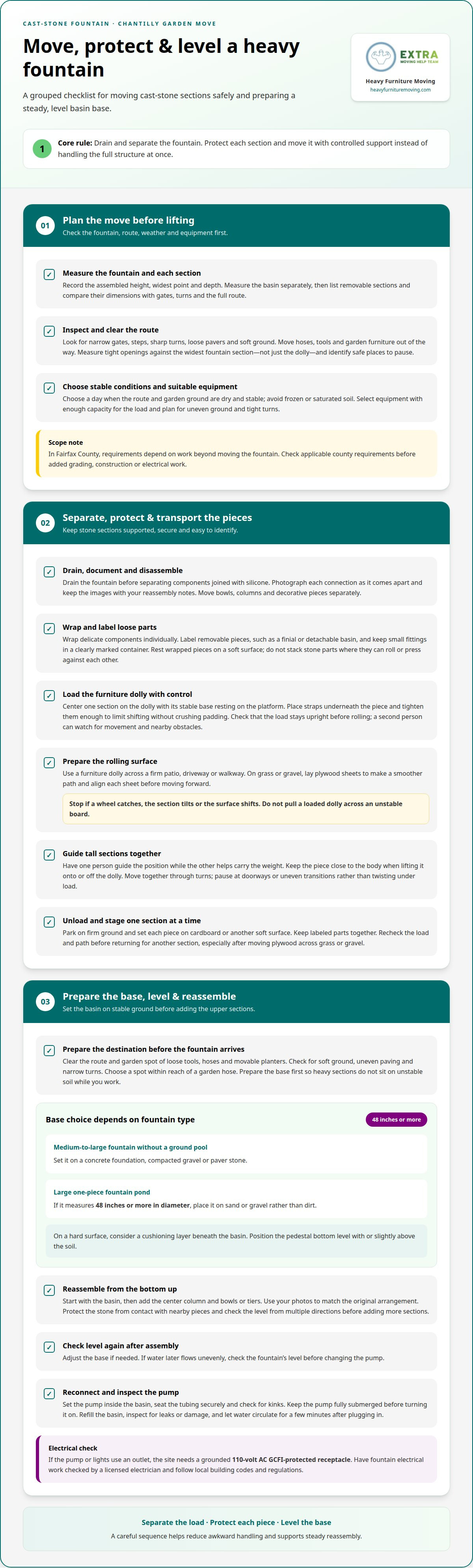
In Fairfax County, permit requirements depend on any work beyond moving the fountain. Distinguish the move from added grading, construction, or electrical work, and establish the applicable county requirements for those tasks before starting.
In Northern Virginia, choose a day when the route and garden ground are dry and stable. Avoid frozen or saturated soil, which can make footing and dolly movement less predictable.
- Clear and inspect the route. Walk from the fountain’s current location to its garden destination before loading a dolly. Look for narrow gates, steps, sharp turns, loose pavers, and soft ground. Measure tight openings against the widest fountain section, not just the dolly. Move hoses, tools, and garden furniture out of the path, then decide where the dolly can pause safely.
- Separate pieces joined with silicone. Detach silicone-joined cast-stone components before lifting or moving them. Drain the fountain first, then photograph each connection as it comes apart. Keep the images with your reassembly notes. Removing joined sections reduces awkward handling and lets you transport bowls, columns, and decorative pieces separately.
- Protect and secure loose parts. Wrap delicate components individually and label removable parts, such as a finial or detachable basin. Put small fittings together in a clearly marked container so they don’t get lost along the route. Keep wrapped pieces on a soft surface while preparing the dolly. Don’t stack stone parts where one can roll or press against another.
- Load the dolly with control. Place the fountain section centrally on the dolly, with its stable base resting on the platform. Secure it with straps placed underneath the piece, then tighten them enough to limit shifting without crushing protective padding. Check that the load remains upright before rolling. A second person can watch the section and call out movement or contact with nearby obstacles.
- Roll over a prepared surface. Use a furniture dolly across a firm patio, driveway, or walkway instead of carrying the full weight. For grass or gravel, lay plywood sheets to create a smoother rolling path. Align each sheet before advancing, and stop if a wheel catches, the section tilts, or the surface shifts. Don’t pull a loaded dolly across an unstable board.
- Guide taller sections with two people. Have one person guide the position while the other helps carry the weight. Keep the stone piece close to the body when lifting it onto or off the dolly, and move together through turns. Pause at a doorway or uneven transition rather than twisting under load. Watch stability throughout the move and stop to correct any shift.
- Secure every part at the destination. Park the dolly on firm ground, unload one fountain section at a time, and set each piece on cardboard or another soft surface. Keep labeled parts together for reassembly. Check the load and path again before returning for another section, especially after moving plywood across grass or gravel.
Permit requirements depend on any work beyond moving the fountain. Check the applicable county requirements for added grading, construction, or electrical work before starting.
Positioning and leveling the fountain basin
Prepare a firm, level destination before setting down the basin. A stable base supports reassembly and helps water flow evenly through the fountain.
-
Prepare the path and site
Clear the route to the garden spot, including loose tools, hoses, and movable planters. Check for soft ground, uneven paving, narrow turns, and places where a dolly may catch. Choose a destination within reach of a garden hose for rinsing and replenishing evaporated water. Prepare the base before the fountain arrives, so heavy pieces don’t need to sit on unstable soil while you work.
-
Build a stable base and check level
Set a medium-to-large fountain without a ground pool on a concrete foundation, compacted gravel, or paver stone. Place a large one-piece fountain pond measuring 48 inches or more in diameter on sand or gravel rather than dirt. Consider placing a cushioning layer beneath the basin on a hard surface. Position the pedestal bottom level with or slightly above the soil, then check the basin from multiple directions before adding more sections.
-
Reassemble and level the fountain
Start with the basin, then add the center column and bowls or tiers from the bottom upward. Use photos of the original arrangement to match each part. As you align the sections, protect the stone from contact with nearby pieces, then check the fountain’s level after assembly and adjust the base if needed. If water later flows unevenly, check the level before changing the pump.
- Reconnect the pump and inspect operation. Set the pump inside the basin after assembly, then seat the tubing securely and check for kinks before filling. Keep the pump fully submerged before turning it on. If the pump or lights use an outlet, the site needs a grounded 110-volt AC GCFI-protected receptacle. Have fountain electrical work checked by a licensed electrician and follow local building codes and regulations. Refill the basin, inspect for leaks or damage, and let water circulate for a few minutes after plugging in. For help handling heavy sections, consider a heavy lifting moving service.
Assessing fountain weight and dimensions
Measure the fountain and assess the weight of each section before choosing equipment. When moving a heavy cast-stone water fountain to a garden in Chantilly, use those details to plan handling and access.
- Measure the assembled fountain. Record its overall height, widest point, and depth. Measure the basin separately, since its shape may determine clearance at gates and turns. Compare these measurements with the route from the current location to the garden, and keep them together for planning.
- List each removable section. Note the basin, pedestal, bowls, center column, and decorative top as separate pieces. Measure each section at its widest and tallest points. This inventory shows which pieces may pass through a gate individually and which need a different handling plan. Use the same component names in your notes and assembly photos.
- Find the fountain’s weight information. Check product paperwork, packaging details, or a maker’s label for the stated weight. One concrete fountain was described as weighing 200 pounds, but that example doesn’t establish the weight of another fountain. Record any available figure and keep it tied to the exact model or section it describes.
- Separate total weight from section weight. If the paperwork gives only the assembled weight, don’t assume the sections weigh equally. A broad basin, thick pedestal, or large bowl may weigh more than a decorative top. Record individual section weights when available. Otherwise, plan around the heaviest piece rather than dividing the total evenly.
- Account for removable contents. Drain the fountain before moving it, and note whether the pump, tubing, or other removable parts add to the load. Keep them separate from the stone sections when assessing weight, and record which accessories need their own packing.
- Compare each section with access points. Check piece dimensions against gates, walkways, steps, and tight turns. Include the dolly or hand truck in your clearance plan, since equipment adds to the load’s overall width and height. A section that clears a gate alone may not fit while secured to a dolly.
- Use the measurements to shape the move plan. Keep weights, dimensions, component names, and route notes together. Mark the heaviest section and any piece with an awkward shape. These details help you choose equipment suited to the route. When moving a heavy cast-stone water fountain into a Chantilly garden, account for both the load and the room needed to maneuver it.
Carefully unpacking and protecting fountain pieces
Cast stone can crack or chip if sections collide, tip, or rest unevenly. Damage to an edge can also make a piece harder to align during reassembly.
- Open the package on stable ground. Set the pallet or container where it won’t shift as parts come out. Clear nearby tools and garden items first. Heavy outdoor fountains may arrive on pallets, with delivery stopping at the home’s front or driveway. Keep the unpacking area close to that point, then move each piece only after it’s supported.
- Prepare a soft landing surface. Lay cardboard or choose a clear patch of grass before removing stone sections. Place each component on that surface as it comes out. Don’t set a bowl on bare concrete or against another stone piece. A soft landing area limits hard contact while you handle packaging and prepare the next section.
- Remove one section at a time. Take out the upper decorative piece first, then the bowls, column, and basin as the package allows. Keep the remaining fountain supported while removing each part. Don’t pull a section sideways past another stone surface. Lift it clear before turning, so an edge doesn’t catch on packaging or a neighboring component.
- Unwrap delicate details separately. Remove protective wrapping from one ornament or bowl at a time. Keep the wrapping nearby until that piece is ready for transport. Check narrow rims, sculpted details, and contact edges for chips or cracks. These areas can be harder to protect if they’re pressed against straps, cardboard folds, or another loose component.
- Keep each section apart. Arrange the basin, column, bowls, and decorative top with space between them. Don’t stack stone pieces just to clear the work area. If a section rolls or tips, nearby parts can take the impact. Keep the heaviest pieces on stable ground and the smaller, delicate components on separate soft surfaces.
- Label parts for reassembly. Mark each removable section with its position, such as “basin,” “center column,” or “top bowl.” Keep labels with the pieces without placing them across an edge or fitting surface. Photograph the arrangement as you unpack it. Clear names and pictures help distinguish similar bowls and match the correct sequence later.
- Secure loose components separately. Put removable decorative elements and small fountain parts together in a container that won’t spill during handling. Label it with the fountain’s parts, not a general description. Keep it separate from heavy stone sections, so the container won’t be crushed or lost under the larger pieces.
- Keep the unpacking area orderly. Move discarded packaging away from the walking route after each section is removed. Leave the labeled pieces on their soft surfaces until they’re ready to be loaded. Before moving anything, look for a loose ornament, exposed edge, or section resting at an angle. Correct the setup before lifting.
Choosing dollies, hand trucks, cranes, or forklifts
Match equipment to each fountain section’s weight, shape, and route. The right equipment helps control movement without forcing a delicate stone piece into an awkward position.
- Start with the heaviest section. Use the weight and measurements recorded for each fountain piece, not just the assembled fountain. A dolly or hand truck for a smaller fountain must have a weight capacity greater than the fountain’s weight. If the section’s weight exceeds the equipment rating, don’t load it onto that equipment.
- Choose a furniture dolly for firm, open routes. A furniture dolly can roll heavy sections across a patio, driveway, or walkway, reducing the need to carry their full weight. Check that the piece sits securely on the platform and can pass through turns without striking walls or garden features. Use plywood over grass or gravel to create a smoother rolling surface.
- Consider a hand truck for a stable, compact section. A hand truck may suit a section that can rest securely against its frame. Compare the section’s shape with the support area before loading. The rating must exceed the fountain’s weight, and straps should secure the piece without placing pressure on fragile edges or decorative details.
- Keep straps beneath the load. Whether using a dolly or hand truck, position straps underneath the fountain piece before tightening them. This helps secure the section to the equipment during movement. Keep the load balanced and upright. Stop if it shifts, leans, or presses against a sharp edge, then correct its position before continuing.
- Assess whether heavier equipment is needed. A crane or forklift may be considered when a section is too heavy or awkward for the available dolly, hand truck, or carrying route. Base the decision on the piece’s measurements, weight, access, and destination. Don’t assume powered equipment solves a narrow gate, soft ground, or an unstable landing area.
- Plan guidance before using heavy equipment. Coordinate each movement and assign skilled people to guide the fountain section. Agree on clear stop signals before lifting or rolling. Keep the path and landing area clear, and monitor the section’s stability throughout. Pause immediately if the load tilts or the route changes.
- Match the equipment to the whole route. A suitable machine still needs clear access from the fountain’s starting point to the garden. Account for gates, turns, surface changes, and the space needed to set the piece down. If the route narrows, smaller separated sections may be more practical than moving one bulky component intact.
- Keep the load controlled at the destination. Bring each section to stable ground before removing straps or supports. Set it down carefully, then inspect the stone for movement or contact damage. For help handling demanding household loads, arrange heavy-item moving help.
Heavy Furniture Moving
Heavy Furniture Moving handles demanding lifts and bulky items that are difficult to move alone. If the fountain’s cast-stone sections feel too heavy or awkward to handle safely, the team can help with the lifting and local moving support. This can be useful when narrow access, uneven ground, or a heavy basin complicates the move.
Keep your measurements, route details, and notes about the fountain’s separate pieces ready when you reach out. That information helps describe the lift and the access involved. For hands-on help with a challenging move, contact Heavy Furniture Moving.
Make the Garden Move Your Next Step
Before moving a heavy cast-stone water fountain to a garden in Chantilly, turn your measurements and route notes into a clear handling plan. Decide where each section will be set down, who will guide the load, and how the assembled fountain will fit the garden. A defined landing spot helps avoid last-minute changes.
If the weight or access makes the lift difficult, Heavy Furniture Moving can help with demanding household moves. Choose support suited to the physical challenge, especially when a bulky stone section needs careful handling along a tight path.
Contact Heavy Furniture Moving for help with planning the move. Take the next step with a clear route and a capable hand, then look forward to enjoying your fountain in its new garden setting.
Frequently Asked Questions
How much does a cast stone garden fountain weigh?
There isn’t one standard weight; dimensions, stone thickness, and design all affect the load. One concrete fountain was described as weighing 200 pounds, but that example won’t predict the weight of another model. Check the fountain’s paperwork or label, and assess each section separately. A wide basin and a tall pedestal can require different handling plans, even when they belong to the same fountain.
What equipment is needed to move a heavy stone fountain?
Equipment depends on the fountain’s weight, shape, and route. A furniture dolly can roll sections over firm paths, while a hand truck may suit a stable piece that rests securely against its frame. Use plywood to create a smoother path over grass or gravel. Straps can secure pieces to moving equipment. For heavy equipment, arrange skilled guides and coordinate movement before lifting.
How much do professional fountain movers cost near Chantilly, Virginia?
The quote depends on the move, including the fountain’s weight and dimensions, the number of sections, the distance through the property, and access obstacles such as steps, narrow gates, or uneven ground. For a Chantilly move, share clear details about the fountain and route so the work can be assessed accurately.
Can a cast stone fountain be moved with a dolly, pallet jack, or crane?
Yes, a dolly can move a suitable section across a firm, clear route, and heavier equipment may be considered for loads that exceed simpler handling options. Use equipment rated above the fountain’s weight and secure the load. A pallet jack or crane requires a suitable approach and landing area, plus skilled guidance. The fountain’s shape, ground conditions, and access determine which method fits.
Does Fairfax County require permits to install or relocate a garden fountain?
Permit requirements depend on whether the work involves more than moving the fountain. Check applicable county requirements before doing added grading, construction, or electrical work.
Frequently Asked Questions
There isn’t one standard weight; dimensions, stone thickness, and design all affect the load. One concrete fountain was described as weighing 200 pounds, but that example won’t predict the weight of another model. Check the fountain’s paperwork or label, and assess each section separately. A wide basin and a tall pedestal can require different handling plans, even when they belong to the same fountain.
Equipment depends on the fountain’s weight, shape, and route. A furniture dolly can roll sections over firm paths, while a hand truck may suit a stable piece that rests securely against its frame. Use plywood to create a smoother path over grass or gravel. Straps can secure pieces to moving equipment. For heavy equipment, arrange skilled guides and coordinate movement before lifting.
The quote depends on the move, including the fountain’s weight and dimensions, the number of sections, the distance through the property, and access obstacles such as steps, narrow gates, or uneven ground. For a Chantilly move, share clear details about the fountain and route so the work can be assessed accurately.
Yes, a dolly can move a suitable section across a firm, clear route, and heavier equipment may be considered for loads that exceed simpler handling options. Use equipment rated above the fountain’s weight and secure the load. A pallet jack or crane requires a suitable approach and landing area, plus skilled guidance. The fountain’s shape, ground conditions, and access determine which method fits.
Permit requirements depend on whether the work involves more than moving the fountain. Check applicable county requirements before doing added grading, construction, or electrical work.