Moving a Grandfather Clock in Gainesville: A Safe, Step-by-Step Guide
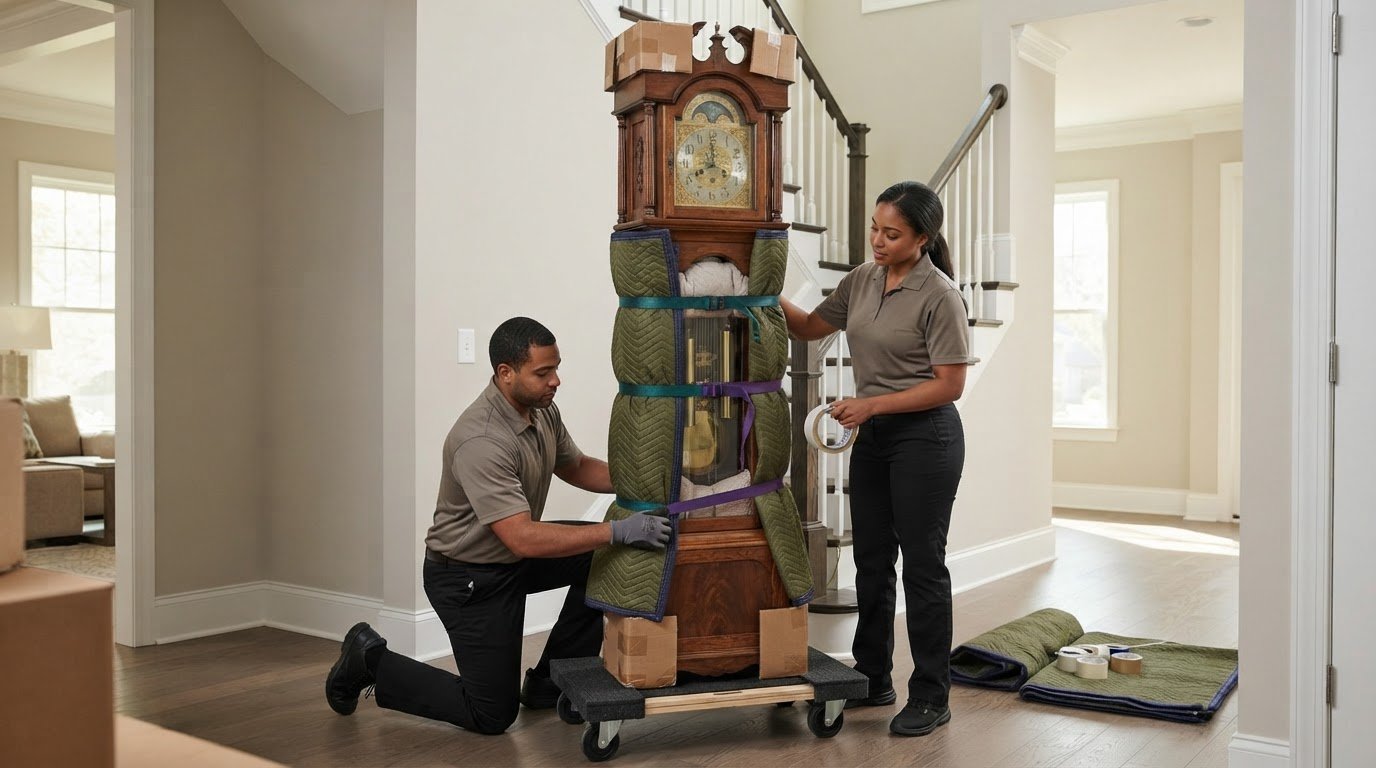
What if the biggest risk to your grandfather clock isn’t the distance, but one tight turn on the stairs? Moving a grandfather clock in Gainesville takes more than careful lifting. The case, weights, pendulum, and other moving parts need thoughtful preparation, and you’ll want a clear route out of your home before moving day.
It’s reasonable to be unsure what you can handle yourself, what requires a clock professional, and whether a general mover has the right experience. This guide explains how to prepare the clock, compare DIY handling with professional moving help and specialist support, and plan a safer move from your Gainesville home.
You’ll learn how to measure doorways, plan for stairs and tight corners, and share the clock’s details and access route when requesting help. We’ll also cover when to pause and ask a clock professional for guidance. A clear plan can reduce last-minute surprises and help you choose support that fits your clock and route.
Key Takeaways
- Identify the clock’s model and check its instructions before handling any parts.
- Pause and ask a clock professional rather than forcing or removing unfamiliar components.
- Compare DIY, specialist support, and general moving help. Experience with heavy items alone doesn’t confirm clock-specific expertise.
- Plan the route in advance by checking measurements, stair turns, thresholds, door swings, and overhead obstacles.
- For moving a grandfather clock in Gainesville, document its condition and confirm the mover’s experience, handling scope, and service availability before booking.
Moving a Grandfather Clock in Gainesville: What Makes It Different?
Careful preparation and appropriate help can reduce avoidable handling risks. A grandfather clock is a tall, delicate timepiece, not just a large cabinet. Its case, glass, and internal parts need separate consideration, and the right approach depends on the clock’s design. The Grandfather clock reference explains the longcase clock’s history and basic mechanics, useful context for understanding why moving one takes more planning than moving ordinary furniture.
A grandfather clock needs a specific moving plan because its tall case and delicate, movable mechanism require different kinds of protection.
This section focuses on preparation, access, and choosing appropriate moving help. It isn’t a repair guide or a substitute for clockmaker-level servicing. If the clock has a mechanical problem, or you’re unsure how to prepare a component, ask a qualified clock professional instead of trying to fix or disassemble it yourself.
Why a grandfather clock needs a different moving plan
The tall case can be awkward to guide through a home, and glass panels may be vulnerable to bumps. The weights, pendulum, and internal mechanism present separate handling concerns. If a part is loose or unsupported, it may shift during lifting or transport and damage the clock or its case.
Don’t assume every clock comes apart the same way. Construction and manufacturer instructions vary by model. Find the manual, if available, and ask a qualified clock professional for model-specific preparation advice. Don’t force, bend, or remove unfamiliar parts based on generic instructions.
What Gainesville movers need to know before arrival
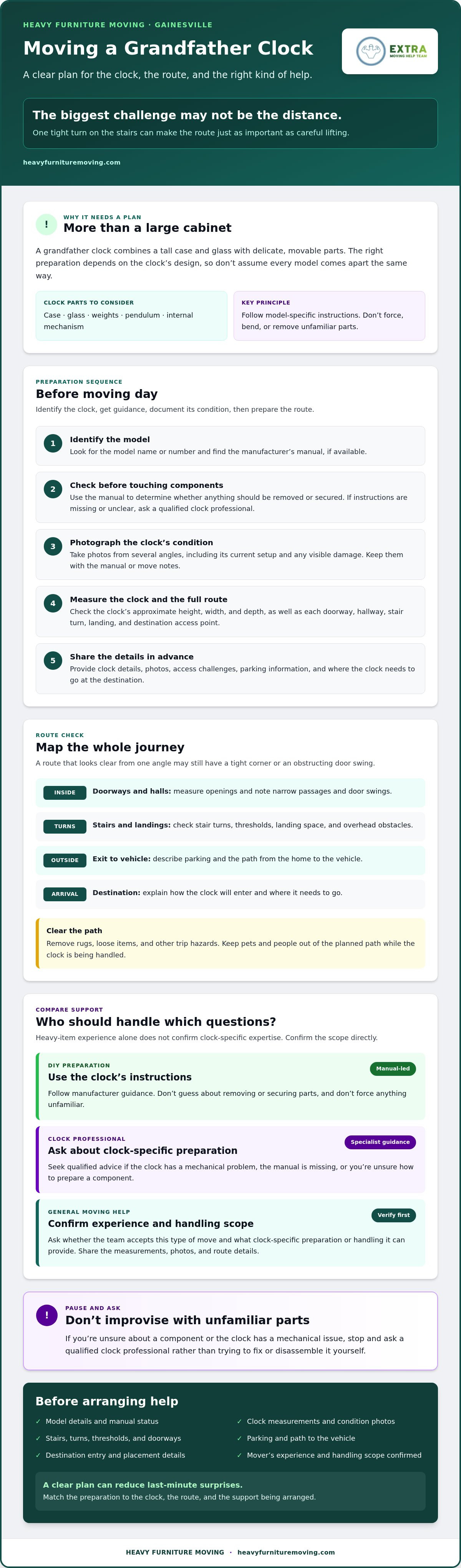
Give potential movers a clear picture of the job before arranging help. Share the clock’s location and approximate height, width, and depth, along with any access challenges. Photos can show the clock’s condition and the route, but they don’t replace checking measurements.
- Note stairs, tight turns, narrow doorways, and thresholds along the route.
- Measure door openings and check landings, door swings, and overhead obstacles.
- Describe parking and the path from the home to the vehicle.
- Explain how the clock will enter the destination and where it needs to go.
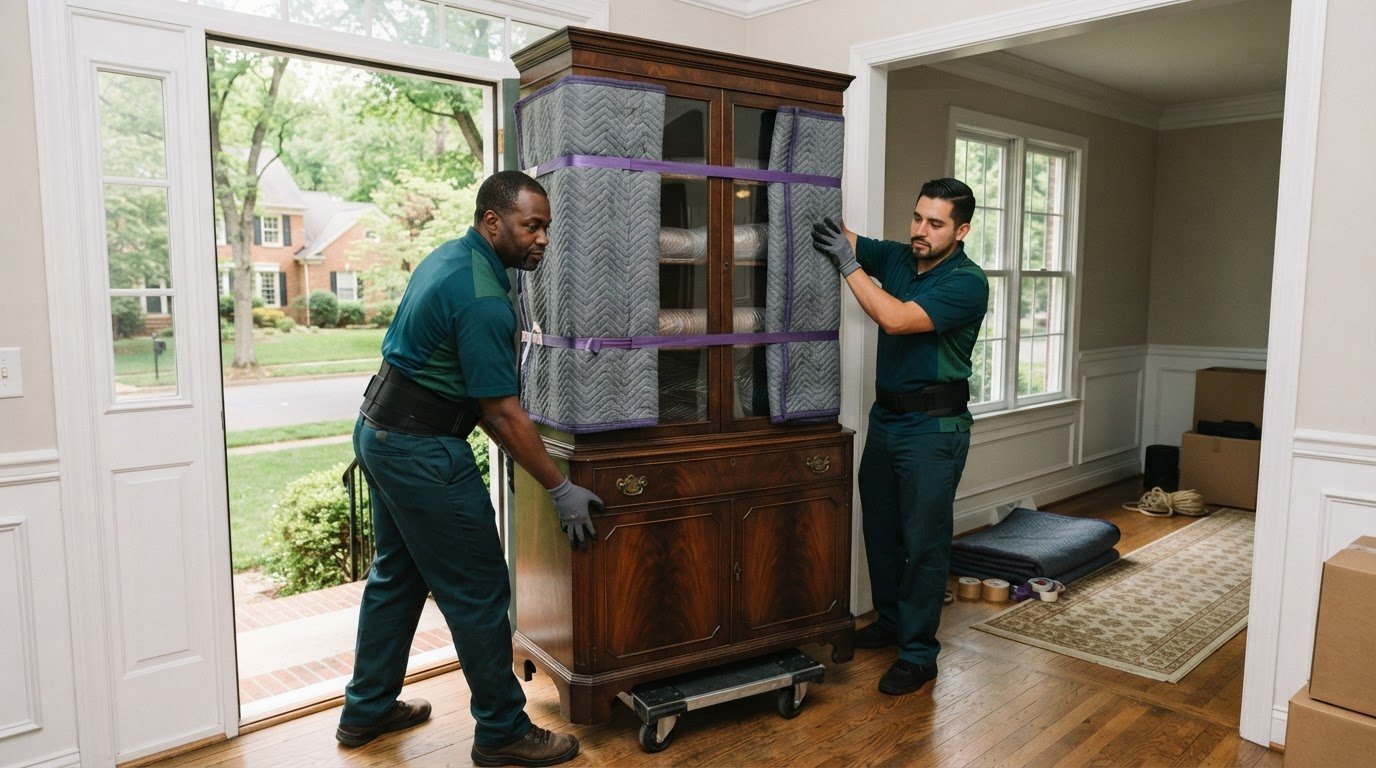
These details help a moving team assess the route and identify questions before moving day. If you’re considering general heavy-item help for moving a grandfather clock in Gainesville, confirm directly whether the team accepts this type of move and what clock-specific preparation or handling it can provide. Experience with bulky items alone doesn’t establish clock-specific expertise.
How to Prepare a Grandfather Clock Before Moving Day
Prepare in order: identify the clock, find its manual, get specialist guidance for unfamiliar steps, and then get the route ready. This helps you avoid guessing about the mechanism while giving movers useful information before they arrive.
Before any approved preparation begins, photograph the clock from several angles, including its current setup and any visible damage. Keep the images with the manual or your move notes. They’ll help you describe the clock’s condition and remember how it was arranged before handling.
Check the manual before touching the pendulum or weights
Look for the model name or number, then consult the manufacturer’s instructions. If the manual is missing or you’re uncertain about a step, ask a qualified clock professional for advice. Handling pendulums, weights, chains, and chime components can vary by design. Use the manufacturer’s guidance to determine which parts, if any, should be removed or secured.
Don’t force, bend, or remove anything unfamiliar. Only label and keep removed parts together if the manual or a qualified professional directs you to remove them. Glass panels also need model-appropriate care, so ask how they should be protected rather than assuming they can be detached or wrapped in a particular way. The National Association of Watch & Clock Collectors museum collection offers a reminder of the variety of clock designs, but your own clock’s instructions should guide its preparation.
Protect the case and clear the moving route
Measure the clock and the full route before moving day. Check doorways, halls, stair turns, landings, thresholds, and access at the destination. A route that looks wide enough from one angle may still have a tight corner or a door swing that blocks the turn.
Clear rugs, loose items, and other trip hazards. Keep pets and people out of the planned path while the clock is being handled. Then discuss protective wrapping and transport position with whoever will move it. Don’t assume one wrapping method or position fits every model.
- Record the model details and keep the manual accessible.
- Photograph the clock and its setup before approved preparation.
- Ask who will prepare each component and what the moving team will handle.
- Share your measurements and access concerns before confirming the move.
If you’re considering heavy-item moving help in Gainesville, describe the clock and route, then confirm whether the team accepts this type of move and what clock-specific handling it can provide. Clear answers can help you decide whether you also need a clock professional to prepare the mechanism.
DIY, Clock Specialist, or Movers? Compare Your Gainesville Options
The right choice depends on the clock, the route, and the kind of help you need. A clock professional can advise on preparing the mechanism. Movers may be able to handle physical transport. Those are different skills, so don’t assume experience with heavy household items automatically means experience with grandfather clocks.
Use this comparison to decide what to ask before arranging help:
DIY handling
Expertise: You know the clock and home, but may lack clock-specific guidance.
Physical handling: Depends on your available people and whether the route is manageable.
Preparation: Follow the manual or seek professional advice. Don’t guess about unfamiliar parts.
Verify: Can you manage the clock and route safely without improvising?
Clock professional
Expertise: Can advise on the mechanism and model-specific preparation.
Physical handling: Ask what assistance is included. Don’t assume transport is offered.
Preparation: Clarify which parts, if any, need attention before the move.
Verify: What guidance can they provide for your particular clock?
General movers
Expertise: Heavy-item experience may help with lifting, but doesn’t prove clock-specific experience.
Physical handling: Depends on the company’s confirmed scope and your access route.
Preparation: Confirm who handles each step.
Verify: Have they moved grandfather clocks, and will they accept this job?
When should you involve a clock professional?
Ask a qualified clock professional if the manual is missing, the mechanism is unfamiliar, or the clock is fragile, antique, damaged, or unusually constructed. The professional may advise on preparation without packing or transporting the clock. Confirm exactly what help they can provide before building your moving plan around it.
When might professional moving help make sense?
Consider moving help if the clock is heavy, the route is difficult, or your household can’t manage the physical handling safely. Describe the clock and access challenges, then ask directly about grandfather-clock experience and the handling included. For moving a grandfather clock in Gainesville, residents can ask Heavy Furniture Moving whether it accepts this item and confirm service availability and scope. Experience with heavy items doesn’t automatically confirm clock-specific expertise.
If you’re uncertain about the mechanism or route, consider combining specialist preparation advice with moving help. Before confirming arrangements, settle who will prepare the clock, who will carry it, and who will handle it at the destination.
Plan the Clock’s Route Through Your Gainesville Home
A safe move needs a clear route from the clock’s current position to the vehicle, then from the vehicle to its final place. Walk both paths before moving day and check every transition, not just the front door. A clear plan gives you and the moving team time to address tight spots before handling begins.
Measure tight doorways, stairs, and turns
Measure the clock and the narrowest points along the full route. Include door openings, hallways, thresholds, stair turns, landings, and overhead obstacles. A doorway may be wide enough, but a nearby corner or low ceiling can make the turn difficult. Photograph tight areas and share the pictures and measurements with the mover while discussing the plan.
If getting past an obstacle appears to require tilting, lifting over something, or hoisting, stop and ask a qualified professional how to proceed. Don’t improvise a maneuver with a delicate clock. Confirm that the route and handling approach are suitable before scheduling the move.
Coordinate pickup and placement in Gainesville
For moves in Gainesville and nearby Northern Virginia communities, confirm address access and arrival arrangements directly with the people responsible for each location. Ask about parking, building entry, elevator rules, and any required move-time arrangements. Details can differ from property to property, so don’t assume access will be available when the team arrives.
Agree in advance on who prepares the clock, who carries it, who loads it, and who places it at the destination. Confirm the intended final position and make sure the destination route is clear. Avoid last-minute placement changes that could mean carrying or repositioning the clock again.
- Trace the full path from the clock’s current spot to the vehicle.
- Measure narrow openings and turns, then share the details with the mover.
- Confirm parking, entry, elevator access, and timing with the relevant contacts.
- Clear household traffic, children, and pets from the route during handling.
- Settle responsibilities and destination placement before moving day.
For moving a grandfather clock in Gainesville, sharing its dimensions and route details helps a moving team assess the request. Heavy Furniture Moving serves Gainesville and handles heavy household items, but grandfather-clock moves and handling scope need to be confirmed directly. Ask Heavy Furniture Moving about heavy-item help and describe the clock, access, and destination before arranging service.
Arrange Grandfather Clock Moving Help in Gainesville
Before you book, make sure everyone understands the job. Document the clock, describe the route, and confirm exactly what the moving team will handle. Schedule only after the scope and availability are clear.
Questions to ask before confirming a mover
Ask directly whether the team has handled grandfather clocks or similarly delicate, heavy items. General heavy-item experience can help with physical handling, but it doesn’t confirm clock-specific experience. Clarify who prepares the mechanism and removable parts: you, the mover, or a qualified clock professional. Don’t assume movers will disassemble or prepare the clock unless they confirm that work is included.
Discuss the entire handling plan, not just the lift. Ask whether the team can assess the route, what protective materials it expects to use, how the clock will be positioned during transport, and who will place it at the destination. Confirm any steps that need a clock professional’s input before moving day.
Make the next step simple
Have these details ready for the conversation:
- The clock’s approximate dimensions and current location.
- The pickup and destination addresses, plus the intended final placement.
- Photos of the clock and any tight doorways, stairs, or turns.
- Notes about parking, building access, and other route challenges.
Heavy Furniture Moving serves Gainesville and handles heavy, bulky household items, including pianos and safes. Grandfather-clock moves aren’t specifically listed, so confirm whether the company accepts your clock, what preparation or handling it can provide, and whether service is available for your address. Its movers near me in Fairfax and Northern Virginia service overview explains its broader moving-help options, but clock-specific scope still needs a direct conversation.
For moving a grandfather clock in Gainesville, clear answers about preparation, transport, and placement can help you decide whether the support fits your needs. If you’re considering Heavy Furniture Moving, ask whether your clock and route are within scope before booking.
Move Forward With a Clear Plan
Protect the clock before planning the lift. Check its manual, photograph its condition, and get qualified guidance before handling unfamiliar parts. Then measure the route from its current position to the vehicle and destination, and confirm who will prepare, carry, and place it.
For moving a grandfather clock in Gainesville, choose help based on the clock and the route, not heavy-item experience alone. Heavy Furniture Moving serves Gainesville and specializes in heavy, bulky household items, with specialized handling listed for pianos and safes. Grandfather-clock service isn’t specifically confirmed, so ask whether the move is within scope and what preparation and handling the team can provide.
Have the clock’s approximate dimensions, photos, addresses, and access notes ready. Contact Heavy Furniture Moving to ask whether your Gainesville grandfather-clock move is within scope and confirm availability.
Frequently Asked Questions
Can I move a grandfather clock without taking it apart?
Possibly, but don’t assume the clock can travel intact. Its design and the manufacturer’s instructions determine whether any parts need to be removed or secured. Check the manual or ask a qualified clock professional before touching the pendulum, weights, chains, or chime components. If you can’t confirm the right preparation, pause and get guidance rather than forcing or removing unfamiliar parts.
How do you prepare a grandfather clock for moving?
Start by identifying the model and checking its manual. Photograph the clock and its setup before any approved preparation, then ask a qualified clock professional about unfamiliar or delicate components. Follow the model-specific instructions for any pendulum, weights, chains, chimes, or glass. Next, measure and clear the route, and agree with the mover who will prepare, carry, load, and place the clock.
Should a grandfather clock be moved upright?
Ask the manufacturer’s instructions or a qualified clock professional about the correct transport position for your specific model. Don’t assume every clock can be tilted or laid down safely. Share the clock’s design and any handling guidance with the mover before confirming the plan. If a doorway or stair turn seems to require tilting, lifting over an obstacle, or hoisting, stop and seek professional advice first.
Can regular movers move a grandfather clock?
Some moving teams may be able to handle the physical transport, but general moving or heavy-item experience doesn’t automatically mean clock-specific experience. Ask directly whether the team has handled grandfather clocks and confirm exactly what it will do. Clarify who prepares the mechanism and removable parts, what protection and transport position are planned, and who places the clock at the destination. Use a clock professional for model-specific preparation advice.
How do I move a grandfather clock through a narrow staircase?
Don’t try to squeeze or maneuver the clock through a tight staircase by guesswork. Measure the clock, stair width, turns, landings, door openings, and overhead clearance. Take photos of problem spots and share them with the mover before confirming a plan. If the route appears to require tilting, lifting over obstacles, or hoisting, stop and ask a qualified professional whether that approach is suitable.
What should I ask movers in Gainesville before hiring them for a grandfather clock?
Ask whether the team has moved grandfather clocks or similar delicate, heavy items, and what clock-specific handling it can provide. Confirm who prepares the mechanism, whether the mover will assess the full route, what protective materials and transport position are planned, and who handles final placement. Share the clock’s approximate dimensions, photos, access notes, and destination. Confirm service scope and availability for your address before scheduling.
Can Heavy Furniture Moving move my grandfather clock in Gainesville?
Heavy Furniture Moving serves Gainesville and nearby communities, including Fairfax, Woodbridge, Manassas, Manassas Park, Aldie, Ashburn, McLean, Vienna, Reston, Centreville, Chantilly, Clifton, Dumfries, South Riding, Fairfax Station, Haymarket, and Gainesville. The company handles heavy and bulky household items, but grandfather-clock moving isn’t specifically listed. Contact the team to confirm whether it accepts your clock, whether your address is currently covered, and what preparation and handling are included.
Frequently Asked Questions
Ask a qualified clock professional if the manual is missing, the mechanism is unfamiliar, or the clock is fragile, antique, damaged, or unusually constructed. The professional may advise on preparation without packing or transporting the clock. Confirm exactly what help they can provide before building your moving plan around it.
Consider moving help if the clock is heavy, the route is difficult, or your household can’t manage the physical handling safely. Describe the clock and access challenges, then ask directly about grandfather-clock experience and the handling included. For moving a grandfather clock in Gainesville, residents can ask Heavy Furniture Moving whether it accepts this item and confirm service availability and scope. Experience with heavy items doesn’t automatically confirm clock-specific expertise. If you’re uncertain about the mechanism or route, consider combining specialist preparation advice with moving help. Before confirming arrangements, settle who will prepare the clock, who will carry it, and who will handle it at the destination. A safe move needs a clear route from the clock’s current position to the vehicle, then from the vehicle to its final place. Walk both paths before moving day and check every transition, not just the front door. A clear plan gives you and the moving team time to address tight spots before handling begins.
Possibly, but don’t assume the clock can travel intact. Its design and the manufacturer’s instructions determine whether any parts need to be removed or secured. Check the manual or ask a qualified clock professional before touching the pendulum, weights, chains, or chime components. If you can’t confirm the right preparation, pause and get guidance rather than forcing or removing unfamiliar parts.
Start by identifying the model and checking its manual. Photograph the clock and its setup before any approved preparation, then ask a qualified clock professional about unfamiliar or delicate components. Follow the model-specific instructions for any pendulum, weights, chains, chimes, or glass. Next, measure and clear the route, and agree with the mover who will prepare, carry, load, and place the clock.
Ask the manufacturer’s instructions or a qualified clock professional about the correct transport position for your specific model. Don’t assume every clock can be tilted or laid down safely. Share the clock’s design and any handling guidance with the mover before confirming the plan. If a doorway or stair turn seems to require tilting, lifting over an obstacle, or hoisting, stop and seek professional advice first.
Some moving teams may be able to handle the physical transport, but general moving or heavy-item experience doesn’t automatically mean clock-specific experience. Ask directly whether the team has handled grandfather clocks and confirm exactly what it will do. Clarify who prepares the mechanism and removable parts, what protection and transport position are planned, and who places the clock at the destination. Use a clock professional for model-specific preparation advice.
Don’t try to squeeze or maneuver the clock through a tight staircase by guesswork. Measure the clock, stair width, turns, landings, door openings, and overhead clearance. Take photos of problem spots and share them with the mover before confirming a plan. If the route appears to require tilting, lifting over obstacles, or hoisting, stop and ask a qualified professional whether that approach is suitable.
Ask whether the team has moved grandfather clocks or similar delicate, heavy items, and what clock-specific handling it can provide. Confirm who prepares the mechanism, whether the mover will assess the full route, what protective materials and transport position are planned, and who handles final placement. Share the clock’s approximate dimensions, photos, access notes, and destination. Confirm service scope and availability for your address before scheduling.
Heavy Furniture Moving serves Gainesville and nearby communities, including Fairfax, Woodbridge, Manassas, Manassas Park, Aldie, Ashburn, McLean, Vienna, Reston, Centreville, Chantilly, Clifton, Dumfries, South Riding, Fairfax Station, Haymarket, and Gainesville. The company handles heavy and bulky household items, but grandfather-clock moving isn’t specifically listed. Contact the team to confirm whether it accepts your clock, whether your address is currently covered, and what preparation and handling are included.