Move-Out Furniture Disposal in Dumfries, VA: A Practical Guide
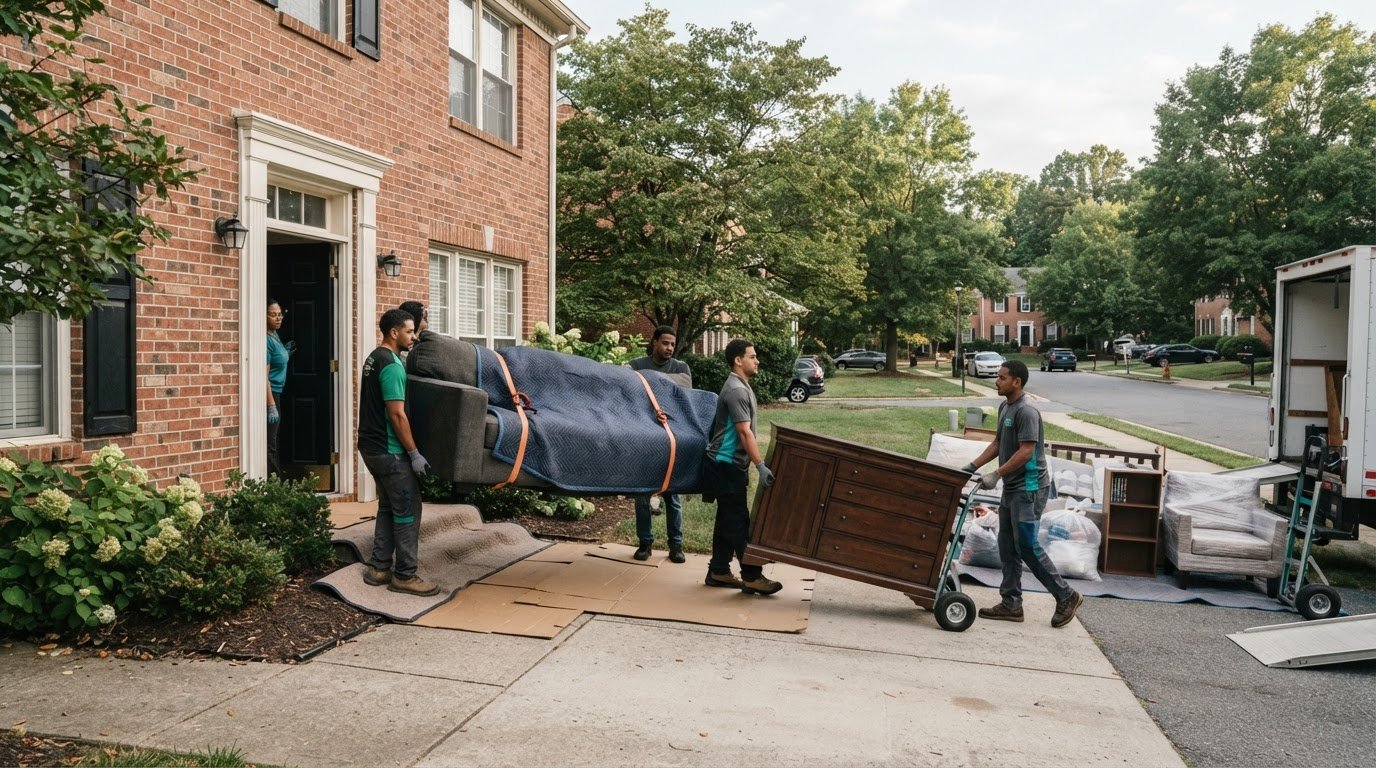
What if unwanted furniture slows down your whole move? A sofa, bed, or heavy dresser can be difficult to lift safely, and move-out deadlines leave little room for last-minute decisions. Planning move out furniture disposal Dumfries alongside your other moving tasks can help you clear unwanted pieces without trying to carry them alone or leaving them until the final day.
Start by deciding what’s coming with you and what needs to go, then choose a practical way to handle each unwanted item. This guide compares options for clearing furniture in Dumfries, including town bulk pickup and landfill disposal, and explains what to consider before arranging removal. You’ll also learn how residential moving and junk removal support can fit into the same move-out plan. With sorting, lifting, and removal scheduled around the job, you can make room for what matters and avoid leaving everything until the deadline.
Key Takeaways
- Use an item-by-item plan to decide what moves with you, stays, or needs to leave before your deadline.
- For move out furniture disposal Dumfries, record each item’s type, approximate size, and pickup-floor details to help plan the job.
- Compare moving, reuse or donation, and junk removal based on each item’s condition, usefulness, timing, and the effort involved.
- Make removal day easier by clearing walking routes, identifying the furniture to remove, and keeping pets and unrelated belongings away from the work area.
- Residential moving, packing, and junk removal support can cover different parts of your move-out, including the handling of bulky household items.
Moving out in Dumfries? Decide which furniture should go
A move-out deadline can make every bulky item feel like one more problem to solve. Start with a simple decision for each piece: will it move with you, stay where it is, or leave the home? Sorting before you arrange transport separates furniture that needs careful moving from furniture that needs removal. It also helps prevent a rushed decision from sending a useful or meaningful item out the door.
Judge each piece by its condition, usefulness, fit in your next home, and sentimental value. A sturdy dining table may be worth moving if it fits the new space. A damaged dresser that won’t serve you there may belong in the removal group. If an item has family meaning, give yourself time to decide rather than letting move-day pressure make the choice.
Move-out furniture disposal is the planned removal of unwanted household furnishings, such as sofas, beds, tables, and dressers, from a home before or during a move. These bulky items may need a collection or disposal method separate from ordinary household waste. The Bulky waste overview explains how furniture fits this category and describes approaches such as reuse and recycling.
How to sort furniture before your Dumfries move-out
Create three groups before arranging transport: keep, remove, and undecided. Compare keepers with the next home’s room dimensions and access points, including doorways, stairwells, and turns. A piece may fit the room but still be difficult to get inside.
- Keep: Furniture you plan to use and can fit into the next home.
- Remove: Pieces you no longer want or that won’t suit the new space.
- Undecided: Items that need another look before you commit.
Photograph undecided pieces and note their approximate dimensions. Reviewing the pictures can help you compare an item with the new home’s layout, discuss it with family, or make a final decision without returning to a crowded room.
When furniture disposal belongs on the move-out plan
Add removal to the plan as soon as you identify bulky furniture that’s broken, unwanted, or unsuitable for the next home. Keep those items separate from furniture that still needs to be packed and transported. This makes it easier to estimate what the move involves and plan a distinct way to remove the pieces you’re leaving behind.
Before settling on a disposal method, review current Dumfries and Prince William County guidance. Collection rules, accepted items, and disposal options can vary by location and service, so don’t assume every piece of furniture follows the same process. Planning early gives you time to sort carefully and coordinate help around your move-out deadline.
How to arrange move-out furniture disposal in Dumfries
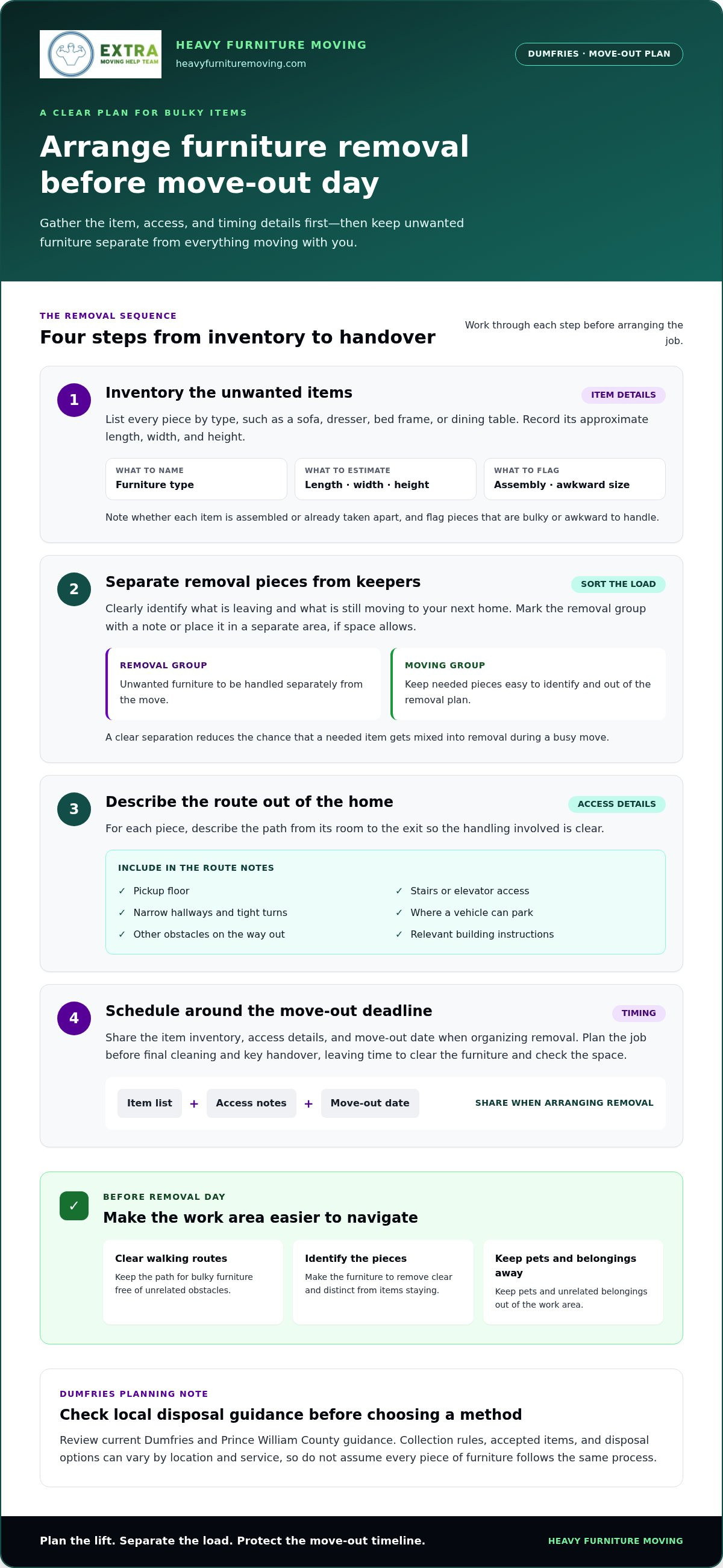
A clear plan turns a crowded room into a manageable job. For move out furniture disposal Dumfries, gather details before arranging removal so the work can be planned around your home’s layout and move-out deadline. A short inventory also keeps furniture that’s leaving separate from belongings that still need to reach your next home.
- Inventory the unwanted items. List each piece by type, such as a sofa, dresser, bed frame, or dining table. Add approximate length, width, and height. Note whether it’s assembled or already taken apart, and flag anything bulky or awkward to handle.
- Separate furniture that’s moving. Clearly distinguish items for removal from keepers. Mark the removal group with a note or place it in a separate area, if space allows. This reduces the chance that a needed piece gets mixed into the removal plan during a busy move.
- Describe the access route. Record the pickup floor and the path from each item to the exit. Include stairs, narrow hallways, tight turns, elevators, and other obstacles. Note where a vehicle can park and any relevant building access instructions. These details help explain the work involved in getting bulky furniture out of the home.
- Arrange the job around your deadline. Share the inventory, access details, and move-out date when organizing removal. Schedule the task before final cleaning and key handover, leaving time to clear the furniture and check the space.
What details to gather before arranging removal
Be specific, even if your measurements are approximate. A large assembled sofa on an upper floor presents a different handling challenge from a disassembled bed frame near the entrance. Note the route from the room to the exit, including stairs, elevator access, and tight turns. Include building instructions and your deadline so the plan accounts for the home’s layout and timing.
Removal checklist: Prepare each item’s type, approximate dimensions, assembly status, pickup floor, route to the exit, parking access, building instructions, and move-out deadline.
How to coordinate furniture removal with a move
Keep removal and transport as separate tasks in your plan. Label or group the furniture that’s leaving, and make the pieces you’re taking easy to identify. Schedule removal before final cleaning and key handover, not after the home is expected to be empty. If the move includes packing or heavy lifting, plan for those needs alongside removal so each task has a clear place in the timeline.
For help coordinating bulky-item handling with your Dumfries move, explore local moving and removal help. A clear inventory and access plan gives the team practical details to work from and helps keep the move-out organized.
Should you remove, donate, or move unwanted furniture?
A piece of furniture may be useful in your next home, suitable for reuse, or ready to leave. Choose based on its condition, usefulness, timing, and the effort required to handle it. For move out furniture disposal Dumfries, separate the item’s destination from the question of who will lift and carry it. A usable table may still be awkward to move without help, while a worn chair may be easy to carry but no longer worth keeping.
| Option | May make sense when | Consider before deciding |
|---|---|---|
| Move it | The piece is useful, fits your next home, or has practical or sentimental value. | Check whether it fits the new space and access route, and plan how it will be transported. |
| Explore reuse or donation | The furniture is in usable condition and you have time to find it a new home. | Acceptance depends on the item’s condition and the organization’s current arrangements. Don’t assume a pickup or donation will fit your deadline. |
| Arrange junk removal | The piece is damaged, unwanted, or unsuitable for the next home, or self-removal is impractical. | Plan around the item’s size, location, access route, and removal timing. Its final destination depends on the item and local arrangements. |
Use the table as a starting point, not a rigid rule. A well-loved chair might be worth moving even if it takes extra effort. A clean piece may still have no place in the next home. And a large item that cannot be reused may need a removal plan that fits your move-out schedule.
When moving furniture may make more sense than disposal
Keep furniture that fits your next home and will serve a clear purpose there. Consider both practical use and personal meaning before choosing removal. A family dining table may matter even if it needs a different room or layout. Then plan transport as its own task. Deciding to keep a piece doesn’t mean you have to lift or carry it alone. Bulky furniture moving support can help with the physical work of getting selected items to the next home.
When professional removal help can reduce the workload
Self-removal can take more time and effort than expected, especially with a heavy sofa, bulky dresser, stairs, narrow turns, or limited access. These conditions can make maneuvering difficult and may call for extra hands. Don’t let move-out pressure push you into handling an awkward item alone. Residential junk removal support can help clear unwanted furniture, while moving help can assist with pieces you’re keeping.
Furniture transport takes a piece to your next home; furniture removal clears a piece you don’t plan to keep. Make that distinction for each item, then choose a handling plan that suits its destination, condition, and timing. Donation or recycling may be possible in some cases, but acceptance and destinations depend on the furniture and local arrangements.
Prepare your Dumfries home and furniture for removal day
A little preparation helps keep furniture removal focused and the rest of your move on track. Identify what’s leaving, make a clear path to the exit, and share access details before the job. For move out furniture disposal Dumfries, build the plan around your actual move-out deadline, not just the day you hope to clear a room.
- Mark the furniture for removal. Use a visible note or label so unwanted pieces aren’t mistaken for furniture that’s moving with you. Put the label on the item, not on a nearby box or wall.
- Clear the walking route. Move small belongings, loose rugs, and boxes out of the way if you can do so safely. Leave heavy furniture in place rather than trying to shift it alone to make the route easier.
- Point out tight spots. Take photos of awkward furniture, narrow doorways, tight turns, or stair access. Sharing these details while organizing the job gives the crew a clearer picture of the work area.
- Keep the work area clear. Move unrelated belongings away from furniture being removed, and keep pets out of the work zone. This reduces distractions and leaves room to maneuver bulky pieces.
Make bulky furniture easier to identify and access
Before removal, walk the route from each item to the home’s exit. Look for anything that could narrow the path, then clear only smaller items you can handle comfortably. Don’t attempt an unsafe lift to reposition a large piece. A photo of a tight hallway or difficult turn can communicate the access challenge more clearly than a quick description alone.
Be direct about what’s leaving and what’s staying. If two similar pieces are in the same room, label the removal item clearly and keep the other one out of the work area. That simple distinction can prevent confusion during a busy move-out.
Keep move-out timing and local rules in view
Work backward from your lease, sale, or key-handover deadline. Leave time for furniture removal before final cleaning and the last walkthrough instead of relying on the home being cleared at the last moment. Share relevant access instructions and timing details as you arrange the job.
If you’re planning curbside disposal or scheduled collection, review current Dumfries or Prince William County guidance before setting furniture out. Local rules and collection arrangements can change, so don’t assume a curbside option, item, or pickup window applies to your address. Keep that research separate from arranging help to carry bulky furniture out of the home.
When your move also involves furniture that needs to travel with you, local residential moving help can support the transport side of the plan. Keep removal items and moving items clearly separated, and share access and timing details so each part of the move has a clear purpose.
Get move-out furniture disposal help in Dumfries
Sorting furniture is one part of a move-out. Getting unwanted pieces out while managing the items you’re keeping can take extra hands and careful coordination. Heavy Furniture Moving provides residential junk removal, moving, and packing support in Dumfries. The team also specializes in bulky household items, helping with demanding lifting as part of a move.
Plan around each item’s destination. Furniture you’re taking needs transport; unwanted household furnishings belong in the removal plan. Some move-outs involve both, along with packing or unpacking support for belongings that remain. Separating those tasks makes it easier to describe what help you need and keeps every heavy item from being treated as something to dispose of.
Match the support to the job
Residential junk removal can help clear unwanted furniture, while moving support suits bulky pieces that are staying with you. A large sofa may need experienced handling for transport; a damaged dresser you’re leaving behind is a removal task. Not every item needs specialty handling. Plan around the furniture, its destination, and the access inside your home.
Before arranging help, turn your notes into a simple job outline. A short, accurate inventory distinguishes removal from transport and gives useful context about the work involved. Include:
- Each item’s purpose: Mark it for removal or transport.
- Furniture details: Note the type and approximate size, especially for bulky pieces.
- Home access: Describe the pickup floor, stairs, narrow turns, or other access constraints.
- Move-out timing: Include the deadline that the plan needs to work around.
That information also helps you decide whether different tasks belong together. For example, a move may include packing household belongings, transporting selected furniture, and clearing pieces you don’t plan to keep. If your broader move-out checklist also involves servicing major kitchen equipment or specialized ice systems, appliance service providers such as HomeFix can handle necessary appliance repairs. A clear outline shows how these needs fit without assuming they all require the same kind of handling.
Take the next step toward a clearer move-out
Set aside your inventory, access notes, and move-out deadline before planning the work. You don’t need a complicated checklist. A few clear details make it easier to organize support for unwanted furniture and the pieces that still need to move. Heavy Furniture Moving is veteran-family owned and operated, with local service in Dumfries.
Ready to make a plan? Plan your Dumfries move-out with Heavy Furniture Moving. Put your item list and access details to work, and take one more task off your moving-day load.
Make your next move-out step simpler
Turn your furniture decisions into one clear plan: identify what needs removal, note what still has to travel, and leave room in your schedule to handle both. That gives you a practical starting point for move out furniture disposal Dumfries without letting unwanted pieces dictate the pace of your move.
Heavy Furniture Moving provides residential moving and junk removal support in Dumfries and nearby communities, including Fairfax, Woodbridge, Manassas, Manassas Park, Aldie, Ashburn, McLean, Vienna, Reston, Centreville, Chantilly, Clifton, South Riding, Fairfax Station, Haymarket, and Gainesville. As a veteran-family-owned and operated business, the team can help with different parts of your move-out, including bulky-item lifting. Keep your item list and access notes handy to make the next step easier to organize.
Plan your Dumfries move-out with Heavy Furniture Moving. With a clear plan and the right kind of help, you can focus on what comes next and move forward with less weight on your shoulders.
Frequently Asked Questions
Can movers remove furniture during a move-out in Dumfries?
Yes. Heavy Furniture Moving provides residential moving and junk removal, so unwanted furniture removal can be planned alongside the items you’re taking with you. Keep those groups distinct in your inventory. For example, list a bookcase for removal separately from a bed frame that needs transport. Include access details and your move-out deadline when arranging the job so the plan reflects the work involved.
How do I decide whether to move or dispose of furniture?
Move a piece if it has a clear use or personal value in your next home and can fit there. Compare its condition and usefulness with the effort of transporting it. For example, a worn chair that’s easily replaced may not be worth moving, while a sturdy desk you rely on might be. For move out furniture disposal Dumfries, decide where the item is going first, then plan how it will be handled.
What happens to furniture after junk removal?
The destination can depend on the furniture’s condition and local arrangements. Usable items may have different options from damaged or unsuitable pieces, but don’t assume a particular item will be accepted for donation or recycling. If the final destination matters to you, treat it as a separate part of your plan and use current local information to understand the options. Junk removal helps clear unwanted items without requiring you to carry them away yourself.
Can I leave unwanted furniture at the curb in Dumfries?
Don’t leave bulky furniture at the curb without arranging collection first. According to the Town of Dumfries guidance provided for this article, bulk pickup for items beyond regular household garbage takes place Wednesdays and must be scheduled with Bates Trucking by 2:00 p.m. on the preceding Tuesday. Review the town’s current instructions before setting items out, since schedules and item rules can change.
Do I need to empty furniture before it is removed?
Empty drawers, cabinets, and shelves before removal, and take out loose contents such as paperwork, clothing, or dishes. This keeps personal belongings from getting mixed up with furniture and reduces loose items along the carrying route. If a piece has removable shelves or cushions, set them aside together so they don’t shift during handling. Keep anything you want to retain in a separate, clearly marked area.
How much does move-out furniture disposal in Dumfries cost?
There isn’t a single cost that applies to every move-out job. The furniture list, the amount to remove, and the home’s access can all affect the work involved. Prepare an itemized description, approximate sizes, and pickup-floor details when arranging the job. That gives the company useful information to discuss a project-specific estimate. Avoid relying on a price for a different-sized load or a different home setup.
What should I do if bulky furniture will not fit through the doorway?
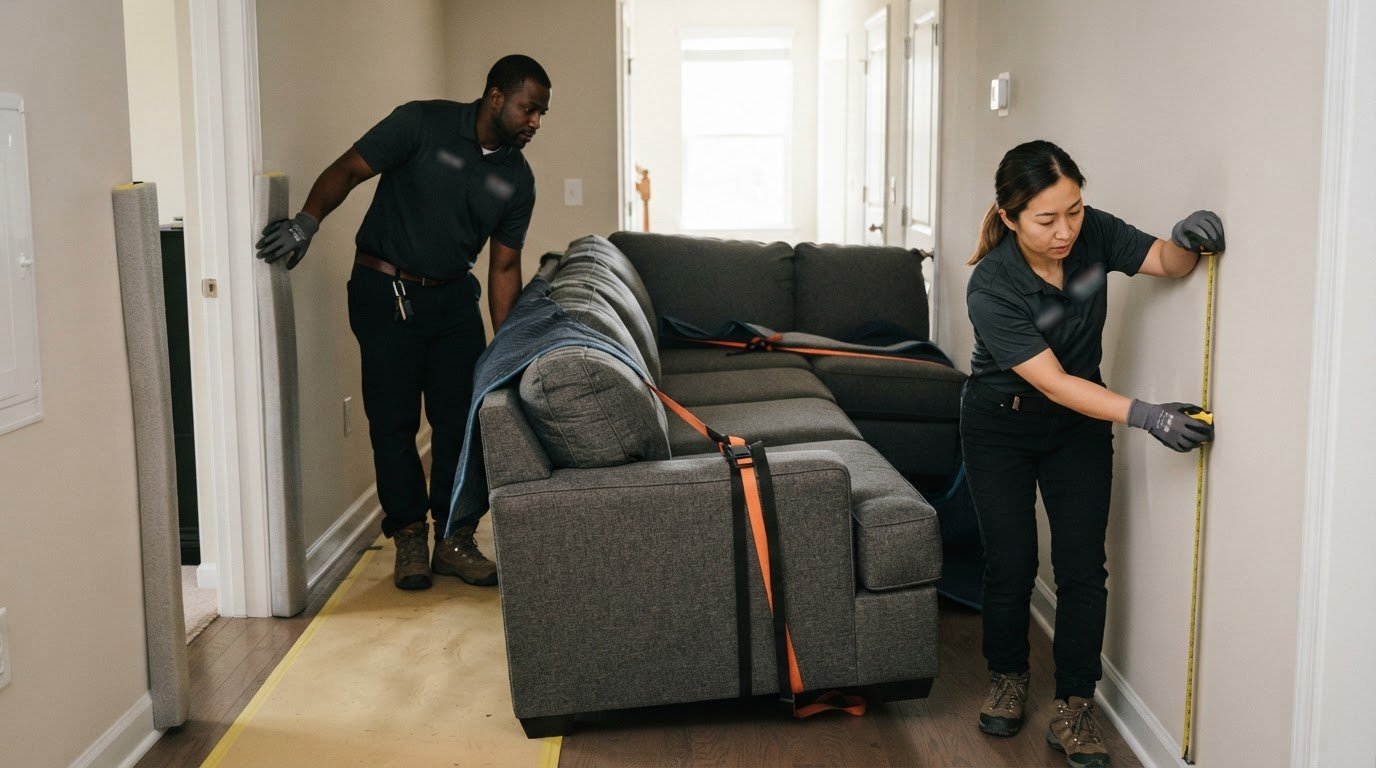
Don’t force the piece through or attempt a risky lift. Measure the doorway and the furniture, then look for removable legs, cushions, or other parts that may make it easier to maneuver. Share photos and describe tight turns or stairs. Heavy Furniture Moving offers sofa hoisting for pieces that cannot fit through standard entryways or elevators, and the right approach depends on the item and access conditions.
Frequently Asked Questions
Yes. Heavy Furniture Moving provides residential moving and junk removal, so unwanted furniture removal can be planned alongside the items you’re taking with you. Keep those groups distinct in your inventory. For example, list a bookcase for removal separately from a bed frame that needs transport. Include access details and your move-out deadline when arranging the job so the plan reflects the work involved.
Move a piece if it has a clear use or personal value in your next home and can fit there. Compare its condition and usefulness with the effort of transporting it. For example, a worn chair that’s easily replaced may not be worth moving, while a sturdy desk you rely on might be. For move out furniture disposal Dumfries, decide where the item is going first, then plan how it will be handled.
The destination can depend on the furniture’s condition and local arrangements. Usable items may have different options from damaged or unsuitable pieces, but don’t assume a particular item will be accepted for donation or recycling. If the final destination matters to you, treat it as a separate part of your plan and use current local information to understand the options. Junk removal helps clear unwanted items without requiring you to carry them away yourself.
Don’t leave bulky furniture at the curb without arranging collection first. According to the Town of Dumfries guidance provided for this article, bulk pickup for items beyond regular household garbage takes place Wednesdays and must be scheduled with Bates Trucking by 2:00 p.m. on the preceding Tuesday. Review the town’s current instructions before setting items out, since schedules and item rules can change.
Empty drawers, cabinets, and shelves before removal, and take out loose contents such as paperwork, clothing, or dishes. This keeps personal belongings from getting mixed up with furniture and reduces loose items along the carrying route. If a piece has removable shelves or cushions, set them aside together so they don’t shift during handling. Keep anything you want to retain in a separate, clearly marked area.
There isn’t a single cost that applies to every move-out job. The furniture list, the amount to remove, and the home’s access can all affect the work involved. Prepare an itemized description, approximate sizes, and pickup-floor details when arranging the job. That gives the company useful information to discuss a project-specific estimate. Avoid relying on a price for a different-sized load or a different home setup.
Don’t force the piece through or attempt a risky lift. Measure the doorway and the furniture, then look for removable legs, cushions, or other parts that may make it easier to maneuver. Share photos and describe tight turns or stairs. Heavy Furniture Moving offers sofa hoisting for pieces that cannot fit through standard entryways or elevators, and the right approach depends on the item and access conditions.