Move a Heavy Concrete Fire Pit Table to Your Fairfax Station Patio
Moving a heavy concrete fire pit table to a backyard patio in Fairfax Station starts with a clear plan, not a lift. The table’s size, shape, and weight, along with the route and landing spot, determine how to handle it safely.
Tight gates, steps, uneven ground, and the risk of patio damage can make the move challenging. Plan the route, prepare the landing area, and identify any removable parts before lifting. When the table is too heavy or awkward to move safely, Heavy Furniture Moving can help with heavy-item handling and transport.
Key Takeaways
- A concrete fire pit table’s weight depends on its size and construction, so assess the specific piece before planning the move.
- Choose moving equipment and handling methods based on the table, the route, and the surfaces along the way.
- Reduce the risk of chips and cracks by keeping the table supported and avoiding sudden shifts.
- Check whether the table can be safely separated into parts before moving it; the design determines what can come apart.
- Plan protection for both patio and lawn, and bring in experienced moving help when the table is too bulky or difficult to handle.
How much does a concrete fire pit table weigh?
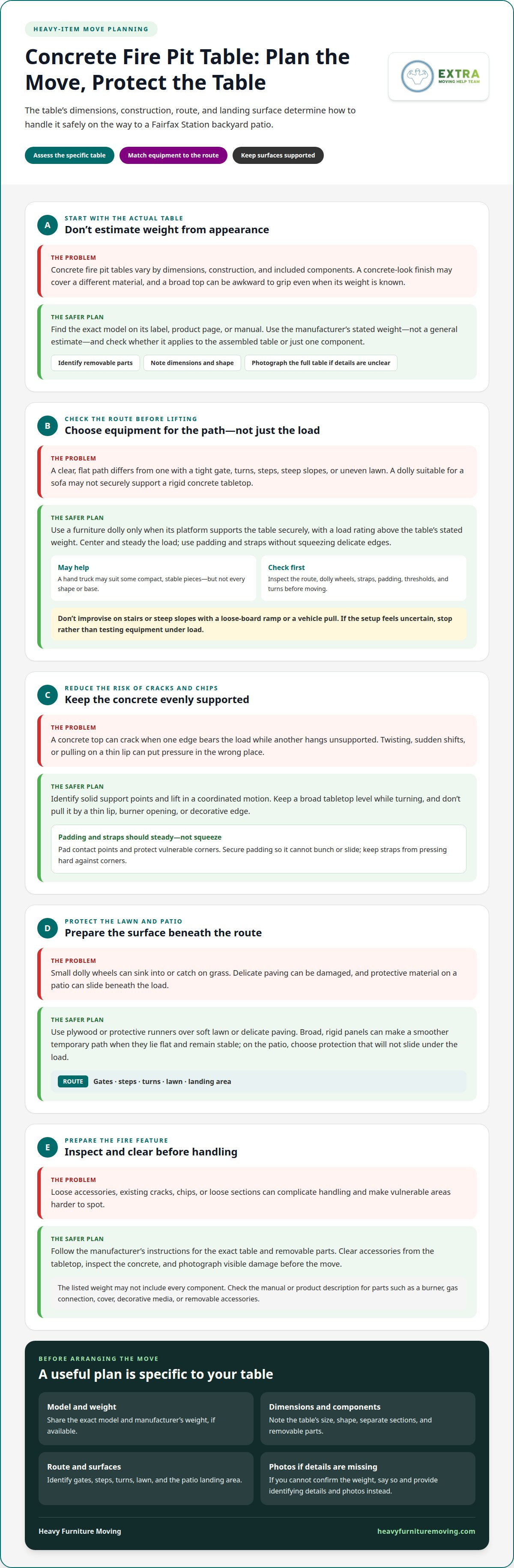
Concrete fire pit tables do not all weigh the same. Weight depends on the model’s dimensions, construction, and included components. A compact table with a hollow base can weigh less than a broad table made of thick, solid concrete. A concrete-look finish may also cover a different underlying material. Use the model’s stated weight, rather than a general estimate, when planning the move.
Start with the manufacturer’s label, product page, or manual. Find the exact model name and listed weight. If the table has detachable parts, check whether that figure applies to the complete assembly or only one component. A removable tabletop or burner cover may change what needs to be carried. Record the model and weight before planning the route.
Identify what is included with the table. The concrete body may be only one part of the total. A fire feature can also include a burner, gas connection, cover, decorative media, or removable accessories. Check the manual or product description to see which components are included in the listed weight. Plan to handle detachable items separately, and don’t assume nearby accessories are included in the table’s weight.
Use this quick assessment before arranging a move:
- Find the model: Match the label or paperwork to the exact table, not just a similar-looking design.
- Check the listed weight: Note whether it applies to the assembled table or a single section.
- Review the parts: Identify removable accessories and any separate base or top.
- Measure the route: Note gates, steps, turns, and the patio landing area alongside the table’s dimensions.
If you can’t find the product information, don’t guess based on appearance. Measure the tabletop and base, photograph the full table, and note visible seams or detachable parts. These details help identify its design and handling needs. A wide tabletop can be awkward to grip even when its weight is known, while a compact base can still be difficult to maneuver through a narrow gate. Consider the dimensions and shape as well as the weight.
For moving a heavy concrete fire pit table to a backyard patio in Fairfax Station, plan around the actual table and route. Share the manufacturer’s weight information, dimensions, and photos when arranging help. If you can’t establish the exact weight, say so and provide the identifying details instead. A plan based on your specific table is more useful than a general estimate.
What equipment is best for moving a heavy concrete fire pit table?
The right equipment depends on the table’s shape and the route to the patio. A flat, clear path may suit a heavy-duty furniture dolly, while a narrow gate, uneven lawn, or steps require a different plan. Match the equipment to the table’s weight, dimensions, and support points. A dolly suitable for a sofa may not safely support a rigid concrete tabletop.
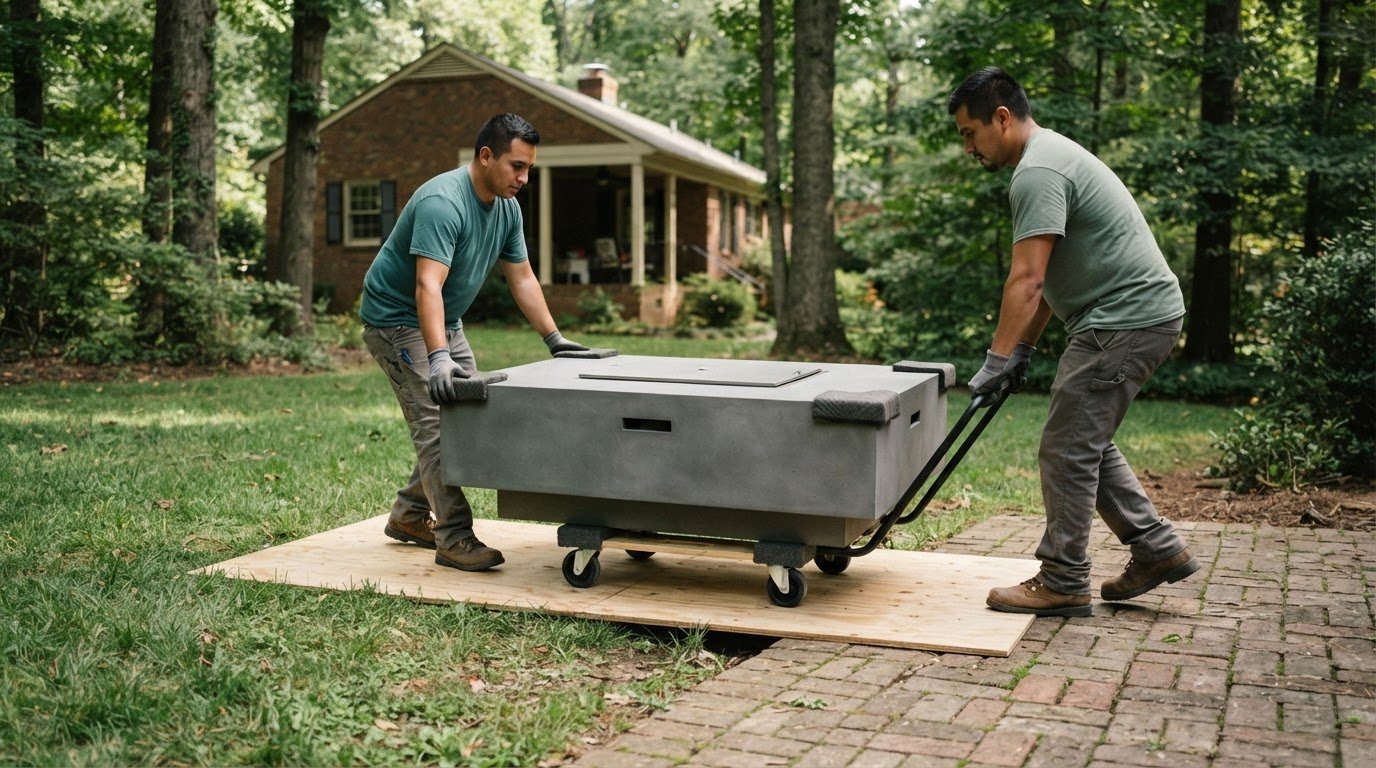
Use a furniture dolly only if its platform can support the table securely. Padding at the contact points helps protect the surface. Center the load and secure it with straps that keep the table steady without squeezing delicate edges. A hand truck may work for some compact, stable pieces, but it isn’t suitable for every shape or base.
Useful equipment may include:
- Padded moving blankets: Cover exposed surfaces and help prevent scuffs during handling.
- Corner and edge protectors: Cushion vulnerable corners where straps or hands could press.
- A suitable dolly: Choose a stable platform with a load rating above the table’s stated weight.
- Wide moving straps: Use them to support the load, not to pull against a thin edge.
- Floor and ground protection: Place plywood or protective runners over soft lawn or delicate paving.
Small dolly wheels can sink or catch when crossing grass. Broad, rigid panels can create a smoother temporary path, but they must lie flat and remain stable. On a patio, use protective material that won’t slide beneath the load. Plan for thresholds and tight turns before lifting, since they can affect which equipment will work.
Stairs and steep slopes require more than a basic dolly. Don’t improvise with a loose board as a ramp or pull the table with a vehicle. A controlled move needs secure support, coordinated handling, and equipment suited to the surface. If the table’s weight or balance makes the setup uncertain, stop rather than testing equipment under load.
Before moving, clear accessories from the table and follow the manufacturer’s instructions for removable components. Check straps, padding, dolly wheels, and the route for damage or obstructions. Keep hands clear of pinch points while lifting or lowering. These checks help match the equipment to the table instead of forcing the table to fit the equipment.
If the table needs a dolly, careful padding, and a challenging route, heavy lifting moving help can take the strain out of planning and handling the move.
How to move a concrete fire pit table without cracking or chipping it?
Read the manufacturer’s instructions for the exact table. Follow its guidance for preparing the fire feature and handling removable parts. Clear accessories from the tabletop, then inspect the concrete for existing cracks, chips, or loose sections. Photograph any visible damage before the move. This gives the crew a record and helps them avoid putting pressure on weak spots.
Keep the table evenly supported. A concrete top can crack if one edge bears the load while the other hangs unsupported. Identify solid support points and lift in a coordinated motion without twisting the table. Don’t pull it by a thin lip, burner opening, or decorative edge. Keep a broad tabletop level as the crew turns through a gate.
Use padding at contact points, but don’t rely on soft blankets in place of stable support. Secure the padding so it can’t bunch beneath the table or slide during handling. Straps should hold the load steady without pressing hard against the corners. Add suitable edge protection where a strap crosses a sharp edge. Don’t drag the table, even a short distance, since contact with paving can chip the underside.
Move in controlled stages rather than rushing along the full route. A careful sequence looks like this:
- Prepare: Clear the path and remove loose items from the table according to its instructions.
- Lift: Raise the table evenly from stable support points, keeping it level.
- Travel: Move slowly and pause at turns, thresholds, or changes in surface.
- Set down: Lower the table gradually onto a prepared, level landing area.
Watch for jolts at patio joints, door thresholds, and uneven lawn. A sudden stop can shift the load, while a tilted landing can put uneven pressure on the concrete. At a tight turn, reposition the team before moving again. Don’t twist the tabletop to force it around an obstacle. Clear the obstruction or choose a route that allows steady movement.
At the destination, lower the table onto its intended support, not a corner or narrow edge. Check that it sits level and doesn’t rock. Inspect the same surfaces you photographed before the move, including the corners and underside. Comparing them helps identify new marks. For moving a heavy concrete fire pit table to a backyard patio in Fairfax Station, preparation, balanced support, and a controlled landing help reduce the risk of cracks and chips.
Can a concrete fire pit table be disassembled before moving
Some concrete fire pit tables have removable parts, while others are built as one piece. Start with the model’s manual, looking for instructions about the tabletop, base, burner cover, and accessories. A visible seam doesn’t automatically mean a section is designed to come apart. Don’t pry apart bonded or fitted pieces, since force can chip edges or crack the concrete.
Separate only components the manufacturer identifies as removable. A loose cover or decorative accessory, for example, may lift away without taking the table apart. Store each piece in a labeled container and keep its hardware together. Photograph the table before removing anything. The photos help show how the parts fit and where fittings or supports belong during reassembly.
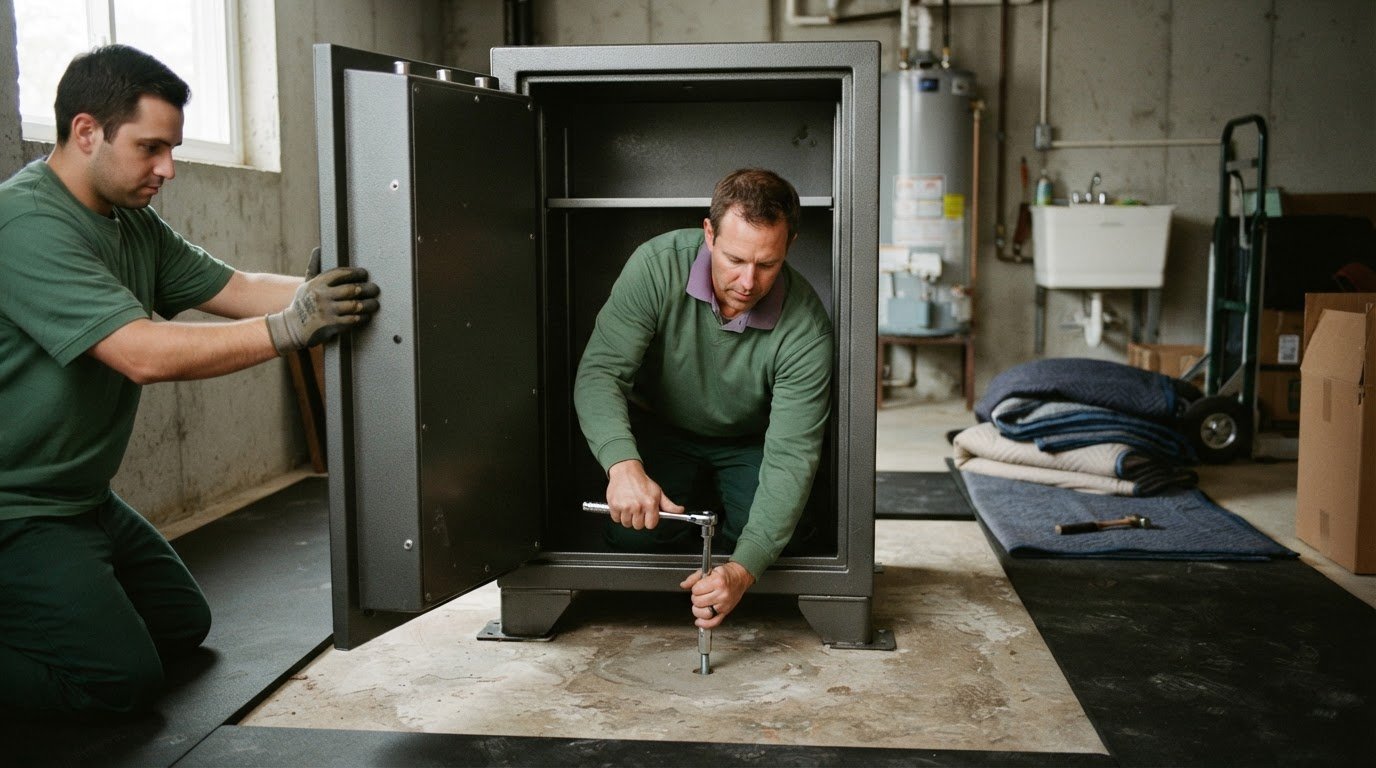
Take particular care with the fire feature. Follow the manufacturer’s instructions for preparing it before the move. Don’t pull, bend, or disconnect a gas line as part of moving the furniture. If the manual requires the fuel connection to be handled or disconnected, leave that task to a qualified professional familiar with the system. Keep the fire feature out of use until it has been reassembled and checked according to its instructions.
Use this decision process before taking the table apart:
- Find the instructions: Match the manual to the exact model and review its moving guidance.
- Identify removable parts: Separate only components the instructions designate for removal.
- Protect each piece: Wrap loose parts individually and keep hardware with its matching component.
- Stop at fixed connections: Don’t force bonded sections, built-in supports, or fire-system fittings apart.
Disassembly can help a table fit through a narrow gate, but it adds handling steps. A detached tabletop still needs even support, and a base with an uneven shape may shift when lifted. Plan how each part will be carried and set down. Smaller pieces are not automatically easier or safer to handle.
Before reassembly, compare the pieces with your photos and the manufacturer’s instructions. Put each removable component back in its intended position and use the specified hardware. Don’t substitute fasteners or force a part that doesn’t align. If the documented steps don’t allow the table to be separated, plan to move it assembled with suitable support. The table’s construction, route, and handling needs determine whether disassembly helps.
How to protect a patio and lawn when moving a heavy fire pit table
Map the route from the table’s current location to the patio. Mark lawn, paving, steps, thresholds, and tight turns. Remove hoses, planters, chairs, and loose stones from the path. A clear route reduces sudden stops that can shift the load or scrape the surface. Choose the firmest available path instead of cutting across soft ground.
Protect grass with clean, rigid panels that spread the load over a wider area. Lay each panel flat and secure it against shifting before moving over it. Avoid rolling a dolly across bare, soft lawn, where its wheels can sink or leave tracks. If the ground is damp, choose a firmer route when possible. Align the panels so the wheels won’t catch on their edges.
For pavers or a finished patio, use a surface covering that stays flat and won’t slide underfoot or beneath equipment. Check it as the table advances. A loose blanket can bunch at a joint, and trapped grit can scratch stone or tile. Sweep the route first and clear debris from protective materials before setting them down. Keep the landing area covered until the table is in position.
Prepare the destination before the move begins:
- Clear the landing spot: Move patio furniture, pots, and accessories away from the fire pit’s final position.
- Check the route: Look for uneven pavers, lawn edges, drainage covers, and narrow gates.
- Lay protection: Cover vulnerable lawn and patio sections with stable, clean materials.
- Keep access open: Make sure the crew can approach and turn without crossing garden beds.
At transitions, such as where a lawn meets a stone patio, pause and reposition the protection. Don’t let a dolly wheel drop from a panel onto an exposed paver edge. Keep the table level as it crosses, and don’t drag it across either surface. Before setting it down, remove trapped grit and check that the landing area is level and clear.
After placement, lift away the panels instead of dragging them across the patio. Inspect the lawn for compressed tracks and the paving for scuffs or debris. For a route with narrow access, soft ground, or several surface changes, arrange help with heavy lifting to plan the handling and protect the path.
Heavy Furniture Moving
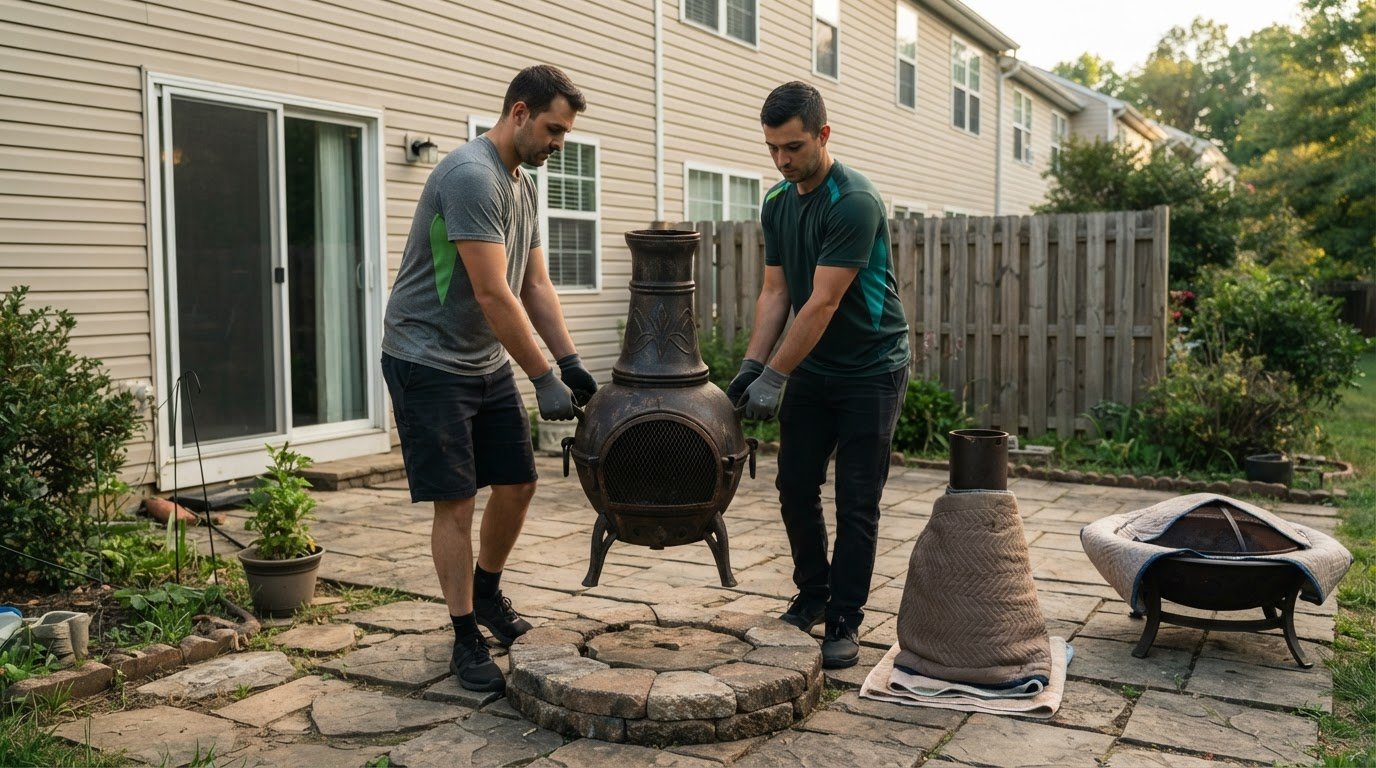
Heavy Furniture Moving helps plan and handle bulky fire pit table moves. Turn to the team when the table’s weight, awkward shape, patio access, or route across the yard makes it difficult to manage alone. Share the table’s model details, dimensions, and route so the move can be planned around the specific item and setting.
Heavy Furniture Moving provides heavy lifting moving service for demanding jobs that require careful handling. The right approach depends on the table, its construction, and the route to its new spot. Contact Heavy Furniture Moving to arrange help with your fire pit table.
Make the Patio Move Your Next Step
Prepare the space before the table arrives, and decide where it should sit. If the route, table size, or handling feels like too much to manage alone, moving help can take the strain out of the job. For moving a heavy concrete fire pit table to a backyard patio in Fairfax Station, share the route and access details when arranging support. That gives the team useful context for planning the work.
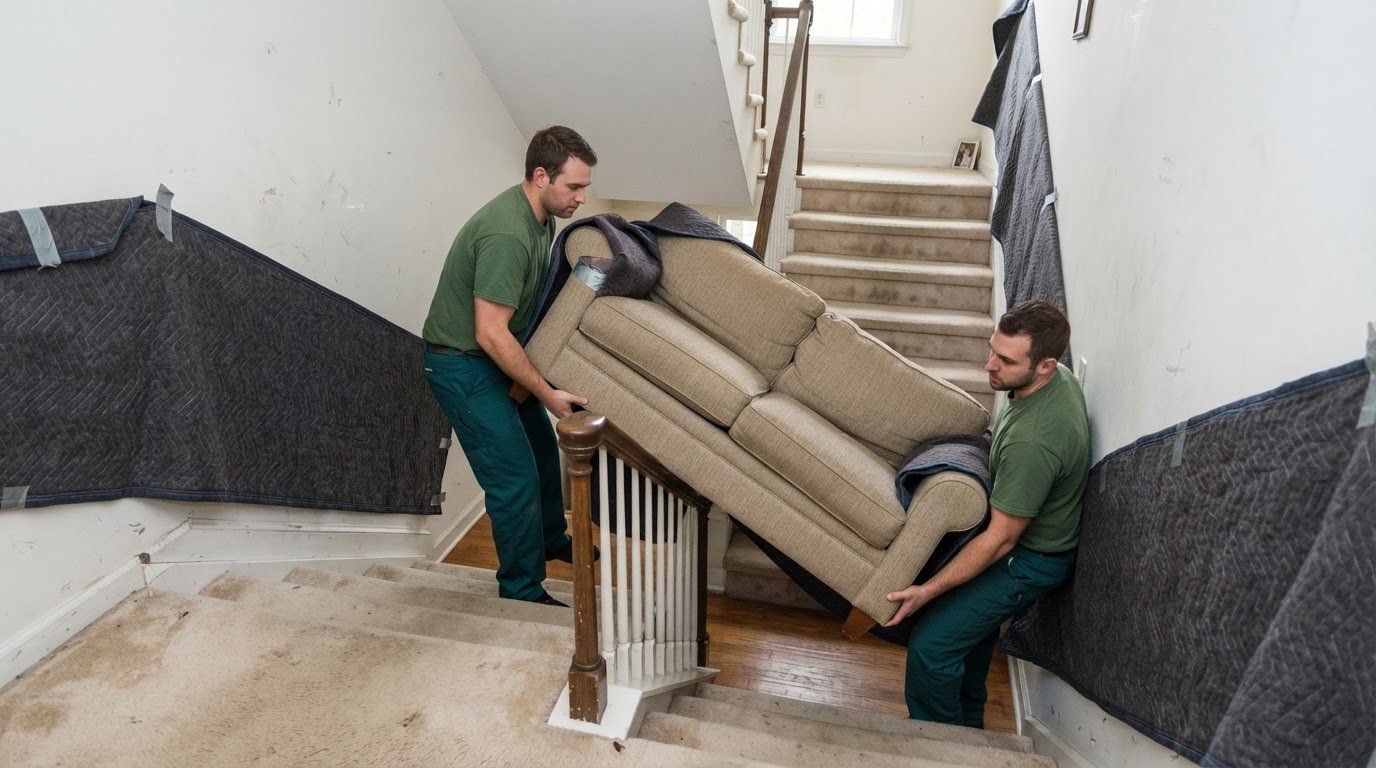
Heavy Furniture Moving offers Movers Near Me, Exercise Equipment Moving, and Sofa Hoisting. The team also handles demanding household moves, including heavy and bulky items. Choose support that fits your move, and keep the patio plan simple: a clear path and prepared destination make it easier to settle in and enjoy the space.
Contact Heavy Furniture Moving to discuss help with your move. Your patio is ready for its next chapter.
Frequently Asked Questions
How many people are needed to move a concrete fire pit table safely?
There’s no fixed crew size for every concrete fire pit table. The table’s weight, dimensions, shape, and route determine how many people are needed to handle it safely. A broad tabletop may need more coordinated support than a compact design. Steps, narrow gates, and sloped lawns also affect the plan. Share the table details and access conditions when arranging help so the crew can plan for the specific job.
What does professional heavy-item moving cost in Fairfax Station, Virginia?
The cost depends on the individual move. Heavy Furniture Moving offers hourly labor with a two-hour minimum and flat rates for most single heavy items. Stairs and landings are priced before the crew arrives. Share the table’s size, weight, access route, steps, and distance to the patio to get a quote based on the work involved. Send photos of the item and access points to help plan the move.
Which local movers in Fairfax Station handle heavy outdoor furniture?
Heavy Furniture Moving provides local moving help for residents in Fairfax Station who need support with heavy household items. Its Movers Near Me and heavy lifting moving service are relevant when a bulky table is difficult to handle independently. When arranging the move, describe the table’s construction, starting location, and route to the patio. Those details help the team plan around your property’s layout.
Frequently Asked Questions
There’s no fixed crew size for every concrete fire pit table. The table’s weight, dimensions, shape, and route determine how many people are needed to handle it safely. A broad tabletop may need more coordinated support than a compact design. Steps, narrow gates, and sloped lawns also affect the plan. Share the table details and access conditions when arranging help so the crew can plan for the specific job.
The cost depends on the individual move. Heavy Furniture Moving offers hourly labor with a two-hour minimum and flat rates for most single heavy items. Stairs and landings are priced before the crew arrives. Share the table’s size, weight, access route, steps, and distance to the patio to get a quote based on the work involved. Send photos of the item and access points to help plan the move.
Heavy Furniture Moving provides local moving help for residents in Fairfax Station who need support with heavy household items. Its Movers Near Me and heavy lifting moving service are relevant when a bulky table is difficult to handle independently. When arranging the move, describe the table’s construction, starting location, and route to the patio. Those details help the team plan around your property’s layout.