In-Home Furniture Shifting in Vienna for Staging Projects
Furniture placement is part of the move, not an afterthought. An in-home furniture shifting service for interior designer staging in Vienna can move bulky pieces carefully, follow the designer’s plan, and coordinate the order of work. Clear instructions help the crew put each item in the right place.
Custom furniture and carefully chosen décor need thoughtful handling as a room comes together. This guide explains how movers can help with placement, protect furniture during handling, and coordinate with designers before staging day.
You’ll also learn what to include in a placement plan and which project details shape white-glove staging move pricing. The price depends on the project and is provided after a quote request; factors include the items being moved, the handling they need, and the placement work involved.
Key Takeaways
- Give the moving crew a floor plan and clear placement instructions so furniture lands where the design calls for it.
- Plan protection and handling around each custom piece, including any disassembly or reassembly it needs.
- Coordinate a room-by-room walkthrough before staging day to clarify item locations and special handling needs.
- White-glove staging work can involve more than transport, with packing, placement, and setup shaping the scope.
- Moving costs depend on the items, handling requirements, and work involved, so a project-specific quote is the useful next step.
How can movers help with furniture placement and staging?
Professional movers can turn a designer’s floor plan into a clear placement sequence. Before moving day, share the room layout, item list, and placement guide. Mark each piece with its destination, such as “living room, left of fireplace.” That helps the crew deliver furniture to the right room and avoids extra lifting later.
In a staged property, placement is part of the visual finish. A sofa may anchor a seating area, while a dining table should align with the room’s focal point. Even a small adjustment can change the balance of an arrangement. Give the crew specific directions, then have the designer review the main furniture positions before smaller accessories are set out.
How do professional furniture movers compare with hiring taskers or labor-only movers in Vienna? Labor-only help can suit a room-to-room shift or lifting when you have already arranged transport. Heavy Furniture Moving offers labor-only service when you provide a truck, pod, or container, as well as moving help for heavy and bulky household items.
Are there parking, building access, or scheduling rules for furniture movers in Vienna, Virginia? Plan the parking spot, loading route, stair or elevator access, and arrival window with the property contact. A narrow entry or reserved loading area, for example, can affect how the crew brings a sectional into the home.
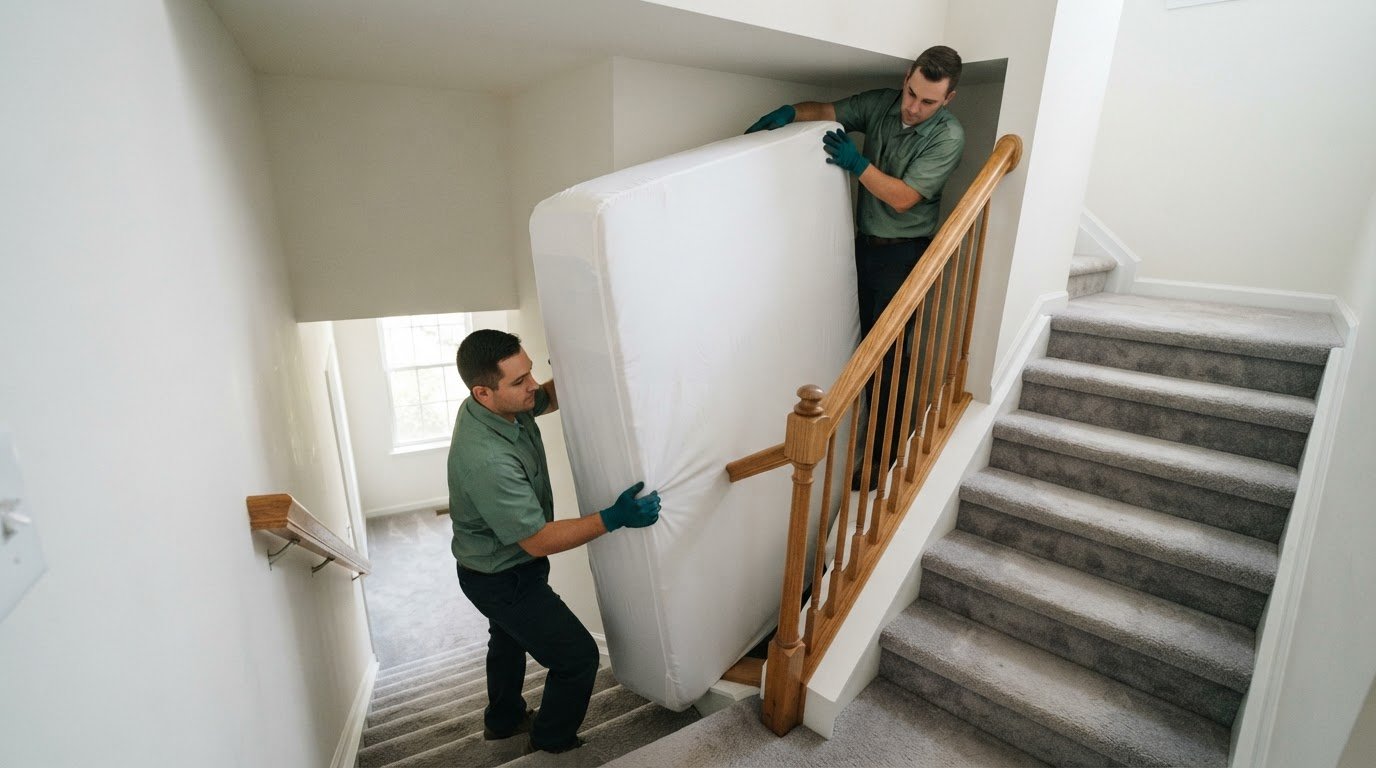
What in-home furniture shifting services are available for interior design staging in Vienna, Virginia? A staging move can include carrying furniture between rooms, delivering pieces to the property, and positioning them according to designer direction. For instance, the crew can move a bed into a guest room and place a chair beside the window as shown on the guide.
Which Vienna-area companies provide furniture staging, placement, and room-to-room moving? Look for in-home furniture movers whose work includes careful handling and placement based on a designer’s instructions. The key is matching the move scope to the project, whether it involves one room or furniture delivered throughout a staged home.
What information and photos do movers need to provide a furniture shifting estimate? Share an item list, destination rooms, a floor plan or placement guide, and photos of the furniture and access route. Note any pieces that need disassembly or reassembly. A photo of a large cabinet beside a doorway, for example, helps show the space and handling involved.
A pre-move review can bring those details together. Heavy Furniture Moving measures items and access before lifting, including doorways and stairs, so the crew can plan the route. Photos also provide a visual record of the furniture before the move and help the designer track pieces during staging.
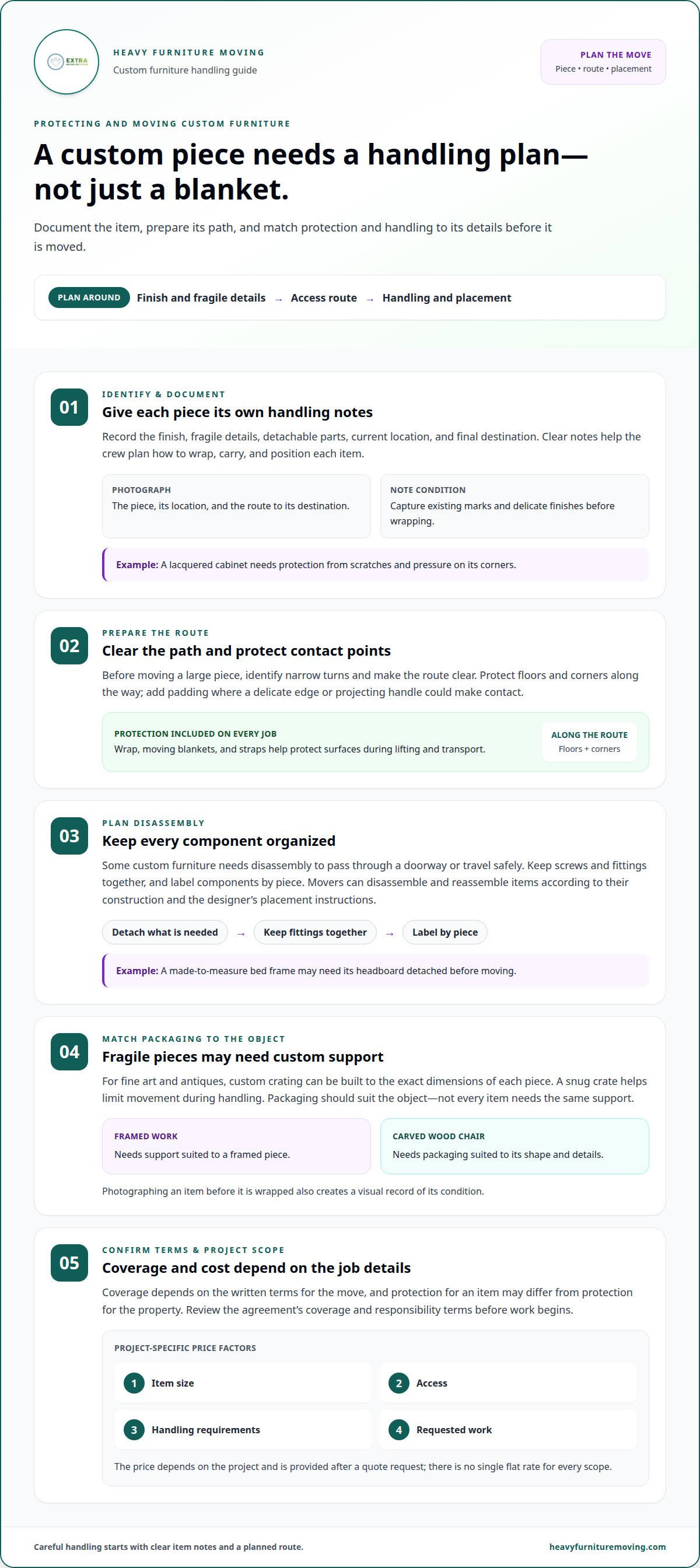
Protecting and moving custom furniture
A custom piece needs a handling plan, not just a blanket. Identify its finish, fragile details, detachable parts, and final destination. A lacquered cabinet, for example, needs protection from scratches and pressure on its corners. The designer’s notes help the crew plan how to wrap, carry, and position each piece.
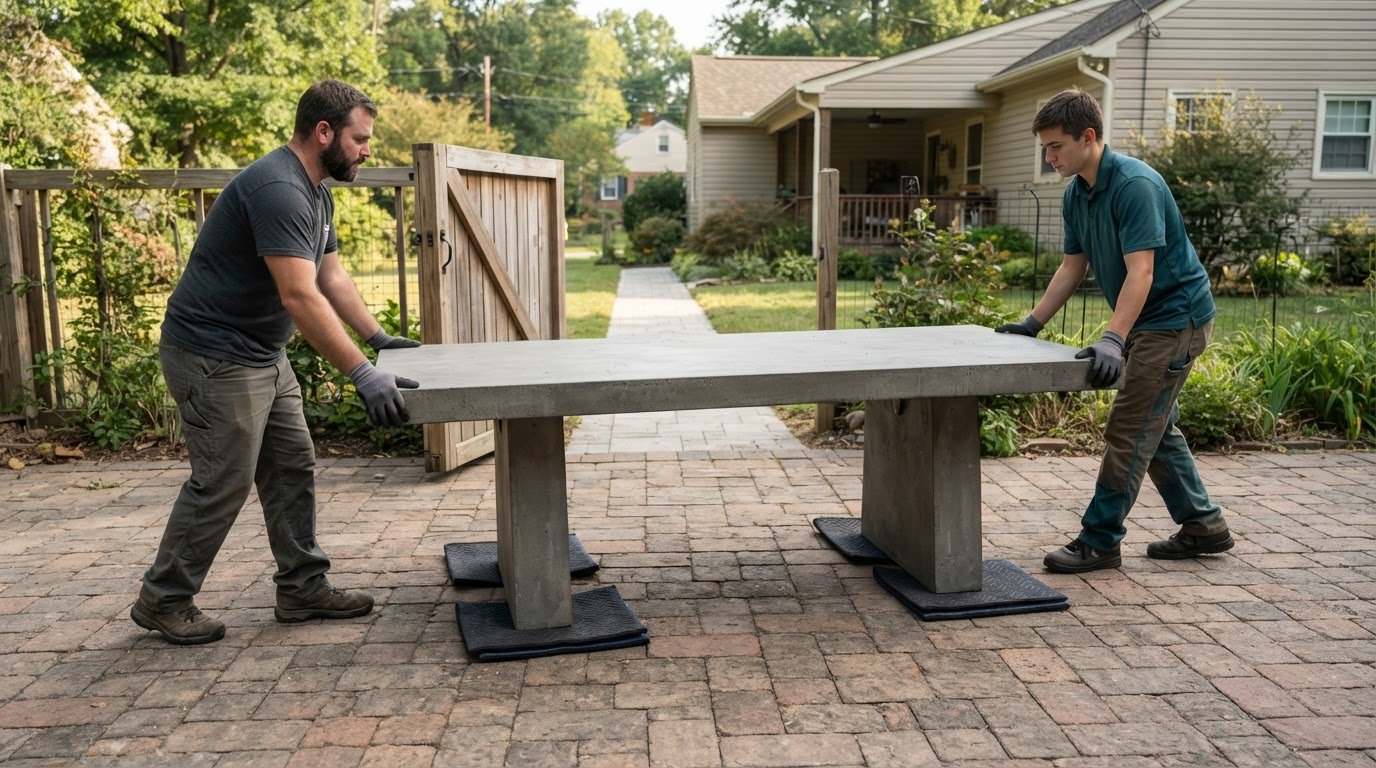
Wrap, moving blankets, and straps are included on every job to help protect surfaces during lifting and transport. The crew also protects floors and corners along the route. Before moving a large table, clear the path and identify narrow turns. Add padding where a delicate edge or projecting handle could make contact.
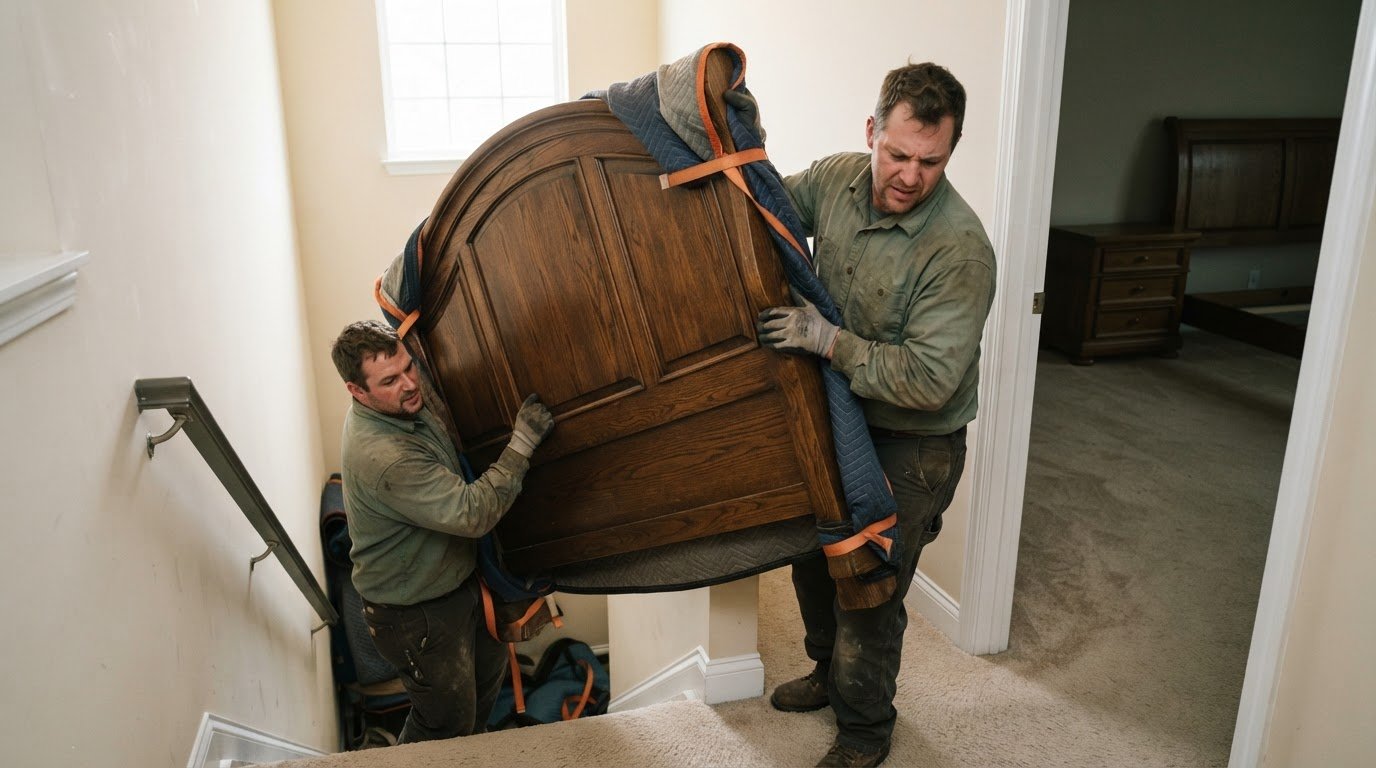
Some custom furniture needs disassembly to pass through a doorway or travel safely. Keep screws and fittings together, and label components by piece. Heavy Furniture Moving can disassemble and reassemble items, following their construction and the designer’s placement instructions. A made-to-measure bed frame, for instance, may need its headboard detached before it can be moved.
For fine art and antiques, custom crating can be built to the exact dimensions of each piece. A snug crate helps limit movement during handling. Packaging should match the object: a framed work needs different support from a carved wood chair. Photographing an item before it is wrapped also creates a visual record of its condition.
Are movers insured for damage to furniture, floors, walls, and stairways during in-home rearranging? Coverage depends on the written terms for the move, and protection for an item may differ from protection for the property. Review the agreement’s coverage and responsibility terms before work begins, especially for a valuable custom piece or a tight stairway.
Customer price examples shouldn’t rely on a made-up flat rate. A move involving one wrapped chair and a short indoor carry has a different scope from a cabinet requiring disassembly, careful stair handling, and reassembly. The price depends on the project and is given after a quote request; key factors include item size, access, handling, and requested work.
Share clear photos of each piece, its current location, and the route to its destination. Include close views of existing marks and delicate finishes. Those details help define the work and record the item’s condition. If a piece will wait in storage before installation, keep its packing and handling needs clear throughout the staging schedule.
For a move centered on heavy or bulky pieces, in-home furniture movers can help with careful lifting and room-to-room placement.
White-glove moving services for design projects
White-glove moving for a design project can cover careful packing, delivery, furniture placement, and post-delivery setup. The exact scope depends on what the property needs. For example, a staged living room may require a sofa and side tables delivered, positioned, and adjusted to match the designer’s layout. Fragile décor can receive individual wrapping and padded containers, while bulky furniture needs a clear route and coordinated lifting.
Delivery works best when items are grouped by destination, not just by type. Label each package with its room and intended use, such as “entry table” or “guest bedroom lamp.” Plan the sequence so larger pieces do not block smaller items. Bring the bed frame and mattress into the guest room before placing a chair beside the window. That order leaves room to work and reduces unnecessary handling.
Setup means more than setting a piece down. It can include positioning furniture according to instructions and assembling items that arrive in parts. A dining table, for instance, may need its legs attached before it can be placed beneath the room’s light fixture. A bookcase may need its shelves fitted after it reaches its assigned wall. List assembly needs in the work plan so the crew knows which pieces require attention.
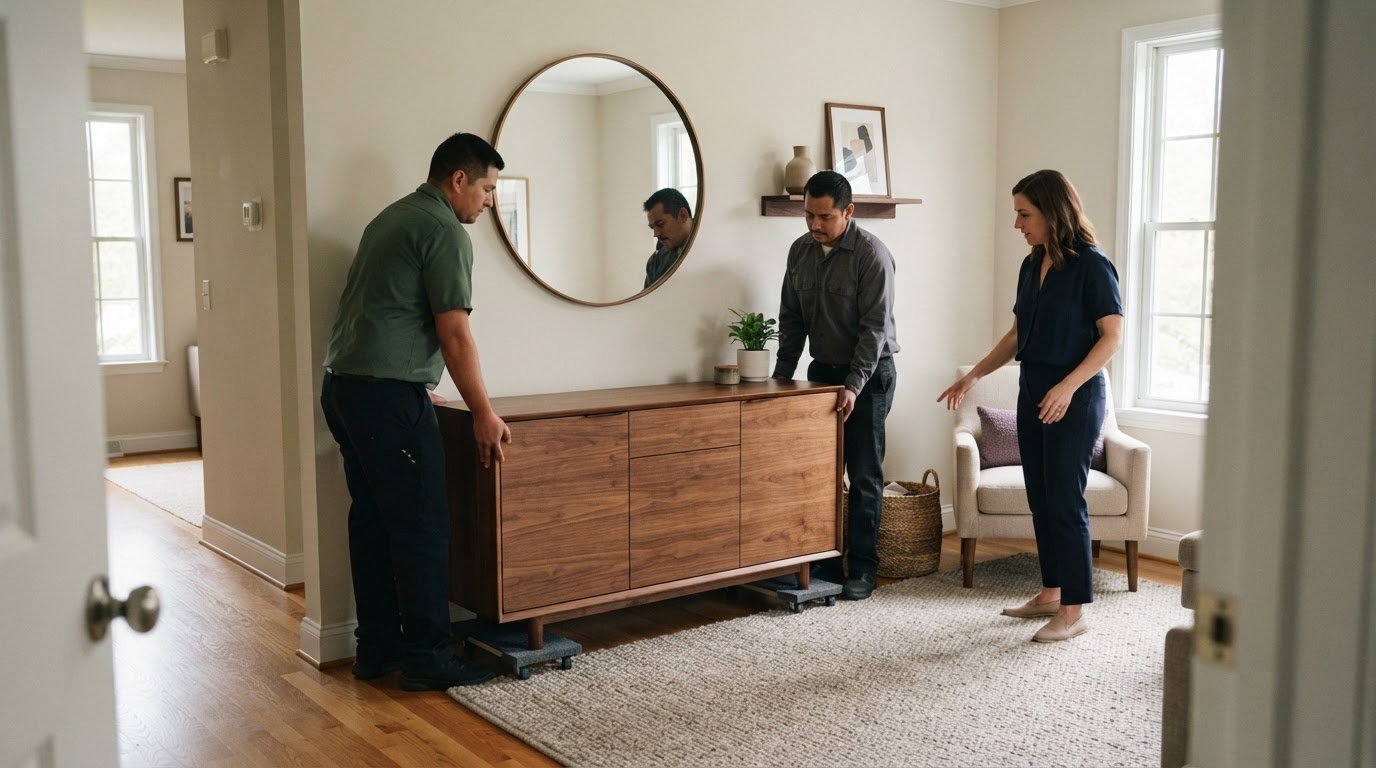
For an interior design project, the placement guide should distinguish delivery instructions from setup details. Note the room, exact wall or area, and nearby features that affect placement. “Place the console beneath the mirror” is more useful than “put console in hallway.” Add assembly notes beside the relevant item to give the crew practical direction and avoid guesswork.
A final placement review with the designer can help confirm the arrangement. Walk through each room after the main furniture arrives. Check that the sofa faces the intended focal point, dining chairs have usable space, and accessories are in their assigned areas. If a piece needs a small adjustment, make it before the crew moves on. In a staged bedroom, for example, align bedside tables with the bed before setting out lamps and décor.
Define the scope before moving day: which items need packing, which require assembly, and where each piece belongs. Keep delicate accessories separate from heavy furniture in the plan. Clear notes distinguish a transport-only job from a project that also includes placement or setup. They give the designer and moving crew a shared reference from arrival through the final room check.
Pre-move collaboration between designers and movers
A useful plan gives the designer and moving crew the same reference. Connect each item to a room, destination, and handling note. For example, label a console “entryway, beneath mirror” rather than simply “hall table.” That detail tells the crew both where it belongs and how it fits the intended arrangement.
A pre-move review can identify handling needs and access concerns, such as a tight turn, narrow doorway, or heavy piece that needs careful handling. The designer can also walk through the rooms and clarify each item’s destination before placement. This builds a plan around the actual route and finished rooms.
What should homeowners do before an in-home furniture shifting appointment? Send the floor plan, item list, placement notes, and photos of unusual pieces or tight access points. Decide which belongings stay in place, and identify items that need special care, disassembly, or a specific destination.
- Mark each furniture item with its destination room and preferred location.
- Share photos showing doorways, stairs, elevators, and the moving route.
- List pieces that need assembly or disassembly, such as a bed frame.
- Flag fragile finishes, loose parts, or existing marks for the crew’s attention.
Keep the placement guide easy to use on site. A room label or annotated floor plan can show the intended position without a long explanation. “Sofa faces fireplace” gives a clear direction, while “sofa in living room” leaves the orientation open. The designer can also identify pieces that should arrive first, such as a table that needs space for assembly.
Plans can change after they are shared. If a chair moves from the study to the guest room, update its destination before the crew begins placing items. One current item list prevents conflicting instructions in separate messages. Record changes made during the walkthrough on the same plan so the crew can follow the latest direction.
On moving day, the designer or homeowner can show the crew the rooms and confirm the placement sequence. The crew can then follow the plan rather than decide where furniture belongs. A final walkthrough helps catch a misplaced side table or a chair blocking the intended path. Clear roles, careful notes, and one shared plan keep the move aligned with the staging design.
A pre-move review can assess item-handling needs and access. Heavy Furniture Moving measures items and routes before lifting, helping the crew plan for individual pieces and any special considerations.
Average service costs by option
There isn’t one useful average for every staging move. The price depends on the project and is given after a quote request. The main cost factors are the furniture involved, access at both locations, handling needs, and requested work. A room-to-room shift has a different scope from packing, transport, delivery, and placement across a staged property.
Start by defining the work. An in-home shift may involve moving selected furniture between rooms and placing it in designated areas. A larger project may also require transport between addresses. Describe whether you need packing, unpacking, assembly, or placement according to the designer’s instructions. A clear description ties the quote to the actual work.
For example, moving a sofa between rooms depends on its size, route, and final position. Moving a large cabinet from another address also involves transport and careful handling through the home’s entrance. If a piece needs disassembly to pass through a doorway, include that detail. These specifics matter more than a broad label such as “furniture shifting.”
Access can affect the estimate too. Stairs, narrow turns, long carries, and limited parking can change how the crew handles delivery. Photos of the item and access route help show the practical conditions. Include a floor plan or room list when placement matters, and note which pieces need packing or assembly. Clear information makes the requested scope easier to define.
For a staging project, organize the quote request around the finished rooms. List each item, its starting point, and its destination, then separate essential work from other requested tasks. For instance, say whether the crew should move a dining table only or also assemble it and place its chairs. This keeps the estimate tied to the actual project.
Compare options by scope, not just by the headline amount. A labor-only arrangement may suit a shift where transport is already handled. A move requiring transport, packing, and placement involves different tasks. A heavy lifting moving service can fit projects centered on bulky pieces that need careful handling. Use the same item list and access details for each requested scope, so the work being priced stays clear.
To request a project quote, provide the item list, locations, access notes, and placement requirements. Request a quote for your staging move with those details, including any packing or assembly needs.
Heavy Furniture Moving: in home furniture movers near me
Heavy Furniture Moving provides in-home furniture moving help for staging projects that need careful lifting and placement. Turn to the team for bulky pieces, room-to-room shifts, or sofa hoisting. Its Movers Near Me and Exercise Equipment Moving services can also help with heavy items in the home.
Share the furniture list, destination rooms, and access details when describing the work. For an in-home furniture shifting service for interior designer staging in Vienna, clear placement instructions keep the move aligned with the design plan. Heavy Furniture Moving can handle the physical work, from shifting furniture inside the home to hoisting a difficult sofa.
Contact Heavy Furniture Moving to discuss your staging move.
Set the Staging Plan in Motion
Turn the finished design into a practical move plan, with each decision tied to the rooms and pieces that matter most. An in-home furniture shifting service for interior designer staging in Vienna can help keep the physical work aligned with the designer’s intent. Choose support that fits the job, whether it involves staging furniture, exercise equipment, or sofa hoisting.
Heavy Furniture Moving offers Movers Near Me, Exercise Equipment Moving, and Sofa Hoisting. These services can support different parts of a home project, from shifting furnishings to handling a bulky item that needs a specialized move. Share the staging goal and the work involved to plan the next step.
Contact Heavy Furniture Moving to discuss the move. A clear plan gives your design project a strong start and helps keep the next steps focused.
Frequently Asked Questions
How do luxury movers collaborate with interior designers during a move?
Designers and movers can coordinate the handling and placement plan before moving day. For a valuable or oversized piece, Heavy Furniture Moving measures the item and access route before lifting, while the designer identifies its destination and handling priorities. Wrap, blankets, and straps are included on every job. A shared, current item list helps prevent confusion if a room assignment changes.
How much does in-home furniture moving or staging labor cost in Vienna, VA?
The price depends on the project and is given after a quote request. Heavy Furniture Moving charges hourly labor with a two-hour minimum, while most single heavy items have flat-rate pricing. The scope, item dimensions, access, and requested labor shape the quote. For example, shifting furniture within a home differs from moving a heavy piece between addresses.
Do Vienna furniture movers offer hourly rates, minimums, or flat-rate staging packages?
Heavy Furniture Moving offers hourly labor with a two-hour minimum and flat rates for most single heavy items. Labor-only service is available when you provide a truck, pod, or container. Staging work can vary by task, so describe whether you need lifting, loading, or furniture movement. That helps define the right service structure without assuming a package covers every project need.
Can local movers rearrange existing furniture without transporting it off-site?
Yes. In-home furniture movers can shift existing pieces between rooms or reposition them within a property, without an off-site destination. For example, a sofa can move from a den to a living room while a dresser changes bedrooms. Heavy Furniture Moving measures before lifting, and wrap, blankets, and straps are included on every job.
How far in advance should I book furniture shifting for an interior design project in Vienna?
Arrange the move once the staging date and item list are taking shape, then share access details and any heavy-item photos. Same-day and next-day heavy-item jobs are often available; call before 2 PM for same-day afternoon service. Heavy Furniture Moving serves Vienna, Fairfax, Woodbridge, Manassas, Manassas Park, Aldie, Ashburn, McLean, Reston, Centreville, Chantilly, Clifton, Dumfries, South Riding, Fairfax Station, Haymarket, and Gainesville.
Frequently Asked Questions
Designers and movers can coordinate the handling and placement plan before moving day. For a valuable or oversized piece, Heavy Furniture Moving measures the item and access route before lifting, while the designer identifies its destination and handling priorities. Wrap, blankets, and straps are included on every job. A shared, current item list helps prevent confusion if a room assignment changes.
The price depends on the project and is given after a quote request. Heavy Furniture Moving charges hourly labor with a two-hour minimum, while most single heavy items have flat-rate pricing. The scope, item dimensions, access, and requested labor shape the quote. For example, shifting furniture within a home differs from moving a heavy piece between addresses.
Heavy Furniture Moving offers hourly labor with a two-hour minimum and flat rates for most single heavy items. Labor-only service is available when you provide a truck, pod, or container. Staging work can vary by task, so describe whether you need lifting, loading, or furniture movement. That helps define the right service structure without assuming a package covers every project need.
Yes. In-home furniture movers can shift existing pieces between rooms or reposition them within a property, without an off-site destination. For example, a sofa can move from a den to a living room while a dresser changes bedrooms. Heavy Furniture Moving measures before lifting, and wrap, blankets, and straps are included on every job.
Arrange the move once the staging date and item list are taking shape, then share access details and any heavy-item photos. Same-day and next-day heavy-item jobs are often available; call before 2 PM for same-day afternoon service. Heavy Furniture Moving serves Vienna, Fairfax, Woodbridge, Manassas, Manassas Park, Aldie, Ashburn, McLean, Reston, Centreville, Chantilly, Clifton, Dumfries, South Riding, Fairfax Station, Haymarket, and Gainesville.