How to Swap Heavy Bedroom Furniture Between Floors in South Riding
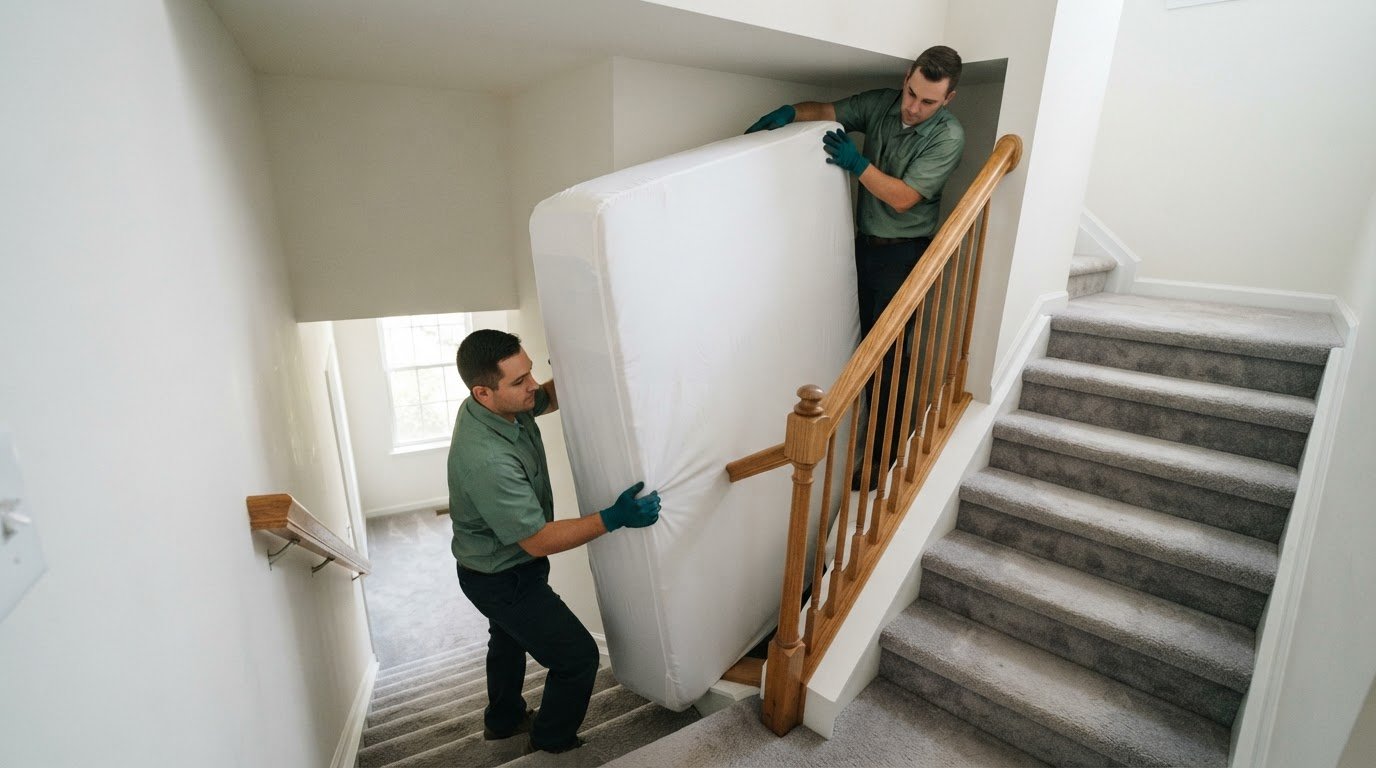
A heavy bedroom swap calls for coordinated lifting, not a solo effort. For labor to swap heavy children’s bedroom furniture between floors in South Riding, plan enough help to control each piece on stairs and through tight turns.
It’s easy to focus on furniture weight and overlook the route. Clear paths, careful measurements, and a little preparation make the move more manageable and help protect your furniture and home.
This guide explains how to measure stairways and doorways, decide what to take apart, secure loose parts, and organize the move. You’ll also learn when lifting straps or professional help can make a difference, and why an awkward item may need a different plan from a dresser or bed frame. A clear plan helps you move with better control and less last-minute scrambling.
Key Takeaways
- Recruit enough help to keep bulky furniture controlled through stair turns, and agree on who guides each end before lifting.
- Remove detachable parts when practical, then keep hardware together so reassembly is straightforward.
- Protect floors and clear the route before shifting pieces into position.
- Measure furniture and the full stair route, including landings and tight turns, to spot trouble before moving day.
- Choose a safer plan for oversized or awkward items, and use labor-only moving help when the lift is too demanding to manage alone.
Getting help to move heavy furniture
Plan the people, route, and lifting order before moving a bed, dresser, or desk between floors. To arrange labor to swap heavy children’s bedroom furniture between floors in South Riding, start by listing each piece and identifying the tightest point on its route.
Plan the Heavy-Furniture Move
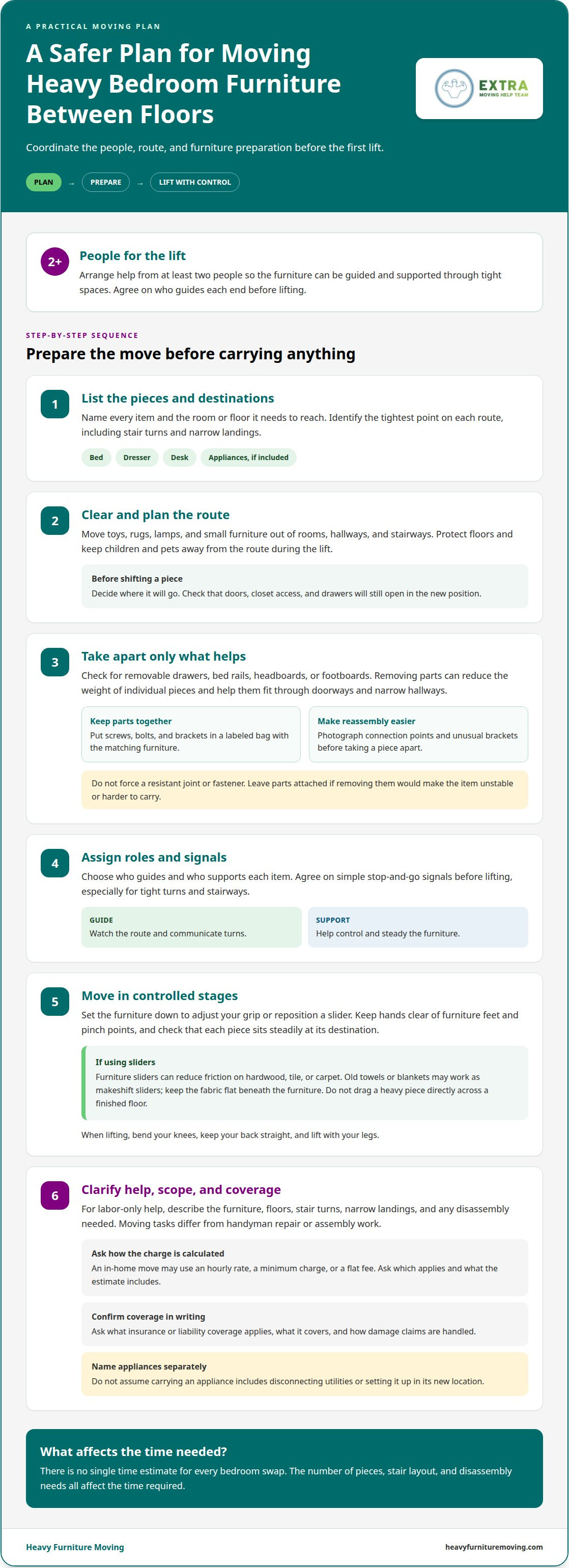
- List every item and destination room, including bedroom furniture and appliances. For a refrigerator, washer, or dryer, name the exact appliance and note whether it needs moving only. Don’t assume carrying includes disconnecting or reconnecting appliances.
- Clear the path through each room, hallway, and stairway. Move toys, rugs, lamps, and small furniture out of the way. Assign clear roles for guiding and supporting each item, and agree on simple stop-and-go signals before lifting.
- For labor to swap heavy children’s bedroom furniture between floors in South Riding, choose help suited to lifting and carrying rather than repair work. Labor-only movers focus on moving tasks, while handyman services generally focus on repairs or assembly. Keep children and pets away from the route during the lift.
Ask for an In-Home Moving Quote
- Describe each piece, the floors involved, stair turns, narrow landings, and any disassembly needed. Identify appliances separately and explain whether they’ll remain in the home. Specific details define the work more clearly than a general request to move furniture.
- Ask what the quote covers and how the charge is calculated. Explain the stairs, disassembly, bulky pieces, and unusual access details, and share photos of tight turns. Don’t assume moving an appliance includes disconnecting utilities or setting it up in its new location.
Confirm Movers, Timing, and Coverage
- Arrange help from at least two people for heavy furniture so they can guide and support it through tight spaces. No single time estimate fits every bedroom swap: the number of pieces, stair layout, and disassembly needs all affect the time required.
- Ask what insurance or liability coverage applies to the in-home move, what it covers, and how damage claims are handled. Get the terms in writing before move day. Coverage depends on the mover and job, so the quote should explain the applicable terms clearly.
- Prepare the rooms before help arrives. Empty dresser drawers, secure loose doors, and keep bed hardware in a labeled bag. Clear the route and have lifting straps ready if they’ll be used. During a lift, bend your knees, keep your back straight, and lift with your legs.
Disassembling furniture for easier maneuvering
- Check each piece for removable parts before moving it. A bed frame may separate into rails, a headboard, and a footboard; a dresser may have removable drawers. Taking furniture apart, when appropriate, reduces the weight of individual pieces and can help them fit through doorways and narrow hallways. Don’t force a resistant joint or fastener, since damaged connections can make reassembly harder.
- Gather the hand tools needed for the furniture you’re handling. A screwdriver or wrench may be required to disassemble a bed or dresser. Match the tool to the visible fastener, and keep the work area clear so small parts don’t get lost. If a part won’t release with steady pressure, pause to inspect its connection rather than pulling harder.
- Photograph each piece before taking it apart. Capture the bed frame’s connection points, the order of dresser components, and any unusual brackets. Put screws, bolts, and brackets in a labeled bag for that item, then keep the bag with the matching furniture. These photos provide a useful reference when you reassemble the piece in its destination room.
- Remove only the parts that make the furniture easier to handle. Take drawers out of a heavy dresser and separate bed rails if the design allows. Keep loose sections together, and don’t stack heavy components where they could fall or block the route. Leave parts attached if removing them would make the item unstable or create more awkward pieces to carry.
- Prepare the dismantled pieces for the stair route. Secure doors or other loose parts that remain attached, and carry hardware bags with the matching item. Keep bed rails and panels together so they’re easy to identify at the other floor. For a complex bed frame or bulky dresser, in-home furniture moving help can assist with carrying and maneuvering pieces between rooms.
In-home moving and rearranging
Plan the room layout before shifting a bed, dresser, or desk. A clear destination and a safe route across each floor make the rearrangement easier to coordinate.
-
Arrange an In-Home Furniture Move
1. Decide where each piece will go before moving it. Mark the bed’s new position and identify where the dresser and desk should sit. Check that doors, closet access, and drawers will still open once the furniture is in place. This prevents repeated lifting and avoids blocking the room’s main walking path.
Clear small items from the route, including lamps, toys, and loose rugs. Furniture sliders can reduce friction on hardwood, tile, or carpet. Old towels or blankets can work as makeshift sliders, but keep the fabric flat beneath the furniture. Don’t drag a heavy piece directly across a finished floor.
Move each item in controlled stages. Set it down to adjust your grip or reposition a slider. Keep hands clear of furniture feet and pinch points, especially when turning a dresser near a wall. At its destination, check that the piece sits steadily before replacing drawers or setting items on top.
-
Clarify In-Home Moving Fees
2. Ask how the move will be priced before arranging the work. In-home furniture moves may use an hourly rate, a minimum charge, or a flat fee; the structure depends on the job. Request a quote and ask which method applies, what the estimate includes, and how the scope affects the final amount.
Describe the number and type of pieces, the floors involved, and whether stairs connect the rooms. Mention any disassembly, tight turns, or careful repositioning needed. These details explain the work more clearly than a vague request to “move some furniture.”
Ask whether moving pieces within the home and placing them in their final positions are included in the requested work. Clarify the difference between carrying furniture and assembling it. For example, a bed moved upstairs may only need placement, while its frame may also need reassembly.
- 3. Finish with a room-by-room walkthrough. Confirm the bed, dresser, and desk are in their intended spots, and check that drawers and doors open freely. Keep the route clear until the last piece is settled. For hands-on help shifting heavy pieces between rooms, in-home furniture moving help can fit the job.
If the rearranging is part of a larger move, leave time to prepare rather than packing at the last minute. In a 2024 survey, 63% of respondents believed packing should ideally start more than three weeks before moving day. That preparation can also leave room to sort belongings and make the destination easier to set up. After the move, give yourself time to recover and avoid treating a completed room as a reason to rush into more heavy lifting.
The average American takes two months to physically recover after moving. Getting help can make moving heavy furniture more manageable and improve control in tight spaces. Agree on the route and each item’s destination before lifting, then move steadily and pause if anyone needs to reset. This keeps everyone coordinated while positioning a large item.
Measuring furniture and stairways
Measure each piece and the full route before moving bedroom furniture between floors. To arrange labor to swap heavy children’s bedroom furniture between floors in South Riding, identify tight spots before lifting.
- Measure each item at its widest, tallest, and deepest points. For a dresser, include handles and trim that extend beyond its sides. For a bed, measure the headboard, footboard, and rails separately. Note whether drawers or other removable parts will come out, since this can change the furniture’s shape.
- Measure the clear opening of every doorway, from one obstruction to another. Account for the frame, hinges, and doorstop rather than relying on the door’s listed size. Check hallway width at corners and beside built-in features. A dresser may fit through a bedroom doorway straight on but need extra room to turn just beyond it.
- Measure the stairway at its narrowest point, including handrails. Record the landing’s length and width, then check the ceiling above the stairs. Pay close attention to where the stairway meets each hallway. A long headboard may clear the steps but hit a wall during a landing turn.
- Compare item dimensions with the route before arranging labor to swap heavy children’s bedroom furniture between floors in South Riding. Consider how each piece must tilt or rotate, not just whether it fits straight through an opening. Allow enough room for people to guide it. Don’t force furniture through a gap that leaves no space to control it.
- Map each tight point in order: the bedroom doorway, hallway corner, stair landing, and destination doorway. Note low ceilings, projecting rails, and sharp turns along the route. Use the map to plan where the item may need to pause or change angle, helping prevent rushed turns near walls and doorframes.
- Prepare the route around measured pinch points. Move nearby objects, secure loose rugs, and protect exposed corners or walls. Keep hands clear when furniture passes close to a banister or doorframe. Bulky items can catch or scrape surfaces and leave carriers with too little space to adjust their grip.
- Share the dimensions and route details when arranging help. Describe each item and flag narrow landings, low ceilings, or sharp turns. Photos can show how a staircase meets a hallway, while measurements clarify the available clearance. Provide the destination floor’s route details too, since its doorway may be the limiting point.
Moving large and specialty items
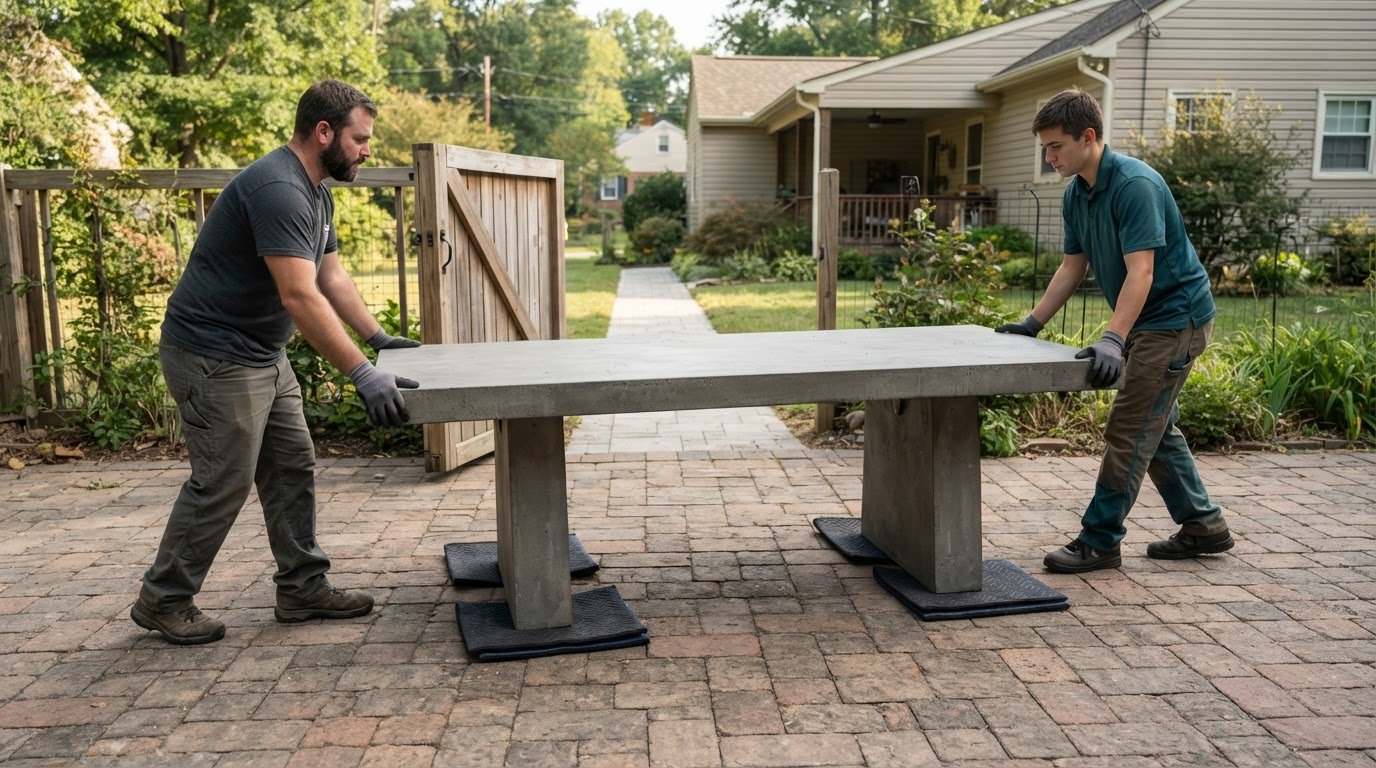
Oversized furniture and exercise equipment need a plan tailored to the route. Treat each awkward item as its own move, with clear roles and controlled steps.
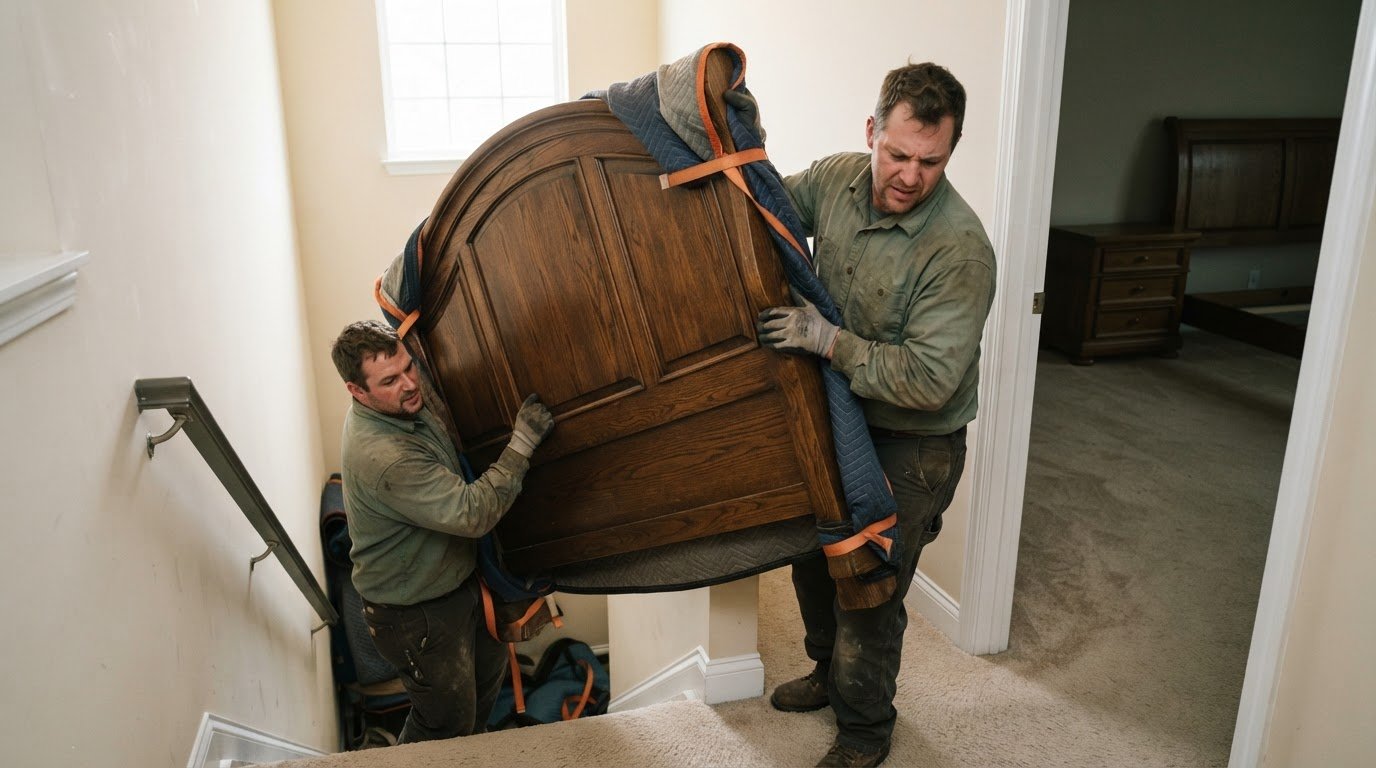
- Identify pieces that need special handling before the move begins. A treadmill, stationary bike, tall bookcase, or bulky headboard may have an uneven shape or parts that shift. Note what can be safely removed, such as a detachable shelf or accessory, and keep each part with its item. Don’t guess how equipment comes apart; follow its instructions.
- Plan how each item will pass through every turn. A long headboard may need to travel upright, while a wide dresser may require a different angle. Walk the route without the item and identify where carriers must pause, pivot, or change hand positions. Stop if the planned turn leaves too little room to control the load.
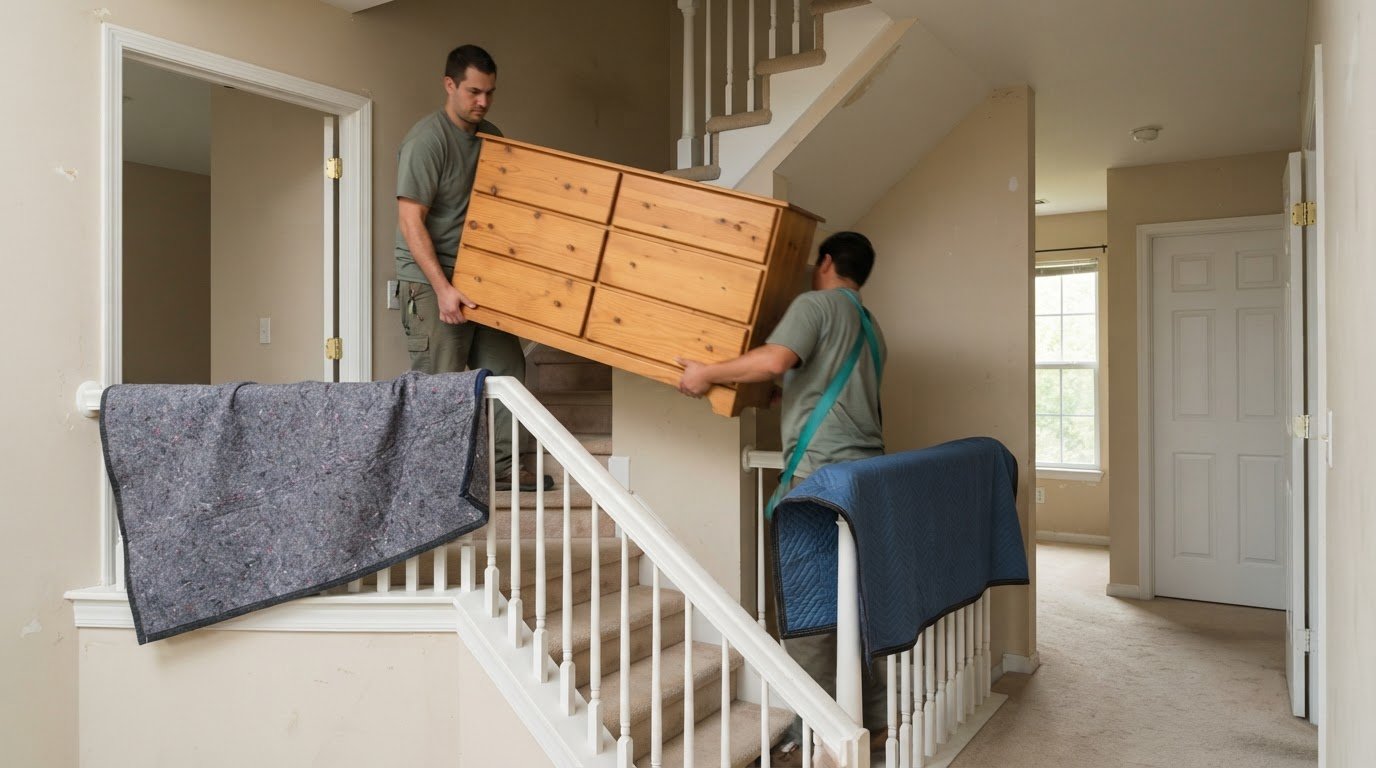
- If a heavy item must go downstairs on a blanket, use a two-person method. One person guides it from above while the other supports and slows it from below. Agree on stop-and-go commands first, then move in small, coordinated stages. Don’t let the item slide freely or rely on one person to control its full weight.
- Plan exercise equipment separately from ordinary bedroom furniture. A treadmill or stationary bike can have protruding parts that catch on doorframes or stair rails. Secure movable components according to the equipment instructions, and avoid gripping screens, handles, or other parts not designed to support the load. Keep loose accessories together for the destination room.
- Choose another plan if you can’t control the piece on the stairs. A bulky sofa or oversized furniture item may need a different route or specialized handling, not a forced turn. Keep children and pets away from the work area, and stop if carriers lose a stable grip. Clear communication matters at every landing.
- Describe the item and its route when arranging help. Include the equipment type, the floor change, stair turns, and any removable parts. For an awkward lift or exercise equipment move, arrange heavy-item moving help suited to the task.
Before the item reaches the stairs, agree who will guide from above and who will support and slow it from below. Moving a heavy item downstairs on a blanket requires two people. Make sure both carriers understand the route and commands before starting, and move slowly enough for either person to call a stop. If the blanket shifts, a grip becomes unstable, or the item moves uncontrollably, pause rather than trying to correct the problem while continuing downstairs.
At each landing, reassess the space and the next turn before proceeding. Keep the item supported as carriers adjust their positions, and make sure nobody is where the load could trap them. The person guiding should call when to move, pause, or change direction; the person supporting should be able to slow the descent throughout. If the carriers can’t maintain control or there isn’t room for a safe pivot, stop and choose another plan. A controlled pause is better than forcing the item through a tight space.
Heavy Furniture Moving: labor only movers near me
Heavy Furniture Moving provides labor-only help with lifting and carrying bedroom furniture between floors. Turn to the team when a dresser, bed frame, or awkward piece needs coordinated handling beyond what household helpers can manage. Share the items involved and describe the stairs, landings, and tight turns so the work is clear.
For other bulky jobs, Heavy Furniture Moving also handles exercise equipment moving and sofa hoisting. These services suit items that need a distinct approach rather than a routine room rearrangement.
Contact Heavy Furniture Moving to discuss help with your furniture swap.
Set up the next move with confidence
Make the furniture swap an opportunity to create a bedroom that works better for your family. Before choosing a layout, consider how your child uses the room: where they sleep, study, and keep everyday belongings. Knowing the purpose of each piece makes placement easier once the move is underway.
If labor to swap heavy children’s bedroom furniture between floors in South Riding calls for extra hands, Heavy Furniture Moving offers Movers Near Me, Exercise Equipment Moving, and Sofa Hoisting. Share which pieces need moving and what help you need to take the next step.
Reach out to Heavy Furniture Moving to discuss help with your furniture move. A thoughtful plan and capable assistance can help you make room for what comes next.
Frequently Asked Questions
Which local movers or labor-only moving companies serve South Riding, VA?
Heavy Furniture Moving serves South Riding with Movers Near Me and labor-only help for household furniture. For a bedroom swap, explain that the pieces are staying in your home and identify anything unusually bulky. This clarifies the work as moving pieces between rooms, not transporting belongings to another address. Wrap, moving blankets, and straps are included on every job to help protect furniture during handling.
Can local furniture movers move items between floors without a moving truck?
Yes. Labor-only moving help covers lifting and carrying between floors without a truck when furniture stays inside the home. For example, a bed frame can move upstairs while a dresser moves to another bedroom downstairs. Explain that it’s an in-home swap, so the work is understood as moving pieces between rooms rather than transporting belongings to another address.
How should bedroom furniture be prepared for moving between floors?
Empty dresser drawers before the move, since dressers must be emptied for handling. Remove breakables from nightstands and shelves, and keep small personal belongings separate from the furniture. If a bed frame comes apart, keep its hardware with the matching parts. Set aside bedding and lamps, and keep your children’s essentials accessible during the room change.
How many movers are recommended for heavy bedroom furniture and what is the estimated time?
At least two people are recommended. There’s no single time estimate: the number of pieces, stair layout, and disassembly needs affect how long the move takes.
Frequently Asked Questions
Heavy Furniture Moving serves South Riding with Movers Near Me and labor-only help for household furniture. For a bedroom swap, explain that the pieces are staying in your home and identify anything unusually bulky. This clarifies the work as moving pieces between rooms, not transporting belongings to another address. Wrap, moving blankets, and straps are included on every job to help protect furniture during handling.
Yes. Labor-only moving help covers lifting and carrying between floors without a truck when furniture stays inside the home. For example, a bed frame can move upstairs while a dresser moves to another bedroom downstairs. Explain that it’s an in-home swap, so the work is understood as moving pieces between rooms rather than transporting belongings to another address.
Empty dresser drawers before the move, since dressers must be emptied for handling. Remove breakables from nightstands and shelves, and keep small personal belongings separate from the furniture. If a bed frame comes apart, keep its hardware with the matching parts. Set aside bedding and lamps, and keep your children’s essentials accessible during the room change.
At least two people are recommended. There’s no single time estimate: the number of pieces, stair layout, and disassembly needs affect how long the move takes.