How to Safely Move a Heavy Power Lift Recliner in Ashburn
A power lift recliner can be too heavy and awkward for one person to control safely. If you’re figuring out how to safely move a heavy power lift recliner chair in Ashburn, use a helper on stairs or a long route, and don’t move it alone if you can’t keep it steady.
It makes sense to handle the move yourself, especially if the chair only needs to go to another room. But its motor, moving parts, and bulky shape make it different from an ordinary chair. A furniture dolly can help on a clear, level path, while tight turns, stairs, and uneven weight are good reasons to get help.
This guide explains how to protect the upholstery, secure the footrest and cords, and plan a route through doorways and corners. You’ll also learn how to lift and maneuver the chair without pulling on vulnerable parts, and what to do if you can’t control a solo move. Take it step by step, and stop before a difficult lift becomes a risky one.
Key Takeaways
- Measure the chair and the full route, including tight turns, before attempting a doorway or hallway maneuver.
- Unplug the chair and secure its cords and controls so they can’t snag or get crushed during the move.
- Use moving blankets or padding to help protect upholstery, and secure detachable parts before shifting the chair.
- Lift from sturdy areas approved by the manufacturer, never from the footrest, wiring, or moving mechanism.
- Use a helper or a suitable dolly when the chair feels unstable, the path is difficult, or you can’t control the lift safely.
How do you get a recliner through a narrow doorway?
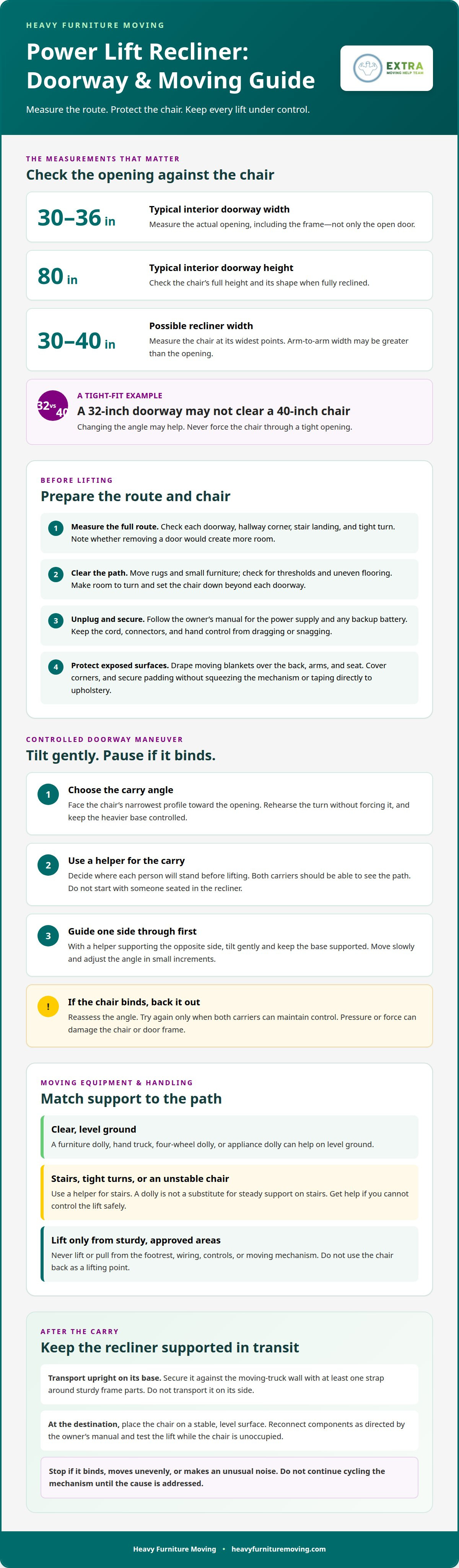
Measure the chair and route before lifting, then test a controlled tilt through the tightest opening. Standard interior doorways are typically 30 to 36 inches wide and 80 inches tall, while recliner widths can range from 30 to 40 inches.
For stairs, use a controlled carry with a helper. A hand truck, four-wheel dolly, or appliance dolly can help on level ground, but a dolly is no substitute for steady support on stairs.
If the chair can’t be moved, don’t assume curbside placement is allowed. Arrange a bulky-item disposal plan appropriate for your address, and don’t leave the recliner in a shared hallway or at the curb without following applicable collection instructions.
-
Measure Doorways and the Moving Route
Measure the chair at its widest points and compare those dimensions with each opening. Include the door frame, not just the open door, and note whether removing a door would create more room. Check the entire route: a chair that fits through one doorway may not clear the next opening or a hallway corner.
Measure the chair fully reclined too, since its shape changes with its position. Mark tight spots on a simple route sketch, including stair landings and 90-degree corners. A 32-inch doorway, for example, may not pass a chair measuring 40 inches across without changing its angle.
-
Check Paths, Outlets, and Clearance
Clear the planned path before carrying. Move rugs, small furniture, and other obstacles, then check for thresholds and uneven flooring that could catch the chair. Locate nearby outlets and unplug the chair before moving it. Keep the cord from dragging under the base or catching on a corner.
Make sure there’s room to turn and set the chair down beyond each doorway. Leave enough clearance to avoid scraping the frame against walls or door trim. Check the owner’s manual for model-specific transport instructions, especially before changing the chair’s position or disconnecting electrical parts.
-
Plan the Carry Angle
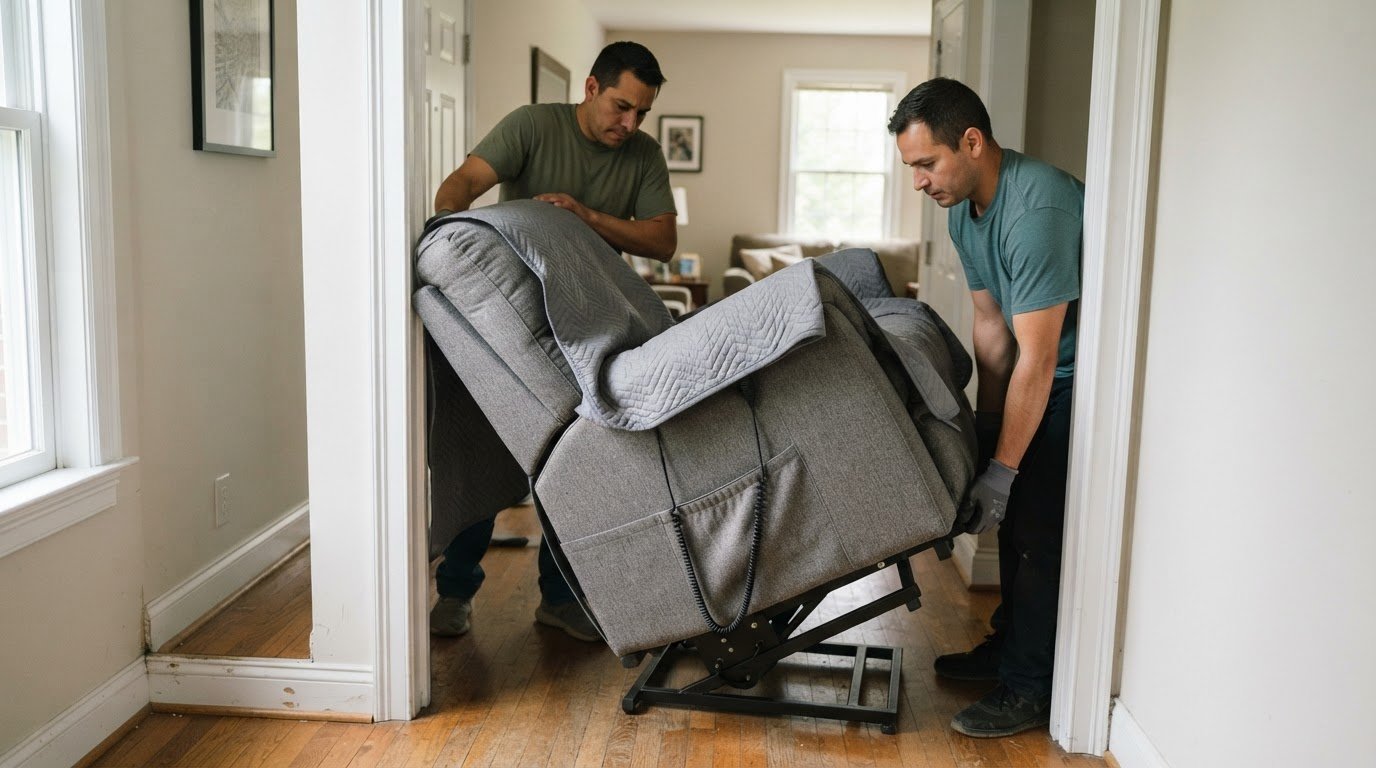
Angle the chair so its narrowest profile faces the opening, then rehearse the turn without forcing it. The chair’s arm-to-arm width may exceed the opening, so a slight tilt can help. Keep the heavier base controlled and ensure both carriers can see the path.
Decide where each person will stand before lifting. Account for the door swing, nearby corners, and the space needed to rotate the chair. Don’t start with someone seated in the recliner. Its motion and shifting position can make the carry harder to control.
-
Use the Tilt Method
With a helper holding the opposite side, gently tilt the chair enough to guide one side through the doorway first. Keep the base supported, move slowly, and pause if the upholstery, arms, or frame touch the trim. Adjust the angle in small increments instead of twisting the chair through.
Once the leading edge clears, guide the rest of the chair through while watching both sides. Don’t force a tight fit, as pressure can damage the chair or door frame. If the chair binds, back it out, reassess the angle, and try again only when both carriers can maintain control.
Protecting upholstery with moving blankets or padding
- Unplug the chair and prepare its fabric before wrapping. Disconnect the power supply and any backup battery according to the owner’s manual. Secure the hand control, cord, and connectors so they can’t drag across the upholstery or catch beneath the frame. Remove loose items from pockets, and check the seams for anything that could snag.
Drape moving blankets over the back, arms, and seat. Cover exposed corners and surfaces that could rub against a doorway or truck wall. Keep the padding smooth, not bunched beneath the chair, where it could shift and interfere with the base.
- Fasten the blankets without squeezing the chair’s mechanism. Place moving straps around sturdy parts of the frame, not delicate controls or wiring. Check that the padding stays in place when the chair is tilted slightly. If a strap slips toward a moving joint, reposition it before lifting.
Protect the footrest and arm edges, which can brush against walls during a turn. Don’t tape directly to upholstery, as adhesive may leave residue or pull at the fabric. A layer of blanket between the strap and chair helps prevent marks and keeps the cover secure.
- Remove the back only if the manufacturer identifies it as detachable. Some models use levers or clips where the back meets the seat. Follow the specific instructions, then wrap the detached piece separately and keep its hardware together. Don’t pull at stapled fabric or take apart the motor, frame, or lifting mechanism for a household move.
Leave the chair assembled if the manual doesn’t describe how to remove the back. Uncertain disassembly can strain the frame or complicate reconnection. Support the back while handling the chair, and don’t use it as a lifting point.
- Load the wrapped recliner upright on its base, against the moving-truck wall. Secure it to the tie-down rails with at least one moving strap to hold the frame steady. Don’t transport it on its side, as this can put lateral stress on the mechanism. Tighten the strap enough to prevent shifting without crushing the padding or upholstery.
Before driving, check that the chair cannot slide or tip and that its cord stays clear of contact points. For a bulky load that needs controlled handling, consider heavy lifting moving help.
- Set the chair on a stable, level surface at its destination. Reconnect the power supply and other components as directed in the owner’s manual. Keep the chair unoccupied while testing its lift and reclining motion. Stop if it binds, moves unevenly, or makes an unusual noise. Don’t continue cycling the mechanism until the cause is addressed.
Securing the footrest and removing loose cushions
Prepare the chair’s movable parts before lifting so nothing swings, slips, or catches. Follow the owner’s manual for your model, and keep the lifting mechanism intact.
- Unplug the chair and close the footrest, if the manual permits. Disconnect the power supply and backup battery as instructed, then secure the hand control, cord, and connectors. This keeps loose electrical parts from snagging or being crushed while the chair is carried.
-
Remove Approved Detachable Pieces
Remove only parts the manufacturer identifies as detachable. Check the owner’s manual before removing a headrest, tray, or other detachable piece. Keep each item and its hardware together in a labeled bag, then wrap them separately to protect their surfaces and prevent parts from getting lost during the move.
Leave the motor, frame, and lifting mechanism assembled for a household move. Don’t pull at fabric or fasteners to force a part free. If a piece resists removal, stop and consult the model’s instructions rather than risking damage to the chair.
-
Detach Cushions and Chair Backs
Remove loose cushions and set them aside before moving the chair. Wrap each cushion in a clean blanket, and keep it away from straps, tools, or sharp edges. This protects the upholstery and prevents a cushion from sliding into the carrier’s path while the chair is tilted.
If the back is designed to detach, follow the manual’s release steps. Some recliners have levers or clips where the back meets the seat. Support the back as it comes free, collect its hardware, and protect the exposed connection points. Don’t remove stapled fabric or force a fixed back loose.
- Secure the footrest and backrest before carrying, especially on stairs. Use suitable straps or bungee cords to keep these sections closed and prevent unwanted movement. Position fasteners around sturdy areas, not across electrical wiring, controls, or the moving mechanism. Check that the restraints hold without pressing hard into the upholstery.
- Inspect the chair before lifting. Confirm that loose cushions and detachable parts are set aside, the footrest stays closed, and cords are secured. With a helper holding the opposite side, gently test whether the chair’s parts shift when tilted. If the backrest or footrest moves, adjust its restraint before continuing.
Avoiding lifting or pulling by vulnerable chair parts
Use the chair’s sturdy frame as the control point, not its movable or electrical parts. Check the owner’s manual for approved lifting points before moving it.
- Find the frame points the manufacturer identifies for lifting. Ask a helper to hold the opposite side, then raise the chair together with a steady grip. Keep the chair close to your body and avoid twisting as you lift. If the manual lists no lifting points, don’t guess by grabbing an armrest or headrest.
Keep your hands clear of joints and moving parts. The lift mechanism can shift if the chair tilts, so support the frame rather than bracing against a lever or hinge.
- Never lift or pull by the footrest, armrests, electrical wiring, or moving mechanism unless the manufacturer permits it. Those parts can flex, detach, or shift under load. For example, pulling a recliner by its extended footrest can strain the joint that moves it.
Don’t use the headrest as a handle either. It may adjust independently, and its position can change your grip while the chair is moving.
- Secure the hand control, power cord, and connectors against the frame before lifting. Keep them away from the floor, wheels, and gaps where they could snag or be crushed. Unplug the chair first, and disconnect backup batteries according to the manual.
Before each lift, check that no cable crosses the path or hangs beneath the base. A cord caught during a turn can pull on a connector even when the chair is carried carefully.
- Coordinate the lift with a clear count, and have one person direct each movement. Raise the chair only enough to clear the floor, then move in short, controlled steps. If you need more clearance at a doorway, stop and adjust the route or angle rather than pulling on an arm.
Keep the heavier bottom controlled as you reposition the chair. Don’t let the top swing freely, especially near corners or thresholds. Set the base down evenly before changing hand positions.
- Pause if the chair shifts, feels unstable, or won’t stay level. Set it down, check that its feet touch the floor evenly, and reset your grip on the frame. Don’t try to correct a tilt by yanking the backrest or footrest.
If you can’t keep the chair steady with a helper, stop the lift. A heavy-lifting moving service can help with a difficult carry, tight turn, or stair route.
Power recliner weight and uneven weight distribution
A power lift chair can be heavy and harder to balance than its shape suggests. Check its weight and how that weight shifts before choosing a lifting method.
- Find the chair’s weight in its manual or model documentation before moving it.
Use the model’s actual information, not the weight of a similar-looking chair. Motors, frames, and other features affect the load. If you can’t tell whether you can control the chair, don’t plan a solo lift.
- Account for the chair’s uneven weight distribution. Its base and lower frame may carry more weight than the upper section, so the chair can tip or shift as you lift. Keep the heavier bottom controlled first, then guide the top instead of letting it swing.
Before lifting, identify which side feels heavier while the chair is still on the ground. Coordinate with a helper, agree on who controls the base, and move together. Don’t make sudden adjustments once the chair is off the floor.
- Check whether the chair stands evenly before starting. On a level surface, make sure its feet touch the floor evenly. If it rocks, inspect the feet and base before lifting. An unstable starting position can shift unexpectedly during the move.
Keep the footrest closed and loose parts secured. A change in position can affect balance, so don’t use the powered motion to reposition the chair during the carry. Follow the model’s manual for transport instructions.
- Choose equipment and help based on the route and the chair’s weight. A furniture dolly can support movement across a level floor, but stairs require a controlled carry with another person. Don’t attempt a stair carry alone if the weight or balance prevents steady control.
On a longer route, pause at a clear landing to reset your grip. Keep the load close, lift with your legs, and avoid twisting while carrying the chair. If either person loses control, set it down safely before continuing.
- Stop if the chair tilts, rocks, or shifts during movement. Set it down on a stable surface, reassess the balance, and adjust the plan before lifting again. For a heavy or awkward carry, get help moving heavy furniture instead of forcing an unsafe lift.
Heavy Furniture Moving: heavy lifting moving service
Heavy Furniture Moving offers heavy-lifting help for bulky furniture that’s difficult to maneuver safely. Turn to the team when the chair’s weight, an awkward route, stairs, or tight turns make a solo move hard to control.
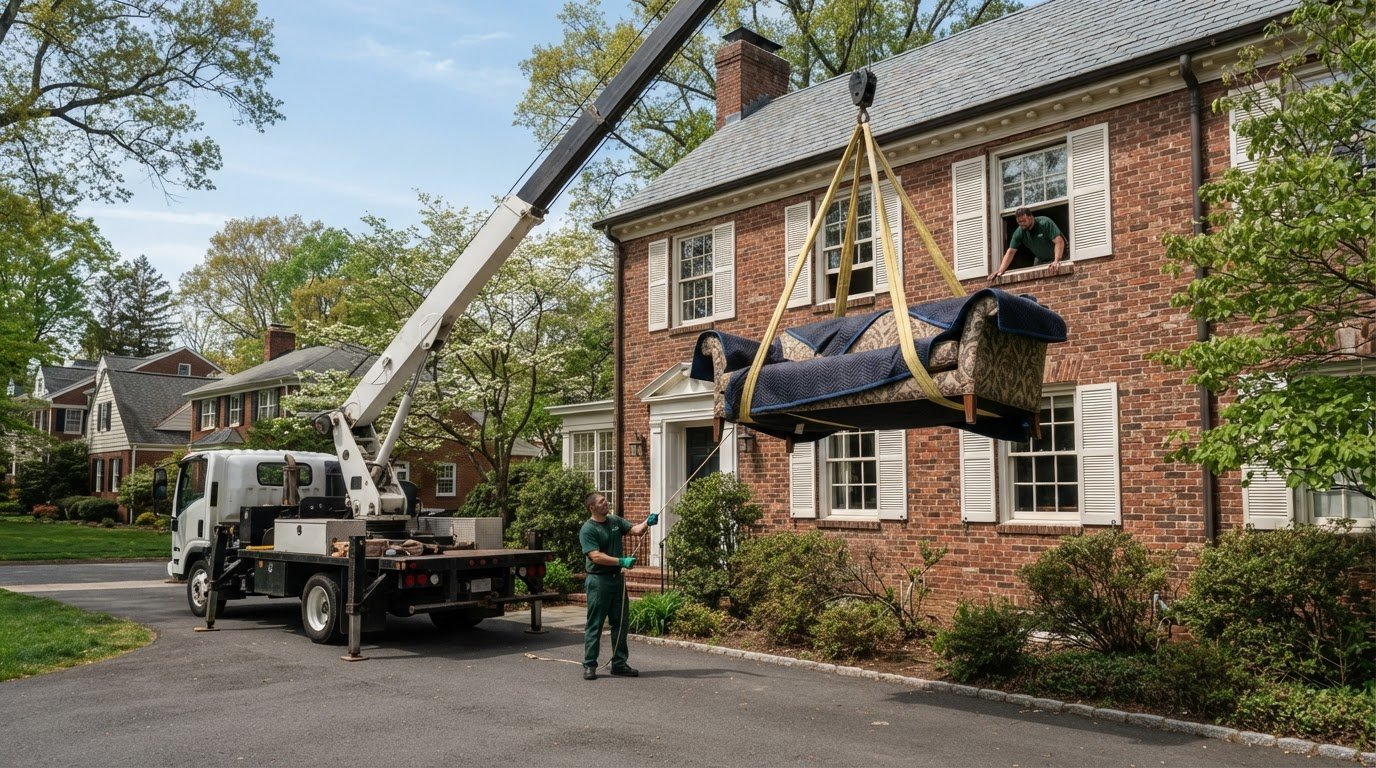
Share the recliner’s approximate weight, dimensions, route, and any model-specific handling instructions when arranging the move. These details help the moving team plan how to handle the chair and its electrical components. For other heavy items, Heavy Furniture Moving also offers Exercise Equipment Moving and Sofa Hoisting.
If carrying the recliner feels unsafe, contact Heavy Furniture Moving to discuss help with the move.
Make the next move a controlled one
Before moving day, decide whether you can keep the chair steady throughout the route. If you’re planning how to safely move a heavy power lift recliner chair in Ashburn, base your decision on the actual carry, not just the distance. Even a short move can be difficult if it involves stairs, narrow turns, or an awkward lift.
When the job extends beyond the recliner, Heavy Furniture Moving also offers Movers Near Me, Exercise Equipment Moving, and Sofa Hoisting. Choose help that fits the items and move you’re planning, rather than attempting a lift you can’t control.
For a practical next step, contact Heavy Furniture Moving to discuss your moving needs. A clear plan can help you move forward with confidence.
Frequently Asked Questions
Can one person move a recliner alone?
Sometimes, but only if you can keep the chair controlled throughout the move. A short, level path with no tight turns may be manageable with a suitable dolly. Don’t attempt a solo lift if the chair tips, catches, or feels too heavy to steer. A stair landing or doorway that requires rotating the chair, for example, calls for another person to help guide and stabilize it.
Do I need to disassemble a recliner before moving it?
No, a household move usually doesn’t require taking the chair apart. Remove only parts the owner’s manual identifies as detachable, such as a removable back or loose cushion. Keep the motor, frame, and lifting mechanism assembled. If the chair won’t clear a doorway, check whether its back is designed to come off rather than pulling fabric or forcing a joint.
How do you move a power recliner safely?
Start by unplugging the chair and securing the cord and hand control so they can’t snag. Protect exposed upholstery, keep detachable pieces together, and use a helper on stairs or through a difficult turn. A furniture dolly may reduce strain on a level floor. If you’re deciding how to safely move a heavy power lift recliner chair in Ashburn, let the route and your ability to control its balance guide your plan.
How much does a power lift recliner weigh, and where are its heaviest parts?
The base and lower frame can feel heavier, so the chair may shift as it tilts. Check your model’s documentation for its weight, and keep the bottom controlled while repositioning it.
How to safely prepare and disconnect a power lift recliner before moving it?
Use the owner’s manual to guide you when disconnecting the power supply and backup battery. Keep the hand control, cord, and connectors secured against the frame, away from wheels and pinch points. Remove loose objects from pockets, then close and secure movable sections as directed. For an Ashburn move, note any model-specific transport instructions and keep them with the chair.
Can a power lift recliner be disassembled for moving, and how?
Some models allow the back to detach, but follow the manufacturer’s steps for that specific chair. A removable back may have clips or levers at the seat connection. Support it as it releases and keep its hardware together. Don’t dismantle the motor, frame, or lifting mechanism for an ordinary move. Pulling away stapled fabric can damage the chair.
How many people are needed to move a power lift recliner safely?
Use at least two people for a stair carry or a longer route. One person can control the base while the other guides the upper frame and watches clearances. The right help depends on the chair’s weight, balance, route, and each person’s ability to keep it steady. If you can’t coordinate a controlled lift, stop and choose another plan.
What are safe lifting techniques for moving a heavy recliner without injury?
Keep the chair close, bend at the knees, and lift with your legs rather than pulling with your back. Agree on direction and timing with your helper before lifting. Move in controlled steps, avoid twisting while carrying, and set the chair down before changing grips. Don’t lift by the footrest, armrests, wiring, or moving mechanism unless the manufacturer permits it.
Frequently Asked Questions
Sometimes, but only if you can keep the chair controlled throughout the move. A short, level path with no tight turns may be manageable with a suitable dolly. Don’t attempt a solo lift if the chair tips, catches, or feels too heavy to steer. A stair landing or doorway that requires rotating the chair, for example, calls for another person to help guide and stabilize it.
No, a household move usually doesn’t require taking the chair apart. Remove only parts the owner’s manual identifies as detachable, such as a removable back or loose cushion. Keep the motor, frame, and lifting mechanism assembled. If the chair won’t clear a doorway, check whether its back is designed to come off rather than pulling fabric or forcing a joint.
Start by unplugging the chair and securing the cord and hand control so they can’t snag. Protect exposed upholstery, keep detachable pieces together, and use a helper on stairs or through a difficult turn. A furniture dolly may reduce strain on a level floor. If you’re deciding how to safely move a heavy power lift recliner chair in Ashburn, let the route and your ability to control its balance guide your plan.
The base and lower frame can feel heavier, so the chair may shift as it tilts. Check your model’s documentation for its weight, and keep the bottom controlled while repositioning it.
Use the owner’s manual to guide you when disconnecting the power supply and backup battery. Keep the hand control, cord, and connectors secured against the frame, away from wheels and pinch points. Remove loose objects from pockets, then close and secure movable sections as directed. For an Ashburn move, note any model-specific transport instructions and keep them with the chair.
Some models allow the back to detach, but follow the manufacturer’s steps for that specific chair. A removable back may have clips or levers at the seat connection. Support it as it releases and keep its hardware together. Don’t dismantle the motor, frame, or lifting mechanism for an ordinary move. Pulling away stapled fabric can damage the chair.
Use at least two people for a stair carry or a longer route. One person can control the base while the other guides the upper frame and watches clearances. The right help depends on the chair’s weight, balance, route, and each person’s ability to keep it steady. If you can’t coordinate a controlled lift, stop and choose another plan.
Keep the chair close, bend at the knees, and lift with your legs rather than pulling with your back. Agree on direction and timing with your helper before lifting. Move in controlled steps, avoid twisting while carrying, and set the chair down before changing grips. Don’t lift by the footrest, armrests, wiring, or moving mechanism unless the manufacturer permits it.