How to Prepare a Residential Safe for a Stair Move in Reston

Empty the safe completely before a stair move. Removing its contents helps balance the load and makes it easier to control on the stairs. Residential safe movers in Reston need the safe’s weight, dimensions, and route details to plan a safe move with suitable equipment.
A heavy safe can damage floors, stairs, and tight landings if the equipment and moving plan don’t suit the job. Before the crew arrives, prepare the safe and clear the route. This guide covers how to get ready, protect surfaces, and plan a stair move.
You’ll also learn what details help movers assess the route, including stair width, turns, and landing space. With those details in hand, the crew can plan the handling around the safe and the home, making a demanding move more orderly from the start.
Key Takeaways
- Learn why stair shape, landing space, and safe size affect the moving plan and equipment choice.
- See how careful wrapping and floor protection help reduce the risk of scuffs and damage during the move.
- Understand how movers secure a safe for transport and why its contents should be removed first.
- Find out which details about the safe and home help the crew plan the route and prepare suitable equipment.
- Discover when specialized stair-climbing equipment or rigging may be needed for a demanding move.
Moving safes on stairs
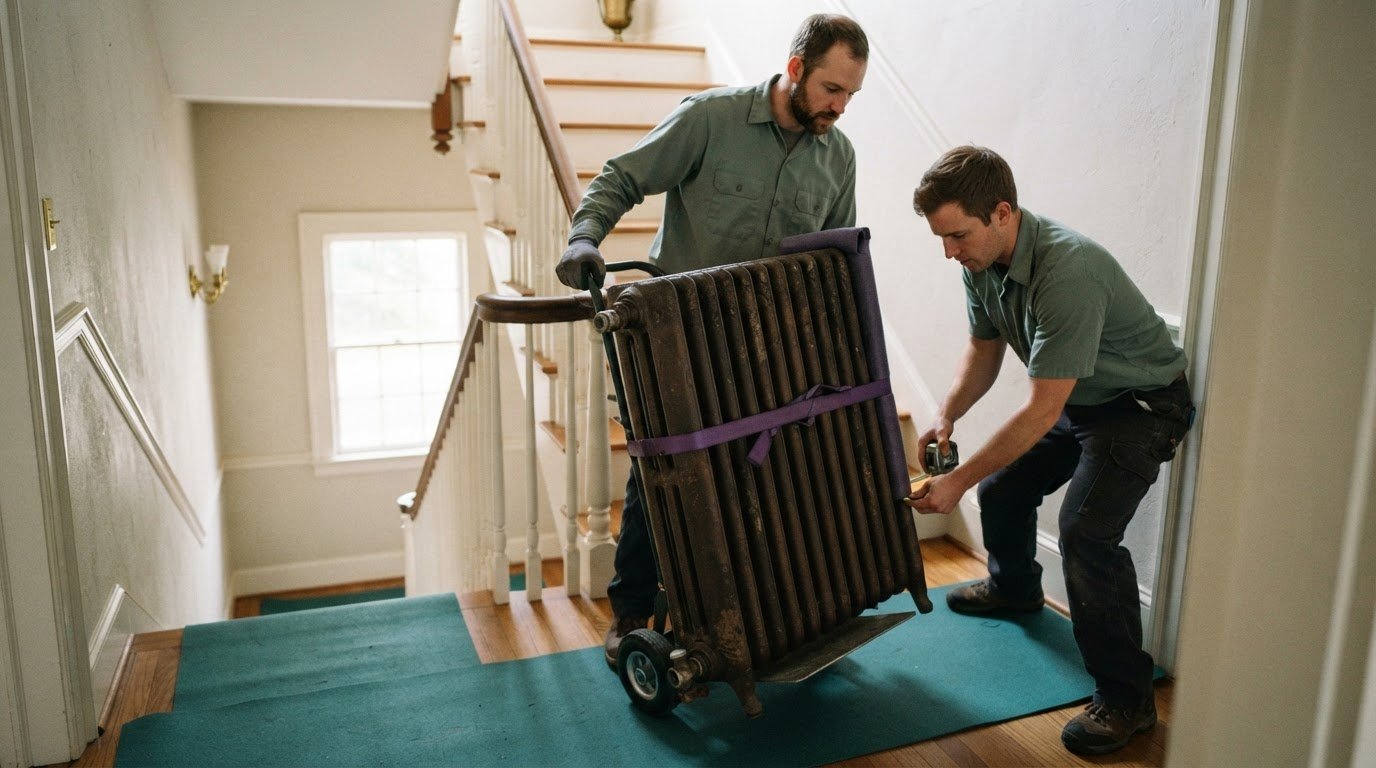
Plan the route, handling method, and equipment together before moving a safe up or down stairs. The safe’s weight, stair width, turns, and landing space all affect the approach.
-
Assess Stairs, Turns, and Tight Spaces
Describe the full route, including every turn, doorway, and narrow landing. The safe’s dimensions and center of gravity affect whether it can pass and remain controlled. A straight staircase presents different challenges from stairs with a sharp turn. Point out tight clearances and obstacles so the crew can plan the route and equipment before moving day.
-
Confirm the Safe’s Stair and Floor Move
State whether the safe needs to go up or down stairs and between floors. Stair movers handle both directions when the route and equipment suit the load; this is not limited to moves within one floor. Include the safe’s current and destination floors in the move plan. That detail helps the crew assess the complete route, rather than treating the stairs as a small part of the move.
-
Match the Moving Method to the Safe
Ask how the planned method fits the safe’s weight and stair layout. Manual moves can require three to six workers; powered climbers typically use one or two operators.
A 500-pound safe on stairs calls for trained movers, a rated stair-climbing dolly, and straps. Some appliance dollies aren't designed to support an 800-pound gun safe safely. Don't treat a general-purpose hand truck as suitable just because it rolls heavy appliances.
-
Review Costs and Stair-Access Surcharges
Request a quote that reflects the safe’s weight, route, stairs, turns, access, and required equipment. The price depends on the case and is given after a quote request; those job details shape the estimate. Stair access can affect the work involved, but avoid assuming a standard surcharge applies to every home. Give accurate route details so the estimate accounts for the actual move.
-
Compare Reviews, Equipment, and DIY Risks
Compare movers by reviews that mention safe or stair work, equipment suited to the load, and clearly stated Reston service coverage. Movers handling a stair move should plan for both up and down routes, including moves between floors within a home. A safe over 500 pounds, narrow stairs, or multiple turns are reasons to hire professionals. An uncontrolled shift can injure people or damage stairs and floors, so avoid attempting a heavy stair move without trained help and suitable equipment.
Safe preparation, wrapping, and floor protection
Prepare the safe and route before moving day. A clear plan for protecting surfaces helps the crew safeguard floors, walls, door frames, and stairs.
-
How Movers Assess Stairs, Turns, and Tight Spaces
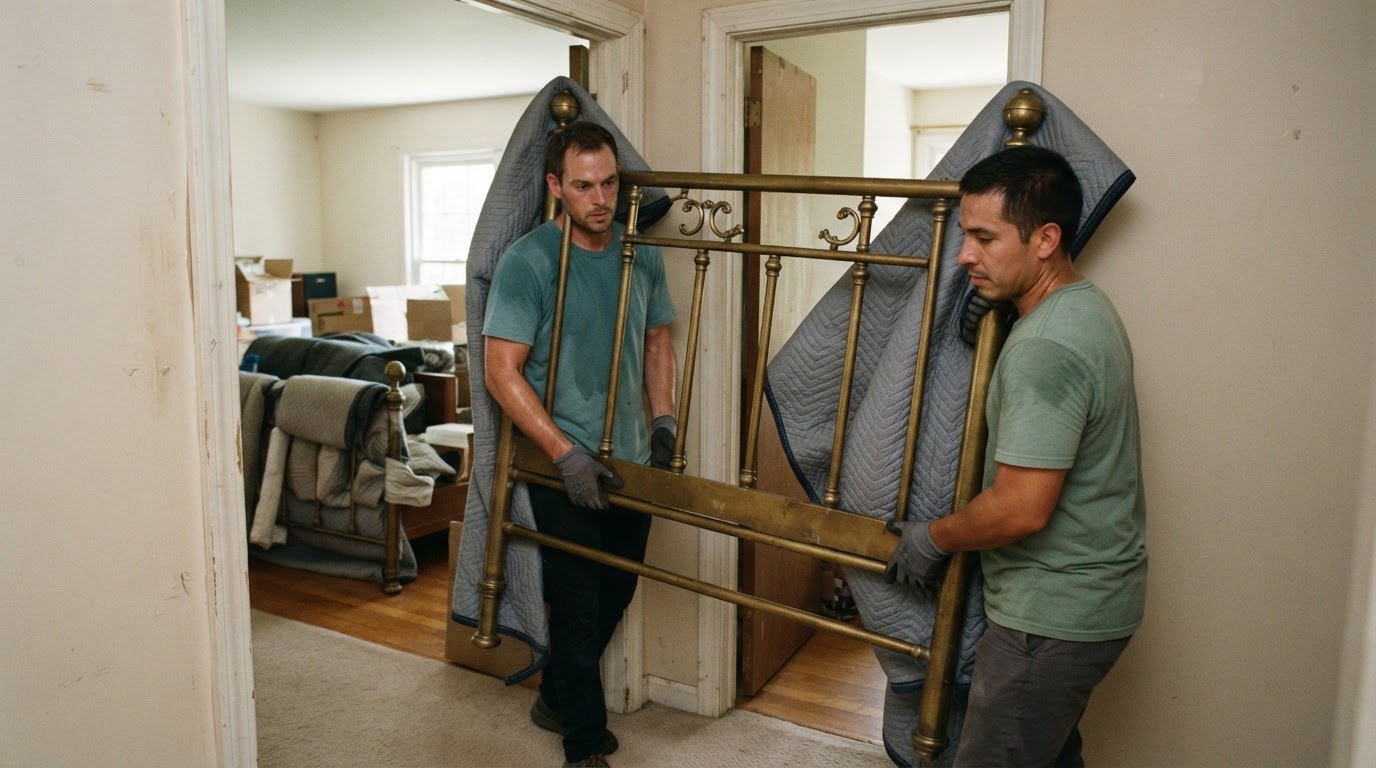
Share the route and identify each turn, doorway, and landing. The crew can assess stairways and access points for tight clearances before bringing in equipment, and plan protection for floors and stair surfaces. A narrow turn may affect how the safe can be positioned, so mention obstacles and changes in floor level.
Point out delicate finishes along the route, such as polished wood or tile. This helps the crew plan where to place protective materials before moving the safe.
-
Prepare the Safe for Wrapping
Clear the area around the safe so movers can work without shifting nearby items. Describe its construction and point out exposed hardware, handles, or edges that could catch on wrapping. The safe’s weight and center of gravity affect how it is handled and protected. Share the unit’s shape and contact points so the crew can plan accordingly.
Make sure the route is accessible before the crew begins. Move small obstacles out of the way, and keep people and pets clear while the safe is being handled.
-
Protect Floors With Layered Materials
Ask the movers to protect the floor along the safe’s travel path, not only at the starting point. A floor-protection system can use 3/4-inch plywood to spread the load over a broader surface. Proper placement matters: gaps or unstable panels can create an uneven path for the moving equipment.
Moving blankets can cushion the safe’s exterior during handling. The recommended setup uses eight heavy moving blankets weighing 7.5 pounds each. Movers position the layers to cover exposed surfaces without blocking secure handling points. This helps protect the finish while the crew manages the safe’s weight and gravity.
Floor protection and wrapping have different purposes. Floor protection helps shield the surface beneath the equipment, while blankets cushion the safe. Together, they support controlled movement and help limit contact damage.
-
How Movers Protect Walls, Door Frames, and Stairs
Point out vulnerable walls, door frames, and stair edges before the move. The crew can place protective materials where the safe or equipment might contact these surfaces. Keep the route clear, and move steadily through each turn instead of forcing the safe past a tight frame.
For a home with finished stairs and a narrow doorway, plan protection at both locations. Share any fragile trim or wall surfaces so the crew can account for them while positioning the safe. For related local moving help, plan the service around the heavy items and access route.
Do I need to empty the safe before moving it?
Yes. Empty the safe completely before lifting begins. Removing the contents helps balance the load and keeps valuables in your control during the move.
- Remove everything from inside. Take out documents, valuables, ammunition, and loose items before moving day. Contents can shift when the safe tilts, changing its balance on stairs or during loading. A balanced load is easier for movers to control. Store removed items securely and away from the moving route.
Don’t leave items inside because the safe seems sturdy. Its heavy door can affect balance when open, and a swinging door can weigh 150 pounds. Tell the crew about any door or interior parts that could move during handling.
- Keep keys and combinations with you. Store keys, access codes, and removed contents separately from the safe. This keeps private information and valuables out of the truck’s load. If the safe needs to be opened during preparation, arrange access before lifting begins. Don’t put keys in a box that will travel with your household furniture.
- Tell movers about the safe’s condition. Point out existing dents, loose handles, or damage before loading. A clear description helps the crew plan its grip and protect vulnerable surfaces. Note the safe’s condition in your move records, and take photographs before it leaves the room. This documents the exterior without suggesting that photographs determine insurance coverage.
Keep moving paperwork with your own records. Protecting the safe and securing its contents are separate concerns: straps and moving blankets protect the load, not valuables left inside.
- Watch how the crew prepares the safe for the truck. Movers use suitable equipment to control the safe while positioning it for loading. They work to keep the load balanced and avoid sudden shifts that could damage the safe, truck, or nearby furniture. Wrapping cushions the exterior while leaving secure handling points accessible.
Once loaded, the safe must be secured against movement during transport. Ratchet straps rated to a 3,300-pound working load are specified for safe moves. The movers match securement to the load and placement, rather than relying on the safe’s weight to hold it in place.
- Keep the loading area clear. Move people, pets, and loose items away from the truck’s path before lifting begins. A clear route lets movers position the safe without working around boxes or furniture. Stay nearby to answer questions, but leave lifting and strap adjustments to the crew.

Information movers need to plan a safe move
Share the safe’s details and complete access route so the crew can select suitable equipment and plan the handling.
- Give the safe’s make, model, and weight. A label or owner’s manual can help identify the unit and its specifications. Residential safes vary considerably: small fire safes and document boxes weigh 40 to 150 pounds, while fire-rated safes average 800 to 1,500 pounds. Full-size gun safes average 600 to 1,000 pounds. If the exact weight isn’t available, provide the model and any visible specifications for planning.
- Provide its dimensions and door details. Share the safe’s height, width, and depth, including handles or other parts that extend beyond its body. A unit may fit through a doorway in one position but not another. Include whether its door opens freely or has removable interior parts. A swinging safe door can weigh 150 pounds, so its movement may affect positioning and handling during the move.
- Describe the route from pickup to destination. Tell movers which floor the safe is on, whether stairs are involved, and where each landing or turn is. Include narrow doorways, thresholds, changes in floor level, and obstacles. A doorway might be wide enough for the safe but leave little room to turn it just beyond the frame. Explain how the doorway connects to the hall or stairway, not just the width of its opening.
- Explain how the safe is secured in place. Tell the crew if it’s bolted down or positioned under a counter or inside a closet. Most gun safes are anchored with two to four lag bolts. This affects preparation and can change the equipment and work involved. Note the floor surface beneath the safe, such as wood or tile, and any nearby trim or built-ins that limit access.
- Ask how the crew matches equipment to the load. Safe-moving operators should verify the safe’s weight and the stair-climbing equipment’s rated capacity before moving it. A 1,200-pound-rated appliance dolly is described for most home safe moves, but capacity alone doesn’t determine suitability. Stairs, turns, safe dimensions, and access all matter. A safe weighing 500 to 1,000 pounds calls for a minimum crew of three movers. Trained movers use these details to plan a controlled move safely.
Specialized rigging and stair-climbing equipment
Match the equipment to the safe, stair route, and surfaces before moving begins. A stair climber’s capacity matters, as do the safe’s dimensions and the available turning space.
- Choose equipment by rated capacity. A stair dolly should be rated at least 20% above the weight being moved. For example, a 400-pound load calls for equipment rated at least 480 to 500 pounds. That margin helps account for the demands of the move, but it doesn’t replace a route assessment. The crew must also consider stair shape, landings, and how the safe sits on the dolly.
Electric stair-climbing dollies use motors rated from 120W to 1200W. Motor power alone doesn’t establish suitability. A trained crew matches capacity and equipment to the load and access conditions.
- Use specialized equipment for heavier safes. Safes above 420 kg (925 lb) call for specialized heavy-duty equipment. A powered stair climber can support controlled movement, while more complex loads may need additional rigging. Safes over 1,000 pounds may require a rigger, and safes over 1,500 pounds may require a rigger and Johnson bar. The safe’s size and route help determine the appropriate setup.
- Account for hardwood and other surfaces. A heavy safe puts concentrated pressure on floors during staging and transport. Protect hardwood, tile, and stair edges along the equipment’s path. The plan should account for where the safe will be loaded, turned, and positioned. Consider surface protection and equipment selection together, not as afterthoughts.
For example, a tight turn on hardwood may call for a different approach than a straight run with broad landings. The crew should assess the safe’s dimensions and the surfaces along the route before moving it.
- Keep lifting and rigging under trained control. A stair climber doesn’t eliminate the need for careful handling. The crew secures the safe, controls its position, and moves it deliberately. Improvised rigging or equipment without suitable capacity can lead to shifting loads, property damage, or injuries. A heavy-duty appliance dolly is not a substitute for equipment selected for the safe and route.
- Use equipment details to shape the estimate. Give movers the safe’s weight and dimensions, plus details about stairs, turns, and hardwood or other vulnerable surfaces. Those specifics help establish which equipment and handling plan fit the job. For heavy-item moving support, plan your move with the right equipment.
Heavy Furniture Moving: Exercise Equipment Moving
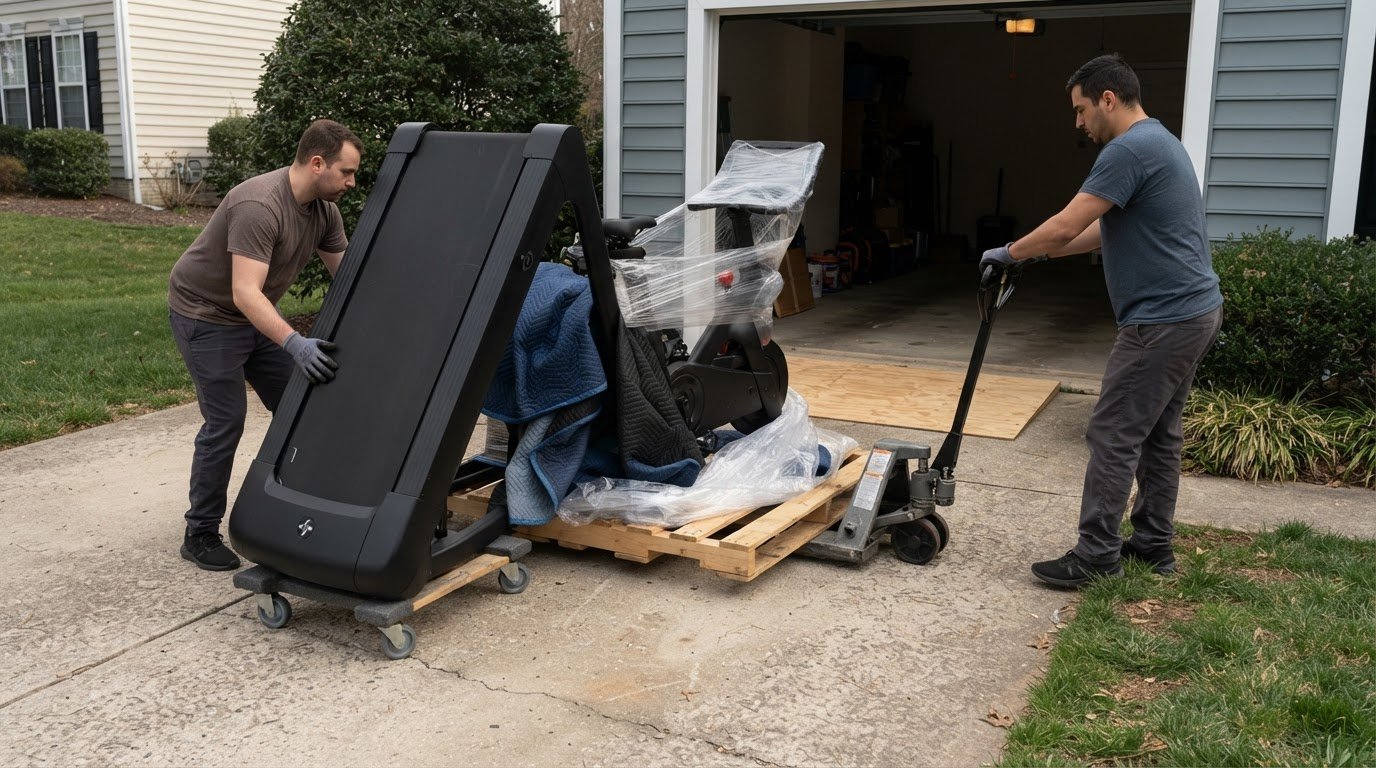
Heavy Furniture Moving handles exercise equipment that needs careful navigation around stairs, doorways, and tight indoor spaces. If your household move also includes bulky fitness equipment, the company can move it as a separate heavy-item service.
Share the equipment type, its location, and the route it needs to travel. Stairways, turns, and limited access help shape the moving plan, just as they do for other large items. For furniture that needs a different access route, Heavy Furniture Moving also provides sofa hoisting.
Planning a move that includes heavy exercise equipment? Contact Heavy Furniture Moving to discuss your job.
Plan the next move with confidence
A safe move is easier to plan when the crew understands the item and the route. For residential safe movers handling stair-climbing equipment moves in Reston, share the safe’s details and access conditions early. This gives the team a practical starting point for planning around your home.
Heavy Furniture Moving also offers Movers Near Me, Exercise Equipment Moving, and Sofa Hoisting for other demanding household moves. If your move involves more than the safe, describe the items and access challenges together so the plan reflects the full job. Contact Heavy Furniture Moving to discuss your move and the help you need. Take the next step with a clear plan and a capable team.
Frequently Asked Questions
How do you prevent stair damage when moving heavy items?
Prevent stair damage by planning the equipment’s path before moving the safe. Crews need a clear route and stable places to pause or reposition equipment. On carpeted stairs, protect edges and keep the load from scraping walls. On hardwood, avoid dragging equipment across the finish. Keep household members clear of the work area so movers can focus on controlled movement through each turn.
What stair-climbing equipment do safe movers use?
Depending on the load and route, safe movers may use manual stair dollies, powered stair climbers, or other heavy-duty climbing equipment. A safe dolly supports the safe while movers control its position on the stairs. Powered equipment can assist with heavy loads, but the crew still needs to assess turns, landings, and clearance. The equipment must suit the safe’s weight and dimensions.
How do safe movers price residential stair carries?
Residential stair moves may use hourly labor or a flat rate for a single heavy item. Heavy Furniture Moving offers hourly labor with a two-hour minimum and flat-rate pricing for most single heavy items. The upfront quote accounts for the stairs and included wrapping before work begins. Pricing reflects the safe’s handling needs and access conditions, not a universal stair-carry fee.
What information do safe movers need for a moving quote?
For a useful quote, send a clear photo of the safe and another of the stairs or access route. Include the pickup and destination floors, the safe’s make or model, and whether it is anchored. Mention tight turns, narrow doorways, or limited parking that could affect access. These details help the moving team understand the job and prepare an estimate based on its actual conditions.
What measurements do movers need for a safe, stairway, landings, and doorways?
Measure the safe’s height, width, and depth, including protruding handles. Record the narrowest doorway and stair clearance, landing width, and available turning space. Note door swings and thresholds that reduce usable room. A safe might fit through a doorway but still lack turning clearance at the landing. Photos alongside measurements can show how these spaces connect.
What are the risks and damage protections when moving a safe on stairs?
A safe can shift during a stair carry, putting the crew, walls, steps, and nearby items at risk. Movers reduce contact risks by planning the route, protecting surfaces, and controlling the load through turns. Review the move plan and protections included in the quote before work begins. Keep valuables and personal documents out of the safe, and people away from the lifting path.
Frequently Asked Questions
Prevent stair damage by planning the equipment’s path before moving the safe. Crews need a clear route and stable places to pause or reposition equipment. On carpeted stairs, protect edges and keep the load from scraping walls. On hardwood, avoid dragging equipment across the finish. Keep household members clear of the work area so movers can focus on controlled movement through each turn.
Depending on the load and route, safe movers may use manual stair dollies, powered stair climbers, or other heavy-duty climbing equipment. A safe dolly supports the safe while movers control its position on the stairs. Powered equipment can assist with heavy loads, but the crew still needs to assess turns, landings, and clearance. The equipment must suit the safe’s weight and dimensions.
Residential stair moves may use hourly labor or a flat rate for a single heavy item. Heavy Furniture Moving offers hourly labor with a two-hour minimum and flat-rate pricing for most single heavy items. The upfront quote accounts for the stairs and included wrapping before work begins. Pricing reflects the safe’s handling needs and access conditions, not a universal stair-carry fee.
For a useful quote, send a clear photo of the safe and another of the stairs or access route. Include the pickup and destination floors, the safe’s make or model, and whether it is anchored. Mention tight turns, narrow doorways, or limited parking that could affect access. These details help the moving team understand the job and prepare an estimate based on its actual conditions.
Measure the safe’s height, width, and depth, including protruding handles. Record the narrowest doorway and stair clearance, landing width, and available turning space. Note door swings and thresholds that reduce usable room. A safe might fit through a doorway but still lack turning clearance at the landing. Photos alongside measurements can show how these spaces connect.
A safe can shift during a stair carry, putting the crew, walls, steps, and nearby items at risk. Movers reduce contact risks by planning the route, protecting surfaces, and controlling the load through turns. Review the move plan and protections included in the quote before work begins. Keep valuables and personal documents out of the safe, and people away from the lifting path.