How to Plan a Heavy Elliptical Move Through Tight Hallways

A tight hallway turn can matter more than the distance you’re moving an elliptical. For moving a heavy elliptical machine through tight hallway turns in South Riding, the cost depends on the machine, whether it needs disassembly, how many movers are needed, and how difficult the route is. Extra help and careful route planning can make a challenging move safer and more controlled.
It’s reasonable to want a clear cost before arranging the move. This guide explains what affects the estimate and how professionals plan for narrow doorways, sharp turns, and bulky equipment. You’ll also learn when disassembly or additional movers may help, and what details about your elliptical and home can help shape a practical moving plan.
Key Takeaways
- Moving costs depend on the elliptical, the route, any disassembly, and the crew size. A clear description of these details helps shape a practical estimate.
- A furniture dolly and moving blanket can help movers control the machine and protect it during transport.
- Professional movers can assess whether removing parts will help the elliptical fit through a doorway or tight turn.
- Stairs, narrow passages, and sharp corners can affect how many movers are needed and how the route is planned.
- Share the machine’s model and the layout of the path so the moving team can plan the handling approach.
How Much Does It Cost To Move an Elliptical?
The right moving plan depends on the machine’s size and weight, whether it needs disassembly, the crew required, and the route. Heavy Furniture Moving provides an upfront quote before work begins, based on the job details.
Tilting or laying an elliptical on its side can shift its weight and put pressure on parts not designed to bear it. Keep it upright unless the owner’s manual specifies a different position for moving.
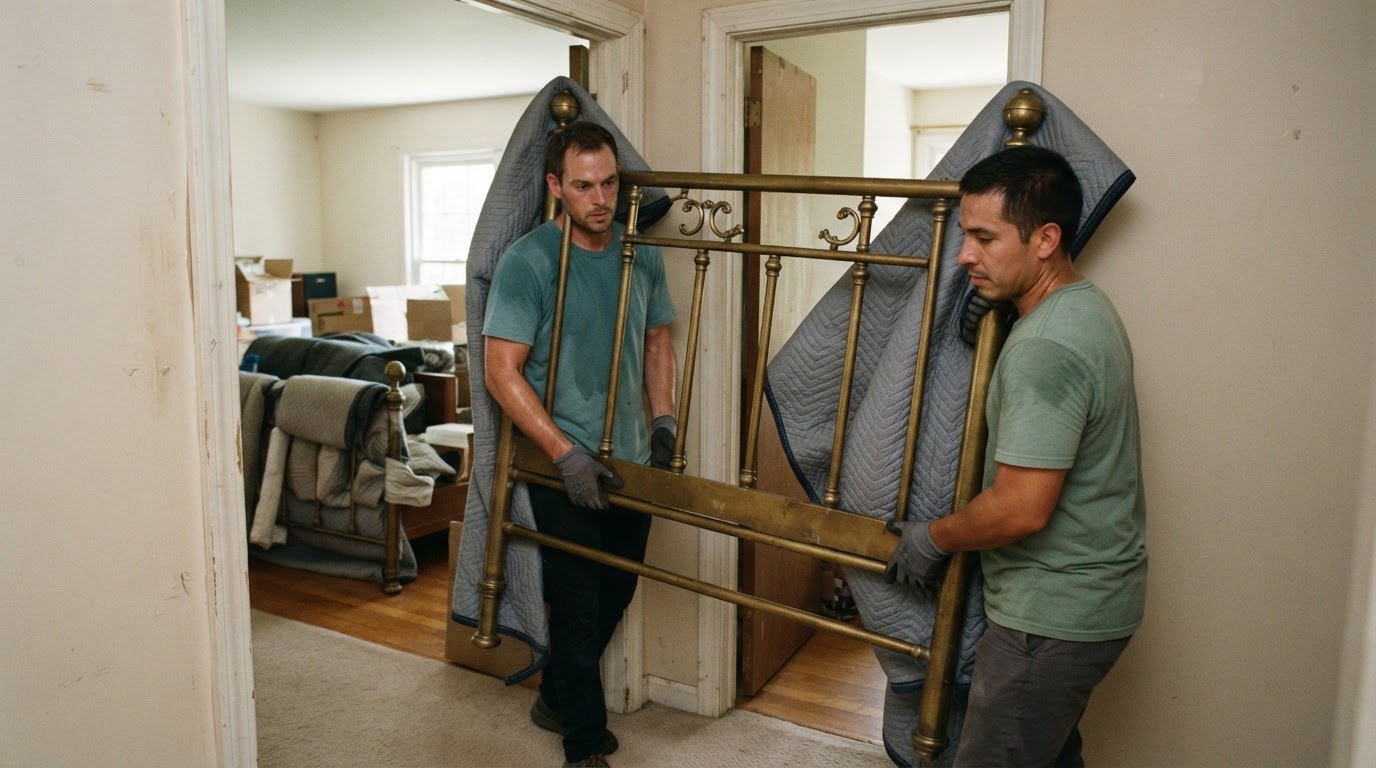
During tight turns, movers use blankets and padding to protect nearby surfaces. They guide the frame slowly past walls, floors, and doorframes instead of forcing it through a narrow opening.
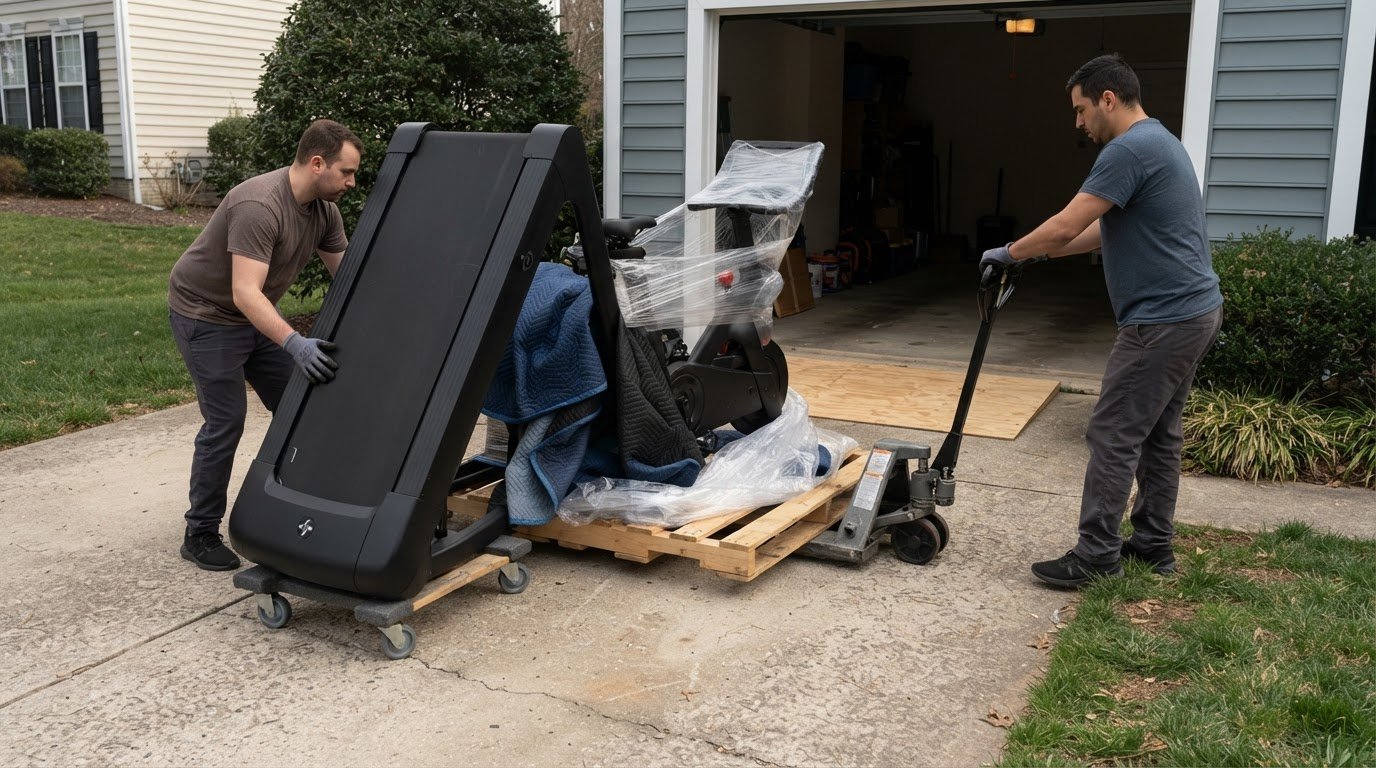
- Match the furniture dolly to the machine. A furniture dolly should be rated for at least 250-300 pounds. For most home ellipticals, a standard appliance dolly should be rated for at least 300 pounds. The team checks that the machine sits securely before rolling it.
- Secure the machine before transport. Movers unplug the elliptical, secure its power cord, and use straps to keep the arms and pedals from swinging. They position the machine’s weight carefully on the furniture dolly, then steady the frame as it moves. This control matters around hallway corners, where a shifting arm could strike a wall or doorframe.
- Use a moving blanket to protect the frame and nearby furniture. Movers cover exposed areas with cushioning material before transport. In a moving truck, a blanket underneath the elliptical and a snug position help reduce shifting or tipping. The team keeps straps clear of delicate parts and checks that the padding stays in place during loading.
- Assign enough movers to control each turn. A dolly supports the load, but it doesn’t steer itself through a tight hallway. Movers coordinate at the frame and dolly, moving in short, controlled stages. At a sharp corner, they pause, adjust the angle, and guide the machine through without dragging it across flooring or bumping nearby furniture.
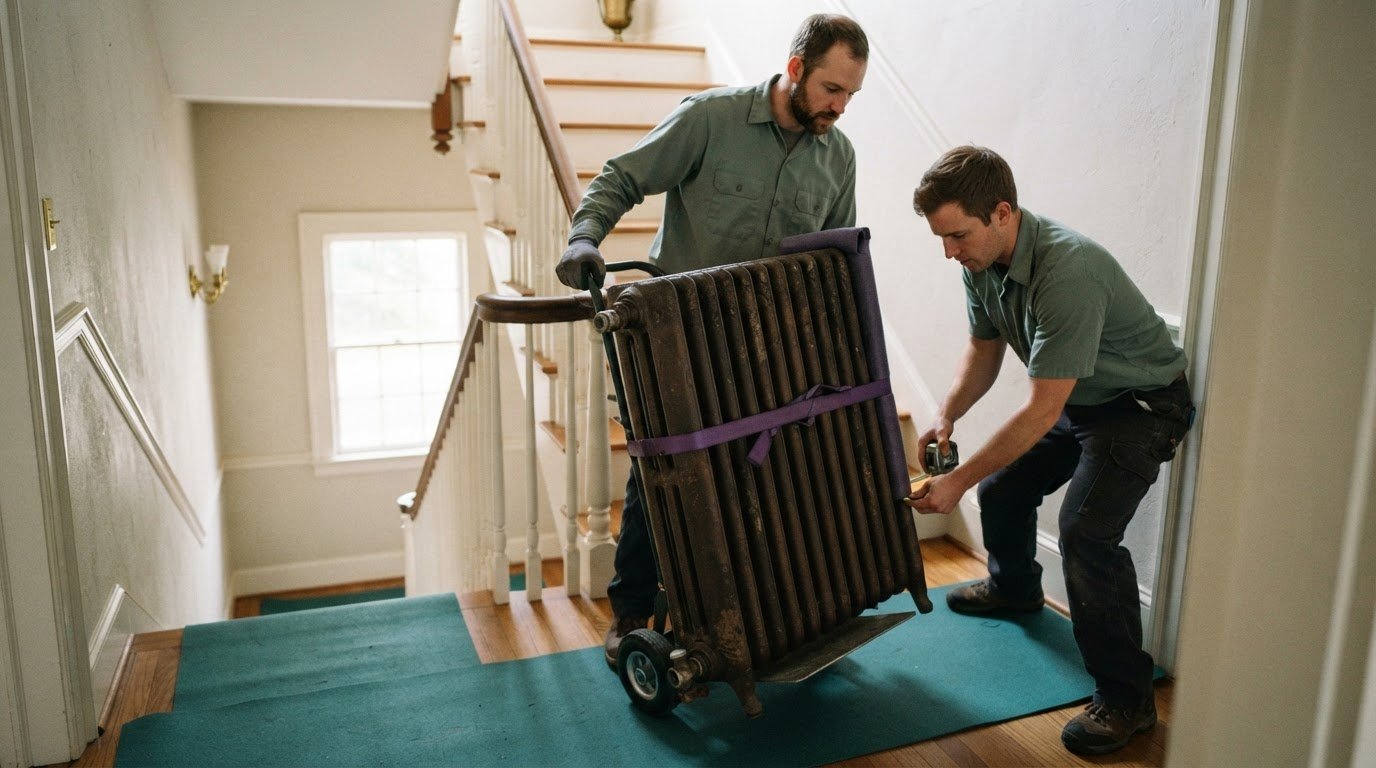
- Keep dollies off stairs. A furniture dolly isn’t advisable on stairs, and stair moves should be treated as at least a three-person job. Movers manage the elliptical with a coordinated lift rather than rolling a dolly over steps. An appliance dolly doesn’t make stairs a suitable route; the crew must control the weight throughout the stairway.
For a clear, single-floor route, a furniture dolly can help control the elliptical. Stairs and tight hallway turns call for a handling plan suited to the space, the machine, and the available clearance.
Professional Disassembly and Reassembly of the Elliptical
Disassembly may help an elliptical fit through a narrow doorway or hallway turn. Movers use the manufacturer’s manual to guide the work and protect the parts during transport.
- Review the model’s moving instructions. Movers consult the owner’s manual before removing parts. Elliptical designs differ, so the manual helps identify which connections can be taken apart and how to reassemble them. The crew also notes the machine’s model and visible condition before starting. This keeps the process tied to the manufacturer’s instructions instead of guesswork.
- Disconnect power and accessories. Before disassembly, movers unplug the machine and secure its power cord. They disconnect entertainment hookups, adapters, and other attached cables, then store them safely together. A loose cord can snag as the frame passes through a narrow opening. Keeping accessories grouped also makes them easier to locate during reassembly.
- Record connections before removing parts. When the machine’s layout is unfamiliar, movers take photos or videos of connections and component positions. These records provide a practical reference when the crew puts the elliptical back together. Movers keep screws and other small parts in a safe place, rather than leaving them loose on the floor or mixed with unrelated furniture hardware.
- Remove only the parts needed for clearance. If an assembled Horizon elliptical is too wide for a doorframe, its handrails and pedals may be disassembled for transit. Movers follow the relevant instructions and handle removed parts carefully to limit damage. They consider the tightest doorway or turn on the route, so disassembly addresses the actual clearance problem without taking apart more than necessary.
- Protect and organize each component. After removing a handrail or pedal, movers keep its fasteners with the corresponding part. They cushion exposed surfaces and position components so they won’t shift during transport. A labeled container or grouped set of hardware helps the crew match each screw to its original connection. This simple organization reduces mix-ups when the machine reaches its destination.
- Reassemble and check the machine before use. At the destination, movers use the manual and their photos to return removed parts to their original positions. They secure the saved fasteners and reconnect the power cord and accessories only after assembly. The crew checks that the reattached parts feel secure and that the machine operates as expected. If a connection doesn’t align, they stop and consult the manufacturer’s instructions rather than forcing it.
For a narrow route, share the elliptical’s model and the tightest doorway details when arranging professional elliptical moving help. That information helps the moving team plan whether disassembly is part of the handling approach.
Getting the Right Number of Professional Movers
A safe crew plan accounts for the elliptical, the route, and each turn. Most jobs are covered by two movers; larger items may require three to four movers. The team plans how to control the machine without crowding a narrow hallway.
- Set a minimum crew before lifting. Moving an elliptical safely requires at least 2 people. One mover controls one end while the other steadies the opposite end. This shared hold helps prevent sudden shifts when the machine changes direction. The crew keeps communication clear, especially when one person’s view is blocked by the frame.
- Account for stairs and landings. Treat moving an elliptical up or down stairs as at least a three-person job. The crew can divide control across the machine and coordinate each step. On an upstairs move, two people can handle the flywheel area to help distribute the load, while another mover supports and guides the route.
- Consider the machine’s weight and shape. A heavier or wider elliptical may need more hands than a compact model. The front section contains the main drive system, so the strongest person on the moving team should handle that heavy end. Movers also consider the machine’s balance and any parts that extend beyond its frame.
- Factor in the route, not just the room. A two-person crew may manage a same-floor move into another room, but several sharp turns change the handling demands. Movers need space to pivot, steady the frame, and avoid contact with walls. A blocked landing or tight doorway can also affect where each person stands.
- Assign clear roles before taking the first step. One mover can guide the front while another watches the rear and calls out clearance. If an added mover is needed, that person can spot corners, manage doors, or keep blankets in place. Clear roles prevent conflicting movements when the team reaches a turn.
- Hire professional movers for difficult routes. Professional help is especially useful when the elliptical must go to a new residence, climb stairs, or pass through many sharp turns. The crew can plan hand positions and pacing around the route, rather than trying to improvise while supporting the machine’s weight.
- Keep the crew coordinated through the whole move. Movers pause at landings and tight corners to reset their grip before proceeding. They move the elliptical in controlled stages, with one person giving clear directions. This approach helps the team maintain control from the room to the exit, including while taking the machine through narrow passages.

How Professional Movers Plan a Route Through Narrow Hallways and Sharp Turns
Before carrying an elliptical from a home gym, movers check the route for tight turns, doorway clearance, stairs, low ceilings, and delicate flooring.
-
How Professional Movers Map Narrow Hallways and Sharp Turns
Movers trace the route from the workout room to the exit, noting each doorway and sharp corner. For moving a heavy elliptical machine through tight hallway turns in South Riding, they compare the openings with the machine’s widest points. They check whether the frame can pivot without hitting a wall or doorframe, and note low ceilings or narrow sections that limit positioning.
For a tight doorway, movers may plan to remove a door or jamb if needed. They identify the narrowest point before moving begins, rather than discovering a clearance problem midway through the job. The route plan also includes safe places to pause and reposition the machine without blocking the hallway.
-
How Professional Movers Plan Around Narrow Spaces and Stairs
Movers assess stairs, landings, and hallway transitions as one continuous route. They account for the elliptical’s full shape, including pedals and handles that extend beyond its base. A landing may leave too little room to pivot, even when the stairs are clear. The team plans where movers will stand, how to angle the machine, and where it can be safely repositioned.
If the assembled frame cannot clear an opening, the team considers whether removing parts would create enough space. Stairs change the plan too: movers account for each landing and do not rely on wheels where steps interrupt the floor. Another passage may offer a clearer route around the staircase.
-
How Professional Movers Choose a Safe Route Through the Home
Movers compare possible routes by checking clearance, floor condition, stairs, and turns. When moving a heavy elliptical machine through tight hallway turns in South Riding, they choose a path that leaves room to control the frame, not simply the shortest route. A longer hallway, for example, may be straighter than a shortcut with sharp corners.
Before work begins, clear the chosen path of furniture and other obstacles. Movers plan how to approach each turn and communicate before changing direction. If a doorway or landing blocks the route, they stop and reassess rather than force the machine through or risk damaging the home’s surfaces.
Getting help to move a heavy elliptical
Professional help can be useful when an elliptical is heavy, the route is awkward, or the machine needs to be loaded for transport. A clear crew plan matters more than lifting strength alone.
- Choose a professional crew for the machine and route. A professional team considers the machine’s weight, shape, and destination before moving it. Tight turns, stairs, and a long path to the truck all affect how movers coordinate the lift and control the frame.
- Use at least two movers for the move. Moving an elliptical safely requires at least 2 people. Each mover controls an end, communicates before changing direction, and helps keep the frame balanced. For a same-floor move into another room, two people might be enough. A route with several turns or a change in floor level calls for a more involved crew plan.
- Plan for stairs and heavy sections. Treat moving an elliptical up or down stairs as at least a three-person job. Two people can handle the flywheel area to help distribute the load, while another supports and guides the move. The heavier front section contains the main drive system, so the strongest person on the team should lift that end.
- Keep control of the machine’s moving parts. Ellipticals have small plastic transport wheels, usually near the front base under the flywheel. Movers secure the arms and pedals so they don’t swing as the machine shifts. They use controlled movements rather than pulling on plastic covers, which can be damaged by pressure or a poor grip.
- Coordinate the move into the truck. Loading an elliptical into a moving truck without a ramp requires at least 3 people to keep it level. Movers place the heavy base against the truck’s front wall, then secure the machine in a snug position. A blanket underneath helps reduce shifting or tipping during transport.
- Hire help when the move involves more than a straightforward room change. A new residence, stairs, multiple sharp turns, or a moving truck can all increase the demands of the job. Professional movers can manage the lifting, route coordination, and loading as one planned task. Share the elliptical’s model and the route details so the crew can plan around the actual conditions.
For a challenging fitness equipment move, arrange professional elliptical moving help and share the machine and route details.
Heavy Furniture Moving
Heavy Furniture Moving handles exercise equipment moves when a narrow hallway, sharp turn, or stairway makes the job challenging. The movers assess the machine and route, then plan how to handle the lift and protect the home. This service can help when relocating an elliptical between rooms or preparing it for transport to another residence.
Share the machine’s model, the tightest passage, and whether stairs are involved. These details help the team plan the move and determine whether disassembly or additional movers may be appropriate. Heavy Furniture Moving handles exercise equipment and other heavy household items, with a plan tailored to the job.
Contact Heavy Furniture Moving to discuss your elliptical move.
Make Your Next Move a Planned One
A smooth elliptical move starts with a clear description of where the machine is, where it needs to go, and what makes the route difficult. For moving a heavy elliptical machine through tight hallway turns in South Riding, this overview helps the team understand the job before handling begins. Mention whether the move is part of a household relocation or simply a change within the home.
Heavy Furniture Moving offers Exercise Equipment Moving, Movers Near Me, and Sofa Hoisting for different heavy-item moving needs. If your elliptical’s route calls for experienced handling, take the next step and share the move details with the team. A straightforward conversation can help you decide how to proceed, without making the planning feel like another workout.
Contact Heavy Furniture Moving to discuss your move. With a clear plan and capable help, you can focus on settling into your refreshed workout space.
Frequently Asked Questions
How Do Professional Movers Carry an Elliptical Machine Through Doors and Stairs?
Professional movers keep the machine controlled as they guide it through each opening or stair section. At a doorway, they adjust its angle to clear protruding parts without forcing the frame. For stairs, the crew coordinates each transition and landing before proceeding. If a door or jamb blocks the opening, removing it may create needed clearance. The route and machine shape determine how movers position the equipment.
Can you disassemble an elliptical?
Some ellipticals can be partly disassembled for transport, but the safe approach depends on the model. Movers consult the owner’s manual to identify removable parts and the proper reassembly sequence. For example, a Horizon elliptical’s handrails and pedals may be removed if its assembled width prevents it from passing through a doorframe. Photos of connections and carefully grouped fasteners can help with reassembly.
How Much Does an Elliptical Machine Weigh, and Does That Change Your Plan?
That weight range makes the model’s weight an important part of planning, along with its shape and the route through the home. A heavier machine or a stair route may call for a different crew setup than a move between rooms on one floor. Share the model details so the team can plan how to handle and transport the equipment.
Should You Move It Yourself or Book Moving Labor?
Book professional help for stairs, multiple sharp turns, or an elliptical that exceeds 180 pounds. A move under that weight may be manageable when there are no stairs and a second person can help, but that doesn’t make every route straightforward. Moving labor is especially useful when the machine must leave the home or enter a moving truck. Consider the route and lifting demands, not just the machine’s weight.
How much does it cost to move a heavy elliptical machine in South Riding, Virginia?
The move’s details, including the elliptical, stairs, route complexity, and crew needs, shape the plan and quote. Heavy Furniture Moving provides an upfront quote before work begins. Share whether the move is within your home or to another residence, and describe any narrow access points so the team can prepare a quote for your South Riding move.
Are there appliance or fitness equipment movers serving South Riding and Loudoun County?
Heavy Furniture Moving offers Exercise Equipment Moving in South Riding and nearby communities, including Aldie and Ashburn. Share the elliptical’s model and whether the route includes stairs, narrow doors, or tight turns. These details help the team plan for the equipment and access, whether you are moving it within your home or to another residence.
How Do Professional Movers Disassemble an Elliptical Machine for a Narrow Hallway?
Movers identify the elliptical model and consult its manual, since parts and connections differ. If a Horizon model cannot clear a doorway when assembled, its handrails and pedals may be removed for transport. Movers keep small hardware together and take photos of connections as a reassembly reference. Disassembly should address an actual clearance problem, not remove components without a reason.
How Do Professional Movers Measure Hallway Widths, Doorways, and Turns Before Moving an Elliptical?
Measure the clear doorway opening and assess the narrowest hallway section and each turn along the route. Compare those spaces with the machine’s widest points, including attached pedals or handrails. Check whether a door or jamb further restricts clearance. For a Horizon elliptical, removing a door or jamb may be necessary if the assembled machine cannot fit through the opening.
Frequently Asked Questions
Professional movers keep the machine controlled as they guide it through each opening or stair section. At a doorway, they adjust its angle to clear protruding parts without forcing the frame. For stairs, the crew coordinates each transition and landing before proceeding. If a door or jamb blocks the opening, removing it may create needed clearance. The route and machine shape determine how movers position the equipment.
Some ellipticals can be partly disassembled for transport, but the safe approach depends on the model. Movers consult the owner’s manual to identify removable parts and the proper reassembly sequence. For example, a Horizon elliptical’s handrails and pedals may be removed if its assembled width prevents it from passing through a doorframe. Photos of connections and carefully grouped fasteners can help with reassembly.
That weight range makes the model’s weight an important part of planning, along with its shape and the route through the home. A heavier machine or a stair route may call for a different crew setup than a move between rooms on one floor. Share the model details so the team can plan how to handle and transport the equipment.
Book professional help for stairs, multiple sharp turns, or an elliptical that exceeds 180 pounds. A move under that weight may be manageable when there are no stairs and a second person can help, but that doesn’t make every route straightforward. Moving labor is especially useful when the machine must leave the home or enter a moving truck. Consider the route and lifting demands, not just the machine’s weight.
The move’s details, including the elliptical, stairs, route complexity, and crew needs, shape the plan and quote. Heavy Furniture Moving provides an upfront quote before work begins. Share whether the move is within your home or to another residence, and describe any narrow access points so the team can prepare a quote for your South Riding move.
Heavy Furniture Moving offers Exercise Equipment Moving in South Riding and nearby communities, including Aldie and Ashburn. Share the elliptical’s model and whether the route includes stairs, narrow doors, or tight turns. These details help the team plan for the equipment and access, whether you are moving it within your home or to another residence.
Movers identify the elliptical model and consult its manual, since parts and connections differ. If a Horizon model cannot clear a doorway when assembled, its handrails and pedals may be removed for transport. Movers keep small hardware together and take photos of connections as a reassembly reference. Disassembly should address an actual clearance problem, not remove components without a reason.
Measure the clear doorway opening and assess the narrowest hallway section and each turn along the route. Compare those spaces with the machine’s widest points, including attached pedals or handrails. Check whether a door or jamb further restricts clearance. For a Horizon elliptical, removing a door or jamb may be necessary if the assembled machine cannot fit through the opening.