How to Move an Armoire Down Exterior Steps in Vienna Safely
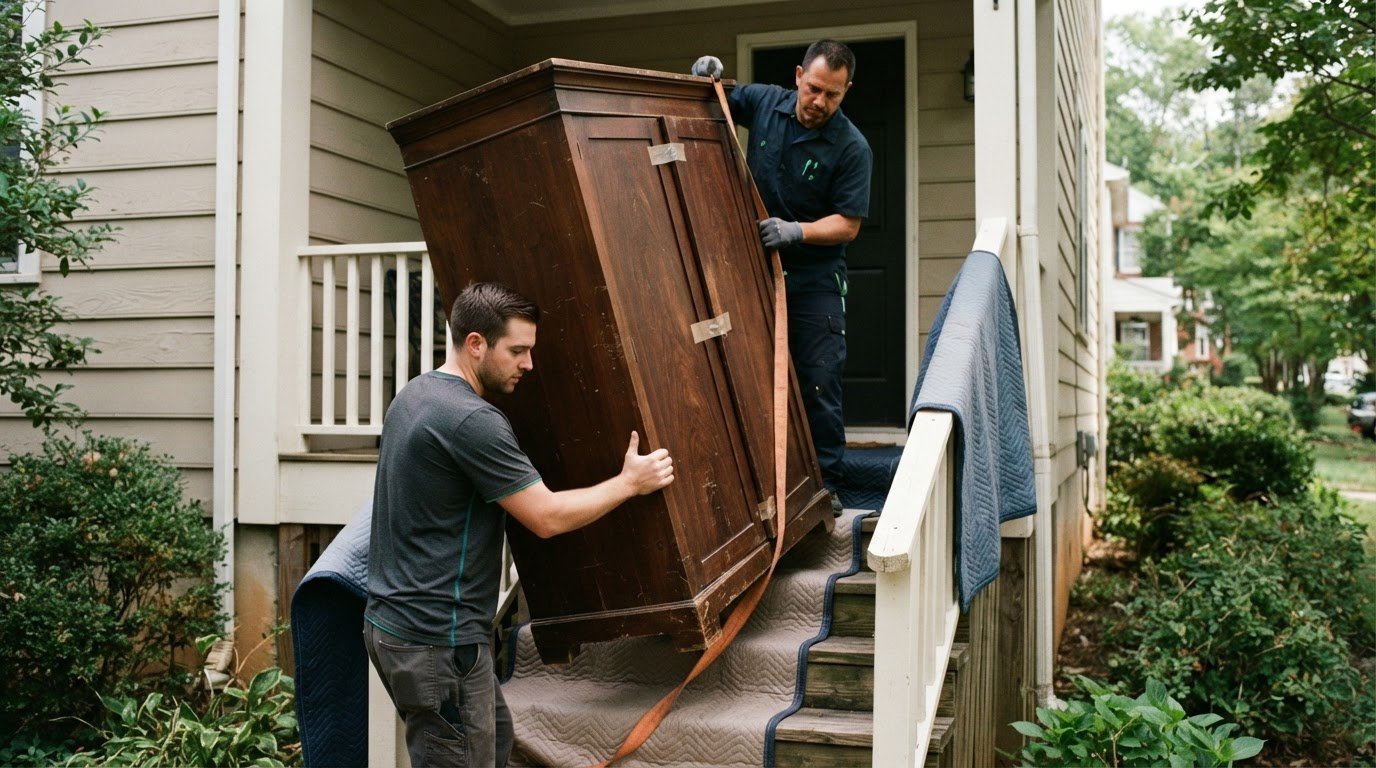
A heavy armoire shouldn’t be treated like an ordinary carry. To learn how to safely transport an oversized armoire down exterior steps in Vienna, start with a professional assessment: measure the piece and the stair route, then plan the carry around the tightest turn and any uneven steps. For a tall, heavy armoire, at least two trained movers and proper lifting straps help control the load. The team can also decide whether removing parts will improve clearance.
A narrow staircase or tight landing can make you worry about losing control or damaging the armoire and nearby walls. A careful assessment helps identify the risks before lifting begins. The crew checks the armoire and exterior route, protects vulnerable surfaces, and plans how to handle turns and whether removable parts should come off. The safest approach depends on the piece, the access, and the room available to maneuver.
Key Takeaways
- Movers assess the armoire’s dimensions against the stair width, ceiling height, and landing turns before choosing a carry angle.
- Removing shelves, drawers, or other detachable parts can reduce weight and improve clearance; disassembly depends on the armoire’s construction and route.
- Blankets along the armoire and vulnerable stairwell surfaces help reduce the risk of scratches and dents.
- For a tall, heavy carry, trained movers use lifting straps and clear step-by-step communication to keep the load controlled.
- A tight turn or an armoire that cannot be safely tilted may call for a different professional moving plan.
How professional movers handle tight clearance by tilting or disassembling furniture
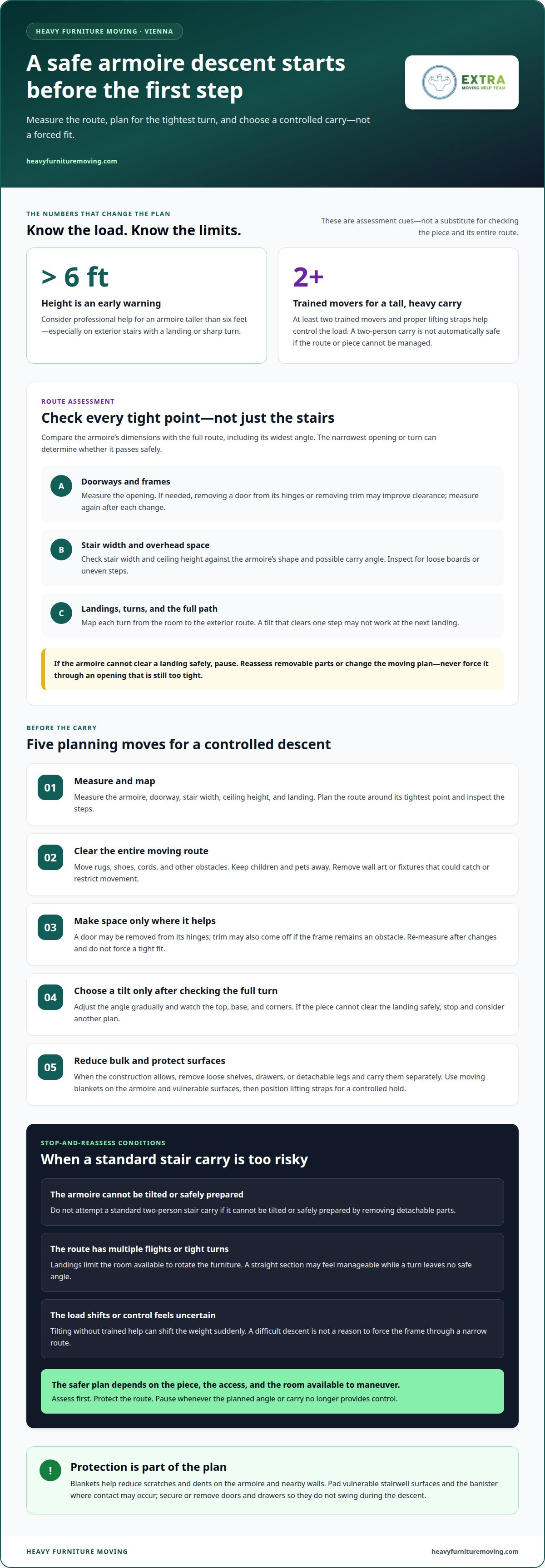
Movers plan the route before lifting and decide whether a controlled tilt or removing detachable parts will provide enough clearance. Exterior steps, landings, and doorways all affect the handling plan.
-
Check Route and Stairwell Clearance
Movers measure the armoire, doorway, stair width, ceiling height, and landing before carrying it. They compare the tightest points with the piece at its widest angle, since a small clearance gap can decide whether it passes without striking the frame. They also inspect the stairs for loose boards or uneven steps, then map each turn from the room to the exterior route.
-
Clear the Moving Route
Clear the full route, not just the steps: move rugs, shoes, cords, and other obstacles. Keep children and pets away from the stairwell while the armoire is moving. Remove wall art, sconces, and other fixtures along the route if they could catch on the furniture or restrict the space needed to guide it.
-
Remove Doors or Molding
If a doorway is too narrow, removing its door from the hinges may improve clearance. Removing trim can open up more space if the frame remains an obstacle. After each change, the crew measures again and checks whether the armoire can pass without scraping. Never force it through an opening that is still too tight.
- Choose a tilt only after checking the armoire’s full turning path. Movers adjust its angle gradually on a narrow staircase or landing, watching the top, base, and corners for contact. An angle that clears one step may not work at the next turn. If the armoire cannot clear the landing safely, the crew pauses and considers removing parts or changing the moving plan instead of forcing it.
- Reduce the armoire’s bulk where its construction allows. Movers can remove loose shelves and drawers, which should be carried separately; detachable legs may also come off. The crew protects the furniture with moving blankets before the carry, then positions lifting straps to support a controlled hold. Keep enough room around the movers’ hands and shoulders to guide the piece without scraping walls.
When Is an Armoire Too Big or Heavy to Carry Down Stairs Safely Without Professional Movers?
Tilting an armoire without trained help can make its weight shift suddenly, leading to loss of control, damage, or injury. If a tall piece cannot be tilted or safely prepared by removing detachable parts, don’t attempt a standard two-person carry down the stairs. Professional movers can assess the route and handling method.
- Use the armoire’s height as an early warning. Consider professional help for a piece taller than six feet, especially when exterior stairs have a landing or sharp turn. Height affects both balance and clearance: an armoire that fits upright in a room may be hard to control when its top must angle beneath an overhang or around a corner.
- Assess the entire carry, not just the first step. Multiple flights, a walk-up without an elevator, or an armoire that cannot be disassembled are reasons to consider professional movers. Each landing limits the space available to rotate the furniture. A straight staircase may allow a steady descent, while a tight turn can leave no safe angle for a rigid piece.
- Before lifting, have the crew assess which parts can be removed. Loose shelves, drawers, and detachable components may reduce bulk and make the remaining pieces easier to handle. Carry contents separately. If the armoire cannot be tilted safely, removing appropriate parts may provide clearance; forcing the frame through a narrow route risks damage.
- Let the crew decide whether a two-person carry gives enough control. If furniture cannot be tilted, bent, or disassembled to fit, a standard two-person stair carry is generally too risky. Movers weigh the armoire’s shape, balance, and turning space together. A carry that seems manageable on a straight section may become unstable at a landing, where both carriers need room to reposition.
- Choose professional help when the route or load exceeds a comfortable, controlled carry. Moving heavy furniture alone isn’t recommended; a person should proceed alone only when completely confident in maintaining control. For an armoire taller than six feet or one that won’t clear a turn, professional furniture-moving help is a safer next step than attempting a difficult descent without trained support.
How do professional movers protect stairwell walls when moving furniture?
Moving-truck and temporary street-parking requirements depend on the exact location and parking arrangement in Vienna or Fairfax County. Plan where the truck will be positioned, since parking approval and protecting the route are separate considerations.
- Protect the armoire and nearby surfaces before the carry. Movers wrap furniture in blankets to help prevent scratches and dents. Along a stairwell, blankets can protect walls near elbow and shoulder height, and the crew can wrap a banister if the carry may bring the furniture into contact with it. Padding helps limit direct contact during turns.
- Prepare drawers, shelves, doors, and glass before moving. The crew can remove loose parts and carry them separately. Secure or remove doors and drawers so they don’t swing during the descent. Protect glass panels or mirrors with blankets, and keep them from pressing against stair rails or walls.
- The right equipment depends on the armoire and the stairs. A stair-climbing hand truck with rotating wheels can help move suitable items over step edges. A two-wheeled hand truck may suit some tall, boxy furniture, while a four-wheeled dolly is for large, awkward pieces on a flat surface. Movers choose equipment to match the item and route.
- Use straps and sliders only where they help maintain control. Two loaders are needed to move a heavy dresser with moving straps, and lifting straps can leave a hand free to steady furniture or hold a railing. Fabric or slippery-plastic sliders under furniture corners reduce friction on suitable floor sections. Movers don’t treat sliders or a dolly as a substitute for controlled stair handling.
- Move antiques with particular care. An older armoire may have delicate trim, a fragile finish, or glass that needs extra padding. Movers inspect vulnerable areas, protect them, and avoid letting corners or hardware rub against the stairwell. They carry loose drawers and shelves separately and keep the armoire supported throughout each movement.
Hiring professional movers
- Bring in a moving crew when the armoire’s weight, shape, or route makes control uncertain. Professional movers are worth considering if you’re concerned about damage or can’t find capable help. A broad top, delicate finish, or awkward base can make an armoire harder to balance than its size suggests. A crew assesses these features alongside the exterior steps before settling on a handling plan.
- Describe the armoire and access route before the move. Share its dimensions, material, glass panels, detachable parts, and any known weak joints. Photos of the steps, landing, and tight corners give the crew useful context. This information helps Heavy Furniture Moving plan how to safely transport an oversized armoire down exterior steps in Vienna.
- Ask the moving team to explain the handling sequence for your armoire. A sound plan accounts for preparation, carrying, turns, and loading rather than treating the stairs as one straight passage. The crew should identify who guides the top and base, where they can pause, and how they’ll support the piece. Clear roles help limit sudden weight shifts during a turn.
- The armoire’s construction affects the equipment and handling approach. A hardwood piece may need a different plan from a lighter cabinet with glass doors. Movers consider where straps can support the frame without pressing on fragile trim or hardware. For an oversized armoire going down exterior steps in Vienna, this assessment connects the piece’s design with the demands of the route.
- Use the assessment to understand what may affect the move’s time and scope. Tight turns, difficult access to exterior steps, fragile surfaces, and necessary preparation can change the handling plan. Mention prior repairs or loose hardware, since they affect how movers support the armoire. If the piece cannot be controlled through the route, the crew can plan a different approach instead of forcing a difficult carry.
The decision to bring in a crew can rest on whether you can keep the armoire controlled throughout the entire route, not simply whether you can lift it at the starting point. If you feel uncertain about protecting the furniture, or cannot find capable help, hiring professional movers is the sensible choice. Be candid about what worries you, whether that is the weight, the finish, a turn on the stairs, or the way the piece must be supported. Clear concerns give the team a chance to address them while discussing the handling plan, rather than leaving important questions until the carry begins.
Before the move, make sure you understand how the crew intends to manage the hardest part of the route and what preparation they expect from you. Confirm that the plan reflects the armoire’s condition and the access details you shared. If you remain uncomfortable with any part of the proposed approach, raise it before the furniture is moved. A considered decision gives you a clearer basis for choosing professional help and helps keep the focus on controlled handling rather than attempting a carry you cannot confidently manage.
How professional movers use lifting straps and coordinate a two-person lift
A tall armoire needs coordinated handling, not strength alone. Heavy Furniture Moving provides professional help with heavy furniture, using lifting straps and a plan suited to the piece and route.
-
Use Lifting Straps
Position the straps beneath the armoire’s base so both movers can support the load through their shoulders or hands. The crew checks that straps sit securely and don’t press against delicate trim, loose joints, or glass. Straps help distribute the weight, but they don’t replace a clear route or a planned grip.
Before lifting, movers test the hold and confirm the armoire stays balanced. They keep their backs straight, bend at the knees, and adjust the strap position if the piece shifts. With a shoulder-dolly harness, movers keep their arms straight and push against the furniture to steady it during movement.
-
Coordinate a Two-Person Lift
Assign one mover to guide the top and the other to support the base. For a descent, the stronger mover should be at the bottom. Both movers agree on commands before lifting, then coordinate each shift in weight instead of moving on separate cues.
Two trained movers are the recommended minimum for tall hardwood armoires using proper lifting straps. The armoire’s weight, shape, and stair layout determine whether the crew needs additional support or equipment. A two-person carry is not automatically suitable if the piece cannot be controlled through turns.
- Move one step at a time, pausing to reset balance and grip. One mover calls each movement, and the other responds before the load shifts. A steady rhythm helps prevent the top from swinging or the base from striking a stair edge.
- Pause at a landing or turn before changing the armoire’s angle. Movers reset their grip and agree on the next position before continuing. If a strap twists, a hand slips, or the piece leans unexpectedly, they stop and stabilize it rather than correcting the shift mid-step.
- Keep the carry controlled through the final approach and loading. The crew stays in communication until the armoire is supported in its next position. Keep blankets and other packing materials clear of the movers’ footing and the strap path so they don’t interfere with balance or grip.
For a strap-assisted armoire carry, get professional heavy furniture moving help.
Heavy Furniture Moving
Heavy Furniture Moving helps with the demanding lift when an oversized armoire needs careful handling down exterior steps. Turn to the team when the route includes a tight corner, the piece is difficult to control, or lifting straps and coordinated carrying are needed. Share the armoire’s dimensions, any fragile features, and details about the stairs so the moving plan can account for the item and access. The right approach depends on clearance, weight, and whether the armoire can be safely prepared for carrying. For help with a challenging furniture move, contact Heavy Furniture Moving.
Make Your Armoire Move Easier to Plan
Planning how to safely transport an oversized armoire down exterior steps in Vienna gives you time to focus on what matters: protecting the furniture and your home while keeping the move manageable. Make the plan before moving day, so the crew can account for your priorities instead of making a rushed decision at the stairway.
Consider what would help you feel prepared for the move. You may want a clear point of contact, a smooth handoff between your home and the moving crew, or confidence that the armoire’s care stays central throughout the job. Sharing those priorities gives the planning conversation a useful focus.
You don’t have to work through a difficult carry alone. Discuss your armoire move with Heavy Furniture Moving and take the next step with a clear plan. A thoughtful start can make a challenging move feel much more manageable.
Frequently Asked Questions
How do professional movers get a heavy dresser down a narrow staircase?
Movers control the armoire’s balance and direction throughout the descent rather than trying to move it quickly. They assess whether its shape allows a safe tilt, then coordinate changes in position to keep the top and base supported. At a tight turn, the crew can pause and reset. Empty drawers and removable parts are handled separately to prevent contents from shifting.
When should I hire movers just for a staircase move?
Hire movers when the armoire is difficult to control, the stairs have tight turns, or you’re concerned about damage to the furniture or home. For an armoire taller than six feet, professional help is worth considering. Multiple flights and a walk-up without an elevator also make the carry more demanding, even if the piece fits through the doorway.
How do professional movers measure an oversized armoire and exterior staircase before moving it?
Movers measure the armoire’s height, width, and depth, then compare them with the route’s narrowest points. They assess stair width, overhead clearance, doorways, and landing space, including room to turn. They account for the armoire’s carrying angle, not just its upright dimensions, to identify tight spots before choosing a route.
What equipment do professional movers use to move an armoire down exterior steps?
The equipment depends on the armoire’s shape and the stairs. Movers may use lifting straps for a coordinated carry, blankets to cover vulnerable surfaces, and a stair-climbing hand truck with a tri-wheel or track design when suitable. A furniture dolly can help on level ground, while sliders may suit a smooth floor. No wheeled aid replaces direct control on the steps.
How do professional movers protect an armoire, stairs, railings, and doorway during an outdoor move?
Movers wrap the armoire in blankets and protect vulnerable contact points along the route. They can cover stairwell walls around shoulder and elbow height, wrap a banister, and use door-jamb covers at an opening. Glass panels and mirrors need padding that prevents direct contact with rails or walls. Doors and drawers are secured or removed so they don’t swing during the carry.
How do professional movers decide when an armoire should be disassembled before moving it down stairs?
Movers assess whether the armoire can clear the tightest doorway or landing while tilted, and whether removing detachable parts would improve clearance. Loose shelves, drawers, and legs may come off if the construction allows. The main frame remains intact unless it can safely be disassembled further. The crew also considers fragile finishes, glass, and how the prepared piece can be handled.
Which furniture movers in Vienna, Virginia handle oversized items and exterior stairs?
Heavy Furniture Moving serves Vienna and handles residential moves involving heavy and bulky items, including armoires. Its published armoire range is 150-400 lb, with 2-3 movers and an estimated 45-90 minutes for that item category. The actual route, stairs, and preparation affect the move plan. Its Movers Near Me service is a relevant option for a Vienna homeowner arranging help with a difficult furniture carry.
Frequently Asked Questions
Movers control the armoire’s balance and direction throughout the descent rather than trying to move it quickly. They assess whether its shape allows a safe tilt, then coordinate changes in position to keep the top and base supported. At a tight turn, the crew can pause and reset. Empty drawers and removable parts are handled separately to prevent contents from shifting.
Hire movers when the armoire is difficult to control, the stairs have tight turns, or you’re concerned about damage to the furniture or home. For an armoire taller than six feet, professional help is worth considering. Multiple flights and a walk-up without an elevator also make the carry more demanding, even if the piece fits through the doorway.
Movers measure the armoire’s height, width, and depth, then compare them with the route’s narrowest points. They assess stair width, overhead clearance, doorways, and landing space, including room to turn. They account for the armoire’s carrying angle, not just its upright dimensions, to identify tight spots before choosing a route.
The equipment depends on the armoire’s shape and the stairs. Movers may use lifting straps for a coordinated carry, blankets to cover vulnerable surfaces, and a stair-climbing hand truck with a tri-wheel or track design when suitable. A furniture dolly can help on level ground, while sliders may suit a smooth floor. No wheeled aid replaces direct control on the steps.
Movers wrap the armoire in blankets and protect vulnerable contact points along the route. They can cover stairwell walls around shoulder and elbow height, wrap a banister, and use door-jamb covers at an opening. Glass panels and mirrors need padding that prevents direct contact with rails or walls. Doors and drawers are secured or removed so they don’t swing during the carry.
Movers assess whether the armoire can clear the tightest doorway or landing while tilted, and whether removing detachable parts would improve clearance. Loose shelves, drawers, and legs may come off if the construction allows. The main frame remains intact unless it can safely be disassembled further. The crew also considers fragile finishes, glass, and how the prepared piece can be handled.
Heavy Furniture Moving serves Vienna and handles residential moves involving heavy and bulky items, including armoires. Its published armoire range is 150–400 lb, with 2–3 movers and an estimated 45–90 minutes for that item category. The actual route, stairs, and preparation affect the move plan. Its Movers Near Me service is a relevant option for a Vienna homeowner arranging help with a difficult furniture carry.