How to Move an Antique Armoire with Fragile Glass Panels in Centreville
An antique armoire needs more than a blanket and a strong lift. To move one with fragile glass panels in Centreville, protect the finish with acid-free paper, add cushioning and moving blankets, and remove and wrap the glass panels separately when possible. Measure the route before lifting, then carry the armoire from stable points without dragging or putting pressure on the glass.
It’s easy to focus on the armoire’s size, but age makes the wood, joints, carvings, and glass more vulnerable to pressure and bumps. A careful plan helps reduce those risks at each stage, from packing and securing loose parts to guiding the piece through tight doorways.
Use suitable packing materials, prepare the armoire before lifting, and plan how to navigate doorways and stairs. Avoid common packing mistakes that can leave delicate details exposed to impacts or pressure.
Key Takeaways
- Protect antique finishes and joints from moisture, pressure, and hard impacts, not just surface scratches.
- Keep straps away from glass panels, and don’t leave removable glass shelves inside the armoire during transport.
- Use separate cushioning for each fragile piece, and fill packing gaps to limit shifting and vibration.
- Photograph the armoire’s condition and secure or remove loose hardware before moving day.
- Plan doorway turns and stairs before lifting so the armoire can stay balanced and upright along the route.
Why do antiques need different packing than regular furniture?
Antique wood, joints, finishes, carvings, and glass need protection from pressure, moisture, and impact. Plan each layer and lift before the armoire leaves its room.
-
Assess antique protection needs
Inspect the finish, joints, carvings, glass, and original hardware before packing. Photograph each side and note existing chips, lifted veneer, or loose joints. Moisture can affect antique wood, while pressure can loosen joinery or damage carved details. Planning how to move an antique armoire with fragile glass panels in Centreville starts with documenting vulnerable areas and identifying where the frame needs support.
For a Centreville move, arrange the truck in a driveway or suitable loading area. Keep it clear of access points and follow posted parking restrictions. Consider moving liability before the move: basic customer-belongings liability is $0.60 per pound per article where that level is selected in writing in the signed moving agreement. Since that figure is weight-based, compare the written protection terms with the armoire’s documented value.
-
Choose protective packing materials
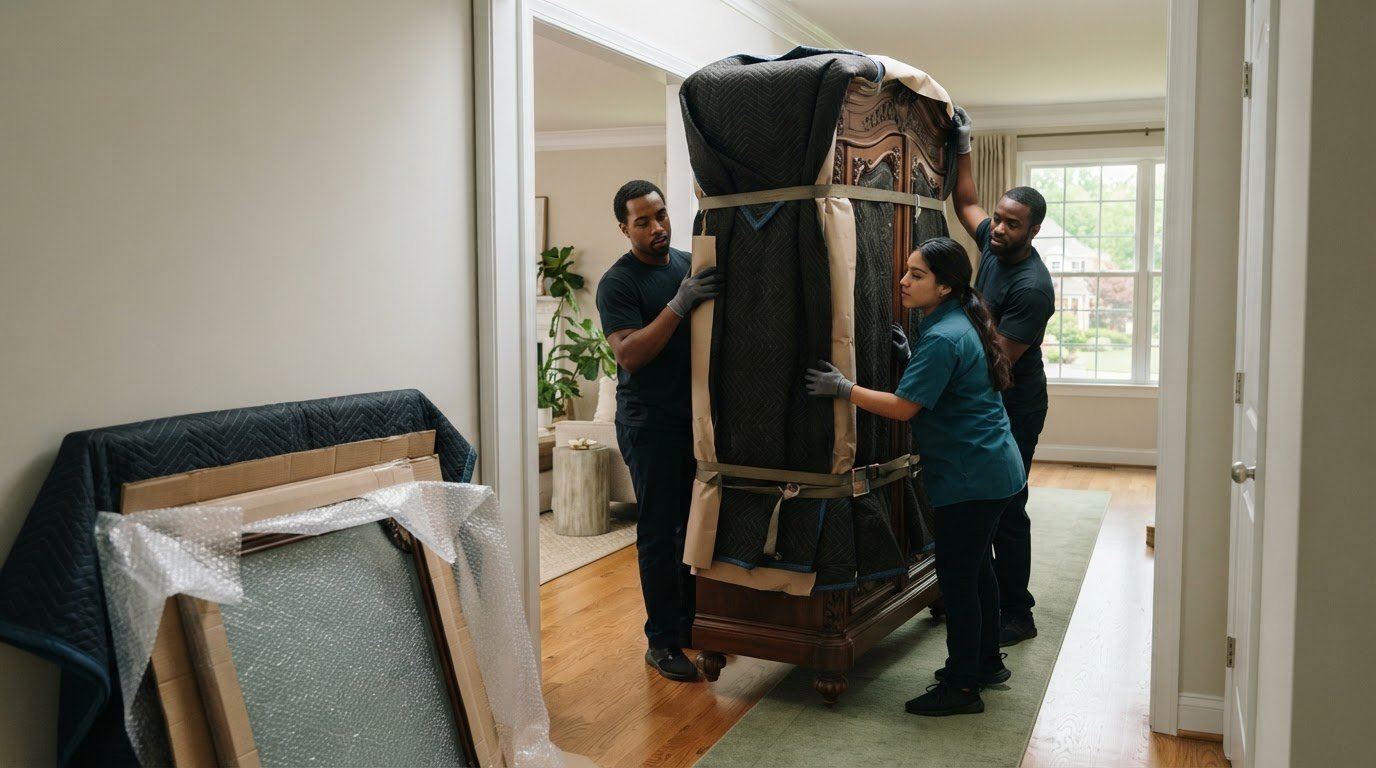
Gather acid-free paper, foam padding or bubble wrap, and moving blankets before you start. Place acid-free paper against the finish, then add cushioning and a blanket to guard against scratches and dents. Avoid newspaper because its ink can stain antique surfaces. Add padding around carved trim, legs, and corners, where a bump could chip wood or loosen a joint.
Protect the armoire underneath as well as around its sides. Keep it off a bare truck floor and prevent hard contact with walls or other furniture. A delicate or high-value piece with fragile joinery or finishes may need a custom wooden crate. Choose cushioning that supports the frame without pressing on glass or delicate hardware.
-
Remove and protect glass panels
Remove glass panels or shelves only if their fittings release without force. Photograph their placement first, then handle each panel by its edges and wrap it separately. Keep wrapped pieces apart so their edges cannot knock together. Pack removable glass shelves upright, not flat beneath stacked items, where weight can press down and crack them.
If a panel resists removal, don’t pry at the frame. Cushion the glass in place, keeping straps and hard pressure away from it. Concentrated pressure can create stress fractures even when the surrounding wood appears secure. Label wrapped panels and keep them upright and braced for transit.
-
Prepare the armoire for moving
Empty the armoire and remove loose handles or brackets that could scratch its interior. Keep small hardware together in a labeled container, and secure doors so they cannot swing. Mark the armoire as fragile and indicate which side must stay upright. When planning how to move an antique armoire with fragile glass panels around Centreville, clear labels help handlers maintain its orientation.
Place moving blankets beneath the armoire before lifting, and don’t drag it across the floor. Check the route for obstacles and tight turns first. Move slowly, keeping the base supported and the wrapping secure. A clear path and steady handling reduce jolts that can strain old joints or shift protective materials.
Common packing and handling mistakes
Packing shortcuts can create impact points, concentrated pressure, or shifting loads in transit. Before loading, make sure glass, antiques, artwork, and household breakables are separated and supported.
-
Remove and pack glass shelves
Take removable glass shelves out before moving the cabinet; leaving them inside can lead to cracks or shattered glass. Wrap each shelf separately, then place foam dividers between pieces so their edges cannot strike one another. Keep the wrapped shelves upright in a snug carton. Fill empty spaces to prevent movement, and brace the carton upright during loading rather than laying other items across it.
Don’t stack shelves flat beneath heavier cartons. Pressure can concentrate across the glass, even if the box seems well padded. Mark the carton as fragile on all four sides and the top, then position it upright with lighter boxes above it.
-
Handle fragile antiques carefully
Move the piece by strong, stable parts of its frame, not by pulling on carvings, trim, or original hardware. Lateral pressure can bend brass fittings, while dragging can damage feet, split base corners, and scratch the floor. Don’t set marquetry or other delicate inlays directly on a hard surface. Put padding underneath before setting the piece down.
Keep straps away from glass panels; tight pressure can create stress fractures. Don’t tilt a cabinet face-forward onto a dolly, which transfers weight onto its glass doors. Instead, maintain support at the frame and keep the load steady as it moves.
- Protect framed art and mirrors as separate fragile items. Wrap artwork in glassine paper to help prevent smudging or sticking, and add corner protectors to guard the frame. Cushion the wrapped piece, then use a fitted carton or crate when appropriate. Keep it upright and secure it against shifting during loading. Don’t place heavy items against the glass face or stack cartons on top.
Give every wrapped item its own support. A frame leaning against an unpadded surface can take a direct impact if the load shifts. Before closing the truck, check that corners, edges, and glass fronts have cushioning between them and other cargo.
- Pack dishes and glassware so pieces cannot knock together. Wrap each item separately in clean packing paper, place plates on their edges, and use cell dividers to separate stemware. Cushion the bottom of a double-wall dish box with 2 to 3 inches of crumpled paper, then fill gaps around the contents.
Keep dish boxes under about 45 pounds. Close each carton securely, label it on every side and the top, and load it upright with lighter boxes above. For a difficult load or bulky furniture, heavy lifting moving help can support the physical handling.
Damage risks during lifting and doorway transitions
Plan the route before lifting. Tight turns, stairs, and uneven support can twist antique joints or put pressure on glass.
-
Measure the armoire and doorways
Measure the armoire’s height, width, and depth, then compare them with each doorway and hallway. Account for narrow turns, stair landings, and the space needed to angle the piece. A doorway may fit the armoire’s width but still block a turn because of its depth. Record the tightest point on the planned route.
Clear obstacles and check door swings, handles, and carved trim that could catch. Removing a door along the route can create more clearance. If the armoire cannot pass without forcing or twisting it, choose another path. Planning how to move an antique armoire with fragile glass panels in Centreville means accounting for every transition, not just the front entrance.
-
Choose the armoire’s moving position
Keep the armoire upright whenever the route allows. Its frame and joinery support it in that position, while tilting it face-forward can transfer weight onto glass doors. Never lay it on its glass panels or use them for support. Keep the frame balanced as handlers move through turns.
Use at least two people to handle a large cabinet, with a third person spotting on stairs or in tight doorways. Each handler should support a stable part of the frame, not a carving or loose fitting. Agree on simple calls before moving, such as “pause” and “turn.” A controlled lift helps prevent sudden twisting that can strain period joinery.
-
Transport and unload the armoire
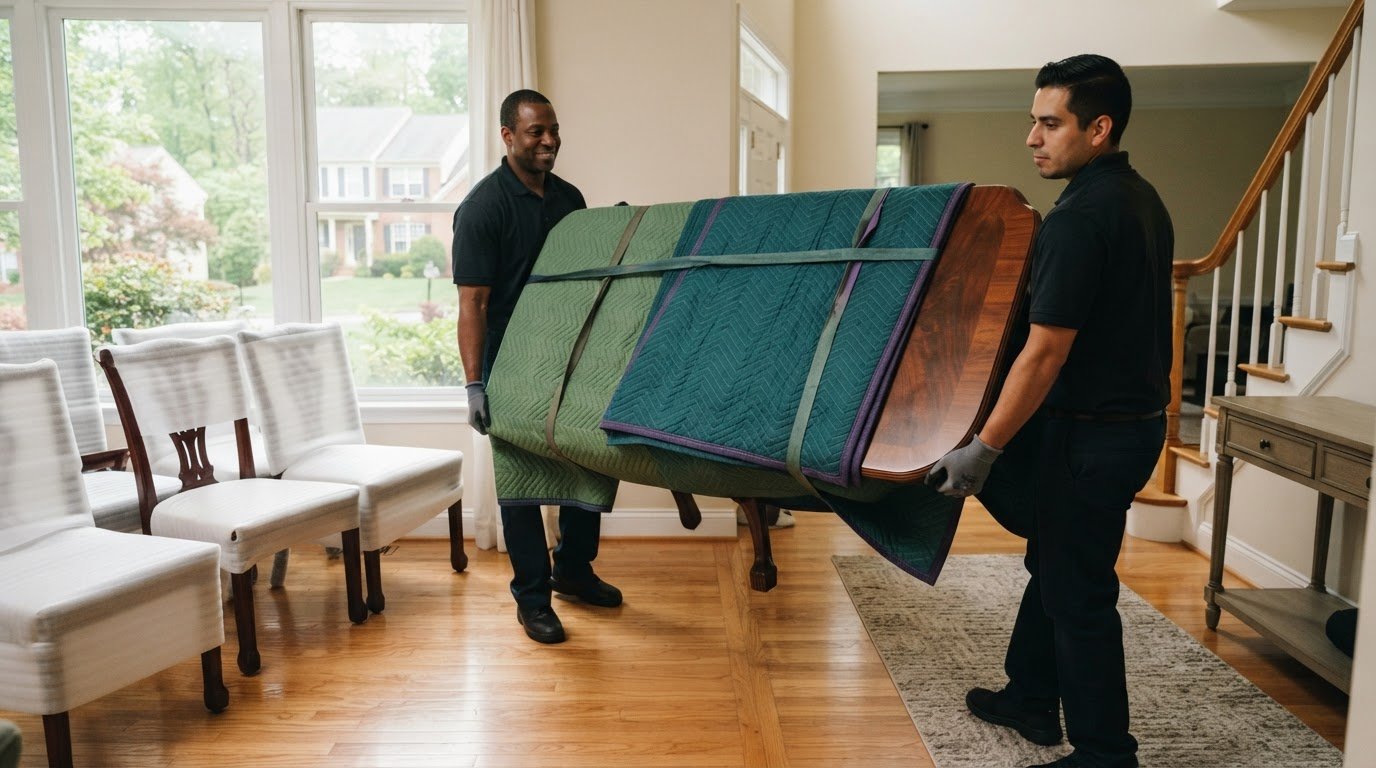
Support the base as you move, and don’t drag the armoire across floors or thresholds. Keep the load steady through doorway transitions, where a sharp angle can strain old joints. Use padding beneath the piece and keep straps off glass panels. These steps help protect the feet, base corners, frame, and nearby walls.
During transit, secure the upright armoire so it cannot slide into other pieces. Keep its padded frame clear of hard edges and shifting cargo. At the destination, clear the unloading route before lifting again, then guide the armoire into position with handlers supporting its frame. Set it down gently and compare its condition with the pre-move photographs. A careful way to move an antique armoire with fragile glass panels around Centreville includes unloading, not just the trip to the truck.
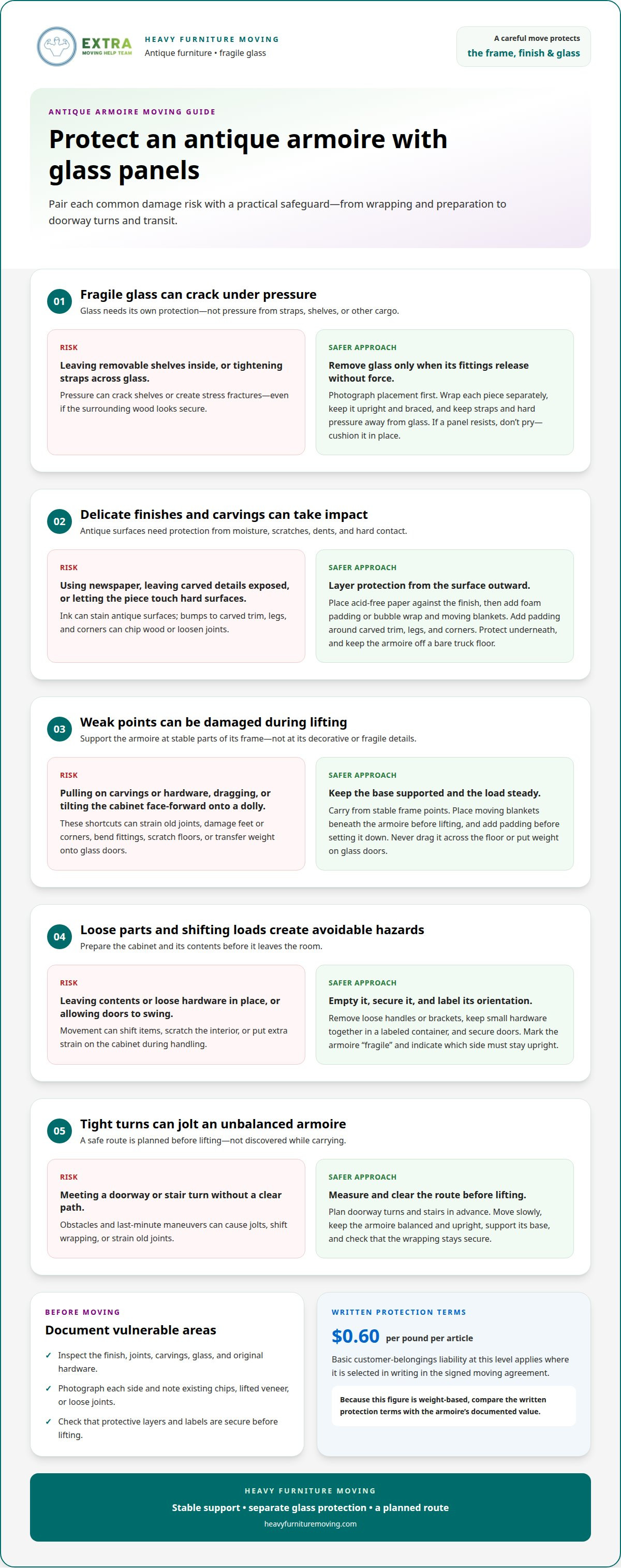
Individual wrapping and cushioning for fragile items
Build protection in layers, matching each material to the part it protects. Keep antique finishes, glass edges, and carved details from pressing against hard surfaces or other pieces.
- Wrap the armoire’s finished wood in acid-free paper before adding padding. This first layer helps protect against discoloration and keeps rougher materials away from the surface. Avoid newspaper, which can leave ink stains. Cover the paper with foam padding or bubble wrap, then add a moving blanket to guard against scratches and dents.
- Protect ornate carvings, narrow legs, and projecting trim with extra padding. Wrap each detail separately so it doesn’t catch on nearby pieces during handling. Cushion corners, where a bump can chip the finish. Keep tape on the outside of the padding, not on antique wood, varnish, or original hardware.
- Wrap each removable glass panel individually, using clean cushioning to separate it from other packed items. For glass or porcelain antiques, use acid-free tissue paper first, followed by bubble wrap. Add foam dividers between glass shelves to prevent contact. Keep panels separate, and don’t let their edges rest against one another inside a carton.
- Choose a carton that fits each wrapped item with room for its cushioning. A carton that’s too large lets glass shift in transit; one that’s too tight can press against the contents. Cushion the bottom and sides, place the wrapped piece inside, then fill open spaces so it cannot move. Close the box without forcing its flaps down onto the item.
- Secure the outer layer with kraft wadding or a premium furniture pad before loading the armoire. Check that blankets cover exposed corners and that padding doesn’t slip when the piece is lifted. Don’t wrap moving straps around glass panels; concentrated pressure can create stress fractures. Place the padded armoire on moving blankets rather than directly on a hard truck floor.
When possible, remove antique glass panels before the move, then wrap, pad, and secure each one separately. For dishes and glasses, use clean packing paper around every piece.
How to prepare an antique armoire with glass panels for moving
Prepare the armoire before lifting. A clear record of its condition, loose parts, and orientation helps prevent avoidable handling mistakes.
- Photograph the armoire before packing, including its front, sides, top, feet, glass, and visible wear. Clearly capture existing chips, cracks, lifted veneer, and loose joints. These images provide a reference for checking the piece after arrival. Keep the photographs accessible during the move, and note delicate details that need extra care, such as carved trim or a fragile finish.
- Empty every compartment and drawer, then check behind shelves for stored items. Even a small object left inside can shift, strike the interior, or press against a glass panel when the armoire moves. Remove loose shelves when possible and keep them separate from the cabinet. Don’t leave personal items or packing supplies inside the armoire during transit.
- Remove loose handles, brackets, and other hardware that could scratch the interior. Place each fitting in a labeled container and keep it with the armoire’s moving notes. If a fitting is firmly attached, don’t force it loose. Secure doors so they can’t swing open, and protect the edges where a door meets the frame.
- Disassemble removable parts only when doing so won’t strain old joints or finishes. Keep each part with its related hardware, and label it by its original position, such as “left door” or “upper shelf.” Don’t pull on decorative carvings or use them as handles. If a part resists removal, leave it attached rather than applying force.
- Mark the wrapped armoire as fragile and identify the side that must remain upright. Make the labels visible to anyone handling or loading the piece, and keep them clear of blanket folds, straps, and padding. Before moving, review the labels with everyone involved so the cabinet’s orientation stays consistent during lifting and unloading.
- Set aside a simple move record with photographs, the hardware container, and notes about existing damage. Keep it separate from cartons so it remains easy to find at the destination. For a difficult lift, arrange a heavy lifting moving service to help handle the armoire. Keep the prepared pieces and their labels together until the cabinet is reassembled.
Disassemble antique furniture only when parts can be removed without stressing old joints or finishes. Keep fragile and upright markings visible, and retain the condition photographs to check the piece after arrival.
Heavy Furniture Moving: Movers Near Me
Heavy Furniture Moving provides local moving help for bulky furniture. If lifting an antique armoire through a narrow doorway or stairwell feels difficult, in-home furniture movers can help with the physical move. A clear route, secure padding, and steady handling keep pressure off fragile panels. Wrap, blankets, and straps are included on every job.
Heavy Furniture Moving also handles exercise equipment and sofa hoisting, reflecting its focus on challenging household lifts. Its moving help can support a local move involving heavy furnishings. Share the armoire’s dimensions, glass-panel details, and route challenges when arranging the move.
Contact Heavy Furniture Moving or visit heavyfurnituremoving.com to discuss moving help.
Make the Next Move with Confidence
Moving a treasured piece takes more than logistics. Give the armoire the time and attention its age and sentimental value deserve, and choose a plan that feels manageable from the first lift to its final placement. If you’re deciding how to move an antique armoire with fragile glass panels in Centreville, focus on a calm, coordinated move rather than rushing.
Heavy Furniture Moving can help with a demanding household move. The right support can ease the physical strain and let you focus on protecting the piece that matters to you.
Contact Heavy Furniture Moving to discuss your move and the help you need. Take it one step at a time, and move forward with confidence.
Frequently Asked Questions
Does the mover cover my fragile items if something breaks?
Coverage depends on the protection selected in the signed moving agreement. Basic customer-belongings liability is $0.60 per pound per article where that level is selected in writing. That amount is weight-based, so it may not match the armoire’s full value. Keep photographs and a written description of its condition, and read the agreement’s protection terms before the move.
How do professional movers disassemble and reassemble antiques?
Start by identifying which parts detach without stressing old joints or finishes. Group hinges, brackets, and screws by door or section, then label them so their original positions are clear. At the destination, reassemble the frame before adjusting doors. If a door swings unevenly, check that the armoire stands level before tightening or changing its hardware.
What materials protect antique wood finishes during a move?
Place acid-free paper against the finish, then add kraft wadding or a clean furniture pad for cushioning. Moving blankets can protect exposed surfaces from scuffs during handling. Keep adhesive tape off the wood, especially near old varnish or veneer, and avoid newspaper because its ink can transfer. Use separate padding around brass fittings so they don’t rub against the finish.
What’s the best way to remove and pack fragile glass panels from an armoire?
Check the panel’s clips or retainers before removing it, and don’t force a fitting that resists. Once free, hold the glass by its edges and wrap it separately. Mark its original location, such as “upper left door,” so it can be matched during reassembly. Keep wrapped panels upright, separated, and secured so their edges don’t strike each other in transit.
Where can I find antique furniture movers near Centreville, Virginia, with glass-panel experience?
Heavy Furniture Moving provides residential moving help in Centreville and focuses on heavy, bulky household items. For an armoire with glass panels, share its dimensions, panel layout, and route details when arranging the move. The service includes pre-move measurements of the item and access points, with wrap, moving blankets, and straps included on every job.
How do I move a heavy armoire without damaging floors, walls, or furniture?
Protect the route before lifting: lay down floor runners, cover vulnerable door jambs, and clear nearby furniture from turns. Keep the armoire supported instead of dragging it across the floor. Move slowly through thresholds, where feet or base corners can catch. At the destination, set it down on a padded surface, then remove the protective covers once the path is clear.
Frequently Asked Questions
Coverage depends on the protection selected in the signed moving agreement. Basic customer-belongings liability is $0.60 per pound per article where that level is selected in writing. That amount is weight-based, so it may not match the armoire’s full value. Keep photographs and a written description of its condition, and read the agreement’s protection terms before the move.
Start by identifying which parts detach without stressing old joints or finishes. Group hinges, brackets, and screws by door or section, then label them so their original positions are clear. At the destination, reassemble the frame before adjusting doors. If a door swings unevenly, check that the armoire stands level before tightening or changing its hardware.
Place acid-free paper against the finish, then add kraft wadding or a clean furniture pad for cushioning. Moving blankets can protect exposed surfaces from scuffs during handling. Keep adhesive tape off the wood, especially near old varnish or veneer, and avoid newspaper because its ink can transfer. Use separate padding around brass fittings so they don’t rub against the finish.
Check the panel’s clips or retainers before removing it, and don’t force a fitting that resists. Once free, hold the glass by its edges and wrap it separately. Mark its original location, such as “upper left door,” so it can be matched during reassembly. Keep wrapped panels upright, separated, and secured so their edges don’t strike each other in transit.
Heavy Furniture Moving provides residential moving help in Centreville and focuses on heavy, bulky household items. For an armoire with glass panels, share its dimensions, panel layout, and route details when arranging the move. The service includes pre-move measurements of the item and access points, with wrap, moving blankets, and straps included on every job.
Protect the route before lifting: lay down floor runners, cover vulnerable door jambs, and clear nearby furniture from turns. Keep the armoire supported instead of dragging it across the floor. Move slowly through thresholds, where feet or base corners can catch. At the destination, set it down on a padded surface, then remove the protective covers once the path is clear.