How to Move an Antique Apothecary Cabinet in Centreville Safely
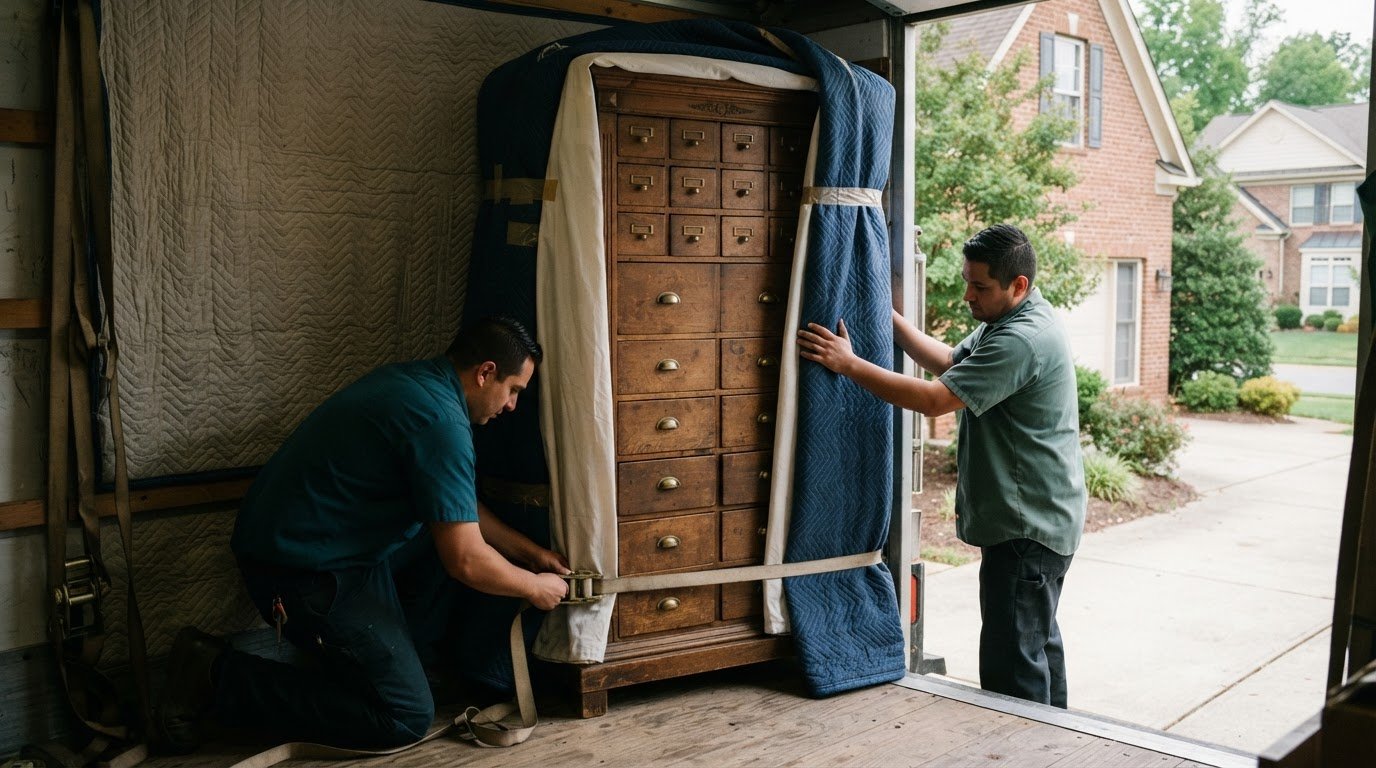
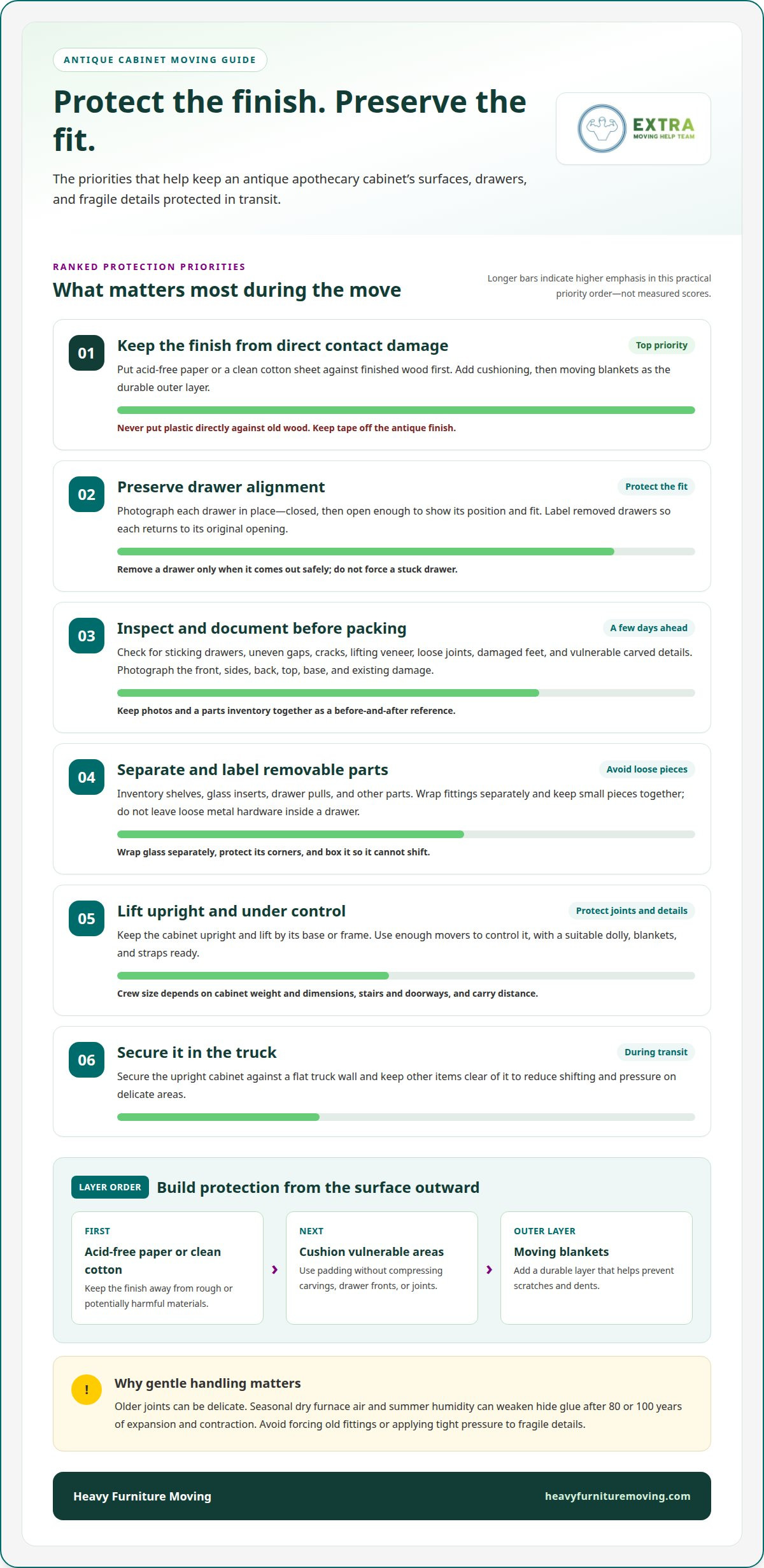
A moving blanket can protect an antique apothecary cabinet, but it should not touch the finish directly. For moving an antique apothecary cabinet in Centreville without losing drawer alignment, photograph the cabinet and each drawer in place. Cover finished surfaces with acid-free paper or a clean cotton sheet before adding padding and blankets. Keep the cabinet upright and lift it by its base or frame.
Moving blankets help prevent scratches and dents, but careful layering and handling matter just as much for an older piece with delicate joints and drawers that need to fit properly.
This guide explains how to inspect and document the cabinet, protect its surfaces and details, and load and secure it. You’ll also learn when a heavy-item moving team can help with the lifting and handling.
Key Takeaways
- Inspect the cabinet a few days before moving day and note existing damage, loose joints, and drawer fit.
- Remove drawers and detachable parts only when safe to do so, then pack and label them separately.
- Protect delicate finishes with suitable surface wrapping and cushioning, and avoid pressure on carvings or fragile joints.
- Keep the cabinet upright during loading, secure it against a flat truck wall, and leave other items clear of it.
- Consider moving help for a heavy or awkward cabinet that’s difficult to lift and control safely.
Inspecting and documenting antique furniture before a move
The right crew size depends on the cabinet’s weight and dimensions, the stairs and doorways, and the distance it must be carried. Use enough movers to keep it upright and under control, with a suitable dolly, blankets, and straps ready.
- Inspect the cabinet a few days before moving day. Open each drawer gently and note sticking, looseness, or uneven gaps. Look for cracks, lifting veneer, loose joints, damaged feet, and carved details that could catch during handling. Older joints may be delicate: seasonal dry furnace air and summer humidity can weaken hide glue after 80 or 100 years of expansion and contraction.
- Record the cabinet’s condition from several angles. Take clear photos of the front, sides, back, top, and base. Photograph each drawer closed, then open it enough to show its position and fit. Include close-ups of existing chips, scratches, and misaligned fronts. These images provide a useful before-and-after comparison and help distinguish existing marks from new damage.
- Make a detailed inventory before packing. List the cabinet and its removable parts, including drawer pulls, shelves, and glass inserts. Note which drawer belongs in each opening; a label on its wrapping can preserve the match. Keep the inventory with the photographs so you can easily check the condition and parts at the destination.
- Clean and assess each component before wrapping. Wipe dust and dirt from the cabinet with a lint-free cloth. Remove detachable hardware only if it comes away easily; forcing old or fragile fittings can damage them. Wrap removable pieces separately, label them, and keep small parts together. Leave unstable joints and stubborn fittings undisturbed.
- Protect wood before adding moving blankets. Never place plastic directly against old wood. First cover finished surfaces with acid-free paper or a clean cotton sheet, then add cushioning and moving blankets. The blankets help prevent scratches and dents, while the first layer keeps rough or potentially harmful materials away from the finish.
- Wrap parts in layers and keep the alignment record close. Use acid-free paper against delicate finishes, cushioning around vulnerable areas, and moving blankets as the durable outer layer. Avoid tight pressure on drawer fronts and carved details. Keep labeled hardware and the inventory somewhere easy to reach when reassembling the cabinet.
Treat the inspection as a chance to address concerns before the furniture is in transit: checking it a few days before moving day leaves time to address any issues found. Keep the condition record complete by photographing the antique from several angles before the move. Those images provide a reference for its existing condition, while the inventory helps keep the items being moved accounted for. The movers and the moving company should prepare a detailed inventory, rather than relying on memory during packing and delivery.
For protection, do not wrap plastic directly over old furniture, especially wood furniture. Wooden furniture should first be covered with moving blankets. Antique furniture components should be wrapped in acid-free paper, then padded, with an outer layer of moving blankets for durability. This layered arrangement can help protect against scratches and dents, while keeping plastic away from old wood.
What Materials and Techniques Protect Antique Furniture in Transit?
- Remove only parts that come away safely. Take out drawers, loose shelves, glass inserts, and detachable hardware before transport. Don’t force a stuck drawer or old pull; pressure can loosen fragile joints or damage aged wood. Label each drawer to match its opening, and keep the fittings separate. For moving an antique apothecary cabinet without losing drawer alignment in Centreville, preserving each drawer’s original position is a practical first step.
- Choose a safe first layer for each surface. Place acid-free paper or a clean cotton sheet against painted, gilded, or finished wood. Acid-free paper helps reduce discoloration, while newspaper can transfer ink. For a polished drawer front, cover the face and edges before adding cushioning. Keep adhesive tape off the antique finish, especially near veneer seams and decorative trim.
- Build protection in three layers. Start with a surface-protecting layer, add cushioning, then finish with sturdy paper or cardboard. Foam padding or bubble wrap can cushion fragile sections, but don’t compress carved details or joints. Add moving blankets outside the protective layers for durability. To move an antique apothecary cabinet without losing drawer alignment in Centreville, keep pressure even and away from drawer fronts.
- Pack glass and small hardware separately. Wrap each glass insert separately, protect its corners, and place it in a fitted box. Cushion empty spaces with crumpled paper or foam to prevent shifting during loading. Wrap drawer pulls and other removable fittings separately, label each bundle, and keep them with the cabinet’s inventory. Don’t leave loose metal parts inside a drawer.
- Fit boxes to their contents. Choose a box that supports each wrapped component without crushing it. An undersized box can tear; an oversized one needs enough padding to stop movement. Fill gaps with crumpled paper, bubble wrap, or foam chips. For a large or especially fragile antique component, a custom wooden crate can limit shifting during transport.
- Keep documentation and value records together. Match the pre-move condition photographs to the inventory, and take close-ups of delicate details before packing. An expert appraisal can help establish an antique’s value for a loss or damage claim. Store the appraisal and inventory together, away from packing materials where they might get misplaced.
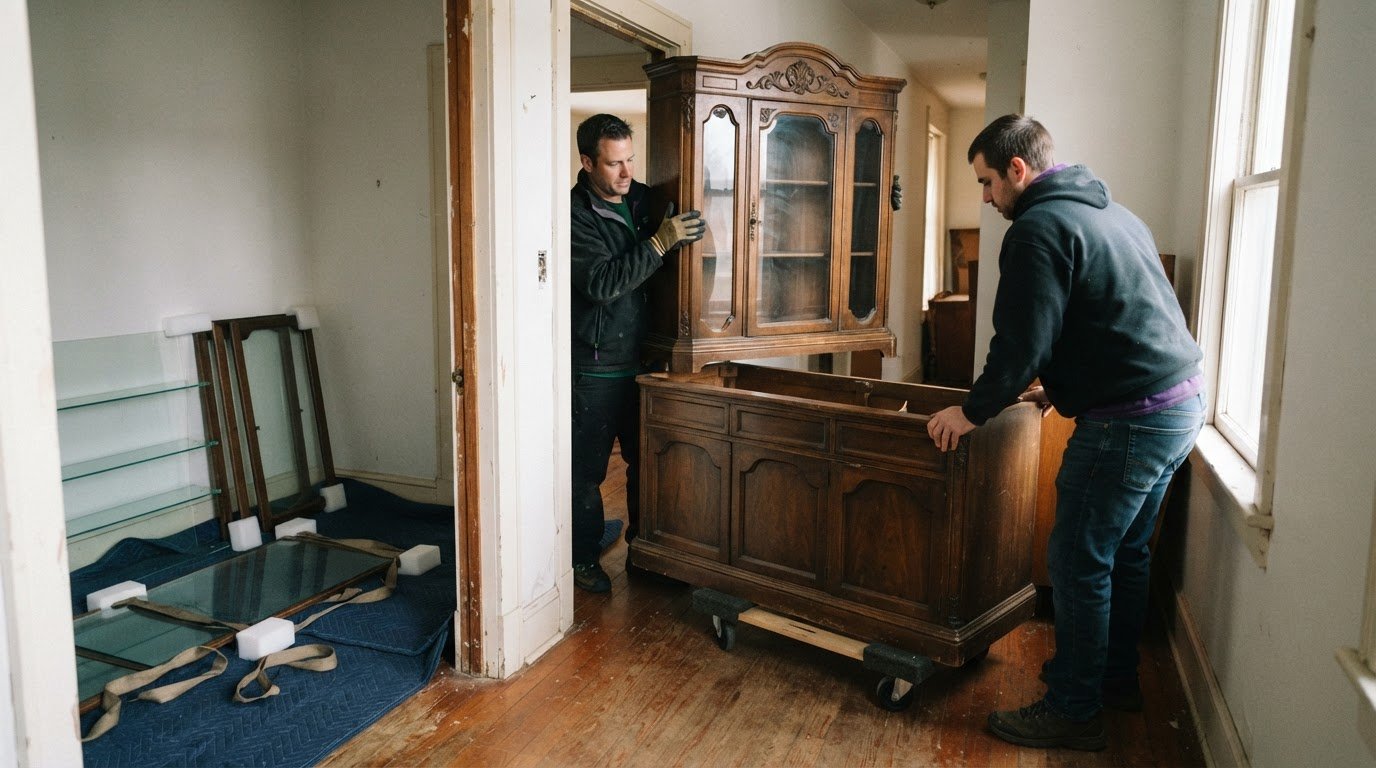
- Get help with awkward lifting and loading. A cabinet with removed drawers can still be heavy and difficult to control through a doorway. For hands-on help with the lift, consider a heavy lifting moving service. Careful handling matters: gripping carved trim or pushing against a joint can transfer force to fragile areas.
How Do You Load and Secure Antiques in the Truck?
Measure the cabinet, doorways, stair turns, and truck opening before loading, and compare the narrowest clearances. Temperature and humidity changes can affect antique wood and finishes, so protect the cabinet from moisture and avoid leaving it exposed during loading.
-
Measure Access Routes for the Cabinet
Measure the cabinet’s height, width, and depth, including any protruding trim. Then measure the clear width and height of each doorway, stair landings and turns, and the truck entrance. Compare the tightest point with the cabinet’s dimensions, allowing room to guide and turn it without scraping walls or forcing it through.
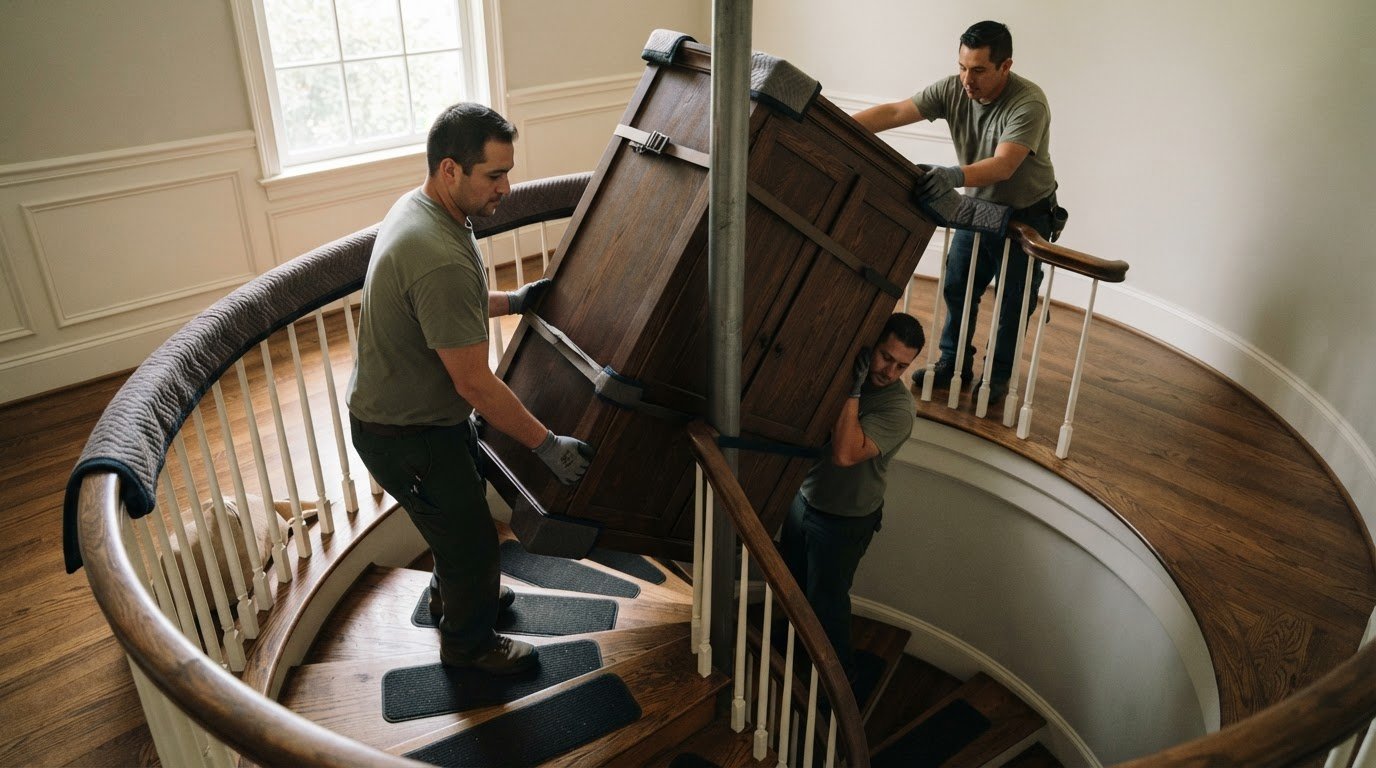
Plan the route from the cabinet’s room to the truck before carrying it. Check steps, narrow halls, and door swings for obstructions. If the cabinet cannot clear a turn upright, don’t improvise by tilting it against delicate trim. Reassess the path and handling plan first.
-
Load and Position Antiques
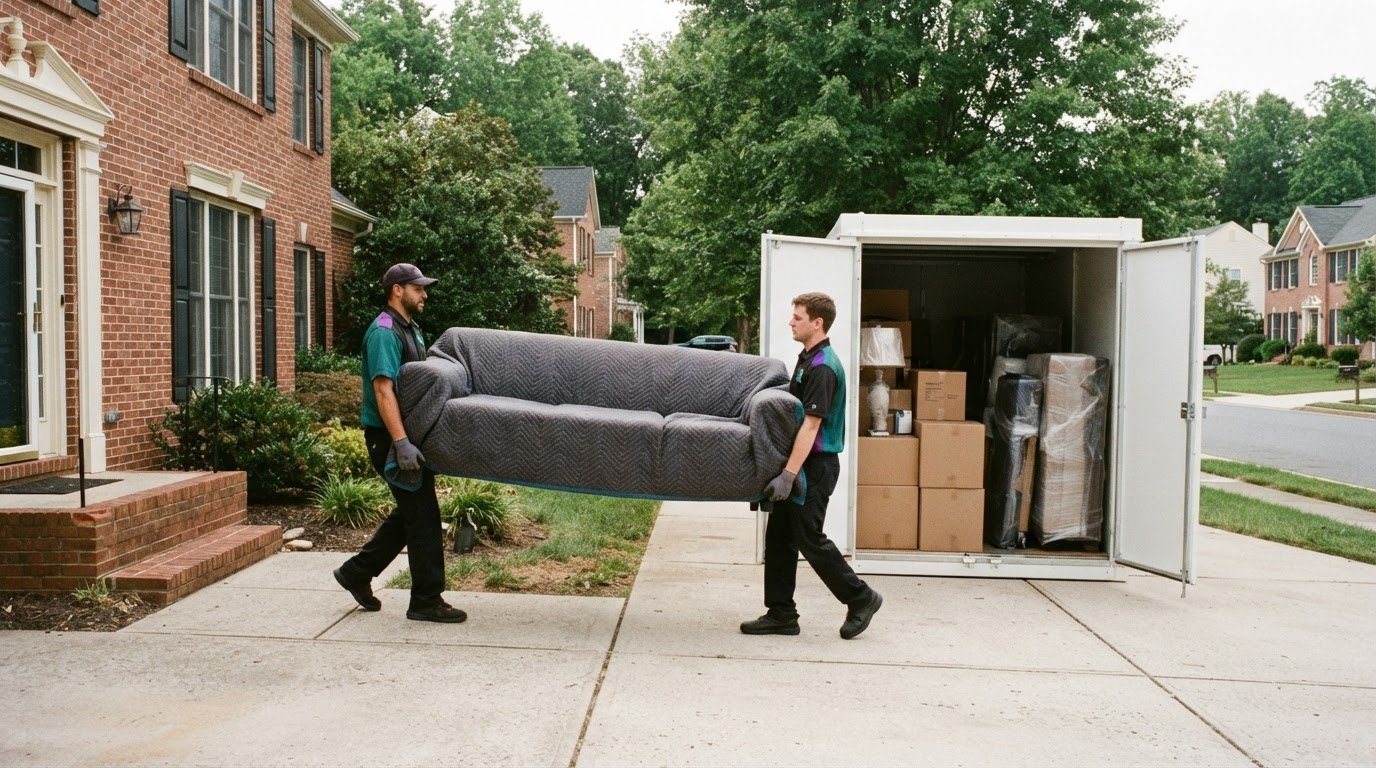
Keep the cabinet upright and lift it by its base or frame, not its handles, arms, or tabletop. Use a dolly or hand truck instead of dragging a heavy piece. Clear the route and coordinate each move so the cabinet stays under control over thresholds and ramps.
Position the cabinet upright against a flat truck wall. Keep other furniture and boxes from pressing against its carved details or leaning on it for support. Place fragile boxes where heavier items cannot fall onto them. This positioning reduces bumps and pressure during the drive.
-
Secure Antiques in the Truck
Strap the upright cabinet securely against the flat wall, keeping straps away from vulnerable corners and carvings. Hold it steady without crushing the finish or pressing on fragile joints. Check that it cannot slide or tip as the truck moves.
Keep the cabinet clear of loose cargo that could shift into it, and leave enough room to inspect the straps after loading other items. Don’t use boxes as braces; they can move, collapse, or transfer force onto the cabinet during a bump.
- Label and protect the remaining items. Mark boxes “Fragile,” “This Side Up,” or “Unload First,” then position them where other cargo won’t fall on them. Keep bubble wrap and padding around delicate packed pieces, not loose in the truck. Avoid direct plastic contact with antique wood, and protect the cabinet from moisture and abrupt temperature changes while loading.
For storage before or after the trip, a climate-controlled facility can reduce exposure to temperature swings and humidity. Don’t leave the cabinet in a damp area or exposed to changing conditions longer than necessary. On arrival, compare it with the condition photographs and inspect the finish, joints, and drawer fit before using it again.
Protecting veneer, finishes, corners, and carved details
Protect each exposed surface according to its material and vulnerable points. A veneer edge, glass insert, or carved corner needs a different barrier from a broad, flat panel.
-
Identify Weak Points Before Lifting
Inspect veneer edges, feet, joints, hardware, and carved trim before anyone grips the cabinet. Identify loose or raised areas so hands, straps, and padding stay clear. Lift by the base or frame, not a drawer pull or decorative molding. Pressure on a weak joint can loosen it, while gripping veneer can pull its edge away.
-
Select Protective Materials for Surfaces
Choose a clean, nonabrasive layer for each finished surface, then add cushioning and an outer protective layer. Use acid-free paper or clean cotton against painted, gilded, or polished areas. Keep plastic away from antique wood and adhesive off the finish. Fit padding around corners without pressing hard against delicate veneer or carved details.
- Guard corners and relief details individually. Pad projecting corners before wrapping broad panels, as they can take direct contact during a turn. For mirrors or framed art, place cardboard corner protectors at each corner and secure them around the wrapping, not onto the valuable surface. Shape padding around carved figures and trim to protect their contours without flattening them.
- Separate glass and ceramics from the cabinet. Wrap glass, ceramic, and porcelain pieces in glassine, a barrier paper resistant to air, water, and grease. Cushion each wrapped piece and protect exposed corners with cardboard. Pack glass inserts and ceramic items so they cannot knock against other objects. Keep these fragile pieces apart from heavy hardware during loading.
- Protect collectible paper items with the right barrier. Wrap books and magazines in acid-free paper; ordinary acidic paper can yellow and break down faster, potentially harming the items. Mylar bags can shield collectibles from oxygen, moisture, and light. Keep paper flat and separate from cabinet hardware, which could press into covers or tear edges if packed items shift.
- Choose extra protection for unusually fragile pieces. A custom wooden crate can reduce movement around an oversized or especially fragile antique. Before closing it, check that every corner and carved section has clearance, and that padding holds each component steady without forcing it into position. Pack the cabinet’s removable hardware separately so metal pieces cannot scratch the finish.
Acid-free paper is suitable for books and magazines; standard acidic paper can yellow, break down faster, and potentially damage them. Wrap plates and cups individually, then fill gaps with foam chips or crumpled paper to prevent breakage.
Hiring specialty antique movers
- Decide whether the cabinet needs hands-on moving help. A tall apothecary cabinet can be difficult to control through a narrow doorway, stair turn, or long carry. Consider its size, weight, condition, and access route together. If the frame feels unstable or the finish has loose veneer, don’t handle it like ordinary household furniture.
- Describe the piece and route before moving day. Share the cabinet’s dimensions, visible damage, removable parts, and path from its room to the truck. Include tight doorways, stairs, landings, and turns. These details shape the handling plan: a wide hallway differs from a narrow stairwell with little room to turn.
- Set expectations for handling the cabinet. Keep it upright and lift by its base or frame, not its handles or decorative trim. A sound plan accounts for safe handholds, clearance through each doorway, and where the cabinet will sit during loading. That helps keep force away from fragile joints and carved details.
- Clarify which parts should stay attached. Drawers, shelves, glass, and hardware may need separate packing, but old fittings can break if forced. Identify loose parts and vulnerable joints before deciding what to disassemble. Label each removed item and group it with the cabinet’s inventory. Leave delicate or stubborn components in place rather than risking damage.
- Match protection to the cabinet’s finish. Don’t place plastic directly against antique wood. Use a clean surface layer, cushioning, and moving blankets, taking care around veneer edges and carved areas. Custom crating can limit movement for oversized or especially fragile pieces. The cabinet’s size, fragility, number of pieces, and travel distance affect the moving cost.
- Plan for climate and arrival conditions. Temperature changes and humidity can affect antique wood, finishes, and upholstery. Protect the cabinet from moisture and avoid leaving it exposed during loading. Climate-controlled storage can reduce exposure to temperature swings and humidity when storage is part of the plan, but it does not replace secure packing and careful handling.
- Keep the record with the move plan. Keep the pre-move photographs, inventory, and any appraisal easy to access. An expert appraisal can help establish an antique’s value for a loss or damage claim. After delivery, compare the cabinet with the photographs and inspect its joints, finish, and drawer fit before using it again.
For help moving a heavy cabinet through a home and into the truck, arrange hands-on moving help.
Heavy Furniture Moving: Movers Near Me
Heavy Furniture Moving can help with moving a heavy cabinet through your home and toward the truck. Turn to its Movers Near Me or in-home furniture moving help when the cabinet is awkward to lift, the route has tight turns, or you need extra hands for loading. Share the cabinet’s dimensions, access challenges, and handling concerns so the move can be planned around the piece and its route.
Keep your condition photos and drawer notes handy for the move. If you’re ready for help with the heavy lifting, contact Heavy Furniture Moving.
Make the Move Plan Your Next Step
Before moving day, decide who will guide the cabinet from its current room to its destination. Share the route, note tight turns, and keep the condition record available to the people handling the lift. A clear plan gives everyone the same reference point and helps avoid rushed decisions around a valuable piece.
For moving an antique apothecary cabinet in Centreville without losing drawer alignment, careful handling matters from the first lift through arrival. If the cabinet’s weight or access route makes it difficult to move alone, Heavy Furniture Moving can help with the physical work.
Contact Heavy Furniture Moving to discuss help with your move. Take the next step with a steady plan and give your cabinet a careful journey to its new home.
Frequently Asked Questions
Is it better to hire specialty antique movers?
Specialized handling helps when a cabinet has fragile joints, ornate details, or a difficult route. The plan should account for its construction, access, and safe lifting points, not just its age. For a heavy piece that is awkward to carry, Heavy Furniture Moving’s Movers Near Me service can help with the physical move, without implying antique restoration or repair.
When Should You Call in Professional Movers for Antiques?
Call Heavy Furniture Moving when the cabinet is too heavy to control safely, the route includes tight turns, or its frame feels unstable. A piece that shifts when tilted or has loose legs needs careful handling before it leaves the room. Heavy Furniture Moving offers Movers Near Me for residential moving help when the main challenge is lifting and moving bulky furniture.
How Should You Inspect and Prepare an Antique Before Moving Day?
Check how each drawer moves before packing, and don’t force one that sticks or catches. Record which drawers bind and whether the cabinet sits level; these observations help distinguish an existing issue from a change after transport. Remove loose contents so they can’t strike the drawer fronts. After arrival, let the cabinet adjust to the new room for a few hours before loading the drawers.
Should drawers be removed or left in place when moving an antique cabinet?
Remove drawers that slide out easily, especially if they are empty and can be carried securely on their own. Leave a seized drawer in place rather than pulling hard on an old front or joint. Let the cabinet’s condition guide your choice: loose joints, brittle wood, or a drawer that catches call for gentle handling, not forceful disassembly.
Frequently Asked Questions
Specialized handling helps when a cabinet has fragile joints, ornate details, or a difficult route. The plan should account for its construction, access, and safe lifting points, not just its age. For a heavy piece that is awkward to carry, Heavy Furniture Moving’s Movers Near Me service can help with the physical move, without implying antique restoration or repair.
Call Heavy Furniture Moving when the cabinet is too heavy to control safely, the route includes tight turns, or its frame feels unstable. A piece that shifts when tilted or has loose legs needs careful handling before it leaves the room. Heavy Furniture Moving offers Movers Near Me for residential moving help when the main challenge is lifting and moving bulky furniture.
Check how each drawer moves before packing, and don’t force one that sticks or catches. Record which drawers bind and whether the cabinet sits level; these observations help distinguish an existing issue from a change after transport. Remove loose contents so they can’t strike the drawer fronts. After arrival, let the cabinet adjust to the new room for a few hours before loading the drawers.
Remove drawers that slide out easily, especially if they are empty and can be carried securely on their own. Leave a seized drawer in place rather than pulling hard on an old front or joint. Let the cabinet’s condition guide your choice: loose joints, brittle wood, or a drawer that catches call for gentle handling, not forceful disassembly.