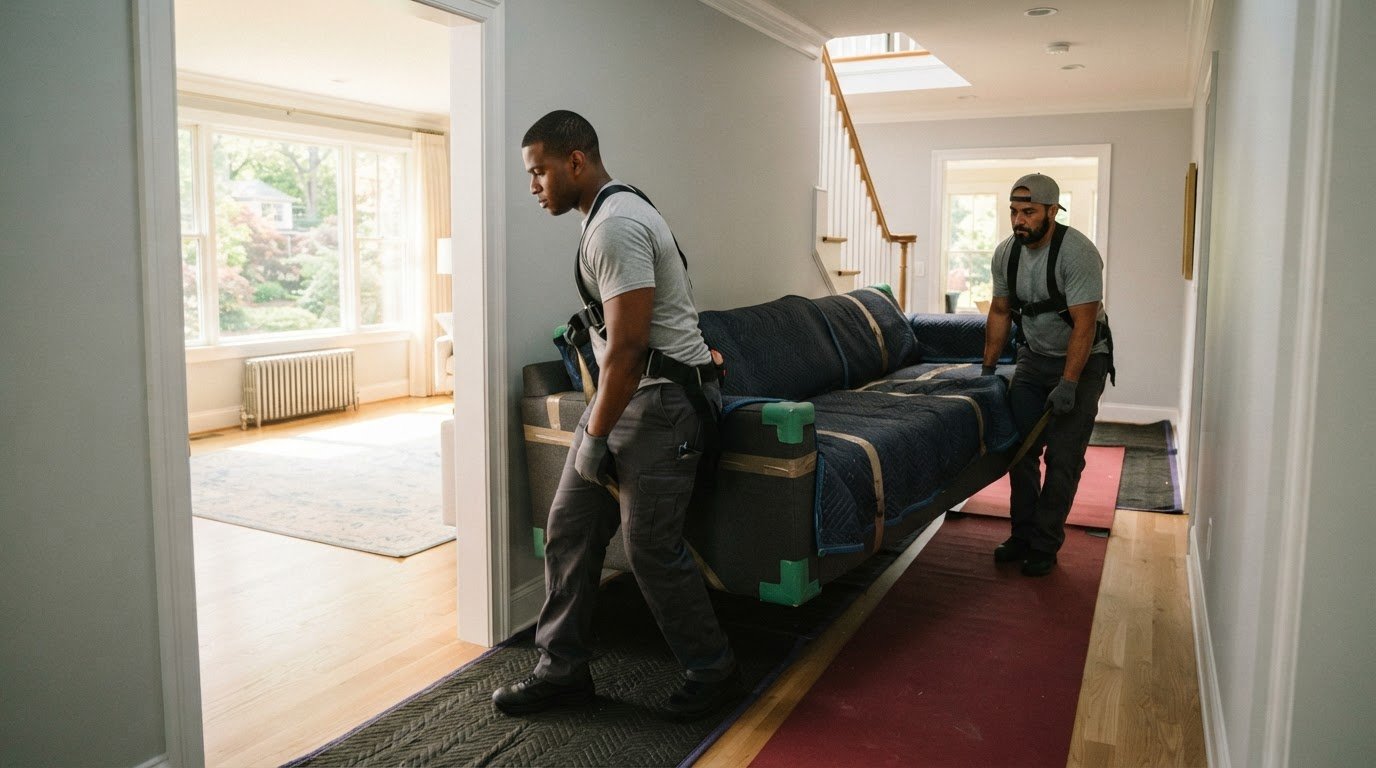
How to Move a Spinet Piano in Vienna, VA: A Safe, Practical Guide
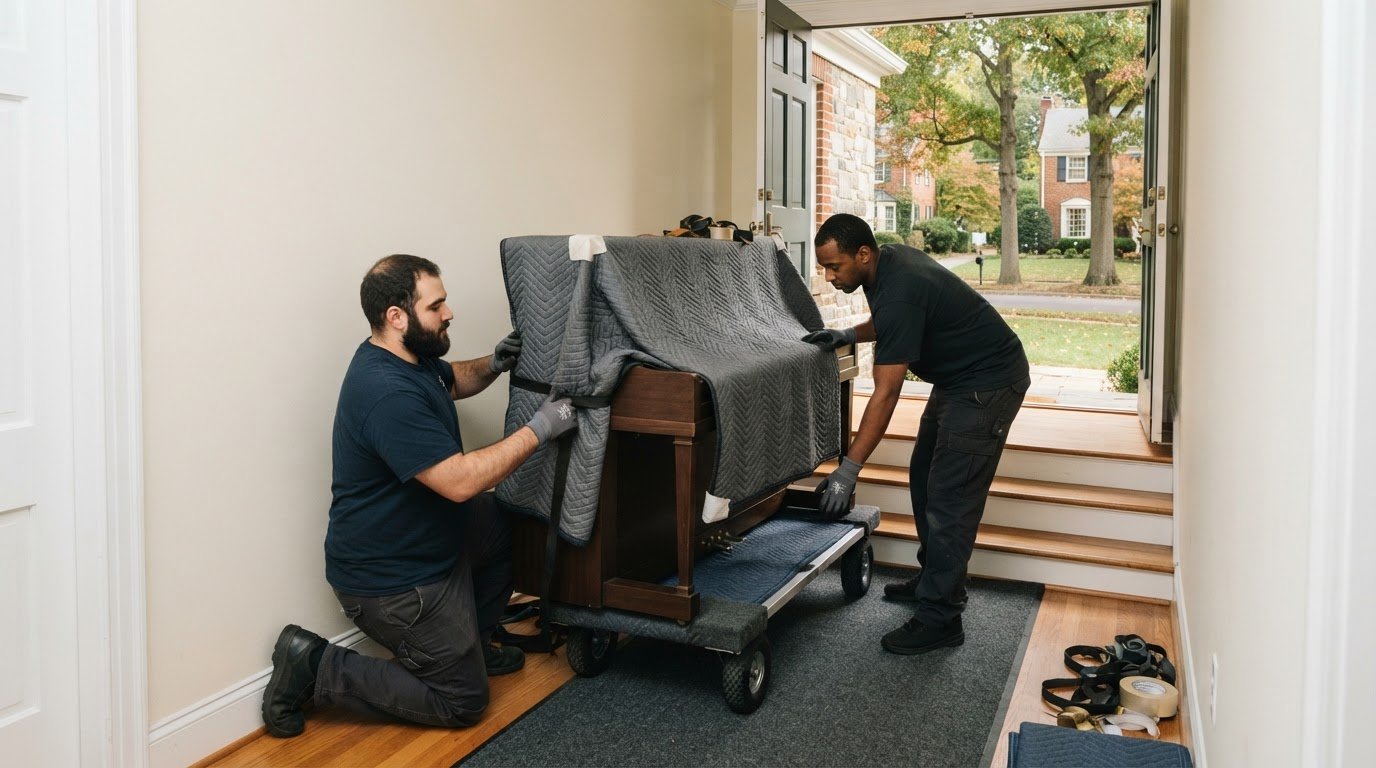
To figure out how to move a spinet piano in Vienna, start by checking the route, not by judging the piano’s size. Its compact cabinet can still be awkward to control, and a tight turn, narrow doorway, or flight of stairs can quickly make the move more difficult.
It’s reasonable to want to know whether your helpers and equipment can manage the job while protecting the piano, floors, walls, and everyone involved. Street access and parking can add another challenge in Vienna, especially if a moving vehicle can’t stop close to the entrance.
This guide explains how to assess the piano and route, prepare your home and move details, and choose between a carefully planned DIY attempt and professional help. You’ll learn what to check before any lifting, which access problems call for extra caution, and what information to share when asking for an assessment. Heavy Furniture Moving serves Vienna and includes piano moving among its specialized heavy-item services. Confirm current availability and service details before making plans.
Key Takeaways
- Check the piano’s make or model to help confirm its weight. Don’t assume a compact spinet is easy to lift.
- Measure the piano and inspect the entire route, including doorways, hallways, turns, stairs, and vehicle access.
- Use route complexity, crew experience, equipment, and the piano’s condition to decide whether DIY is a sensible option.
- Prepare the space and document the piano’s visible condition without trying to lift or reposition it yourself.
- When asking about how to move a spinet piano in Vienna, share clear measurements, access photos, stair details, and destination information.
Before Moving a Spinet Piano in Vienna, Identify the Real Risks
Before deciding how to move a spinet piano in Vienna, identify the instrument and consider the risks along the full route. A spinet is a compact type of upright piano, but its smaller cabinet doesn’t mean it is light, easy to grip, or safe to carry without planning. Weight and dimensions vary by make and model, so don’t rely on a generic estimate or how the piano looks.
How is a spinet different from other upright pianos?
Modern spinets are generally shorter than studio and full-size upright pianos, which makes them a more compact option for a home. Their design also differs from taller uprights. The Spinet piano reference provides background on the instrument’s characteristics and action. However, “spinet” doesn’t tell you the exact height, width, depth, or weight of the piano in your home. Check its make and model, then look for manufacturer information or ask a qualified mover to help identify it.
Why does a small-looking piano still need careful handling?
A compact cabinet can conceal a heavy load with an uneven balance. Smooth sides and limited handholds may make it harder to maintain a secure grip, particularly while turning or changing levels. If the piano shifts, tilts suddenly, or takes a jolt, people can lose control and the instrument may be damaged. Appearance alone can’t show how difficult or safe a move will be.
An uncontrolled move can put people and property at risk. A slipping piano could injure someone or strike a wall, doorframe, floor, or stair edge. Stairs and tight turns are especially challenging because they leave less room to adjust the piano’s position and maintain control. A route that looks manageable when empty may be much harder once the piano is in motion.
Start with an assessment, not a lift. Identify the piano, note its visible condition, and consider every part of the route from its current position to the vehicle and from the vehicle to its destination. Look for narrow openings, stairs, turns, and surfaces that could be damaged. If you don’t know the weight, the route is restrictive, or you’re unsure that the available crew can manage the load safely, pause and seek qualified help. These details will help you decide whether a carefully planned DIY move is realistic or whether you need experienced piano-handling support.
How to Check a Vienna Home’s Piano-Moving Route Before Lift Day
A route that looks open from the doorway may become difficult at a sharp turn, narrow landing, or stair rail. Before choosing how to move a spinet piano in Vienna, walk the full path from the piano to the vehicle and assess the destination route as well. Measure instead of guessing, and share uncertain or tight spots with the moving provider before scheduling.
What should you measure along the route?
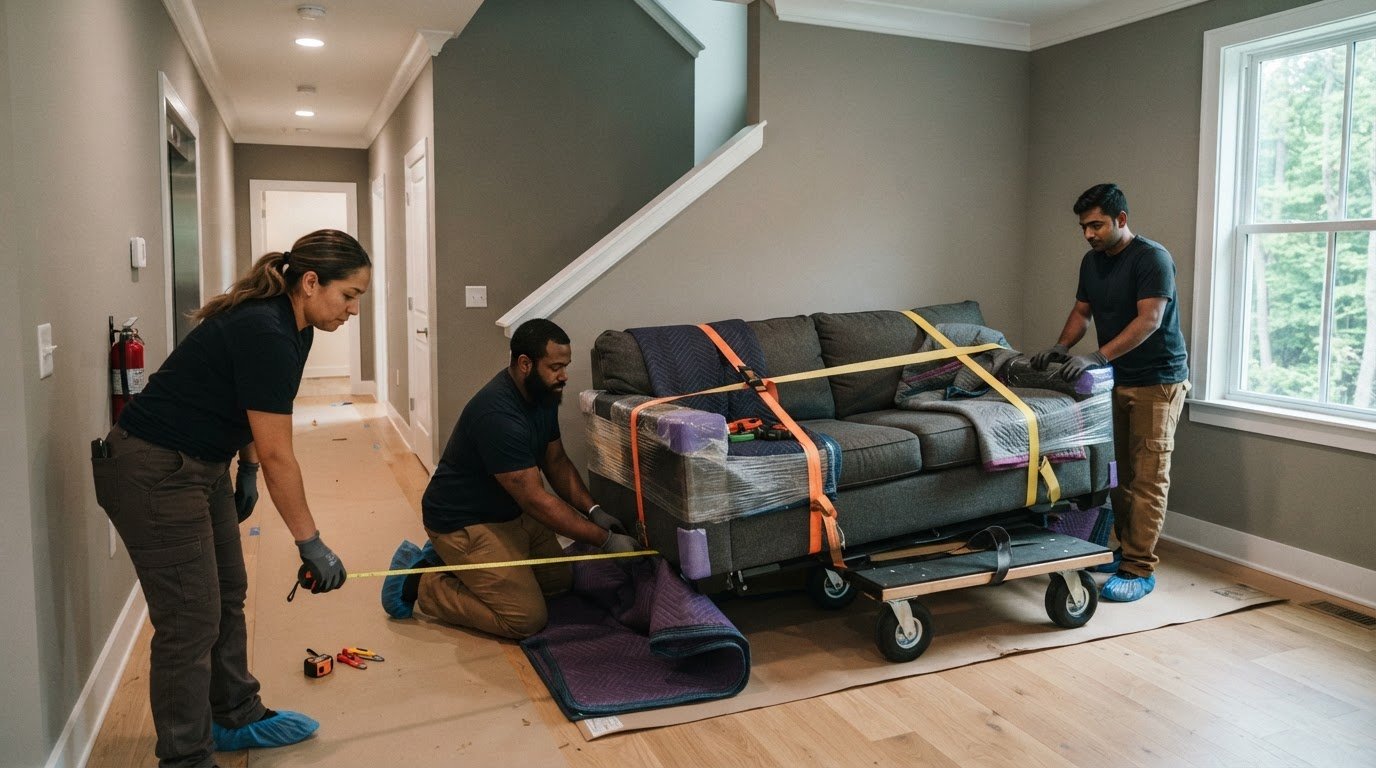
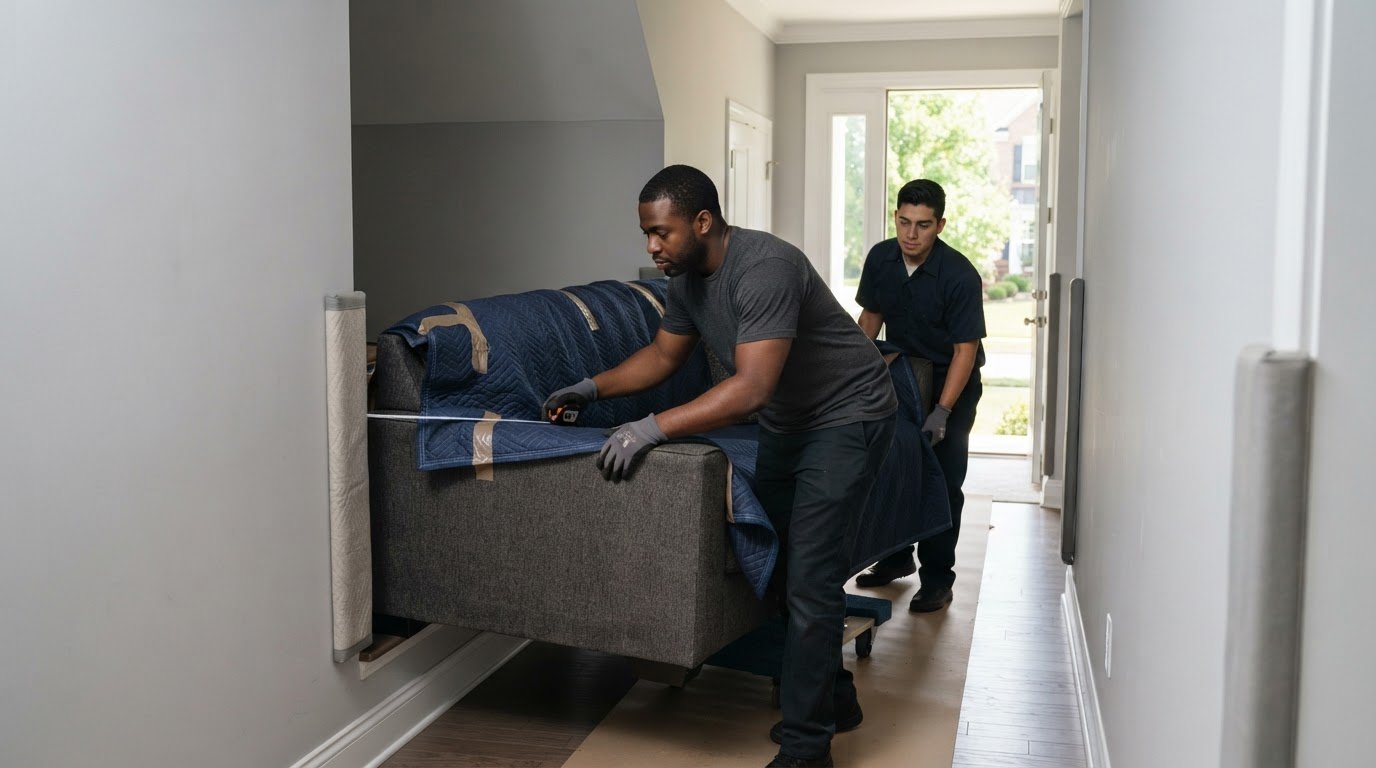
Measure the piano’s height, width, and depth, then check every narrow point it must pass through. The front door is only one part of the route. Record hallway widths, door openings, tight turns, thresholds, and changes in floor level. At corners, consider how much space is needed to turn the piano, not just the width of the passage. If a measurement leaves little clearance, flag it for the mover rather than assuming the piano will fit.
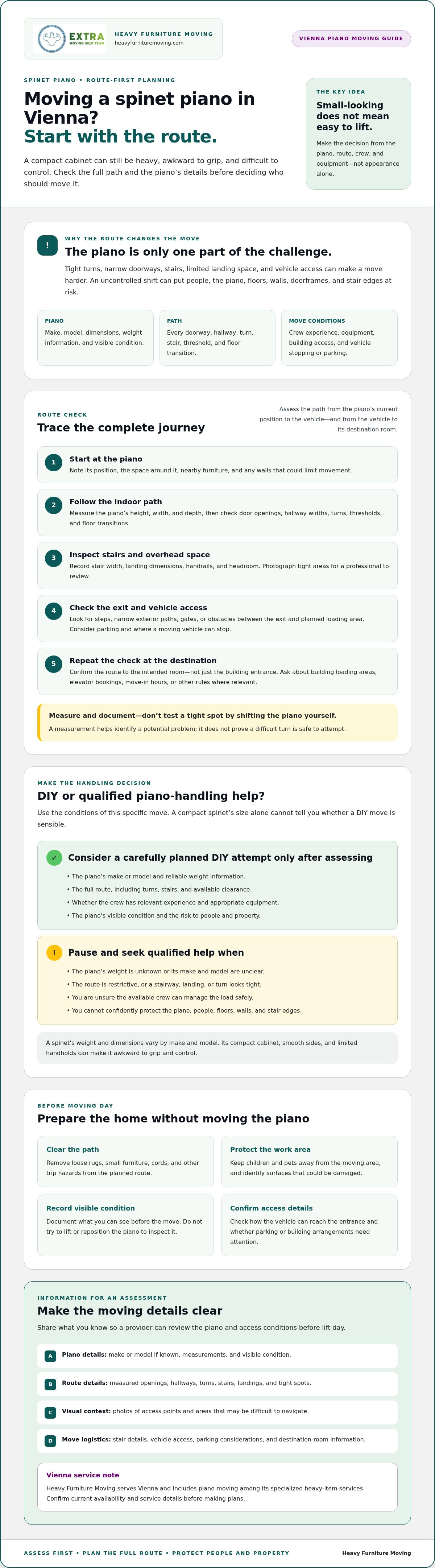
- Start at the piano. Note its position and the space around it, including nearby furniture or walls that could limit movement.
- Follow the indoor path. Measure doorways, hallways, turns, thresholds, and floor transitions between the piano and exit.
- Inspect stairs and overhead space. Record stair width, landing dimensions, handrails, and headroom. Photograph tight spots so a professional can review them.
- Check the exit and vehicle access. Look for steps, narrow exterior paths, gates, or other obstacles between the door and the planned loading area.
- Repeat the check at the destination. Confirm that the piano can reach its intended room, not just enter the building.
Measurements help a mover identify potential problems before lift day. They are not a reason to test a difficult turn by shifting the piano yourself. If a stairway or landing looks tight, send the dimensions and photos to a qualified provider for review.
How do you prepare rooms and building access?
Clear loose rugs, small furniture, cords, and other trip hazards from the planned path. Keep children and pets away from the work area. Check how a moving vehicle can reach the entrance and whether parking or access arrangements need attention. An apartment or managed building may have loading areas, elevator bookings, move-in hours, or other rules to confirm. Don’t assume every Vienna home or building has the same restrictions.
Before move day, confirm the piano’s measurements, each doorway and turn, stair and landing dimensions, overhead clearance, floor obstacles, and vehicle access.
Clear route information makes planning more practical and can help identify when specialized handling may be the safer choice. If access or heavy lifting is a concern, explore Vienna heavy-item moving help and confirm current piano-move availability and details.
DIY or Piano Movers? Compare the Safer Choice for Your Spinet
A spinet’s compact size can make a DIY move seem manageable, but appearance alone can’t tell you whether your crew, equipment, and route are suited to the job. Use what you’ve learned about the piano and access to compare your options. If you’re unsure how to move a spinet piano in Vienna safely, pause before lifting and ask someone experienced with pianos to assess the move.
| Factor | DIY may be worth considering when… | Professional help is safer to consider when… |
|---|---|---|
| Route | The path is clear, with no difficult stairs, tight turns, or long carries. | Stairs, narrow landings, sharp turns, or limited maneuvering space make control difficult. |
| Team | Everyone understands the plan and can coordinate without rushing. | Helpers lack experience handling heavy, awkward items or can’t communicate clearly during the move. |
| Equipment | You’ve confirmed that suitable moving equipment is available for the piano and route. | You’re uncertain what equipment or protective materials the move requires. |
| Piano condition | The piano is stable, and its condition and approximate weight are known. | Its weight is uncertain, it has visible damage, or you’re concerned about how it may respond to handling. |
When might a simple move still need professional assessment?
A short distance doesn’t necessarily mean a simple move. Stairs, a tight landing, a long carry, or limited turning space can make it difficult to keep a piano controlled. Stop planning a DIY move if the route isn’t clear, the weight is unknown, or helpers can’t coordinate safely. A provider should review the piano’s make or model, condition, and route details before confirming whether they can take the job.
Don’t try to solve a difficult passage by improvising once the piano is moving. If the plan depends on squeezing through a space or making an uncertain adjustment on stairs, reassess before lifting. Heavy Furniture Moving serves Vienna and includes pianos in its specialized heavy-item handling. Confirm current piano-move availability and service details before making arrangements.
What should you ask a piano-moving company?
Ask direct questions before booking. Does the company have experience with spinet pianos and the specific stairs, turns, or access challenges in your home? What equipment and protective materials does it plan to bring? How will the team protect floors, walls, and the instrument while handling it? Share your measurements and photos, then look for a clear plan that addresses your actual route. If important details remain unresolved, continue assessing your options before committing.
How to Prepare Your Spinet Piano and Home for Moving Day
Your role is to make the agreed path clear and give the moving team accurate information. Preparation helps everyone work from the same plan. It doesn’t mean testing the piano’s balance, shifting it into position, or trying to make it easier to lift yourself.
What can you do before the movers arrive?
Take clear photos of the piano from several sides before move day. Note visible scratches, dents, loose trim, or other existing damage, and share those details with the provider. If you know the make or model, include it. Accurate notes and photos help everyone understand the piano’s condition before handling begins.
Then prepare the spaces at both ends of the move:
- Clear the agreed route of loose rugs, cords, small furniture, and other items that could obstruct the crew.
- Keep children, pets, and unrelated household activity away from the work area.
- Confirm the destination room and clear its access path so the team knows where the piano is going.
- Send relevant access photos and mention stairs, tight spots, or concerns you’ve already identified.
- Check building or parking arrangements that could affect access, and share the details in advance.
Use a final check to catch changes. A delivery, a newly placed piece of furniture, or a blocked entrance can disrupt a route that was clear during the earlier assessment. If anything has changed, tell the provider before the move rather than waiting until the piano is ready to leave its spot.
What should you leave to the moving team?
Leave lifting, securing, and maneuvering decisions to the people responsible for handling the move. Don’t improvise with straps, dollies, or ramps, and don’t attempt to disassemble or tip the piano without qualified guidance. Equipment that seems sturdy may not suit the piano, the route, or the team’s handling plan.
Prepare the space and share what you know. Leave moving, securing, and maneuvering the piano to the professionals responsible for the job. If you’re still considering how to move a spinet piano in Vienna, use your photos and condition notes to explain the job and confirm the provider’s plan before move day.
For help with heavy-item handling in Vienna, contact Heavy Furniture Moving to discuss your piano and access details. Confirm current piano-move availability and service details when you reach out.
Arrange Spinet Piano Moving Help in Vienna, VA With Fewer Surprises
A clear request helps a moving provider assess the piano, the route, and the work involved before move day. Include details that might seem minor. A photo of a narrow landing or a note about stairs can reveal access challenges early and reduce last-minute uncertainty.
What information helps a mover assess your piano move?
Start with the piano. Provide its make and model if available, along with its approximate height, width, and depth. Explain whether it’s moving to another room in the same home or between addresses. If you don’t know its model or measurements, say so rather than guessing.
Next, describe access at both the starting point and destination. Include stairs, tight turns, narrow doorways, entry steps, long carries, and any parking or building restrictions you know about. Photos can make these details easier to review. Confirm the destination room too, so the provider can consider the whole route rather than only the exit.
Before arranging the move, ask the provider to confirm the proposed scope and explain what you should prepare. Clarify anything that remains uncertain, such as whether the route information is enough for an assessment or whether additional measurements are needed. A useful discussion should address your actual piano and access conditions, not rely only on the word “spinet.”
When should you request professional piano-moving help?
Contact a specialized mover if you’re unsure about the piano’s weight, the route includes difficult stairs or turns, or your helpers and equipment don’t give you confidence in a safe plan. Raise concerns before move day. A provider can review the details you share and confirm whether the job fits its services.
Heavy Furniture Moving serves Vienna, Virginia, and includes piano moving in its specialized heavy-item handling. If you’re comparing options, learn more about reliable movers in Fairfax and Northern VA. Confirm current Vienna piano-move availability and service details directly before making arrangements.
Once you’ve gathered the piano details, photos, and access notes, contact Heavy Furniture Moving about your piano move.
Plan Your Spinet Move With Confidence
A safe move starts with facts, not guesswork. Identify the spinet’s make and model, check its dimensions, and assess the complete route, including turns, stairs, and access at both ends. Clear the path and share photos and condition notes with your moving provider before move day.
Use the route, available experience, equipment, and piano condition to decide whether DIY is sensible. If the weight is uncertain, access is tight, or the handling plan doesn’t feel safe, stop and seek experienced help. Knowing how to move a spinet piano in Vienna also means recognizing when preparation isn’t enough and the move needs professional attention.
Heavy Furniture Moving serves Vienna, Virginia, and includes piano moving in its specialized heavy-item handling. Confirm current availability and service details, then contact Heavy Furniture Moving about your Vienna piano move. With clear information and a suitable plan, you can take the next step with greater confidence.
Frequently Asked Questions
Can I move a spinet piano myself?
Possibly, but DIY is worth considering only if the piano’s weight and condition are known, the route is clear, and capable helpers can coordinate with suitable equipment. A compact spinet can still be awkward to grip and control. Don’t attempt the move if stairs, tight turns, long carries, uncertain weight, or uncoordinated handling are involved. To decide how to move a spinet piano in Vienna safely, assess the route before choosing DIY.
How heavy is a spinet piano?
Spinet piano weight varies by make and model, so there isn’t one reliable figure for every instrument. Don’t plan around a generic estimate or the piano’s appearance. Check manufacturer information using the make and model, or ask a qualified mover to help identify it. If you can’t confirm the weight, tell the provider before discussing the moving plan. Don’t guess when deciding whether your helpers can control the piano safely.
How do you move a spinet piano down stairs?
Don’t try to guide a spinet down stairs yourself unless qualified professionals have assessed the piano and route and are handling the move. Stair work requires a plan that accounts for the instrument, stair width, landing space, handrails, headroom, and room to maneuver. Share measurements and photos with the mover in advance. If helpers lack experience or can’t coordinate clearly, stop and arrange a professional assessment instead of attempting a lift.
What equipment is needed to move a spinet piano?
The right equipment depends on the piano and the route. A moving provider may determine that piano-moving equipment, securement materials, and protective padding are needed, but don’t assume household straps or a general-purpose dolly will suit the job. Ask what equipment the provider plans to bring and how it fits your access conditions. Leave equipment selection and operation to people qualified to handle the piano.
How should I prepare my home before piano movers arrive?
Clear the agreed route at the piano’s current location and at its destination. Move loose rugs, cords, and small furniture out of the way, and keep children and pets clear of the work area. Photograph the piano and note visible damage. Send the provider the make or model, access photos, stair details, and any concerns before move day. Confirm the destination room and any building or parking arrangements.
Should I hire professional movers for a spinet piano in Vienna, VA?
Consider professional help if stairs, narrow turns, uncertain weight, limited maneuvering room, or lack of experience make safe handling doubtful. Heavy Furniture Moving includes piano moving in its specialized heavy-item handling and serves Vienna, Virginia. Its stated local coverage also includes Fairfax, Woodbridge, Manassas, Manassas Park, Aldie, Ashburn, McLean, Vienna, Reston, Centreville, Chantilly, Clifton, Dumfries, South Riding, Fairfax Station, Haymarket, and Gainesville. Confirm current piano-move availability and details directly.
Frequently Asked Questions
Modern spinets are generally shorter than studio and full-size upright pianos, which makes them a more compact option for a home. Their design also differs from taller uprights. The Spinet piano reference provides background on the instrument’s characteristics and action. However, “spinet” doesn’t tell you the exact height, width, depth, or weight of the piano in your home. Check its make and model, then look for manufacturer information or ask a qualified mover to help identify it.
A compact cabinet can conceal a heavy load with an uneven balance. Smooth sides and limited handholds may make it harder to maintain a secure grip, particularly while turning or changing levels. If the piano shifts, tilts suddenly, or takes a jolt, people can lose control and the instrument may be damaged. Appearance alone can’t show how difficult or safe a move will be. An uncontrolled move can put people and property at risk. A slipping piano could injure someone or strike a wall, doorframe, floor, or stair edge. Stairs and tight turns are especially challenging because they leave less room to adjust the piano’s position and maintain control. A route that looks manageable when empty may be much harder once the piano is in motion. Start with an assessment, not a lift. Identify the piano, note its visible condition, and consider every part of the route from its current position to the vehicle and from the vehicle to its destination. Look for narrow openings, stairs, turns, and surfaces that could be damaged. If you don’t know the weight, the route is restrictive, or you’re unsure that the available crew can manage the load safely, pause and seek qualified help. These details will help you decide whether a carefully planned DIY move is realistic or whether you need experienced piano-handling support. A route that looks open from the doorway may become difficult at a sharp turn, narrow landing, or stair rail. Before choosing how to move a spinet piano in Vienna, walk the full path from the piano to the vehicle and assess the destination route as well. Measure instead of guessing, and share uncertain or tight spots with the moving provider before scheduling.
Measure the piano’s height, width, and depth, then check every narrow point it must pass through. The front door is only one part of the route. Record hallway widths, door openings, tight turns, thresholds, and changes in floor level. At corners, consider how much space is needed to turn the piano, not just the width of the passage. If a measurement leaves little clearance, flag it for the mover rather than assuming the piano will fit. Measurements help a mover identify potential problems before lift day. They are not a reason to test a difficult turn by shifting the piano yourself. If a stairway or landing looks tight, send the dimensions and photos to a qualified provider for review.
Clear loose rugs, small furniture, cords, and other trip hazards from the planned path. Keep children and pets away from the work area. Check how a moving vehicle can reach the entrance and whether parking or access arrangements need attention. An apartment or managed building may have loading areas, elevator bookings, move-in hours, or other rules to confirm. Don’t assume every Vienna home or building has the same restrictions. Before move day, confirm the piano’s measurements, each doorway and turn, stair and landing dimensions, overhead clearance, floor obstacles, and vehicle access. Clear route information makes planning more practical and can help identify when specialized handling may be the safer choice. If access or heavy lifting is a concern, explore Vienna heavy-item moving help and confirm current piano-move availability and details. A spinet’s compact size can make a DIY move seem manageable, but appearance alone can’t tell you whether your crew, equipment, and route are suited to the job. Use what you’ve learned about the piano and access to compare your options. If you’re unsure how to move a spinet piano in Vienna safely, pause before lifting and ask someone experienced with pianos to assess the move.
A short distance doesn’t necessarily mean a simple move. Stairs, a tight landing, a long carry, or limited turning space can make it difficult to keep a piano controlled. Stop planning a DIY move if the route isn’t clear, the weight is unknown, or helpers can’t coordinate safely. A provider should review the piano’s make or model, condition, and route details before confirming whether they can take the job. Don’t try to solve a difficult passage by improvising once the piano is moving. If the plan depends on squeezing through a space or making an uncertain adjustment on stairs, reassess before lifting. Heavy Furniture Moving serves Vienna and includes pianos in its specialized heavy-item handling. Confirm current piano-move availability and service details before making arrangements.
Ask direct questions before booking. Does the company have experience with spinet pianos and the specific stairs, turns, or access challenges in your home? What equipment and protective materials does it plan to bring? How will the team protect floors, walls, and the instrument while handling it? Share your measurements and photos, then look for a clear plan that addresses your actual route. If important details remain unresolved, continue assessing your options before committing. Your role is to make the agreed path clear and give the moving team accurate information. Preparation helps everyone work from the same plan. It doesn’t mean testing the piano’s balance, shifting it into position, or trying to make it easier to lift yourself.
Take clear photos of the piano from several sides before move day. Note visible scratches, dents, loose trim, or other existing damage, and share those details with the provider. If you know the make or model, include it. Accurate notes and photos help everyone understand the piano’s condition before handling begins. Then prepare the spaces at both ends of the move: Use a final check to catch changes. A delivery, a newly placed piece of furniture, or a blocked entrance can disrupt a route that was clear during the earlier assessment. If anything has changed, tell the provider before the move rather than waiting until the piano is ready to leave its spot.
Leave lifting, securing, and maneuvering decisions to the people responsible for handling the move. Don’t improvise with straps, dollies, or ramps, and don’t attempt to disassemble or tip the piano without qualified guidance. Equipment that seems sturdy may not suit the piano, the route, or the team’s handling plan. Prepare the space and share what you know. Leave moving, securing, and maneuvering the piano to the professionals responsible for the job. If you’re still considering how to move a spinet piano in Vienna, use your photos and condition notes to explain the job and confirm the provider’s plan before move day. For help with heavy-item handling in Vienna, contact Heavy Furniture Moving to discuss your piano and access details. Confirm current piano-move availability and service details when you reach out. A clear request helps a moving provider assess the piano, the route, and the work involved before move day. Include details that might seem minor. A photo of a narrow landing or a note about stairs can reveal access challenges early and reduce last-minute uncertainty.
Start with the piano. Provide its make and model if available, along with its approximate height, width, and depth. Explain whether it’s moving to another room in the same home or between addresses. If you don’t know its model or measurements, say so rather than guessing. Next, describe access at both the starting point and destination. Include stairs, tight turns, narrow doorways, entry steps, long carries, and any parking or building restrictions you know about. Photos can make these details easier to review. Confirm the destination room too, so the provider can consider the whole route rather than only the exit. Before arranging the move, ask the provider to confirm the proposed scope and explain what you should prepare. Clarify anything that remains uncertain, such as whether the route information is enough for an assessment or whether additional measurements are needed. A useful discussion should address your actual piano and access conditions, not rely only on the word “spinet.”
Contact a specialized mover if you’re unsure about the piano’s weight, the route includes difficult stairs or turns, or your helpers and equipment don’t give you confidence in a safe plan. Raise concerns before move day. A provider can review the details you share and confirm whether the job fits its services. Heavy Furniture Moving serves Vienna, Virginia, and includes piano moving in its specialized heavy-item handling. If you’re comparing options, learn more about reliable movers in Fairfax and Northern VA. Confirm current Vienna piano-move availability and service details directly before making arrangements. Once you’ve gathered the piano details, photos, and access notes, contact Heavy Furniture Moving about your piano move. A safe move starts with facts, not guesswork. Identify the spinet’s make and model, check its dimensions, and assess the complete route, including turns, stairs, and access at both ends. Clear the path and share photos and condition notes with your moving provider before move day. Use the route, available experience, equipment, and piano condition to decide whether DIY is sensible. If the weight is uncertain, access is tight, or the handling plan doesn’t feel safe, stop and seek experienced help. Knowing how to move a spinet piano in Vienna also means recognizing when preparation isn’t enough and the move needs professional attention. Heavy Furniture Moving serves Vienna, Virginia, and includes piano moving in its specialized heavy-item handling. Confirm current availability and service details, then contact Heavy Furniture Moving about your Vienna piano move. With clear information and a suitable plan, you can take the next step with greater confidence.
Possibly, but DIY is worth considering only if the piano’s weight and condition are known, the route is clear, and capable helpers can coordinate with suitable equipment. A compact spinet can still be awkward to grip and control. Don’t attempt the move if stairs, tight turns, long carries, uncertain weight, or uncoordinated handling are involved. To decide how to move a spinet piano in Vienna safely, assess the route before choosing DIY.
Spinet piano weight varies by make and model, so there isn’t one reliable figure for every instrument. Don’t plan around a generic estimate or the piano’s appearance. Check manufacturer information using the make and model, or ask a qualified mover to help identify it. If you can’t confirm the weight, tell the provider before discussing the moving plan. Don’t guess when deciding whether your helpers can control the piano safely.
Don’t try to guide a spinet down stairs yourself unless qualified professionals have assessed the piano and route and are handling the move. Stair work requires a plan that accounts for the instrument, stair width, landing space, handrails, headroom, and room to maneuver. Share measurements and photos with the mover in advance. If helpers lack experience or can’t coordinate clearly, stop and arrange a professional assessment instead of attempting a lift.
The right equipment depends on the piano and the route. A moving provider may determine that piano-moving equipment, securement materials, and protective padding are needed, but don’t assume household straps or a general-purpose dolly will suit the job. Ask what equipment the provider plans to bring and how it fits your access conditions. Leave equipment selection and operation to people qualified to handle the piano.
Clear the agreed route at the piano’s current location and at its destination. Move loose rugs, cords, and small furniture out of the way, and keep children and pets clear of the work area. Photograph the piano and note visible damage. Send the provider the make or model, access photos, stair details, and any concerns before move day. Confirm the destination room and any building or parking arrangements.
Consider professional help if stairs, narrow turns, uncertain weight, limited maneuvering room, or lack of experience make safe handling doubtful. Heavy Furniture Moving includes piano moving in its specialized heavy-item handling and serves Vienna, Virginia. Its stated local coverage also includes Fairfax, Woodbridge, Manassas, Manassas Park, Aldie, Ashburn, McLean, Vienna, Reston, Centreville, Chantilly, Clifton, Dumfries, South Riding, Fairfax Station, Haymarket, and Gainesville. Confirm current piano-move availability and details directly.