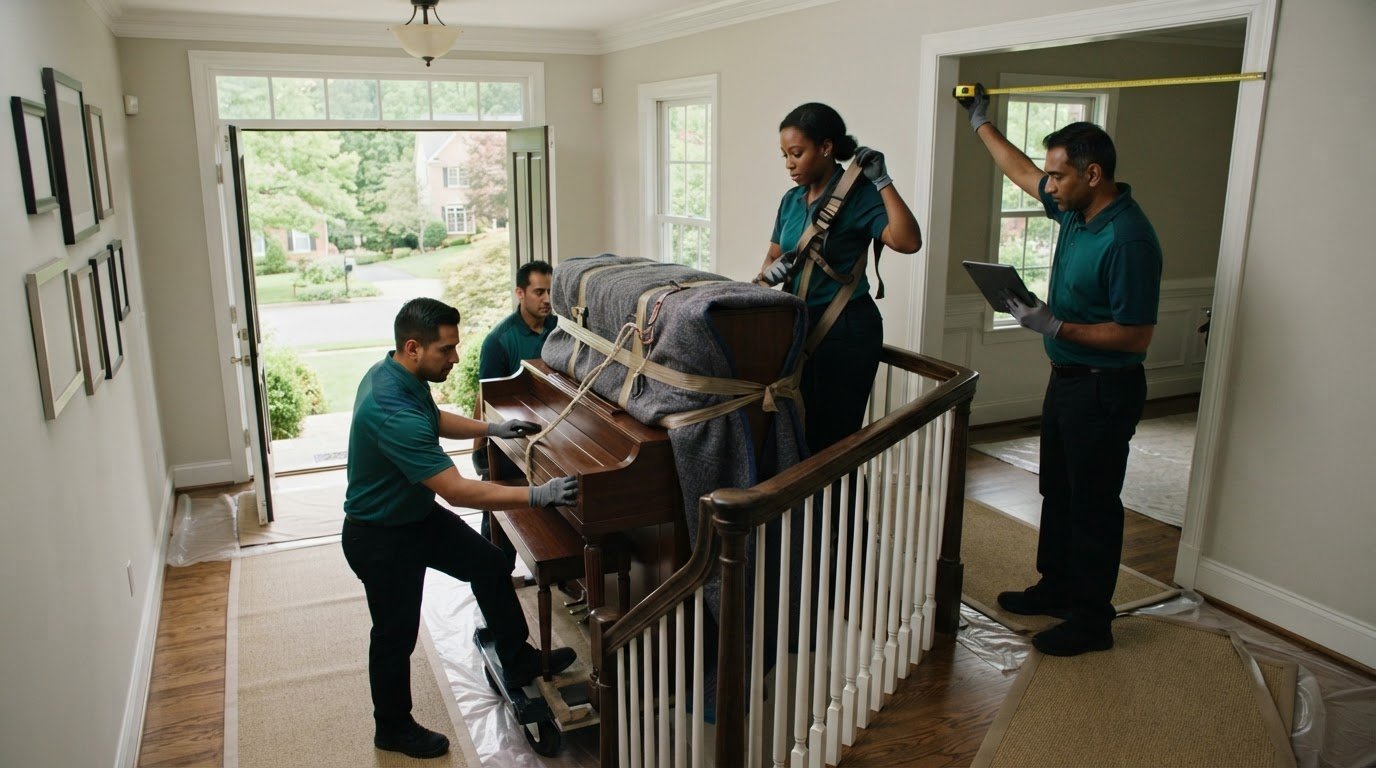
How to Move a Piano Without Scratching Floors in McLean: The 2026 Guide
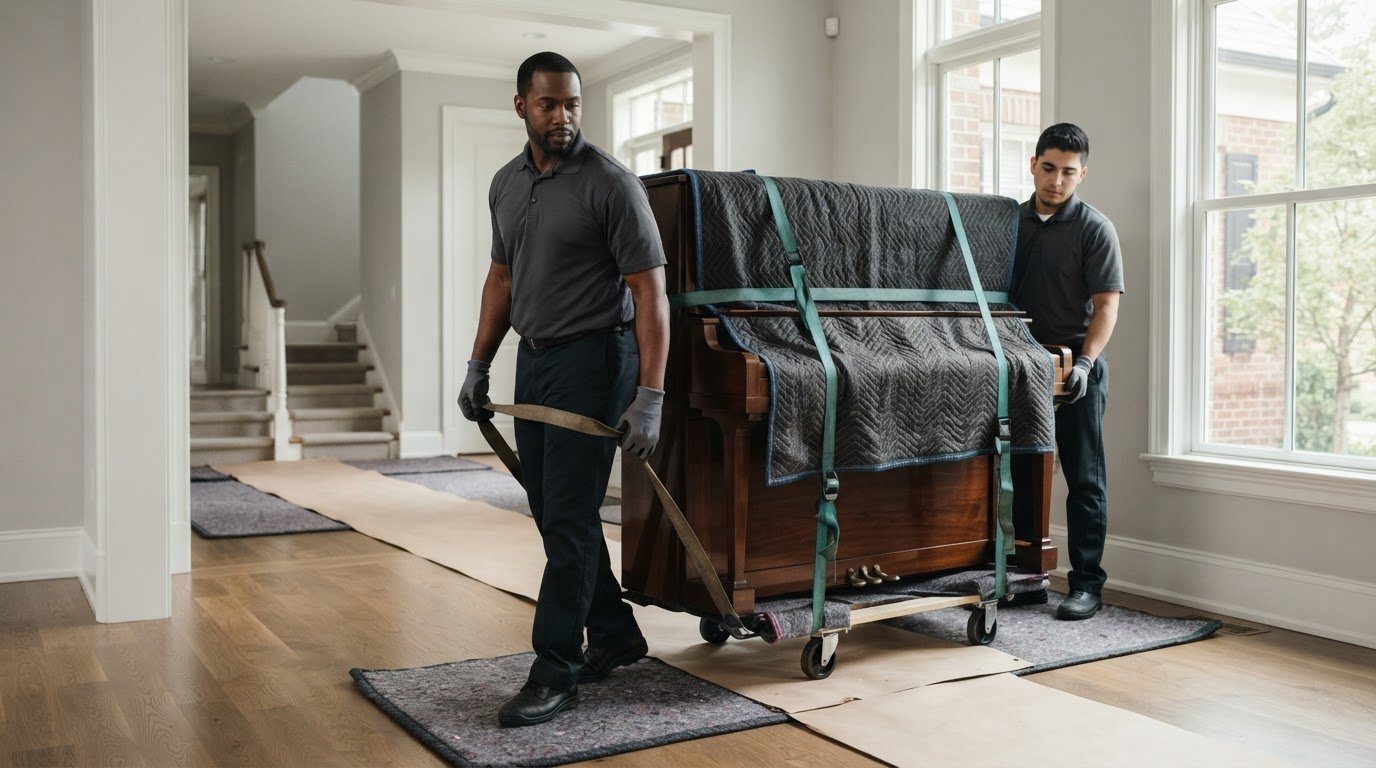
A moving blanket alone won’t save a McLean hardwood or marble floor from a piano’s concentrated weight. The key to how to move a piano without scratching floors McLean homeowners value is to spread that weight safely, then keep the piano steady from the first lift to the final placement.
It’s reasonable to worry about gouges, cracked stone, or an injury when a piano weighs hundreds of pounds. And not every floor protector can handle that load. Choose the wrong dolly or slide the piano over an unprotected surface, and a careful move can turn costly fast.
This guide breaks down the professional approach: how to prepare the route, protect delicate floors, and choose equipment that can support a heavy instrument. You’ll learn what piano dollies, padding, and floor coverings are designed to do, what to check before renting or buying, and when the safest move is to get experienced heavy-lifting help. With the right plan, you can reduce the risk to both your piano and your floors.
Key Takeaways
- Learn why upright and grand pianos put different pressure on floors, and which McLean surfaces may be most vulnerable.
- See how piano dollies and Masonite sheets can help distribute weight instead of concentrating it on a few points.
- Use the route-checking and floor-cleaning steps that support how to move a piano without scratching floors McLean.
- Spot risky shortcuts, including thin rugs and cardboard that may shift or compress under a heavy load.
- Recognize when DIY moving may be unsafe and how labor-only heavy-lifting help can support an in-home piano move.
Why Piano Moving is a High-Risk Task for McLean Floors
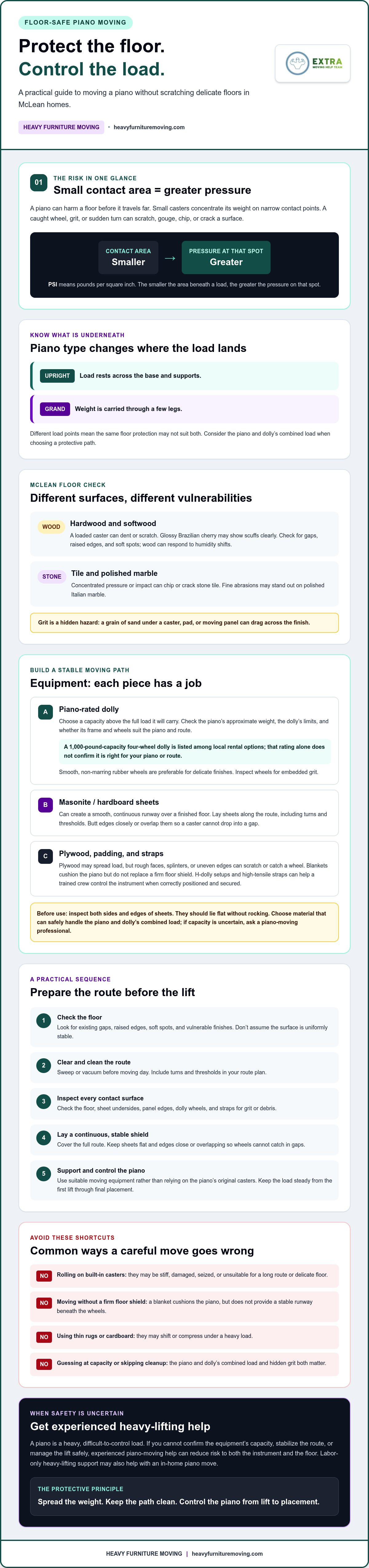
A piano can damage a floor before it travels across the room. The risk comes from concentrated weight, small contact points, and movement that’s hard to stop once the instrument starts rolling. An upright rests its load across its base and supports, while a grand’s weight is carried through a few legs. That difference changes where pressure lands, so the same floor protection may not suit both pianos.
Think in terms of PSI, or pounds per square inch: the smaller the contact area beneath a load, the greater the pressure on that spot. A piano’s small casters can focus pressure onto a narrow patch of flooring. Adding grit or a sudden turn can make that contact point act like an abrasive or pry against a brittle surface. For a deeper overview of professional piano moving techniques, including specialized moving equipment, see the piano-moving guidance on Wikipedia.
Hardwood vs. Marble: Different Risks in McLean Estates
Softwood and hardwood can dent or scratch when a loaded caster catches, while stone tile can chip or crack under concentrated pressure or impact. Brazilian cherry flooring may show scuffs clearly under a glossy finish, and polished Italian marble can make fine abrasions stand out. Don’t assume a surface is protected because it looks smooth. A grain of sand trapped under a caster or pad can drag across the finish and leave a visible mark.
Clean the route before moving day, and inspect the floor and wheel contact points. Northern Virginia’s humidity shifts can also affect wood flooring: wood responds to moisture in the air, and changes in its condition may influence how it handles pressure. Check for existing gaps, raised edges, or soft spots instead of assuming the floor is uniformly stable.
The Myth of the “Built-In” Caster
The wheels attached to a piano aren’t a substitute for moving equipment. Older metal casters may be stiff, damaged, or seized. If one catches or turns unevenly, the piano can lurch and the caster can scrape or gouge the floor. Even wheels that roll freely weren’t necessarily made to carry the instrument over a long route or delicate surfaces.
Don’t roll the piano on its original casters. A proper move uses equipment designed to support and control the piano, rather than relying on small built-in wheels. That’s a core part of how to move a piano without scratching floors McLean homeowners want to protect: manage the load and its contact with the floor before the piano starts moving.
Essential Equipment for Scratch-Free Piano Moving
Floor protection has to do more than cover the finish. It must create a stable path that spreads the piano’s load and stays put as the instrument moves. A professional piano dolly, clean protective sheets, and properly fitted straps each solve a different problem. Blankets can cushion the piano, but they aren’t a substitute for a firm floor shield beneath the wheels.
Masonite vs. Plywood: Choosing the Right Shield
Masonite, also called hardboard, can form a smooth, continuous runway over a finished floor. Plywood may work as a load-spreading layer, but rough faces, splinters, or uneven edges can scratch flooring or catch a wheel. Whichever material you use, inspect both sides and edges first, and make sure the panels lie flat without rocking.
Lay sheets along the entire route, including turns and thresholds. Keep edges butted closely or overlap them so a caster can’t drop into a gap. Don’t assume one thickness suits every job: a grand piano places weight differently from an upright, so choose sheets that can safely handle the piano and dolly’s combined load. If you can’t confirm the material’s capacity, ask a piano-moving professional rather than guessing.
Specialized Piano Dollies
Choose a piano-rated dolly with a capacity above the full load it will carry. A 1,000-pound-capacity four-wheel dolly is listed among local rental options, but that rating alone doesn’t confirm it’s the right model for your piano or route. Check the piano’s approximate weight, the dolly’s limits, and whether its wheels and frame suit your floor and setup.
Look for smooth, non-marring rubber wheels rather than hard plastic that may mark delicate finishes. Inspect them for embedded grit before use. H-dolly setups and high-tensile moving straps can help a trained crew support and control the instrument, but straps must be correctly positioned and secured. They don’t make an unsafe lift safe. The Southeastern Spine Institute explains proper lifting techniques, a useful reminder to plan body mechanics as carefully as floor protection.
Clean the route before placing any shield. Sweep or vacuum first, then check the floor, sheet undersides, dolly wheels, and straps for grit or debris. A single grain trapped under a moving panel can become an abrasive dragged along the finish.
In the McLean area, rental listings include dollies and furniture pads at U-Haul locations in Vienna. Call ahead to confirm what’s available and whether the dolly is rated for piano use. If you’d rather not manage the equipment and heavy lifting yourself, get help with a piano move from a local heavy-lifting team.
Step-by-Step Guide: Moving Your Piano Without Damage
The safest move starts before anyone touches the piano. If the route includes stairs, tight turns, uneven thresholds, or a grand piano that must be lifted or tilted, stop and bring in experienced piano movers. A detailed plan helps protect your floors, but it can’t replace the equipment and handling skill a heavy instrument demands.
Prepare the Route and Floor
Measure the piano and every doorway, hallway, and turn along the route. Include trim and door hardware in your checks. Clear furniture, rugs, and loose objects, then vacuum and inspect the floor so grit won’t get trapped beneath protective sheets or wheels. Lay clean Masonite or suitable hardboard from the starting point to the destination. Keep panels flat and secure, with no gaps where a wheel could catch. Add a second layer at turns and other pivot points, but don’t let protection create a raised or unstable edge.
The “Lift and Place” Method
Don’t tilt a piano directly onto its side or try to lift it onto a dolly by improvising. Grand pianos may require a piano board and specialized handling. A coordinated team might include three or four trained movers, but headcount alone doesn’t make the lift safe. The crew needs clear commands and controlled roles, with the piano’s weight supported throughout. Centering the load over the dolly’s support is a technical task, not a guess. If the piano shifts, stop; don’t try to catch it with your body.
Securement matters, too. Heavy-duty ratcheting straps should be used only by people who know how to position and tighten them without damaging the piano or creating an unstable load. Straps should hold the instrument steady on the proper equipment, not serve as a substitute for safe lifting or control.
Navigating Thresholds and Floor Transitions
Carpet-to-hardwood transitions and entryway thresholds can stop a wheel suddenly. That jolt can shift the piano or make a protective sheet slide. Build a continuous, firm path across the change in surface, and check that every panel is supported and lies flat. Never bridge a gap with loose cardboard or a wobbly board.
Before each transition, pause and check the route, sheet edges, and wheel alignment. Move slowly, with one person directing and the team following a shared signal. If the dolly catches or the load feels unstable, stop and reset rather than forcing it forward.
These precautions are central to how to move a piano without scratching floors McLean, but they don’t remove the risks of handling a heavy instrument. For a grand piano or a route that requires lifting, consider labor-only heavy-lifting help instead of attempting the move yourself.
Common Mistakes that Lead to Floor Damage in McLean Homes
Most floor damage happens when a protective layer shifts, a wheel catches, or a heavy piano turns without control. The fix isn’t simply to add more padding. Use firm, clean protection and move deliberately. If the piano feels unstable, stop instead of trying to muscle through.
The Danger of Cardboard and Area Rugs
Cardboard and thin rugs can compress under a heavy load, leaving casters or piano legs in direct contact with the floor. They can also bunch up or slide during a turn. Cardboard edges and folds may trap grit, turning movement into a sanding motion against hardwood or a polished finish. Sliding a piano on fabric can create friction and scuffing, too. Use rigid, stable floor protection instead, and don’t drag the piano across it.
Rushing, Pivoting, and Lifting Beyond Your Limits
A piano has momentum. Once it starts rolling, a sudden stop or quick turn can shift the load, skid a wheel, or push a protector out of place. Pivoting in one spot is especially risky: the wheels or legs can grind against the finish while the instrument swings around them. Move slowly, keep the route clear, and reposition the dolly rather than twisting the piano sharply.
Don’t attempt a lift with too few people or rely on strength alone. Fatigue, poor coordination, or a missed grip can lead to a dropped instrument and serious floor damage, as well as injury. If the move needs stairs, a grand piano lift, or a tight turn you can’t control, call experienced heavy-lifting help. The safest answer to how to move a piano without scratching floors McLean is knowing when not to force a DIY move.
Northern Virginia Climate and Entryway Hazards
Wood responds to changes in humidity, so don’t assume a floor will handle pressure exactly the same way in every season. Keep the path dry and clean. On rainy days, wet shoe soles can track moisture and grit indoors, making a smooth floor slippery and increasing the chance of a slip or sudden shift. Wipe shoes and the route before moving. Synthetic protectors may also create static in dry conditions; choose stable floor coverings, and don’t let static concerns distract from the bigger risks of slipping, shifting, or trapped debris.
A piano move is demanding work, not a test of willpower. If you need skilled help with the heavy lifting in your McLean home, arrange piano-moving assistance before risking a dropped load or damaged floor.
When to Hire McLean’s Heavy Lifting Experts
DIY stops making sense when you can’t control the piano at every stage. Tight turns, stairs, narrow townhome entries, a grand piano, or a route with delicate flooring all raise the stakes. So does uncertainty about the piano’s weight, safe lifting points, or whether your equipment can support it. If the load shifts or your team can’t move in sync, pause. Don’t risk an injury or a damaged floor to finish the job yourself.
In-Home Moving Help vs. Full-Service
A room-to-room rearrangement doesn’t necessarily require a truck. Labor-only movers can provide help with the heavy lifting while you handle the rest of the plan. That can be useful when the piano only needs to move within your home, but it still calls for clear access details and piano-specific handling. Explore local moving help to understand the available support.
Compare the rental route with the risks, not just the equipment list. A dolly and floor panels won’t guide themselves through a doorway or keep a load steady over a threshold. Professional help can reduce the physical strain and the chance of a costly mistake. Before hiring, describe the piano, route, stairs, floor types, and any tight turns so the team can assess the job accurately.
Specialized Help for Tight McLean Homes
McLean homes can have narrow halls, tight staircases, and limited access. Heavy Furniture Moving is veteran-family owned and specializes in heavy-item logistics, including pianos. The business also offers sofa hoisting for tight spaces, but that technique is for sofas. Don’t assume it’s suitable for a piano. Ask how the piano itself would be handled and whether the proposed route and equipment fit your home.
For valuable flooring and instruments, ask the mover about insurance coverage, limits, exclusions, and the process for documenting damage before work begins. Coverage details can vary, so get answers for your specific move rather than assuming the piano or floors are fully covered.
If the piano move is part of a larger in-home rearrangement, labor-only assistance may be a practical fit. And if you’re moving gym equipment at the same time, review the treadmill and exercise equipment moving information to plan those heavy items separately. Choosing the right help is a key part of how to move a piano without scratching floors McLean homeowners want to protect.
Protect Your Piano and Move Forward with Confidence
A safer piano move starts with a clear route, floor protection suited to the load, and equipment designed to support the instrument. Just as important, know when the move calls for experienced heavy-lifting help instead of a DIY attempt. Those are the essentials of how to move a piano without scratching floors McLean homeowners can use to reduce risk to both their floors and their piano.
Heavy Furniture Moving is veteran-family owned and specializes in heavy-item logistics, including piano moving. For a high-value home, ask the moving team directly about current insurance coverage, limits, and what protections apply to your specific move. Clear answers help you make an informed choice before work begins.
If the piano needs to move within your home, or the route feels too challenging to manage safely, request a professional piano-moving quote. Share the piano type, floor surfaces, access points, and any stairs or tight turns so the team can understand the job. With the right support and a careful plan, you can move ahead with greater peace of mind.
Frequently Asked Questions
Can I move a piano on hardwood floors with just moving blankets?
No. Moving blankets cushion surfaces, but they don’t create a firm runway or spread a piano’s weight across the floor. Under a heavy load, blankets can bunch or shift, and grit trapped beneath them can scratch the finish. Use clean, stable floor protection, such as properly placed hardboard sheets, along with piano-rated moving equipment. Don’t slide the instrument across the floor, even if it’s covered.
How many people do I need to move an upright piano safely in McLean?
There’s no single headcount that makes an upright move safe. The piano’s weight, route, stairs, doorway clearance, equipment, and movers’ experience all matter. Don’t decide based only on how many people are available. If the team can’t lift and guide the piano in coordination, or the route includes stairs or tight turns, stop and get experienced help. A piano can shift suddenly and injure people or damage floors.
What is the best floor protector for a grand piano’s weight?
Use a firm, continuous protective runway, such as clean hardboard sheets, paired with a piano-rated dolly that can safely support the combined load. Grand pianos place weight through their legs, so soft blankets or thin rugs alone aren’t enough. Check the equipment’s capacity and the panels’ condition before moving. Keep sheets flat, cover turns and thresholds, and remove grit from the floor and wheels to help prevent scratches.
Is it cheaper to hire piano movers or rent the equipment in Northern VA?
It depends on the rental cost, the move’s difficulty, and whether you already have a trained team to use the equipment safely. Renting a dolly doesn’t include help with lifting, securing, or steering the piano, and the wrong setup can put people and floors at risk. Compare the full rental plan with labor-only help, including equipment needs, route challenges, and your ability to handle the lift safely.
Will moving my piano out of a room for floor refinishing affect its tuning?
Moving it doesn’t automatically mean it will need tuning, but changes in temperature, humidity, and the piano’s surroundings can affect tuning stability. Ask your piano technician for advice based on the instrument and the refinishing plan. Tell the movers where the piano will go and whether it needs to return after the work. Avoid placing it near strong temperature or humidity changes, and let the technician assess it once it’s settled.
What should I do if my piano casters are already stuck or rusted?
Don’t force the piano to roll on stuck or rusted casters. They can catch suddenly, scrape the floor, or make the instrument shift. Avoid trying to tilt the piano or free the wheels while it’s carrying its full weight. Keep the route clear and contact experienced piano movers who can assess how to support and transfer the instrument safely. Mention the caster problem before the move so the crew can plan appropriate equipment.
Does Heavy Furniture Moving offer same-day piano moving in McLean?
Same-day availability isn’t confirmed, so contact Heavy Furniture Moving directly to ask about scheduling for your specific move. The company specializes in heavy-item moving, including pianos, and serves McLean and Northern Virginia communities such as Fairfax, Woodbridge, Manassas, Manassas Park, Aldie, Ashburn, Vienna, Reston, Centreville, Chantilly, Clifton, Dumfries, South Riding, Fairfax Station, Haymarket, and Gainesville. Share your route details when you inquire.
How do I protect my marble floors from cracking under a heavy safe or piano?
Don’t rely on blankets or thin rugs to protect marble from concentrated weight. Use a firm, stable surface to distribute the load, and select moving equipment rated for the item’s weight. Keep the route clean, cover turns and thresholds, and avoid sudden stops or pivots. Because stone can crack from impact or concentrated pressure, have experienced heavy-item movers assess the safe or piano, floor condition, and path before moving it.
Frequently Asked Questions
No. Moving blankets cushion surfaces, but they don’t create a firm runway or spread a piano’s weight across the floor. Under a heavy load, blankets can bunch or shift, and grit trapped beneath them can scratch the finish. Use clean, stable floor protection, such as properly placed hardboard sheets, along with piano-rated moving equipment. Don’t slide the instrument across the floor, even if it’s covered.
There’s no single headcount that makes an upright move safe. The piano’s weight, route, stairs, doorway clearance, equipment, and movers’ experience all matter. Don’t decide based only on how many people are available. If the team can’t lift and guide the piano in coordination, or the route includes stairs or tight turns, stop and get experienced help. A piano can shift suddenly and injure people or damage floors.
Use a firm, continuous protective runway, such as clean hardboard sheets, paired with a piano-rated dolly that can safely support the combined load. Grand pianos place weight through their legs, so soft blankets or thin rugs alone aren’t enough. Check the equipment’s capacity and the panels’ condition before moving. Keep sheets flat, cover turns and thresholds, and remove grit from the floor and wheels to help prevent scratches.
It depends on the rental cost, the move’s difficulty, and whether you already have a trained team to use the equipment safely. Renting a dolly doesn’t include help with lifting, securing, or steering the piano, and the wrong setup can put people and floors at risk. Compare the full rental plan with labor-only help, including equipment needs, route challenges, and your ability to handle the lift safely.
Moving it doesn’t automatically mean it will need tuning, but changes in temperature, humidity, and the piano’s surroundings can affect tuning stability. Ask your piano technician for advice based on the instrument and the refinishing plan. Tell the movers where the piano will go and whether it needs to return after the work. Avoid placing it near strong temperature or humidity changes, and let the technician assess it once it’s settled.
Don’t force the piano to roll on stuck or rusted casters. They can catch suddenly, scrape the floor, or make the instrument shift. Avoid trying to tilt the piano or free the wheels while it’s carrying its full weight. Keep the route clear and contact experienced piano movers who can assess how to support and transfer the instrument safely. Mention the caster problem before the move so the crew can plan appropriate equipment.
Same-day availability isn’t confirmed, so contact Heavy Furniture Moving directly to ask about scheduling for your specific move. The company specializes in heavy-item moving, including pianos, and serves McLean and Northern Virginia communities such as Fairfax, Woodbridge, Manassas, Manassas Park, Aldie, Ashburn, Vienna, Reston, Centreville, Chantilly, Clifton, Dumfries, South Riding, Fairfax Station, Haymarket, and Gainesville. Share your route details when you inquire.
Don’t rely on blankets or thin rugs to protect marble from concentrated weight. Use a firm, stable surface to distribute the load, and select moving equipment rated for the item’s weight. Keep the route clean, cover turns and thresholds, and avoid sudden stops or pivots. Because stone can crack from impact or concentrated pressure, have experienced heavy-item movers assess the safe or piano, floor condition, and path before moving it.