How to Move a Heavy Upright Piano Without Throwing It Out of Tune
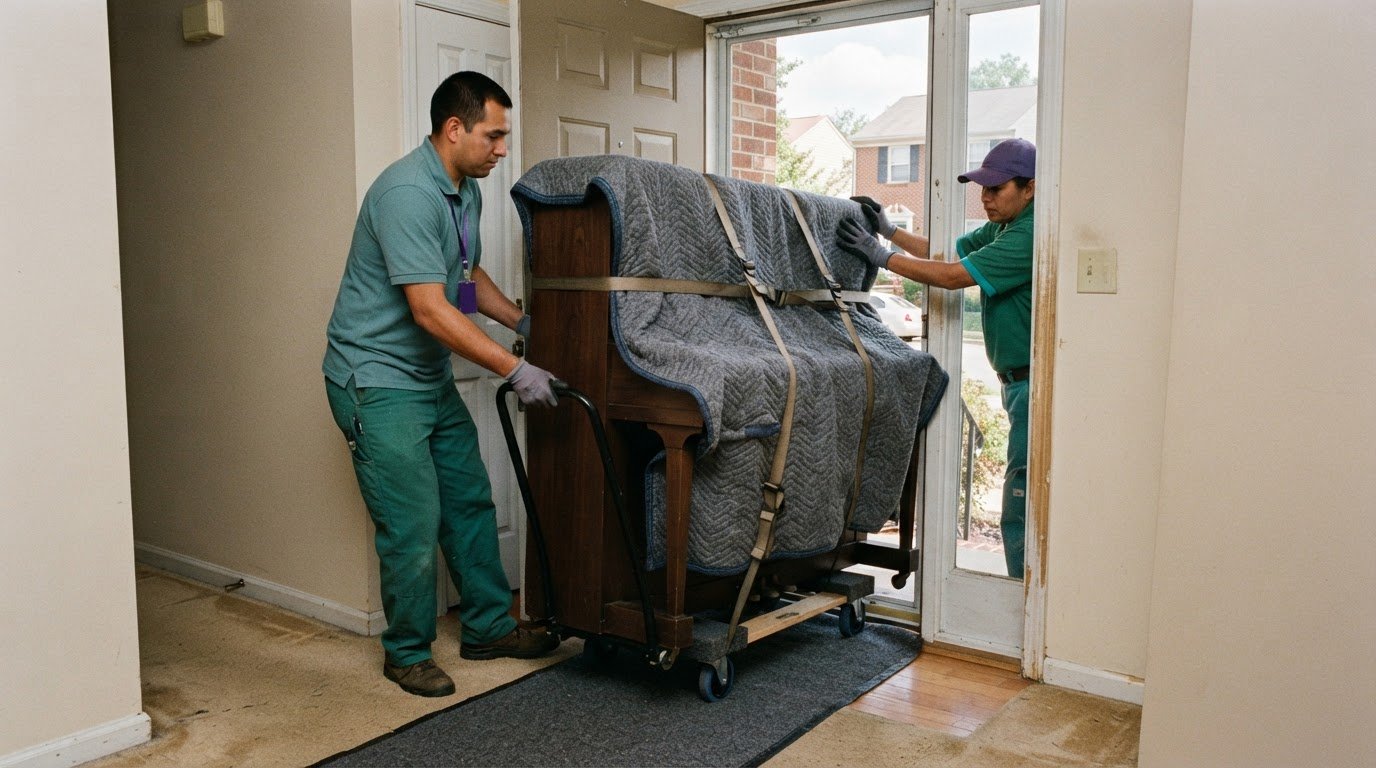
Keep an upright piano standing during a move whenever possible. It may need to tip briefly to pass through a narrow doorway, but return it upright as soon as there’s room. If you’re learning how to move a heavy upright piano without throwing it out of tune in Woodbridge, plan the route and use proper support instead of relying on the piano’s small built-in wheels.
It’s natural to worry about both the piano’s finish and its tuning. Temperature, humidity, and movement can affect string tension, so a careful move helps protect the instrument but can’t prevent every tuning change. This guide covers measuring tight passages, lifting and placing the piano on a dolly, protecting it in transit, and letting it adjust in its new home. After the move, allow 4-6 weeks for the piano to settle before arranging a tuning.
Key Takeaways
- Measure doorways, hallways, and staircases before moving day so you can spot tight turns and obstacles early.
- Use a piano dolly for distance instead of relying on the piano’s small built-in wheels, which are meant for minor positioning adjustments.
- Wrap and secure the instrument to help protect its finish, and use caster cups to keep the wheels from rolling and protect floors.
- Plan enough hands for controlled lifting, with people positioned to steady both ends of the piano.
- For stairs, narrow corridors, or a difficult loading route, professional moving help can reduce the strain of handling the piano.
Allowing a piano to adjust before tuning
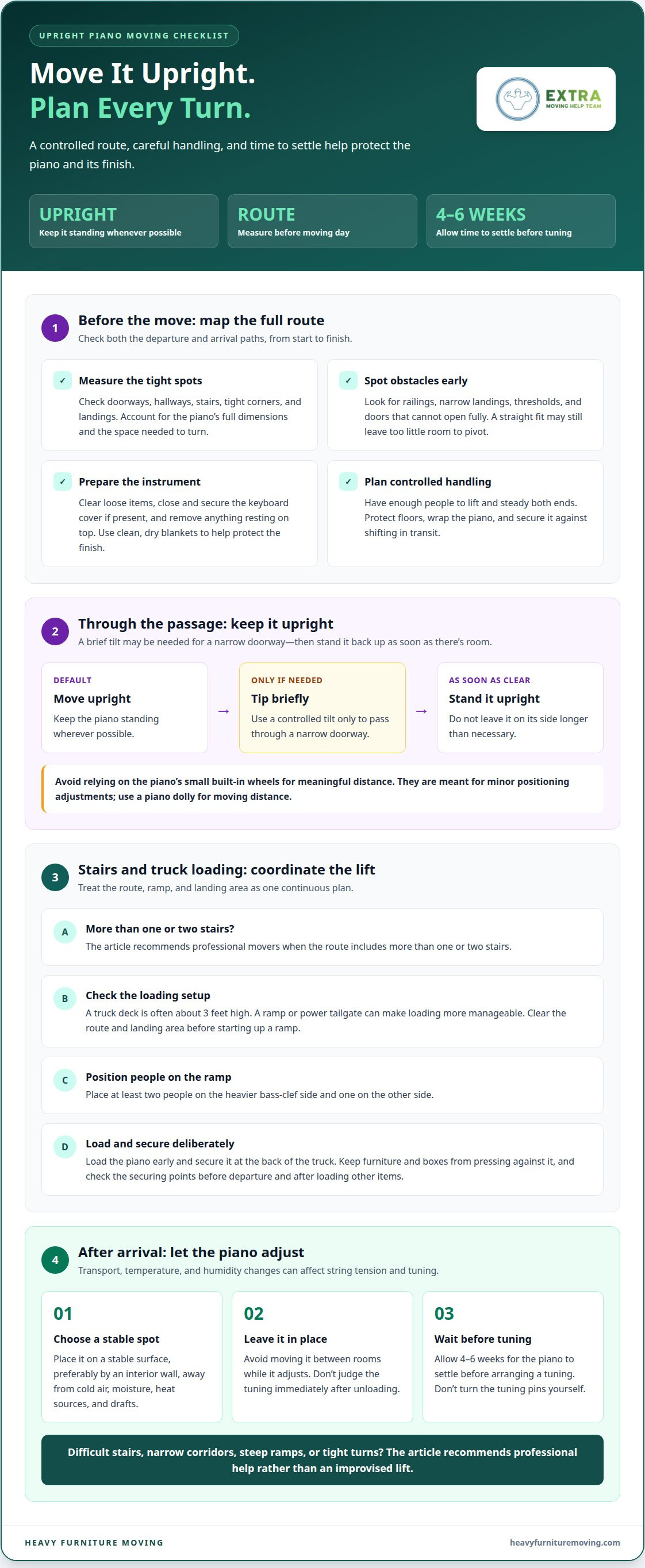
Yes, moving an upright piano can affect its tuning. Changes in temperature and humidity, as well as movement during transport, can affect string tension. Let the instrument settle in its new room before tuning.
-
Assess Tuning Stability After the Move
Place the piano on a stable surface in its new room, then give it time to adjust. Temperature and humidity changes can affect string tension, while the movement of transport can also shift tuning. Avoid judging the instrument immediately after unloading, especially after a long trip across the country. Note any obvious changes in pitch, but don’t turn the tuning pins yourself. DIY adjustments can add strain or make the piano harder to tune accurately.
- Keep the piano standing in a suitable spot. Choose an interior wall, away from cold air and moisture. Avoid placing the instrument near a heat source or in a drafty, damp area where conditions can fluctuate. Once positioned, leave it there while it adjusts. Moving it between rooms changes its surroundings and makes it harder to tell whether the tuning has settled.
-
Schedule Post-Move Tuning
Wait 4-6 weeks after the move before arranging a tuning. A piano should have at least a month to adjust to its new environment, and that settling period gives its strings time to respond to the room’s temperature and humidity. Keep the piano in its chosen location throughout this period. If the move involved a long transport or a noticeable change in climate, resist the urge to book a tuning immediately after arrival.
- Use the right upright piano tuning tools. A tuning lever turns the piano’s tuning pins, while an electronic tuning device measures pitch. These tools don’t make tuning simple: each pin needs controlled adjustment, and rough handling can affect stability. Don’t use household tools or force a resistant pin. If you’re unfamiliar with the piano’s internal parts or the feel of its pins, leave tuning to a technician.
- Combine electronic readings with careful listening. Hybrid electronic and aural tuning uses a device to measure pitch, then the ear to compare notes. For a two-string note, the left string is tuned to the electronic reading, then the right string is matched by ear. The device measures a single string, while listening helps reveal whether the paired strings sound together. If you don’t have tuning experience, leave this work to a trained piano technician.
Can You Put Pianos On Their Side?
An upright piano may need to tip briefly onto its side to pass through a narrow doorway, but return it to standing as soon as there’s room. Moving it without professional help risks losing control of its weight, damaging the piano or home, and affecting its tuning.
- Measure the route before moving day. Check doorways, hallways, stairs, and tight corners from start to finish. Account for the piano’s full dimensions and the space needed to turn it. Look for railings, narrow landings, thresholds, and doors that cannot open fully. A route may fit the piano straight ahead but leave too little clearance to pivot. Measure both the departure and arrival routes so you can plan a continuous path.
- Keep the piano upright wherever possible. If a narrow doorway leaves no alternative, tip the piano onto its side only for that passage, then stand it upright again as soon as there’s room. Moving it on its side may mean basic regulation work afterward. An upright piano is not a grand piano, which has a different shape and moving method. Keep the transition controlled, and don’t leave the instrument on its side longer than necessary.
- Plan stairs and truck loading as one operation. A piano should be moved by professional movers when the route includes more than one or two stairs. A truck deck is often about 3 feet high, so a ramp or power tailgate can make loading more manageable. On a ramp, position at least two people on the heavier bass-clef side and one on the other side. Don’t start up the ramp until the route and landing area are clear.
- Load and secure the piano deliberately. Load it early and secure it at the back of the truck. Keep furniture and boxes from pressing against it, and secure it against shifting during transport. Check the securing points before departure and after loading other items. If the route involves a steep ramp, difficult turns, or repeated repositioning, professional piano moving is safer than improvising.
- Choose DIY only for a simple, manageable route. A clear, level path with no stairs or tight turns is less complicated than a route with obstacles. Still, don’t roll the piano any meaningful distance on its built-in wheels. If you’re unsure you can control it through each turn, or it moves unpredictably, stop rather than forcing it. After arrival, let the piano settle before scheduling tuning; the recommended wait is three to six weeks.
If a stairway, narrow corridor, or truck ramp makes the plan difficult, consider help with a heavy piano move instead of attempting a risky lift.
Protective blankets, padding, and straps
Protect the piano’s finish and floors along the route before moving begins. Prepare the instrument, wrap it without obstructing safe handling, and secure it against shifting.
-
Prepare and Protect the Piano
Clear loose items from the piano and its path before wrapping. Check the exterior for delicate edges, hardware, and existing scratches so you can spot any new marks afterward. Close and secure the keyboard cover, if there is one, and remove anything resting on top. Keep blankets clean and dry, with no grit that could rub against the finish during the move.
-
Wrap It with Blankets and Padding
Cover the piano with clean moving blankets, paying close attention to corners and exposed edges. Add padding where it could contact a doorway, railing, or truck wall. Keep the covering smooth, since bunched folds can shift as the piano moves. Use straps to hold the blankets in place, positioned so they don’t press hard against delicate trim or hardware.
- Check the wrap before lifting. Walk around the piano and look for exposed surfaces, loose blanket edges, and straps that could catch on a doorway. Make sure the people carrying it can still find secure handholds. If the padding slips when gently pressed, adjust it before starting. Tuck any blanket trailing near the floor clear of the moving path so it cannot snag during a turn.
-
Protect Floors with Cups and Straps
Place caster cups under the piano’s wheels when it’s parked to help prevent rolling and protect the floor. During the move, don’t rely on the built-in wheels to carry it any distance. Protect the floor along the route, especially at thresholds and turns where the piano may pause. Use straps to stabilize the wrapped instrument during handling, not to drag it.
- Inspect the route and truck contact points. Before moving, clear grit and small objects from the floor that could scratch the piano or obstruct a controlled carry. Pad places where the wrapped instrument could touch a wall, doorframe, or truck interior. Recheck the straps after major repositioning, since movement can loosen or shift them. Keep padding between the piano and hard surfaces throughout transport.
- Remove protection carefully at the destination. Set the piano in its planned position before removing the blankets, then take off the straps without pulling them across the finish. Check the corners and panels for marks as you remove the padding. Once the piano is stationary, place caster cups under its wheels. Keep the wrapping on until the instrument is clear of the moving route to protect the finish from doorways and nearby furniture.
Using enough movers and appropriate footwear
Set the crew and lifting positions before the piano leaves its room. An acoustic piano commonly weighs well over 200 kilograms, so plan each handoff instead of relying on strength alone.
- Use enough people for the instrument and route. Even a straightforward acoustic piano move calls for at least four people. A grand piano often needs five or six. These instruments have different shapes, but both require coordinated handling and clear communication. Assign positions before lifting, and decide who will give movement cues. Don’t begin until the route is clear and everyone is ready to move together.
- Keep support at both ends. At least two people should lift a piano, with one at each end. This positioning helps control a small move and reduces the chance of the instrument tipping or becoming difficult to manage. Add enough people for the piano’s size and the route; two lifters are not a complete crew for every move. Keep hands clear of pinch points as the piano shifts.
- Choose footwear that supports steady footing. Wear secure shoes with a firm grip, and avoid loose footwear that could slip during a lift. Check the floor for rugs, cords, and debris before the crew takes position. A clear, dry path helps everyone keep their footing. Don’t rush across thresholds: pause, confirm everyone is balanced, then move together.
- Hire professional movers for obstacles. Stairs, narrow corridors, and tight turns make handling more difficult. Use professional piano movers when the route involves more than one or two stairs. Don’t try to manage a difficult staircase by reducing the crew or improvising a lift. Professionals can plan the handling sequence around the route and the instrument’s balance.
- Choose experience that matches piano handling. Piano moving involves more than shifting a heavy object. The crew must coordinate lifts, control turns, and keep the instrument steady through transitions. Piano technicians or piano stores can provide referrals when you’re looking for movers with piano experience. Before the move, have the route ready and identify where the piano must turn, pause, or change levels.
- Agree on cues before lifting. Choose one person to call each movement, such as lifting, turning, or setting down. This keeps everyone synchronized and avoids competing instructions near stairs or doorways. If someone loses footing or the piano shifts unexpectedly, stop and reset positions. Keep everyone assigned to the move in place until the piano is safely set down.
Upright piano lifting and dolly placement
For Woodbridge residents working out how to move a heavy upright piano without throwing it out of tune, control matters from the first lift to the final position. Use a suitable dolly, secure the piano properly, and move slowly across changes in surface.
- Position the dolly before lifting. Clear the floor around the piano, then bring the dolly close to its base. Use a rubber-wheel piano dolly or a four-wheeled furniture dolly on flat surfaces. The piano’s small built-in wheels are for minor adjustments, not moving it any distance. Align the dolly with the base before raising the piano.
- Lift carefully and seat the piano evenly. Coordinate the lift so the dolly can slide into place without catching the piano’s finish or lower structure. Keep the instrument balanced as it comes down. Confirm that its weight rests securely on the dolly before anyone lets go. If the dolly shifts or the piano tilts, pause and reset rather than trying to correct its position while rolling.
- Keep a steady hand on the piano. Once it’s on the dolly, maintain control so it can’t tip or roll away. Move at a walking pace, using small, deliberate movements across the floor. Watch the piano’s balance as the surface changes, and avoid sudden turns that could pull it off line. Prioritize control over speed.
- Move over bumps in stages. At a small bump, guide the front two wheels over it, then move the rear wheels across. Stop if the dolly catches or the piano begins to shift. Don’t jerk the instrument forward to clear a threshold. Even a minor bump can affect the dolly’s balance, so move slowly and keep the piano supported throughout.
- Use additional support for a particularly large piano. A particularly large piano may need two dollies, one at each end. Keep them aligned as the piano moves, and coordinate each push so one end doesn’t get ahead of the other. If the piano won’t sit securely or the route includes stairs, don’t force the dolly method. Careful handling helps avoid preventable strain, and a piano technician can address damage or regulation concerns after the move.
- Set the piano down before removing the dolly. Bring it to a complete stop at its destination, then coordinate the lift needed to remove the dolly. Keep the piano steady until its weight is fully supported on the floor. Check its final position before releasing your hold. If you’re planning how to move a heavy upright piano without throwing it out of tune in Woodbridge, get help with the controlled lifting and dolly placement through heavy lifting moving service.
Heavy Furniture Moving: Movers Near Me
Heavy Furniture Moving provides moving help for bulky items, including piano moves. If the piano’s weight, stairs, or tight turns make lifting difficult, our professional heavy-item moving service can take some of the physical strain off your household. We measure doorways, stairs, and item dimensions before the move, and wrap, blankets, and straps are included on every job. Plan the route and note any obstacles so the crew can prepare for the space and handling involved.
The same moving support can help with other demanding household tasks, including Exercise Equipment Moving, Sofa Hoisting, and in-home furniture moves. Choose help when the lift or route feels beyond what you can handle safely. For moving help, contact Heavy Furniture Moving or visit heavyfurnituremoving.com.
Make the Next Move with a Clear Plan
Before moving day, turn your route plan into a simple sequence: where the piano starts, where it needs to turn, and where it will sit afterward. This gives everyone a shared picture of the job and helps you decide whether you can manage each part. If you’re working out how to move a heavy upright piano without throwing it out of tune in Woodbridge, match the lifting plan to the actual space, not just the piano’s size.
When the route or heavy lifting feels like too much to manage alone, Heavy Furniture Moving offers Movers Near Me to help with moving needs. A conversation can help you take the next step with a clearer plan. Contact Heavy Furniture Moving to discuss your move. Take it one step at a time, and make a plan that feels manageable.
Frequently Asked Questions
How Do You Transport a Piano?
Transport an upright piano on a suitable dolly, protect it from contact, and keep it stable in the truck. Before loading, make sure the truck route and landing space are clear. Keep the piano upright during travel, position it securely, and prevent other cargo from pressing against it. At the destination, unload carefully and place it where it can remain while adjusting to the new room.
How do I save my floors from a piano?
Protect floors by placing caster cups beneath the piano’s wheels while it’s parked and laying protective material along the moving route. The built-in wheels are for small positioning adjustments, not rolling the piano across a room. Don’t drag it over wood, tile, or carpet. Clear grit and objects from the path first, since debris under a wheel or dolly can scratch the floor.
What equipment is needed to move a heavy upright piano safely?
Use a piano dolly or four-wheeled furniture dolly on flat surfaces, along with moving blankets and straps to protect and secure the instrument. A ramp or power tailgate can help when loading a truck. Keep the path clear and use enough people to control the piano as it’s lifted and positioned. The small built-in wheels aren’t a substitute for a dolly during relocation.
How many people are needed to move an upright piano, and how heavy are typical models?
Plan for at least four people, even for an easy acoustic piano move. Most household pianos weigh 400-600 pounds, so assign positions and agree on lifting cues before anyone takes hold. One person should guide the movement and call pauses or turns. If the route includes stairs or tight spaces, the challenge is not simply the piano’s weight, but keeping it controlled through each change in position.
How long should you wait to tune a piano after moving it?
Wait 4-6 weeks after the move before arranging a tuning. The piano needs time to adjust to its new room, where temperature and humidity can differ from its previous surroundings. Keep it in one location during that period rather than moving it between rooms. If the piano sounds different immediately after transport, note the change, but allow the settling period before scheduling routine tuning.
Frequently Asked Questions
Transport an upright piano on a suitable dolly, protect it from contact, and keep it stable in the truck. Before loading, make sure the truck route and landing space are clear. Keep the piano upright during travel, position it securely, and prevent other cargo from pressing against it. At the destination, unload carefully and place it where it can remain while adjusting to the new room.
Protect floors by placing caster cups beneath the piano’s wheels while it’s parked and laying protective material along the moving route. The built-in wheels are for small positioning adjustments, not rolling the piano across a room. Don’t drag it over wood, tile, or carpet. Clear grit and objects from the path first, since debris under a wheel or dolly can scratch the floor.
Use a piano dolly or four-wheeled furniture dolly on flat surfaces, along with moving blankets and straps to protect and secure the instrument. A ramp or power tailgate can help when loading a truck. Keep the path clear and use enough people to control the piano as it’s lifted and positioned. The small built-in wheels aren’t a substitute for a dolly during relocation.
Plan for at least four people, even for an easy acoustic piano move. Most household pianos weigh 400–600 pounds, so assign positions and agree on lifting cues before anyone takes hold. One person should guide the movement and call pauses or turns. If the route includes stairs or tight spaces, the challenge is not simply the piano’s weight, but keeping it controlled through each change in position.
Wait 4–6 weeks after the move before arranging a tuning. The piano needs time to adjust to its new room, where temperature and humidity can differ from its previous surroundings. Keep it in one location during that period rather than moving it between rooms. If the piano sounds different immediately after transport, note the change, but allow the settling period before scheduling routine tuning.