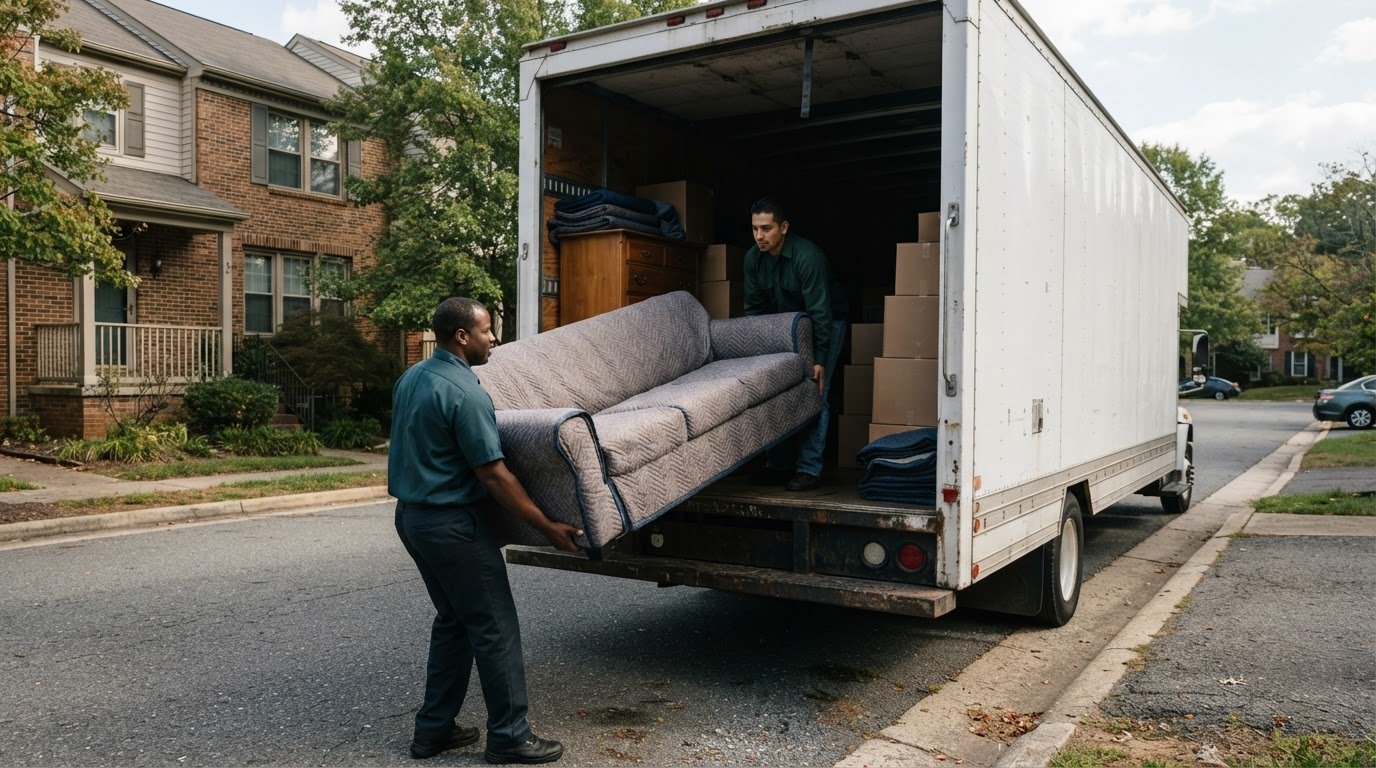
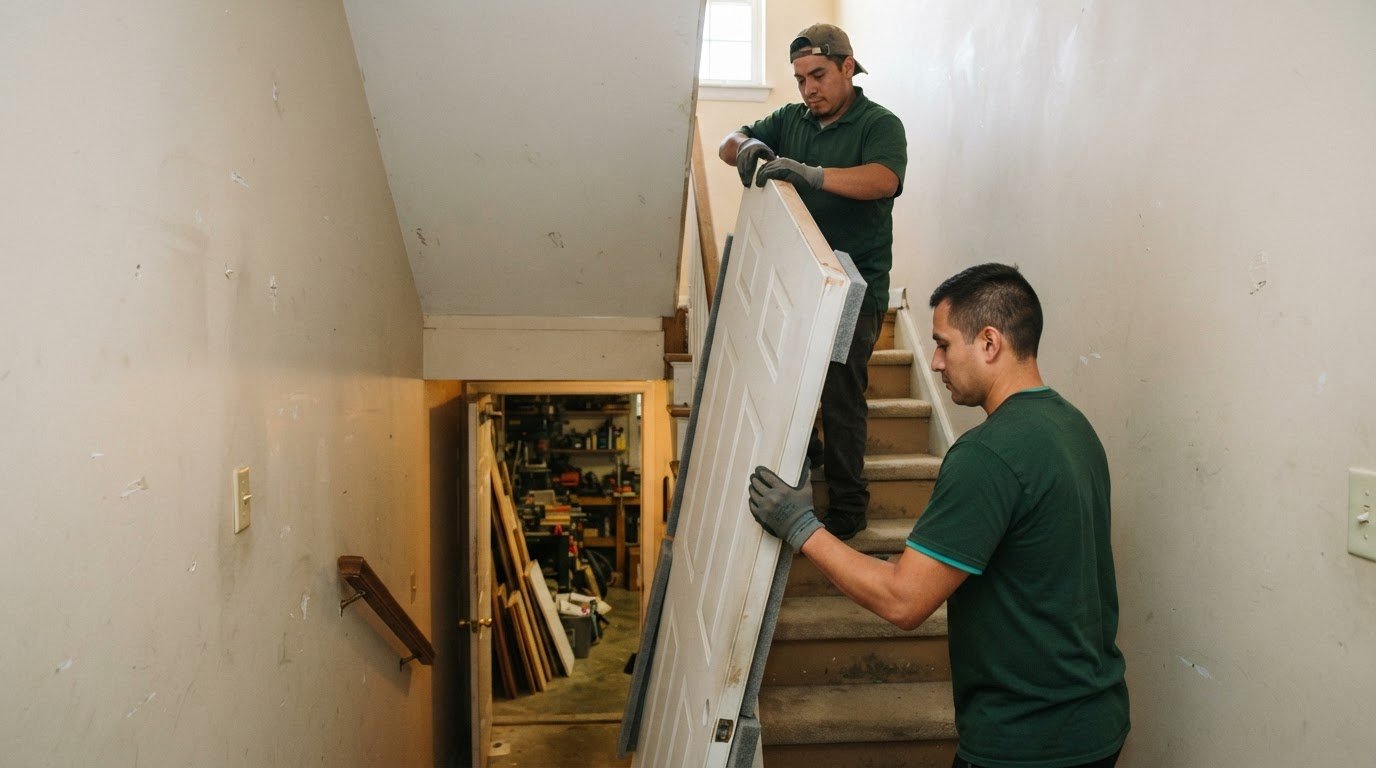
Moving Heavy Commercial Slicers and Prep Tables to Vienna Homes
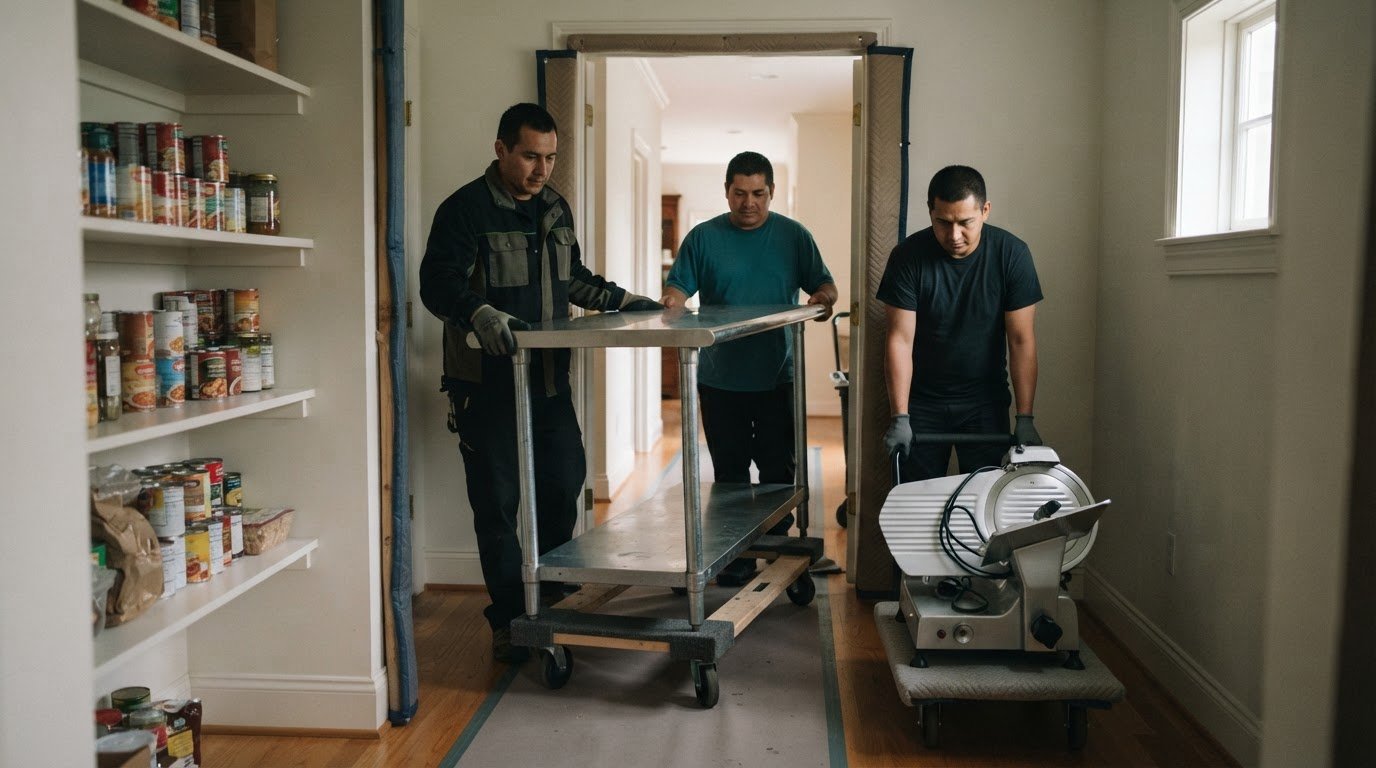
Moving a heavy commercial-grade meat slicer and prep table to a home pantry in Vienna starts with disconnecting the equipment before it travels. Qualified technicians should handle electrical, gas, or water connections according to the manufacturer’s instructions and applicable local codes. Plan a safe route that accounts for doorways, turns, ceiling clearance, and room to maneuver the load.
Moving heavy equipment through a home without scraping floors or striking overhead fixtures takes careful planning. Prepare the slicer and table, then protect the full path into the pantry.
Learn how to plan access, secure and transport commercial kitchen equipment, and protect floors and overhead spaces during a residential move. You’ll also find out which disconnections require a qualified technician and which details shape the moving plan.
Key Takeaways
- Plan the route around doorways, turns, stairs, ceiling clearance, and the space needed to maneuver lifting equipment.
- Have qualified technicians handle utility disconnections and reconnections, following manufacturer instructions and applicable local codes.
- Remove loose accessories and detachable parts where appropriate, then plan how to lift and secure each item.
- Use floor protection and watch for overhead obstacles to help prevent scrapes and impacts along the route.
- Secure the slicer and prep table with suitable padding and restraints so they stay stable during transport.
How Do Restaurant Equipment Movers Move Heavy Kitchen Equipment?
Start by documenting the slicer and prep table, then map a clear route from the home entrance to the pantry. Account for the equipment’s weight, access measurements, utility work, loading, and transport.
Access Measurements and Route Planning
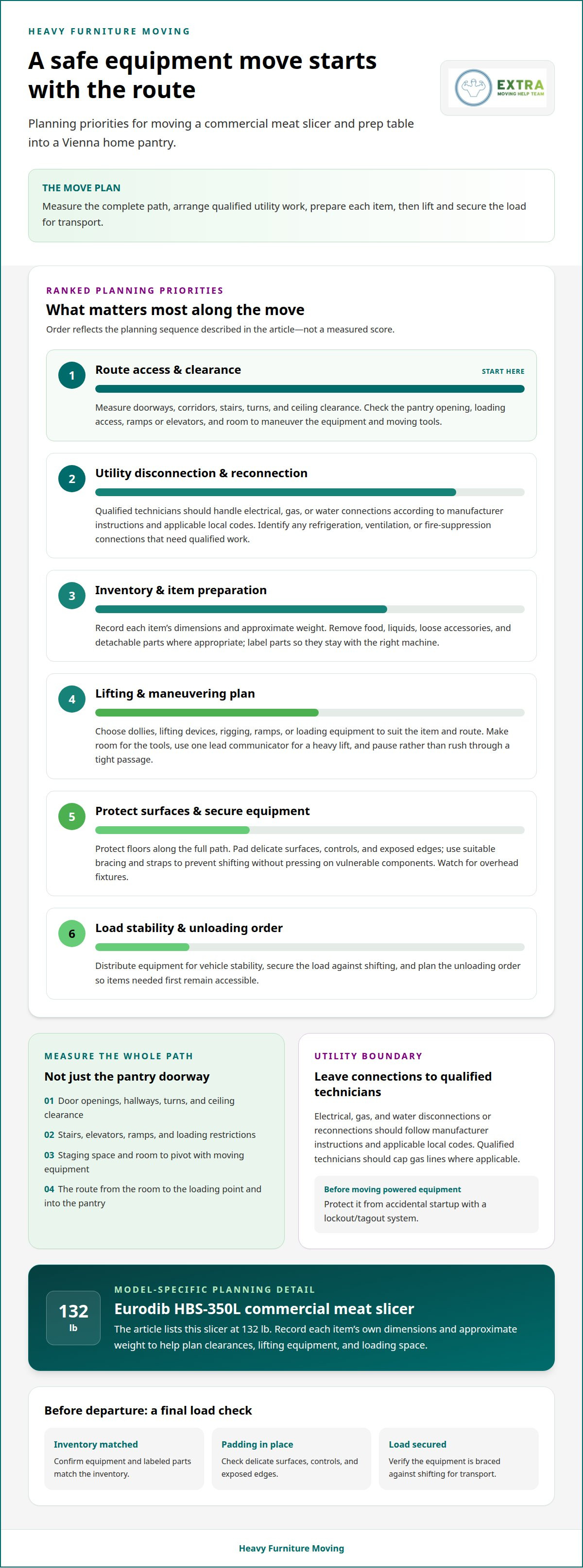
Measure every doorway, corridor, stairwell, and turn along the route, not just the pantry entrance. Record each item’s dimensions and approximate weight, then compare them with the tightest passage and ceiling clearance. A stainless prep table may fit through a doorway but still need room to pivot without hitting trim or an overhead fixture.
Include the path from the room to the loading point. Note elevator capacity, stairs, loading access, ramps, and space for dollies or lifting equipment. At the destination, check the pantry opening and turning space too. The route needs enough clearance for both the equipment and the tools used to move it.
- Measure door openings, hallways, turns, and ceiling clearances.
- Identify stairs, elevators, ramps, and loading restrictions.
- Plan where the crew can safely maneuver and stage each item.
For a Vienna, VA move, provide dimensions, approximate weight, utility connections, and route restrictions. Review insurance terms in the written move agreement, and don’t infer coverage from the equipment’s size or access details.
Mover Selection and Equipment Risks
Which Vienna, VA movers handle heavy commercial kitchen equipment? Look for residential heavy-item movers who plan loading and transport around the equipment’s dimensions and access limits. The move plan should also identify whether gas, electrical, water, refrigeration, ventilation, or fire-suppression connections require qualified technicians.
Moving a commercial meat slicer without professional movers can risk injury, equipment damage, or damage to floors, walls, and doorframes. Its weight and shape can make it difficult to control through a narrow turn. Pause rather than risk injury while moving heavy equipment.
Before moving, remove food, liquids, loose accessories, and detachable parts where appropriate. Clean contact surfaces so residue won’t complicate handling. Protect powered equipment from accidental startup with a lockout/tagout system. Qualified technicians should disconnect relevant utilities and cap gas lines where applicable.
Plan transport at the loading point, too. Use suitable padding, straps, and bracing to keep equipment from shifting. Arrange and secure loads for vehicle stability, and plan the unloading order so items needed first remain accessible. If a doorway blocks the route, assess whether another route works before considering building changes or contractor coordination.
Moving commercial slicers and food preparation equipment
Commercial kitchen equipment needs a move plan suited to each item’s weight, shape, and delicate parts. A slicer, stainless prep table, and detachable accessories may each need different handling and loading steps.
Equipment Inventory and Measurements
Start with an inventory that names each piece, records its dimensions, and notes its approximate weight when available. Include the slicer, prep table, trays, racks, guards, and removable accessories. For scale, the Eurodib HBS-350L commercial meat slicer weighs 132 lb. A model-specific record helps movers plan lifting equipment, clearances, and loading space.
Separate removable components from parts that must stay attached. Record how each piece fits together, and label small parts so they stay with the right machine. Before moving day, remove food, liquids, and loose accessories where appropriate. This preparation reduces shifting and keeps the inventory useful during unloading.
Specialized Lifting and Transport
The equipment’s dimensions and route determine whether dollies, lifting devices, rigging, ramps, or loading equipment are needed. Make room for those tools, not just the machine. For example, a narrow turn can limit a dolly’s turning radius even when the doorway is wide enough.
For a heavy lift, use a coordinated team with one lead communicator. Avoid twisting while carrying, and pause rather than rush through a tight passage. During loading, distribute equipment across the truck bed for stability and plan the unloading order around access at the destination.
Padding and Securing Equipment
Protect delicate surfaces, controls, and exposed edges with suitable padding before moving each piece. Use bracing and straps to prevent shifting during transport. Restraints should steady the load without pressing on vulnerable components. Even a stainless surface can be scratched by loose hardware or a neighboring item.
Keep removable parts in labeled containers, separate from the heavy equipment. Mark each container with the machine name and contents, such as slicer guards or prep-table racks. This simple system helps prevent misplaced pieces and keeps unloading organized.
Before departure, compare the inventory with the loaded equipment and confirm that each piece is padded and secured. A load weighing more than 300 kilograms can make a move a substantial task, so route, lifting, and truck stability all matter. For help planning a demanding residential lift, heavy lifting moving service can be a practical next step.
Moving commercial food slicers and prep tables
Moving a heavy commercial-grade meat slicer and prep table to a home pantry in Vienna calls for a plan tailored to each item. The slicer and table may have different shapes, removable parts, and handling needs, even when they’re going to the same destination.
Start by clearing food, liquids, trays, racks, and loose accessories where appropriate. Keep detachable pieces grouped with their machine. Label containers clearly, for example, “slicer accessories” or “prep-table shelf,” so parts don’t get mixed up during loading or unpacking.
Protect the slicer’s exposed cutting area and controls from contact with other cargo. Don’t place loose parts against the machine, and keep cords clear of wheels and lifting equipment. Choose a lifting approach suited to the slicer’s dimensions, weight, and route. A coordinated team can move it with one lead communicator calling turns and pauses.
Prepare the prep table as a separate load. Remove shelves or other parts only if they’re designed to detach, then secure them separately. Protect the stainless surface and edges from rubbing against straps, hardware, or nearby equipment. Because a broad tabletop can catch on a doorway or wall, guide it steadily through turns.
Before moving, have qualified technicians disconnect applicable electrical, gas, or water connections according to the manufacturer’s instructions and applicable local codes. Movers should never pull an appliance by its cord or use a connection as a handhold. Keeping utility work separate from lifting helps protect the machine and its connections.
At loading, position each item for stability and secure it with suitable padding, straps, and bracing. Prevent the slicer from shifting or contacting other cargo during transport. Consider unloading order as well. If the prep table must come out first to clear the pantry entrance, load it for access while maintaining a stable arrangement in the vehicle.
When moving a heavy commercial-grade meat slicer and prep table to a home pantry in Vienna, plan the final placement as carefully as the loading. Clear the pantry route, guide each piece into position, and keep accessories together. After placement, qualified technicians should reconnect equipment according to the manufacturer’s specifications and applicable local codes, then test it before use.
Plan food preparation separately from preparing the slicer and prep table. Stopping freezer restocking about two weeks before the move gives you time to use the remaining food. Moving crews won’t handle food, so clear the freezer before the move. Don’t expect the crew to pack or transport freezer contents.
As moving day approaches, track what remains and plan meals around using it up. Clear the freezer before the crew arrives so food isn’t left among the equipment or other household items. This keeps the crew’s work focused and avoids confusion about what should be carried. Coordinate this task with kitchen preparations, but keep it separate from technicians’ utility work and the movers’ handling of the slicer and prep table.
Protecting floors and watching for overhead obstacles
Protect the full floor route, from the entry point to the pantry. Floor-protection mats or plywood boards can help protect delicate flooring during a commercial kitchen equipment move. Place them before moving begins, including at turns where machines may need extra maneuvering room.
Choose protection suited to the surface and route. A hardwood hallway, tiled kitchen, and carpeted room each present different conditions. Keep mats and boards flat, secure, and aligned so equipment wheels or lifting devices don’t catch their edges. Reposition them as the move progresses.
Before loading, clear the planned path of rugs, boxes, cords, and loose objects. Remove obstacles that could snag a dolly or force a sudden stop. A clear route helps movers guide a slicer or prep table precisely, without last-minute adjustments beside a wall or cabinet.
Look up as well as ahead. Check for ceiling fixtures, hanging lights, door closers, low beams, sprinkler heads, and open cabinet doors along the route. A tall or tilted appliance can strike an overhead obstacle even when its base fits through a doorway. Check available clearance before entering each tight section.
Point out low-clearance spots to the moving team before the first lift. A kitchen doorway, pantry threshold, or stair landing can change how a load must be guided. Have one person watch overhead clearance while the team moves carefully through the opening. Stop if the equipment approaches a fixture or ceiling edge.
Protect corners and nearby surfaces, too. A stainless prep table can scrape a doorframe when its wide edge swings through a turn. Padding at vulnerable contact points can reduce direct impact, while floor coverings help protect surfaces below. Move steadily and don’t drag equipment.
During unloading, keep the protected path in place until each piece reaches its intended position. Don’t remove floor coverings just because the equipment has entered the home; the final turn into a pantry may still require careful maneuvering. Keep loose accessories and tools out of the route so the team can focus on the load.
A restaurant kitchen may have open working space, while a Vienna home pantry has close walls, fixtures, and furniture. That difference makes a route walk-through valuable before moving. Identify floor transitions and overhead obstructions, then maintain protection from the loading access through final placement.
How should a commercial meat slicer be disconnected, secured, and transported?
Disconnect and prepare the slicer before anyone starts lifting. Follow the manufacturer’s instructions and applicable local codes for disconnection and reconnection. Qualified technicians should handle electrical, gas, or water connections. This keeps utility work separate from the moving crew’s lifting and transport tasks.
Use a clear sequence. Keep the machine off during preparation and prevent accidental startup with a lockout/tagout system. Remove food, liquids, and detachable parts where appropriate. A qualified technician should disconnect connected utilities. If the equipment needs draining, include that in the preparation plan.
- Record the equipment. Note its model, dimensions, approximate weight, and removable components. These details help match lifting and transport plans to the actual slicer.
- Prepare the machine. Remove loose accessories and detachable pieces where appropriate. Keep parts together and label them with the slicer name.
- Arrange disconnection. Have a qualified technician handle electrical, gas, or water connections as applicable. Follow manufacturer instructions and local codes.
- Protect the equipment. Pad exposed surfaces and vulnerable components. Keep padding clear of parts that need to remain accessible for handling.
- Secure the load. Use suitable straps and bracing to prevent movement during transport. Check the restraints before departure and after loading.
Keep the slicer stable while lifting. The team should move in coordination, with one lead communicator calling each change in direction. Avoid twisting while carrying, and pause if a doorway or turn makes the load difficult to control. A short delay is better than risking injury.
During loading, position the slicer so it won’t shift or strike other cargo. Put padding between the machine and nearby equipment, then secure it with straps and bracing. Federal Motor Carrier Safety Administration cargo-securement rules are intended to prevent cargo from shifting, falling, or becoming unstable during commercial transportation.
Plan the unloading order before the truck leaves. Keep the slicer accessible if it needs to come off before other items. At the Vienna home, guide it along the prepared route, then place it without dragging it across the floor. Keep labeled removable parts together for reassembly.
After placement, have qualified technicians reconnect the slicer and reinstall it according to manufacturer specifications and applicable local codes. Test the equipment before use. For help with the heavy lifting and transport portion of a home move, get help with heavy equipment moving.
The recommended preparation is to remove detachable parts, drain the equipment, and have qualified technicians disconnect its water, gas, and electrical connections before the move.
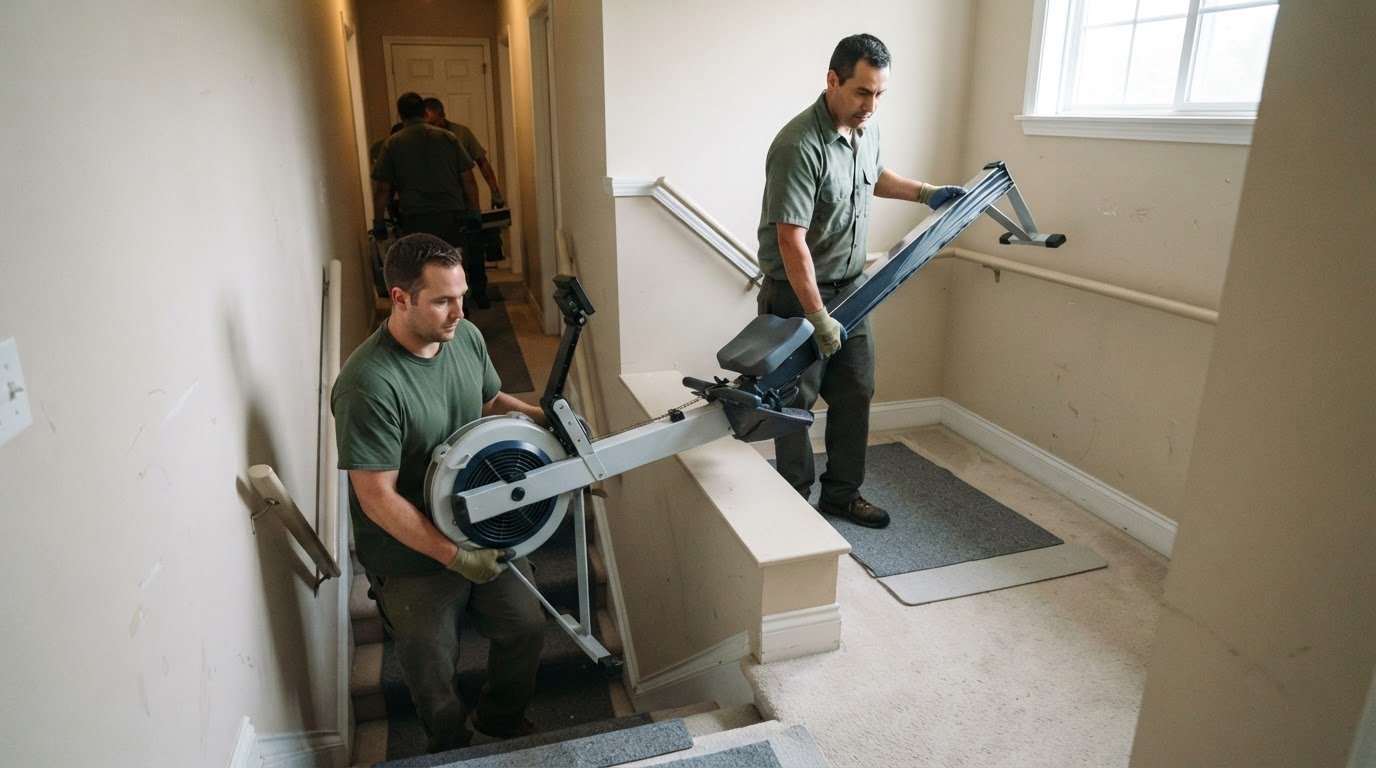
Heavy Furniture Moving: Exercise Equipment Moving
Heavy Furniture Moving handles demanding residential lifts, including exercise equipment moved through tight home spaces. Turn to the team when bulky items need careful handling or a home move includes several heavy pieces alongside kitchen equipment. Planning the route and coordinating the lift helps keep the move organized from entryway to destination.
For a commercial slicer, qualified technicians must handle utility disconnection and reconnection. The moving team handles the physical move, including lifting, protective padding, and secure transport. Keep these tasks separate so each is handled appropriately.
Planning a heavy home move in Vienna? Contact Heavy Furniture Moving to discuss your move.
Plan the Next Move with Confidence
Moving a heavy commercial-grade meat slicer and prep table to a home pantry in Vienna is an opportunity to plan how bulky equipment will fit into your household routine. Think beyond the delivery route: consider where each piece will sit, how you’ll access it, and how much space you need around it for everyday use. That gives the move a clear destination, not just a place to unload.
Heavy Furniture Moving offers Movers Near Me, Exercise Equipment Moving, and Sofa Hoisting for demanding residential moves. Share your equipment and destination details to discuss the right next step for your move.
Contact Heavy Furniture Moving to plan your move. A solid plan can make a challenging lift feel more manageable.
Frequently Asked Questions
Do restaurant appliances need to be disconnected before moving?
Yes. Disconnect appliances from utilities before moving them. A qualified technician should handle electrical, gas, and water connections, as applicable, following manufacturer instructions and local codes. For a slicer with a plug, keep the disconnected cord secured away from the blade area and moving equipment. Gas lines need proper disconnection and capping, while refrigeration systems require qualified technicians for refrigerant work.
How much do commercial meat slicers and stainless steel prep tables weigh?
Weights vary by model and configuration. For one specific example, the Eurodib HBS-350L commercial meat slicer weighs 132 lb. A prep table’s weight depends on its size and fitted components, so its model information or a direct measurement is more useful than a broad estimate. Include removable shelves or attachments when assessing the total load to be handled and transported.
What equipment and number of movers are needed to safely move a heavy meat slicer?
The required crew and equipment depend on the slicer’s weight, dimensions, route, and available maneuvering space. A moving plan may include a dolly or lifting device, with padding and restraints for transport. The team needs a lead communicator to coordinate changes in direction. Narrow turns or stairs can affect the approach, so account for the full route, not just the item’s weight.
How do you safely move a stainless steel prep table through narrow doors and hallways?
Measure the table and the tightest openings, then plan how to turn it before lifting. Remove shelves or other parts only if they’re designed to detach, and keep them together for delivery. Protect the stainless surface and edges from doorframe contact. At a narrow turn, move slowly with one person calling direction changes; don’t twist while carrying or force the table through.
Will a commercial meat slicer fit in a home pantry, including doorway and floor-load requirements?
Whether the slicer fits depends on its dimensions, doorway width, turning room, and pantry clearance. Measure the route and account for the room needed to guide the item, not just its final position. Floor-load capacity is a separate building question; the slicer’s weight alone doesn’t establish whether a particular floor can support it. A qualified building professional can assess the floor structure for the planned placement.
Frequently Asked Questions
Yes. Disconnect appliances from utilities before moving them. A qualified technician should handle electrical, gas, and water connections, as applicable, following manufacturer instructions and local codes. For a slicer with a plug, keep the disconnected cord secured away from the blade area and moving equipment. Gas lines need proper disconnection and capping, while refrigeration systems require qualified technicians for refrigerant work.
Weights vary by model and configuration. For one specific example, the Eurodib HBS-350L commercial meat slicer weighs 132 lb. A prep table’s weight depends on its size and fitted components, so its model information or a direct measurement is more useful than a broad estimate. Include removable shelves or attachments when assessing the total load to be handled and transported.
The required crew and equipment depend on the slicer’s weight, dimensions, route, and available maneuvering space. A moving plan may include a dolly or lifting device, with padding and restraints for transport. The team needs a lead communicator to coordinate changes in direction. Narrow turns or stairs can affect the approach, so account for the full route, not just the item’s weight.
Measure the table and the tightest openings, then plan how to turn it before lifting. Remove shelves or other parts only if they’re designed to detach, and keep them together for delivery. Protect the stainless surface and edges from doorframe contact. At a narrow turn, move slowly with one person calling direction changes; don’t twist while carrying or force the table through.
Whether the slicer fits depends on its dimensions, doorway width, turning room, and pantry clearance. Measure the route and account for the room needed to guide the item, not just its final position. Floor-load capacity is a separate building question; the slicer’s weight alone doesn’t establish whether a particular floor can support it. A qualified building professional can assess the floor structure for the planned placement.