How to Move a Heavy Upright Freezer in Chantilly Without Leaking Coolant
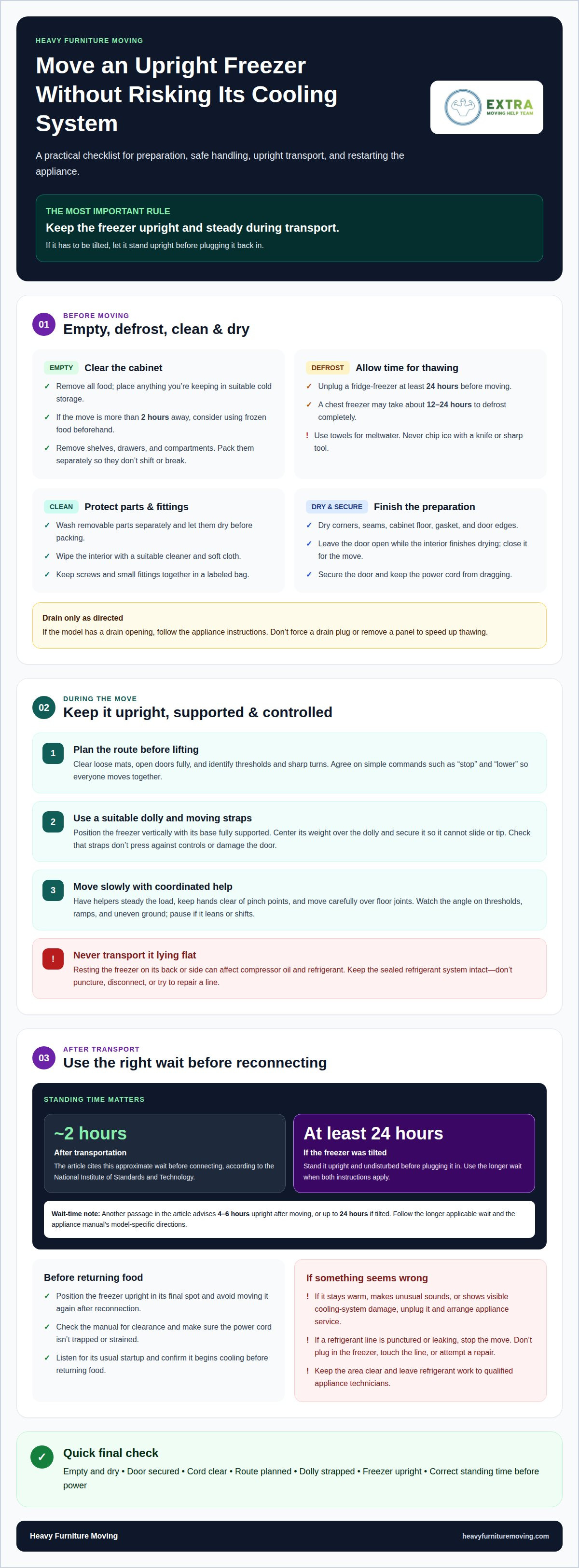
Keeping an upright freezer upright is the key to protecting its cooling system during a move. If you’re planning how to move a heavy upright freezer without leaking coolant in Chantilly, empty it, unplug it at least 24 hours ahead to defrost, and keep it vertical during transport. If it must be tilted, let it stand upright for 24 hours before plugging it back in.
Moving a bulky freezer means managing heavy lifting, meltwater, and the risk of damaging the appliance. With careful preparation and handling, you can make the move more manageable.
This guide explains how to move a heavy upright freezer without leaking coolant in Chantilly. You’ll learn how to empty, defrost, clean, and dry it, secure it for transport, and prepare it to run again. You’ll also find out when moving help can make a difficult route or lift easier to manage.
Key Takeaways
- Clear out food and removable parts before moving, then clean and dry the interior to help prevent spills and odors.
- Keep the freezer upright in transit to protect its cooling system, and let it stand before reconnecting it.
- Plan the route through doorways and tight spaces before lifting, so you can avoid sudden twists and scrapes.
- Use a suitable dolly and coordinated help to keep the freezer steady from pickup to placement.
- For a difficult lift or a complicated path, Heavy Furniture Moving can help with local moving support.
Emptying, defrosting, cleaning, and drying the freezer
Empty the freezer, then defrost, clean, and dry it thoroughly. For an upright fridge-freezer, prepare ahead so water and loose parts don’t complicate the move.
-
Empty and Defrost the Freezer
Remove every food item and place anything you’re keeping in suitable cold storage. If the move is more than two hours away, consider using frozen food beforehand. Unplug a fridge-freezer at least 24 hours before moving so it can defrost. Put towels around the base and check for meltwater as ice loosens. Don’t chip ice with a knife or sharp tool; that can damage the interior or cooling components.
-
Prepare and Secure the Freezer
Remove shelves, drawers, and compartments before moving the appliance. They can shift, strike the interior, or break in transit. Wash removable parts separately and let them dry before packing. Wipe the interior with a suitable cleaner and a soft cloth, then dry the corners, seams, and cabinet floor with a clean towel. Before lifting, secure the door and keep the power cord from dragging.
- Let the freezer defrost completely before carrying it. A thawed interior is easier to clean, and standing water won’t slosh across the floor or leak along the route. Keep towels nearby and replace them as they get wet. If your model has a drain opening, follow the appliance instructions for draining collected water. Don’t force a drain plug or remove a panel to speed up thawing.
- Check the cabinet and the floor beneath it for moisture. Dry the gasket, door edges, and interior corners, where water can collect. Leave the door open while the interior finishes drying, then close it for the move. Pack shelves and drawers separately to prevent rattling. Keep screws and small fittings together in a labeled bag instead of leaving them loose inside the freezer.
- If a refrigerant line is punctured or leaking, stop the move and don’t plug in the freezer. Avoid touching the damaged line or attempting a repair. Keep the area clear and arrange qualified appliance service before using the unit again. Meltwater is different from a punctured line: wiping the cabinet won’t repair damage to the cooling system.
For a chest freezer, complete defrosting takes about 12 to 24 hours. Remove shelves, drawers, and compartments before moving a fridge-freezer to prevent loose parts becoming dangerous in transit.
Keeping the freezer upright to protect its cooling system
Keep the freezer upright during transport to reduce strain on its cooling system. If it tilts, let it stand upright before reconnecting it.
- Position the freezer vertically on its dolly, with the base fully supported. Don’t let it rest on its back or side, as those positions can affect compressor oil and refrigerant. Secure the appliance so it can’t slide or tip during loading. Keeping it upright and steady matters more than rushing.
- Watch the freezer’s angle while moving across thresholds, ramps, or uneven ground. Use controlled movements and pause if the load starts leaning. A fridge-freezer that tilts during transport should stand upright for at least 24 hours before plugging it in. Once upright, leave it undisturbed so the cooling system can settle.
- Before connecting the unit to a power source, let it stand for approximately 2 hours after transportation, according to the National Institute of Standards and Technology. If the freezer was tilted, allow at least 24 hours upright before plugging it in. Follow the longer wait when both instructions apply, and use the appliance manual for model-specific directions.
- Keep the sealed refrigerant system intact during an ordinary household move. Transporting an intact freezer is different from opening or servicing its refrigerant circuit. Don’t puncture, disconnect, or try to repair a refrigerant line. This guidance doesn’t establish Virginia legal permissions or specific EPA rules for refrigerant handling. Leave refrigerant work to qualified appliance technicians.
- After the appropriate waiting period, plug in the freezer and listen for its usual startup. Check that it begins cooling before returning food. Watch for unusual sounds, a persistently warm interior, or visible damage around the cooling system. If it doesn’t cool as expected, unplug it and arrange appliance service rather than opening panels or handling refrigerant.
- Keep the unit upright while positioning it in its final spot, then avoid moving it again after reconnection. Leave space around it as directed by its manual, and check that the power cord isn’t trapped or strained. If controlling a heavy appliance through the final lift is the difficult part, moving help for heavy items can make that step easier to manage.
A fridge-freezer should not be transported lying flat because tilting can affect the compressor oil and refrigerant. After moving, let it settle upright for 4-6 hours before plugging it in, or up to 24 hours if it was tilted.
Moving a freezer safely with helpers or professional movers
Plan each lift, turn, and loading step before moving the freezer. Coordinate with enough help to keep it steady and upright.
- Clear the route to the truck before lifting. Remove loose mats, open doors fully, and note thresholds and sharp turns. Agree on simple commands, such as “stop” and “lower,” so everyone moves together. Keep hands clear of pinch points, and pause if the appliance shifts or leans.
-
Use Appliance Dollies and Moving Straps
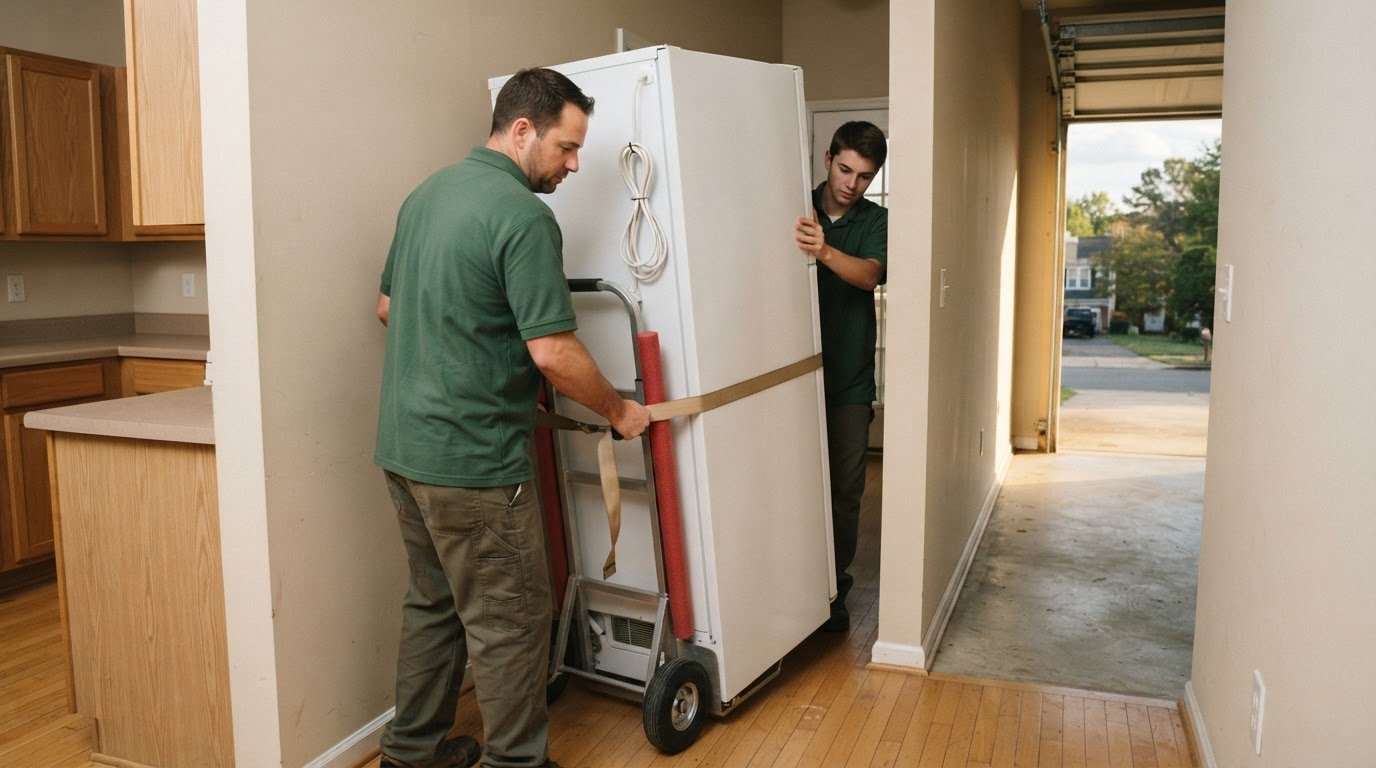
Secure the freezer to an appliance dolly with moving straps before rolling. Center its weight over the dolly, then check that straps hold the cabinet without pressing against controls or damaging the door. Have at least one helper steady a chest freezer while positioning it on the dolly. Keep the load upright and move slowly over floor joints.
Don’t rely on a loose grip to control a heavy appliance. Check the dolly wheels and route before moving, and stop if a wheel catches. Use straps to prevent the freezer from shifting, not to drag it across the floor.
-
Move Around Stairs and Corners
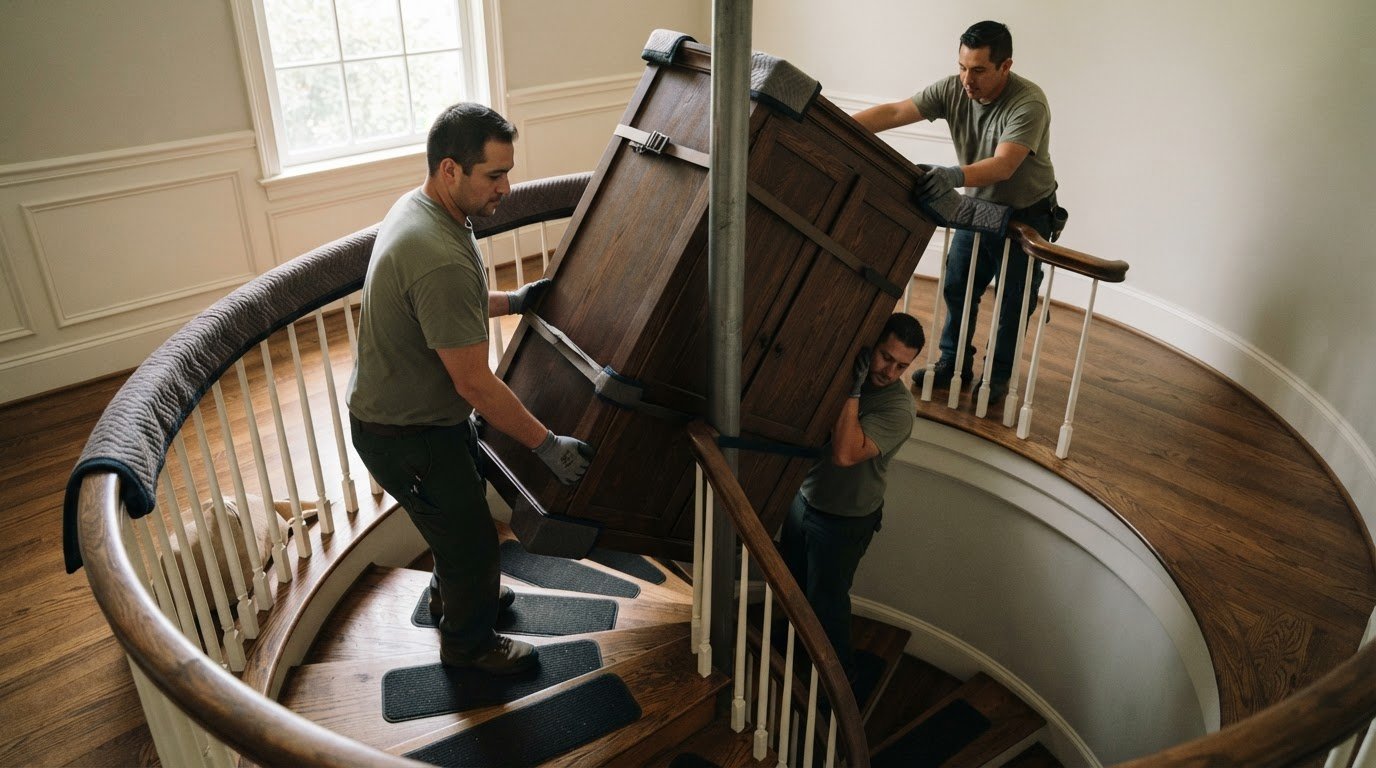
For stairs, use a stair-climbing appliance dolly rather than a flat dolly. Position helpers to control the load and move one deliberate step at a time. At corners, pause before turning and check that the freezer, dolly, and helpers have room to pivot without hitting walls or doorframes.
Don’t twist while supporting the load. If the route narrows or the dolly loses stable contact, stop and reposition before continuing.
-
Secure the Freezer in the Truck
Load the freezer upright and secure it against a truck wall so it can’t slide during the drive. Use straps to hold the cabinet in place without pulling it out of vertical alignment. Keep other items from pressing against the door, controls, or cooling components.
Before driving, gently test the restraint by hand. Recheck it after loading nearby items, as shifting cargo can loosen the setup.
-
Coordinate Helpers or Professional Movers
Move a fridge-freezer with at least two people, coordinating each lift and turn. One person can guide the route and call out thresholds while the others control the appliance. On a truck ramp, one person should push from behind while another pulls from the front. Use clear commands and stop together if the load shifts.
If stairs, tight turns, or loading make the freezer difficult to control, arrange moving help instead of attempting an unstable lift alone.
Moving through doorways, stairs, and tight spaces
Map the route before lifting, then compare the freezer’s dimensions with each opening. Planning ahead helps prevent scraping walls or forcing the cabinet sideways.
-
Measure Doorways and Hallways
Measure the freezer’s height, width, and depth, including handles and protruding hinges. Measure doorways and hallways at their narrowest points, accounting for trim and open doors. Compare the measurements before moving. Check ceiling clearance, especially where a hallway meets a low doorway or sloped ceiling.
Walk the entire route and note corners, thresholds, and changes in flooring. A wide doorway may lead to a hallway without enough room to turn. Remove movable obstacles and secure doors open so they don’t swing into the load.
-
Navigate Stairs and Tight Spaces
When planning how to move a heavy upright freezer without leaking coolant in Chantilly, identify every turn before reaching a stairwell or narrow landing. Keep the appliance upright, move in controlled increments, and pause where the route changes direction. Don’t twist the cabinet sharply to squeeze around a corner. Reposition the dolly and helpers instead.
For a chest freezer on stairs, use a stair-climbing appliance dolly rather than a flat dolly. Check each stair edge and landing before proceeding. If the freezer blocks a turn or the load becomes unstable, stop and reassess the route instead of pushing through.
- Test the tightest turn with the unloaded dolly before bringing the freezer through. Note where the front edge must clear a wall before the back edge can pivot. Keep hands away from gaps between the cabinet and frame. A spotter can watch the clearance and call out potential contact.
- Protect floors with coverings secured so they won’t bunch under the dolly wheels. First remove rugs, cords, and loose mats. Approach raised thresholds squarely and move slowly, keeping the freezer stable. Don’t use a doorway edge as a fulcrum or push the cabinet against a wall for leverage.
- Recheck the route if the freezer needs to change orientation to clear an opening. A small dolly adjustment may create space without laying the appliance flat. Keep the cabinet clear of doorjambs. If the route requires an uncontrolled tilt, choose another path or get help.
- After each doorway, pause in a clear area and check the cabinet for new dents or scrapes. Make sure the straps are secure and the freezer is upright before continuing. If you’re planning how to move a heavy upright freezer without leaking coolant in Chantilly, include the destination in your route check and make sure there’s a clear path to the placement spot.
Keeping the freezer upright
Keep the cabinet vertical from pickup through placement. A steady position helps protect the cooling system from unnecessary strain.
- Set the freezer upright on a dolly, with its base evenly supported. Don’t let the cabinet rest on its back or side during the move. Keep the dolly aligned under the appliance rather than letting one edge carry the weight. If the load starts to lean, stop and reset it before rolling.
- Tilt the freezer only as much as needed to cross a threshold or adjust the dolly. A pronounced angle can allow compressor oil to move into refrigerant lines and disrupt the system’s normal balance. Don’t lean the freezer back for an extended carry just because it seems easier to grip. Choose a route that allows you to handle it upright.
- Keep the freezer’s upper edge close to vertical as you roll over uneven ground. Move slowly across thresholds and have a helper watch the cabinet’s angle. Avoid sharp jolts, sudden drops, or twisting the dolly while the freezer leans. Keep each movement controlled instead of forcing the load through an obstacle.
- Secure the upright cabinet against a truck wall before driving. Straps should hold it steady without pulling it sideways or pressing hard on controls. Prevent boxes and other cargo from shifting into the freezer during the trip. Check the setup after loading nearby items, since a newly placed box can push the cabinet off balance.
- After unloading, place the freezer upright on a level surface and leave it settled before plugging it in. If transport involved tilting, allow it to stand upright for at least 24 hours before reconnecting power. This pause gives compressor oil time to return to its intended position. Follow the appliance manual if it gives a longer wait.
- After reconnecting the freezer, watch for signs that it’s cooling normally. Check the interior after startup, listen for unusual sounds, and look for visible damage around the cabinet. Don’t open panels or handle refrigerant if cooling seems wrong. If you suspect system damage, arrange appliance service instead of trying to fix it by tilting the freezer again.
- Choose help that can control the load through the full lift, not only carry it across a clear floor. If an upright move involves awkward handling or difficult positioning, get help with heavy lifting to keep the freezer steady from pickup to placement.
Heavy Furniture Moving: Movers Near Me
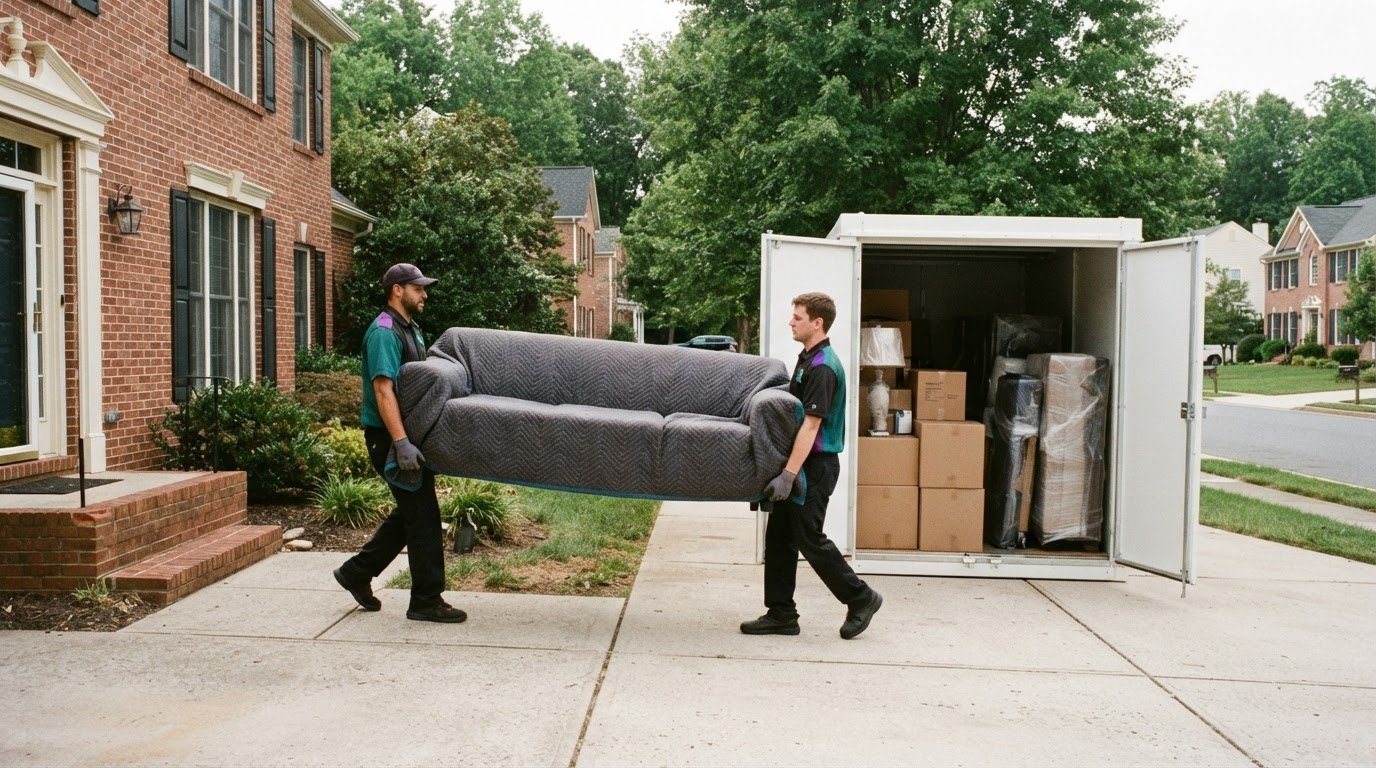
Heavy Furniture Moving provides moving help for bulky household items that need careful lifting and coordination. If you’ve prepared the freezer but feel unsure about a narrow hallway, stairs, or loading it into a truck, the team can help with the demanding physical work.
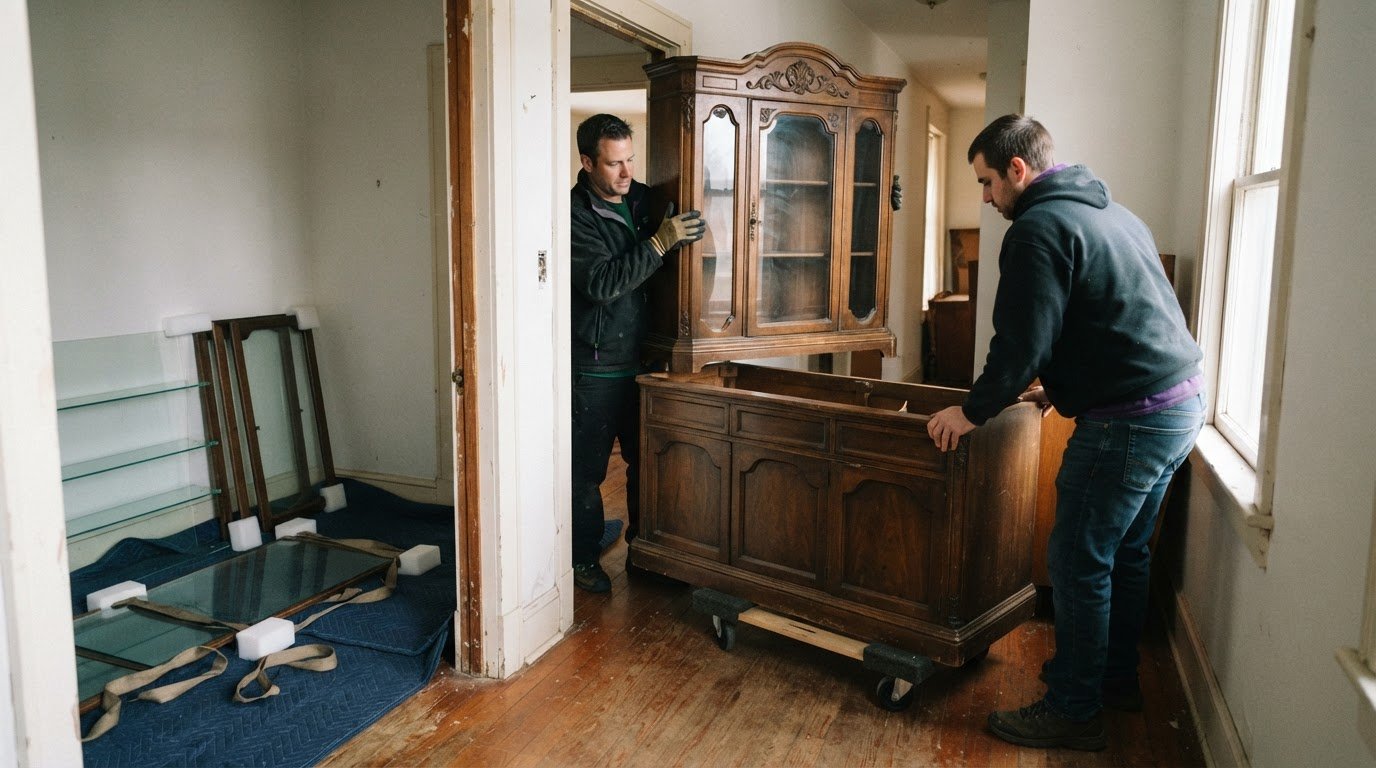
Moving help is useful when you can manage the route but need support controlling the appliance during lifting and placement. Heavy Furniture Moving measures before lifting and includes wrap, blankets, and straps on every job. Share the access details and steps involved so the work can be planned for your space.
Contact Heavy Furniture Moving to arrange help with your freezer move.
Make the Next Move With Confidence
Before moving day, decide which parts of the job you can handle comfortably and where extra help would be useful. Moving a freezer involves more than lifting: carrying it through a tight route and placing it securely both require coordination. If you’re planning how to move a heavy upright freezer without leaking coolant in Chantilly, start by clearing the route, organizing the lift, and choosing the level of help that suits your home.
Heavy Furniture Moving helps with demanding residential moves and bulky-item handling. Reach out if you’d rather have support managing the physical work than tackle the freezer move on your own. Contact Heavy Furniture Moving for help and take the next step toward a smoother move. With a clear plan and the right support, you can focus on settling your appliance into its new place.
Frequently Asked Questions
Can an upright freezer be transported on its side without damaging the compressor or refrigerant system?
It’s safest to transport an upright freezer standing, not lying on its side. Transporting it flat can affect compressor oil and refrigerant. If a move forces a tilt, set the freezer upright at its destination and wait at least 24 hours before plugging it in. Check the appliance manual for model-specific instructions, especially if the freezer spent extended time on its side.
What is the safest way to move a heavy upright freezer up or down stairs?
Use an appliance dolly, secure the freezer with straps, and coordinate with helpers before starting. Keep the appliance controlled and upright, pausing at landings to reset your grip or position. Clear the stair route, including loose rugs and objects. Don’t attempt the stairs if the load shifts or your team can’t control it safely.
What equipment is needed to move an upright freezer safely, and how much does it cost?
Use an appliance dolly and moving straps to support and secure the freezer. Gloves and floor protection can also help with grip and prevent scuffs along the route. Equipment costs depend on whether you already own the tools or need to rent them, plus rental terms and local availability. Get a current quote before arranging equipment, since rates vary.
How can you tell if an upright freezer has a refrigerant leak after moving?
A freezer that doesn’t cool properly may have a problem, but that symptom alone can’t confirm a refrigerant leak. Look for visible damage around the cooling lines and note unusual hissing or oily residue. Don’t touch a damaged line or attempt a repair. Unplug the unit if you suspect damage, and arrange qualified appliance service for diagnosis.
How much do appliance movers in Chantilly, Virginia charge to move an upright freezer?
The cost depends on the move, including the freezer’s access route, stairs, distance carried, and the help required. Heavy Furniture Moving’s price depends on the job and is provided after a quote request. Share details about the freezer, entryways, and stairs when requesting a quote so the work involved can be assessed. Avoid relying on a general estimate that ignores access conditions.
Which appliance movers near Chantilly, Virginia, move heavy freezers and provide insurance?
Heavy Furniture Moving serves Chantilly with moving help for heavy household items. Insurance coverage depends on the specific written terms for the move, so review those terms before booking and identify what protection applies to the freezer. Pay attention to coverage limits, exclusions, and the process for reporting damage. Don’t assume a particular insurance level based only on a mover’s service description.
Frequently Asked Questions
It’s safest to transport an upright freezer standing, not lying on its side. Transporting it flat can affect compressor oil and refrigerant. If a move forces a tilt, set the freezer upright at its destination and wait at least 24 hours before plugging it in. Check the appliance manual for model-specific instructions, especially if the freezer spent extended time on its side.
Use an appliance dolly, secure the freezer with straps, and coordinate with helpers before starting. Keep the appliance controlled and upright, pausing at landings to reset your grip or position. Clear the stair route, including loose rugs and objects. Don’t attempt the stairs if the load shifts or your team can’t control it safely.
Use an appliance dolly and moving straps to support and secure the freezer. Gloves and floor protection can also help with grip and prevent scuffs along the route. Equipment costs depend on whether you already own the tools or need to rent them, plus rental terms and local availability. Get a current quote before arranging equipment, since rates vary.
A freezer that doesn’t cool properly may have a problem, but that symptom alone can’t confirm a refrigerant leak. Look for visible damage around the cooling lines and note unusual hissing or oily residue. Don’t touch a damaged line or attempt a repair. Unplug the unit if you suspect damage, and arrange qualified appliance service for diagnosis.
The cost depends on the move, including the freezer’s access route, stairs, distance carried, and the help required. Heavy Furniture Moving’s price depends on the job and is provided after a quote request. Share details about the freezer, entryways, and stairs when requesting a quote so the work involved can be assessed. Avoid relying on a general estimate that ignores access conditions.
Heavy Furniture Moving serves Chantilly with moving help for heavy household items. Insurance coverage depends on the specific written terms for the move, so review those terms before booking and identify what protection applies to the freezer. Pay attention to coverage limits, exclusions, and the process for reporting damage. Don’t assume a particular insurance level based only on a mover’s service description.