How to Move a Heavy Treadmill Through a Door in Gainesville
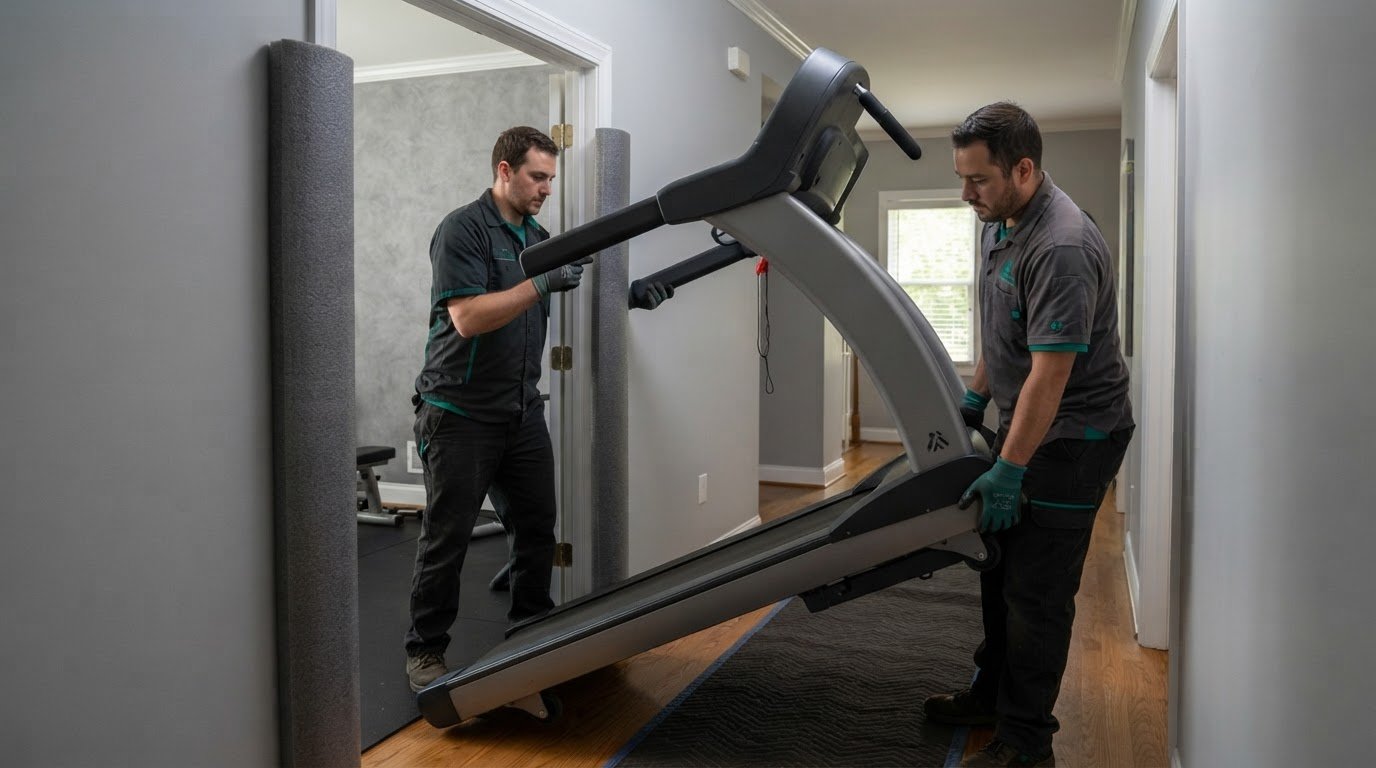
Those transport wheels can make a heavy treadmill look easier to move than it is. Moving a heavy commercial treadmill through a standard 32-inch door in Gainesville may be possible, but the wheels alone don’t guarantee it will clear the opening safely. Folding or disassembling the machine can help, since moving it flat through a doorway may require tipping it sideways and risk damage.
It’s reasonable to hope the treadmill can simply roll to its new spot. The key is whether its folded or moved dimensions fit the entire route, not just the doorway. Turns, stairs, and ceiling clearance can all affect the move. A professional can assess how the machine needs to be positioned and handled before it goes through a tight opening.
Here, you’ll learn when a treadmill’s wheels can help, how to measure the route, and when folding or disassembly may make the move safer. You’ll also see what details to share when arranging professional exercise equipment moving, so the plan accounts for the treadmill and the space it needs to pass through.
Key Takeaways
- Treadmill wheels can help with repositioning, but they don’t guarantee the machine will fit through a doorway safely.
- Fit depends on the treadmill’s dimensions and the full route, including turns, stairs, and ceiling clearance.
- Folding or disassembly may make a tight doorway pass more manageable and help reduce the risk of damage.
- Before the move, share details about the treadmill and any tight spots along its route so the moving plan can account for them.
- Professional exercise-equipment movers can handle the planning and heavy lifting when the machine is bulky or difficult to maneuver.
Do professionals have to disassemble a treadmill to move it?
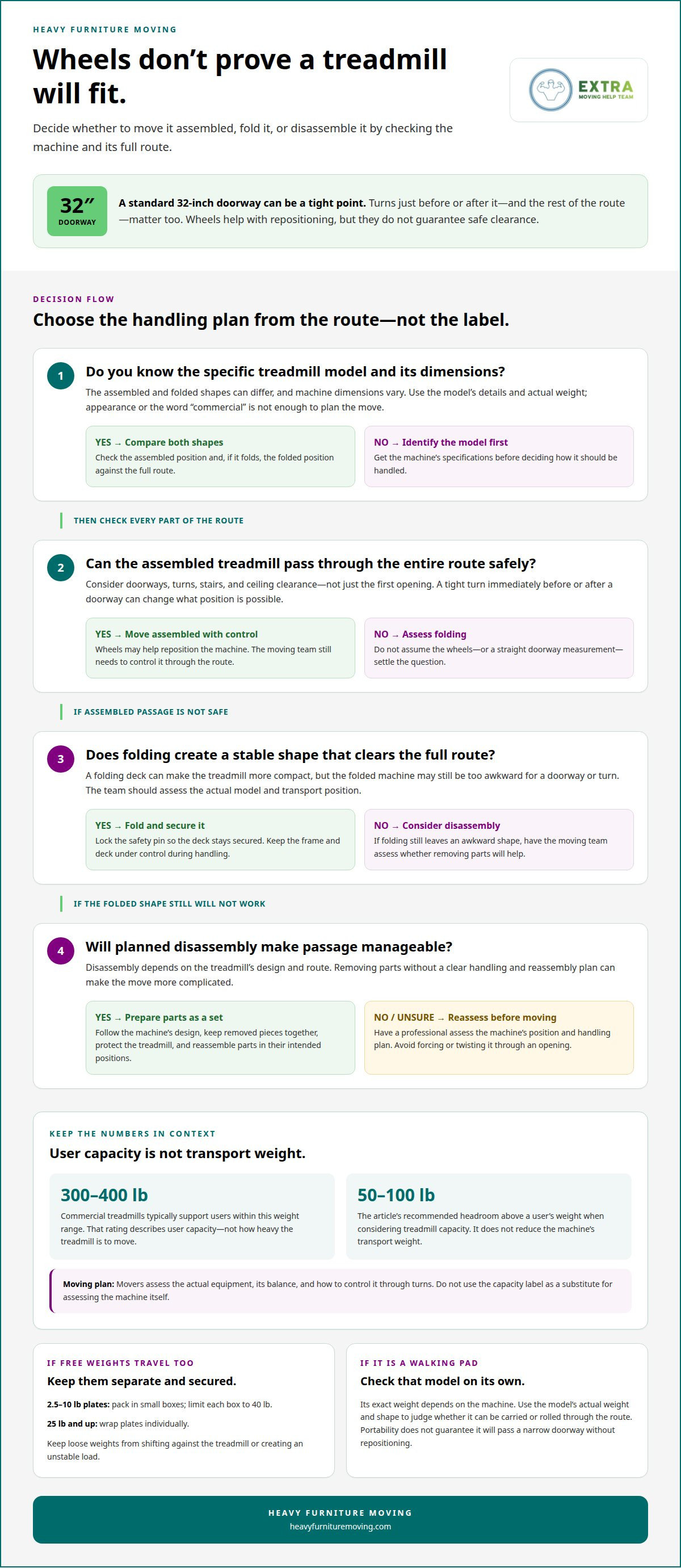
- Assess the machine before choosing a moving position. Disassembly isn’t automatic. A professional considers the treadmill’s weight, folded shape, and route through the home. A standard 32-inch doorway can be a tight point, especially when the machine must turn immediately before or after it. Moving a treadmill flat through a standard doorway may require tipping it sideways, which can risk damage. Folding or disassembly can reduce that risk when the machine’s shape won’t pass safely as assembled. The decision depends on the machine and route, not its “commercial” label alone.
- Use the model and its specifications to plan handling. Commercial treadmills typically support users weighing between 300 and 400 pounds, but user capacity isn’t the machine’s transport weight. These examples show why a professional needs the specific model rather than an estimate based on appearance. Machine dimensions also vary, so the assembled and folded shapes both matter when planning passage through a narrow doorway.
- Separate user capacity from the moving load. A treadmill’s rated user capacity describes the user weight it supports during a workout, not how heavy the machine is. The article recommends 50 to 100 pounds of headroom above a treadmill user’s weight when considering capacity. That guidance helps with equipment selection; it doesn’t reduce the machine’s weight during transport. A professional accounts for the actual equipment and its balance, then plans how to control it through turns. Don’t use the capacity label as a substitute for assessing the treadmill itself.
- Handle free weights as separate, secured items. Professionals keep plates and loose weights from shifting against the treadmill or creating an unstable load. Small plates weighing 2.5 to 10 pounds can be packed in small boxes, with each box limited to 40 pounds. Plates weighing 25 pounds and up should be wrapped individually. Separating the weights also lets the moving team manage the treadmill and accessories as distinct loads, instead of adding loose metal to an awkward machine.
- Assess walking pads individually. An under-desk walking pad is a different transport challenge from a full-size commercial treadmill, but its exact weight depends on the specific machine. The moving team uses the model’s actual weight and shape to judge whether it can be carried or rolled through the route. Portability doesn’t mean every pad can pass through a narrow doorway without repositioning. Check the walking pad’s model details before arranging its move, and keep accessories separate from the machine.
Professional treadmill folding and disassembly for moving
Movers choose folding or disassembly based on the treadmill’s design and the route. The goal is to create a stable shape that can pass through the doorway without forcing or twisting the machine.
-
How Folding Affects Treadmill Portability During a Move
Ask the moving team to assess the treadmill’s folding design and transport position. A folding deck can make the machine more compact, but it doesn’t guarantee the folded treadmill will clear a narrow doorway or turn. Movers account for the machine’s shape along the full route. Before moving it, they lock the safety pin so the folded deck stays secured during handling.
-
Professional Treadmill Disassembly
Have the movers decide whether removing parts will help the treadmill fit through the doorway and along the route. They follow the machine’s design, keep removed pieces together, and protect the treadmill during handling. After transport, they reassemble the parts in their intended positions. Disassembly can help when folding still leaves an awkward shape, but removing parts without a clear plan can complicate handling and reassembly.
- Have the team compare folded and assembled positions. Movers consider which orientation gives the machine a controlled path through each opening. A treadmill moved flat through a standard doorway usually has to be tipped sideways, creating a risk of damage. Folding it first can change its shape and balance, so the team assesses the actual machine rather than assuming every model folds the same way. They avoid forcing the deck or frame against the doorway.
- Keep the moving sequence controlled. Once the treadmill is folded or prepared for disassembly, movers maintain control of the frame and deck at separate contact points. They don’t rely on the folded position alone to keep the machine stable. If straps are used to secure it for transport, they’re positioned to hold the load without pressing against parts that could shift or be damaged. The team keeps loose components together for reassembly.
- Choose the setup that protects the machine. Folding is useful when it reduces awkwardness without making the treadmill harder to control. Disassembly is the next consideration when the folded shape still won’t work for the route. Neither option should be treated as automatic: the design, access, and handling plan decide which approach fits. For professional treadmill moving help, use the option that supports a controlled passage and orderly reassembly.
Types of equipment moved, including treadmills and ellipticals
Plan each move around the equipment’s shape, weight, and route. For commercial gym equipment in Gainesville, building access, elevator fit, and property-specific insurance terms can affect the plan.
- Identify every item and its moving needs. List the treadmill, elliptical, stationary bike, and other fitness equipment separately. A 300-pound squat rack and a commercial treadmill need different handling from a compact home-gym bench. Note which pieces have removable parts, loose accessories, or frames that extend beyond their bases. This inventory helps movers group equipment by handling needs and avoid treating a whole gym as one uniform load.
- Include workshop tools and bench equipment in the inventory. Identify heavy tool cabinets, benches, and loose equipment before planning the route. Keep small parts grouped with the item they belong to. This helps the moving team plan the sequence and avoid mixing workshop loads with delicate fitness equipment.
- Plan business gym moves around the equipment layout. Commercial gyms typically have ADA-accessible passageways measuring 3 feet wide, and the National Strength and Conditioning Association recommends at least 3 feet between equipment in commercial gym aerobic training areas. Those dimensions describe different spaces: passageways affect access, while equipment spacing affects layout. For a business move, map each treadmill and elliptical from its current position to the exit, then plan where each item will go at the destination.
- Use equipment suited to the load and route. Moving straps can distribute loads over 200 pounds across a team. The equipment choice still depends on the machine’s shape and route. Tight turns, stairs, or a narrow doorway can make a dolly unsuitable for part of the move.
- Keep the moving sequence controlled. Before transport, the team plans how each item will be lifted, secured, moved, and placed. A treadmill that tips unexpectedly can strike a doorway, damage the machine, or injure someone. Controlling its balance and path helps reduce those risks. Moving a treadmill upstairs requires at least two people at opposite ends, with the person at the lower end bearing most of the weight. Reassembly follows the move if parts were removed.
- Arrange professional help for bulky or heavy equipment. Exercise Equipment Moving covers treadmills and ellipticals alongside other home-gym pieces. Share the equipment list, building access details, elevator dimensions, and any property-specific insurance terms as part of planning. This helps the moving team choose handling equipment and sequence the loads without confusing a treadmill move with workshop transport or ordinary furniture moving.
How professionals measure doorways and the moving route
For moving a heavy commercial treadmill through a standard 32-inch door in Gainesville, professionals measure every opening and transition, not just the front entrance. The doorway is one point on the full route.
- Measure the treadmill in its planned position. Movers record the machine’s width, height, and length in the orientation planned for transport. If it folds or comes apart, they compare those measurements with its assembled dimensions. This helps determine whether each doorway can accommodate the equipment. A treadmill may fit straight through but still need extra clearance to turn its frame or pass around a nearby wall.
- Measure each doorway at its narrowest clear point. The team checks the usable opening, including space occupied by the open door, handles, or other obstructions. A nominal 32-inch doorway may offer less clear passage once its frame or hardware is considered. Movers compare the opening with the treadmill’s planned orientation, then note whether the machine must rotate before entering or after clearing the threshold.
- Trace every turn and change in direction. A straight hallway and a sharp corner require different amounts of room for the same treadmill. Movers map the distance between openings and check whether there’s enough space to reposition the machine without striking walls. They also account for door swings and nearby furniture. A treadmill may clear a doorway but still be unable to turn into a narrow hallway.
- Include stairs, landings, and ceiling height. Movers measure staircase width, landing space, and ceiling clearance along the route. A low ceiling above a stair landing can limit how the treadmill is angled, even if the staircase itself appears wide enough. Commercial gyms typically have ADA-accessible passageways measuring 3 feet wide, while some basement gym doorways are less than 30 inches wide. Those examples show why each route needs its own measurements.
- Check exterior access and the garage route. The team follows the route to the vehicle, including exterior doorways, the garage entrance, thresholds, and screen doors. A screen can narrow the usable passage or obstruct the machine’s path, so movers account for it during the assessment. They also note surface changes and distance. A tight exit followed by a long carry affects how the treadmill can be positioned and controlled.
- Compare measurements before moving. Movers use the openings, turns, staircase width, and ceiling height to decide whether the treadmill can travel assembled, folded, or in sections. They identify the tightest point first. Planning to move a heavy commercial treadmill through a standard 32-inch door in Gainesville means accounting for the approach and the turn beyond the doorway, not just the opening itself. If the folded machine still cannot pass, the team can plan another orientation or disassembly before starting.
Professional moving of heavy treadmills
- Prepare the treadmill for transport. Movers switch off the machine, unplug it, and remove its safety key before handling. They clear the path and identify parts that could swing or catch during movement. Knowing where the frame and deck shift helps the team control the load. The goal is to avoid sudden movement that could damage the treadmill, furniture, a doorway, or someone nearby.
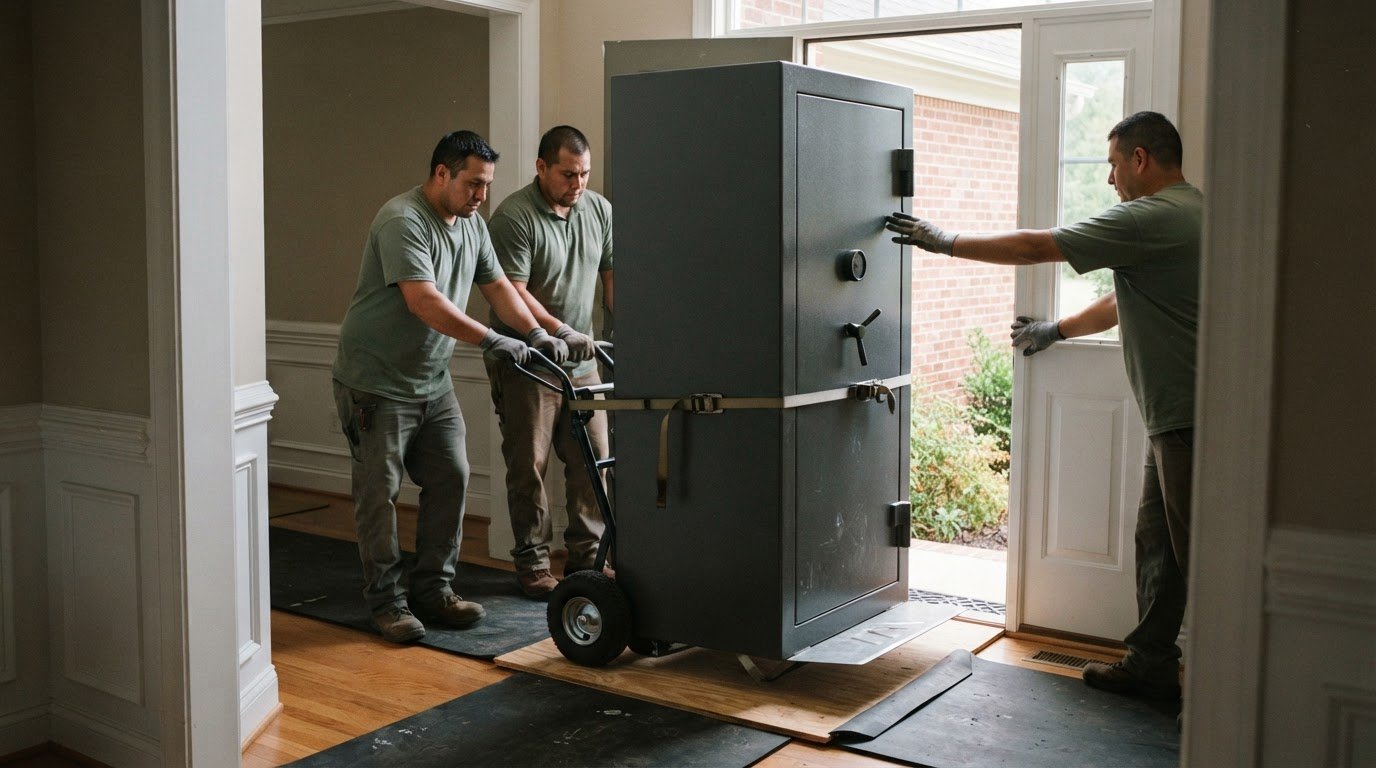
- Choose handling equipment for the route. A machine-moving dolly may have a 1,000-2,000-pound rating, but its rating alone doesn’t decide whether it suits a treadmill. Movers consider the machine’s shape, balance, and the route’s tight points. If a furniture dolly is used, they secure the treadmill with straps or tie-downs before rolling. They keep the load controlled rather than relying on the wheels to guide it.
- Coordinate each lift before moving. For a treadmill weighing more than 200 pounds, moving straps can distribute weight across a team. Movers agree on who controls each end and when to lift, turn, or set the machine down. Clear calls help the team move together through a narrow opening. They pause if the treadmill shifts or the path changes, then reset their grip before continuing.
- Manage stairs with assigned positions. Moving a treadmill upstairs requires at least two people at opposite ends. The person at the lower end bears most of the weight as the machine moves up or down stairs. Movers account for this uneven load before starting, then coordinate each step and landing. A turn on a stair landing can change the machine’s balance, so the team advances only when both ends remain controlled.
- Protect nearby surfaces and property. Before moving, professionals identify close walls, doorframes, flooring, and furniture along the treadmill’s path. They keep the machine from scraping or striking those surfaces as it passes. Problems often develop at turns, where the frame can swing wider than expected. Movers control the direction and pace instead of forcing the treadmill through an opening without enough clearance.
- Set down and check the machine after transport. Movers lower the treadmill under control at its destination, then check that it rests securely. If parts were removed for the move, they keep them together for reassembly. The team avoids plugging in or operating the treadmill while its parts remain loose. For professional treadmill moving help, share the machine’s model and route details so the handling plan addresses the actual equipment and access points.
Heavy Furniture Moving
Heavy Furniture Moving helps with bulky equipment moves when a treadmill’s weight, shape, or doorway makes transport difficult. Its Exercise Equipment Moving and Movers Near Me services provide a practical way to handle the machine and plan its route through your home. Share the treadmill model, its current location, and any tight doorways or turns. These details help the moving team understand the equipment and access involved, including whether folding or disassembly may help. If other furniture needs moving along the same route, mention that too so the plan accounts for the full space. Contact Heavy Furniture Moving to discuss your treadmill move.
Set Up Your Treadmill Move With Confidence
If you’re planning to move a heavy commercial treadmill through a standard 32-inch door in Gainesville, turn your route details into a clear moving plan. Share the treadmill’s model, where it needs to go, and any access details that could affect its arrival. That gives the moving team a useful starting point for coordinating the job and handling the equipment with care.
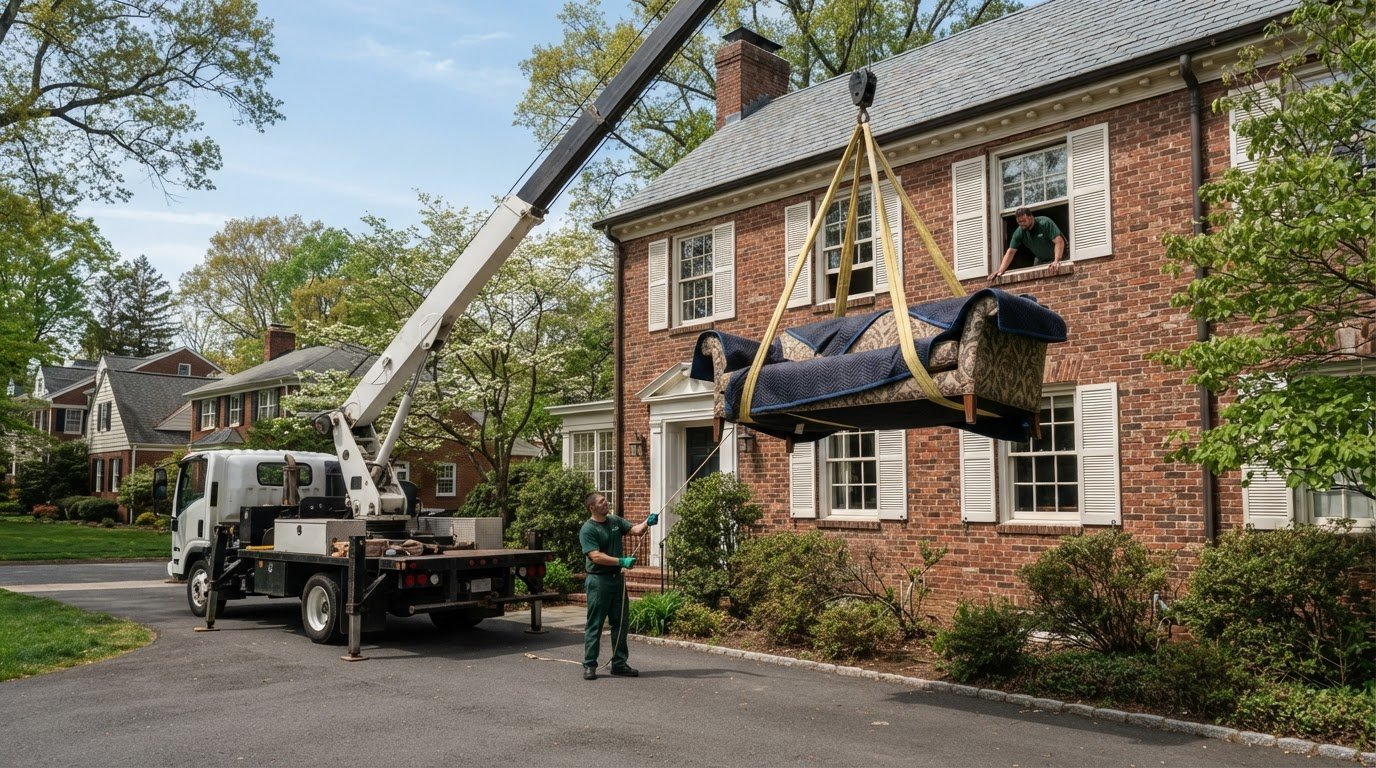
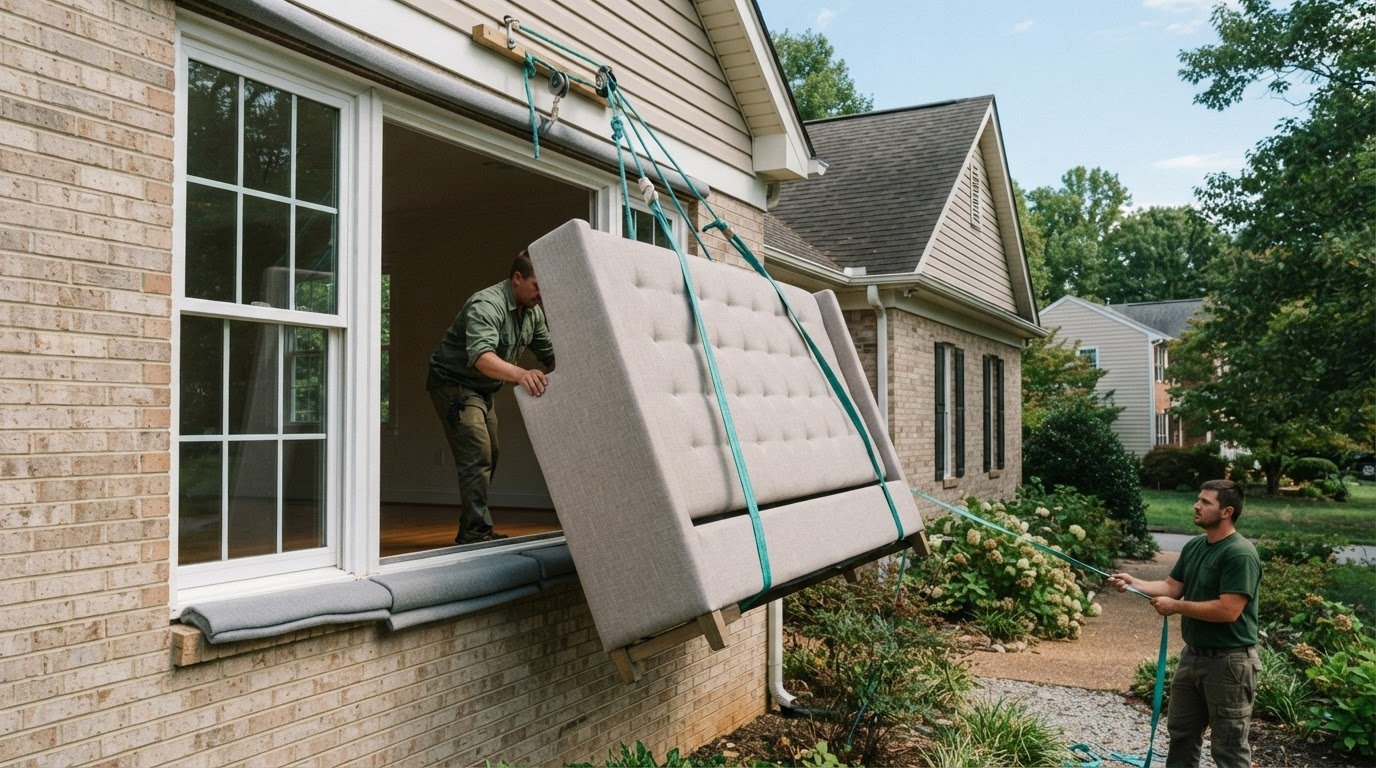
Heavy Furniture Moving offers Movers Near Me and Exercise Equipment Moving for bulky equipment transport. Sofa Hoisting is also available when large furniture needs a different route into or out of the home. The right support depends on what needs moving and the access involved.
Bring the details together, then contact Heavy Furniture Moving to discuss your move. A well-planned next step can make a demanding equipment move feel more manageable.
Frequently Asked Questions
Can It Be Moved on its Wheels?
Sometimes, but transport wheels don’t mean a treadmill can roll through every doorway. They’re useful for repositioning on a clear, level path, while thresholds, tight turns, or stairs can change the handling plan. A professional assesses whether the wheels keep the machine stable and whether the frame clears the route. If rolling would force the treadmill against a wall or doorframe, movers use another controlled method.
How heavy are treadmills?
Treadmill weight varies widely by type and model. These differences affect how the machine is positioned and transported. A model name or manufacturer label gives the moving team a more useful starting point than estimating weight from the treadmill’s size.
What are the dimensions and weight of common commercial treadmills?
Commercial treadmill dimensions depend on the model and whether its deck folds. Compare the exact model’s full length, width, and height with its folded dimensions. Include protruding parts such as the console, then consider how the machine’s shape changes during a turn.
Can a professional move a commercial treadmill through a standard 32-inch doorway after disassembly?
Yes, disassembly can make passage through a standard 32-inch doorway possible when the assembled machine won’t fit. The moving team considers which removable parts affect the treadmill’s shape and how much clearance remains at the doorway and turns. Removing a console or other part can change the machine’s profile, but the full route still matters. A tight turn beyond the doorway may remain the deciding obstacle.
What doorway clearance do professional movers need to move a commercial treadmill safely?
There isn’t one clearance that suits every commercial treadmill. Movers compare the doorway’s usable opening with the machine’s width and height in its planned orientation, including space needed to turn. A standard 32-inch opening may be tight for an assembled treadmill, especially near a wall or hallway corner. The threshold, door hardware, and the approach angle can all reduce practical maneuvering room.
How do professional movers disassemble and reassemble a commercial treadmill for moving?
Professionals prepare the machine, remove the parts needed for the planned route, and keep components together for reassembly. They switch it off, unplug it, remove the safety key, and follow the model’s design. Grouping removed hardware with its matching part helps prevent mix-ups. At the destination, movers restore the removed components and check that the assembly is secure before use.
How many movers are needed to move a heavy commercial treadmill safely?
Heavy Furniture Moving lists a treadmill move as typically requiring two movers. Moving a treadmill upstairs also requires at least two people positioned at opposite ends, with the person at the lower end bearing most of the weight. The route can affect how the team coordinates the move, especially at landings or tight turns. Share stair and access details when arranging Exercise Equipment Moving.
Frequently Asked Questions
Sometimes, but transport wheels don’t mean a treadmill can roll through every doorway. They’re useful for repositioning on a clear, level path, while thresholds, tight turns, or stairs can change the handling plan. A professional assesses whether the wheels keep the machine stable and whether the frame clears the route. If rolling would force the treadmill against a wall or doorframe, movers use another controlled method.
Treadmill weight varies widely by type and model. These differences affect how the machine is positioned and transported. A model name or manufacturer label gives the moving team a more useful starting point than estimating weight from the treadmill’s size.
Commercial treadmill dimensions depend on the model and whether its deck folds. Compare the exact model’s full length, width, and height with its folded dimensions. Include protruding parts such as the console, then consider how the machine’s shape changes during a turn.
Yes, disassembly can make passage through a standard 32-inch doorway possible when the assembled machine won’t fit. The moving team considers which removable parts affect the treadmill’s shape and how much clearance remains at the doorway and turns. Removing a console or other part can change the machine’s profile, but the full route still matters. A tight turn beyond the doorway may remain the deciding obstacle.
There isn’t one clearance that suits every commercial treadmill. Movers compare the doorway’s usable opening with the machine’s width and height in its planned orientation, including space needed to turn. A standard 32-inch opening may be tight for an assembled treadmill, especially near a wall or hallway corner. The threshold, door hardware, and the approach angle can all reduce practical maneuvering room.
Professionals prepare the machine, remove the parts needed for the planned route, and keep components together for reassembly. They switch it off, unplug it, remove the safety key, and follow the model’s design. Grouping removed hardware with its matching part helps prevent mix-ups. At the destination, movers restore the removed components and check that the assembly is secure before use.
Heavy Furniture Moving lists a treadmill move as typically requiring two movers. Moving a treadmill upstairs also requires at least two people positioned at opposite ends, with the person at the lower end bearing most of the weight. The route can affect how the team coordinates the move, especially at landings or tight turns. Share stair and access details when arranging Exercise Equipment Moving.