How to Move a Heavy Solid Mahogany Dining Suite in McLean Safely
Don’t treat a mahogany dining suite like ordinary furniture. Moving a heavy, solid mahogany dining room suite in McLean safely means removing loose or detachable parts, labeling the hardware, padding the wood, and coordinating each lift with a clear plan. If the pieces are too heavy or awkward to control, professional movers can handle the lifting and transport.
It’s reasonable to worry about more than the weight. A dining table, chairs, and cabinet can have delicate surfaces and corners, while a tight doorway or stairway can make the move harder. Rushing or lifting without coordination increases the risk of damage to the furniture, floors, walls, or people carrying it.
This guide explains how to prepare the suite, protect its finish and your home, choose suitable moving equipment, and coordinate a team lift. You’ll also learn when professional help is the safer choice, especially for oversized or difficult-to-maneuver pieces. Follow the steps in order to keep the move controlled, from the first screw to the final placement.
Key Takeaways
- Remove detachable parts where appropriate, and keep their hardware together in clearly labeled bags.
- Choose moving equipment with the furniture’s shape and the floor surface in mind to help control the load.
- Protect the mahogany finish and nearby floors, walls, and doorframes before moving the suite.
- Plan each lift with a lead person and coordinated movements instead of trying to manage a heavy piece alone.
- Recognize when awkward access, delicate furniture, or physical limits make professional movers the safer option.
Disassembling furniture and storing hardware
Prepare the suite before lifting, and remove only parts that detach safely. Keep every screw, bolt, and fitting with its matching piece.
-
Prepare the Suite Before Movers Arrive
Clear each tabletop, china cabinet shelf, and drawer before moving day. Photograph existing scratches or loose joints, then note them beside the matching piece. Remove rugs and small items from the route so nothing catches underfoot. Parking, loading, and building rules can vary around McLean and Fairfax County. Check posted signs and building instructions before choosing where to position a truck.
-
Disassemble Large Furniture Pieces
Remove a table leaf, detachable legs, or cabinet shelves only if their fasteners release easily. Don’t force stuck joints or pry against the mahogany finish. If the table is designed for leg removal, support the top securely first. Separate china cabinet sections only if they are designed to detach. Leave complex or unstable pieces assembled for trained movers.
- Put each piece of hardware in its own small container or resealable bag. Label it clearly, such as “table legs” or “cabinet doors,” and keep matching parts together. Keep the labels with the hardware after disassembly so nothing gets lost among packing materials. Tape the bags to a protected, unfinished area or place them in one clearly marked box.
- Remove drawers and loose shelves if they come out easily. These parts can make furniture lighter and easier to handle. Wrap each drawer separately and mark its original location, such as “left cabinet drawer.” Remove glassware, dishes, and other contents. Emptying the cabinet prevents items from shifting and striking the interior during the move.
- Check the manufacturer’s assembly instructions, if available, before removing fasteners. Keep a simple parts list with each labeled bag, and place small fittings in a secure container. Photograph the mahogany’s condition before the move and keep the images with your moving records. Any coverage for scratches or other damage depends on the written moving terms, so retain the paperwork describing the selected coverage.
- Decide who should disassemble each piece based on its design and condition. Someone familiar with its fasteners may be able to remove a straightforward table leg. Leave a cabinet with joined sections, delicate trim, or stuck hardware to experienced movers. Stop if a joint flexes, the finish begins to crack, or a fastener resists gentle removal.
Removing drawers or other detachable parts can reduce a furniture piece’s weight and make it easier to move. This applies only to parts that come off safely. Don’t force a component that resists removal.
Dollies, sliders, lifting straps, and protective equipment
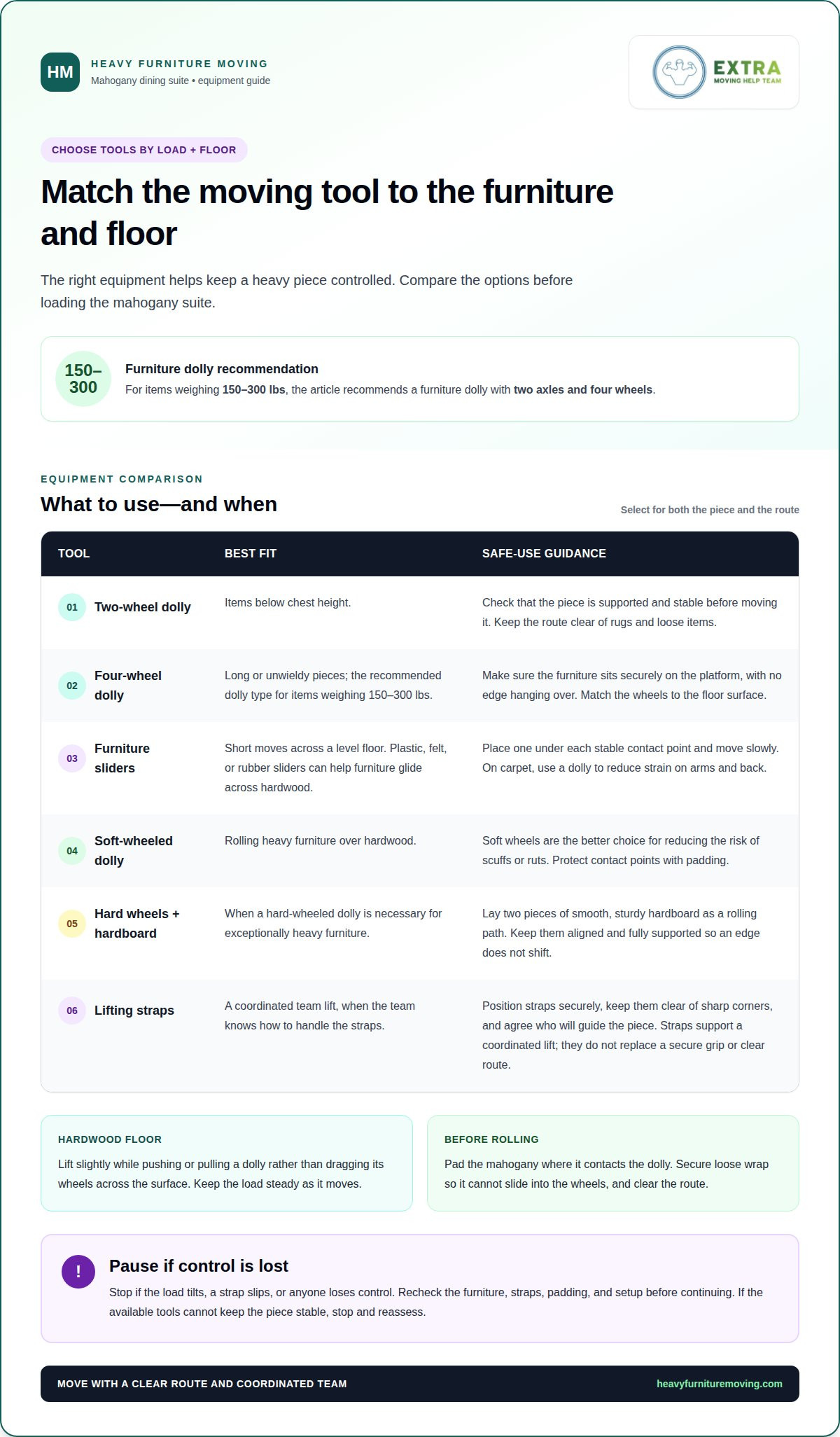
Match each tool to the furniture’s shape, weight, and floor. A wrong wheel or poorly placed strap can make a controlled move harder.
- Choose a dolly that supports the piece evenly. A furniture dolly with two axles and four wheels is recommended for items weighing 150-300 lbs. Two-wheel dollies suit items below chest height, while four-wheel dollies work better for long or unwieldy pieces. Check that the mahogany table or cabinet sits securely before rolling, with no edge hanging over the platform.
- Use sliders for short moves across a level floor. Plastic, felt, or rubber sliders can help furniture glide across hardwood and reduce the risk of scratches. Place one under each stable contact point, then move the piece slowly. On carpet, use a dolly to reduce strain on your arms and back. Clear the route so wheels and sliders don’t catch on rugs or loose items.
- Protect hardwood before rolling a loaded dolly. A soft-wheeled dolly is a better choice because hard wheels can leave scuffs or ruts. If a hard-wheeled dolly is necessary for exceptionally heavy furniture, lay two pieces of smooth, sturdy hardboard to create a rolling path. Keep the boards aligned and fully supported. A shifted edge can interrupt the dolly’s movement or mark the floor.
- Use lifting straps only when the team knows how to handle them. Position each strap securely, keep it clear of sharp table corners, and agree on who will guide the mahogany piece. Straps support a coordinated lift; they don’t replace a secure grip or a clear route. Stop if the load tilts, a strap slips, or anyone loses control.
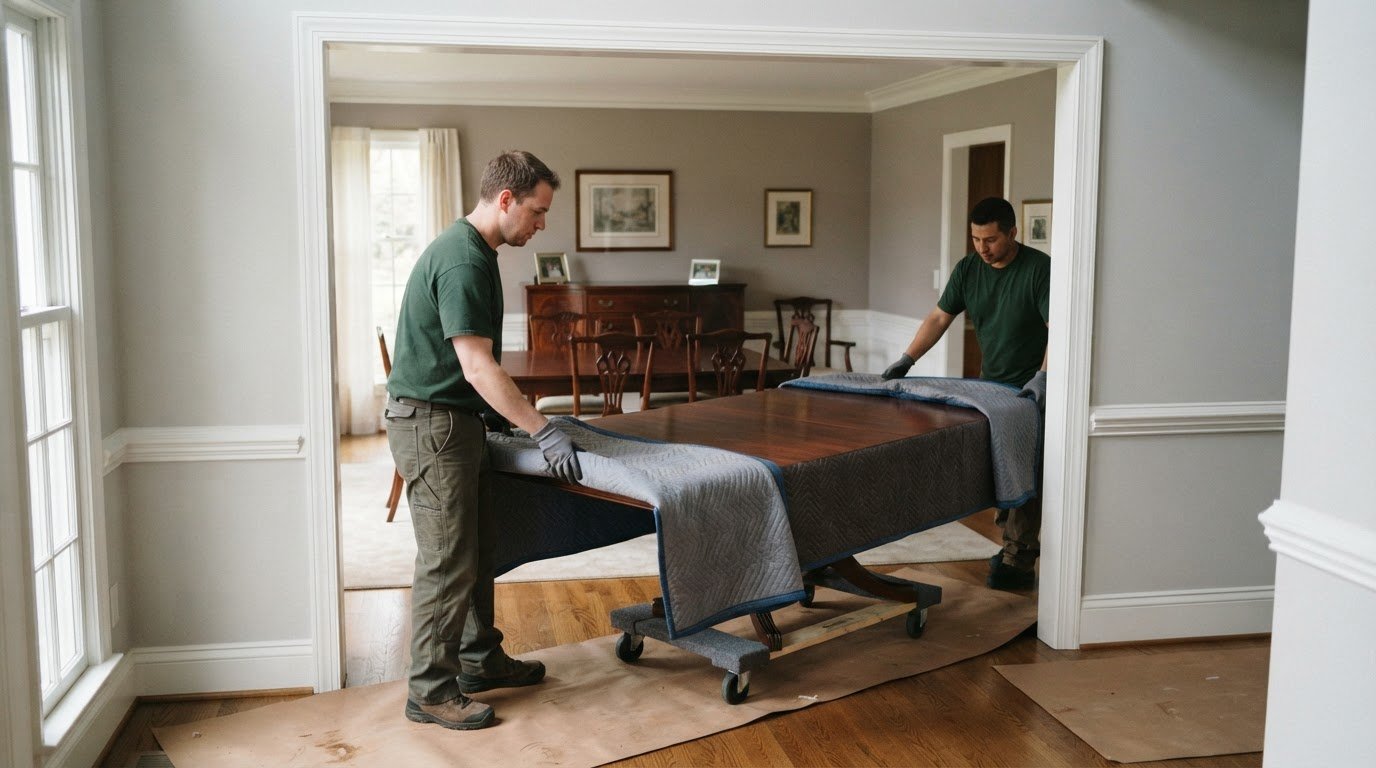
- Protect contact points before loading. Place padding between the mahogany finish and the dolly, and secure loose wrap so it cannot slide into the wheels. On hardwood, lift slightly while pushing or pulling a dolly, rather than dragging its wheels across the surface. For a heavy or awkward suite, a heavy lifting moving service can take on the equipment and handling.
Plan equipment costs alongside the move, rather than deciding what to rent after the furniture is ready to go. Compare the rental choice with the size and shape of the piece, and make sure the dolly can support it securely before loading. Include the cost of padding and wrap in the plan so the finish and contact points are protected during handling.
On hardwood floors, lift slightly while pushing or pulling a dolly to avoid scratching the surface. Keep the load steady as it moves, and pause to check the furniture, straps, and padding if anything shifts. A clear route and a coordinated team matter as much as the equipment: agree on who will steer and who will watch the piece’s edges. If the furniture cannot be kept stable with the available tools, stop and reassess the setup before continuing. Choose equipment that suits the route as well as the object, and avoid treating a rental price as a reason to use a dolly that does not fit the job.
Using moving blankets to protect furniture and floors
Wrap the mahogany and prepare the route before moving the suite. Blankets cushion surfaces, and clear measurements help reveal tight spots.
-
Wrap Furniture and Floors with Blankets
Cover the table, chair backs, and cabinet corners with moving blankets. Fit the padding smoothly and secure it so it won’t slip as the piece moves. Blankets cushion furniture and help prevent scratches and dings during transport. Lay floor protection along the route, especially near turns where a furniture leg could scrape hardwood.
- Assess each piece’s weight and handling demands before choosing a moving plan. Furniture weighing 250-500 lbs needs specialized equipment and 3-4 people. A dining table and a china cabinet may differ in weight and balance, so assess them separately. Don’t rely on appearance alone; solid wood and bulky construction can make a piece harder to control.
-
Protect Walls and Door Frames
Measure doorways and hallways before moving large furniture, then compare those openings with the suite’s widest points. Painter’s tape on door and frame edges can help protect them from scratches or dents. Add moving blankets to exposed walls and corners along the route. Keep the path clear, and don’t twist a tall cabinet through an opening without enough room.
- Plan each turn before moving a tall piece. Guide it from the middle or bottom to help maintain balance and reduce the risk of tipping. At a narrow doorway, pause to check the cabinet’s height, depth, and clearance before changing its angle. Don’t force a piece through a tight corner. Adjusting the route can prevent a collision with trim or plaster.
- Inspect antique mahogany before wrapping it. Note existing scratches, loose trim, weak joints, or areas where the finish looks vulnerable. Photograph visible damage before transport and keep the images with your moving records. This gives you a clear reference if you later need to discuss a mark or break with the mover.
- Share useful details when requesting a moving estimate. Include the suite’s piece count, approximate dimensions and weight, stairs or narrow access, and travel distance. A quote follows your request; cost depends on piece count, weight, dimensions, access, and distance. For example, note whether the cabinet must pass through a tight hallway or down stairs.
- Review the written moving terms before transport. Any coverage for scratches or other damage depends on those terms, so keep the paperwork and condition photographs together. Use blankets to cushion the mahogany, hardwood floors, and walls, but don’t treat padding as a substitute for documenting the suite’s condition.
Safe lifting and coordinated moving techniques
Plan the lift before anyone grips the mahogany. A shared route, clear commands, and controlled movements help keep each piece balanced.
- Choose a lead person before lifting the table or cabinet. That person calls each move, including “lift,” “stop,” and “lower.” Agree on the route and destination first. The other movers should repeat commands clearly so nobody turns or steps unexpectedly while supporting the furniture.
- Match the team and equipment to the piece’s weight. Furniture weighing 100-250 lbs requires proper equipment and 2-3 people. Don’t treat that range as a universal capacity for every person. Shape, grip points, and the route also affect control. If the team can’t hold the piece steadily, set it down.
- Clear the route before lifting the mahogany suite. Open doors, move chairs, and remove loose objects from the path. Check the destination as well as the exit so the team doesn’t have to hold a cabinet while rearranging the room. Keep the planned path direct and communicate any turn in advance.
- Lift with knees bent and backs straight. Keep the furniture close to your body and rise together on the lead person’s command. Avoid twisting at the waist while carrying a table leg or cabinet section. To change direction, take small, coordinated steps and turn your feet with the load.
- Guide tall furniture from its middle or bottom. Pushing near the top can make a cabinet less stable and increase the risk of tipping. Keep hands away from weak trim and decorative edges. If the china cabinet begins to lean, stop and bring it back under control before moving again.
- Treat stairs as a separate risk. Don’t attempt stairs with an item over 200 lbs unless professional equipment is available. A landing or narrow turn can change the load’s balance, so pause before each transition. Keep the lead person’s commands audible, and never rush to clear the staircase.
- Move in unison instead of letting one person set the pace. Carry the table level, keep the cabinet stable, and take short steps through doorways. If someone loses footing or grip, call “stop.” Lower the piece together when possible, then reset your hands and position before continuing.
- Get enough help rather than trying to move heavy furniture alone. Friends or family can assist if they can follow the plan and manage their part of the load. For a bulky mahogany piece, difficulty gripping, stairs, or tight turns are signs that professional equipment and handling may be needed.
When to hire professional heavy-item movers
Make your decision based on the load, access, and your team’s ability to control each piece. A mahogany suite may move safely in separate parts, but some routes call for professional handling.
- Hire professional movers for an item weighing 500 lbs or more. At that weight, specialized handling and equipment matter. Don’t test the load with an attempted lift. A solid table or large cabinet can be difficult to stop once it shifts, especially near a doorway or stair landing.
- Consider professional help for pieces over 300 lbs, even with a clear route. Weight isn’t the only concern: a tall china cabinet may be harder to balance than a lower table. Shape, grip points, and the route all affect control during a move.
- Choose experienced movers for oversized or delicate pieces. Antique mahogany may have vulnerable joints, carved trim, or flaws in the existing finish. A narrow hallway adds turning and clearance challenges. If moving a heavy, solid mahogany dining room suite in McLean involves delicate construction or tight access, professional handling can make the job more manageable.
- Bring in help if stairs are part of the route. Don’t attempt stairs with items over 200 lbs unless professional equipment is available. A landing, turn, or uneven step can make it harder to keep furniture balanced. Avoid improvising with a table or cabinet the team cannot control.
- Be honest about physical limits before moving day. If someone has trouble gripping, lifting, or walking the planned route, don’t assign them a carrying position. Friends and family should help only if they can follow directions and manage their part safely. If they can’t, arrange professional help.
- Consider the whole task, not just the lift. Professional movers can handle heavy-item work when furniture needs careful maneuvering or the household lacks capable helpers. This can matter when moving a heavy, solid mahogany dining room suite in McLean through tight access or with several bulky pieces.
- Make the decision before the furniture reaches a doorway. If a piece tilts, the team loses its grip, or the route proves tighter than expected, stop and lower it safely. Don’t push forward to avoid a delay. Reassess the route and use suitable equipment or professional assistance.
- Choose professional help when weight, access, delicate construction, or limited assistance makes a do-it-yourself move hard to control. For a stable piece and an open route, careful preparation may be enough. For a demanding mahogany suite, arrange suitable support before lifting begins.
Heavy Furniture Moving
Heavy Furniture Moving helps with bulky residential furniture when a mahogany suite is difficult to lift or maneuver. Turn to the team if the table or cabinet is oversized, access is tight, or you don’t have enough capable helpers. Share which pieces need moving, their approximate dimensions, and any stairs or narrow passages. These details help plan the move around the furniture and route. The team also handles local and in-home furniture moves, so you can get help with the pieces that need careful handling. Contact Heavy Furniture Moving to discuss your dining suite.
Make the Next Move with Confidence
Before setting a moving date, decide how much of the work you want to manage yourself. A clear plan for the dining suite’s route, handling, and delivery can help you choose the right level of support. For moving a heavy, solid mahogany dining room suite in McLean, share the details that shape the job, including the pieces involved and any access challenges.
Heavy Furniture Moving can help with residential furniture moves when the load feels difficult to manage alone. Its other services include Movers Near Me, Exercise Equipment Moving, and Sofa Hoisting. Choose support that fits the task, and allow time for careful handling rather than a rushed lift.
Ready to discuss your move? Contact Heavy Furniture Moving and take the next step toward getting your dining suite where it needs to go.
Frequently Asked Questions
Which McLean VA movers specialize in heavy antique furniture and dining room suites?
Heavy Furniture Moving handles residential moves involving heavy furniture in McLean, including dining tables and china cabinets. For moving a heavy, solid mahogany dining room suite in McLean, describe the pieces, their condition, and any challenging access. A china cabinet with glass panels needs a different handling plan from a dining table with detachable leaves. These details help the moving team understand the work involved.
How do movers protect mahogany dining tables, leaves, chairs, and china cabinets during a move?
Movers can protect each piece according to its shape and vulnerable areas. For moving a heavy, solid mahogany dining room suite in McLean, table leaves can be wrapped separately, while chair legs and cabinet corners need protection from bumps. Glass panels require careful handling, and loose shelves should be secured. Share details about delicate features so the team can plan suitable protection for the furniture.
What are the risks of moving heavy antique furniture through stairs, narrow doorways, or elevators?
Stairs can complicate balance, while narrow doorways leave little room to turn or adjust a large piece. Limited elevator clearance can make positioning difficult, and doors may close before the furniture is fully clear. These constraints can lead to collisions, finish damage, or loss of control. If the route feels too tight to manage steadily, pause and choose a safer moving plan.
How much does it cost to move a heavy solid mahogany dining room suite in McLean, Virginia?
The total for a dining suite depends on the piece count, weight, dimensions, access, and distance.
Frequently Asked Questions
Heavy Furniture Moving handles residential moves involving heavy furniture in McLean, including dining tables and china cabinets. For moving a heavy, solid mahogany dining room suite in McLean, describe the pieces, their condition, and any challenging access. A china cabinet with glass panels needs a different handling plan from a dining table with detachable leaves. These details help the moving team understand the work involved.
Movers can protect each piece according to its shape and vulnerable areas. For moving a heavy, solid mahogany dining room suite in McLean, table leaves can be wrapped separately, while chair legs and cabinet corners need protection from bumps. Glass panels require careful handling, and loose shelves should be secured. Share details about delicate features so the team can plan suitable protection for the furniture.
Stairs can complicate balance, while narrow doorways leave little room to turn or adjust a large piece. Limited elevator clearance can make positioning difficult, and doors may close before the furniture is fully clear. These constraints can lead to collisions, finish damage, or loss of control. If the route feels too tight to manage steadily, pause and choose a safer moving plan.
The total for a dining suite depends on the piece count, weight, dimensions, access, and distance.