How to Move a Heavy Sideboard Through a Tight Vienna Hallway
A tight hallway turn can defeat a sideboard that fits easily through the doorway. To safely maneuver a heavy sideboard through a tight 90-degree hallway in Vienna, measure the piece and the full route first, then remove anything detachable that adds bulk. Taking a room door off its hinges can provide two to three inches of extra clearance, but it won’t solve a turn the sideboard cannot make.
It’s easy to focus on the doorway and miss the real pinch point: the corner. Measure the sideboard’s height, width, and depth, along with the hallway, doorway, and space needed to pivot. Protect the floor and walls, and move slowly so you can keep the piece under control.
This guide explains when to remove sideboard doors or a room door, how to judge clearances, and how to use sliders without letting the furniture drift. You’ll also learn when to stop: if the route leaves less than 1-2 inches of clearance, professional movers can assess the turn and handle the heavy lifting. No forcing, scraping, or guessing your way around the corner.
Key Takeaways
- Use sliders only when you can keep the sideboard steady and guide its movement; a helper can spot the corner as you pivot.
- Protect floors, walls, and corners before moving, and keep the sideboard’s edges from scraping along the hallway.
- For a difficult turn, try a controlled tilt and rotation rather than forcing the piece straight through.
- If the sideboard still catches after two reasonable repositioning attempts, stop instead of risking damage or losing control.
- Check whether removable parts or a vertical entry angle could make an oversized or irregular piece easier to move.
Do furniture sliders help or hinder in tight hallways?
Sliders can help move furniture across a clear, level floor, but they can make a tight turn harder to control. Measure the sideboard and the full route before deciding how to move it.
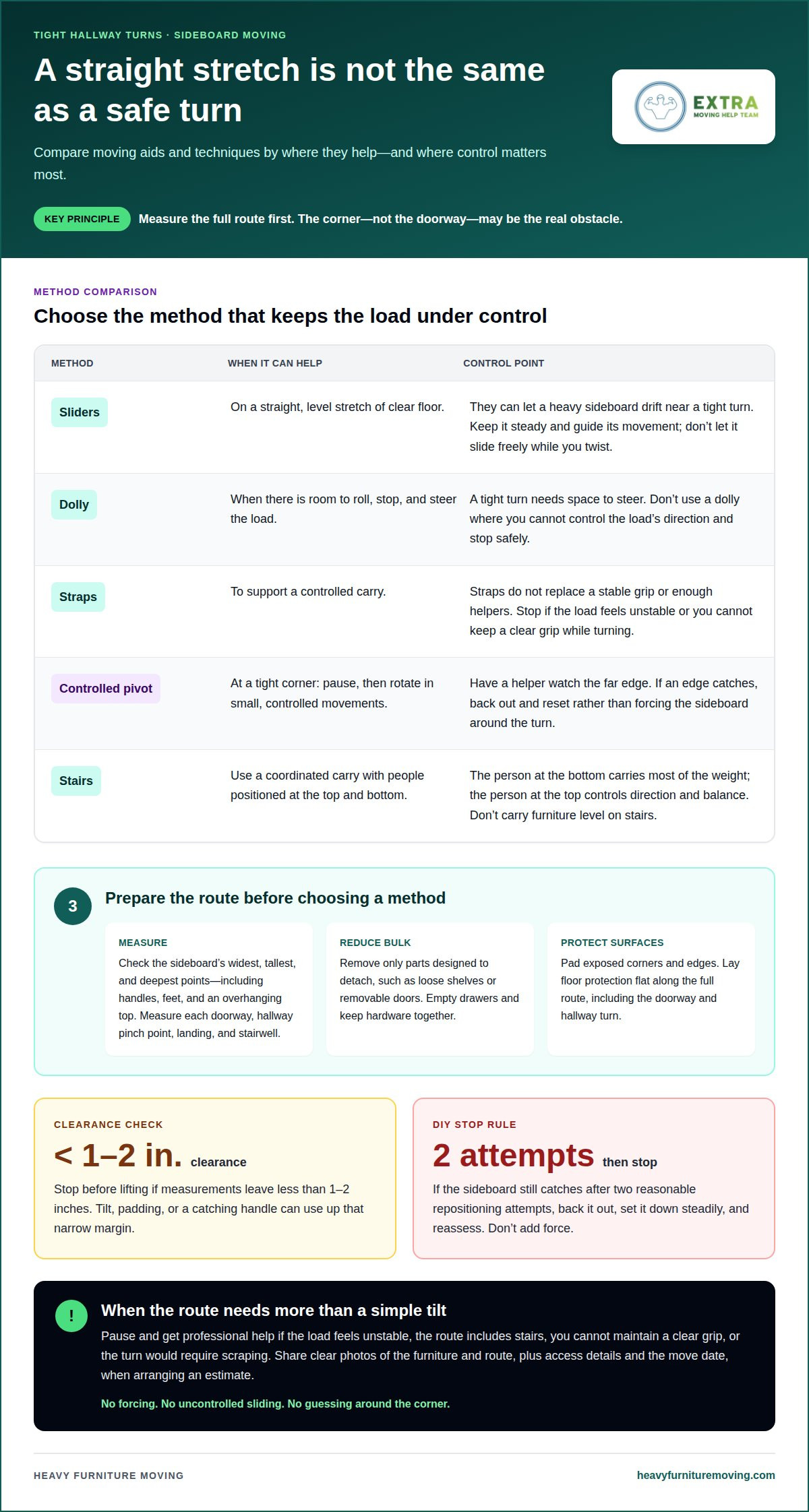
- Measure the sideboard at its widest, tallest, and deepest points, including handles, feet, and an overhanging top. Then measure each doorway, hallway pinch point, landing, and stairwell along the route. A 30-inch hallway section may be the real obstacle, even when the doorway is wider. Compare the sideboard’s diagonal height with the doorway height to see whether vertical entry needs planning.
-
Protect Floors, Walls, and Furniture
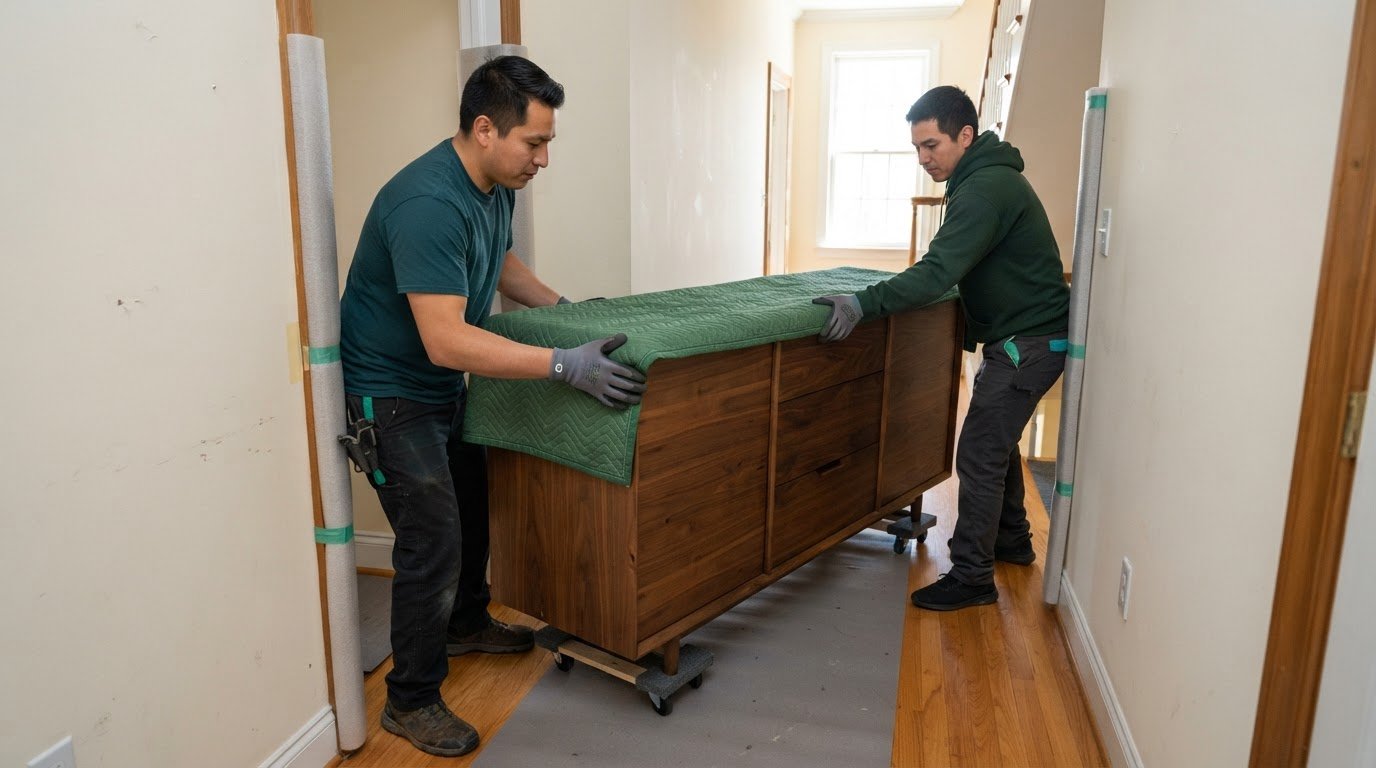
Cover the sideboard’s exposed corners and edges with securely fastened padding before lifting. Lay floor protection flat along the route, including the doorway and hallway turn. Keep wall corners, doorframes, and floor transitions visible to the people guiding the piece. Avoid loose coverings that bunch underfoot or padding that slips over a handle and blocks a carrier’s grip.
-
Pivot Through Tight Corners
Pause before the corner, then rotate the sideboard in small, controlled movements. A helper should watch the far edge as the carriers adjust the angle. Don’t let the piece slide freely while you twist it. If an edge catches, back out and reset rather than forcing it around the turn. If the sideboard has removable parts, assess each separately instead of assuming the whole piece turns as one.
- Remove only parts designed to detach, such as loose shelves or removable sideboard doors. Empty drawers and keep hardware together for reassembly. Removing a room door from its hinges can provide two to three inches of extra clearance, but it won’t create turning space around a corner. Vienna, Virginia is in the United States, not Austria, so Austrian curb-space rules don’t apply. Plan truck access around the local restrictions and conditions at the address.
- Use a dolly only when there’s room to roll, stop, and steer the load. Sliders can help on a straight, level stretch, but may let a heavy sideboard drift near a tight turn. Straps can support a controlled carry, but don’t replace a stable grip or enough helpers. On stairs, the person at the bottom carries most of the weight while the person at the top controls direction and balance. Don’t carry furniture level on stairs.
Knowing when to stop and get professional help
- Stop before lifting if the measurements leave less than 1-2 inches of clearance. That narrow margin can disappear when the sideboard tilts, padding adds bulk, or a handle catches. Check the tightest point, not just the doorway. A hallway may look wide enough straight on, yet the turn can leave no room to rotate. Treat close measurements as a reason to reassess the route before moving day.
- Stop a DIY attempt if the sideboard catches after two reasonable repositioning attempts. Back it out along the same path, set it down steadily, and inspect the snag point. Look for a projecting leg, doorframe, radiator, railing, or wall corner. Don’t add force or keep changing angles while the piece is partly wedged. Repeated pushing can damage the furniture or surfaces and make the load harder to control.
- Bring in movers when the load feels unstable, the route includes stairs, or you can’t maintain a clear grip while turning. A heavy or awkward sideboard can shift as its weight changes direction. One person may also lose sight of the far edge in a tight hallway. If a helper can’t guide the pivot and watch the surroundings, pause rather than carrying through a blind spot.
- Choose professional help when the obstacle calls for more than a simple tilt, such as a narrow landing, a tight corner beside a railing, or a sideboard that cannot turn without scraping. When arranging an estimate, share clear photos of the furniture and route, along with access details and the move date. This helps movers understand the challenge and plan how to handle the carry.
- Set a clear stop rule before lifting: no forcing, no uncontrolled sliding, and no second person left without a safe position. If the measurements are tight or the first controlled pivot fails, leave the sideboard in a stable spot and arrange help. For a difficult in-home move, in-home furniture moving help can take the heavy carrying and hallway maneuvering off your hands.
Protecting walls, corners, and floors
Prepare the sideboard and hallway surfaces before lifting. A moving blanket can cushion furniture edges, while floor coverings help protect the route.
-
Protect Floors Before Moving
Lay clean floor coverings along the sideboard’s full route, including the doorway and hallway turn. Smooth each covering flat and secure loose edges so shoes or furniture legs can’t catch them. Check that the material isn’t slippery underfoot. A blanket dragged beneath a heavy sideboard can bunch suddenly, so keep padding attached to the furniture instead.
For hardwood, tile, or laminate, keep floor protection between the surface and every point where the sideboard might touch down. Avoid setting the furniture on uncovered corners during a pause. Clear grit, small stones, and loose objects from the path first. A hard particle trapped beneath a cover can scratch the floor as people step or pivot.
-
Pad Walls and Door Frames
Cover the sideboard’s exposed corners and edges with moving blankets before lifting. Secure the padding so it stays in place around handles and doesn’t hide a grip point. Check the doorway frame, nearby wall corners, and any railing along the route. Keep those surfaces visible enough for a helper to spot contact before the furniture presses against them.
Don’t rely on a blanket hanging over one side of the sideboard. It can slip during a turn and leave a sharp corner exposed. Keep the padding snug, and avoid applying adhesive directly to painted drywall or a finished wood frame. At each doorway, pause to check that the padding hasn’t shifted before moving through.
- Clear packing materials, shoes, rugs, and small tables from the route before carrying. A loose rug can slide under a carrier, while a box beside the wall can block the space needed to steady the sideboard. Open doors fully and keep them from swinging back into the furniture. Check the hallway lighting so carriers can see covered thresholds and wall corners.
- Lift in a controlled way to prevent scraping. Keep the sideboard steady and avoid lowering one end onto a wall or doorframe. If you need to set it down, choose a clear, protected patch of floor and lower it together. Don’t drag it across a blanket or floor covering; reposition the protection once the furniture is stable.
- Inspect the hallway surfaces after each difficult turn. Check the sideboard’s blanket, floor coverings, painted walls, doorframes, and corner padding before continuing. If a cover has shifted or a corner is exposed, stop and reset it while the furniture is secure. This quick check can prevent one snag from becoming a scrape along the rest of the route.
Checking hallway turns and doorway clearance
- Measure the sideboard as assembled, including handles, feet, trim, and overhanging top edges. Record its height, width, and depth, then compare each dimension with the narrowest doorway and hallway spaces. The main body may clear a frame while a handle or raised edge catches. Note removable parts separately so you can compare the route with the furniture reduced.
- Map the complete route from the room to the exit, marking every doorway, 90-degree turn, threshold, and landing. Measure the usable passage at each point, not just the open floor. A door that swings into a hallway can reduce turning space, as can a radiator, railing, or deep trim. Include the space needed for carriers to stand and change position.
- Assess the corner as a turning space, not a straight corridor. At a 90-degree hallway turn, the sideboard’s outer corner travels farther than its inner edge. Picture the piece rotating through the opening and note where its longest edge could meet the opposite wall. A clear doorway alone doesn’t prove the assembled furniture can make the turn.
- Check each doorway with the door fully open and the sideboard approaching at its planned angle. Measure between the frame’s narrowest points, including hardware or protruding trim. If the sideboard’s diagonal affects how it enters, compare that path with the opening’s height and width. A vertical approach may change what clears, but it also changes balance and grip.
- Use your measurements to choose a route before moving day. Compare the assembled sideboard’s dimensions with each tight point, then identify whether removing detachable hardware or a furniture section changes the fit. Mark the intended approach and turning direction on a simple layout. If the route leaves too little room to guide the piece without contact, don’t treat force as extra clearance.
- Recheck measurements after preparing the hallway. Floor protection, padding, an open door, or a moved obstacle can change the usable clearance. Measure the actual passage with these conditions in place, especially at the corner and doorframes. Keep the recorded dimensions together so everyone carrying the sideboard follows the same layout and knows where the route narrows.
Handling oversized or irregular items
- Inspect the sideboard’s shape before choosing a route. A deep top, bowed front, projecting feet, or uneven back can catch where a standard cabinet clears. Measure its widest points, including handles and trim. Knowing those details helps you plan how to safely maneuver a heavy sideboard through a tight 90-degree hallway in Vienna, where the item’s outline matters as much as its main body.
- Reduce the load only by removing parts designed to detach. Empty drawers, take out loose shelves, and remove detachable legs or handles if they come off safely. Keep screws and hardware together for reassembly. Don’t pry at fixed trim or force glued joints. Disassembly can reduce bulk, but removing structural parts may make the remaining cabinet harder to grip.
- Plan the turning angle before lifting. A sideboard with a deep top may need to tilt as its narrow end enters the corner, while the far edge clears the opposite wall. Think through how to safely maneuver a heavy sideboard through a tight 90-degree hallway in Vienna by considering every projection, not just the cabinet body. Don’t let a hidden foot or handle snag during the pivot.
- Use sliders only where you can stop and steer the furniture. They may help across a straight, level floor, but can let an oversized piece drift near a corner. Don’t slide a tilted sideboard or use sliders to lift it. A bed frame has different balance points, so its handling method may not suit a solid cabinet. Keep moving blankets clear of sliders and carriers’ feet.
- Stop if the sideboard can’t pass without scraping, forcing, or losing a stable grip. A different route may be needed if the hallway opening cannot accommodate the item. Moving a large piece through a window is one possible alternative, but it requires careful planning and controlled handling. For help with an oversized item, arrange heavy furniture moving help and share the sideboard’s shape and access details.
An apparent fit in a straight run does not guarantee a clean turn. A 34-inch-deep couch in a 36-inch hallway is an example of furniture that can jam when turning, because the turn radius can cause it to jam. Treat the corner as its own clearance problem: consider the projecting edges as the piece rotates, and pause before committing its weight to the turn. If it catches, do not force it or keep pushing against the wall; stop and reassess the angle and route. The page advises stopping if furniture does not clear a pinch point after two reasonable repositioning attempts.
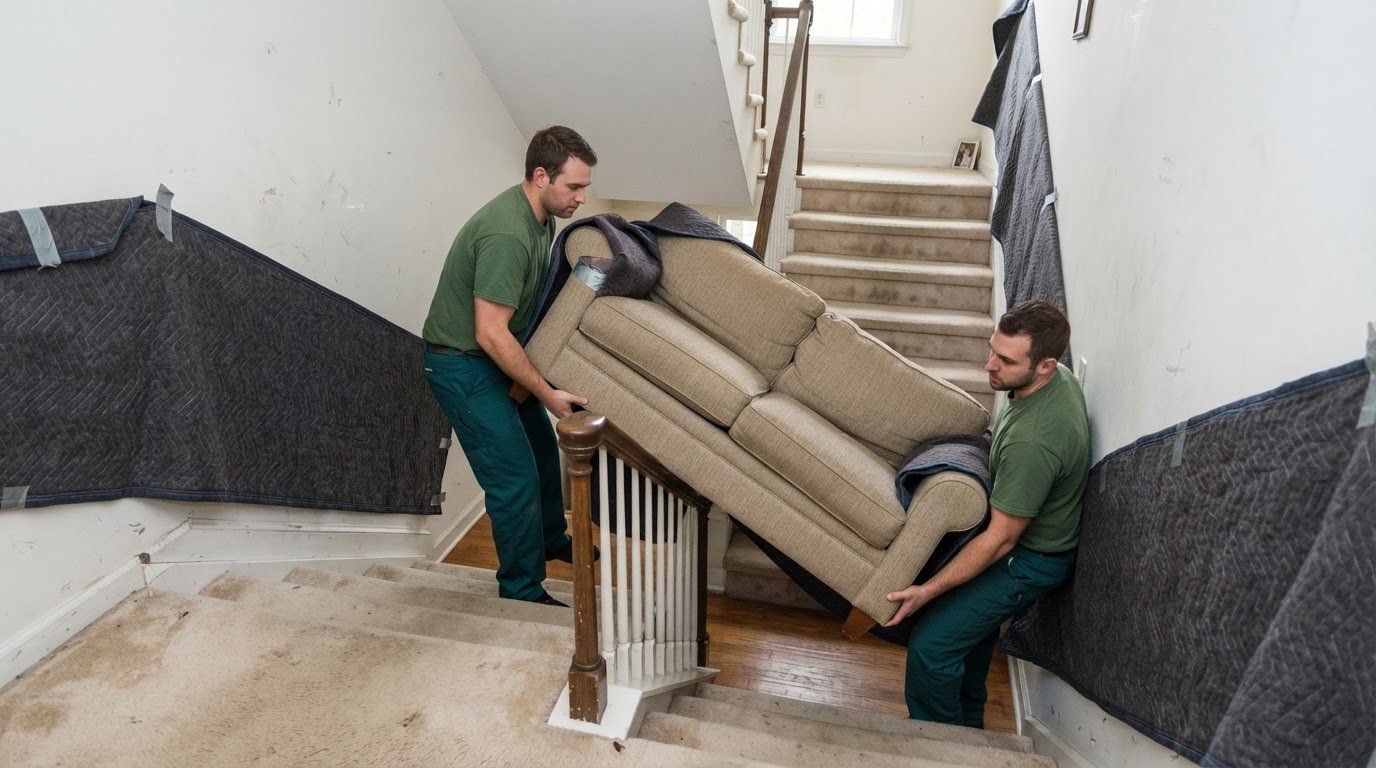
Stair landings call for similarly deliberate control, especially with a bulky item whose weight shifts as it turns. Professional movers may use stair rollers and forearm forklifts to control large objects on winding staircases. They should protect walls and railings and use a continuous, controlled hook turn to navigate furniture around stair landings. A solid wood dresser weighs approximately 150-300 pounds, so avoid treating a large cabinet as though it were a light, easily corrected load. Before moving, agree on who is guiding the turn and who is supporting the weight; keep instructions clear and movements coordinated. If the object cannot be held securely or the landing does not provide enough room for a controlled turn, pause and choose another plan rather than risking a slip or impact.
Heavy Furniture Moving
Heavy Furniture Moving helps with heavy and bulky furniture when a sideboard’s weight, shape, or hallway turn makes a DIY move difficult. Its in-home furniture movers handle the carrying and maneuvering, including awkward transitions where a tight corner limits grip or turning space. Wrap, blankets, and straps are included on every job.
Consider professional help if the sideboard catches, the route leaves too little clearance, or you can’t move it without forcing or scraping. Share the sideboard’s dimensions and describe the hallway, doorway, and any stairs. Heavy Furniture Moving can use those details to plan around the item and route instead of relying on guesswork.
If you’re ready to hand over the heavy lifting, contact Heavy Furniture Moving.
Plan the next move with confidence
Before moving the sideboard, decide where it will sit and which way it will face. That gives everyone handling it a clear destination and helps avoid extra lifting or turning inside the home. If the route or the furniture’s shape makes you uncertain, adjust the plan before carrying begins. For how to safely maneuver a heavy sideboard through a tight 90-degree hallway in Vienna, a controlled move matters more than pushing through a difficult fit.
Heavy Furniture Moving can help with bulky furniture when the hallway, doorway, or turn makes the job difficult to manage alone. Choose professional support if you’d rather leave the carrying and maneuvering to a moving team. Share photos of the sideboard and route to discuss the move and take the next step.
Contact Heavy Furniture Moving to discuss help with your sideboard move. You can move forward with a practical plan and a steadier hand on the job.
Frequently Asked Questions
Should I take the doors off their hinges to move furniture through?
Yes, remove a room door from its hinges if it blocks the opening and you can lift it off safely. This can provide two to three inches of extra clearance, but it won’t create more room around a hallway corner. Sideboard cabinet doors are separate: remove them only if they detach safely. Keep hinge pins and hardware together, and place the door outside the carrying path.
Why Does Furniture Get Stuck in Hallways and Stairwells?
Furniture gets stuck because its full shape needs more room to turn than the hallway provides. A sideboard may fit through a doorway straight on, then catch when its far corner swings toward a wall. Projecting handles, feet, trim, and nearby railings can shrink the usable space. Stair landings add another challenge because carriers must change direction while keeping the item stable.
How Do You Measure Furniture and Doorways Before Moving Day?
Measure the furniture at its widest, tallest, and deepest points, including handles and feet. Then measure each doorway at its narrowest usable point, with the door open. Record hallway width, landings, stairwells, and obstacles such as radiators. For example, a cabinet body might clear a door while its top overhang catches the frame. Keep the measurements together as a route plan.
How many people does it take to carry a heavy dresser through a narrow hallway?
Plan on at least two people to carry most dressers through a narrow hallway. Both carriers need a secure grip and a clear path to reposition their hands. A third person can watch the far corner at a tight landing and call out obstacles. If the dresser shifts, blocks a carrier’s view, or can’t be held steadily, set it down and reassess before continuing.
What's the Right Technique for Carrying Furniture Through a Narrow Space?
Move in short, coordinated adjustments rather than one long push. Agree on who gives directions before lifting, then pause at each doorway or landing to reset hand positions. Carriers should keep the furniture balanced and communicate before changing its angle. In Vienna, Fairfax, Woodbridge, Manassas, Manassas Park, Aldie, Ashburn, McLean, Reston, Centreville, Chantilly, Clifton, Dumfries, South Riding, Fairfax Station, Haymarket, and Gainesville, tight home layouts can make a planned route especially useful.
Professional furniture movers in Vienna Virginia for difficult hallway moves and typical costs
This article refers to Vienna, Virginia. For a difficult hallway turn, Heavy Furniture Moving can assess the route. Share photos of the furniture and route, access details, and the move date when arranging an estimate.
Frequently Asked Questions
Yes, remove a room door from its hinges if it blocks the opening and you can lift it off safely. This can provide two to three inches of extra clearance, but it won’t create more room around a hallway corner. Sideboard cabinet doors are separate: remove them only if they detach safely. Keep hinge pins and hardware together, and place the door outside the carrying path.
Furniture gets stuck because its full shape needs more room to turn than the hallway provides. A sideboard may fit through a doorway straight on, then catch when its far corner swings toward a wall. Projecting handles, feet, trim, and nearby railings can shrink the usable space. Stair landings add another challenge because carriers must change direction while keeping the item stable.
Measure the furniture at its widest, tallest, and deepest points, including handles and feet. Then measure each doorway at its narrowest usable point, with the door open. Record hallway width, landings, stairwells, and obstacles such as radiators. For example, a cabinet body might clear a door while its top overhang catches the frame. Keep the measurements together as a route plan.
Plan on at least two people to carry most dressers through a narrow hallway. Both carriers need a secure grip and a clear path to reposition their hands. A third person can watch the far corner at a tight landing and call out obstacles. If the dresser shifts, blocks a carrier’s view, or can’t be held steadily, set it down and reassess before continuing.
Move in short, coordinated adjustments rather than one long push. Agree on who gives directions before lifting, then pause at each doorway or landing to reset hand positions. Carriers should keep the furniture balanced and communicate before changing its angle. In Vienna, Fairfax, Woodbridge, Manassas, Manassas Park, Aldie, Ashburn, McLean, Reston, Centreville, Chantilly, Clifton, Dumfries, South Riding, Fairfax Station, Haymarket, and Gainesville, tight home layouts can make a planned route especially useful.