How to Move a Heavy Sectional Through a Narrow Door in Clifton
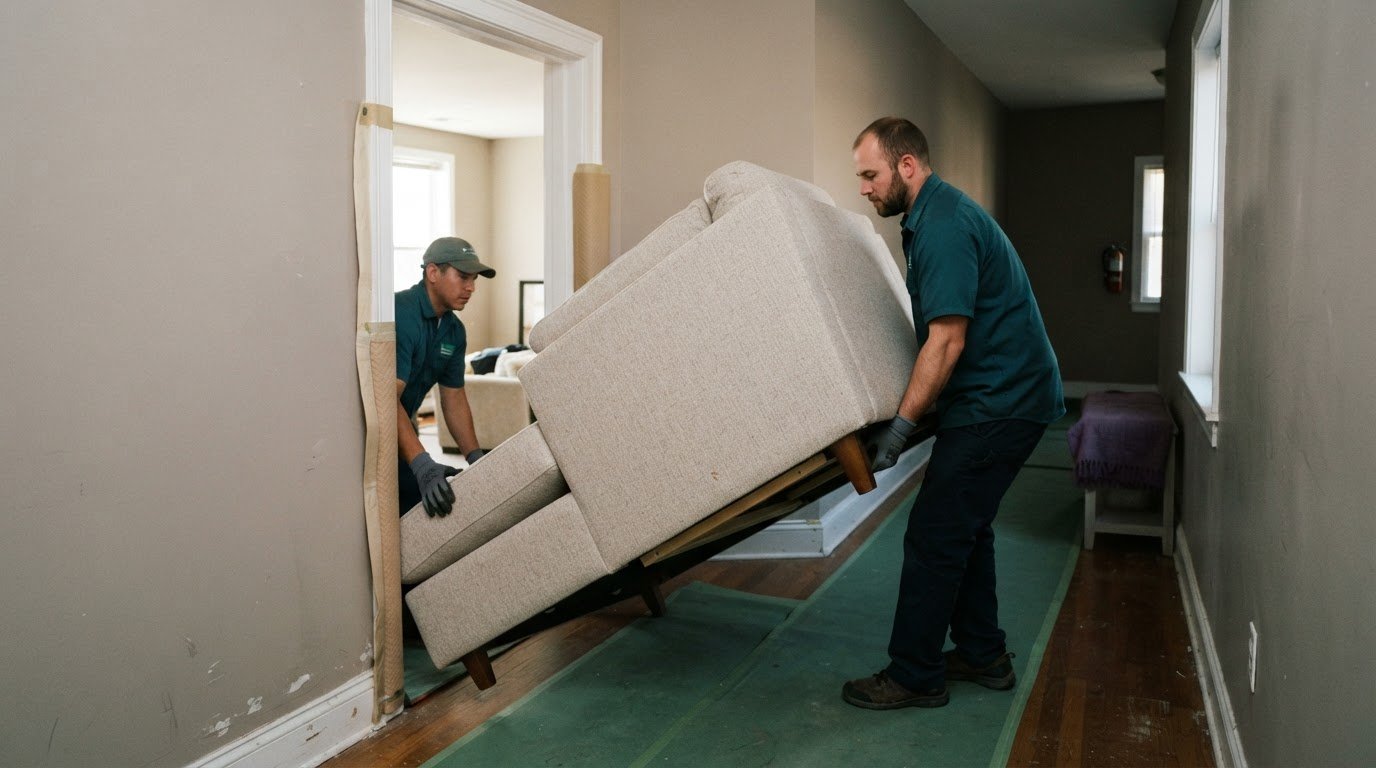
A sectional that will not pass through a doorway flat may fit when tilted upright and carefully pivoted. Moving a heavy Pottery Barn sectional through a narrow apartment door in Clifton starts with measuring the sofa, doorway, and tightest hallway turn. Aim for at least two inches of clearance, and stop to reassess if the sofa catches.
A tight entry can make a heavy sofa feel impossible to move, especially when the hallway turns just beyond the door. To move a heavy Pottery Barn sectional through a narrow apartment door in Clifton, plan the angle and route before lifting, then proceed in controlled steps.
Learn how to measure the sectional and apartment route, tilt and rotate the sofa through a narrow opening, and protect floors, walls, and door frames. You’ll also see when separating the sectional or choosing another route can make the move easier to manage.
Key Takeaways
- Measure the sectional and the full route, including tight turns, stairs, and elevator openings, before you lift.
- Consider separating the sectional and changing its angle to find a manageable path through a narrow doorway.
- Walk the route for another entry point, then clear obstacles that could block a turn or landing.
- Wrap the sofa and protect floors, door frames, walls, and stair rails before moving it.
- When a heavy sofa or difficult route makes the move hard to control, explore professional furniture-moving help.
How do you move a couch through a narrow doorway?
Measure the sectional and the entire route before lifting, then choose an angle that clears the tightest point. If the sectional stops moving smoothly, pause and reassess instead of forcing it against the frame.
-
Measure Furniture and Doorway Clearance
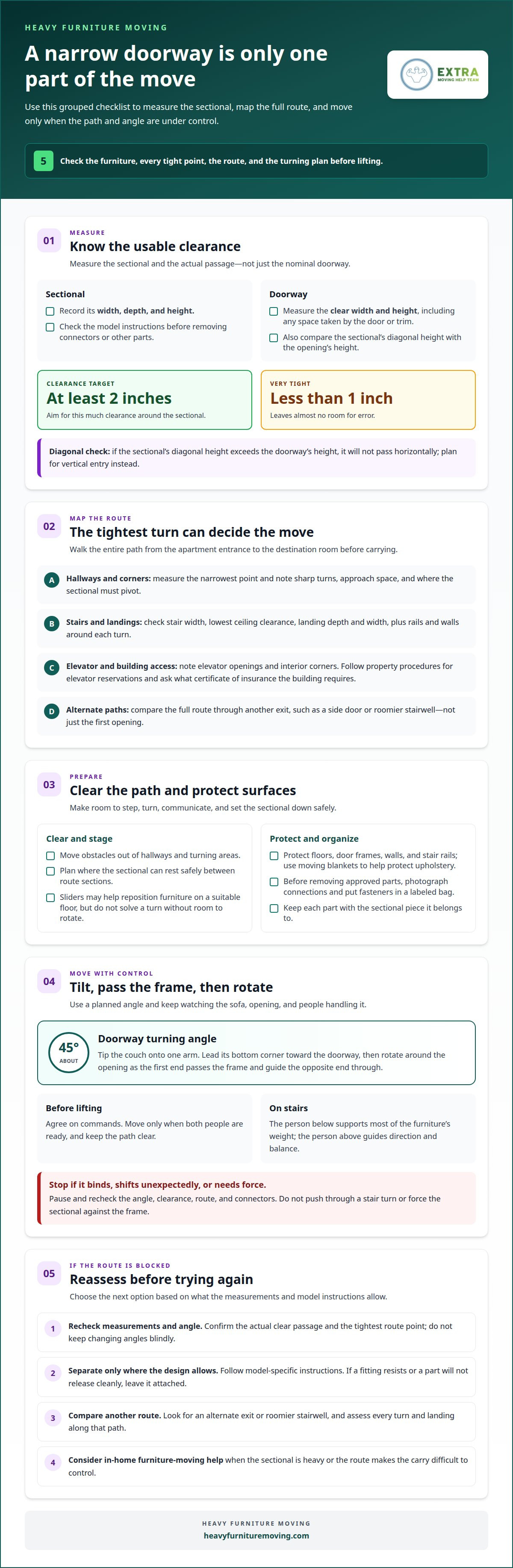
Measure the sectional’s width, depth, and height, then record the doorway’s clear width and height. Aim for at least two inches of clearance; less than an inch leaves almost no room for error. A Pottery Barn sectional may separate if its sections have removable connectors, but check the model-specific instructions before taking it apart. Use the model name from the order record or furniture label to find its dimensions and disassembly guidance in the product documentation.
-
Check Hallways, Stairs, and Corners
Measure the hallway at its narrowest point, along with stair width, lowest ceiling clearance, and each landing’s depth and width. Walk the route from the apartment entrance to the destination room, noting sharp corners and places where the sectional must turn. A doorway measurement alone won’t tell you whether the furniture can clear a nearby corner. Include the approach space on both sides, since a tight setup can limit the angle available for lifting.
-
Use Diagonals to Assess the Doorway
Compare the sectional’s diagonal height with the doorway’s height. If the furniture’s diagonal height exceeds the opening’s height, it won’t pass horizontally, so plan for vertical entry instead. Check the diagonal in the orientation you intend to use, not just the sectional’s flat measurements. A narrow doorway may also have less usable space than expected if the door or trim intrudes into the opening, so measure the actual clear passage.
-
Angle the Couch Through the Doorway
Tip the couch onto one arm and lead its bottom corner toward the doorway at about a 45-degree angle. As the first end passes the frame, rotate the sectional around the opening while guiding the opposite end through. Keep the movement controlled and watch the frame, walls, and hands. If the sofa binds, shifts unexpectedly, or needs force, stop. Recheck the angle, clearance, and sectional connectors before trying again.
- Reassess if it won’t fit. If the sectional still cannot clear the apartment doorway, don’t force it or keep changing angles blindly. Recheck measurements and whether its sections can separate; then consider a different route or in-home furniture-moving help for the heavy lift.
What if the furniture fits the door but not the hallway turn?
Map the full route, because a doorway that clears the sectional doesn’t guarantee the next corner will. Check building access and stair turns before carrying it.
-
Check Entry Points and Building Access
Walk the route through the entry, hallways, stairs, and elevator, noting where the sectional must turn or pause. Measure the narrowest passage and landing, then look for elevator doors or interior corners that limit the approach. For an apartment move, follow property management’s procedures for elevator reservations and ask what certificate of insurance the building requires.
Clear movable obstacles from the path and plan where the sectional can rest safely between sections of the route. Sliders can help reposition furniture on a suitable floor, but they won’t solve a turn without enough room to rotate. Keep the hallway clear so the carrying team can step, pivot, and communicate without dodging household items.
-
Prepare for Stair Turns and Carries
Study each stair landing before lifting. A hook turn may require standing the sectional more vertically, rotating its leading end toward the next flight, then repositioning the other end. Check the ceiling and railings as well as the landing’s floor space. If the sectional cannot rotate without hitting a wall or rail, stop and reconsider the route rather than pushing through.
On stairs, the person below supports most of the furniture’s weight while the person above guides its direction and balance. Agree on commands before carrying, keep the sectional controlled, and move only when both people are ready. Moving blankets can help protect the upholstery during handling, but they don’t replace a firm grip or a clear path. A high-low carry changes the sectional’s angle between carriers; use this technique only when the stair layout allows controlled movement.
-
Remove Sectional Parts Safely
Check the sectional’s model instructions before removing legs, backs, or connectors. Designs differ, so don’t twist a fitting or pry at a joint that resists. Photograph the connections first, use the appropriate tool, and place each fastener in a labeled bag. Keep the parts with the section they belong to, making reassembly easier after the hallway turn.
Separate connected sections only where the design allows, then reassess the carry path for each piece. If a part won’t release cleanly, leave it attached and change the moving plan. For a difficult stair turn, in-home furniture-moving help can provide support for the heavy carry.
Planning alternate routes through a property
Walk the full route before lifting, then compare the tightest points with possible alternate exits. A side door or roomier stairwell may offer a more practical path.
-
Plan a Route Through Narrow Spaces
Start at the apartment and walk every possible route to the vehicle. Note tight doorways, low fixtures, sharp corners, and stair landings where the sectional may need to turn. Mark the hardest point on each route, not just the first doorway. A wider entrance can still lead to a narrow interior hall that blocks the furniture farther along.
Look for an alternate exit, such as a side door or a roomier stairwell. Compare the full path, including the approach space before each opening and the room available after it. Remove movable obstacles, roll up rugs, and clear items from hallway edges. Keep the selected route open from start to finish before lifting begins.
-
Plan for Hallway Turns
Study each turn from both directions. A sectional may clear a straight hall but lack room to rotate where two corridors meet. Check the inside corner, opposite wall, and any nearby door that limits the turn. Plan where the leading end will point and where the trailing end can move as the sectional pivots.
Choose a pause point before each difficult corner, such as a clear landing or a wider stretch of hall. This gives the carriers room to reset their grip without leaving the furniture balanced against a wall. If the route includes stairs, inspect the landing and ceiling above it. A turn that works on a flat floor may not work beneath a low ceiling.
- Compare the alternate route’s obstacles, not just its width. A side entrance may avoid a tight apartment hallway but include steps, a sharp outdoor turn, or a narrow landing. Trace the sectional’s likely path through each option and identify where its longest section must change direction. Choose the route with enough room for controlled movement at every turn.
- Set the route before carrying. Move loose furniture, rugs, and other obstacles out of the way, then keep the path clear while the sectional is in motion. Avoid improvising a new turn mid-carry; stop in a stable, open area and reassess if the planned path is blocked. Careful route planning helps reduce scraping and damage to the sectional and interior surfaces.
Protecting floors, door frames, walls, and stair rails
Prepare the apartment surfaces and the sectional before moving. Protective coverings work best when they’re in place before the first lift or turn.
-
Protect Floors and Door Frames
Lay floor runners along the full route, especially at doorways and beneath a planned pause point. Keep runner edges flat so they don’t become a trip hazard while carrying. Wrap the sectional in moving blankets before lifting, then secure them so they stay in place as the furniture shifts.
Cover a tight door jamb with a moving blanket held in place with painter’s tape. Painter’s tape helps hold the padding without pulling paint like stronger tape can. Check that the padding doesn’t narrow the opening enough to catch the sectional. Furniture sliders can help position a heavy sectional near an entry without dragging it across the floor.
-
Protect Walls and Stair Rails
Place corner guards or taped-on cardboard over exposed wall corners along the route. Add moving blankets over stair rails and banisters where the sectional could brush or rest during a turn. Protect the inside corner of a hallway, not just the wall opposite it; the trailing end can swing wide as the leading end clears a doorway.
Before lifting, check each covering for gaps, loose tape, or edges that could snag the upholstery. Keep the stair path clear, and don’t use a padded rail to balance the furniture. Coverings reduce contact damage, but carriers still need to control the sectional’s movement through each turn.
- Wrap smaller sectional pieces separately after disconnecting them, if the design allows separation. Use moving blankets to cushion corners and exposed edges, then secure the wrap so it won’t slide while carrying. Stretch wrap can hold a blanket around the furniture, but keep adhesive materials off upholstery and finished wood. Place removed hardware in a labeled bag rather than wrapping it loose with a section.
- Protect the landing and the final room as carefully as the entry. Put floor runners across the path to the sectional’s destination, then keep them flat as it moves. If carriers need to pause, set the piece down only in a clear area where it won’t block a doorway or press against a wall.
- Inspect the route after moving each section. Look for shifted runners, exposed jambs, or a blanket that has slipped from a stair rail before carrying the next piece. Reset the protection before continuing; a small gap at a corner or frame can leave the surface exposed during the next turn.
Standing sofas on end to fit through doors
A sofa that cannot pass horizontally may clear the doorway vertically. Stand it on one end only after checking the new orientation and the full route.
- Compare the sofa’s vertical position with the opening before lifting. Compare the sofa’s dimensions with the doorway in the orientation you plan to use, and consider whether standing it on end could help. Check the doorway’s height and width against the sofa’s dimensions in the orientation you intend to use. Consider whether the end, back, and seat can clear the frame together.
- Choose the end that gives you the steadiest base. Tip the sofa onto one arm, then raise it carefully until its back is vertical and its seat leads. Keep it balanced rather than letting its weight drop onto an exposed leg or corner. Make sure the route beyond the threshold leaves room to guide the raised end without striking a ceiling or wall.
- Remove detachable parts only when the sofa’s design allows it. Set loose cushions aside, and handle legs or connectors according to the model’s instructions. Don’t force a fitting or pull on a section that remains joined. Keep removed hardware together so it doesn’t get lost during the move or mixed with another section.
- Position the leading end toward the opening, then move forward in small, coordinated adjustments. As the sofa begins to pass, rotate it around the frame so the trailing end follows the same path. Watch the top edge and lower corners; a vertical position changes which parts may contact the doorway. Stop if the sofa catches instead of pushing it through.
- Reassess the angle if the sofa binds. Check whether the back is truly vertical, the seat is leading, and the doorway remains clear. A small change in position can alter how the end crosses the frame, but forcing the furniture risks damage to the sofa or apartment. If the orientation still fails, use your measurements to reconsider disassembly or another route.
- Keep the sofa controlled until it clears the doorway completely. Don’t release the raised end while another part remains caught on the frame. Once inside, lower it slowly into a stable position before changing grips or moving onward. For a difficult vertical carry, get help moving a heavy sectional through a tight entry.
Heavy Furniture Moving
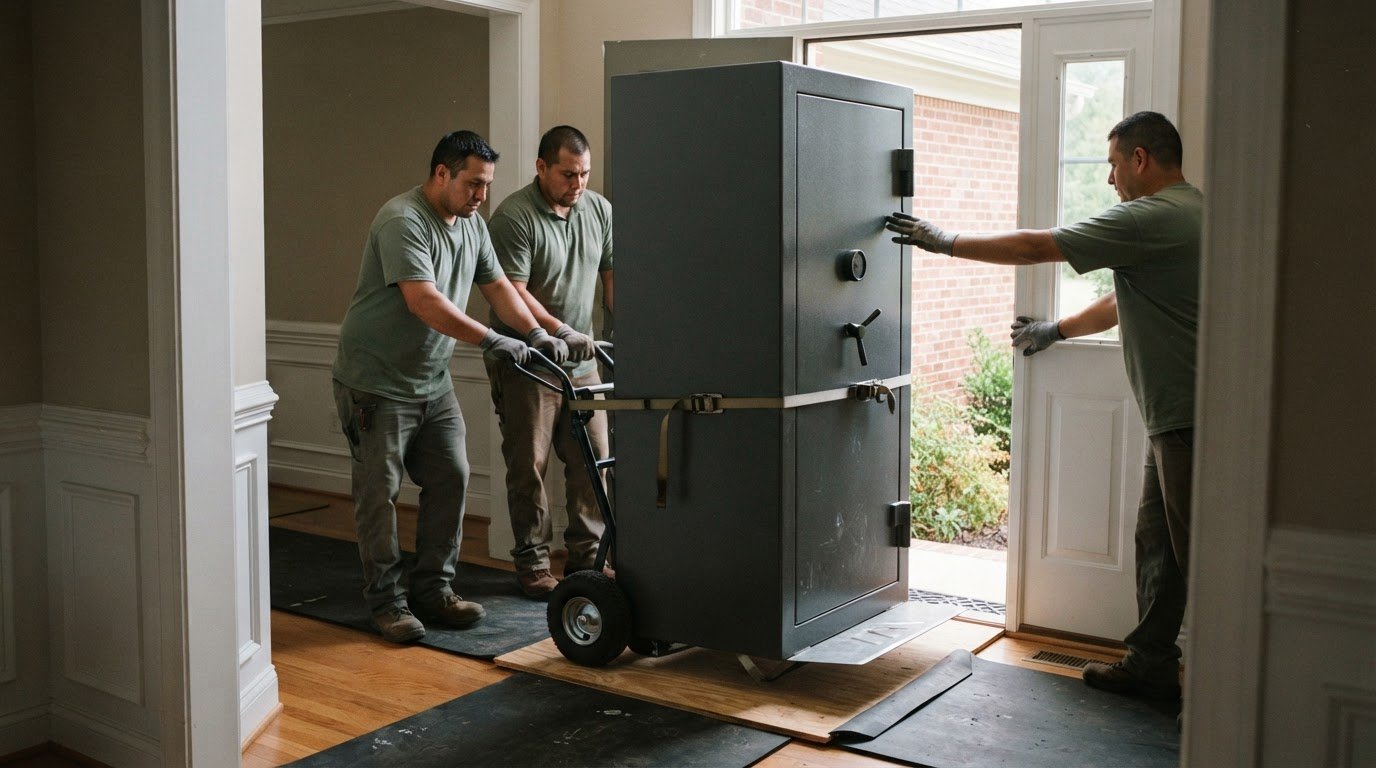
Heavy Furniture Moving helps with bulky furniture moves when a sectional’s weight, narrow doorway, or hallway turn makes handling difficult. Its in-home furniture movers can help manage the lift and maneuvering through the apartment. Share the sectional’s dimensions and any tight points along the route.
Consider professional help if the sofa won’t move smoothly, needs a controlled vertical carry, or the stairs and turns leave little room to adjust. Experienced movers can handle the physical work while keeping the planned route and protection in view.
Contact Heavy Furniture Moving to discuss help with your sectional move.
Set Up Your Sectional Move
Turn your measurements into a clear plan before moving day. For moving a heavy Pottery Barn sectional through a narrow apartment door in Clifton, decide whether the lift and tight turns are manageable with the help available to you. If the route calls for a controlled carry or the sofa needs another way out, experienced furniture movers can handle the physical work.
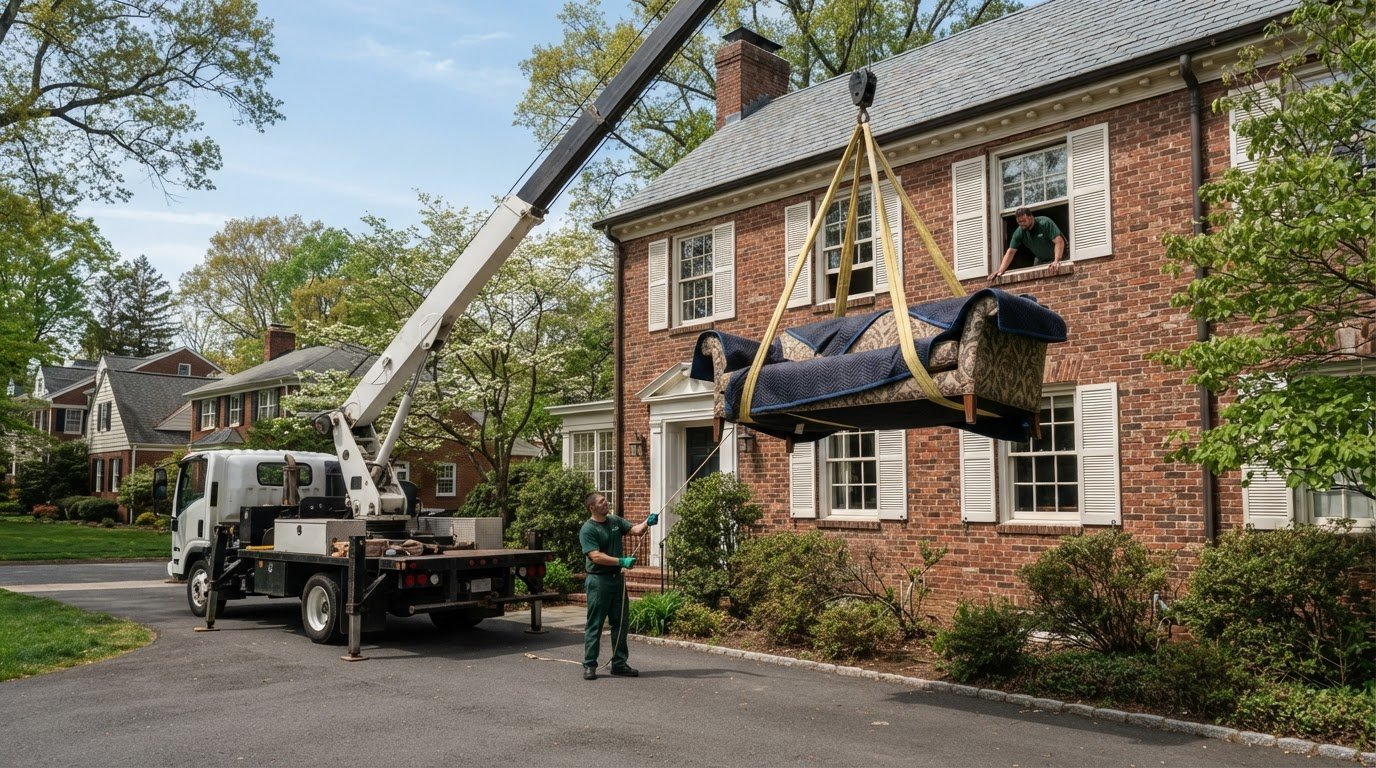
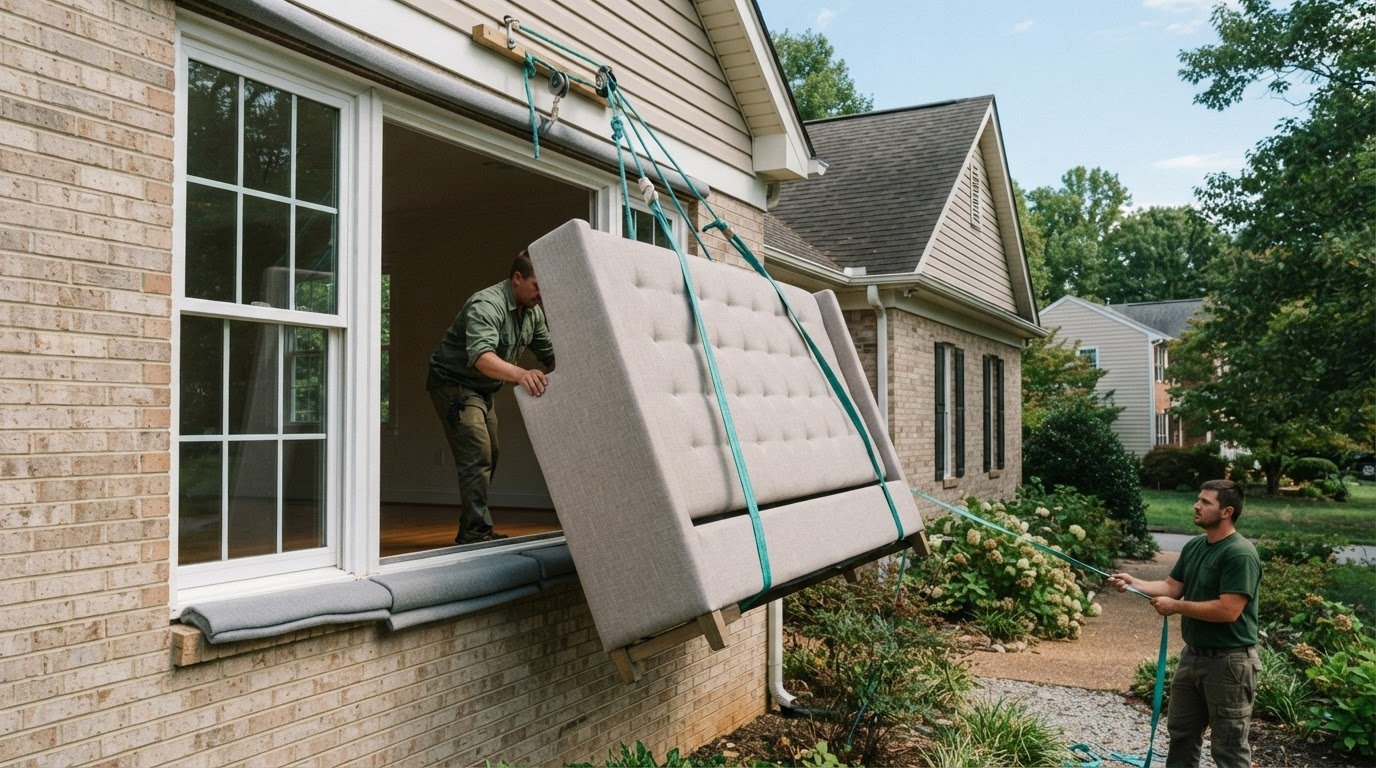
Heavy Furniture Moving offers Movers Near Me, Exercise Equipment Moving, and Sofa Hoisting, as well as help with in-home furniture moves. These services address different heavy-item needs, so focus on the option that fits your move and the obstacle you need to solve.
Plan your sectional move with Heavy Furniture Moving. A measured route and the right support can help you move forward with a practical plan.
Frequently Asked Questions
How to Move Furniture into a Small Apartment?
Plan the sectional’s final position before moving it inside. In a small Clifton, Virginia apartment, sketch the room and place the largest furniture first, leaving clear paths to doors and windows. Move smaller pieces after positioning the sectional so they don’t crowd the turning area. If the sofa has separate sections, bring them in one at a time and connect them where the layout allows.
Can I remove an exterior door to fit something through?
Removing a door from its hinges can widen an entry, but an exterior door may be heavy and awkward to set aside. A slab exterior door can weigh over 80 pounds, so two people may be needed to handle it safely. Protect the door and nearby surfaces as you remove it, and make sure the opening still provides a clear path for the furniture.
How do I protect a tight door frame from damage during the move?
Pad the vulnerable jamb and keep the sectional’s hard edges from striking it as the sofa turns. Moving blankets held with painter’s tape can cushion a tight door frame without pulling paint. Check the padding from both sides of the doorway, since a blanket can shift as the furniture passes. Keep hands clear of the frame and stop if the sofa catches.
How much clearance should furniture have to pass through a doorway?
Aim for at least two inches of clearance between the furniture and the doorway. Less than an inch leaves almost no room for error, especially if the sectional shifts while turning. Measure the actual opening and compare it with the sofa in its intended position. Include the route just beyond the threshold, since a close hallway turn can limit the available angle.
When should you call professional movers for large furniture?
Call professional movers when measurements leave only 1-2 inches of clearance, the sectional is difficult to control, or the route includes stairs and tight turns. A narrow margin makes small shifts more likely to cause a collision or stalled carry. Movers can assess the furniture’s orientation and route before lifting. Heavy Furniture Moving offers Movers Near Me for residential moving help.
How to measure a narrow apartment doorway, hallway, and stairwell for a sectional move
Record the doorway’s clear width and height, then measure the hallway at its narrowest point. For stairs, note the width, lowest ceiling clearance, and each landing’s depth and width. Measure elevator openings if the route uses one. Write down the figures and identify where the sectional must turn, so you can compare each route segment rather than relying on the doorway measurement alone.
How to move a heavy sectional through a narrow doorway without damaging walls or furniture
Wrap the sectional, clear the path, and move it in a controlled position instead of pushing when it catches. Tip the sofa onto one arm, lead a bottom corner toward the opening at about a 45-degree angle, and rotate as the first end passes. Have one person guide the turn and watch the frame. Pause if the furniture stops moving smoothly.
When should you hire professional furniture movers for a narrow apartment door
Hire professional furniture movers when the sectional remains difficult to maneuver after measuring, when stair turns leave little room to reposition it, or when lifting feels hard to control. If it cannot pass through a standard entry or elevator, Heavy Furniture Moving offers Sofa Hoisting as another option. Share the route’s tightest point and the sectional’s configuration when planning your move.
Frequently Asked Questions
Plan the sectional’s final position before moving it inside. In a small Clifton, Virginia apartment, sketch the room and place the largest furniture first, leaving clear paths to doors and windows. Move smaller pieces after positioning the sectional so they don’t crowd the turning area. If the sofa has separate sections, bring them in one at a time and connect them where the layout allows.
Removing a door from its hinges can widen an entry, but an exterior door may be heavy and awkward to set aside. A slab exterior door can weigh over 80 pounds, so two people may be needed to handle it safely. Protect the door and nearby surfaces as you remove it, and make sure the opening still provides a clear path for the furniture.
Pad the vulnerable jamb and keep the sectional’s hard edges from striking it as the sofa turns. Moving blankets held with painter’s tape can cushion a tight door frame without pulling paint. Check the padding from both sides of the doorway, since a blanket can shift as the furniture passes. Keep hands clear of the frame and stop if the sofa catches.
Aim for at least two inches of clearance between the furniture and the doorway. Less than an inch leaves almost no room for error, especially if the sectional shifts while turning. Measure the actual opening and compare it with the sofa in its intended position. Include the route just beyond the threshold, since a close hallway turn can limit the available angle.
Call professional movers when measurements leave only 1–2 inches of clearance, the sectional is difficult to control, or the route includes stairs and tight turns. A narrow margin makes small shifts more likely to cause a collision or stalled carry. Movers can assess the furniture’s orientation and route before lifting. Heavy Furniture Moving offers Movers Near Me for residential moving help. How to measure a narrow apartment doorway, hallway, and stairwell for a sectional move Record the doorway’s clear width and height, then measure the hallway at its narrowest point. For stairs, note the width, lowest ceiling clearance, and each landing’s depth and width. Measure elevator openings if the route uses one. Write down the figures and identify where the sectional must turn, so you can compare each route segment rather than relying on the doorway measurement alone. How to move a heavy sectional through a narrow doorway without damaging walls or furniture Wrap the sectional, clear the path, and move it in a controlled position instead of pushing when it catches. Tip the sofa onto one arm, lead a bottom corner toward the opening at about a 45-degree angle, and rotate as the first end passes. Have one person guide the turn and watch the frame. Pause if the furniture stops moving smoothly. When should you hire professional furniture movers for a narrow apartment door Hire professional furniture movers when the sectional remains difficult to maneuver after measuring, when stair turns leave little room to reposition it, or when lifting feels hard to control. If it cannot pass through a standard entry or elevator, Heavy Furniture Moving offers Sofa Hoisting as another option. Share the route’s tightest point and the sectional’s configuration when planning your move.