
How to Move a Heavy Planter in Chantilly: A Safe, Practical Guide

What if the safest way to move a heavy planter is to avoid lifting it at all? A pot that feels manageable when empty can become a serious load once it’s filled with soil or soaked by rain. Steps, narrow doorways, uneven ground, and tight turns add more risk.
If you’re researching how to move a heavy planter Chantilly, start by assessing the load and route before you lift. It’s easy to underestimate the weight or choose a tool that won’t work for the path ahead. A little planning can help protect you, the planter, and nearby floors or walkways.
This guide will help you check the planter and route, prepare it for moving, and choose a safer method for the job. You’ll also learn when the weight, fragility, or awkward path makes professional help a smarter option. Before asking local movers about a standalone planter move, describe the planter, route, and destination so they can confirm whether they can assist.
Key Takeaways
- For how to move a heavy planter Chantilly, start by considering the full load, including the planter, soil, water, and plant.
- Prepare the planter and clear the route to reduce the chance of damage to floors, walls, steps, or the pot.
- Choose moving equipment to match the planter’s weight, shape, and surface, and don’t rely on wheels or sliders on slopes or steps.
- Move in a controlled, coordinated way and stop if the planter shifts, tilts, or becomes difficult to manage.
- If the planter or route feels unsafe, describe the item, path, and destination to local movers and confirm whether they can help with a single planter.
Moving a Heavy Planter in Chantilly: Assess the Weight, Contents, and Route First
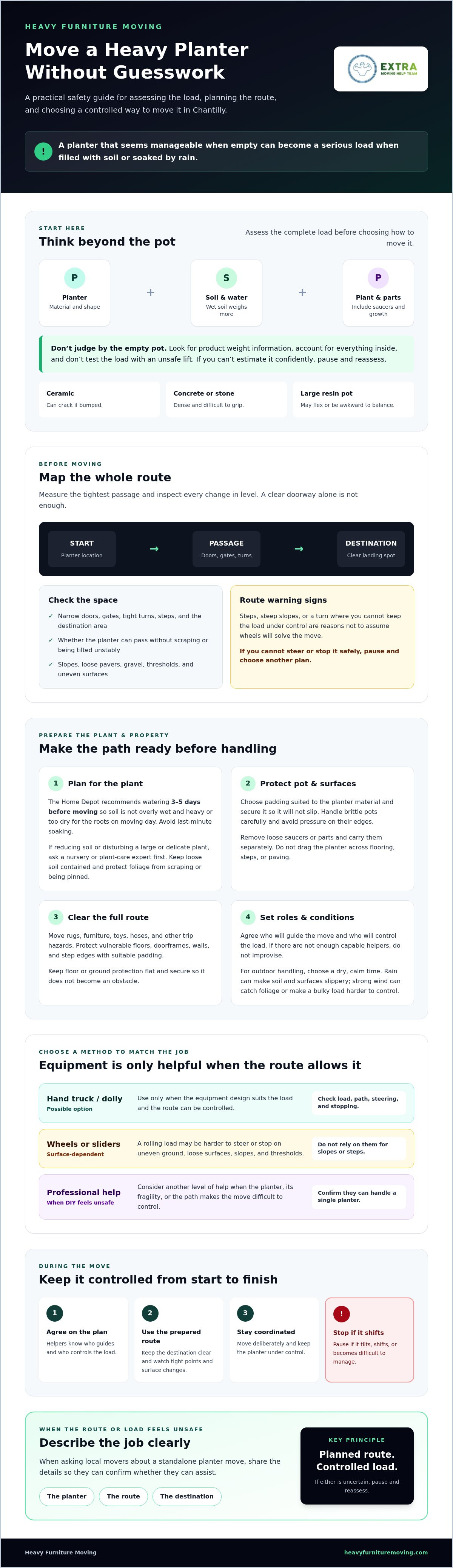
Assess the complete load before choosing how to move it. The planter is only part of the weight: soil, retained water, attached saucers, and a mature plant all add to what you’ll need to control. The material and shape matter too. Ceramic can crack if bumped, concrete and stone are dense and difficult to grip, and a large resin pot may flex or become awkward to balance.
A safe move is a planned route and a controlled load from start to finish. That means checking the planter, the people helping, and the entire path before you commit to lifting or rolling it. A hand truck, also called a dolly, is one possible tool, but its design and suitability depend on the load and route. See this overview of the Hand truck before comparing equipment options later in the guide.
How can you estimate whether a planter is too heavy to move?
Look for manufacturer information or product details that list the planter’s weight. Then account for everything inside it. Wet soil can weigh more than dry soil, while water trapped in the pot or saucer adds weight you may not see. Include the plant, especially if it has grown large or extends beyond the planter. Don’t guess based on the empty pot’s appearance, and don’t test the load with an unsafe lift. If you can’t estimate it confidently, treat that uncertainty as a reason to pause and reassess your plan.
What should you inspect around a Chantilly home before moving it?
Decide first: will the planter pass through the house, or can it travel outdoors? Measure narrow doors, gates, tight turns, steps, and the destination space. Check whether the planter can clear each point without scraping a wall or being tilted into an unstable position. Measure the tightest passage, not just the doorway.
Then inspect the ground. Slopes, loose pavers, gravel, thresholds, and uneven surfaces can make a rolling load harder to steer or stop. Note where the route narrows or changes level, and make sure the landing spot is clear. If the path includes steps, a steep slope, or a turn where you can’t keep the planter under control, don’t assume wheels will solve the problem.
Once you know the load and route, you’ll be better placed to decide how to move a heavy planter Chantilly safely, or whether the job calls for more help than a DIY move can provide.
Prepare the Planter and Clear the Chantilly Moving Route
Once you’ve chosen a route, get the planter and path ready before anyone starts lifting. Pick a dry, calm time for outdoor handling, and check the forecast. Rain can make soil and surfaces slippery; strong wind can catch foliage or make a bulky load harder to control. If conditions change, wait until the route is safer.
Think about the plant as well as the pot. The Home Depot recommends watering a plant 3-5 days before moving so the soil isn’t overly wet and heavy or too dry for the roots on moving day. Avoid last-minute soaking. If you’re removing soil or disturbing a large or delicate plant to reduce the load, ask a nursery or plant-care expert for advice first. Keep loose soil contained and protect foliage from scraping or being pinned against the planter.
Protect the planter and property
Use padding that suits the planter’s material, and secure it so it won’t slip. A soft wrap may help protect a finish from scuffs, while a rigid, brittle pot needs careful handling that avoids pressure on its edges. Remove loose saucers or parts and carry them separately. Don’t drag the planter over flooring, steps, or paving; dragging can damage both the pot and the surface beneath it.
Clear the full path, not just the doorway. Move rugs, furniture, toys, hoses, and other trip hazards. Cover vulnerable floors and protect doorframes, walls, and step edges with suitable padding. For general guidance on planning a lift and handling an object, refer to Stanford Environmental Health & Safety.
Use this quick preparation checklist
- Destination: Clear enough space to set the planter down without twisting or blocking the next step.
- Route: Remove obstacles and check that floor or ground protection stays flat and secure.
- Helpers: Agree on who will guide the move and who will control the load. If there aren’t enough capable helpers, don’t improvise.
- Plant and waste: Plan how to protect the plant. If you remove soil or plant material, check local or property guidance for disposal instead of assuming what’s allowed.
Preparation makes how to move a heavy planter Chantilly less of a guess and more of a controlled plan. If the load still feels too awkward, describe the planter, route, and destination when contacting Heavy Furniture Moving to ask whether the team can help with a single bulky item.
Planter Dollies, Sliders, or Movers: Compare Safer Moving Options
Choose equipment for the full load and the route, not just the planter’s appearance. Check the tool’s stated load rating and compare it with the planter, soil, water, and plant together. Then consider the planter’s base: a narrow, rounded, or tapered shape may sit less securely than a broad, flat one. The ground matters too. A tool that rolls well on smooth flooring may be difficult to control on gravel or uneven paving.
When can a planter dolly or furniture sliders help?
Rolling equipment is best suited to a flat, firm, clear path. A dolly must support the planter securely, and its rating must cover the complete load. Sliders may help across an appropriate smooth surface, but they still require the planter to be lifted enough for safe placement. Don’t use either option on stairs or an uncontrolled slope. Wheels and sliders don’t prevent a top-heavy planter from tipping or rolling away.
For how to move a heavy planter Chantilly, match the method to the hardest part of the route. If the path includes a tight turn, raised threshold, or uneven outdoor section, plan for that obstacle before loading the planter.
Compare your options
DIY help: Consider this only when the load is manageable, helpers can grip and coordinate comfortably, and the route is clear. Stop if the planter shifts or can’t be controlled.
Suitable rolling equipment: A dolly or sliders may work on a level, firm surface if the planter sits securely and the equipment rating is adequate. Avoid stairs, slopes, and rough ground.
Professional movers: Consider asking for an assessment if the planter is heavy, fragile, awkward to grip, or on a difficult route. Share the planter’s material and dimensions, estimated contents, access obstacles, and destination. Confirm whether the team accepts a standalone planter move before making arrangements.
When should you avoid a do-it-yourself move?
Pause if the planter is cracked, top-heavy, waterlogged, or hard to grip. Stairs, narrow turns, fragile finishes, and uneven outdoor paths add control challenges. More helpers don’t automatically make an unsafe plan safe; the team size and equipment must suit both the load and route. If you’re unsure you can keep the planter stable from pickup to set-down, don’t try to force it. Ask local movers whether they can assess the job, and confirm the specific item and conditions with them first.
How to Move a Heavy Planter Safely: A Step-by-Step Method
Use a deliberate process, not a last-minute lift. These steps are for a move you’ve already assessed as manageable, with a clear route and suitable help. If the planter shifts, tilts, or becomes hard to control, stop and reset rather than trying to muscle through.
- Reassess the load. Check that the planter, contents, and any attached parts are stable. If it’s cracked, top-heavy, waterlogged, or too awkward to grip, don’t proceed with a DIY move.
- Prepare the route. Clear obstacles from pickup point to destination. Check the floor or ground for loose, slippery, or uneven areas, and make sure the landing spot is ready.
- Position the equipment. Use only equipment rated for the complete load and suitable for the surface and planter shape. Follow its instructions. Don’t load the planter if it won’t sit securely or the equipment could roll or slip.
- Agree on the move. Make sure each helper knows their role and the direction of travel. Use clear, simple calls before starting, turning, and stopping. Keep the pace slow enough for everyone to respond.
- Move, set down, and inspect. Keep the load controlled and stop if it wobbles or the route changes. Once it’s in place, check the planter for damage and look over the floor or path before removing the equipment.
What steps should you follow for a short move on level ground?
For a genuinely level, clear path, confirm the destination is open before positioning any equipment. Secure the planter only as the equipment instructions allow, then move slowly with helpers coordinating each change in direction. Don’t pull or push in a way that makes the planter tip. After setting it down, check that it’s stable and that neither the planter nor the surface was damaged.
Why do stairs and tight turns change the plan?
Angles can shift soil and water, while a tall planter may become harder to balance through a narrow turn. Don’t improvise a ramp, lifting straps, or a stair-moving technique without the right experience. Never move an unstable planter on stairs without qualified help. If the route requires lifting, stair navigation, or specialized handling, pause and seek a professional assessment instead of adapting a level-ground method.
If you’re unsure whether your load or access route is manageable, share the planter’s details, route, and destination when you ask about heavy-item moving help. Confirm whether the team can assist with a standalone planter before arranging the move.
When to Call Heavy Furniture Moving for a Planter Move in Chantilly
A DIY move may not be the right call if you can’t estimate the planter’s full weight, it’s made of fragile material, the route has stairs or tight turns, or you don’t have enough capable help. Stop if you can’t keep the load stable and controlled. Avoid risking an injury or damaging the planter, your home, or the path just to finish the move yourself.
Heavy Furniture Moving provides residential and specialized heavy-item moving services, and Chantilly is within its stated service area. But planter-specific handling and acceptance of a standalone planter job aren’t confirmed. Ask first. Sharing clear details helps the team determine whether the request fits its services and what additional information may be needed.
What information helps a mover assess a heavy planter move?
Be ready to describe the item and the entire route. Include the planter’s dimensions, material, condition, and whether it contains soil, water, or a plant. Explain where it starts and where it needs to go. Mention stairs, gates, narrow doorways, tight turns, thresholds, slopes, gravel, and other surface conditions that could affect access.
Clear photos can make the conversation more useful. If possible, show the planter from different angles, its base, the narrowest part of the route, any steps or uneven sections, and the destination. Then ask directly whether the team accepts a single bulky-item job like this and whether it can assess the move. Don’t assume that a general heavy-item service automatically includes every planter or access situation.
How can Chantilly residents request professional moving help?
Start with the details, not just the request to move a planter. A concise description of the item, contents, starting point, route, and destination gives the mover a clearer picture of the job. If an important detail is uncertain, say so rather than guessing. Confirm acceptance and any job-specific arrangements before making plans.
For broader information about the company’s local service area, see local movers in Fairfax and Northern Virginia. If you’re considering how to move a heavy planter Chantilly and the load or access feels beyond a safe DIY move, share the details and ask about moving help for your heavy item. The team can confirm whether it can assess this specific request.
Make Your Planter Move a Safer One
A safe planter move starts with a clear plan, not a stronger lift. Assess the full load and route, then choose a method that keeps the planter stable from start to set-down. If the path includes stairs, tight access, or surfaces you can’t control, pause rather than forcing a DIY move.
Still unsure how to move a heavy planter Chantilly? Heavy Furniture Moving serves Chantilly and provides residential and heavy-item moving services, but acceptance of a standalone planter move must be confirmed. Share the planter’s size, material, condition, route, and destination so the team can tell you whether it can assess your request.
Ask Heavy Furniture Moving whether the team can help with your planter move. With the right information and a sensible plan, you can choose your next step with more confidence.
Frequently Asked Questions
How do you move a heavy planter without damaging it?
Protect the planter by planning the route and keeping it stable throughout the move. Check its condition first, since existing cracks or loose parts may worsen with pressure. Use padding suited to the material, and keep the pot from rubbing against walls, doorframes, and hard edges. Avoid dragging it. If you’re unsure how to move a heavy planter Chantilly safely, pause and get advice before attempting a lift.
Should I remove the soil before moving a planter?
Remove some soil only if doing so will reduce the load without putting the plant or planter at risk. Soil can be heavy, especially when wet, but disturbing roots may harm a large or delicate plant. Ask a nursery or plant-care expert before removing the plant or a substantial amount of soil. If you leave the contents in place, account for their weight and keep loose soil contained during the move.
Can you move a large planter with a dolly?
Yes, a dolly may help if it’s rated for the full load and the planter sits securely on it. A flat, firm, unobstructed route is important. Check that the pot won’t wobble or slide, and follow the equipment’s instructions. A dolly isn’t a safe shortcut on stairs, steep slopes, or uneven ground. If you can’t control the planter while it’s on the dolly, stop.
How do you move a heavy planter down steps?
Don’t attempt stairs with an unstable planter or rely on a dolly or improvised ramp to make the descent easier. Steps change the load’s angle and can make the pot difficult to control. If the planter must go down stairs, consider qualified help rather than trying an unfamiliar lifting method. Stop if you can’t keep the load stable, and explain the stairs and access conditions when asking a mover about the job.
Is it safe to move a planter while the plant is inside?
It can be, if the plant and planter remain stable and the move won’t damage the foliage or disturb the roots. Include the plant, soil, and any retained water when considering the load. Protect branches from snagging or being pressed against the pot. For a large or delicate plant, ask a nursery or plant-care expert whether it should stay in the planter or be prepared another way.
When should I hire movers to move a heavy planter in Chantilly?
Consider professional help if you can’t estimate the load, the planter is fragile or awkward to grip, the route includes stairs or tight turns, or you lack adequate help. These conditions make it harder to control the item and protect nearby surfaces. Before arranging anything, describe the planter and route and confirm that the mover can take on this specific job. Don’t proceed with a DIY move if it feels unsafe.
Can Heavy Furniture Moving move a single planter in Chantilly?
Heavy Furniture Moving serves Chantilly and offers residential and specialized heavy-item moving, but acceptance of a standalone planter move isn’t confirmed. Ask the team directly. Share the planter’s dimensions, material, condition, contents, starting point, destination, and any stairs, gates, or tight turns. The company also lists Fairfax, Woodbridge, Manassas, Manassas Park, Aldie, Ashburn, McLean, Vienna, Reston, Centreville, Clifton, Dumfries, South Riding, Fairfax Station, Haymarket, and Gainesville among its local service areas.
Frequently Asked Questions
Look for manufacturer information or product details that list the planter’s weight. Then account for everything inside it. Wet soil can weigh more than dry soil, while water trapped in the pot or saucer adds weight you may not see. Include the plant, especially if it has grown large or extends beyond the planter. Don’t guess based on the empty pot’s appearance, and don’t test the load with an unsafe lift. If you can’t estimate it confidently, treat that uncertainty as a reason to pause and reassess your plan.
Decide first: will the planter pass through the house, or can it travel outdoors? Measure narrow doors, gates, tight turns, steps, and the destination space. Check whether the planter can clear each point without scraping a wall or being tilted into an unstable position. Measure the tightest passage, not just the doorway. Then inspect the ground. Slopes, loose pavers, gravel, thresholds, and uneven surfaces can make a rolling load harder to steer or stop. Note where the route narrows or changes level, and make sure the landing spot is clear. If the path includes steps, a steep slope, or a turn where you can’t keep the planter under control, don’t assume wheels will solve the problem. Once you know the load and route, you’ll be better placed to decide how to move a heavy planter Chantilly safely, or whether the job calls for more help than a DIY move can provide. Once you’ve chosen a route, get the planter and path ready before anyone starts lifting. Pick a dry, calm time for outdoor handling, and check the forecast. Rain can make soil and surfaces slippery; strong wind can catch foliage or make a bulky load harder to control. If conditions change, wait until the route is safer. Think about the plant as well as the pot. The Home Depot recommends watering a plant 3–5 days before moving so the soil isn’t overly wet and heavy or too dry for the roots on moving day. Avoid last-minute soaking. If you’re removing soil or disturbing a large or delicate plant to reduce the load, ask a nursery or plant-care expert for advice first. Keep loose soil contained and protect foliage from scraping or being pinned against the planter.
Rolling equipment is best suited to a flat, firm, clear path. A dolly must support the planter securely, and its rating must cover the complete load. Sliders may help across an appropriate smooth surface, but they still require the planter to be lifted enough for safe placement. Don’t use either option on stairs or an uncontrolled slope. Wheels and sliders don’t prevent a top-heavy planter from tipping or rolling away. For how to move a heavy planter Chantilly, match the method to the hardest part of the route. If the path includes a tight turn, raised threshold, or uneven outdoor section, plan for that obstacle before loading the planter.
Pause if the planter is cracked, top-heavy, waterlogged, or hard to grip. Stairs, narrow turns, fragile finishes, and uneven outdoor paths add control challenges. More helpers don’t automatically make an unsafe plan safe; the team size and equipment must suit both the load and route. If you’re unsure you can keep the planter stable from pickup to set-down, don’t try to force it. Ask local movers whether they can assess the job, and confirm the specific item and conditions with them first. Use a deliberate process, not a last-minute lift. These steps are for a move you’ve already assessed as manageable, with a clear route and suitable help. If the planter shifts, tilts, or becomes hard to control, stop and reset rather than trying to muscle through.
For a genuinely level, clear path, confirm the destination is open before positioning any equipment. Secure the planter only as the equipment instructions allow, then move slowly with helpers coordinating each change in direction. Don’t pull or push in a way that makes the planter tip. After setting it down, check that it’s stable and that neither the planter nor the surface was damaged.
Angles can shift soil and water, while a tall planter may become harder to balance through a narrow turn. Don’t improvise a ramp, lifting straps, or a stair-moving technique without the right experience. Never move an unstable planter on stairs without qualified help. If the route requires lifting, stair navigation, or specialized handling, pause and seek a professional assessment instead of adapting a level-ground method. If you’re unsure whether your load or access route is manageable, share the planter’s details, route, and destination when you ask about heavy-item moving help. Confirm whether the team can assist with a standalone planter before arranging the move. A DIY move may not be the right call if you can’t estimate the planter’s full weight, it’s made of fragile material, the route has stairs or tight turns, or you don’t have enough capable help. Stop if you can’t keep the load stable and controlled. Avoid risking an injury or damaging the planter, your home, or the path just to finish the move yourself. Heavy Furniture Moving provides residential and specialized heavy-item moving services, and Chantilly is within its stated service area. But planter-specific handling and acceptance of a standalone planter job aren’t confirmed. Ask first. Sharing clear details helps the team determine whether the request fits its services and what additional information may be needed.
Be ready to describe the item and the entire route. Include the planter’s dimensions, material, condition, and whether it contains soil, water, or a plant. Explain where it starts and where it needs to go. Mention stairs, gates, narrow doorways, tight turns, thresholds, slopes, gravel, and other surface conditions that could affect access. Clear photos can make the conversation more useful. If possible, show the planter from different angles, its base, the narrowest part of the route, any steps or uneven sections, and the destination. Then ask directly whether the team accepts a single bulky-item job like this and whether it can assess the move. Don’t assume that a general heavy-item service automatically includes every planter or access situation.
Start with the details, not just the request to move a planter. A concise description of the item, contents, starting point, route, and destination gives the mover a clearer picture of the job. If an important detail is uncertain, say so rather than guessing. Confirm acceptance and any job-specific arrangements before making plans. For broader information about the company’s local service area, see local movers in Fairfax and Northern Virginia. If you’re considering how to move a heavy planter Chantilly and the load or access feels beyond a safe DIY move, share the details and ask about moving help for your heavy item. The team can confirm whether it can assess this specific request. A safe planter move starts with a clear plan, not a stronger lift. Assess the full load and route, then choose a method that keeps the planter stable from start to set-down. If the path includes stairs, tight access, or surfaces you can’t control, pause rather than forcing a DIY move. Still unsure how to move a heavy planter Chantilly? Heavy Furniture Moving serves Chantilly and provides residential and heavy-item moving services, but acceptance of a standalone planter move must be confirmed. Share the planter’s size, material, condition, route, and destination so the team can tell you whether it can assess your request. Ask Heavy Furniture Moving whether the team can help with your planter move. With the right information and a sensible plan, you can choose your next step with more confidence.
Protect the planter by planning the route and keeping it stable throughout the move. Check its condition first, since existing cracks or loose parts may worsen with pressure. Use padding suited to the material, and keep the pot from rubbing against walls, doorframes, and hard edges. Avoid dragging it. If you’re unsure how to move a heavy planter Chantilly safely, pause and get advice before attempting a lift.
Remove some soil only if doing so will reduce the load without putting the plant or planter at risk. Soil can be heavy, especially when wet, but disturbing roots may harm a large or delicate plant. Ask a nursery or plant-care expert before removing the plant or a substantial amount of soil. If you leave the contents in place, account for their weight and keep loose soil contained during the move.
Yes, a dolly may help if it’s rated for the full load and the planter sits securely on it. A flat, firm, unobstructed route is important. Check that the pot won’t wobble or slide, and follow the equipment’s instructions. A dolly isn’t a safe shortcut on stairs, steep slopes, or uneven ground. If you can’t control the planter while it’s on the dolly, stop.
Don’t attempt stairs with an unstable planter or rely on a dolly or improvised ramp to make the descent easier. Steps change the load’s angle and can make the pot difficult to control. If the planter must go down stairs, consider qualified help rather than trying an unfamiliar lifting method. Stop if you can’t keep the load stable, and explain the stairs and access conditions when asking a mover about the job.
It can be, if the plant and planter remain stable and the move won’t damage the foliage or disturb the roots. Include the plant, soil, and any retained water when considering the load. Protect branches from snagging or being pressed against the pot. For a large or delicate plant, ask a nursery or plant-care expert whether it should stay in the planter or be prepared another way.
Consider professional help if you can’t estimate the load, the planter is fragile or awkward to grip, the route includes stairs or tight turns, or you lack adequate help. These conditions make it harder to control the item and protect nearby surfaces. Before arranging anything, describe the planter and route and confirm that the mover can take on this specific job. Don’t proceed with a DIY move if it feels unsafe.
Heavy Furniture Moving serves Chantilly and offers residential and specialized heavy-item moving, but acceptance of a standalone planter move isn’t confirmed. Ask the team directly. Share the planter’s dimensions, material, condition, contents, starting point, destination, and any stairs, gates, or tight turns. The company also lists Fairfax, Woodbridge, Manassas, Manassas Park, Aldie, Ashburn, McLean, Vienna, Reston, Centreville, Clifton, Dumfries, South Riding, Fairfax Station, Haymarket, and Gainesville among its local service areas.


