How to Move a Heavy Oak Dining Table in Chantilly Safely
If your oak table legs won’t come off, don’t force them. Wrap the legs and protect the frame with a thick moving blanket, then plan to carry and load the table with its legs attached. Moving a heavy solid oak dining table with extensions attached in Chantilly takes careful handling, but a calm, step-by-step plan can help protect the table and your home.
It’s understandable to worry about the table’s weight, tight doorways, and delicate wood. Start by inspecting the table and removing only parts that come off without force. Then protect the top and extensions, clear the route, and lift from the base, not the legs or tabletop.
This guide covers each stage, including what to do when the legs stay firmly in place. You’ll learn how to prepare the table, remove parts where possible, carry it, and secure it for the move. If it’s too awkward to handle comfortably, professional movers can take care of the heavy lifting.
Key Takeaways
- Inspect the table and photograph existing marks before wrapping it, including the underside and leg connections.
- Remove extension leaves and detachable parts where practical, and keep fasteners labeled with the pieces they belong to.
- If the legs won’t come off easily, don’t force them; protect the frame and plan the move with the legs attached.
- Clear the carrying route and lift the table by its base or apron, not by its legs or edges.
- Use the table’s size, route, and lifting demands to decide whether moving it yourself is manageable or professional help makes more sense.
Carrying and loading tables safely
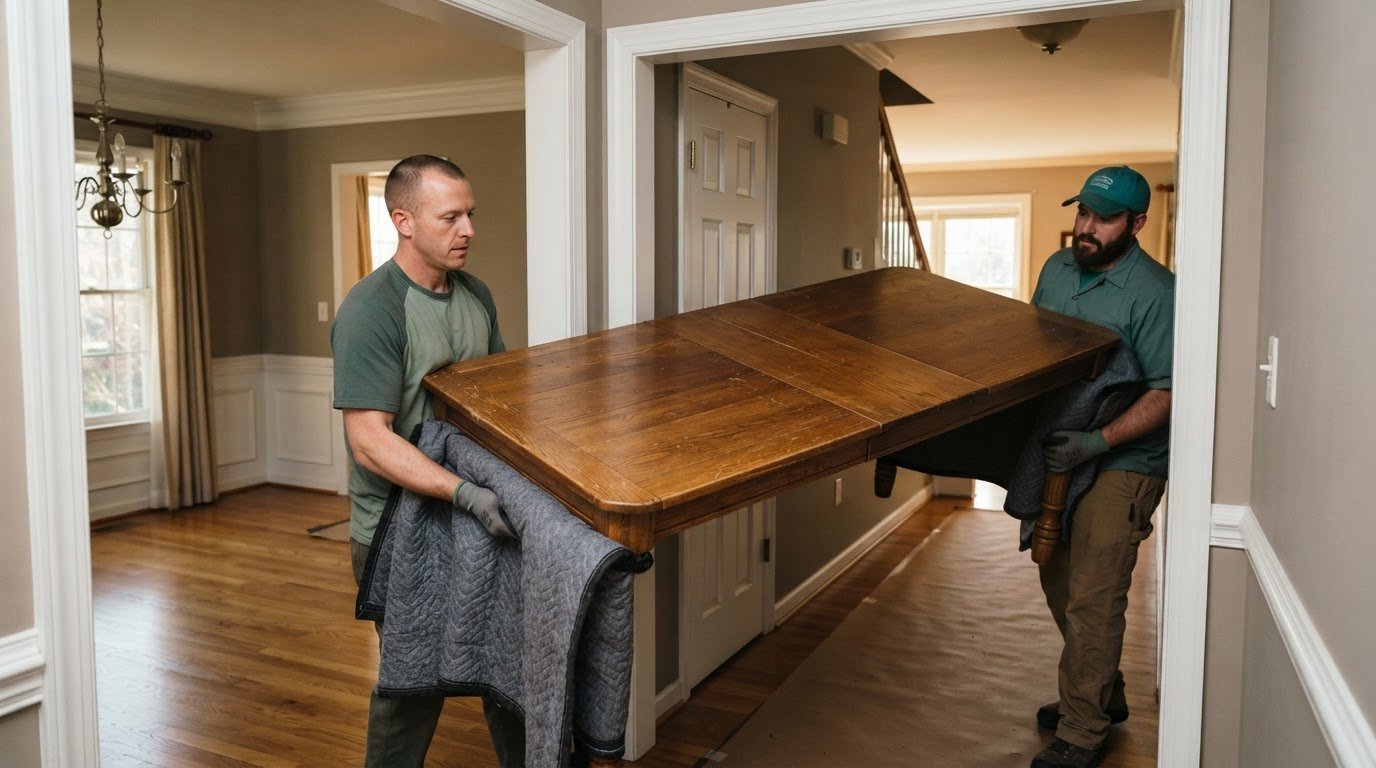
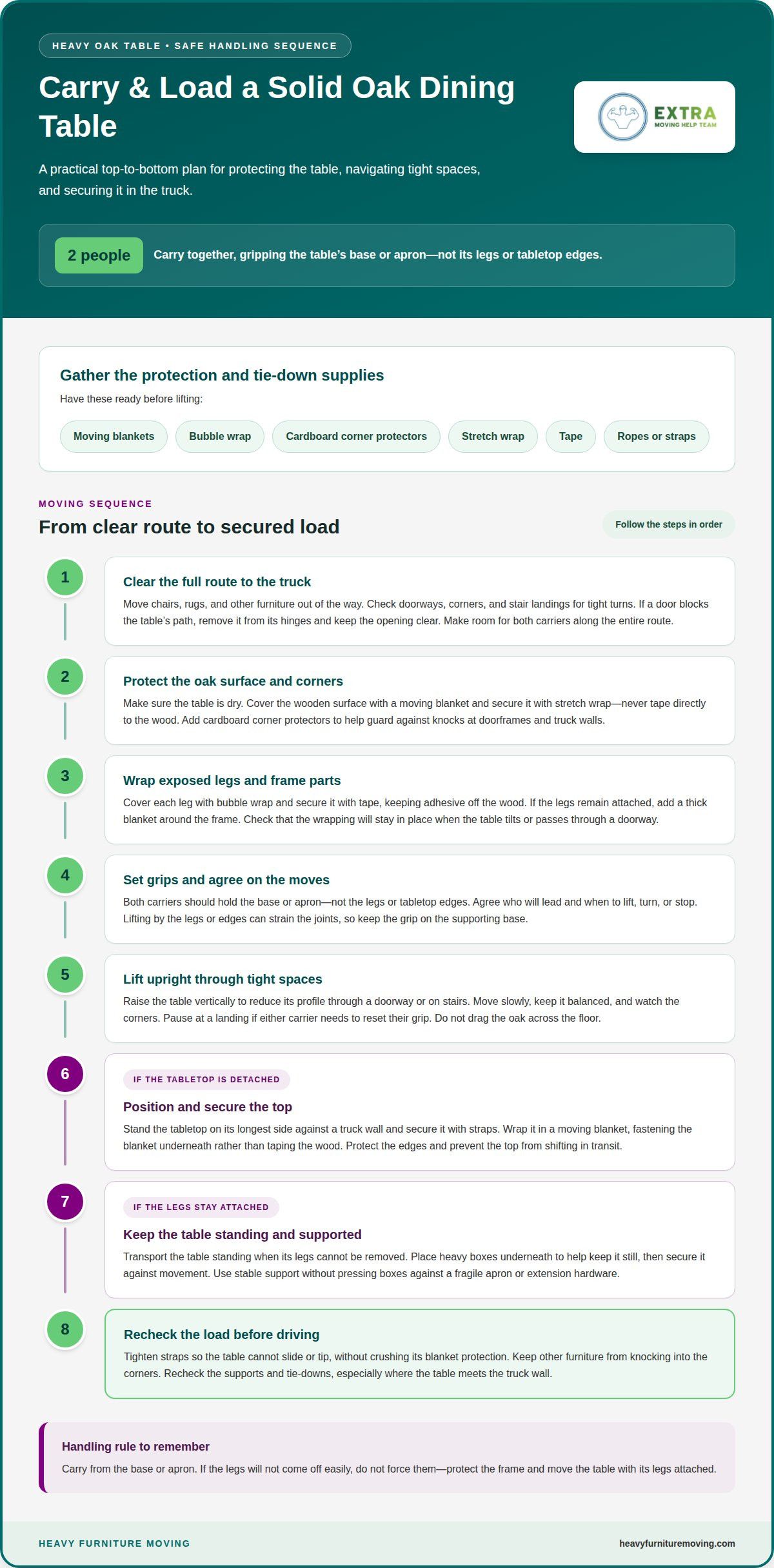
For moving a heavy solid oak dining table with extensions attached in Chantilly, gather moving blankets, bubble wrap, cardboard corner protectors, stretch wrap, tape, and ropes or straps. Two people should carry it by the base, not the legs or tabletop. Clear the route first; a narrow doorway or staircase may be manageable if you lift the table vertically and guide it carefully.
- Clear the path to the truck. Move chairs, rugs, and other furniture out of the route before lifting. Check doorways, corners, and stair landings for tight turns. Remove a door from its hinges if it blocks the table’s path, then keep the opening clear. Make sure there is room for both carriers along the full route.
- Protect the oak before carrying. Make sure the table is dry, then cover the wooden surface with a moving blanket. Secure the blanket with stretch wrap, never tape directly to the wood. Place cardboard corner protectors over each corner to help prevent knocks against doorframes or truck walls.
- Wrap exposed legs and frame parts. Cover each table leg with bubble wrap and secure the wrap with tape, keeping adhesive off the wood. Add a thick blanket around the frame where legs remain attached. Check that the wrapping won’t slip when the table tilts or passes through a doorway.
- Set your grips before lifting. Have two people hold the table’s base or apron, not its legs or tabletop edges. Lifting from the legs or edges can strain the joints. Agree who will lead and when to lift, turn, or stop, so you move together.
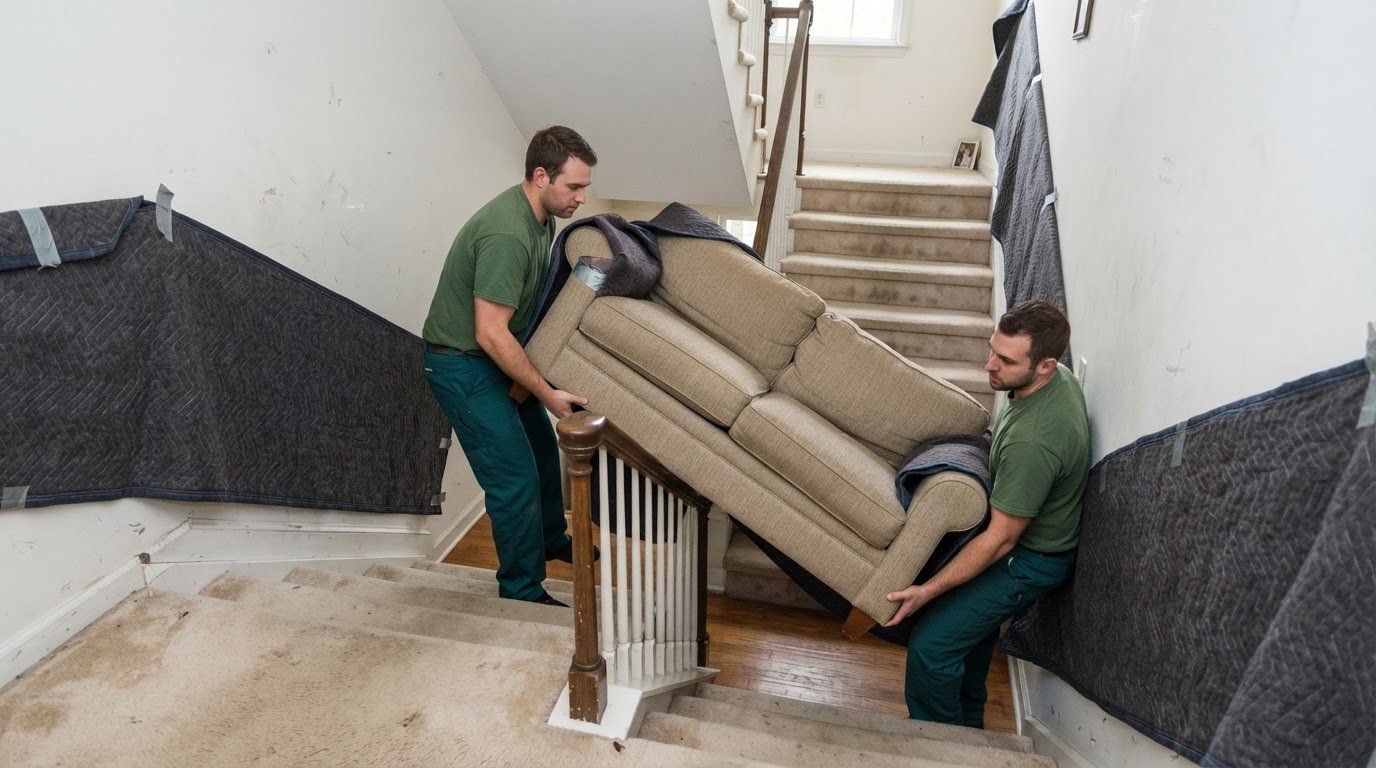
- Lift upright through tight spaces. Raise the table vertically to reduce its profile through a doorway or on stairs. Move slowly, keeping the table balanced and watching the corners. Pause at a landing if either carrier needs to reset their grip; don’t drag the oak across the floor.
- Load a detached top on its longest side. Position the tabletop against a truck wall and secure it with straps. Wrap it in a moving blanket, fastening the blanket underneath rather than taping the wood. Protect the edges and prevent the top from shifting during transit.
- Stabilize a table whose legs stay attached. Transport it standing when its legs cannot be removed. Place heavy boxes underneath to help keep it still, then secure the table against movement. Make sure the boxes provide stable support without pressing against a fragile apron or extension hardware.
- Secure the load before driving. Tighten the straps so the table cannot slide or tip, without crushing its blanket protection. Keep other furniture from knocking into the corners. Before departure, recheck the supports and tie-downs, especially where the table meets the truck wall. Moving a heavy solid oak dining table with extensions attached in Chantilly calls for a stable load from the start.
Inspecting the table and photographing existing damage
- Inspect the table before wrapping or lifting it. Walk around the oak top, apron, legs, and extensions in good light. Look for scratches, dents, loose joints, cracks, water marks, or changes in the finish. A clear initial inspection helps distinguish existing wear from damage that may occur during the move.
- Photograph the full table from multiple angles. Take a picture of each side, then close-ups of visible scratches, dents, and worn edges. Keep the camera steady and include enough surrounding detail to show where each mark is. These photos create a useful record before packing begins.
- Capture the underside and leg connections. Examine where each leg meets the frame. Photograph loose-looking joints, chipped wood, old repairs, or missing hardware. The underside can reveal damage that’s easy to miss during everyday use. Clear images show the table’s condition before disassembly.
- Check every extension leaf separately. Inspect both faces and all edges for cracks, chips, stains, or warping. Photograph each leaf beside the table, and note which edge or end fits into the extension opening. This makes it easier to match the pieces later and spot damage that stacked leaves could conceal.
- Note movement or looseness without forcing parts. Gently check whether the table rocks on the floor or whether the legs or apron shift under light hand pressure. Don’t pull on a joint or test it by lifting the table. Record any wobble and photograph the connection so the issue stays visible during preparation.
- Use a simple location label for each photo. Name images by part and position, such as “left front leg” or “tabletop near extension.” Add a short note describing the shape and location of each mark. This turns your phone gallery into a practical record rather than a set of hard-to-identify close-ups.
- Review the photos before packing. Compare the tabletop, apron, legs, and extensions against your notes. Add a picture if a scratch is blurry or its location is unclear. Keep the original images together, and avoid editing out marks or changing the image, so the record accurately reflects the oak furniture.
- Use the inspection to guide handling. Note fragile edges and loose areas, then plan how to protect them during the move. For example, pad a chipped tabletop corner before it passes a doorway. A weak-looking leg joint needs careful support, not extra pressure during lifting.
Preparing and disassembling a dining table
First, estimate the table’s weight from its size, solid-oak construction, and number of extension leaves. There’s no single weight for every table, so consider its construction and parts when planning how to handle it.
Assessing the Table’s Weight
Check the tabletop’s dimensions and thickness, along with the base and attached leaves. A broad, thick top and several extensions add bulk, while the leg and apron design affect how the table can be supported. Don’t guess from appearance alone or test the weight by lifting one edge.
- Assess the full assembled table. Note which leaves are attached and whether the base has a central support or separate legs. These details affect weight distribution and where carriers can safely grip.
- Plan around the heaviest component. Removing leaves may reduce the load and make the remaining parts easier to handle. A solid-oak top can still be bulky after the extensions are removed.
- Check how the table opens. Traditional wooden-slide dining tables generally take two people to open or close. Metal gear slides can allow one person to operate the table from one side, so identify the slide type before moving it.
Preparing the Table for Disassembly
Prepare the dining room before taking anything apart. Clear the tabletop and nearby furniture, then set aside a clean space for leaves and hardware. Wipe the wood with a slightly damp cloth and dry it immediately. The table should be dry before wrapping to help protect its finish.
- Open the table carefully. Follow the movement of the slides and support the tabletop as the leaves are exposed. Don’t force a stuck section. Resistance may mean the leaves or slide mechanism need a closer look.
- Remove leaves one at a time. Lift each extension out without scraping its edges against the tabletop. Set the leaves on a stable, clean surface and keep them in the order they came out to make reassembly easier.
- Keep hardware with its matching part. Put screws, bolts, and fasteners in clearly marked zip-lock bags. Label each bag by component, then keep it with that part so it won’t get separated during transport.
- Protect the frame and finish. Use a clean moving blanket after the table is dry. If you choose to prepare the wood with polish or wax, allow 15-20 minutes for that preparation, and avoid wrapping before the surface is dry.
- Pause if a connection resists. Check for hidden fasteners before continuing. Support the parts while loosening them, and don’t twist a leg or pull against the apron. Stopping to inspect can prevent strain on the joints.
Removing table legs and extension leaves
Remove only parts that come away without force. Work in a clear space and support each detached piece as you go.
Removing the Table Legs
- Check how each leg is attached. Look underneath the table for visible fasteners or signs that a connection is glued or firmly fixed. Keep the frame supported while examining it. Don’t twist a leg or pull hard to see whether it will come loose.
- Remove only legs that release cleanly. Carefully loosen accessible fasteners and support the leg as it separates. Keep screws and bolts together in a labeled bag. Detachable legs can make the dining table easier to carry and pack.
- Stop if a leg resists. Don’t force off glued or firmly attached legs. A sudden pull can strain the joint or damage the oak. Leave the leg in place, wrap it for protection, and cover the frame with a thick blanket.
Removing the Extension Leaves
- Open the table slowly and identify its slide. Traditional wooden-slide tables generally need two people to open or close. Metal gear slides can let one person operate the table from one side. Let the slide type guide how you open the table, and stop if it catches.
- Support each leaf as you remove it. Lift the extension out carefully, without scraping its edges against the tabletop. Traditional leaves are often 12 inches or 16 inches wide, so set aside enough clear space to handle each piece securely.
- Keep leaves flat and grouped together. Wooden slides can support substantial weight and extend far enough for multiple leaves. Keep removed leaves in order, protect their surfaces, and avoid leaning them where they could shift or fall.
- Label the parts and their order. Mark each leaf with its position, then keep its fasteners with the matching table component. Clear labels make it easier to reassemble the table without guessing which piece belongs where.
- Account for tables with many extensions. Wooden slides are used for most leg tables and all tables with five or more extensions. Geared slides cannot be used on tables with five or more extensions. A split-pedestal table can accommodate as many as 14 leaves, so keep every leaf accounted for.
Before wrapping, account for all detached legs, leaves, and fasteners. If the legs remain attached, protect them and the frame rather than forcing a joint apart. This prepares the table for safer packing and loading.
Moving a table yourself or hiring movers
Choose a plan based on the table, the route, and the lifting task. Attached legs, narrow turns, or stairs require careful coordination.
Moving the Table Yourself
- Walk the full route before lifting. Check doorways, corners, stairs, and the path to the truck. Measure tight openings against the table’s widest point, including attached leaves and legs. Clear furniture and obstacles first, so carriers don’t need to change direction unexpectedly.
- Use a capable, coordinated lifting team. Two people should carry a dining table by its base, not its legs or tabletop edges. Agree who leads and use clear commands for lifting, turning, and stopping. Don’t begin if either person can’t keep a secure grip.
- Make the table easier to handle. Remove extension leaves and legs only if they come off without force. Protect attached legs and plan the route around their full reach. If the table won’t turn through a doorway without twisting, stop and reassess instead of pushing it through.
- Prepare the truck before carrying. Clear the loading path and make room for the table’s position. A detached top can rest on its longest side against a truck wall and be secured with straps. A table with legs attached can travel standing, with heavy boxes underneath to help keep it still.
- Choose a different plan when the lift feels unstable. Stop if the table tilts, a carrier loses balance, or stairs leave no room to adjust grips. Don’t drag the oak or use its legs as handles. These are signs that the current approach isn’t controlled enough.
Hiring Movers for the Table
- Bring in moving help when the route or load is difficult. A heavy oak table with firmly attached legs, extension leaves, or a narrow stair turn can be hard to manage safely. Professional movers can handle the lifting and loading as part of a heavy lifting moving service.
- Share the details that shape the move. Describe the table’s attached parts, any legs that won’t come off, and the route from the dining room to the truck. Mention tight doorways, stairs, and turns. These details help movers plan how to carry and position the table.
- Decide what kind of help you need. If you can prepare the table but need help with the carry, labor-only moving help may fit. If you need help with the heavy item and its loading, choose moving assistance that covers those tasks.
- Use the table’s condition and route as your guide. A clear, level path and detachable parts may make a self-move manageable. Attached legs, stairs, or a tight turn can make professional lifting the safer practical choice. Get help with heavy lifting when the table is too awkward to move with control.
Heavy Furniture Moving
Heavy Furniture Moving can help when an oak table is too awkward to carry or load safely. Turn to professional furniture movers if its legs won’t come off, the route includes stairs or tight turns, or you don’t have enough capable helpers. Share details about the table, attached extensions, and access route so the move can be planned around the actual challenges.
For a manageable route, you may prepare the table yourself and get help with the lifting. For a difficult carry, in-home furniture moving help can reduce the strain of handling a bulky piece through your home and into the truck. Contact Heavy Furniture Moving to discuss help with your table move.
Make the Move Easier on Your Home and Table
Set a clear plan before moving day: decide whether you’ll handle the carry yourself or bring in help. For moving a heavy solid oak dining table with extensions attached in Chantilly, the right choice depends on the table’s shape, the route through your home, and the help available. A steady plan lets you focus on getting the table where it belongs instead of improvising at a difficult doorway.
Heavy Furniture Moving offers Movers Near Me, Exercise Equipment Moving, and Sofa Hoisting. If the table’s size or route makes the lift feel like too much, choose support that fits the job and your home.
Contact Heavy Furniture Moving to discuss help with your table move. Take the next step with a plan that feels manageable, and look forward to enjoying your table in its new spot.
Frequently Asked Questions
What should I do if the table legs won't come off?
Leave firmly attached legs in place rather than forcing them loose. Pulling or twisting a resistant leg can strain the joint and damage the oak. Keep the table supported, protect the legs and frame, and plan around the table’s full shape. If the attached legs make the carry difficult, professional heavy-lifting help can handle the awkward item without requiring disassembly.
How much does it cost to move a heavy solid oak dining table in Chantilly, VA?
The quote depends on the table and the work involved. Share its dimensions, whether extensions or legs remain attached, and whether stairs or landings are on the route. Heavy Furniture Moving provides a job-based quote, with stairs and landings priced before the crew arrives. A photo of the table and access route can help describe the job.
What local movers in Chantilly specialize in moving heavy furniture?
Heavy Furniture Moving serves Chantilly and helps move heavy and bulky household items. It’s a local option if you need help carrying or loading a solid oak table. Share the table’s shape, attached pieces, and route details when discussing the move. This clarifies the lifting and access needs, especially if the table must pass through a tight entrance or around a stair landing.
Should the extensions be removed before moving a solid oak table?
Remove extension leaves if they come out easily and can be handled safely. Detached leaves reduce the table’s size and can make tight turns simpler. Don’t force a leaf that catches in its slide. Check how the table opens and support the leaf as it comes free. If the extensions must stay attached, account for their full reach when planning the path and truck position.
What are the risks of moving a solid wood dining table without professional help?
A DIY move can strain the table’s joints if someone lifts from a leg or edge. An awkward turn can bring the tabletop into a doorway or wall, while an unstable carry can make the load shift. Stairs leave less room to adjust grips. If the route or weight feels hard to control, arrange help instead of improvising mid-carry.
Do Chantilly moving companies charge extra for heavy or oversized furniture?
Pricing depends on the moving company and the job, so there isn’t one rule for every Chantilly mover. Heavy Furniture Moving quotes based on the work, and stairs or landings are priced before the crew arrives. Wrap, moving blankets, and straps are included on every job. Provide the table’s dimensions and route details when requesting a quote so the access and handling needs can be considered upfront.
Frequently Asked Questions
Leave firmly attached legs in place rather than forcing them loose. Pulling or twisting a resistant leg can strain the joint and damage the oak. Keep the table supported, protect the legs and frame, and plan around the table’s full shape. If the attached legs make the carry difficult, professional heavy-lifting help can handle the awkward item without requiring disassembly.
The quote depends on the table and the work involved. Share its dimensions, whether extensions or legs remain attached, and whether stairs or landings are on the route. Heavy Furniture Moving provides a job-based quote, with stairs and landings priced before the crew arrives. A photo of the table and access route can help describe the job.
Heavy Furniture Moving serves Chantilly and helps move heavy and bulky household items. It’s a local option if you need help carrying or loading a solid oak table. Share the table’s shape, attached pieces, and route details when discussing the move. This clarifies the lifting and access needs, especially if the table must pass through a tight entrance or around a stair landing.
Remove extension leaves if they come out easily and can be handled safely. Detached leaves reduce the table’s size and can make tight turns simpler. Don’t force a leaf that catches in its slide. Check how the table opens and support the leaf as it comes free. If the extensions must stay attached, account for their full reach when planning the path and truck position.
A DIY move can strain the table’s joints if someone lifts from a leg or edge. An awkward turn can bring the tabletop into a doorway or wall, while an unstable carry can make the load shift. Stairs leave less room to adjust grips. If the route or weight feels hard to control, arrange help instead of improvising mid-carry.
Pricing depends on the moving company and the job, so there isn’t one rule for every Chantilly mover. Heavy Furniture Moving quotes based on the work, and stairs or landings are priced before the crew arrives. Wrap, moving blankets, and straps are included on every job. Provide the table’s dimensions and route details when requesting a quote so the access and handling needs can be considered upfront.