How to Move a Heavy Multi-Tier Bookcase in Aldie, VA
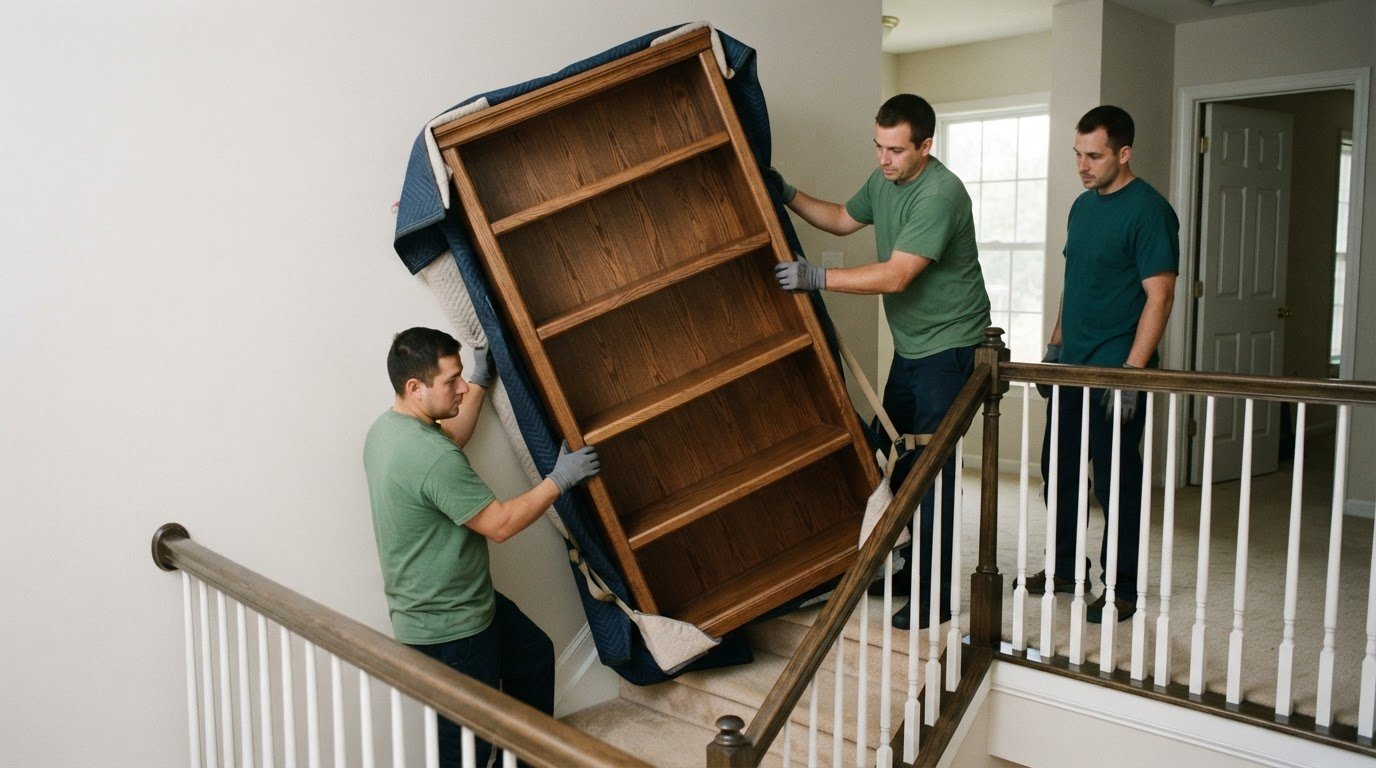
A solid-wood bookcase can be harder to move safely than its size suggests. Professional movers for a heavy multi-tier solid wood bookcase in Aldie can help when you can’t control the piece securely on your own. If you move it yourself, empty it first, measure the route, and don’t attempt stairs with an item over 200 pounds without professional equipment.
It’s understandable to worry about more than lifting. A tall bookcase can tip, scrape walls, or shift in a vehicle if it isn’t handled and secured carefully. Assess its weight, construction, height, and the tightest points along the route before deciding who should move it.
This guide covers how to assess the bookcase, prepare the route, and protect it during transport. You’ll also learn how to position and secure it in a truck so it stays stable on the way to its next home.
Key Takeaways
- Empty the bookcase before moving it, and keep any screws or fittings organized if you disassemble it.
- Assess the bookcase’s weight and construction before choosing a moving method; stairs and awkward handling can raise the risk.
- Measure the bookcase and the full route, including doorways, hallways, and stairs, to spot tight turns before moving day.
- Plan truck placement carefully: a bookcase’s thin back panel can crack under stacked weight, so keep it protected and secure it against shifting.
- Understand which project details affect a heavy-item moving quote, such as the item’s size, weight, and handling needs.
Is It Really Hard to Move a Heavy Bookcase Yourself?
- Empty every shelf before moving. Books shift and add weight, while loose objects can fall during a tilt. Pack them separately, keeping book boxes to 40-45 pounds. A large box filled with books can reach 60 to 70 pounds, making it difficult to lift safely. Clear the shelves, drawers, and top before handling the bookcase.
- Decide whether the bookcase should stay intact. Solid wood pieces with glued or pegged joints are often better moved intact if they fit through the route and can be carried safely. Disassembly can loosen joints or damage an antique finish. Check the frame and construction first, and don’t pry apart fixed joints just to make the bookcase easier to carry.
- Disassemble only removable parts. If the bookcase has doors, adjustable shelves, or a detachable top, remove only parts designed to come off. Work on a protected floor, use the correct screwdriver, and set each piece aside carefully. Keep shelves flat and supported so they don’t bend, and protect finished surfaces from tools and hardware.
- Keep every fitting organized. Put screws, pegs, brackets, and hinges from each section into a separate labeled bag. Photograph the bookcase before removing pieces, including close-ups of unusual connections. Keep the bags together in a small container you can find at the destination. Avoid sticking tape directly to hardwood or finished wood.
- Check your lifting plan before the first move. Overexertion injuries account for over 30% of moving-related injuries, and back injuries account for 60%. Keep the load close, bend at the knees, and avoid twisting while carrying. Get a clear agreement with helpers about who leads, when to lift, and where to set the bookcase down.
- Stop if the route or weight exceeds your control. Don’t attempt stairs with an item over 200 pounds without professional equipment. A tall, narrow bookcase can become unstable when tilted, even after you remove its contents. If you can’t keep the piece steady, or the path requires awkward lifting, professional help is the safer choice.
- Protect floors and the bookcase during movement. Clear rugs, cords, and small objects from the path before lifting. Use suitable floor protection, especially on hardwood, and move slowly through turns. Keep hands clear of pinch points where the bookcase meets a wall or doorway. Stop and reset your grip if the frame shifts or a helper loses control.
What is Considered Heavy Furniture?
For a Virginia move, licensing requirements can depend on whether the move stays within the state or crosses state lines. Coverage for antique or solid wood furniture depends on the mover’s written valuation and policy terms. Don’t assume standard coverage equals full replacement value.
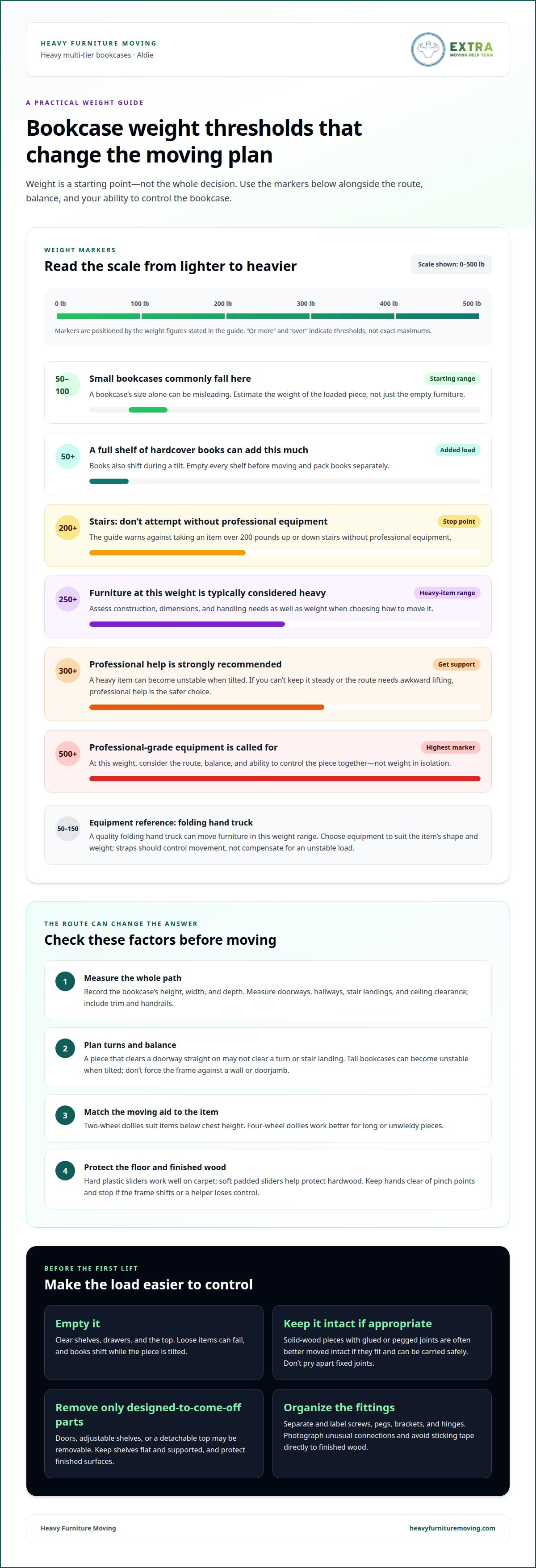
- Use weight as a starting point. Small bookcases commonly fall in the 50-100-pound range, while furniture weighing 250 pounds or more is typically considered heavy. A full shelf of hardcover books can add 50 pounds or more, so estimate the loaded piece’s weight rather than judging its size alone.
- Measure the bookcase and every tight point. Record its height, width, and depth, then measure doorway openings, hallway widths, stair landings, and ceiling clearance. Include trim and handrails in your measurements. A bookcase that fits through a doorway straight on may still not clear a turn or stair landing.
- Map the route before moving the heavy item. Compare the bookcase dimensions with each narrow point, and note where it must turn or tilt. A tall bookcase may clear a doorway at an angle if its depth and width allow. Don’t force the frame against a wall or doorjamb to make it fit.
- Choose moving equipment for the shape and weight. A quality folding hand truck can move furniture weighing 50-150 pounds. Two-wheel dollies suit items below chest height; four-wheel dollies work better for long or unwieldy pieces. Use straps to control movement, not to compensate for an unstable load.
- Protect the floor surface. Hard plastic sliders work well on carpet, while soft padded sliders help protect hardwood from scratches. Place sliders under the furniture legs before moving. Keep the bookcase upright only while it remains stable, and avoid dragging it across exposed floor surfaces.
- Bring in professional help when the route exceeds your control. Don’t attempt stairs with items over 200 pounds without professional equipment. Professional help is strongly recommended for furniture over 300 pounds, and items weighing 500 pounds or more call for professional-grade equipment. Consider the route, balance, and ability to control the piece together.
- Reduce risk to people, walls, and furniture. A tall heavy bookcase can tip during a turn, while an awkward angle can scrape walls or damage a stair rail. Clear the route and keep the piece balanced through each transition. For a difficult indoor carry, in-home furniture moving help can take on the heavy lifting.
The applicable licensing requirements depend on whether the move stays within Virginia or crosses state lines.
Considering bookcase dimensions, style, and destination
- Record the bookcase’s shape, not just its height. Note its height, width, depth, overhanging top, feet, and molding. A deep crown can catch a doorway even when the main frame clears. For a multi-tier piece, include shelves and decorative trim in the overall outline. These details help you plan its position and handling before moving day.
- Match the bookcase to its destination. Choose the room and wall before the furniture arrives. Check that the planned spot leaves access to nearby doors, windows, and switches. A wide bookcase may block a closet door when placed beside it, while a tall piece can overwhelm a low-ceiling room. Mark the intended footprint with removable tape.
- Account for style and construction. A carved antique, glass-front cabinet, or bookcase with an ornate cornice needs protection at its most delicate points. Identify loose trim, glass panels, projecting handles, and exposed corners. Don’t let padding press hard against carved details. A plain, sturdy frame may be simpler to handle than a fragile piece with decorative features.
- Check whether the frame is square. Measure both diagonals across the back of a square bookcase. Equal diagonals indicate a square frame; a difference can signal that the structure is out of alignment. Don’t force a twisted piece into a narrow opening. A rigid frame can resist movement, while a flexible or damaged frame may shift as it’s carried.
- Plan the carrying orientation. Decide whether the bookcase can remain upright or needs a controlled tilt. A tall bookcase may clear a doorway if its depth and width allow the angle. Picture the turn from the room into the hall and through each corner. Leave enough space for the people carrying it to adjust their grip smoothly.
- Prepare the destination before arrival. Clear the chosen wall and remove rugs, baskets, and nearby furniture. Protect the floor where the bookcase will stand, especially on hardwood. If the destination is upstairs, clear each landing and remove obstacles from the stair path. A prepared room reduces pauses while a heavy piece is being carried.
- Plan stability after placement. At the destination, load books with the heaviest volumes on the lowest shelves. A bookcase taller than five feet should be anchored to the wall with an anti-tip strap. Keep the piece level and make sure it doesn’t rock before loading it. This final check helps the bookcase remain steady during everyday use.
Loading and securing a bookcase in a truck
- Prepare the truck space before carrying the bookcase. Remove loose tools, boxes, and packing scraps from the loading area. Set moving blankets within reach, and clear the path between the room and truck. A hallway turn or doorway can interrupt the carry, so open the route before lifting. Place equipment where it won’t become a trip hazard.
- Wrap the bookcase before it reaches the loading ramp. Cover the corners, edges, and finished surfaces with moving blankets. Secure the blankets so they don’t slide off during transport. Avoid tight pressure on delicate molding or carved details. A blanket between the bookcase and the truck wall also helps prevent direct contact.
- Load the bookcase upright whenever the truck allows. A bookcase’s back panel may be vulnerable to pressure, so laying it flat with weight stacked on top can cause damage. Laying one flat with weight stacked on top can crack its back panel. Keep the bookcase standing, and don’t use its shelves as a platform for boxes. Choose a position that supports the frame without putting pressure on fragile trim.
- Place it where other cargo won’t press against it. Set the bookcase beside a stable truck wall, away from items that could roll or fall. Keep heavy boxes and equipment off its top and shelves. If the piece has glass doors or projecting handles, leave clearance around them. Check that the truck floor beneath its base is clear.
- Secure the frame against shifting. Use straps or ropes inside the moving vehicle to hold the bookcase in place. Fasten them around sturdy parts of the frame, not delicate trim or a thin back panel. Apply enough pressure to limit movement without crushing the blankets or stressing the wood. Add padding where the bookcase meets the truck.
- Load nearby items without creating a pressure point. Arrange boxes so they don’t lean into the bookcase during a turn or stop. A narrow gap can let cargo slide, while a heavy box wedged against a shelf can strain the frame. Use other secured items to limit movement only if they don’t press on fragile surfaces.
- Inspect the load before transport begins. Look for loose straps, shifted blankets, and cargo touching the bookcase. Check the top, base, and exposed corners, then make sure the piece remains upright and stable. If the truck will carry other furniture, pack around the bookcase carefully. Hiring help for loading can be useful when the item is too awkward to control safely.
How movers price heavy or oversized furniture in Loudoun County
- Describe the bookcase clearly. Include its material, overall dimensions, approximate weight, and whether it has glass doors or decorative trim. For example, a solid-wood bookcase with a deep crown may need different handling from a narrow, plain shelving unit. Accurate details help define the work instead of treating every piece as standard furniture.
- Explain both ends of the move. Share the pickup and delivery locations in Loudoun County, then describe the carrying route at each property. A ground-floor room differs from a destination reached by stairs or a tight hallway. Mention turns, narrow doorways, and elevator access because each can affect the labor and equipment needed.
- State whether the bookcase is ready to move. Tell the mover if it’s empty, wrapped, or still holding books and décor. Note whether doors, shelves, or other removable parts have been taken off. Preparation can change the handling plan, while a loaded bookcase adds weight and loose contents that must be managed.
- Identify special handling needs. An antique finish, fragile trim, glass panels, or a damaged joint can require extra protection and care. Explain which surfaces need protection and whether the piece must remain intact. These details help determine the packing materials, crew approach, and loading plan before moving day.
- Clarify the service scope. Specify whether the request covers lifting and loading only, or also carrying the bookcase into its destination room. Get the scope and included work in writing so you can compare the same tasks when reviewing estimates. Truck loading differs from labor for an in-home move.
- Ask what drives the quote. The bookcase’s size, weight, route, access conditions, protection needs, and requested services all help shape the job. The price depends on the specific job and is provided after a quote request. Avoid assuming every single item has a fixed rate.
- Share useful details together. Send measurements, photos of the bookcase, and images of narrow access points in one clear description. Include the stairs, hallway turns, and truck-loading conditions. This gives the mover a fuller picture than dimensions alone, especially when an oversized piece must pass through several tight spaces.
- Request a quote with the move details. Gather the bookcase measurements, pickup and delivery access notes, and any protection needs before you submit your request. For help planning the heavy-item move, request a moving quote with those details ready.
Heavy Furniture Moving
Heavy Furniture Moving is a practical next step when a solid-wood bookcase feels too awkward or heavy to move safely alone. For a heavy, multi-tier solid-wood bookcase in Aldie, professional movers can help with the demanding lift and transport planning. Its heavy lifting moving service can support a move from room to truck or between homes. Professional movers for a heavy multi-tier solid-wood bookcase in Aldie can be especially helpful when access is tight or the piece has a delicate finish. Share its dimensions, construction, and access details to explain the task. Contact Heavy Furniture Moving to discuss your move and plan the next step.
Make the Next Move With a Clear Plan
Before moving day, decide where the bookcase will go and what help the move needs. A clear destination and realistic handling plan help protect the piece and keep the move organized. If it feels too difficult to manage safely, professional movers for a heavy multi-tier solid wood bookcase in Aldie can help with the lift and transport planning.
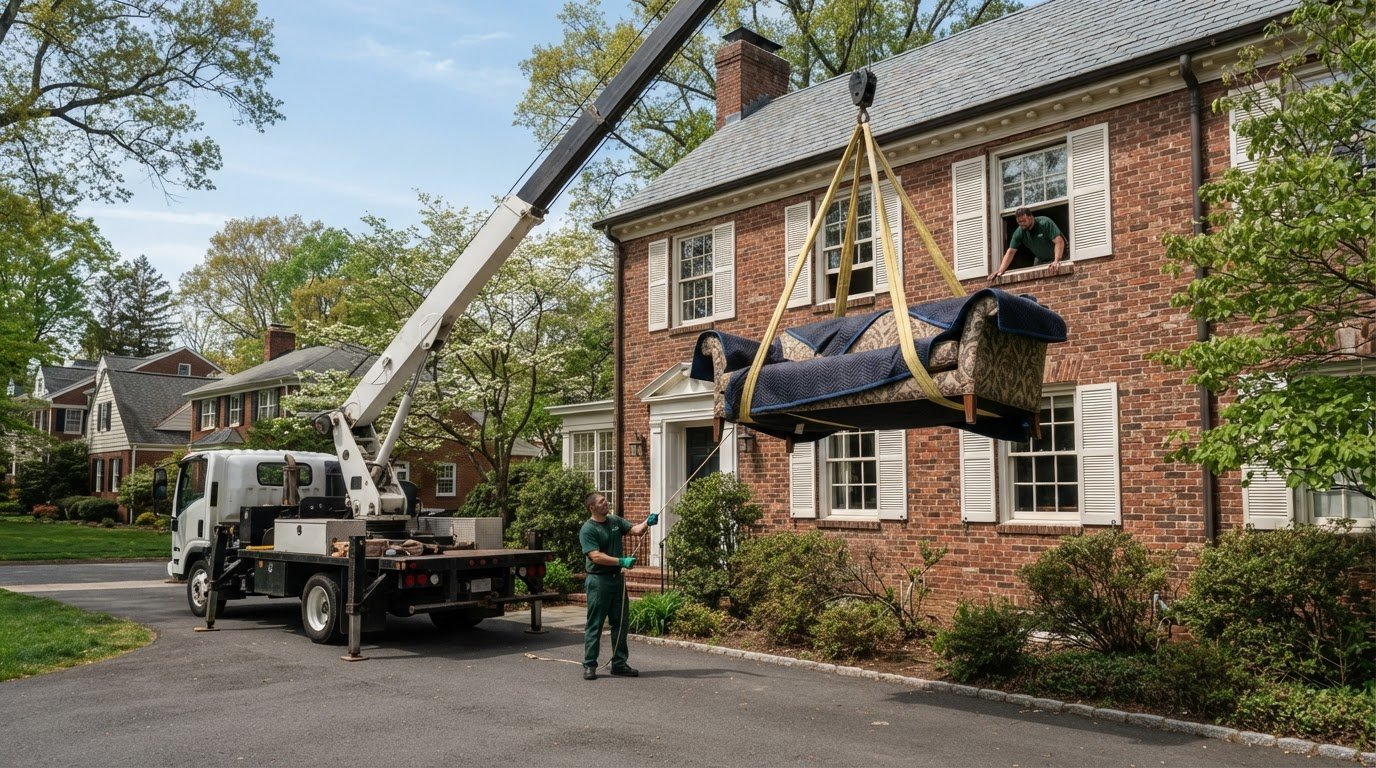
Heavy Furniture Moving helps customers move heavy and bulky household items. Its Movers Near Me service, Exercise Equipment Moving, and Sofa Hoisting reflect experience with demanding moves that require careful handling. Share the bookcase’s condition and the challenges you’ve identified so the team can plan around them.
Take the next step when you’re ready. Contact Heavy Furniture Moving to discuss your bookcase move and make a practical plan for getting it safely to its new place.
Frequently Asked Questions
Which professional movers in Aldie, VA, can help with a heavy solid-wood bookcase?
Heavy Furniture Moving provides local furniture-moving and heavy-lifting help in Aldie. For a solid-wood bookcase, describe the piece and the work you need, such as moving it within your home or loading it into your own vehicle. Include its condition, approximate weight, and difficult access points. These details help define the task and the assistance needed.
Where can I find reviews and ratings for furniture movers near Aldie, VA?
Heavy Furniture Moving has a 4.9 out of 5 rating and 500+ verified five-star Google reviews. Look for feedback that describes work similar to yours, such as handling bulky household furniture or moving items through tight access points. Specific examples can help you understand the kinds of moving challenges reviewers experienced, beyond a rating alone.
What weight and dimension limits apply when professional movers handle a bookcase?
There isn’t one universal weight or dimension limit for every bookcase move. The practical limit depends on the item’s weight and shape, the available carrying space, and whether the crew can control it safely. Share measurements and an estimated weight when describing the job.
Should a multi-tier bookcase be disassembled before moving?
Usually, keep a solid-wood bookcase intact if its frame is sound and it can be moved safely as one piece. Disassemble only parts designed to come off, such as removable doors or shelves. For a bookcase with unusual joinery or a delicate antique finish, avoid taking apart fixed connections. If you’re unsure, describe its construction and condition when arranging the move.
Can I book a furniture-only move near Aldie, VA?
Yes. Heavy Furniture Moving offers in-home furniture-moving help and labor-only moving assistance, so you can request help with furniture without moving an entire household. For labor-only service, you supply the vehicle or container. Describe the specific task, such as moving a piece between rooms or loading it for transport, so the help fits your move.
How do I get a moving quote for a heavy bookcase in Aldie?
Send the bookcase’s measurements, estimated weight, and a clear photo if available. Include pickup and destination details, plus information about stairs, tight turns, or other access challenges. State whether you need in-home moving help or labor to load your own vehicle. Heavy Furniture Moving provides upfront quotes before work begins, so share the details that define the job.
cost to move a heavy multi-tier solid wood bookcase in Aldie VA
Frequently Asked Questions
Heavy Furniture Moving provides local furniture-moving and heavy-lifting help in Aldie. For a solid-wood bookcase, describe the piece and the work you need, such as moving it within your home or loading it into your own vehicle. Include its condition, approximate weight, and difficult access points. These details help define the task and the assistance needed.
Heavy Furniture Moving has a 4.9 out of 5 rating and 500+ verified five-star Google reviews. Look for feedback that describes work similar to yours, such as handling bulky household furniture or moving items through tight access points. Specific examples can help you understand the kinds of moving challenges reviewers experienced, beyond a rating alone.
There isn’t one universal weight or dimension limit for every bookcase move. The practical limit depends on the item’s weight and shape, the available carrying space, and whether the crew can control it safely. Share measurements and an estimated weight when describing the job.
Usually, keep a solid-wood bookcase intact if its frame is sound and it can be moved safely as one piece. Disassemble only parts designed to come off, such as removable doors or shelves. For a bookcase with unusual joinery or a delicate antique finish, avoid taking apart fixed connections. If you’re unsure, describe its construction and condition when arranging the move.
Yes. Heavy Furniture Moving offers in-home furniture-moving help and labor-only moving assistance, so you can request help with furniture without moving an entire household. For labor-only service, you supply the vehicle or container. Describe the specific task, such as moving a piece between rooms or loading it for transport, so the help fits your move.
Send the bookcase’s measurements, estimated weight, and a clear photo if available. Include pickup and destination details, plus information about stairs, tight turns, or other access challenges. State whether you need in-home moving help or labor to load your own vehicle. Heavy Furniture Moving provides upfront quotes before work begins, so share the details that define the job.