How to Move a Heavy Marble Pedestal Dining Table Without Chipping Its Edges

A marble table’s edges are most at risk when it is turned through a tight doorway or stairwell. For moving a heavy marble pedestal dining table without edge chipping in McLean, movers assess the table’s dimensions and weight, measure the route, separate the top from its base when suitable, and protect vulnerable edges with padding. Careful handling reduces risk, but cannot make stone chip-proof.
It’s understandable to worry about a valuable tabletop shifting, scraping a wall, or taking a knock at a corner. The safest approach is to plan before lifting, considering the table’s weight, shape, and route through the home together.
This guide explains how movers assess clearances, prepare the marble and pedestal, and carry and secure each piece for transport. The first tight turn can matter as much as the journey to the vehicle, so sharing access details helps the team plan a smoother move.
Key Takeaways
- Measure the table and the full exit route, including tight turns, stairs, and doorway clearance.
- Plan each turn and threshold before moving day to reduce sudden shifts and edge impacts.
- Use protective wrapping that cushions the marble without putting uneven pressure on its edges.
- Separate the tabletop from its pedestal when the design allows, and keep hardware organized for reassembly.
- Match the handling plan to the table’s weight, then secure each piece to prevent movement during transport.
How Do Professional Movers Measure a Table for Doorways Before Moving Day?
For a McLean move, access, parking, and building procedures depend on the property. Movers plan around the loading area, approved entrances, elevator arrangements, and building instructions before carrying furniture.
-
Measure Doorways, Hallways, and Turns
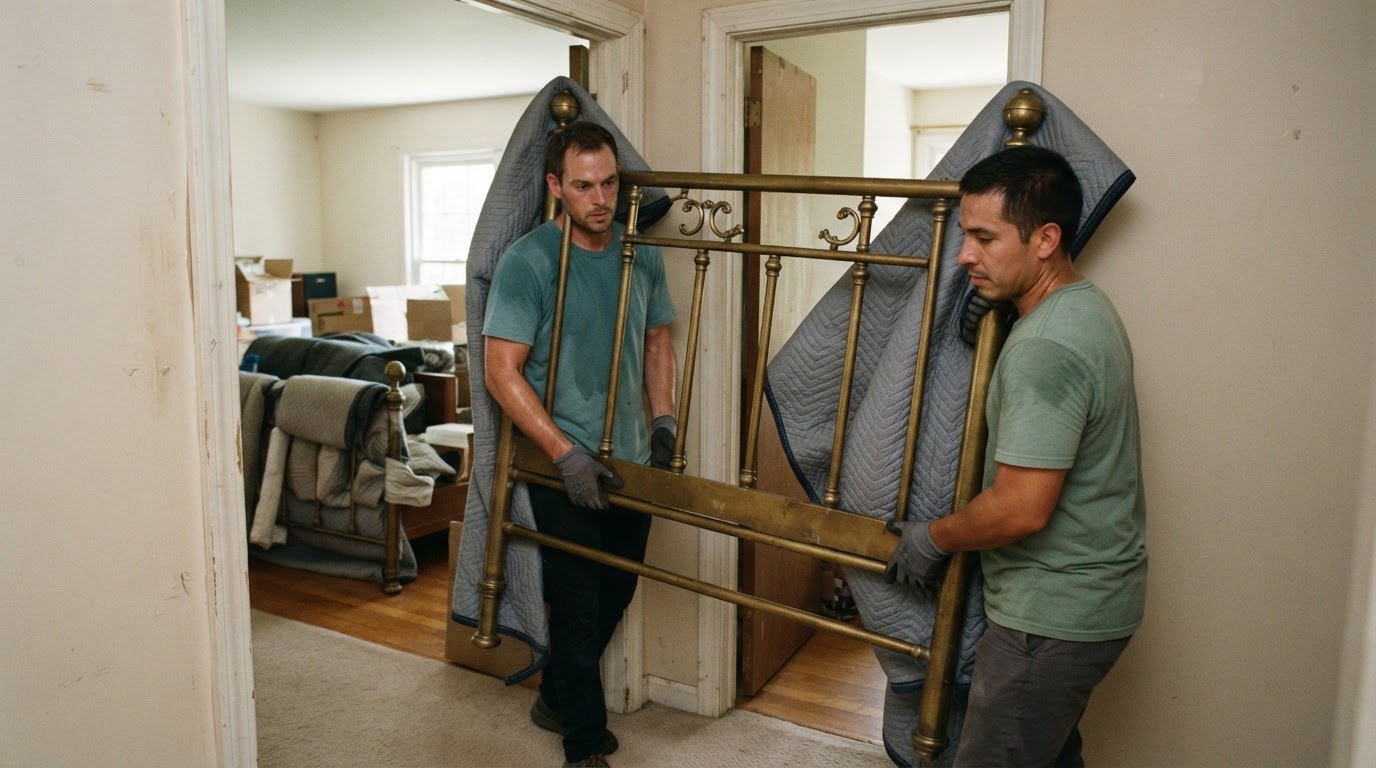
Have the moving team map the full route from the dining room to the vehicle. They measure door openings, hallway widths, stair landings, and tight turns, not just the front entrance. A clear doorway may lead to a narrow corridor or stair landing where a wide tabletop cannot pivot safely.
Movers also note obstacles such as handrails, light fixtures, and nearby furniture. Photos of tight turns and stairs help communicate access details before moving day. To manoeuvre with control, the team identifies where carriers can pause, adjust their grip, or change the table’s angle without scraping walls or striking an edge. A route plan helps prevent rushed turns with a heavy, fragile top.
-
Compare Table and Doorway Dimensions
Have movers compare the table’s full measurements with every route opening. They consider the top’s diameter and thickness, along with the pedestal’s shape and the assembled table’s height. A 60-inch round top, for example, needs more than a doorway measurement. The team also checks whether the table can be turned or tilted safely at each point.
Measure the narrowest usable clearance, including door stops and handles. If the table is within an inch or two of the available clearance, removing a door from its hinges may create room. Movers assess that option based on the door’s weight, surrounding trim, and the table’s planned angle. They won’t force the top through a gap that leaves no room for protective padding or careful hand placement.
-
Check Building Access and Move Rules
Have the move coordinator review property instructions before the crew arrives. In McLean, a home, condominium, or apartment building may have specific procedures for parking, loading, service entrances, elevator use, and move scheduling. The building’s rules determine which arrangements apply, so share those details before the route is planned.
Confirm where the moving vehicle can park and which entrance the crew may use. If the building requires an elevator reservation or a specific loading area, that affects the sequence and timing of the carry. The crew can then plan how to move the tabletop through shared spaces without blocking access or making sudden stops. Clear instructions help keep the marble steady from the room to the vehicle.
Why Do Tables Get Damaged So Often During a Move?
Damage can start in the first ten feet out of the room, when a table meets tight turns, nearby surfaces, and hurried handling. A careful sequence helps protect the marble, the home, and the table during transport.
-
Protect Floors, Walls, and Finishes
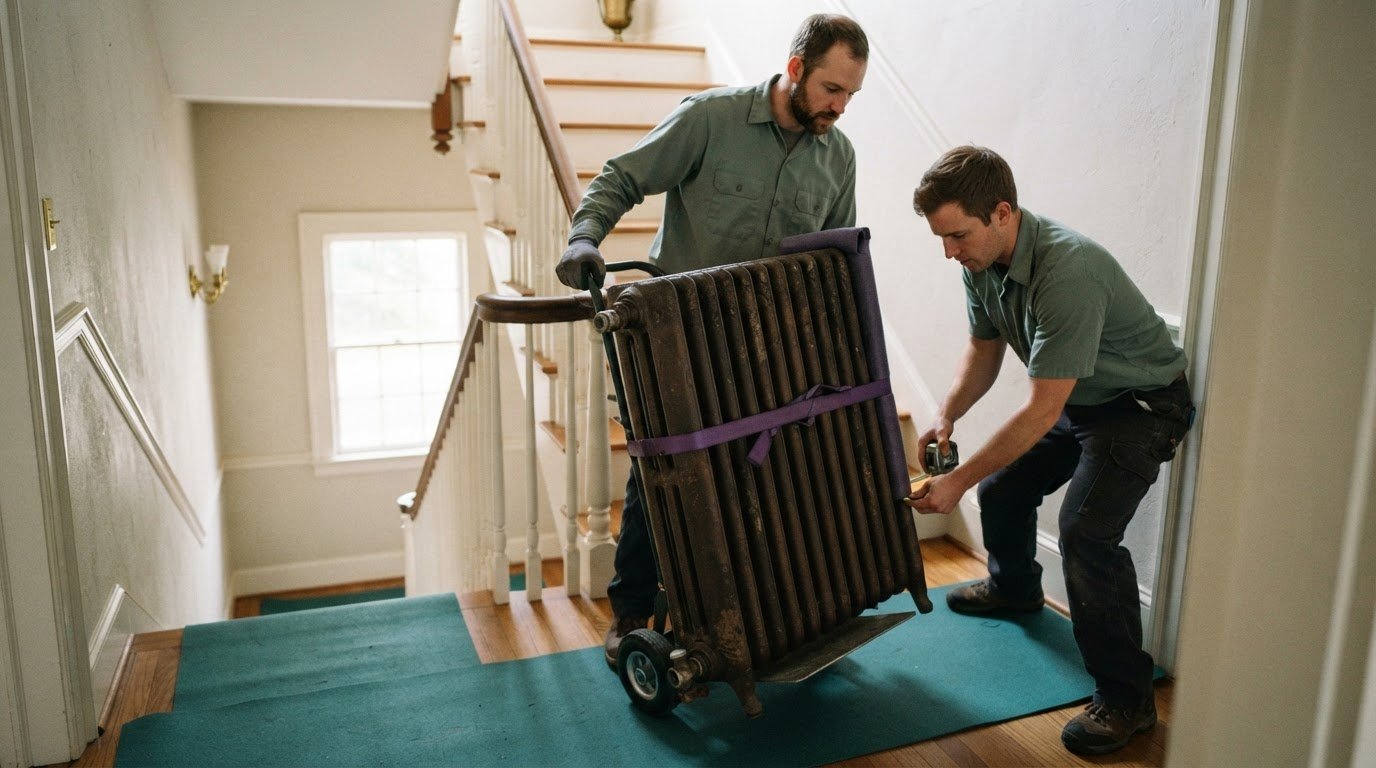
Prepare the route before moving the table. Protective floor coverings help reduce scratches, while padding on vulnerable wall corners guards against contact as the team carries furniture through doorways. Clear away rugs, chairs, and loose items that could shift underfoot or force a sudden stop.
Carry the table rather than dragging it, even over a short distance. Dragging can scratch floors and jolt the tabletop or pedestal. Pay special attention to the first turn out of the dining room, where a carrier may need to change position. A clear path lets the team move smoothly without scraping walls or bumping a door frame.
-
Pad and Protect Table Edges
Wrap the marble with thick protective blankets and foam padding before lifting. Add edge protectors at the corners, which are especially vulnerable to breaks from a direct knock. The padding should cover the exposed perimeter without leaving hard gaps where a doorway, stair rail, or another item could strike the stone.
Keep pressure even across the surface. Don’t carry the tabletop on one edge unless its design and packing instructions allow that position, as uneven pressure can increase the risk of damage. Check that the blankets stay in place when the team changes grip or direction. Loose wrapping can expose an edge just as the table passes through a narrow opening.
-
Wrap and Secure the Table in the Vehicle
Protect the tabletop after it leaves the home. In the vehicle, position it securely with padding between it and other furniture or hard surfaces. Use tie-down systems in a properly equipped vehicle to prevent the marble from shifting during transport. A sudden movement on the road can turn a secure-looking load into a damaging impact.
Before departure, check that the tie-downs hold the load without pressing unevenly on the marble. Make sure the pedestal and tabletop cannot knock against each other or nearby items. A professional furniture moving service can plan this loading sequence alongside the carry from the room, reducing unnecessary handling between stages.
-
Keep the Carry Controlled
Move at a steady pace and pause before each turn, stair, or threshold. The team should coordinate every change in direction so the tabletop stays supported and its edges clear nearby surfaces. The first ten feet deserve close attention, but controlled handling matters until the load is secured.
Don’t twist the top to force it past an obstacle. Stop and adjust the route or the team’s position instead. Sudden tilts and rushed turns can concentrate pressure on one corner, while a planned movement keeps the protected edge away from walls and door frames.
Assessing table dimensions and the moving route
Movers assess the table’s weight, dimensions, and complete route before choosing a lifting plan. A 60-inch round top, for example, needs room to clear obstacles and turn without awkward pressure on its edges.
- Record the table’s dimensions before planning the move. Measure the tabletop’s diameter and thickness, then note the pedestal’s height, width, and shape. For a round top, measure its widest point; for a base with a broad foot, include that footprint. These details show the crew the table’s overall size and how its separate parts affect handling. The assembled height alone won’t reveal whether the pedestal can clear a narrow passage.
- Assess the table’s weight alongside its size. Marble can be heavy and awkward to control, and a broad top may be difficult to maneuver even when the route looks open. The team uses the weight and shape to plan where lifting support is needed, how the table will be oriented, and whether separating the top from the base is practical. A 60-inch round table, for instance, presents a different carrying challenge from a smaller top, even if both fit through the same doorway.
- Compare the measurements with each narrow point on the route. Consider how the table will approach and turn through a doorway, then continue into the next space. A simple width comparison may miss the clearance needed to change direction or keep the edges away from walls. If the table is within an inch or two of the available clearance, removing a door from its hinges may create room. The crew can plan a controlled approach instead of forcing the marble through.
- Use the route assessment to plan the handling sequence. Note where a wide tabletop may need to turn, where the pedestal could catch, and where the team can pause without blocking the carry. Photos can show a tight stair landing or awkward corner more clearly than a general description. Movers use these details to choose a safe orientation and lifting positions before moving the table. Planning can also reveal whether another exit offers more space and fewer sharp turns.

Disassembling the marble top from its base
Separating the marble top from its pedestal, when possible, avoids moving the assembled table as one awkward piece. Movers handle the fragile components as separate loads.
- Inspect the connection before loosening anything. Movers identify how the tabletop attaches to the pedestal and check for visible fasteners or support points. They confirm the top can be detached without prying against the marble or twisting it. If the connection is fixed or separation is unsuitable, they plan to move the table assembled rather than force the joint.
- Support the tabletop before releasing its hardware. The crew positions hands and support beneath the top so it won’t drop or rock as the connection loosens. Marble can crack under uneven pressure, so the team coordinates the release rather than letting one side lift ahead of the other. The base stays steady to prevent a sudden shift between the pieces.
- Keep each fastener organized as the pedestal comes free. Movers place the hardware in a labeled bag and tape it to the underside of the tabletop. This keeps the parts with the right table and makes reassembly easier. The crew also notes the connection points, so the pedestal can be returned to its original position without relying on memory.
- Wrap and handle the detached pieces according to their shape. The marble top needs even support, while the pedestal’s base and any projecting supports need room to avoid knocks. The Natural Stone Institute and WorkSafeBC advise handling stone slabs vertically rather than lifting or carrying them flat. Movers maintain control while changing the top’s orientation and avoid concentrating pressure on a single edge.
- Keep the top and base apart during the carry and vehicle loading. A detached tabletop should not rest unsecured against the pedestal, where movement could cause impact or edge damage. The team protects and positions each piece independently. If the tabletop cannot be detached safely, the crew adjusts the plan to support the assembled table without stressing the fragile stone connection.
When access is tight, removing a door from its hinges takes five minutes with a screwdriver.
Marble dining table weight and handling
The marble’s weight affects the lifting plan, crew size, equipment, and safe carrying position. Dimensions alone don’t show how much control the tabletop requires.
-
Choose Equipment for Professional Handling
Use equipment that supports the stone evenly and protects its edges. Professional movers use lifting straps to help distribute weight, along with protective padding and edge guards to cushion vulnerable areas. They also plan how to support the top as it moves through a doorway or onto a vehicle.
Weight gives the crew a practical warning. According to the National Safety Council, OSHA safe-lifting guidance says loads over about 50 pounds should not be lifted manually. That’s why a heavy top calls for planned handling, not an improvised lift.
-
Determine the Crew Size for Safe Handling
Set crew size by assessing the table’s weight, dimensions, grip points, route, and ability to separate the top from the base. A round top can be difficult to control because its broad shape affects each mover’s reach and position. A team of 2-4 trained movers experienced with premium furniture is recommended for safely relocating a marble table.
Stone weight matters at the individual level, too. The Natural Stone Institute advises that one person should not manually lift stone items over 75 pounds. The crew matches the plan to the actual piece and access route.
-
Assess Whether to Move the Table on Its Side
Have movers assess the table’s construction, available support points, and route before deciding its orientation. A detached marble top is a stone slab, and the Natural Stone Institute and WorkSafeBC advise handling stone slabs vertically rather than lifting or carrying them flat. The table’s design and protective packing instructions also guide how its parts should be positioned.
Don’t assume the pedestal can be carried on its side just because it clears a doorway that way. Movers consider whether tilting puts pressure on the marble, strains the connection, or leaves an edge exposed to impact. They account for the piece’s shape and the turns ahead, keeping the load supported and controlled through each change in direction.
For a heavy, awkward table, arrange professional heavy lifting help so the crew can plan the weight, equipment, and handling position together.
Heavy Furniture Moving
Heavy Furniture Moving handles bulky furniture that calls for careful planning and controlled movement. Turn to the team when a marble pedestal table’s weight, fragile edges, or route through your home makes the move challenging. The plan can account for the table’s dimensions, access points, and whether its top and base can be separated safely.
Share the table’s approximate dimensions, pickup and delivery details, and any tight turns or stairs along the route. This gives the team useful context to plan the move and handle the furniture carefully. For help moving a heavy table, contact Heavy Furniture Moving.
Plan Your Marble Table Move With Confidence
Start with a clear conversation about the move. For moving a heavy marble pedestal dining table without edge chipping in McLean, share the table’s shape, access challenges, and details about its pedestal or attachment. This gives the moving team a useful starting point for planning how to handle the table and its route through your home.
Heavy Furniture Moving also offers Movers Near Me, Exercise Equipment Moving, and Sofa Hoisting for other demanding household moves. If you’re ready to discuss your table, contact Heavy Furniture Moving. A thoughtful plan can make a challenging move feel much more manageable.
Frequently Asked Questions
What's the Right Way for Professional Movers to Protect and Carry a Table?
Professional movers protect the table, coordinate their grips, and move at a controlled pace. Before lifting, they agree on who leads and how the team will signal a pause or change of direction. This helps everyone move together through thresholds and around corners. If the table shifts or the route becomes awkward, they stop and reset rather than trying to correct its position mid-carry.
How Do Professional Movers Move a Heavy Marble Pedestal Dining Table Without Chipping Its Edges?
For moving a heavy marble pedestal dining table without edge chipping in McLean, movers plan the carry around its construction and route. They avoid gripping or levering the marble by its edge, where concentrated pressure can cause damage. They also prevent the tabletop from knocking against the pedestal or other items during handling. The key is controlling contact and movement throughout the move, not just wrapping the table.
Should a marble pedestal dining table be disassembled before moving?
Yes, if the tabletop can be separated from the pedestal without forcing the connection. Movers inspect how the pieces join and avoid prying at stone or joints that resist movement. If the top is fixed to the base, they plan to handle the table assembled. The design matters: a detachable top can simplify access, while an unsuitable connection makes disassembly a risk rather than a benefit.
How Do Professional Movers Lift and Carry a Marble Table Without Cracking It?
Movers coordinate the lift to keep the table supported and level, without sudden twisting or uneven pressure. They avoid using a fragile edge as a handle and keep the tabletop from flexing as the team changes direction. A steady carry includes pausing before a difficult turn instead of pivoting under load. The exact grip and orientation depend on the table’s design and available support points.
How Do Professional Movers Protect Marble Table Edges and Corners During Transport?
Movers cushion the perimeter and corners, then position the protected tabletop so it cannot strike another object. They check that padding stays in place during loading and that straps secure the load without pressing directly on a vulnerable corner. Inside the vehicle, the marble needs separation from hard surfaces and other furniture. These steps help limit impacts and pressure in transit.
Which McLean VA movers specialize in heavy marble furniture?
Heavy Furniture Moving offers Movers Near Me and heavy lifting moving service for residential moves involving bulky household items. If you’re planning to move a heavy marble pedestal dining table without edge chipping in McLean, share the table’s shape, pickup access, and delivery conditions when discussing the job. Details about stairs, narrow entrances, or building access help the team understand the route and plan handling for the table and property.
Frequently Asked Questions
Professional movers protect the table, coordinate their grips, and move at a controlled pace. Before lifting, they agree on who leads and how the team will signal a pause or change of direction. This helps everyone move together through thresholds and around corners. If the table shifts or the route becomes awkward, they stop and reset rather than trying to correct its position mid-carry.
For moving a heavy marble pedestal dining table without edge chipping in McLean, movers plan the carry around its construction and route. They avoid gripping or levering the marble by its edge, where concentrated pressure can cause damage. They also prevent the tabletop from knocking against the pedestal or other items during handling. The key is controlling contact and movement throughout the move, not just wrapping the table. Should a marble pedestal dining table be disassembled before moving Yes, if the tabletop can be separated from the pedestal without forcing the connection. Movers inspect how the pieces join and avoid prying at stone or joints that resist movement. If the top is fixed to the base, they plan to handle the table assembled. The design matters: a detachable top can simplify access, while an unsuitable connection makes disassembly a risk rather than a benefit.
Movers coordinate the lift to keep the table supported and level, without sudden twisting or uneven pressure. They avoid using a fragile edge as a handle and keep the tabletop from flexing as the team changes direction. A steady carry includes pausing before a difficult turn instead of pivoting under load. The exact grip and orientation depend on the table’s design and available support points.
Movers cushion the perimeter and corners, then position the protected tabletop so it cannot strike another object. They check that padding stays in place during loading and that straps secure the load without pressing directly on a vulnerable corner. Inside the vehicle, the marble needs separation from hard surfaces and other furniture. These steps help limit impacts and pressure in transit.
Heavy Furniture Moving offers Movers Near Me and heavy lifting moving service for residential moves involving bulky household items. If you’re planning to move a heavy marble pedestal dining table without edge chipping in McLean, share the table’s shape, pickup access, and delivery conditions when discussing the job. Details about stairs, narrow entrances, or building access help the team understand the route and plan handling for the table and property.