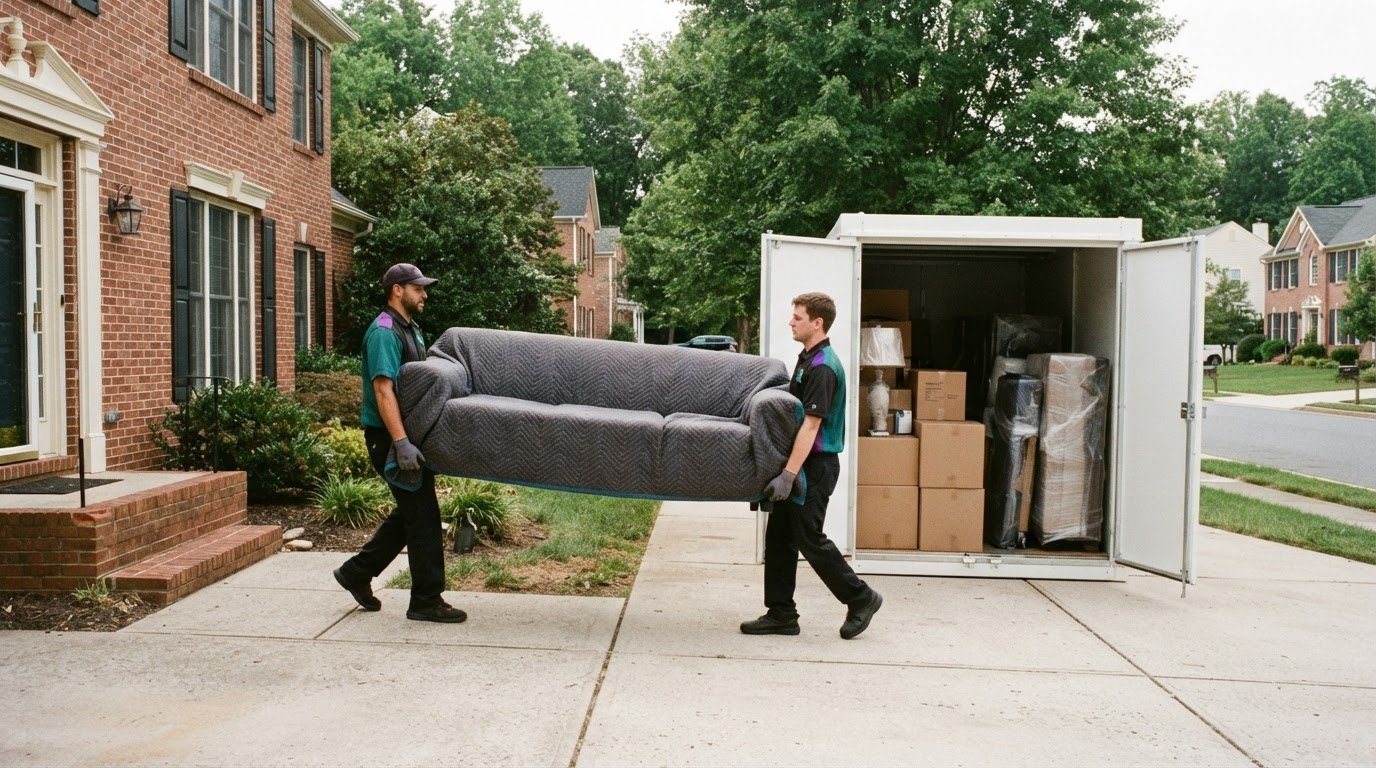
How to Move a Heavy Glass Hutch in Haymarket Without Damage
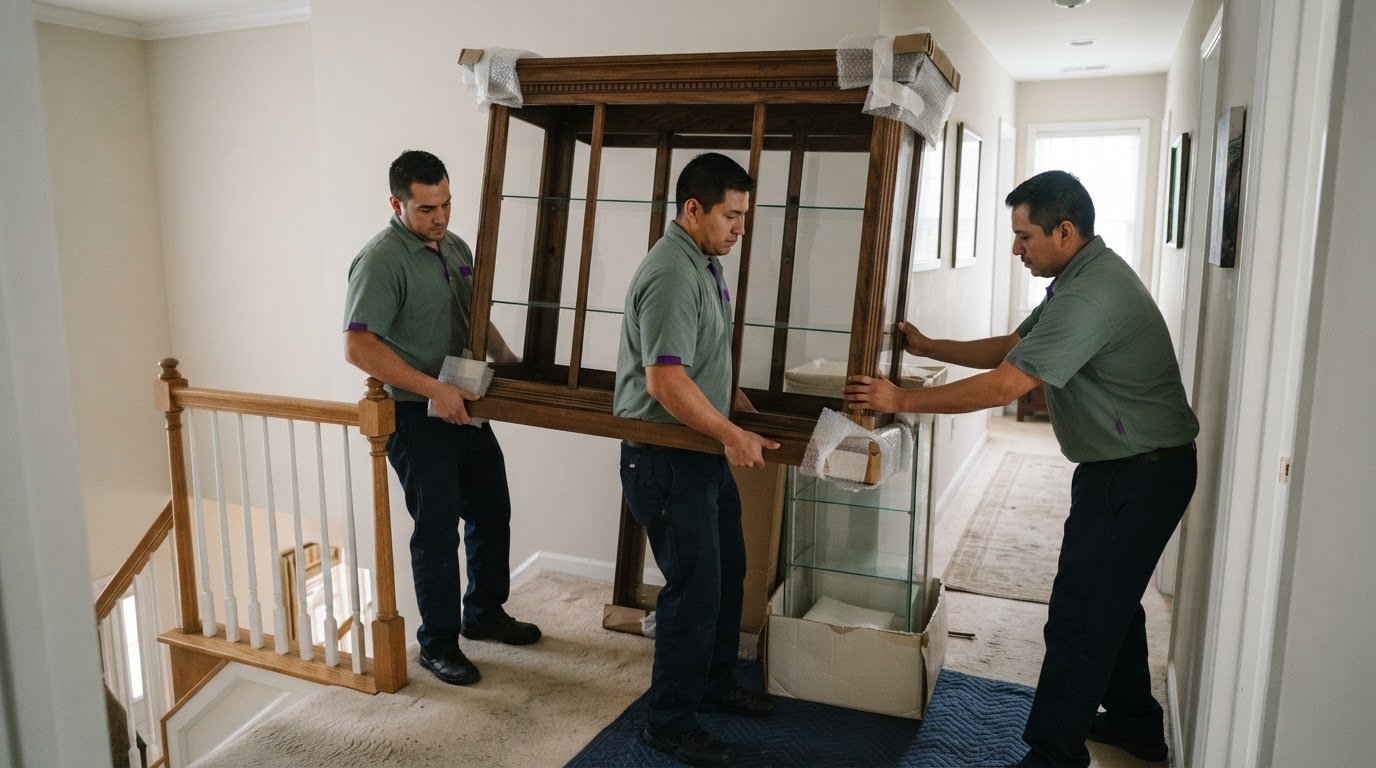
A heavy glass hutch can crack before it reaches the doorway if its shelves, brackets, and frame aren’t secured. For moving a heavy glass display hutch without cracking shelving brackets in Haymarket, use at least two people to handle it, and add a third person as a spotter for stairs or tight doorways. Empty the cabinet and remove its glass parts before lifting.
It’s natural to worry about fragile glass, loose joints, and a bulky base catching on a narrow turn. Start by checking whether the hutch separates from its base, then plan a clear route and protect the cabinet’s vulnerable edges and trim.
This guide explains what to inspect, how to prepare removable shelves and doors, and how to carry the cabinet without putting pressure on its glass or decorative molding. Follow the steps in order to protect the parts that make the hutch valuable.
Key Takeaways
- Measure tight turns and doorways, then plan the hutch’s route before lifting.
- Identify whether the upper hutch detaches from the base, and locate its connecting fasteners.
- Pack removable glass shelves separately and protect their corners from knocks.
- Grip structural frame sections and cushion joints and molding to help prevent damage.
Handling stairs and tight hallways
Map the route before lifting, including stair turns, doorway widths, and landing space at both ends. For a Haymarket move, plan around the actual access at the pickup and destination.
For loading in Haymarket and Prince William County, check posted signs at both addresses and identify the truck’s actual loading space. Don’t assume the curb will be available.
-
Plan for Stairs and Tight Hallways
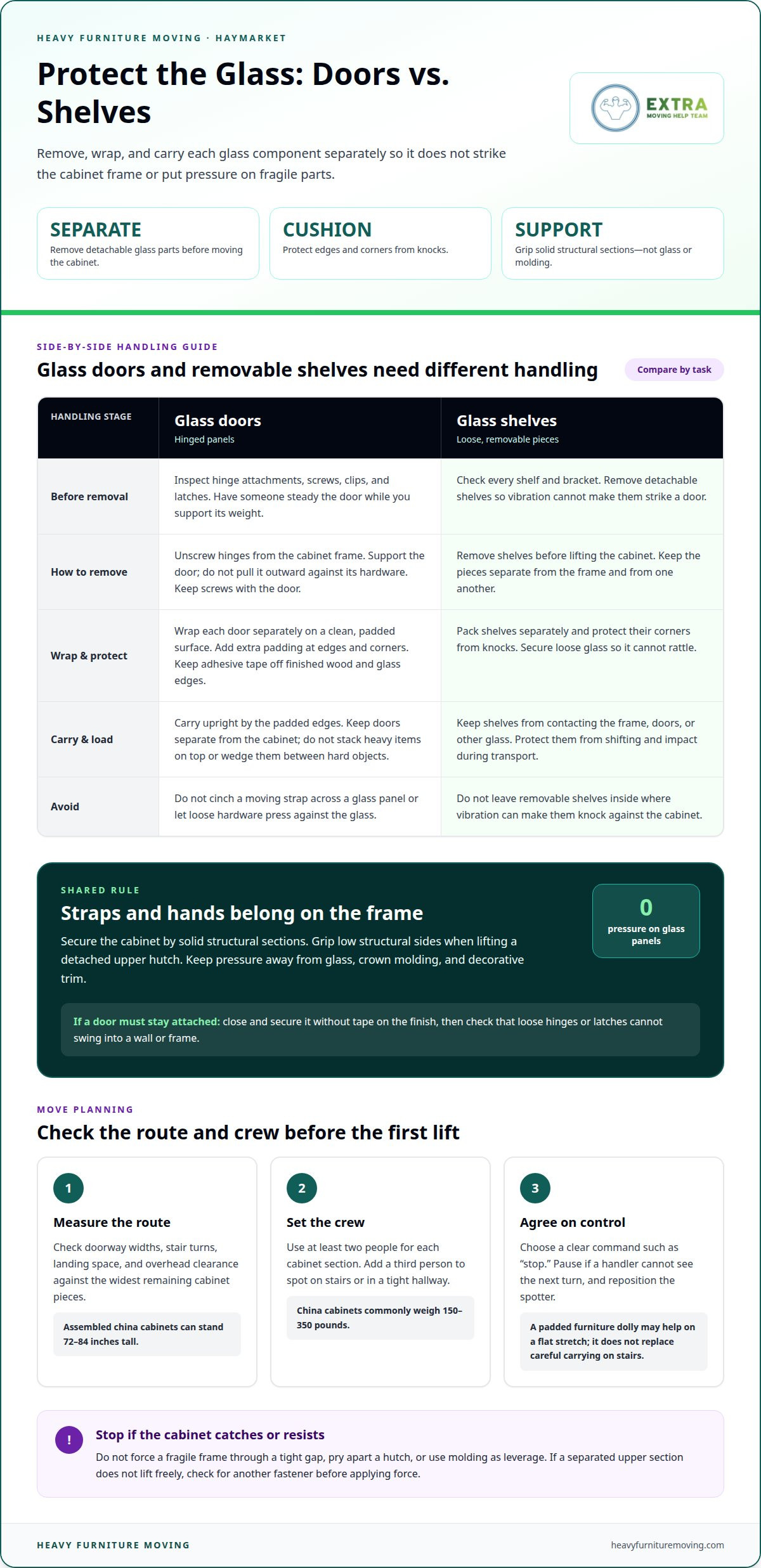
Walk the full route first, from the cabinet’s room to the loading area. Measure narrow doorways, stair landings, and sharp turns against the cabinet’s widest remaining pieces. Check overhead clearance too, especially where a tall hutch meets a low ceiling or stair underside. Assembled china cabinets can stand 72 to 84 inches tall, so height matters before the first lift.
Clear rugs, shoes, and small furniture from the path. Mark where the cabinet must turn and decide who will guide it. Don’t force a fragile frame through a tight gap at an angle. If the molding catches or there isn’t room to keep the hutch upright, stop and reassess the route.
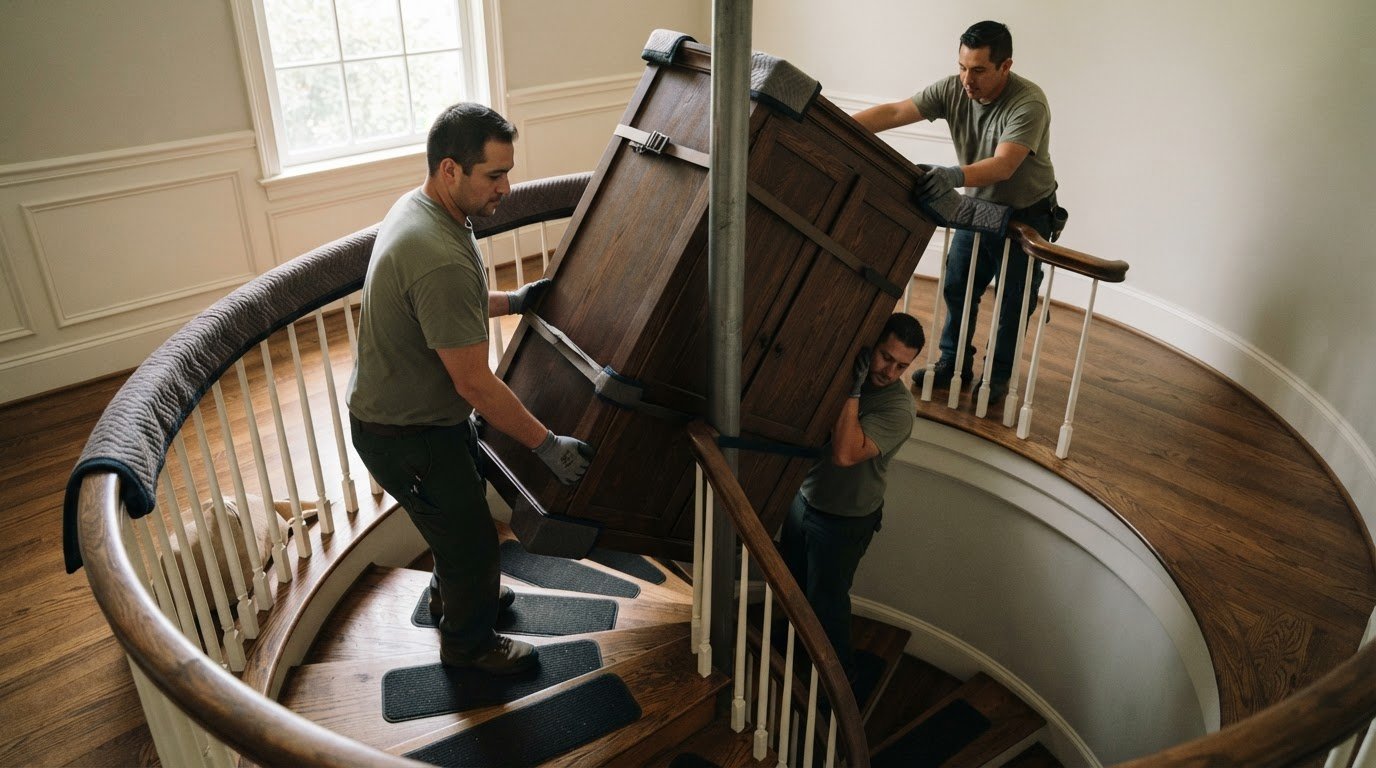
On stairs, move slowly and keep the cabinet steady between landings. A third person should spot from a position where they can see the frame and the next step, without getting trapped beneath the load. Keep glass elements from knocking against the frame, walls, or stair rail. A small bump can shift a shelf bracket or chip a glass edge.
-
Gather People and Equipment
Set up at least two people to handle each cabinet section, and use three people for stairs or a tight hallway. The third person spots the route and calls out obstacles, while the other two keep the load controlled. China cabinets commonly weigh 150 to 350 pounds, so don’t treat a large cabinet as a one-person carry or rely on a quick lift.
On a flat stretch, a padded furniture dolly can help move the cabinet without tilting it onto the glass. It may reduce lifting effort and help with control on level surfaces, but it doesn’t replace careful carrying on stairs. Make sure everyone has a clear grip and room to move.
Before lifting, make sure loose glass pieces are secured and won’t rattle. Keep packing paper nearby for wrapping individual pieces, but don’t clutter a landing. Agree on a simple command such as “stop” before starting. If someone can’t see the next turn, pause and reposition the spotter.
Removing and separately wrapping glass doors
- Inspect each china cabinet door before removing it. Note how its hinges attach to the frame, and check for screws, clips, or a latch that could shift during handling. Have someone steady the door while you support its weight. Unscrew the hinges from the cabinet frame rather than pulling the glass door outward against its hardware. Keep the screws together with the door.
- Wrap each glass door separately as soon as it’s free. Place it on a clean, padded surface, cover the glass with protective material, and add extra padding around the edges and corners. Carry the door upright; don’t rest it against a hard edge or another glass piece. Label each wrapped door so you can match it to the correct opening later.
- Keep moving straps away from glass panels. Concentrated pressure can stress the glass, even when it looks undamaged. Secure the cabinet’s frame or solid structural sections instead. Don’t cinch a door against the cabinet with a strap, and keep loose hardware from pressing against the glass during transport. Bubble wrap can cushion a wrapped door, but keep adhesive tape off finished wood and glass edges.
- Check every remaining door, shelf, and bracket before moving the cabinet. Remove detachable glass shelves and wrap them separately so vibration can’t make them strike a door. If a door must stay attached, close and secure it without putting tape on the finish. Check for loose hinges or latches that could swing open in a hallway and hit the frame or wall.
- Carry wrapped doors separately from the cabinet, with a clear path and a firm grip on the padded edges. Don’t stack heavy items on top or wedge doors between hard objects. After loading, keep each door protected from shifting and contact with other pieces. If you need help handling bulky furniture and its separate parts, explore heavy furniture moving help as a practical next step.
Checking whether the hutch separates from its base
- Inspect the cabinet to determine whether it’s one piece or two. Look along the joint between the upper hutch and base for connecting fasteners, including at the back and sides. Don’t assume a visible seam means the sections separate. Confirm there are fasteners joining the pieces before planning separate lifts, and remove dishes and glass parts before handling the frame.
- Locate every fastener connecting the upper hutch to its base. Check the full joint so no attachment remains in place when you prepare to lift. Keep removed fasteners together and note where they belong. A missed connection can resist the lift and stress the frame or joint. Don’t pry the sections apart or use the molding as leverage. Release the connection without forcing it.
- Plan the lift before separating the sections. Position handlers to grip the upper hutch by its low structural sides, not by the glass, crown molding, or decorative trim. Clear the area around the base so the upper section can rise without catching nearby furniture. Agree on one lift command so everyone raises the hutch together once the fasteners are removed.
- After removing the connecting fasteners, lift the upper hutch straight up from the base. Keep it level as it clears the joint, without twisting one side while the other remains caught. If it doesn’t lift freely, stop and check for another fastener rather than using more force. Set the upper and lower pieces on stable, protected surfaces, and keep loose hardware away from the exposed joint.
- Decide whether separating the cabinet will make the route and lifts easier to manage. Handle a two-piece hutch as separate sections; keep a one-piece cabinet together. Consider stair turns, doorway clearance, and where each piece can be set down. For a heavy or awkward lift, experienced movers can help handle bulky furniture. Planning also helps you assess the space needed without putting pressure on glass or trim.
Packing dishes and removable glass shelves
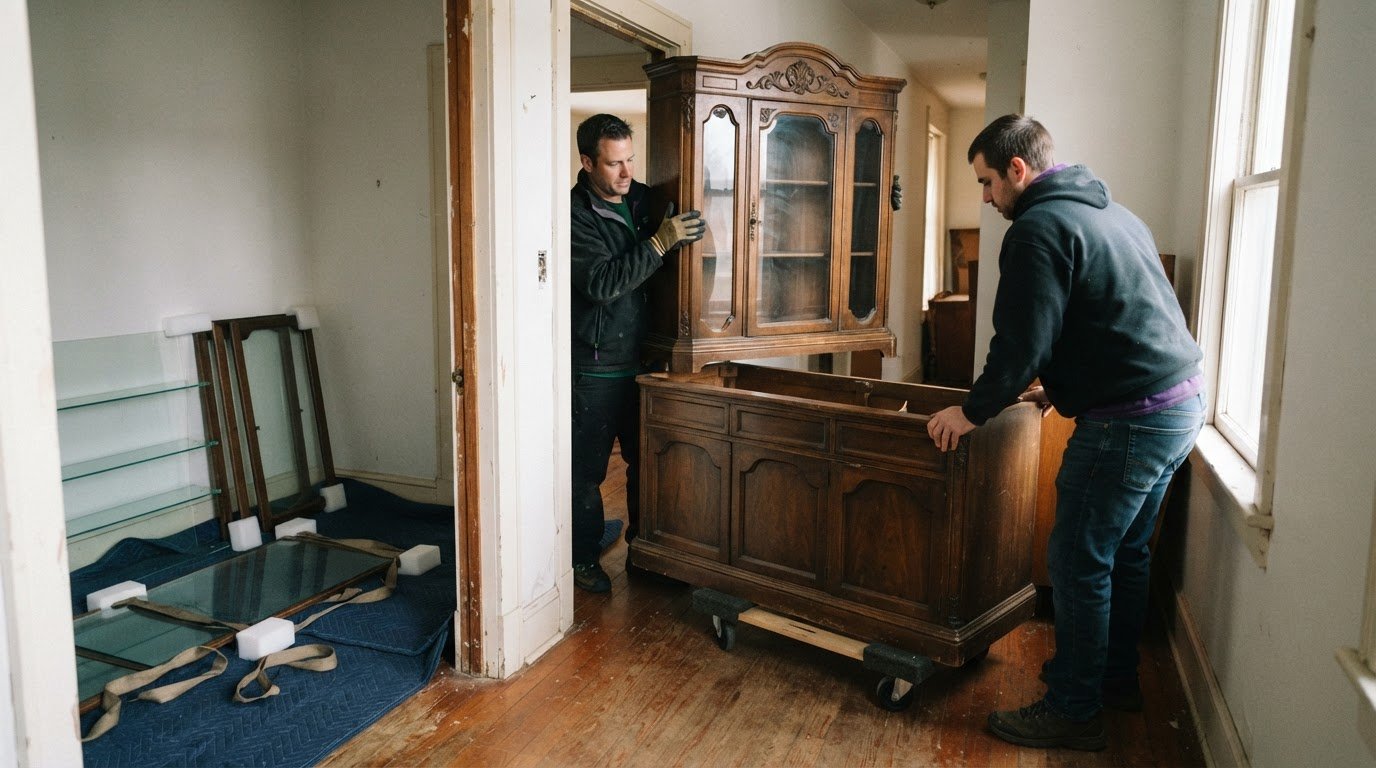
Use packing paper, cardboard, and foam dividers to protect glass shelves and their corners. Wrap each shelf individually and transport it flat, not stacked with other shelves. Cushion dishes separately so they can’t shift into the glass.
- Empty the cabinet before packing its contents. Remove dishes, serving pieces, and decorations so they can’t slide against shelves or brackets while the frame moves. Group similar items, wrap each piece in packing paper, and place them in a stable container with cushioning between them. Keep heavier pieces from pressing on fragile items, and check upper shelves for small items left behind.
- Remove each glass shelf from its supports with both hands. Lift it clear of the brackets without twisting, then set it on a clean, padded surface. Check the corners for existing chips before wrapping. Label its original position, such as “upper left,” so you can return it to the correct supports without forcing a poor fit.
- Build a protective layer around every shelf. Start with packing paper, then wrap the glass individually with paper and cardboard. Add padding at the corners, where chips or cracks can begin. Use foam dividers between wrapped shelves so their edges cannot touch. Keep tape adhesive away from the glass surface. A packing-paper base layer also helps prevent scratches from tape adhesive or bubble-wrap texture.
- Handle wrapped shelves carefully and keep them cushioned during transport. Keep them on a stable, cushioned surface where they can’t slide or take weight from boxes. Don’t put dishes, blankets, or other heavy items on top. If the vehicle shifts, an unprotected edge can strike a hard surface. Keep the shelf labels visible so each piece stays matched to its marked cabinet position.
- Pack dishes and glass shelves separately, and keep the path from the cabinet to the vehicle clear. Measure the route and clear obstacles before carrying boxes through a narrow doorway. Secure packed items so they can’t shift against each other. At the destination, set shelf bundles down gently before unpacking or reinstalling them.
Avoiding damage to joints, molding, and glass
Shelves left in place may shift against their brackets, and movement can stress the glass and frame joints. Homeowners or renters insurance coverage depends on the policy and circumstances, so don’t assume cabinet damage is covered.
- Wrap the upper hutch in at least two layers of moving blankets. Cover corners and exposed edges so they don’t scrape a doorway or catch another piece during transport. Add padding over the wooden frame, not loose against glass. This cushioning helps protect the finish from surface scuffs and shields vulnerable joints from small knocks as the cabinet is carried.
- Hold the padding in place with stretch wrap around the blankets, not tightly around a glass panel or decorative molding. Keep adhesive tape off finished wood because it can mark or lift the finish. Check the wrap near the base and crown before lifting. If a blanket slips, stop and secure it again before an exposed corner rubs against a wall.
- Grip the upper hutch by the low structural sides of its frame. Glass, crown molding, and decorative trim aren’t safe handholds for the cabinet’s weight. Keep the hutch upright and lift from its base. Don’t tilt it face-forward onto a dolly, which would put the weight on the glass door panels and stress their joints.
- Lift and carry the cabinet instead of dragging it. Dragging can damage the feet, split base corners, and scratch flooring. Keep it level, and pause if a joint shifts or molding catches. Check the feet and lower corners after tight turns. During transport, keep the protected cabinet upright and away from hard objects that could press against its frame.
- Inspect the cabinet before lifting and again after setting it down. Look for movement at the joints, loose screws, fresh scuffs, or a shifted blanket. Don’t tighten a screw while someone is holding the cabinet in an unstable position; set the piece down securely first. If the heavy lift feels difficult to control, get help with heavy furniture moving to manage the cabinet carefully.
Pad glass shelf corners separately, since chips and cracks can start at these vulnerable points. Moving blankets cushion wooden frame sections and guard against scuffs, while stretch wrap holds the padding in place without adhesive touching finished wood. Keep the cabinet upright, lift from its base, and never drag it. Avoid placing it face-forward on a dolly, which would put its weight on the glass door panels.
Heavy Furniture Moving: Movers Near Me
Heavy Furniture Moving helps with bulky household moves when a glass hutch is too awkward to carry safely through Haymarket stairs, turns, or narrow hallways. Its Movers Near Me and in-home furniture moving services can provide help with the heavy lift and careful handling. Wrap, blankets, and straps are included on every job.
Consider getting moving help when the hutch’s weight, fragile frame, or tight route makes coordinating the lift difficult. Before the move, secure glass parts, identify the base connection, and protect joints and molding.
Contact Heavy Furniture Moving or visit heavyfurnituremoving.com to discuss your furniture move.
Set Up Your Move With a Clear Plan
If you’re planning on moving a heavy glass display hutch without cracking shelving brackets in Haymarket, make a move-day plan. Write down who will coordinate the lift, where each cabinet section will go, and which items travel separately. A shared plan helps everyone know what to do instead of making decisions mid-carry.
Choose your approach based on the hardest part of the job: the heavy lift, a tight route, or managing separate cabinet pieces. If you’d like help with the physical move, Heavy Furniture Moving is a practical next step. Share your moving details to get started.
Contact Heavy Furniture Moving for help, and move forward with a plan that feels manageable.
Frequently Asked Questions
What Should You Check Before You Move a China Cabinet?
Check the cabinet’s condition and dimensions, the access route, and how its sections connect before planning the lift. Photograph existing chips, loose trim, and bracket positions so you can distinguish prior damage from anything noticed after the move. Measure the cabinet’s widest point and compare it with door openings and turns. Check where it can be set down safely at the destination, not just how it leaves the room.
How much does it cost to hire movers for a heavy glass display hutch in Haymarket, Virginia?
The cost depends on the hutch and the conditions of the move, and you’ll receive a case-specific price after requesting a quote. Factors include the cabinet’s size and weight, stairs or landings, access at both addresses, and whether you need labor only or moving transport. For a useful estimate, describe the route and cabinet configuration when requesting the quote. Don’t rely on a general price that ignores access details.
Which Haymarket, VA movers specialize in packing and moving glass furniture?
For moving a heavy glass display hutch without cracking shelving brackets in Haymarket, Heavy Furniture Moving provides residential moving help for heavy and bulky items. Its Movers Near Me service can help with a hutch move that requires careful handling. Service areas include Haymarket and nearby Gainesville, Fairfax, Woodbridge, Manassas, Manassas Park, Aldie, Ashburn, McLean, Vienna, Reston, Centreville, Chantilly, Clifton, Dumfries, South Riding, and Fairfax Station.
How should a heavy glass display hutch be prepared and disassembled before moving?
A practical plan for moving a heavy glass display hutch without cracking shelving brackets in Haymarket starts with documenting how its parts fit together. Photograph the hinges, shelf supports, and base connection, then keep removed screws in a labeled bag. Record which shelf belongs at each height and side. These notes make reassembly easier, especially if brackets look alike. Keep hardware with the cabinet, separate from dishes and general packing supplies.
How do you safely remove and pack glass shelves from a display hutch?
Remove one shelf at a time, keeping your hands near its edges as you lift it clear of the supports. Note its position and the location of its support pins before packing. Place a clean, padded surface nearby so you don’t need to carry an unwrapped shelf across the room. After wrapping, keep its label visible and store small supports in a separate, clearly marked bag.
What is the safest way to carry a glass display hutch through doorways and stairs?
Coordinate the lift with one person watching the route and calling out turns, steps, and obstacles. Before moving, decide where each person will stand at doorways and stair landings, and agree on a stop signal. If the cabinet blocks someone’s view, pause and reposition rather than moving blindly. Keep hands and feet clear of pinch points where the frame passes close to a wall or stair rail.
Should glass shelves be transported flat or upright, and how should they be secured?
Transport glass shelves flat, with padding beneath them and dividers between pieces. Set them on a stable surface where they can’t slide, and keep boxes and other items from resting on top. For example, place a labeled shelf bundle on a level area of the vehicle and secure nearby items so they can’t bump its edges. Store shelf supports separately so metal pieces can’t press against the glass.
Frequently Asked Questions
Check the cabinet’s condition and dimensions, the access route, and how its sections connect before planning the lift. Photograph existing chips, loose trim, and bracket positions so you can distinguish prior damage from anything noticed after the move. Measure the cabinet’s widest point and compare it with door openings and turns. Check where it can be set down safely at the destination, not just how it leaves the room.
The cost depends on the hutch and the conditions of the move, and you’ll receive a case-specific price after requesting a quote. Factors include the cabinet’s size and weight, stairs or landings, access at both addresses, and whether you need labor only or moving transport. For a useful estimate, describe the route and cabinet configuration when requesting the quote. Don’t rely on a general price that ignores access details.
For moving a heavy glass display hutch without cracking shelving brackets in Haymarket, Heavy Furniture Moving provides residential moving help for heavy and bulky items. Its Movers Near Me service can help with a hutch move that requires careful handling. Service areas include Haymarket and nearby Gainesville, Fairfax, Woodbridge, Manassas, Manassas Park, Aldie, Ashburn, McLean, Vienna, Reston, Centreville, Chantilly, Clifton, Dumfries, South Riding, and Fairfax Station.
A practical plan for moving a heavy glass display hutch without cracking shelving brackets in Haymarket starts with documenting how its parts fit together. Photograph the hinges, shelf supports, and base connection, then keep removed screws in a labeled bag. Record which shelf belongs at each height and side. These notes make reassembly easier, especially if brackets look alike. Keep hardware with the cabinet, separate from dishes and general packing supplies.
Remove one shelf at a time, keeping your hands near its edges as you lift it clear of the supports. Note its position and the location of its support pins before packing. Place a clean, padded surface nearby so you don’t need to carry an unwrapped shelf across the room. After wrapping, keep its label visible and store small supports in a separate, clearly marked bag.
Coordinate the lift with one person watching the route and calling out turns, steps, and obstacles. Before moving, decide where each person will stand at doorways and stair landings, and agree on a stop signal. If the cabinet blocks someone’s view, pause and reposition rather than moving blindly. Keep hands and feet clear of pinch points where the frame passes close to a wall or stair rail.
Transport glass shelves flat, with padding beneath them and dividers between pieces. Set them on a stable surface where they can’t slide, and keep boxes and other items from resting on top. For example, place a labeled shelf bundle on a level area of the vehicle and secure nearby items so they can’t bump its edges. Store shelf supports separately so metal pieces can’t press against the glass.