How to Move a Heavy Glass Display Hutch Safely in Vienna

The safest way to move a heavy glass display hutch in Vienna is to remove and pack the glass shelves separately, protect the doors and frame, and carry each section with coordinated help. To learn how to safely move a heavy glass display hutch without glass breakage in Vienna, focus on preventing glass from shifting, striking hard surfaces, or bearing pressure during the move.
It’s natural to worry about a shelf cracking or a door breaking on a stairway. Careful preparation helps reduce those risks: professional movers measure the route, secure loose parts, and plan how each section will pass through doorways and stairs before lifting begins.
This guide explains why glass breaks in transit and how to protect it. Learn how to pack shelves and doors, measure the route, navigate tight spaces, and secure the hutch sections for transport. Safe handling starts with planning for the most fragile parts.
Key Takeaways
- Learn why glass can crack during a move, even when the hutch looks well protected.
- See how movers prepare shelves, doors, and cabinet sections to limit shifting and pressure in transit.
- Understand how measuring the route ahead of time helps avoid tight turns and clearance problems.
- Find out how professional movers coordinate support and spotting through doorways and stairs.
- Discover what makes secure truck loading different from simply padding the hutch.
How professionals load and secure cabinet sections in a truck
Prepare each cabinet section separately, then position and secure it to limit movement in transit. A careful loading plan protects the frame and glass from pressure, impact, and vibration.
-
How Professionals Empty the Cabinet and Pack Its Contents
Remove dishes, ornaments, and loose accessories before handling the cabinet. An empty hutch is easier to control, and its contents won’t shift into the shelves or doors. Keep small fittings together and pack fragile pieces separately. Remove and pack glass shelves separately: leaving them loose inside risks cracks or breakage when the cabinet tilts or vibrates.
-
How Professionals Protect Frames, Corners, and Panels
Pad the wooden frame and protect its corners before carrying or loading it. Furniture blankets cushion the frame and help prevent scuffs. Stretch wrap can hold padding in place without adhesive touching finished wood. Use at least two blanket layers on the upper hutch. Keep straps away from glass panels, since concentrated pressure can create stress fractures, and cushion the glass edges to help prevent chips.
-
How Professionals Choose an Upright or Laid-Down Position
Movers keep the upper hutch upright whenever possible. Laying it down can put uneven pressure on the frame and glass, while tilting toward the glass face risks contact and stress. China cabinets commonly weigh between 150 and 350 pounds, so poor balance can also strain carriers or damage walls and floors. Glass doors are removed and transported flat, wrapped separately from the cabinet body.
- Have at least two people handle each cabinet section. Grip the structural frame low and near the center, never the glass or decorative molding. Coordinate the lift and carry to keep the section stable on the way to the vehicle. A padded furniture dolly can help control direction on flat surfaces, but it does not replace careful handling at steps or thresholds.
- For a Vienna pickup or delivery, plan curb access and any building elevator reservation with the relevant site contacts. Parking depends on the address, so account for the actual street and building access. In the vehicle, position cabinet sections so they cannot slide or strike other items, then secure them with moving straps rather than bungee cords. Don’t tighten straps across glass.
How professional movers take a hutch through doorways and stairs
Plan each turn before carrying the hutch into a narrow hall or stairwell. Protect the glass by keeping the frame under control and avoiding contact with walls, doorjambs, and railings.
- Clear the route and remove obstacles before lifting. Check the doorway, hall, landing, and stairs for furniture, loose rugs, and anything else that could interrupt a steady carry. If a door narrows the opening, removing it may provide more clearance. A cardboard layer between the door and jamb can also help protect those surfaces during a close pass.
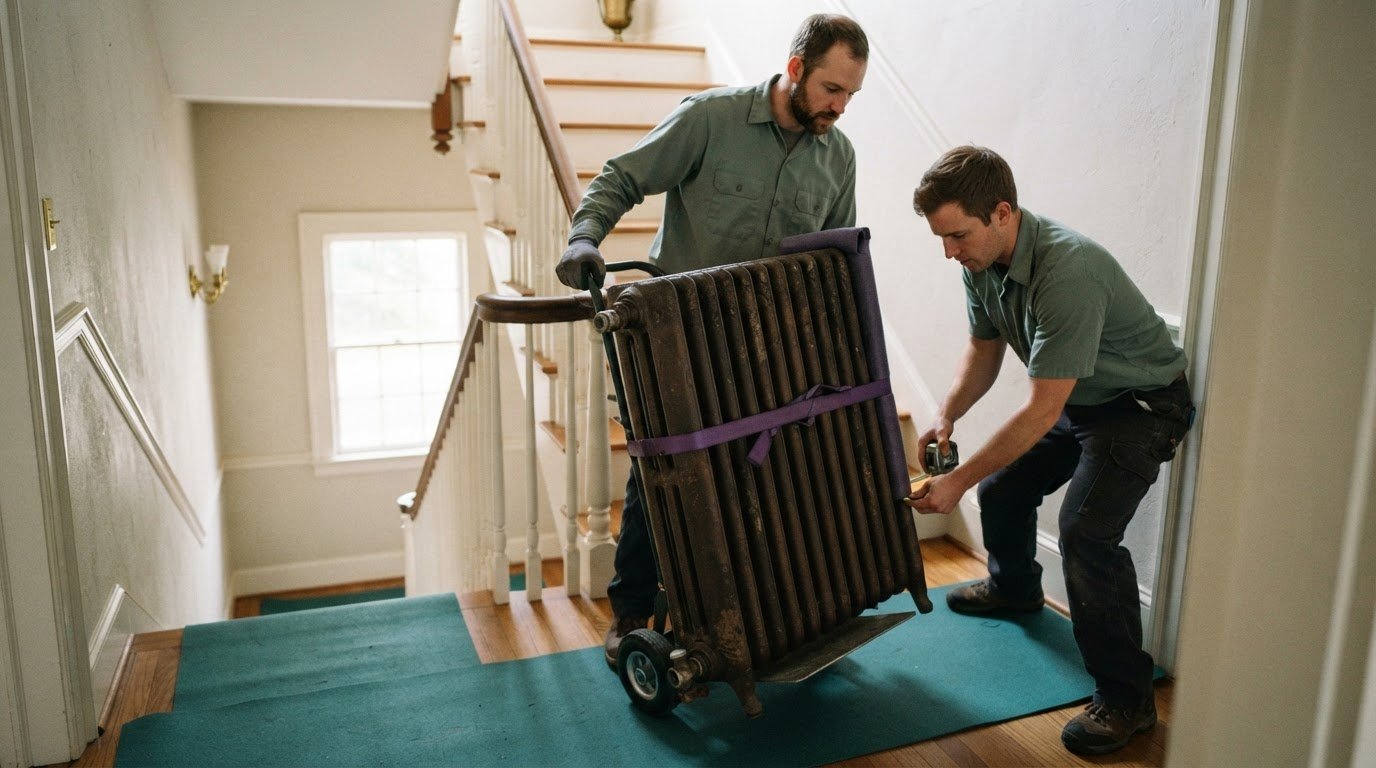
- Have a third person spot at tight doorways and on stairs. The carriers need clear directions as the hutch approaches a turn, while the spotter watches the top, sides, and rear for contact. This is especially useful when a carrier cannot see a stair edge or the frame’s far corner. Agree on simple commands before lifting, and pause if the spotter calls a stop.
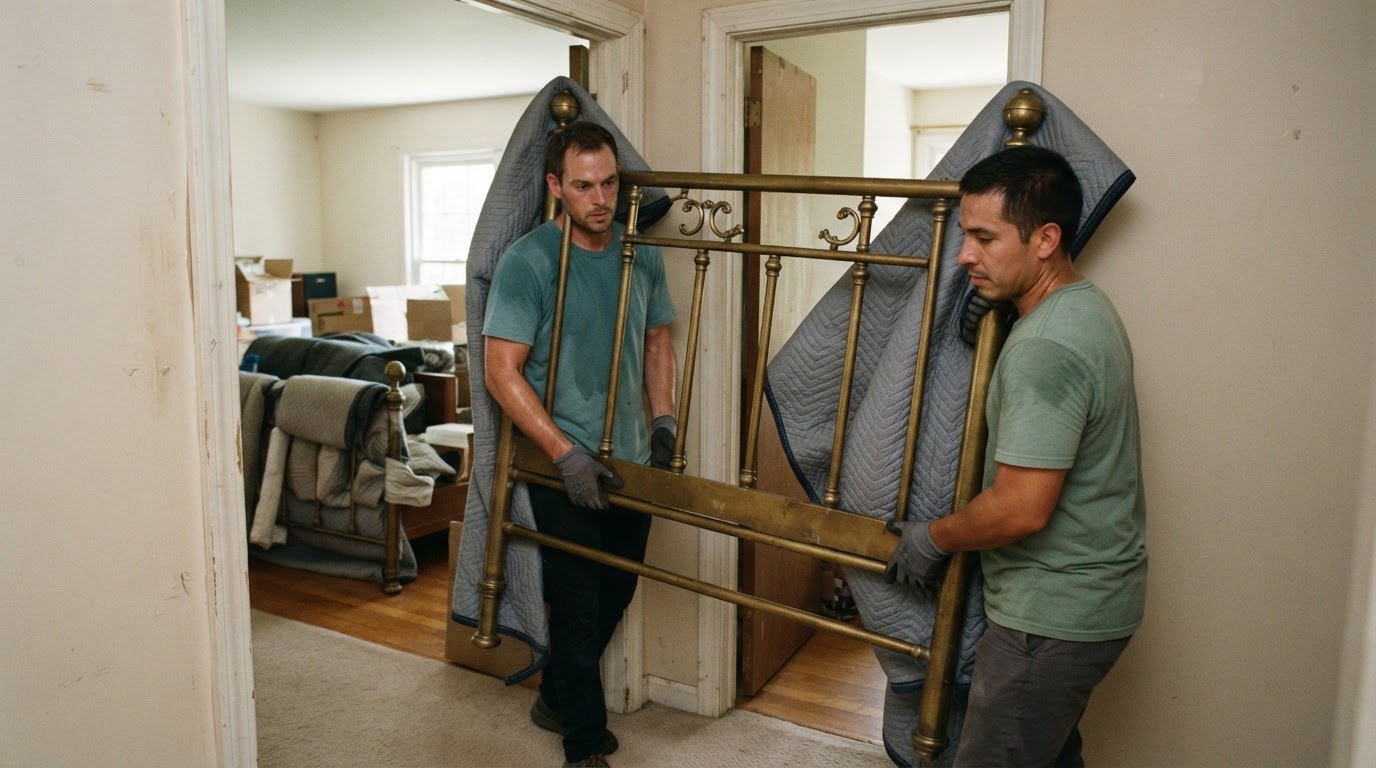
- Carry the hutch by its structural frame, keeping hands away from glass panels and decorative molding. Hold the lower, centered frame so the force travels through solid construction rather than a fragile surface. Never push, pull, or steer by a glass door. At a narrow landing, reposition only when both carriers have stable footing and the spotter confirms there is enough space.
- Keep the hutch upright through doorways and along stairs whenever possible. Never tilt it toward its glass-panel face. That can put pressure on the glass and expose it to a wall, railing, or doorjamb. If the route requires changing the angle, coordinate the movement slowly and support the frame throughout, rather than twisting one end while the other stays fixed.
- Protect removed doors as separate pieces throughout the route. Movers wrap each door so its surface is supported, then place it in a box and transport it vertically. This prevents a loose door from sliding or striking the cabinet during a turn. Common mistakes include rushing a landing, gripping a panel, or letting a door swing into the frame. For careful professional hutch moving help, planned handoffs and clear movement cues keep each transition controlled.
How professional movers measure routes and navigate stairs
Measure the hutch and its full route before lifting. Comparing the dimensions reveals tight turns, low clearances, and where the plan may need to change.
- Measure the hutch in the condition it will travel, including its height, width, and depth. China cabinets can stand between 72 and 84 inches tall when assembled, so movers compare the actual item with each opening. They note any removable parts that change its profile. Measuring the widest and tallest points gives the crew a realistic outline, rather than relying on the cabinet’s appearance from the front.
- Measure the clear width and height of every doorway along the planned route. Include the narrowest point, such as a door that opens only partway or a frame with trim. Then measure the hallway width and ceiling clearance beyond it. A hutch may fit through an entrance straight on but still lack room to turn immediately afterward, so assess the opening and the space beyond it together.
- Map every corner, landing, and stair turn from the room to the exit. Compare those spaces with the hutch’s depth and the room needed to change direction. A wall close to the stair edge can restrict a landing turn even when the doorway is wide. Note railings, light fixtures, and low ceilings, which can interfere with the cabinet’s top or outer corner.
- Check the complete route to the loading point, not just the interior doorway. Include building corridors, lobby turns, elevator openings, and the path from the entrance to the vehicle. If the route includes an elevator, compare its door opening and interior space with the hutch’s dimensions. This helps determine whether the cabinet can travel assembled or needs to be separated into sections for a different route.
- Use the measurements to choose a route and carrying orientation before lifting. If a tight corner prevents a safe turn, assess another exit or route through the building. Account for the carriers’ hand positions and the space needed to keep the frame stable. On stairs, have a spotter watch the clearances at each landing and call a pause before the hutch reaches a close wall or railing.
- Recheck the route after removing obstacles and opening doors fully. A shifted piece of furniture, doorstop, or exposed threshold can reduce usable clearance. Compare the clear path with the hutch’s measured dimensions, then confirm that each turn remains workable. If a section must be carried separately, assess the route for that section too rather than assuming the original plan fits every piece.

How professional movers remove and pack glass shelves
To learn how to safely move a heavy glass display hutch without glass breakage in Vienna, start with one rule: remove loose glass before moving the cabinet. Pack shelves and doors separately, then prepare the hutch sections for handling.
-
How Professionals Remove the Glass Shelves
Lift out each loose shelf before tilting or carrying the cabinet. Check its supports and ease the glass away without forcing it against pins or the frame. Shelves left inside can shift when the hutch tilts or vibrates, causing cracks or breakage. Pack each shelf separately rather than stacking bare glass where weight or contact could damage it.
-
How Professionals Prepare and Secure Doors and Shelves
Remove glass doors and wrap them separately from the cabinet body. Support each door across its surface and transport it flat to limit movement. For shelves, use a packing-paper base and foam dividers to prevent glass-to-glass contact. Secure cabinet openings so nothing swings during handling, and keep tape adhesive away from finished wood.
-
How Professionals Disassemble and Pack Glass Components
Separate cabinet sections at their existing connections and keep removable fittings together. Pack shelves in a rigid, double-wall cardboard box, with foam dividers between pieces. Clear fragile labels signal careful handling. This helps prevent glass from rubbing, shifting, or bearing pressure from other items during transport.
- Identify each glass piece by its cabinet position as you pack it. This helps return each shelf to its intended level after delivery. Keep shelf supports with the matching cabinet section rather than mixing them with dishes or ornaments. Remove loose pins that could rattle inside the hutch in transit.
- Use packing layers that protect the glass without creating pressure points. Packing paper provides a smooth base, while foam dividers separate individual shelves. A rigid box helps resist compression from nearby items. Don’t place bare glass under heavier boxes or stack pieces directly together: weight and vibration can turn small movements into cracks.
- Close and label each box only after the glass is fully supported and separated. If you’re considering how to safely move a heavy glass display hutch without glass breakage in Vienna, clear labels and careful placement help ensure fragile components aren’t mistaken for ordinary household goods. Position the box so it cannot slide or have other cargo placed on top, and handle it separately during delivery.
Why glass shelves break during transport
Breakage often starts with movement, impact, or uneven pressure. The risk depends on how the glass meets its supports, padding, and surrounding cargo during the trip.
- Remove loose shelves before moving the cabinet. A shelf resting on pins can slide when the hutch tilts or vibrates, then strike the frame. The impact can crack or shatter the glass, even if the cabinet body remains intact. Pack shelves separately instead of relying on the pins to hold them steady.
- Protect the edges and corners, where chips can begin. Glass that bumps a hard surface may crack at the impact point, then break further as it moves. Use cushioning to separate the glass from walls, frame edges, and other packed pieces. Keep shelves from touching one another inside the box.
- Prevent concentrated pressure on doors and flat panels. Tight blankets or straps placed across glass can create stress points, even without a visible impact. Secure the cabinet through its structural frame, not around the glass. Padding should cushion the panel without being cinched so tightly that pressure builds in one spot.
- Keep glass shelves flat and supported during transport. Unwrapped shelves stacked together can press against one another, while unsupported edges can take the load. Movers use packing paper as a base layer and foam dividers between pieces. A rigid, double-wall box helps resist compression, and no heavier cargo should rest on the glass package.
- Separate doors from the cabinet body to prevent swinging and impact. China cabinet doors are typically made with single-pane annealed glass, which is neither tempered nor laminated. A door that shifts against a frame, wall, or other cargo can break. Wrap doors separately and support them flat rather than leaving them attached during handling.
- Check that every glass piece is immobilized before loading. A box that slides or rattles allows repeated contact with dividers and nearby cargo. Movers fill gaps with cushioning, label the container as fragile, and position it where other items cannot press against it. For help managing the heavy cabinet and its fragile sections, arrange professional heavy furniture moving.
Keep the flat orientation consistent throughout the move, not just while packing the shelves. Transport glass shelves flat, not upright or stacked unwrapped. Keep each shelf separated from other glass, supported underneath, and away from edges where it could balance precariously. Maintain this arrangement during loading and unloading: don’t set a loose shelf upright or pile unwrapped shelves together. Consistent positioning helps prevent avoidable contact and pressure while moving the cabinet and its contents.
Heavy Furniture Moving
Heavy Furniture Moving provides professional residential moving help for heavy and bulky items, including careful handling of pianos, safes, and exercise equipment, as well as sofa hoisting. Turn to the team when the hutch’s weight, fragile panels, stairs, or tight access make the move difficult to manage alone. Planning the sections and route, protecting vulnerable parts, and coordinating the lift all help make handling safer.
Whether you need help with a single bulky piece or broader furniture-moving support, the right assistance can make the process more manageable. Share the hutch’s size, current location, and any stairs or narrow passages so the move can be planned around the actual access.
Contact Heavy Furniture Moving to discuss help with your hutch move.
Plan a Steadier Move for Your Hutch
If you’re deciding how to safely move a heavy glass display hutch without glass breakage in Vienna, consider who will handle the lifting and transport. Professional help can take the strain off your household and bring coordinated handling to the hutch’s fragile parts. Choose support suited to the task, from moving one bulky piece to coordinating a larger household move.
Heavy Furniture Moving offers Movers Near Me, Exercise Equipment Moving, and Sofa Hoisting, along with local furniture moving and packing support. The team specializes in difficult-to-move household goods. For a hutch, the handling plan should account for its design and access at both ends of the move.
Start planning your hutch move with Heavy Furniture Moving, and take the next step with confidence.
Frequently Asked Questions
How do professional movers move a china cabinet without breaking the glass shelves?
Track each shelf from removal through reinstallation, not just wrapping. Before packing, note the shelf order and any visible edge damage, then label each piece by cabinet position. This helps the crew return each panel to its intended level and spot a mismatch during setup. For a Vienna move, keep small shelf pins in a labeled bag with the cabinet.
What should I look for when hiring someone to move a china cabinet?
Choose a moving plan that accounts for the cabinet’s weight, removable glass, access route, and crew coordination. These details help set clear expectations. For a Vienna home, include narrow halls, stairs, or elevator access in the handling plan.
How many movers are needed for a heavy glass display cabinet?
At least two people should handle each cabinet section; Heavy Furniture Moving lists 2-3 movers for china cabinets and armoires. Crew size is shaped by each section’s weight and balance, available handholds, stairs, and turning space. A heavy upper hutch and a lower base may need different coordination. The key is having enough carriers to keep each section stable throughout the route, including landings.
How do professional movers take a glass hutch through narrow doorways, stairs, or elevators?
Choose a route that preserves clearance and control, and coordinate each transition. For an elevator, account for the cab opening, usable interior depth, and room to position the section without striking the doors. Reserve the elevator to keep it available for the planned move. If the section cannot turn safely inside, use another route or carry it in separate parts.
How do professional movers transport a glass display cabinet safely in a moving truck?
Transport the cabinet with glass components separate from heavy furniture, arranging the load to prevent contact. Position labeled glass packages so they can be reached during unloading without shifting other cargo first. At delivery, inspect the packages and cabinet before reassembly. Keep an inventory with the shipment, and note any crushed packaging or visible damage while unloading is underway.
What are the risks and insurance coverage for broken glass during a local move in Vienna?
Damage risks include broken glass, a marked cabinet frame, and harm to nearby walls or floors. Coverage depends on the written moving terms, so read how the agreement handles damage claims before pickup. Photograph the hutch’s condition and any existing chips before packing, then keep the images with your move records. Don’t assume a particular policy or reimbursement applies without written terms.
Frequently Asked Questions
Track each shelf from removal through reinstallation, not just wrapping. Before packing, note the shelf order and any visible edge damage, then label each piece by cabinet position. This helps the crew return each panel to its intended level and spot a mismatch during setup. For a Vienna move, keep small shelf pins in a labeled bag with the cabinet.
Choose a moving plan that accounts for the cabinet’s weight, removable glass, access route, and crew coordination. These details help set clear expectations. For a Vienna home, include narrow halls, stairs, or elevator access in the handling plan.
At least two people should handle each cabinet section; Heavy Furniture Moving lists 2–3 movers for china cabinets and armoires. Crew size is shaped by each section’s weight and balance, available handholds, stairs, and turning space. A heavy upper hutch and a lower base may need different coordination. The key is having enough carriers to keep each section stable throughout the route, including landings.
Choose a route that preserves clearance and control, and coordinate each transition. For an elevator, account for the cab opening, usable interior depth, and room to position the section without striking the doors. Reserve the elevator to keep it available for the planned move. If the section cannot turn safely inside, use another route or carry it in separate parts.
Transport the cabinet with glass components separate from heavy furniture, arranging the load to prevent contact. Position labeled glass packages so they can be reached during unloading without shifting other cargo first. At delivery, inspect the packages and cabinet before reassembly. Keep an inventory with the shipment, and note any crushed packaging or visible damage while unloading is underway.
Damage risks include broken glass, a marked cabinet frame, and harm to nearby walls or floors. Coverage depends on the written moving terms, so read how the agreement handles damage claims before pickup. Photograph the hutch’s condition and any existing chips before packing, then keep the images with your move records. Don’t assume a particular policy or reimbursement applies without written terms.