How to Move a Heavy Desk Downstairs and What It Costs
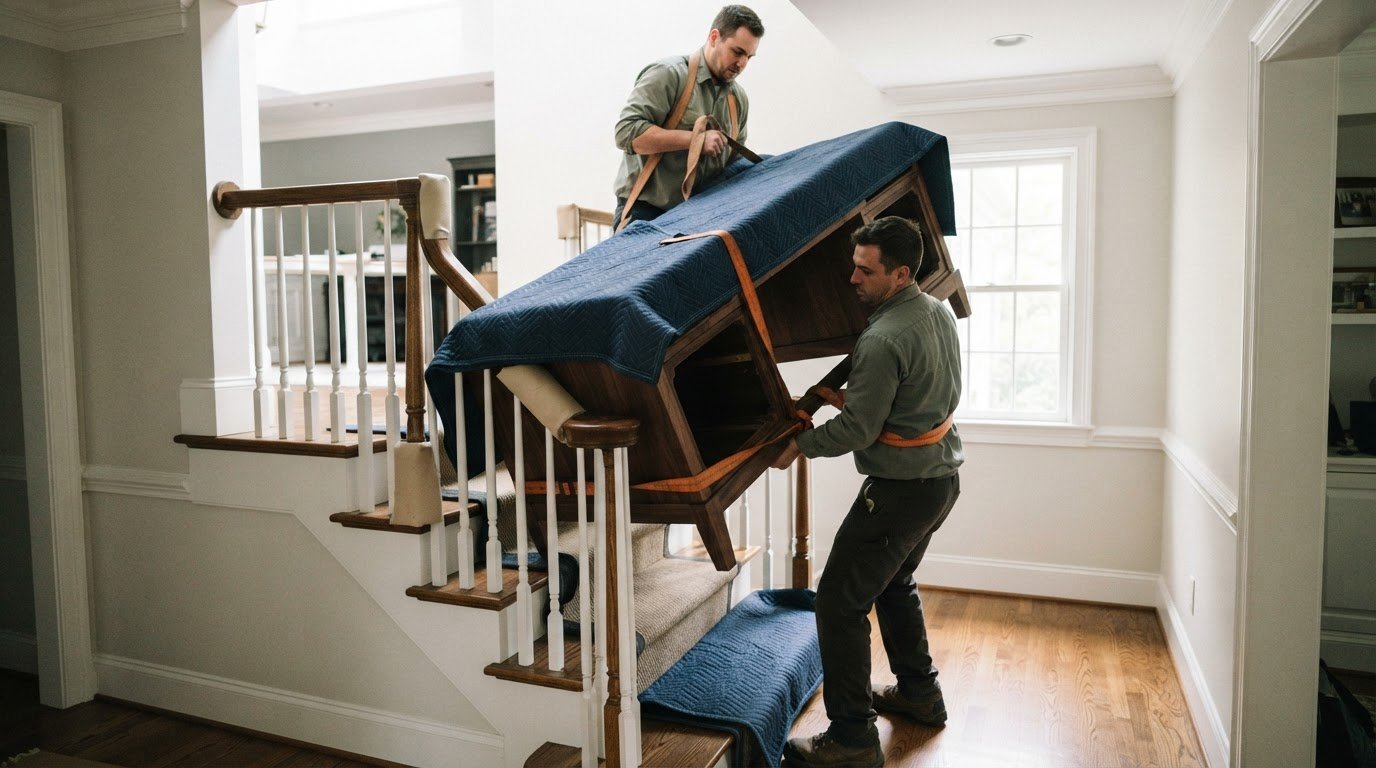
A heavy solid-wood desk is a stairway problem before it’s a lifting problem. For moving a heavy solid wood desk out of a second-floor home office in McLean, the safe plan is to assess its weight and dimensions, measure and clear the route, protect the desk and walls, and use enough help to control it on the stairs. The price depends on the desk’s weight and size, stair and hallway access, route complexity, and any disassembly or extra handling, and is provided after a quote request.
An hourly rate alone does not show how much handling a move requires. A bulky desk, tight turn, or narrow landing can change the plan. Professional help can reduce the risk of wall scrapes, lifting injuries, and damage to the wood.
This guide explains what professionals consider before the first lift, how they plan the route and protect the furniture, and which lifting risks deserve special care. You’ll also learn what details shape the cost and what information to share when arranging help, so you can plan the move with fewer surprises.
Key Takeaways
- Plan the desk’s path downstairs around its dimensions, tight turns, and stair access, not just the doorway.
- Learn how movers use blankets and floor protection to help shield the desk and home from scuffs.
- See why desk weight, grip, and controlled teamwork matter when managing stairs and pinch points.
- Find out which desk parts movers may remove and how they keep drawers and loose pieces secure.
- Understand how access, handling needs, and preparation shape the cost of a professional move.
How professional movers protect furniture and walls with moving blankets
For mover comparisons, review stated licensing details, written damage coverage, and the process for reporting a problem. Read reviews for examples involving heavy furniture, stairs, and property protection, rather than relying on a general rating alone.
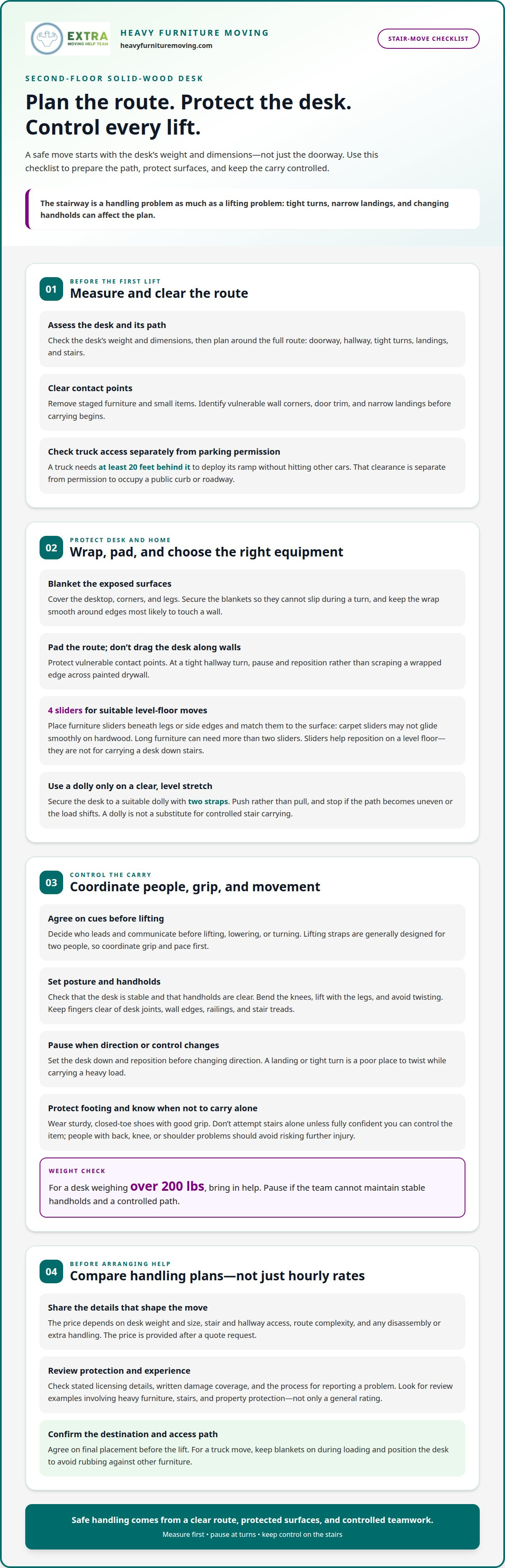
For truck access in McLean or Fairfax County, distinguish loading on private property from occupying a public curb or roadway. A truck needs at least 20 feet behind it to deploy its ramp without hitting other cars; that clearance is separate from parking permission.
- Wrap exposed desk surfaces before handling. Movers cover the desktop, corners, and legs with moving blankets to create a buffer against bumps and scuffs. They secure the blankets so fabric won’t slip during a turn or stair transfer. A solid-wood desk may have a finished edge that needs protection even when the wood feels sturdy. Keep the wrap smooth around corners, where contact with a wall is most likely.
- Protect the route as well as the furniture. Movers identify vulnerable wall corners, door trim, and narrow landings before carrying the desk. They can pad contact points and keep the desk from scraping along the wall. For example, a tight hallway turn may require a pause and a reposition rather than dragging a wrapped edge across painted drywall. Clear the path of staged furniture and small items before the move begins.
- Choose sliders for the floor surface. Four furniture sliders can go beneath the desk’s legs or side edges, helping it glide across carpet or hard flooring while reducing scratch risk. Movers select sliders suited to the surface; a slider intended for carpet may not move smoothly on hardwood. Long furniture can need more than two sliders, so support should match the desk’s shape. Sliders help reposition furniture on a level floor, not carry it down stairs.
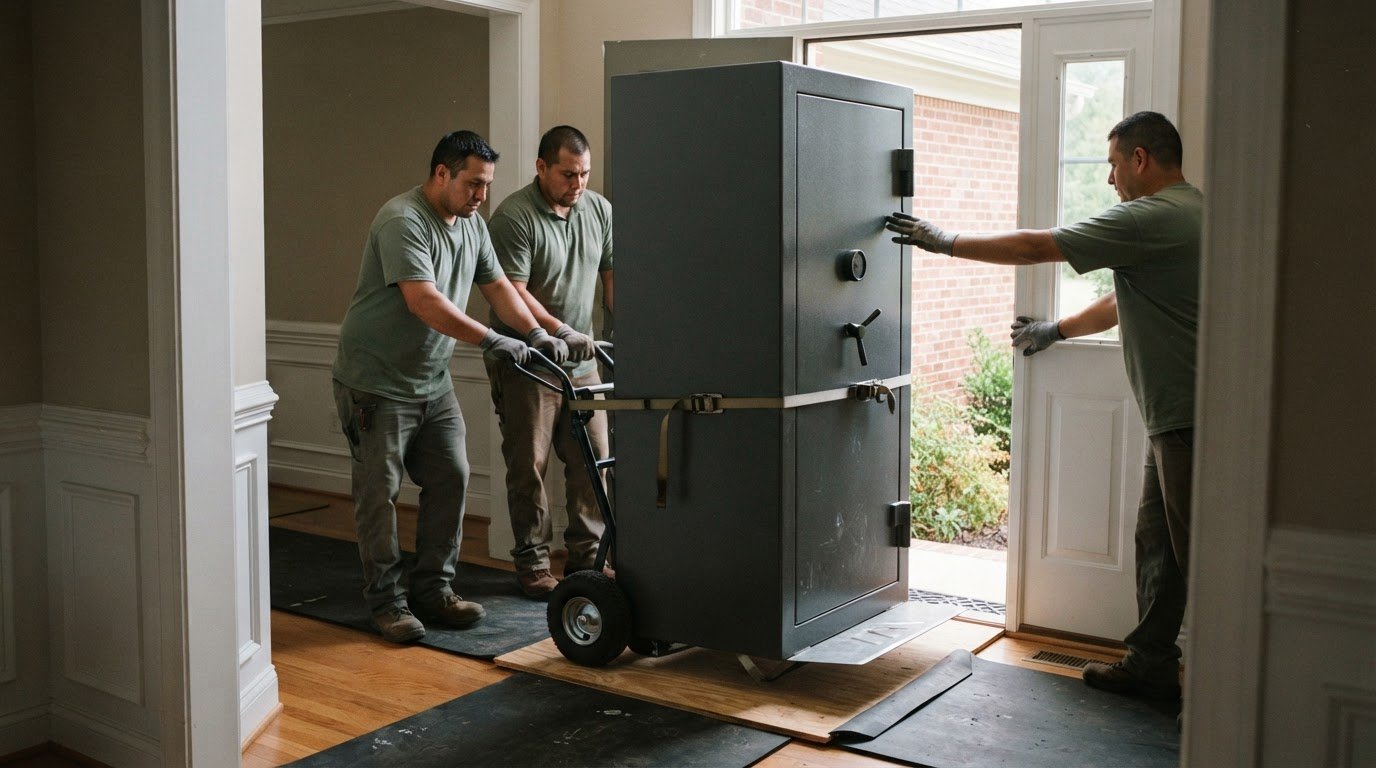
- Use a dolly and straps when the route calls for them. Movers place the desk securely on a suitable dolly and use straps to limit shifting during movement. They push rather than pull the loaded dolly, keeping control over its direction. For a heavy desk, blankets protect its finish, while the dolly supports movement across a clear, level section. Stairs require a separate handling plan; rolling equipment should not be treated as a substitute for controlled stair carrying.
- Plan the final placement before loading. If the desk is being rearranged for home staging, movers can position it where the room layout needs it, rather than leaving it in a doorway or blocking the next item. If it’s going into a moving truck, blankets remain in place during loading, and the desk is positioned to avoid rubbing against other furniture. Agree on the destination and access path before the team lifts.
How professional movers avoid lifting injuries and pinch points
Stairs increase the risk of losing control, pinching fingers, or straining backs, knees, and shoulders. Movers reduce these risks by planning handholds, coordinating the carry, and keeping the desk controlled through each turn.
How Professional Movers Use a Hand Dolly or Lifting Straps
Choose the moving method around the desk’s weight, shape, and route. A hand dolly can help on a clear, level path; stairs call for a coordinated carry, not an attempt to roll the desk downstairs. Lifting straps are generally designed for two people, so movers coordinate their grip and pace before lifting.
- Check the load before raising it. Movers assess whether the desk is stable and whether its size leaves clear handholds. An oversized piece needs a second person to help control its balance and direction.
- Position straps before the lift. Keep straps beneath the furniture and arranged for a balanced hold. Avoid placing hands where the desk could press them against a wall, railing, or stair tread.
- Use a dolly only on a suitable stretch. Movers secure a bulky desk to the dolly with two straps, then push rather than pull it. They stop if the path becomes uneven or the load shifts.
- Pause when control changes. Set the desk down and reposition before changing direction. A landing or tight turn is a poor place to twist while carrying a heavy load.
How Professional Movers Apply Safe Lifting and Tilting Techniques
Set the lifting posture before tilting the desk. Movers bend their knees, lift with their legs, and avoid twisting while carrying. They keep the movement controlled, with each person understanding when to lift, pause, or lower the furniture. A sudden tilt can shift the desk’s weight and trap fingers near a leg or edge.
- Agree on the movement first. Movers coordinate who leads and communicate before lifting, lowering, or turning. Clear cues help prevent one person from moving while another is still adjusting their grip.
- Protect hands and footing. Keep fingers clear of desk joints, wall edges, and stair rails during a tilt. Wear sturdy, closed-toe shoes with good grip to reduce slipping while carrying.
- Don’t carry alone when control is uncertain. A person should not attempt stairs alone unless fully confident they can control the item. People with back, knee, or shoulder problems should avoid risking further injury by moving a heavy desk themselves.
- Bring in help for a heavy load. Call for help when a desk weighs over 200 lbs. For an especially heavy desk, pause the move if the team can’t maintain stable handholds and a controlled path.
For a solid-wood desk on stairs, professional furniture-moving help can manage the coordinated lifting and careful repositioning.
How professional movers clear and measure the moving route
Movers assess a solid-wood desk’s weight based on its size, construction, drawers, and attached parts. They measure the desk and the doorways, hallways, corners, and stair sections along the route.
-
How Professional Movers Clear a Safe Path
Before carrying the desk, clear the route from the home office to the exit. Move chairs, boxes, rugs, and small furniture out of the way, then check stair landings and corners for obstacles. A box beside a railing can limit a mover’s handhold. Keep pets and other household members away from the route during the carry.
-
How Professional Movers Measure the Route and Desk
Share the desk’s basic details and have its full dimensions measured, including its widest points and attached features. Compare them with doorway openings, hallway widths, stair turns, and overhead clearance. For example, a desktop that fits through a doorway straight on may need a different angle at a narrow landing. Its wood, drawers, and attached legs also help movers assess the handling involved.
- Check every transition, not just the exit. Trace the complete route from the office to the loading point, including door swings, thresholds, and stair turns. A clear bedroom doorway does not mean the desk will pass a tight hallway corner. Identify the most challenging point first and plan how to position the furniture without scraping walls or trim.
- Account for the desk’s shape while measuring. Note whether it has a broad top, deep return, attached hutch, or protruding handles. These features affect the desk’s transport profile and turning space. Compare its widest dimensions with each tight spot, not just its front-facing width. Detachable features may change the route plan.
- Keep the path usable through the move. Make sure doors can stay open and the route remains clear as heavy furniture passes. A cord across a stair tread or a rug that shifts underfoot can interrupt a controlled carry. Decide where the desk can be set down if the team needs to pause or reposition it.
These checks help movers plan the handling, protect the home, and choose a workable route before lifting begins. Measuring the path also gives the quote a clearer basis.
How professional movers disassemble the desk and secure loose parts
Movers reduce the desk’s weight and separate parts that could shift during handling. They keep each removed piece organized so the furniture can travel through stairs safely.
-
How Professional Movers Disassemble the Desk
Have movers remove drawers and detachable parts before carrying the desk downstairs. They assess which pieces can come off without disturbing the desk’s structure, then handle those parts gently. A removable return or legs may make a large desk easier to maneuver through a doorway or tight stair turn. Movers avoid forcing a stuck connection, which could damage the wood or fittings.
-
How Professional Movers Secure Loose Desk Parts
Keep removed parts together and protected for transport. Pack heavy or fragile drawer contents separately so they do not shift or add weight during the carry. Keep small hardware with the piece it secures, rather than loose in a drawer. Store separated components away from the stair path and identify them for reassembly.
- Empty drawers before moving them. Remove heavy or fragile items, such as a desk lamp or glass paperweight, and pack them separately. Loose contents can slide as a drawer tilts, making the carry harder to control. Empty drawers are also lighter. Handle each drawer separately instead of leaving it unsecured inside the frame.
- Decide how to handle light, nonfragile contents. If light items remain in a drawer, movers cover its open side with stretch wrap and wrap the drawer in a moving blanket. This helps keep contents from spilling while protecting the drawer’s exterior. Heavy objects and fragile belongings still come out first. A drawer that cannot be secured should travel separately.
- Keep every removed component protected. Wrap detached pieces to limit contact with walls, railings, and other furniture. Keep hardware with its matching component to avoid misplacing fittings between the office and destination. A labeled bag secured to the related desk piece can keep small parts organized.
- Check the desk again before the stair carry. Confirm that drawers and detachable sections are removed or secured, then reassess the frame’s balance. A desk with a removed return may turn differently than when assembled. Adjust the handholds and route plan to the new shape rather than assuming the original setup still fits.
- Keep parts out of the working path. Place wrapped components and packed drawer contents away from the stairs. This prevents a desk leg, drawer, or hardware bag from becoming a trip hazard during the carry. Once the desk is downstairs, move the separated pieces in an orderly sequence.
Moving heavy desks and office equipment
Plan the desk as part of the overall move, not as an isolated lift. Its weight, condition, and the surrounding office equipment all affect how the job is handled.
- Assess the desk before choosing equipment. Movers consider its weight, shape, and condition, including loose joints or a damaged leg. A long, awkward desk may need a four-wheel dolly for level stretches. The right equipment depends on whether the desk can sit securely and remain controlled during transport.
- Separate office equipment from the desk. Movers keep items such as a monitor, printer, and desk lamp out of the carrying path. These pieces can shift or fall if left on the desktop. Pack them separately, and keep cables together so they don’t catch underneath a desk leg or snag during handling.
- Plan each transfer point. Movers coordinate the handoff from the office, through the stairway, and toward the loading area. A landing may require setting the desk down before changing direction. The team should keep the next step clear, including the space needed to turn or reposition heavy items without twisting through a tight corner.
- Keep equipment stable on a dolly. For a long or unwieldy desk, movers secure it to a four-wheel dolly with two straps before pushing it across a suitable, level section. They avoid pulling a loaded dolly, which can make its movement harder to control. If the desk shifts, stop and reset it rather than continuing with an unstable load.
- Use the right method for truck loading. A 200-300-pound dresser or table shouldn’t be lifted by hand into a moving truck; a hydraulic lift can raise it to truck-bed height. That truck-loading step differs from carrying a desk downstairs. Movers plan both parts of the move so the desk stays supported during the transition.
- Don’t turn a friend’s offer into an unsafe lift. A friend may want to help, but heavy furniture on stairs needs coordinated handling. Movers shouldn’t attempt to carry an item upstairs or downstairs alone unless they’re 100% confident they can control it. People with back, knee, or shoulder problems should avoid risking further injury.
For a desk and related office items, arrange heavy furniture moving help for a planned, controlled move.
Heavy Furniture Moving: in home furniture movers near me
Heavy Furniture Moving handles residential furniture, including solid-wood desks that need careful handling on stairs. Its in-home furniture moving service can help when a desk’s weight, size, or route makes moving it alone risky, or when you need help coordinating the carry.
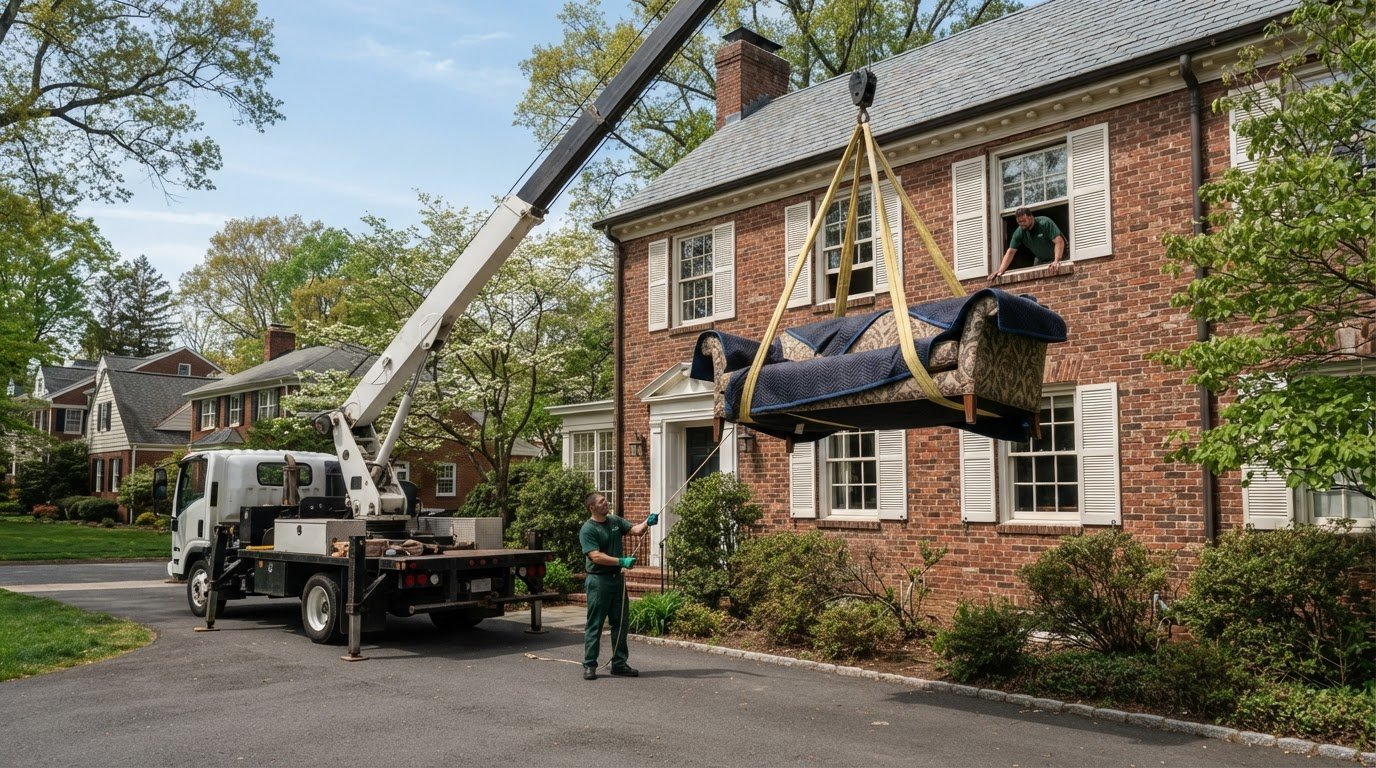
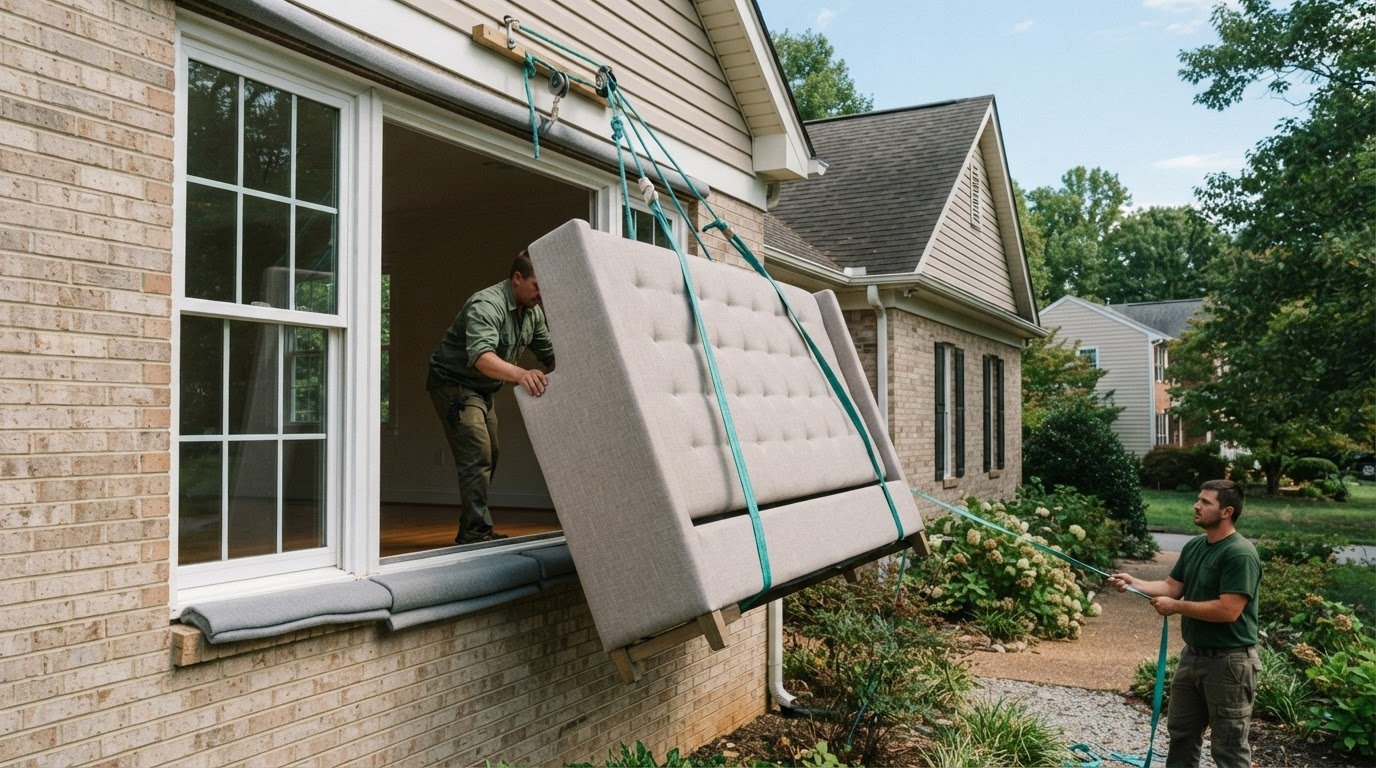
Share the desk’s dimensions, approximate weight, removable parts, and stairway details when arranging help. Those details give the team a clearer picture of the handling involved. Heavy Furniture Moving also offers Movers Near Me, Exercise Equipment Moving, and Sofa Hoisting for other bulky-item needs.
Contact Heavy Furniture Moving to discuss help with your desk move.
Set up your desk move with a clear plan
Plan the destination and timing before moving a heavy solid-wood desk out of a second-floor home office in McLean. Decide where the desk will go, which office equipment needs separate handling, and whether any parts must stay assembled. These choices help shape a practical plan and keep the move focused.
Heavy Furniture Moving handles residential furniture moves and offers Movers Near Me, Exercise Equipment Moving, and Sofa Hoisting. Share the desk details and stairway layout when you get in touch, so the conversation can focus on the parts of the move that matter most.
Contact Heavy Furniture Moving to talk through your desk move and take the next step with confidence.
Frequently Asked Questions
How Much Do Hourly Services Cost?
Labor is billed hourly with a two-hour minimum, while most single heavy-item moves use flat-rate pricing. The quote accounts for the job details, including stairs and protective wrapping. Heavy Furniture Moving provides the total upfront before work begins. Wrap and straps are included. Share the desk’s size, stair layout, and access challenges to get pricing based on the actual move.
What does it cost to move a heavy solid wood desk from a second-floor home office in McLean, VA?
The cost depends on the desk and the job details, so request an upfront quote for your move. Moving a heavy solid-wood desk from a second-floor home office in McLean may be priced as a single heavy-item move or hourly labor, depending on the work involved. Share the desk’s dimensions, photos, stair access, and any parts that need removal. You will receive the total before work begins, with no in-home estimate visit.
Which McLean-area movers specialize in heavy furniture and upstairs moves?
Heavy Furniture Moving handles residential moves involving heavy and bulky items, including desk moves with stairs. Local coverage includes McLean, Fairfax, Woodbridge, Manassas, Manassas Park, Aldie, Ashburn, Vienna, Reston, Centreville, Chantilly, Clifton, Dumfries, South Riding, Fairfax Station, Haymarket, and Gainesville. Start with the Movers Near Me service and share the route details when discussing the job.
How do movers price heavy furniture moves: hourly rates, minimums, stairs, and heavy-item fees?
Heavy Furniture Moving uses hourly labor with a two-hour minimum and flat-rate pricing for most single heavy items. The quote includes the stair and wrapping details before work begins, and blankets and straps are included. Pricing reflects the handling the job requires, not simply the desk’s destination. Ask for the upfront total to understand the quoted scope.
What measurements will movers take to check whether the desk fits through doorways, hallways, and stairwells?
Compare the desk’s height, width, and depth with the tightest openings along its route. Also consider diagonal clearance, door swing, stairwell headroom, and railing position. Check whether the desk can tilt without hitting a ceiling or wall corner. Photos of the desk and stair turns can show awkward angles that one doorway measurement may miss.
How will professional movers prepare and protect a heavy desk for moving?
Movers can protect the desk with blankets and shrink-film, then secure it with straps for handling. The crew can also use masonite floor protection and door-jamb covers to protect the home. Mention delicate finishes, repaired areas, or loose hardware before the move. For example, a recently refinished desktop needs care around other furniture and while being positioned for transport.
Can professional movers safely disassemble the desk, and what tools or instructions do they need?
Movers can handle disassembly when the desk’s design allows it, and disassembly is included for supported items. Share the desk’s make or model, clear photos of its joints, and any assembly instructions you still have. Those details help identify how its parts connect. Point out delicate trim or unusual fasteners before work begins, and keep small hardware with the piece it belongs to.
When should I hire professional movers instead of using a DIY team or rental equipment?
Get professional help if the desk is heavy, oversized, difficult to grip, or must pass through tight stair turns. On stairs, the load can shift as people change direction or footing. A friend and rented dolly may not provide enough control for a bulky desk. If you have back, knee, or shoulder problems, avoid risking injury by moving it yourself.
Frequently Asked Questions
Labor is billed hourly with a two-hour minimum, while most single heavy-item moves use flat-rate pricing. The quote accounts for the job details, including stairs and protective wrapping. Heavy Furniture Moving provides the total upfront before work begins. Wrap and straps are included. Share the desk’s size, stair layout, and access challenges to get pricing based on the actual move.
The cost depends on the desk and the job details, so request an upfront quote for your move. Moving a heavy solid-wood desk from a second-floor home office in McLean may be priced as a single heavy-item move or hourly labor, depending on the work involved. Share the desk’s dimensions, photos, stair access, and any parts that need removal. You will receive the total before work begins, with no in-home estimate visit.
Heavy Furniture Moving handles residential moves involving heavy and bulky items, including desk moves with stairs. Local coverage includes McLean, Fairfax, Woodbridge, Manassas, Manassas Park, Aldie, Ashburn, Vienna, Reston, Centreville, Chantilly, Clifton, Dumfries, South Riding, Fairfax Station, Haymarket, and Gainesville. Start with the Movers Near Me service and share the route details when discussing the job.
Heavy Furniture Moving uses hourly labor with a two-hour minimum and flat-rate pricing for most single heavy items. The quote includes the stair and wrapping details before work begins, and blankets and straps are included. Pricing reflects the handling the job requires, not simply the desk’s destination. Ask for the upfront total to understand the quoted scope.
Compare the desk’s height, width, and depth with the tightest openings along its route. Also consider diagonal clearance, door swing, stairwell headroom, and railing position. Check whether the desk can tilt without hitting a ceiling or wall corner. Photos of the desk and stair turns can show awkward angles that one doorway measurement may miss.
Movers can protect the desk with blankets and shrink-film, then secure it with straps for handling. The crew can also use masonite floor protection and door-jamb covers to protect the home. Mention delicate finishes, repaired areas, or loose hardware before the move. For example, a recently refinished desktop needs care around other furniture and while being positioned for transport.
Movers can handle disassembly when the desk’s design allows it, and disassembly is included for supported items. Share the desk’s make or model, clear photos of its joints, and any assembly instructions you still have. Those details help identify how its parts connect. Point out delicate trim or unusual fasteners before work begins, and keep small hardware with the piece it belongs to.
Get professional help if the desk is heavy, oversized, difficult to grip, or must pass through tight stair turns. On stairs, the load can shift as people change direction or footing. A friend and rented dolly may not provide enough control for a bulky desk. If you have back, knee, or shoulder problems, avoid risking injury by moving it yourself.