How to Move a Heavy Butcher Block Table Across Hardwood Floors
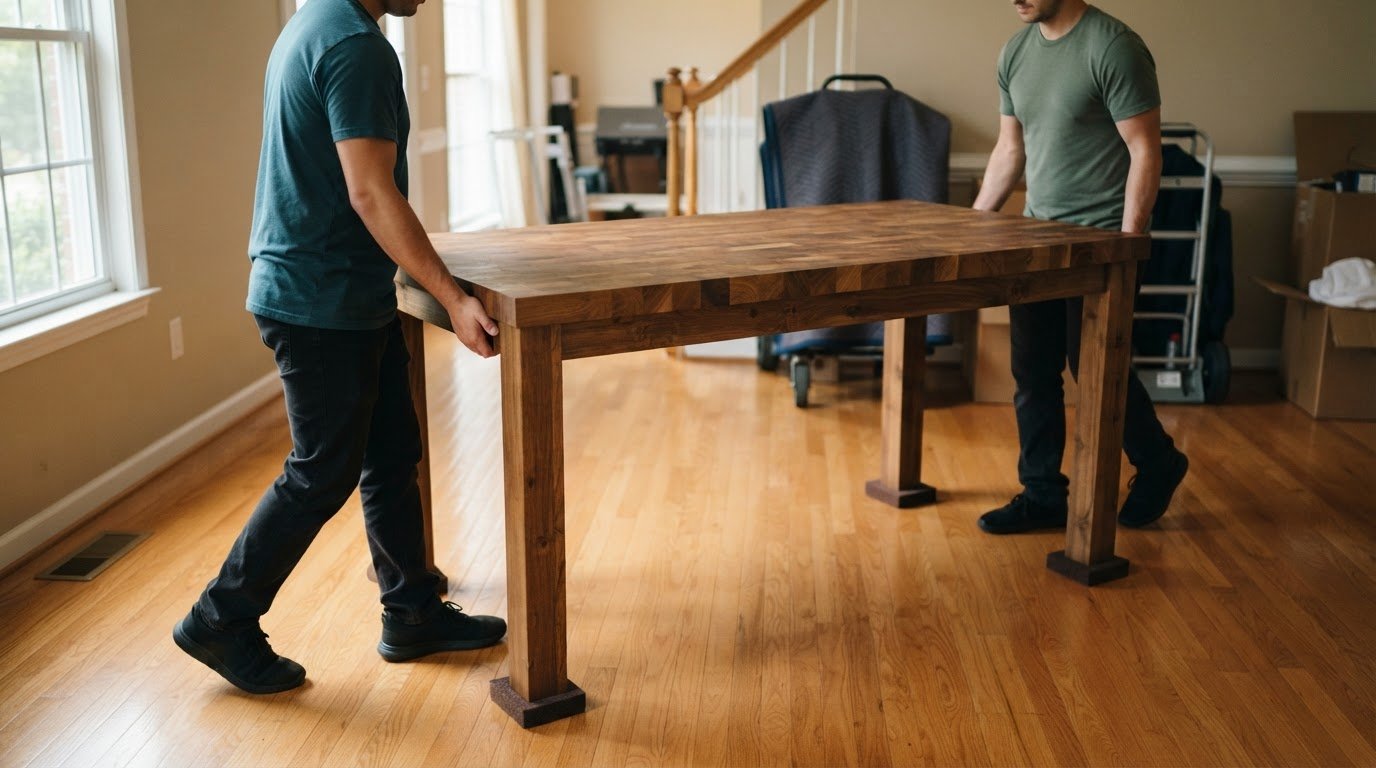
The safest move starts by making the table lighter, not by forcing it across the floor. When planning how to move a heavy butcher block dining table across hardwood floors in Fairfax Station, remove detachable leaves or legs when possible. Use clean felt sliders for a short, level glide or a suitable four-wheel dolly for a wide, stable route. Sliders are pads placed beneath table legs or corners to help furniture glide, and they should be made for finished hardwood.
A butcher block table can be awkward to control, and dragging it bare risks scratching the floor. This guide explains how to protect hardwood, choose between sliders and a dolly, clear the route, and reduce the table’s weight by removing parts that detach. You’ll also learn when carrying is better than rolling, and why thresholds and tight turns need controlled handling. A heavy lift is not a one-person job.
Key Takeaways
- Protect the floor and table with clean padding, and keep grit from getting trapped beneath moving equipment.
- Match the slider or dolly to the floor and route, then move slowly across thresholds and turns.
- For a hard-wheeled dolly, use sturdy floor protection to help prevent scuffs and dents.
- Plan a clear path and coordinate the lift so the table stays balanced and controlled.
- Reduce the table’s weight by removing detachable leaves or legs when appropriate.
How do movers protect hardwood floors?
Protect hardwood by cleaning the route, choosing floor-safe equipment, and controlling each lift. For a Fairfax Station move, planning how to move a heavy butcher block dining table across hardwood floors starts with protecting both the table and its route.
-
How Professional Movers Clean the Hardwood Floor and Moving Path
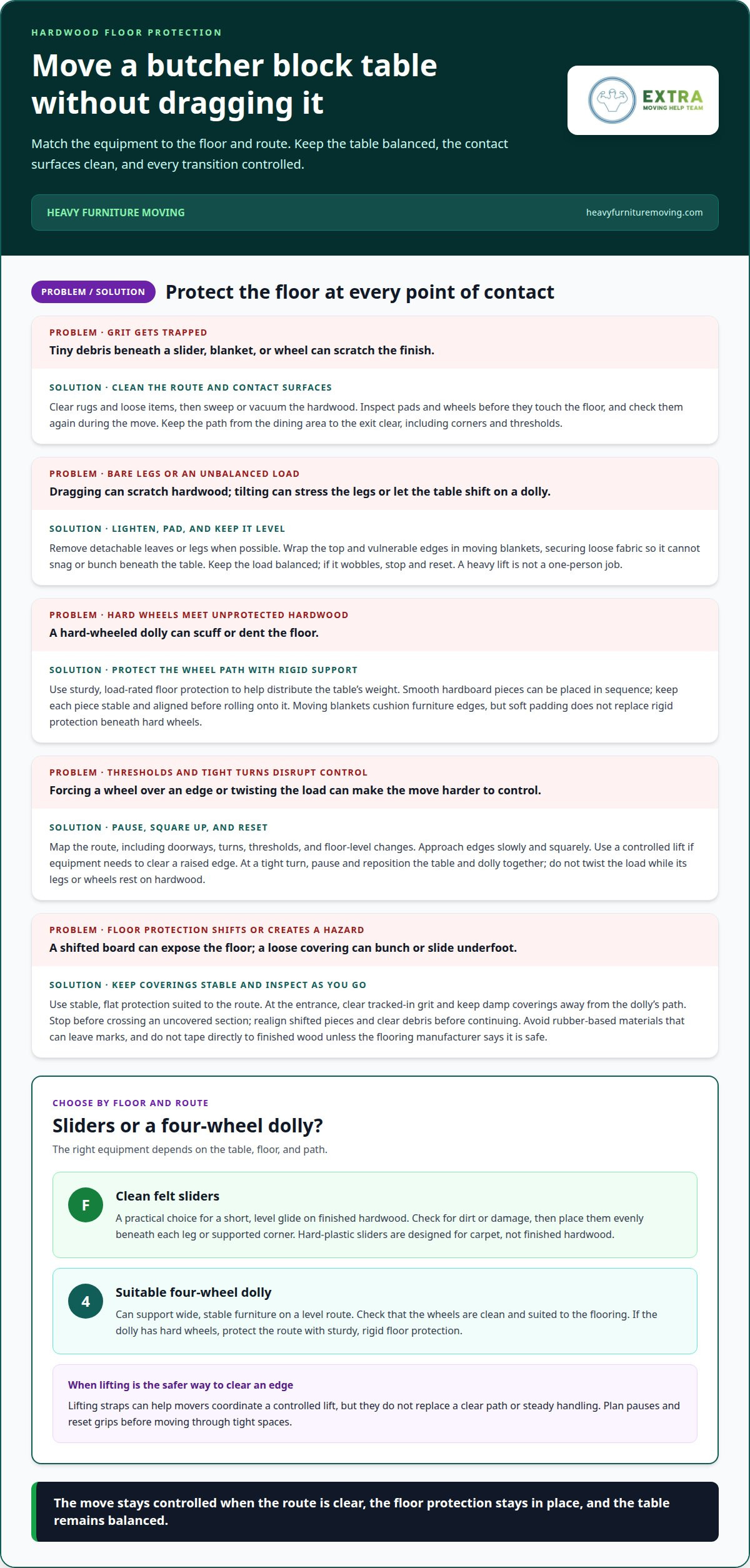
Clear the table’s route, then sweep or vacuum the hardwood before laying floor protection. Grit trapped beneath a slider, blanket, or wheel can scratch the finish. Remove rugs, loose items, and anything that could catch a mover’s foot or equipment.
Check the path from the dining area to the exit, including corners and thresholds. Keep it smooth and unobstructed. Clean contact surfaces matter as much as clean flooring, so inspect wheels and pads before they touch the floor.
-
How Movers Prepare the Route and Check Local Rules
Map the route before lifting, including doorways, tight turns, thresholds, and changes in floor level. Clear the path and plan where movers may need to pause or reset their grip. Cross an edge slowly and squarely, using a controlled lift if equipment needs to clear it.
In Fairfax County, moving furniture to another location differs from disposing of bulky items. Disposal collection requirements depend on the property and collection service. A route through private indoor space also differs from work affecting shared or public space, so don’t assume one rule covers every situation.
-
How Movers Choose Clean, Non-Marking Moving Equipment
Choose equipment to suit the floor, table, and route. Clean felt sliders work for a short glide on level hardwood. Check them for dirt or damage before placing them beneath each leg or supported corner. Hard-plastic sliders are designed for carpet, not finished hardwood.
A suitable four-wheel dolly can support wide, stable furniture on a level route. Check that its wheels are clean and suited to the flooring. Lifting straps can help movers coordinate a controlled lift, but they don’t replace a clear path or steady handling.
-
How Movers Pad the Table and Protect the Floor
Wrap the butcher block top and vulnerable edges in moving blankets before shifting the table. Padding helps protect the furniture from bumps and cushions hard edges near other surfaces. Secure the blankets so loose fabric can’t snag or bunch beneath the table.
Use floor protection where the route or equipment calls for it, and keep it flat and stable. A blanket may help a stable item glide over a smooth floor when lifting isn’t practical, but it must not create a slipping hazard. Avoid rubber-based materials that can leave marks. Don’t apply adhesive tape directly to finished wood unless the flooring manufacturer says it’s safe. A careful plan for how to move a heavy butcher block dining table across hardwood floors in Fairfax Station accounts for the route, floor contact, and equipment from the start.
Protecting floors when using a hard-wheeled dolly
A hard-wheeled dolly can scuff or dent unprotected hardwood. Control the load, protect the wheels’ path, and never drag the table across the floor.
-
How Professional Movers Avoid Dragging or Tilting the Table
Keep the table balanced instead of dragging it or tipping it onto a few legs. Bare legs can scratch hardwood, while uneven pressure can stress or break them. A tilted table can also shift on the dolly, making it harder to control. If the load wobbles, stop and reset before continuing.
-
How Movers Lay Rigid Floor Protection
Place rigid, load-rated floor protection along the dolly route to help distribute the table’s weight. With a hard-wheeled dolly, movers can roll across sturdy, smooth hardboard pieces placed in sequence. Keep each piece stable and aligned before rolling onto it. Moving blankets cushion furniture edges, but soft padding doesn’t replace rigid protection beneath hard wheels.
-
How Movers Shield Thresholds and Tight Turns
Approach each threshold slowly and squarely, rather than striking its edge at an angle. If the dolly must clear a raised edge, use a controlled lift instead of forcing the wheels over it. At a tight turn, pause and reposition the table and dolly together. Don’t twist the load while its legs or wheels rest on the hardwood.
- Protect the entrance before the dolly reaches the hardwood. Rain can bring moisture, while outdoor grit and road salt can cling to shoes or wheels. Use a stable entrance covering that won’t bunch or slide underfoot. Clear tracked-in grit before moving equipment over the floor, and keep damp coverings away from the dolly’s path. Check wheels for debris before each pass.
- Inspect the protection as the move progresses. A shifted board can expose hardwood to direct wheel contact, while trapped grit can scratch beneath rigid material. Stop before crossing onto an uncovered section, realign the pieces, and clear any debris. Keep the dolly moving slowly. If the route becomes uneven or the load loses balance, set it down safely before proceeding.
Choosing sliders for hardwood and other hard floors
Match each slider to the floor surface and the table’s contact points. The right choice helps furniture move straight without scraping or shifting.
-
How Movers Choose Felt Sliders for Hardwood
Choose felt sliders made for finished hardwood, then inspect each contact face before placing it beneath a table leg or corner. Felt can glide across smooth wood while reducing the chance of trapping tiny debris. A dirty, worn, or damaged slider can still mark the floor, so replace it before moving the table.
Set sliders evenly beneath the table’s support points. If a leg misses its pad, the table can tilt or drag an unprotected edge. Keep the table level and apply controlled pressure instead of forcing it forward.
-
How Movers Use Sliders on Smooth Hard Floors
Use clean felt-backed sliders on smooth hardwood and similar finished surfaces. Position one beneath each leg or supported corner, then move the table in a straight, steady line. Felt is less likely than hard plastic to trap tiny debris, but inspect the sliders during the move.
For tile, choose sliders suited to that surface rather than assuming hardwood pads fit every floor. Hard-plastic sliders are recommended for tile, while grout lines need careful handling. Move with control near joints, where a sudden bump can jolt the table or its supports.
- Check the route before choosing sliders over a dolly. Sliders work best when the table can stay supported and move across a level, clear path. A wide butcher block top may be hard to control through a tight turn, even with pads beneath its legs. A suitable four-wheel dolly can offer a steadier platform for wide furniture on level ground.
Don’t use sliders on stairs, steep ramps, broken flooring, or raised thresholds. These obstacles require controlled lifting and a different handling plan. If the table starts to rock or a slider slips out of place, stop and reset the support before continuing.
- Use lifting straps to help movers coordinate when the table needs to be raised for repositioning. Straps can support controlled handling, but they don’t make an unstable lift safe by themselves. Keep the table balanced, communicate before moving, and set it down if grip or control falters.
- For carpet, choose plastic sliders designed for carpet rather than felt pads. Place each slider beneath a table leg, with its rounded edge facing the direction of movement. That orientation can help the furniture glide more smoothly. Never use the same plastic sliders on bare hardwood, where they can scratch the finish.
What Can Professional Movers Put Under Heavy Furniture to Move It?
Movers choose support based on the furniture, floor, and route. For a butcher block table, planning the route and coordinating the lift help keep the load under control.
- Measure the table and the full route before moving. Include doorways, hallways, stair turns, thresholds, and the truck opening. Compare the table’s widest points with each passage, then identify where careful repositioning may be needed. Planning measurements helps movers avoid discovering a tight turn while carrying the table.
- Choose the crew and moving method for the table’s weight and shape. Heavy furniture shouldn’t be moved alone; arrange help so the lifting team can keep the load balanced. OSHA recommends mechanical assistance and two-person lifting for heavy loads. Even under ideal conditions, OSHA states that loads heavier than 50 pounds increase injury risk.
- Have one mover lead the movement and call commands. Other movers should follow the same cues before lifting, turning, or setting the table down. For example, the lead mover can pause the team at a doorway, confirm the direction, then call the lift. This coordination helps prevent sudden shifts and uneven steps.
- Clear the moving path before bringing the table through. Remove rugs, loose items, and other trip hazards from the floor. Keep the route open from the dining area to the exit, including enough space to turn. If a hallway narrows near a doorway, plan the turn before lifting instead of forcing the table through.
- Protect the route wherever furniture or equipment could contact hardwood. Keep floor coverings flat and secure, and remove grit that could get trapped beneath a dolly or pad. Check the path again after setting down equipment. A shifted covering or newly tracked debris can create a hazard before the next lift.
- Use a controlled lift for stairs, steep ramps, or thresholds that sliders can’t safely cross. Keep movers close to the table, bend at the knees, and keep backs as straight as possible while lifting with the legs. If grip, balance, or the route becomes unsafe, stop and set the table down before continuing.
How Professional Movers Reduce a Dining Table’s Weight by Removing Leaves and Detachable Legs
Movers assess the tabletop, base, dimensions, and removable parts to estimate a butcher block table’s weight. Solid construction and a thick top affect the lifting plan, while detachable leaves or legs can reduce the load and improve control.
- Inspect the table before moving it. Identify detachable leaves, extension pieces, and legs, then look for fasteners or support points. Distinguish removable parts from fixed joints so you don’t force a connection that could split or loosen the table.
- Remove each leaf that can be released safely. Set it aside on a stable, protected surface, clear of the moving route. A smaller tabletop is easier to guide through a doorway or around a corner than a fully extended table.
- Detach legs only if the table is designed for removal. Use the appropriate hand tool and keep each fastener with its matching leg. If a joint resists or shifts unexpectedly, stop rather than twisting it. Force can damage the connection or leave the base unstable.
- Keep a clear record of every detached part. Group fasteners by leg or section and place them where they won’t be kicked or misplaced. This helps preserve the table’s original fit and prevents confusion between similar hardware during reassembly.
- Reassess the table after removing parts. The top may still be the heaviest section, and its balance can change once the base or leaves are gone. Adjust grip points and lifting positions to keep the remaining piece level, especially while clearing a doorway or turning a corner.
- Choose the carrying method for the table’s reduced shape, not just its lower weight. A wide top can remain awkward to maneuver after its leaves come off. Keep it supported, move slowly, and coordinate turns so an edge doesn’t strike a wall or doorframe.
- Keep detachable parts separate during transport. Secure each piece so it can’t shift into the tabletop or other heavy items. Before moving the main table, confirm the route fits its shape and the crew can maintain a steady hold from pickup through set-down.
For help handling a bulky table and its removable parts, explore professional heavy furniture moving help.
Heavy Furniture Moving
Heavy Furniture Moving handles bulky furniture that needs careful movement across hardwood floors. Turn to the team when a butcher block table is difficult to lift, awkward to guide through a doorway, or too heavy to move safely without help.
The team can plan the route, choose suitable floor protection, and handle removable parts as part of the move. If the table needs to be shifted within your home, in-home furniture moving help can make lifting and placement easier to manage.
If you’d rather leave the heavy lifting to a moving team, contact Heavy Furniture Moving to discuss your table move.
Plan the Move Around Your Table
When planning how to move a heavy butcher block dining table across hardwood floors in Fairfax Station, the next step is deciding how much of the job to hand over. The table’s size, removable parts, and destination all shape the handling plan. Share those details when arranging help, including whether the table will stay in your home or travel to another address.
Professional help can ease a lift that feels difficult to control. Heavy Furniture Moving handles bulky furniture moves, so you can focus on the table’s destination instead of managing each part of the carry. Discussing the move clearly helps set expectations before work begins.
Ready to leave the heavy lifting to a moving team? Contact Heavy Furniture Moving for help, and take the next step with confidence.
Frequently Asked Questions
What Are Furniture Sliders?
Furniture sliders are pads placed beneath furniture contact points to help it glide instead of scrape. For a dining table, they support the legs or stable corners during a controlled move. Unlike moving blankets, which wrap and cushion the table, sliders create a surface for movement. Choose sliders for the floor type and make sure each pad sits flat beneath its support point.
How Do Professional Movers Lift a Heavy Butcher Block Dining Table?
Professional movers first assess how the tabletop and base connect, then choose stable grip points. They avoid lifting by a loose edge or decorative trim. The team agrees on when to lift, turn, and set the table down. That shared timing matters in a narrow doorway, where one mover may guide an edge while others support the table.
How Do Professional Movers Move a Heavy Butcher Block Dining Table Without Scratching Hardwood Floors?
Movers protect the floor by keeping bare table legs from contacting it during movement. Before shifting the table, they check that sliders or dolly wheels are clean and that floor protection stays in place. They also avoid turning the table abruptly against the floor. If a support pad shifts or grit appears along the route, they pause and fix it before continuing.
How Do Movers Choose the Best Furniture Sliders for Heavy Tables on Hardwood Floors?
Movers choose sliders with clean, nonabrasive contact surfaces made for finished hardwood. They also consider the table’s feet: each pad should sit securely beneath a support, not balance on an edge. Check the sliders before use and during the move. Dirt, wear, or a poor fit can scratch the floor or leave the table unevenly supported.
How Do Professional Movers Safely Lift and Move a Heavy Dining Table?
Movers plan the carry around the table’s shape, available grip points, and tight spots along the route. They coordinate each lift and turn so the table doesn’t swing into a wall or doorway. Keep hands clear of pinch points when setting it down. If the team loses grip or balance, stop and reset rather than forcing the movement.
Should Movers Remove Table Legs or Leaves Before Moving a Butcher Block Table?
Yes, if the leaves or legs are designed to detach and can be removed without forcing a joint. Removing a leaf can make the tabletop easier to guide through a tight doorway, while detachable legs can simplify handling. Keep removed hardware together and protect each part separately. If a fitting resists, leave it in place rather than risk damaging the table.
How Do Professional Movers Protect Hardwood Floors from Furniture Dents and Scratches During a Move?
Movers limit concentrated pressure and prevent hard equipment from rolling directly over unprotected hardwood. A heavy table can dent flooring where its weight rests on a small contact point, so use suitable floor protection beneath equipment. After placement, inspect the route for marks or dents. Don’t immediately apply household oils, waxes, or abrasive cleaners to a scratch.
What Affects the Cost of Hiring Furniture Movers in Fairfax Station, VA, for One Heavy Table?
The table’s handling needs and access conditions affect the quote, including its size, removable parts, stairs, and route difficulty. Heavy Furniture Moving offers hourly labor with a two-hour minimum and flat-rate pricing for most single heavy items. Quotes are provided upfront before work begins, with stairs and wrap priced in. The service is available for one-table moves in Fairfax Station.
Frequently Asked Questions
Furniture sliders are pads placed beneath furniture contact points to help it glide instead of scrape. For a dining table, they support the legs or stable corners during a controlled move. Unlike moving blankets, which wrap and cushion the table, sliders create a surface for movement. Choose sliders for the floor type and make sure each pad sits flat beneath its support point.
Professional movers first assess how the tabletop and base connect, then choose stable grip points. They avoid lifting by a loose edge or decorative trim. The team agrees on when to lift, turn, and set the table down. That shared timing matters in a narrow doorway, where one mover may guide an edge while others support the table.
Movers protect the floor by keeping bare table legs from contacting it during movement. Before shifting the table, they check that sliders or dolly wheels are clean and that floor protection stays in place. They also avoid turning the table abruptly against the floor. If a support pad shifts or grit appears along the route, they pause and fix it before continuing.
Movers choose sliders with clean, nonabrasive contact surfaces made for finished hardwood. They also consider the table’s feet: each pad should sit securely beneath a support, not balance on an edge. Check the sliders before use and during the move. Dirt, wear, or a poor fit can scratch the floor or leave the table unevenly supported.
Movers plan the carry around the table’s shape, available grip points, and tight spots along the route. They coordinate each lift and turn so the table doesn’t swing into a wall or doorway. Keep hands clear of pinch points when setting it down. If the team loses grip or balance, stop and reset rather than forcing the movement.
Yes, if the leaves or legs are designed to detach and can be removed without forcing a joint. Removing a leaf can make the tabletop easier to guide through a tight doorway, while detachable legs can simplify handling. Keep removed hardware together and protect each part separately. If a fitting resists, leave it in place rather than risk damaging the table.
Movers limit concentrated pressure and prevent hard equipment from rolling directly over unprotected hardwood. A heavy table can dent flooring where its weight rests on a small contact point, so use suitable floor protection beneath equipment. After placement, inspect the route for marks or dents. Don’t immediately apply household oils, waxes, or abrasive cleaners to a scratch.
The table’s handling needs and access conditions affect the quote, including its size, removable parts, stairs, and route difficulty. Heavy Furniture Moving offers hourly labor with a two-hour minimum and flat-rate pricing for most single heavy items. Quotes are provided upfront before work begins, with stairs and wrap priced in. The service is available for one-table moves in Fairfax Station.