How to Move a Heavy Butcher Block Island on LVP in Fairfax
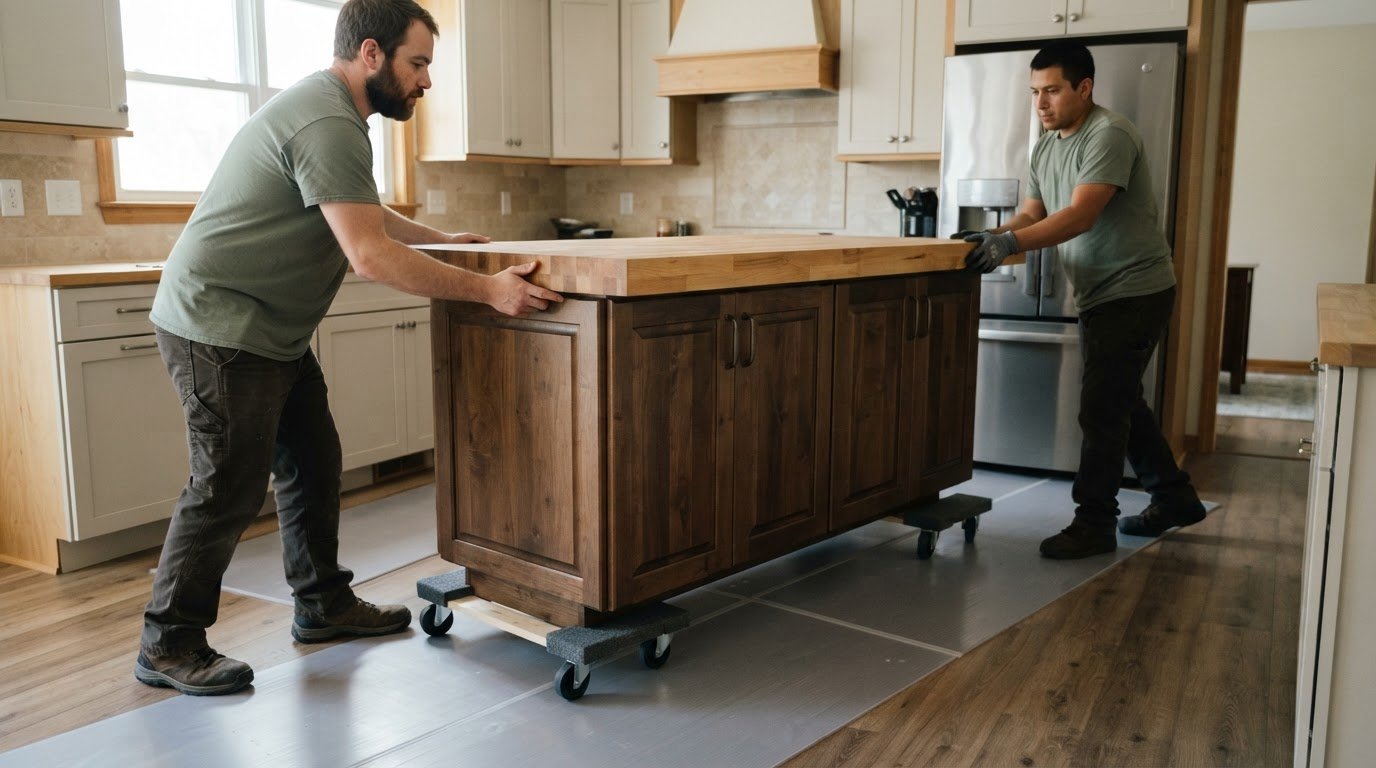
Don’t drag a heavy butcher block island across luxury vinyl plank. Support its weight with suitable moving equipment and protect the floor along the route, distributing the load rather than concentrating it on small feet or corners. If you’re figuring out how to move a heavy butcher block island across luxury vinyl plank in Fairfax, this is the key to reducing the risk of dents, scratches, and damage at flooring joints.
It’s reasonable to worry about the floor: a bulky island can be hard to control, and even a careful move can go wrong if its weight bears down on one small area. Dollies or sliders may help, but the right choice depends on the island’s base and the route through your home.
This guide explains how concentrated pressure can affect LVP, how floor protection and moving equipment help, and what movers consider when planning the job. You’ll learn what can help protect your flooring and when professional heavy-furniture movers can take the strain off you.
Key Takeaways
- Learn why concentrated weight can leave an indentation in LVP, even when the island moves only a short distance.
- See how movers assess an island’s size, weight distribution, and route before choosing a moving method.
- Understand when dollies or sliders can help, and why controlled movement matters around flooring joints.
- Find out how protective materials can reduce the risk of scratches and pressure damage along the move path.
- Discover which details help determine the crew and equipment needed for a heavy island move.
Point loads and indentation on vinyl plank flooring
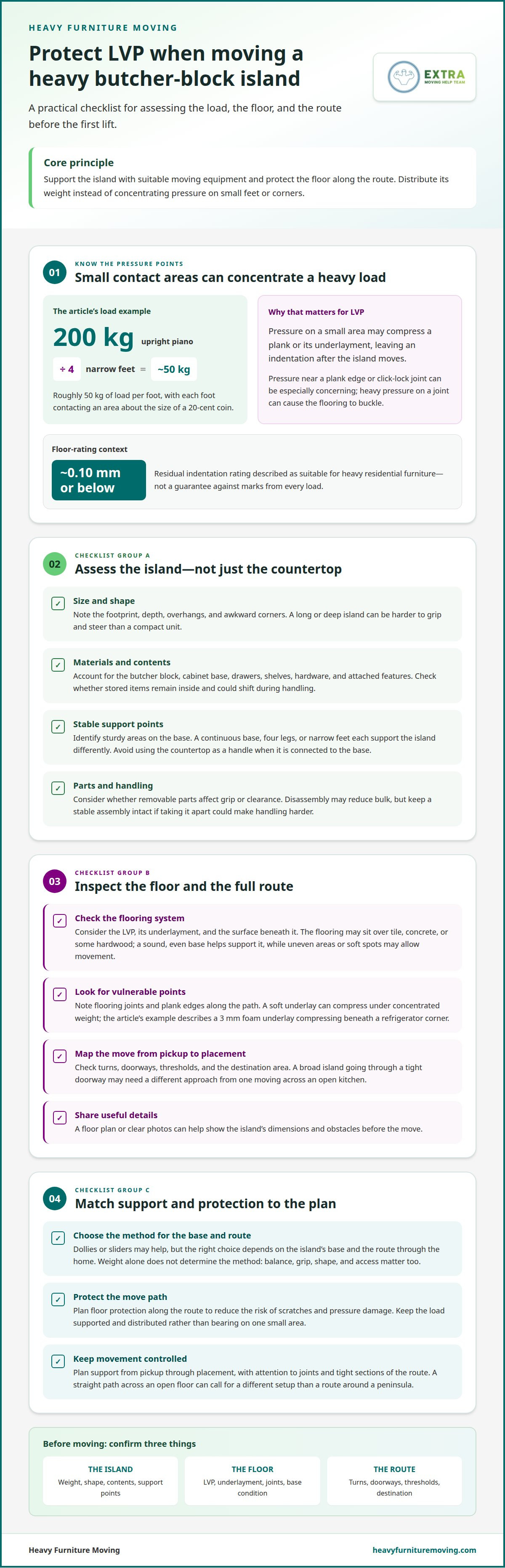
A point load occurs when an island’s weight presses on a small area. An island resting on narrow feet concentrates pressure differently from one supported by a broad, continuous base. That pressure may compress the plank or its underlayment, leaving an indentation after the island is moved. The risk depends on the flooring system, the support beneath it, and how the island’s weight reaches the floor.
That figure shouldn’t be treated as a guarantee against indentation beneath a small foot. For comparison, a 200 kg upright piano resting on four narrow feet applies roughly 50 kg of load per foot. Each foot may press onto an area about the size of a 20-cent coin. The example shows why contact area matters alongside total weight.
Luxury vinyl plank can also flex over a compressible layer. A soft 3 mm foam underlay, for example, can compress beneath a refrigerator corner and leave the plank flexing. In a kitchen, an island’s feet may create a similar concentrated load, especially when weight sits near a plank edge or click-lock joint. Heavy pressure on a click-lock joint can cause the flooring to buckle.
Floor construction matters, too. Luxury vinyl plank may be installed over existing tile, concrete, or some hardwood, provided the surface is in good condition, level, and properly prepared. These layers affect the support beneath the plank. A sound, even base helps distribute pressure, while uneven areas or soft spots may allow movement under a heavy island. An assessment should consider both the flooring and the surface beneath it, not just the butcher-block top.
Residual indentation ratings offer another way to compare flooring performance. Around 0.10 mm or below is described as suitable for heavy residential furniture. That rating provides context, not a promise that every plank will resist marks from every load. A moving plan still needs to account for the island’s feet, weight distribution, and the route across the kitchen floor.
Should a mover disassemble a kitchen island before moving it? First assess whether removable parts affect handling or clearance along the route. Disassembly may help if it reduces bulk, but a stable assembly should stay intact if taking it apart could make handling more difficult.
For a butcher-block island, the priority is controlled support from pickup through placement. Assess where its weight rests, whether the floor has vulnerable joints, and how the island can pass through the kitchen without leaving concentrated pressure in one spot. These details help determine how to protect the LVP.
How do professional movers assess the weight of a butcher block kitchen island?
Assess more than the butcher-block top. The island may also have a cabinet base, drawers, shelves, hardware, and attached features. Each part affects the load and how the island can be supported. Before selecting equipment, consider the island’s construction, footprint, and the way its weight rests on the floor.
Dimensions are a useful starting point. A long, deep island can be harder to grip and steer than a compact unit, even if they seem similar in height. Consider the size of the top and base, then check whether the shape allows secure support. An overhanging counter, for example, affects where hands or lifting equipment can safely make contact.
Construction matters, too. Solid butcher block, a built-up countertop, and a cabinet base each contribute to the overall weight. Drawers or shelves may hold cookware, utensils, or other items, adding weight that could shift during handling. Check whether the island is empty or still loaded, and note any attached sections to determine whether it moves as one unit or in separate pieces.
Consider how the island is built and supported. A continuous base has different support points from four legs or narrow feet. Identify stable lifting areas and consider whether pressure could damage decorative panels, handles, or trim. If the countertop and base are connected, support the assembly rather than using the top as a handle.
- Size and shape: Determine the island’s footprint and identify overhangs or awkward corners.
- Materials and contents: Account for the butcher block, cabinet, drawers, shelves, and stored items.
- Support points: Locate sturdy areas on the base for controlled lifting.
- Movement path: Consider turns, doorways, and the destination before selecting handling equipment.
The route turns a weight estimate into a handling plan. A broad island may need a different approach through a tight doorway than across an open kitchen. Check thresholds, corners, and the final placement area, then match the support method to both the island and the route. A floor plan or clear photos can help show dimensions and obstacles before the move.
Weight alone doesn’t determine the right crew or equipment. Balance, grip, shape, and access all matter. For example, a compact island with a heavy top may be less awkward than a wider island with an uneven base. Professional butcher-block island moving support can account for those details before handling begins.
How do professional movers safely move a heavy kitchen island without damaging luxury vinyl plank flooring?
A professional move starts with the route, not the first lift. Assess kitchen turns, doorways, thresholds, and the destination before choosing how to handle the island. For homeowners planning how to move a heavy butcher block island across luxury vinyl plank in Fairfax, those details shape the approach. A straight path across an open floor may call for a different setup than a route around a peninsula or through a narrow doorway.
Before moving, the crew clears loose items from the route and protects vulnerable areas. A 6 mm sheet of hardboard, MDF, or thick cardboard can cover the travel path. Movers position the sheets to create a protective lane, paying attention to turns and thresholds where a wheel or edge might catch. The covering needs to stay flat as the load passes.
Next, lift the island just enough to place suitable equipment beneath its stable base. Dollies can support and roll the load along a clear route. Sliders may help with controlled repositioning, but don’t drag them directly across exposed vinyl. Match the equipment to the island’s base and keep the load steady to prevent scraping or tipping.
Move with coordination. Guide the island gradually, watching its base and the floor as the equipment travels. At a doorway, pause to realign instead of forcing a tight turn. Heavy pressure on a click-lock joint can cause the flooring to buckle. If equipment snags or the island shifts, stop and reset before continuing.
- Assess the route: Identify turns, thresholds, and tight clearances before lifting.
- Protect the path: Keep the floor covering flat beneath moving equipment.
- Support the base: Place equipment beneath stable parts of the island.
- Control each turn: Pause and reposition rather than forcing the island through.
At the destination, guide the island off the equipment and lower it into position. Keep the support balanced during the transfer, since concentrated pressure can mark the floor as the base comes down. Check that the island sits evenly and doesn’t rock against the kitchen floor.
A sound plan for how to move a heavy butcher block island across luxury vinyl plank in Fairfax accounts for the flooring joints, the island’s shape, and the route through the home. Dollies or sliders can help, but only when used as part of controlled handling. The crew’s steady pace and careful transitions help reduce the risk of scraping, catching, or putting sudden pressure on a vulnerable spot.
What floor protection do professional movers use when moving heavy furniture across luxury vinyl plank?
Floor protection addresses two risks: surface damage during movement and pressure concentrated beneath furniture feet. Lift heavy furniture instead of sliding it across luxury vinyl plank to reduce the risk of scratches and gouges. For a butcher-block island, match the floor covering and support method to the route, the island’s base, and the equipment touching the floor.
A temporary travel lane can shield the LVP from moving equipment. A 6 mm sheet of hardboard, MDF, or thick cardboard can cover the path. Movers position the sheets to create a continuous route, paying attention to turns and thresholds where a wheel or edge might catch. The covering needs to stay flat while the load passes; a shifted sheet can expose the plank underneath.
Felt or cotton pads are recommended beneath furniture feet on luxury vinyl flooring. Rubber padding may stain the floor, so material choice matters even if the item only needs a short repositioning. Pads also suit wide, flat feet that stay beneath furniture after placement. They allow slight seasonal movement as vinyl flooring expands and contracts.
Narrow metal feet need broader support. Furniture cups for those feet should ideally be 60 mm or wider, spreading pressure across more floor area. For a heavier point load, a 100 mm castor cup can spread a 50 kg furniture-foot load across a wider contact area. These examples show why cup size should suit the foot and its load, rather than simply covering the visible metal tip.
- Moving route: Use a protective sheet lane where dollies or other equipment will travel.
- Furniture feet: Choose felt or cotton rather than rubber padding on LVP.
- Narrow supports: Use wider cups to spread pressure beneath small feet.
Different materials serve different purposes. Hardboard, MDF, or thick cardboard protects the travel path; felt or cotton protects contact points beneath furniture. A cup under a foot can help distribute its load, while a sheet beneath moving equipment helps keep wheels and edges away from exposed planks. Combining these protections covers both the move and final placement.
Pay attention to floor joints and equipment contact points. A wheel repeatedly crossing one seam concentrates pressure there, while an exposed edge can catch during a turn. A clear, protected route helps reduce these risks. Lift the island onto its moving equipment, guide it across the floor, then lower it onto suitable foot protection at its destination.
For an island that will stay in place, wide, flat supports distribute pressure more effectively than narrow feet. During a move across LVP, the priority is protecting the equipment’s route and preventing direct scraping. Match protection to each stage, distinguishing temporary path covering from permanent furniture pads.
How many movers or what equipment are needed to move a heavy butcher block island?
Crew size depends on the island’s weight, shape, balance, and route. Consider these factors together rather than choosing a team based on the butcher-block top alone. A wide island with an overhanging counter can be harder to guide than a compact, square unit. Tight turns or a narrow doorway also affect how many people are needed to control the move.
Each mover needs a clear role during lifting and travel. Identify stable grip points, coordinate the lift, and keep the island balanced as it moves. One person can guide the route and watch clearances while others support the load. This coordination matters at a kitchen doorway, where the island may need to turn without striking a frame or tipping.
Choose equipment to suit the island’s base and the floor route. A dolly can carry a supported island along a suitable path, while sliders can assist with controlled repositioning. Select equipment that fits the base and keeps the island steady. Plan how to place and remove it, too, since moving between the floor and equipment requires control.
The travel path shapes the plan. A broad opening and straight route may allow equipment to roll smoothly. A tight turn, threshold, or uneven transition calls for closer guidance and a pause to reposition. For an island with a heavy top and a narrower cabinet base, account for the shift in balance as the load is lifted. Don’t grip the countertop overhang as if it were a handle.
- Island shape: A wide top or uneven base can require more careful guidance.
- Route: Doorways, turns, and thresholds affect access and equipment movement.
- Support: The base determines where movers can lift and place equipment.
- Coordination: Clear roles help keep the island controlled during each transition.
There isn’t one fixed crew size for every butcher-block island. The appropriate team depends on the load and the control needed along the route. More people alone don’t solve poor access or an unstable support point; the plan must match the island’s shape and movement constraints. A professional assessment connects those details to the crew and equipment before lifting starts.
Share the island’s approximate dimensions, whether drawers or shelves contain items, and any tight doorway or turn. Those details help the movers plan equipment and access before arrival. If the island is bulky or difficult to control, request professional heavy-lifting help for a coordinated move across your LVP.
Heavy Furniture Moving
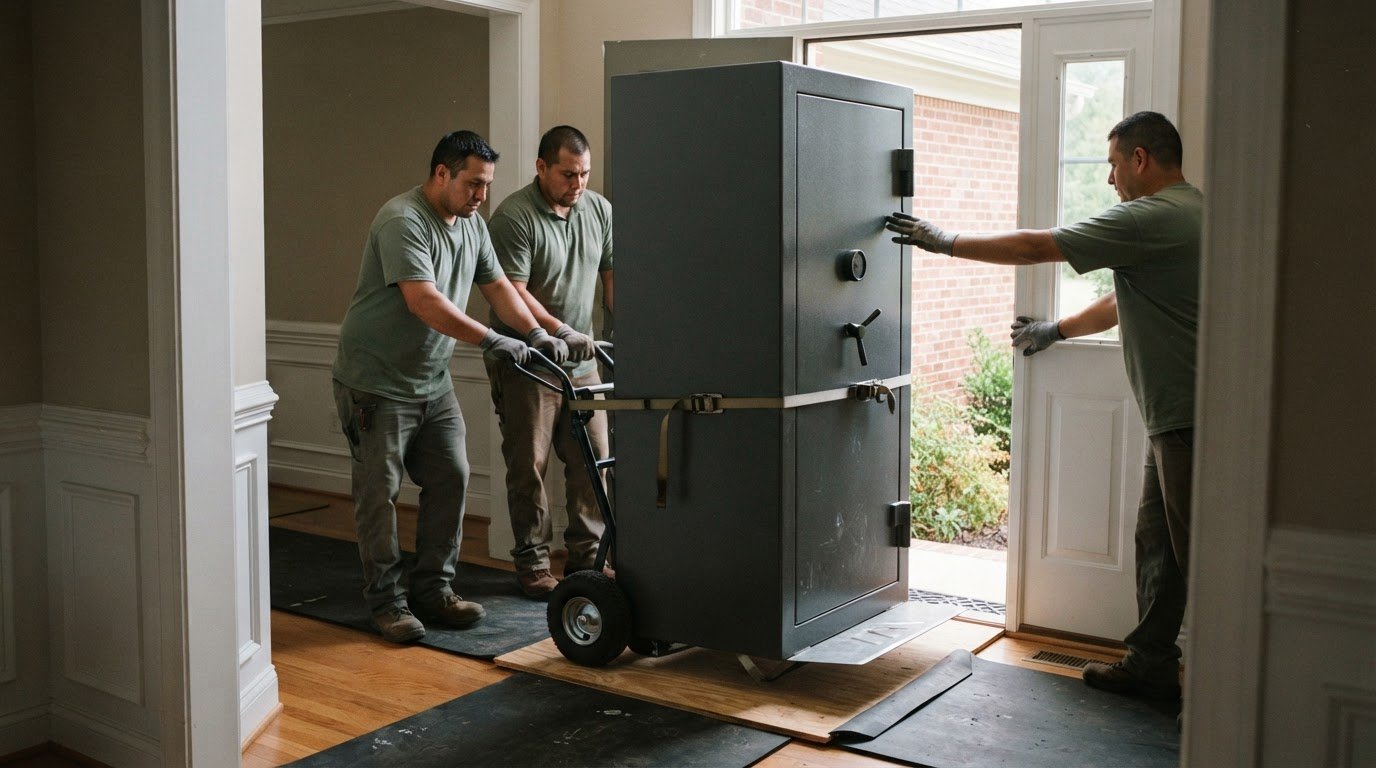
Heavy Furniture Moving can help when a butcher-block island is too heavy or awkward to reposition safely. The company provides residential furniture-moving and heavy-lifting help, with movers planning around the island’s size, support points, and route across LVP. Share details about tight turns, doorways, or flooring joints so the team can plan for your home.
Professional help makes sense when the island is difficult to control, the kitchen route is restricted, or protecting the floor is a priority. Heavy Furniture Moving also provides in-home furniture moving and local moving help for household items. Contact Heavy Furniture Moving to discuss your heavy island move.
Plan Your Island Move With Confidence
Before setting a moving date, note what the crew needs to know: the island’s dimensions, its current position, and any narrow passage between the kitchen and its destination. These details help shape a plan for your home rather than relying on a guess. If you’re considering how to move a heavy butcher block island across luxury vinyl plank in Fairfax, professional guidance can make the next step clearer.
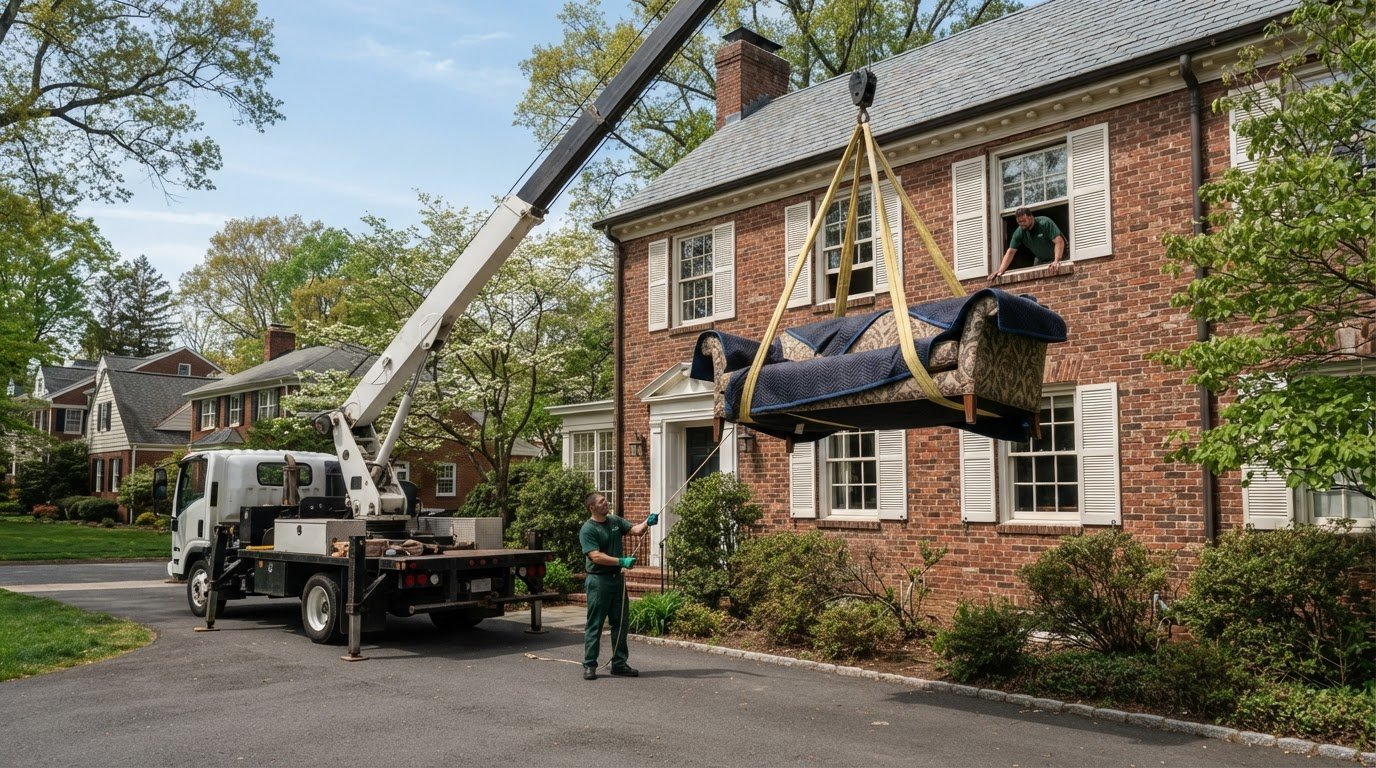
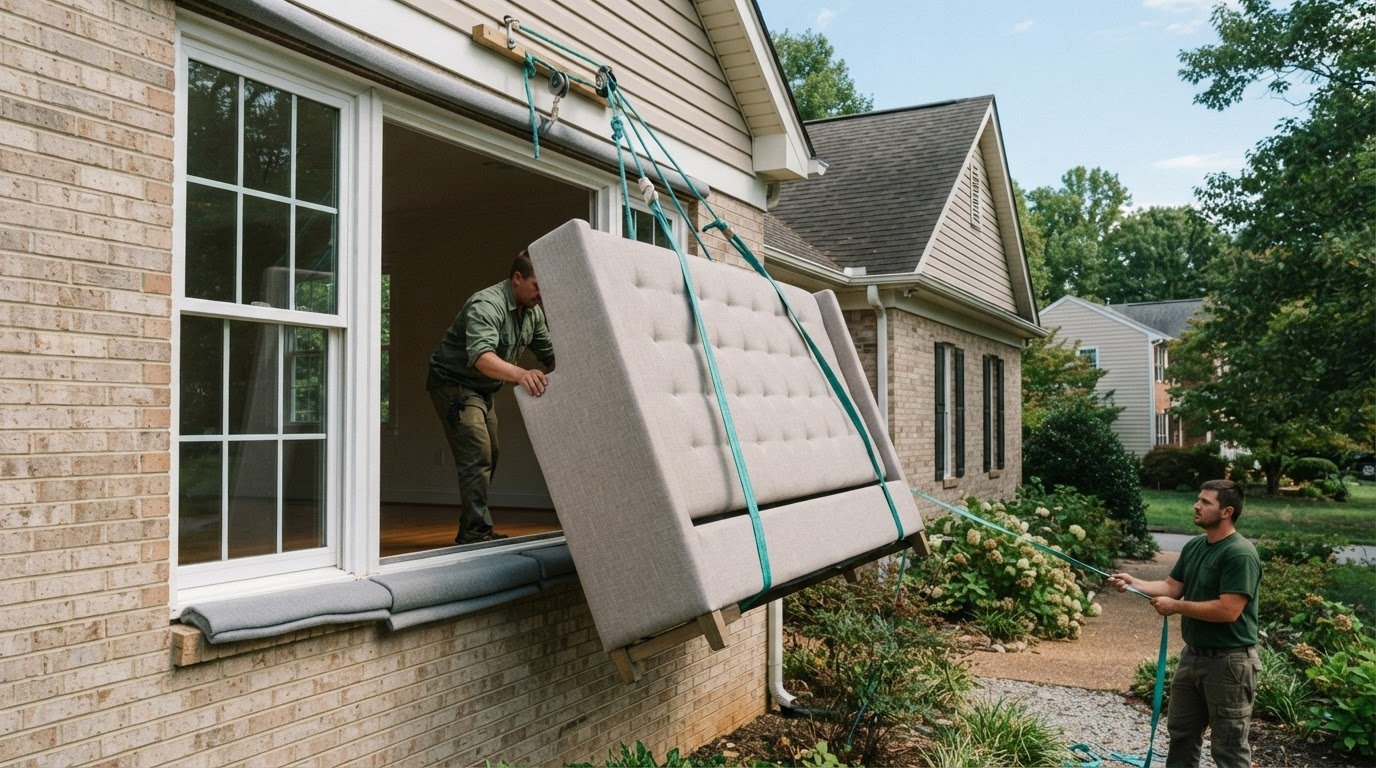
Heavy Furniture Moving handles residential moving needs, including exercise equipment moving and sofa hoisting. For an island move, discuss the item and access route so the team understands the job you have in mind.
Share the details and let a capable moving crew take it from there. Contact Heavy Furniture Moving to talk about your island move and move forward with a clear plan.
Frequently Asked Questions
Can furniture sliders damage or dent luxury vinyl plank flooring?
Yes, sliders can damage LVP if grit gets trapped underneath or the load presses hard against a plank edge. A rough slider dragged beneath a cabinet foot, for example, could scratch the surface, while a small contact area may leave a dent. Sliders are for controlled repositioning, not a substitute for lifting and proper floor protection. Choose a method suited to the furniture base and flooring path.
How much do professional furniture movers charge in Fairfax, Virginia, for moving a heavy kitchen island?
The price depends on the move and is provided after a quote request. Factors include the island’s dimensions, construction, route through the home, and any tight access points. A narrow doorway may call for a different plan than an open route. Describe the island and where it is in your home to request a quote for the specific job.
What local movers in Fairfax, Virginia, move heavy kitchen islands?
Heavy Furniture Moving serves Fairfax residents who need help with heavy household items. Its services include Movers Near Me and in-home furniture moving. For an island move, share its size, whether it has attached sections, and any narrow doorways or turns. These details help the team understand the access and handling challenges in your home.
What are the risks of moving heavy appliances or furniture across luxury vinyl plank flooring?
Dragging a heavy item can scratch or gouge the wear surface, while a foot or wheel pressing in one spot can leave an indentation. A loaded appliance may also catch at a floor transition or put force on a click-lock seam. For example, shifting a refrigerator across a kitchen can scrape the plank if its feet aren’t raised and supported. Controlled handling helps limit these risks.
How much does a butcher block kitchen island weigh, and how can I estimate its weight?
No specific weight is given for a butcher-block island. Account for the countertop, cabinet base, drawers, shelves, hardware, attached features, and anything stored inside; dimensions and construction also affect the load.
How do you lift and move a kitchen island safely without injuring your back?
First clear and assess the route. Lift the island only enough to place dollies or sliders under its stable base. Keep the load steady, move gradually with coordinated help, and pause to realign rather than forcing a turn.
Frequently Asked Questions
Yes, sliders can damage LVP if grit gets trapped underneath or the load presses hard against a plank edge. A rough slider dragged beneath a cabinet foot, for example, could scratch the surface, while a small contact area may leave a dent. Sliders are for controlled repositioning, not a substitute for lifting and proper floor protection. Choose a method suited to the furniture base and flooring path.
The price depends on the move and is provided after a quote request. Factors include the island’s dimensions, construction, route through the home, and any tight access points. A narrow doorway may call for a different plan than an open route. Describe the island and where it is in your home to request a quote for the specific job.
Heavy Furniture Moving serves Fairfax residents who need help with heavy household items. Its services include Movers Near Me and in-home furniture moving. For an island move, share its size, whether it has attached sections, and any narrow doorways or turns. These details help the team understand the access and handling challenges in your home.
Dragging a heavy item can scratch or gouge the wear surface, while a foot or wheel pressing in one spot can leave an indentation. A loaded appliance may also catch at a floor transition or put force on a click-lock seam. For example, shifting a refrigerator across a kitchen can scrape the plank if its feet aren’t raised and supported. Controlled handling helps limit these risks.
No specific weight is given for a butcher-block island. Account for the countertop, cabinet base, drawers, shelves, hardware, attached features, and anything stored inside; dimensions and construction also affect the load.
First clear and assess the route. Lift the island only enough to place dollies or sliders under its stable base. Keep the load steady, move gradually with coordinated help, and pause to realign rather than forcing a turn.