How to Move a Heavy Antique Sideboard Down Reston Basement Stairs
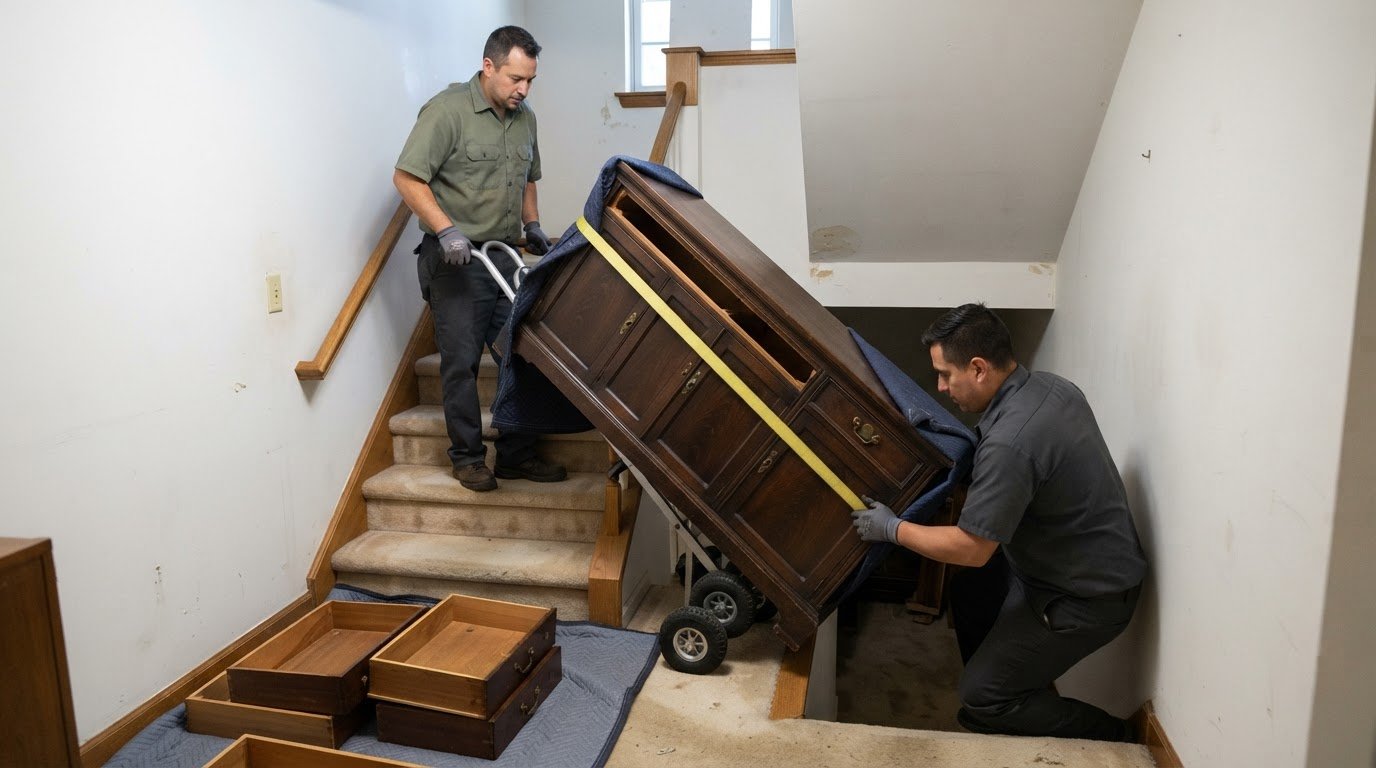
A sideboard that won’t clear the basement stairs shouldn’t be forced through. The safest way to move a heavy antique sideboard down basement stairs in Reston is to measure the piece and the entire route, then choose a moving plan suited to the stairs, landings, and tight turns. If it won’t fit as it stands, movers can assess whether careful disassembly or another route is appropriate.
It’s natural to worry about damaging an antique finish, scraping a doorway, or losing control on a narrow staircase. A stair-climbing dolly or hand truck may help, but the right choice depends on the sideboard’s shape and the route, not just its weight.
This guide explains how movers plan the route, clear and protect the landing, and select equipment for the stairs. You’ll also learn what to consider when a doorway or stairwell is too tight, and what details help a moving crew prepare.
Key Takeaways
- Learn how movers assess a tight fit and decide whether to adjust the sideboard or change the route.
- See which stairway and landing details shape a careful moving plan.
- Understand how stair-climbing dollies and hand trucks are matched to the furniture and stair layout.
- Find out when removing a door or door-stop molding may create useful clearance.
- Learn what affects the crew size needed to control a heavy sideboard on basement stairs.
How professionals handle a sideboard that will not fit, including disassembly or angling
In Reston, building access and common-area rules vary by property, so movers account for them before carrying furniture downstairs. An uncontrolled descent can make a heavy sideboard shift or strike a wall, risking damage to the furniture, staircase, or people nearby.
-
How Professionals Measure the Sideboard and Stairway
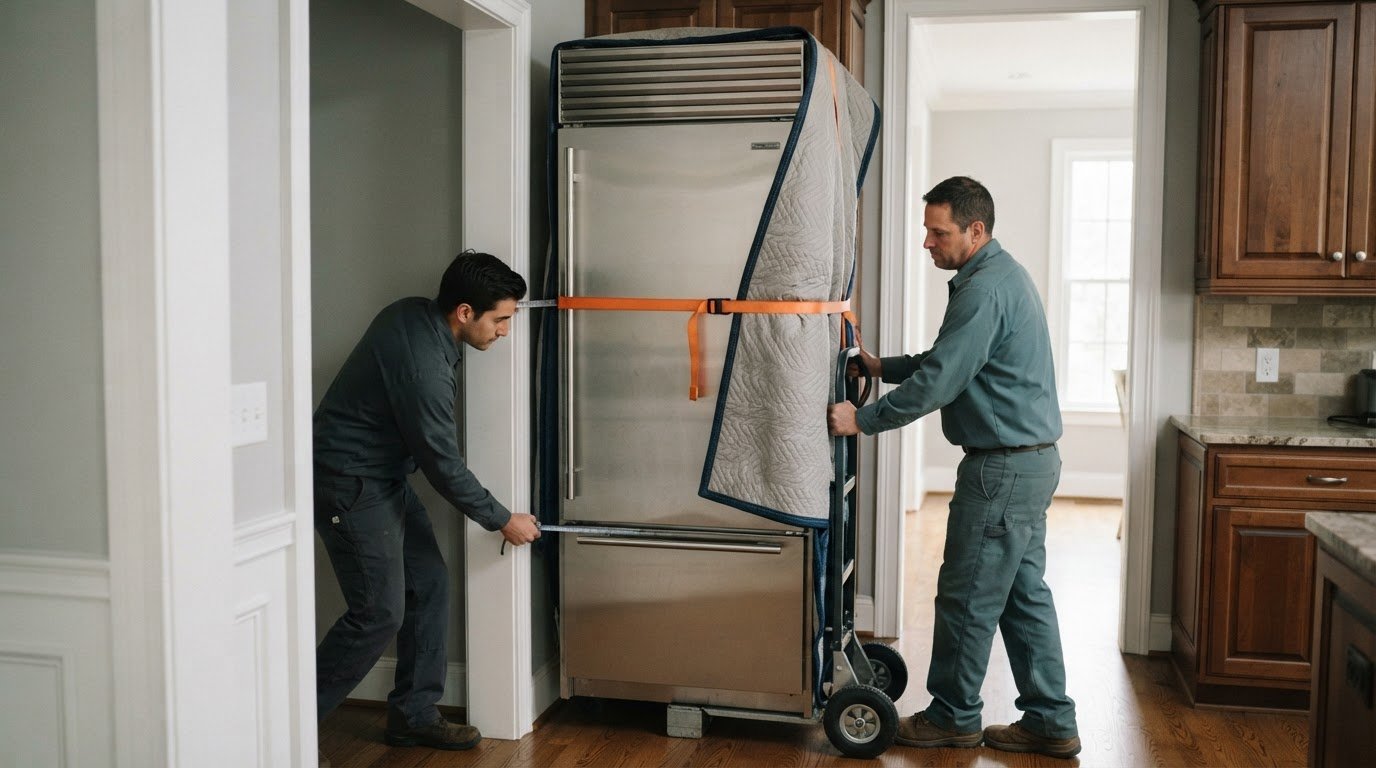
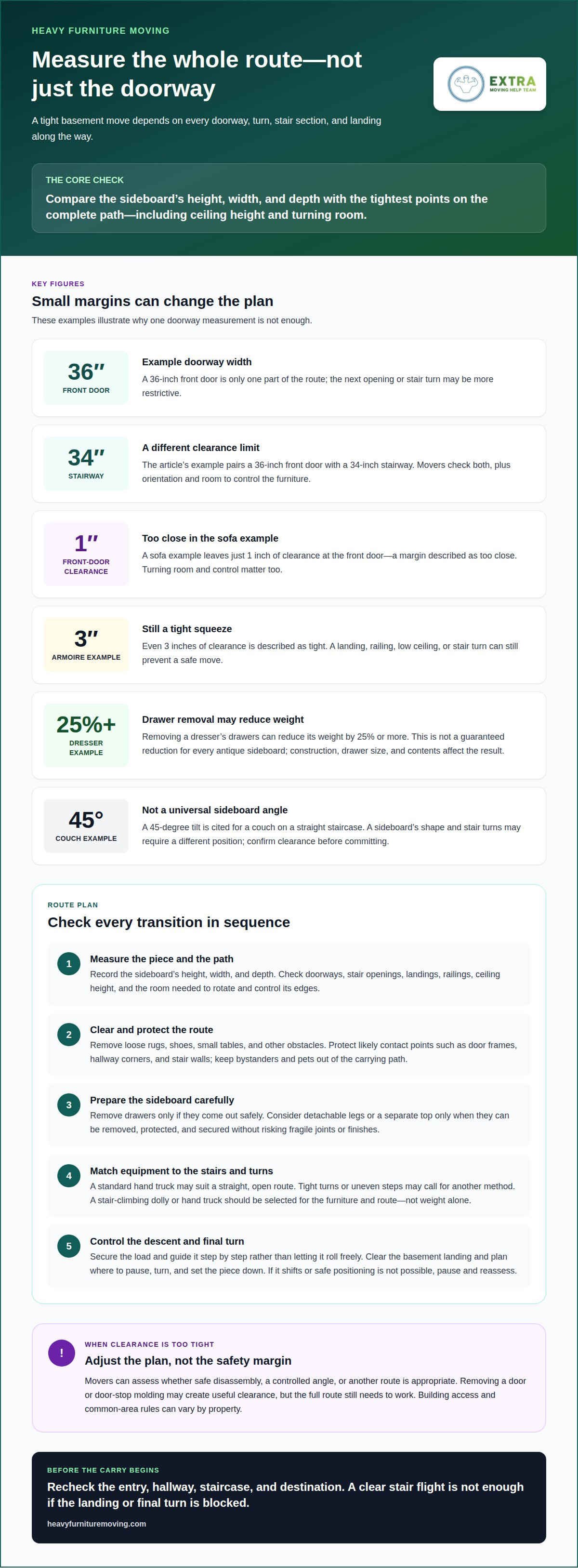
Measure the sideboard, doorway, stair opening, and landing as one connected route. Record the piece’s height, width, and depth, then compare them with every narrow point, including door frames and ceiling height above landings. A doorway may look wide enough but still lead to a stair turn with too little room to rotate the furniture.
For example, a 36-inch front door and a 34-inch stairway create different clearance limits. The crew checks both, then considers the sideboard’s orientation and the room needed to control its edges. Avoid relying on a single width measurement; a landing, railing, or low ceiling can stop a move even when the doorway is clear.
-
How Professionals Remove Drawers to Reduce Weight
Remove drawers before the move if they can be taken out safely. Empty and carefully remove them, then set them aside so they cannot slide open or fall during handling. This reduces the load and gives movers better access to secure the sideboard without putting pressure on drawer fronts or handles.
Removing a dresser’s drawers can reduce its weight by 25% or more. That figure is not a guaranteed reduction for every antique sideboard: drawer size, contents, and construction all affect the result. Movers also check whether drawers are fixed in place or have delicate runners. Forcing a stuck drawer can damage the cabinet, so the crew adapts rather than prying blindly.
-
How Professionals Disassemble or Angle the Sideboard
Disassemble only parts that can be removed safely, such as detachable legs or a separate top. Protect each component and keep its hardware together, then compare the remaining frame with the tightest point on the route. Antique joinery and finishes need careful handling. Taking a piece apart is not automatically safer if its joints are fragile or the parts cannot be secured.
If disassembly will not solve the clearance problem, the crew tests a controlled angle and checks the full path before committing. A 45-degree tilt is cited for a couch on a straight staircase, but a sideboard’s shape and stair turns can call for a different position. The key is confirming clearance without scraping the finish or trapping the piece at a landing.
-
How Professionals Move the Sideboard with a Hand Truck
Choose a hand truck only after assessing the sideboard, stairs, and turning space. Secure the furniture so it cannot tip or slide, keep the load controlled, and coordinate each movement with the crew. A standard hand truck may suit a straight, open route; tight turns or uneven steps may call for another method.
On the descent, guide the load step by step rather than letting it roll freely. Watch the sideboard’s corners, the stair edges, and the person controlling the lower end. If the truck prevents safe positioning or the sideboard shifts, pause and reassess instead of forcing the load down.
How professional movers plan the route and clear the landing area
Planning how to move a heavy antique sideboard down basement stairs in Reston starts with mapping the full route. Each doorway, turn, stair section, and landing can affect the safest approach.
-
How Professionals Plan the Furniture Route
Trace the route from the room entrance to the basement landing. Identify narrow doorways, stair turns, low ceilings, railings, and places where the sideboard may need to change direction. Consider how the furniture will sit at each transition, not just whether it fits through a doorway.
Clearance matters at every turn. A sofa example shows only 1 inch of front-door clearance, a margin described as too close. An armoire example leaves 3 inches, still a tight squeeze. These examples show why movers account for turning room and control, not just a single width measurement. For a Reston basement, the stair entrance and final landing can be just as limiting as the front door.
-
How Professionals Clear and Protect the Route
Remove obstacles along the planned route before the carry begins. Clear loose rugs, shoes, small tables, and other items that could affect footing or catch the sideboard’s corners. Look for protruding handles and tight wall edges, then decide where protective coverings will help.
Protect vulnerable surfaces at likely contact points, such as hallway corners, door frames, and stair walls. Keep the route clear from end to end; a clear hallway is not enough if boxes remain at the basement entrance. Keep bystanders and pets out of the carrying path so movers have room to control the furniture without interruptions.
-
How Professionals Clear the Landing Area
Clear the basement landing before the sideboard reaches the stairs. Remove stored items and leave room to turn, pause, and guide the furniture off the final step. Bins or folded furniture can block a turn even when the stairway itself is clear.
Check the landing’s ceiling, nearby doors, and the direction the sideboard must face after descending. Plan where to set the piece down and how to turn it next. If a door swings into that area, include its full arc in the route plan. Anyone figuring out how to move a heavy antique sideboard down basement stairs in Reston should plan for the final turn, not just the stair flight.
- Revisit the route if conditions change. A newly placed box, open door, or blocked landing can disrupt the planned path. Before moving, the crew confirms that the entry, hallway, staircase, and destination remain clear. For a difficult in-home carry, in-home furniture moving help can take route planning and careful handling off your hands.
How professionals choose stair-climbing dollies and hand trucks
Equipment choice depends on the sideboard’s shape, weight, and stair layout. Match the dolly to the route and the level of control the descent requires.
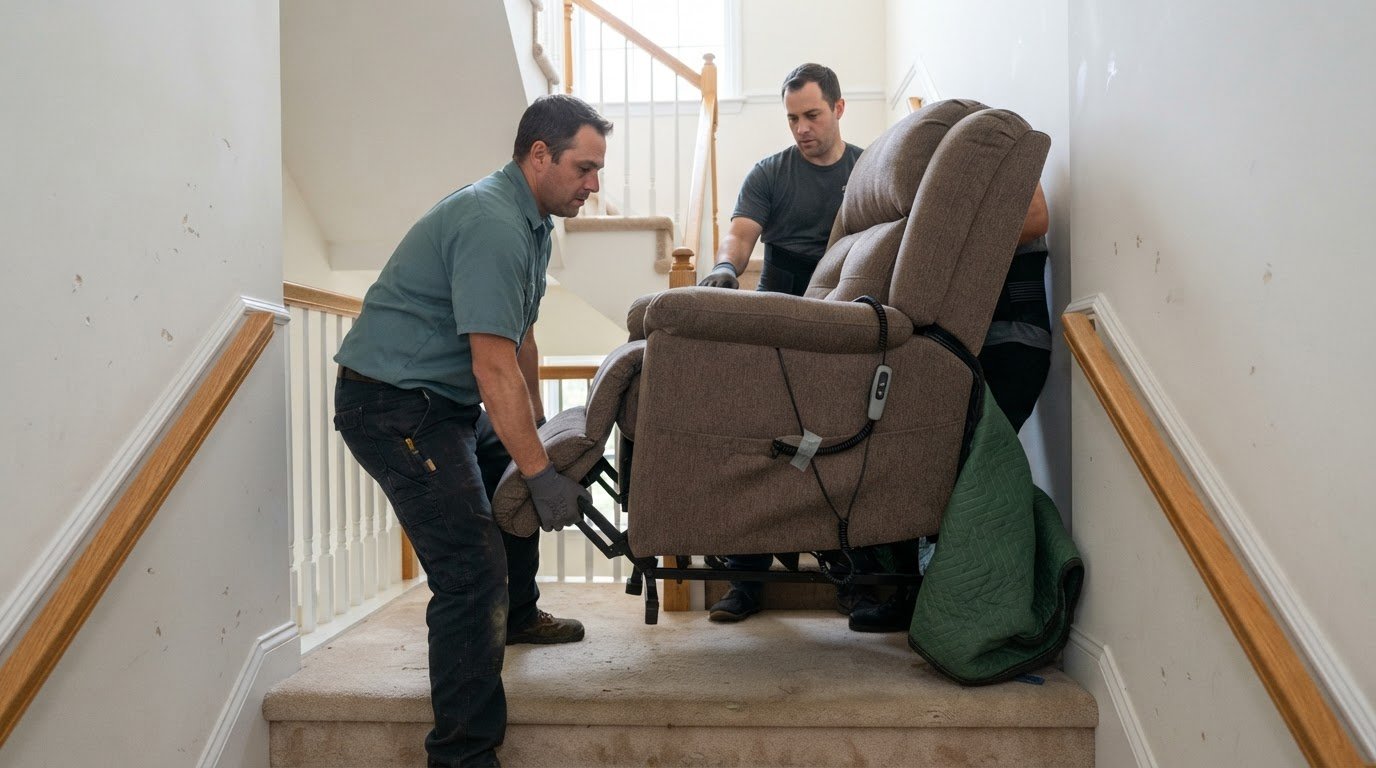
- Assess the sideboard and staircase before choosing a dolly. Consider the cabinet’s balance, base shape, and weight distribution, then compare them with stair width, step edges, turns, and landing space. A narrow turn may limit a hand truck’s position, while a straight run may allow steadier movement. The equipment must support the chosen orientation without blocking a mover’s grip or view.
- Choose a stair-climbing dolly when its wheel design suits the steps. It has three wheels on each side that rotate over stair edges. This arrangement can help the dolly travel across steps, but it does not solve every clearance problem. The sideboard still needs to be secured and guided through turns without striking a wall or railing.
- Use a standard hand truck when the route and load allow controlled handling. Check whether its frame can sit securely against the sideboard and whether the furniture can stay stable during the descent. A tall cabinet, uneven base, or tight landing may change the choice. Also consider how the hand truck affects movers’ positions: safe control takes more than getting the item onto wheels.
- Secure the sideboard before moving it onto the stairs. Position it so the load stays balanced on the equipment, then use suitable restraints to limit shifting. Keep straps away from delicate trim, handles, and antique surfaces. Before starting the descent, confirm that the dolly moves as intended and that the route is clear at every step and landing.
- Coordinate the descent with clear commands and steady movement. Furniture moving straps are recommended for two-person lifts of long items; decide whether they suit the sideboard and stair conditions. Agree on direct commands before lifting, including when to pause or adjust. If the load tilts, catches, or becomes difficult to control, stop and reassess the equipment and positioning rather than forcing it downward.
When professional movers remove doors or door-stop molding
Consider removing a door or door-stop molding only if it creates useful clearance. Weigh the added space against the risk of damaging the doorway or sideboard.
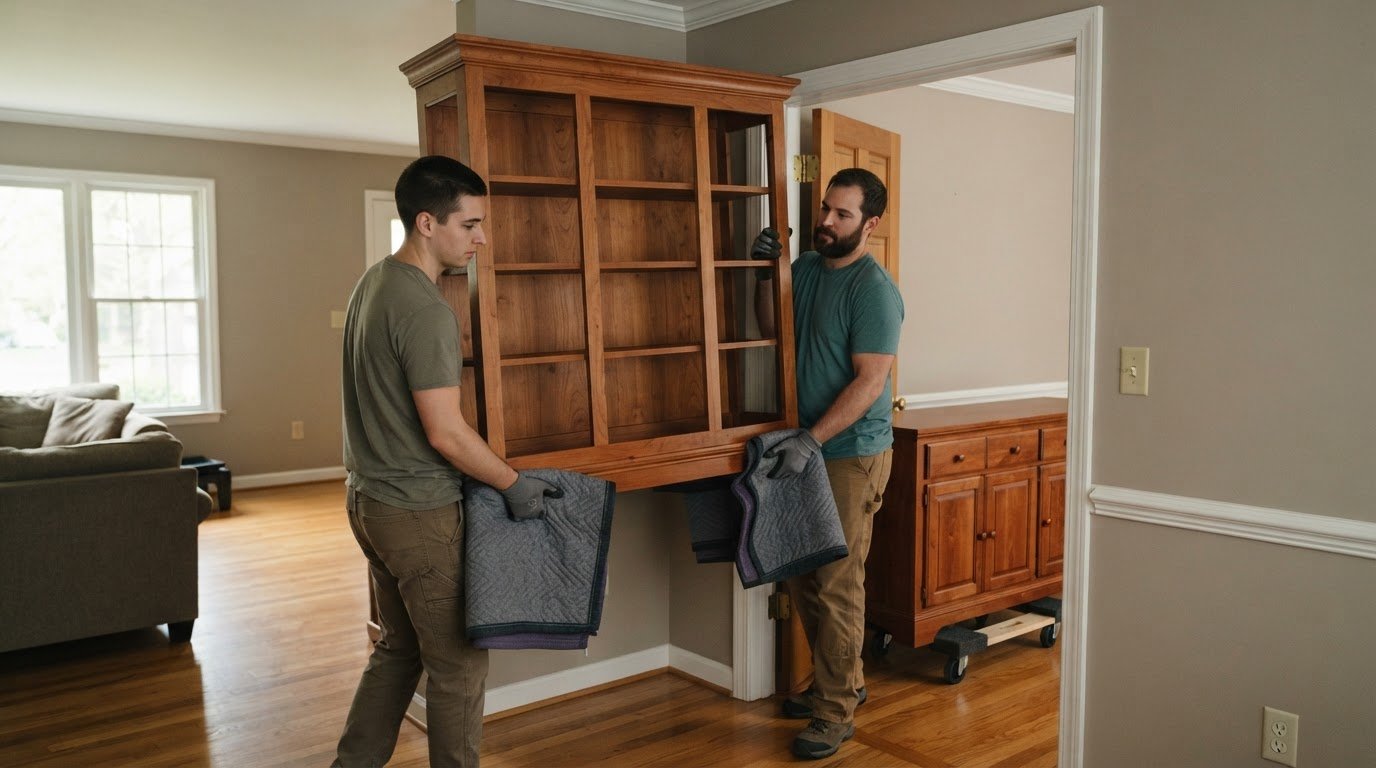
- Identify the exact obstruction before changing the doorway. Compare the sideboard’s path with the door, hinges, frame, and door-stop molding. The door may be the only obstacle, or the frame itself may be the narrow point. Removing a door will not solve a tight stair turn, so check whether the added clearance helps with the full route.
Consider the sideboard’s orientation, too. A piece that must turn immediately beyond the doorway may need more space than one that passes straight through. Decide whether removing the door will meaningfully improve the turn before handling any hardware.
- Remove the door when its open position blocks the sideboard or movers. The crew supports the door while disengaging it, then places it where it won’t obstruct the hall or stair entrance. This can open up the working area without altering the frame. Movers keep the doorway clear while they guide the sideboard through, especially if its corners or trim extend beyond the main cabinet.
Check the hinge side and door swing first. If the door already opens fully against a wall, taking it down may add little room. If it swings into the route, removing it can eliminate an obstacle and give movers more space to position the furniture.
- Consider removing door-stop molding only when it is the specific pinch point. This trim projects into the opening, so removing it may provide modest extra clearance. Check whether the sideboard’s widest point would otherwise catch the molding. Also consider the finish, attachment, and risk of marking the frame during removal.
Door-stop molding is different from the structural door frame. Removing trim does not widen the wall opening itself. If the frame is too narrow, taking off the molding may not provide enough room. The crew compares the available opening with the furniture’s profile before choosing this step.
- Recheck the route after adjusting the doorway. Confirm the newly available opening, then reassess the next turn, stair entrance, and landing. Extra doorway clearance helps only if the sideboard can continue without hitting a wall, railing, or ceiling. Keep removed parts out of the carrying path.
Choose another plan if the obstruction remains. Depending on its construction and the route, the sideboard may need a different angle or careful disassembly. Removing a door or molding will not solve every tight fit. A controlled move depends on the full route, not just one cleared opening.
How many movers are needed for a heavy antique sideboard on stairs
There isn’t one crew size for every sideboard. Movers assess the load, its balance, the stair layout, and how much control each position requires.
- Assess the sideboard’s weight and shape before planning the crew. A broad cabinet can be awkward to grip, while a tall piece may shift differently from a low, solid one. Consider its construction, weight distribution, and stable handholds. These details help determine how many people can guide it without crowding the staircase.
Weight alone doesn’t settle the question. Account for the sideboard’s dimensions and how it must be oriented on the stairs. A piece with a projecting top or delicate legs needs different handling from a plain rectangular cabinet.
- Include the staircase and landing in the crew plan. A straight stairway offers different working space from a route with a turn or narrow landing. Consider where movers can stand, maintain control, and communicate throughout the descent. If there is little room beside the sideboard, plan their positions accordingly.
Give each person a clear role. Depending on the furniture and route, one mover may guide the upper end while another controls the lower end. Avoid placing people where they cannot stand safely or help control the load.
- Match the crew to the equipment and handling method. A secured hand truck changes how movers support the sideboard, but it does not remove the need for controlled guidance. Consider whether the equipment can navigate stair turns and whether movers can keep the load steady at each transition.
Furniture moving straps are recommended for two-person lifts of long items. Decide whether they suit the sideboard’s shape and stair conditions. Straps do not replace a plan for communication, hand placement, or the landing.
- Use difficulty as a reason to bring in professional help, not to add untrained hands. If moving 500-pound furniture proves too difficult, hiring movers is advised. Heavy weight combined with stairs can make a load hard to control, especially when the route includes tight turns or limited footing.
A professional crew assesses whether the furniture can be moved safely with the available space and equipment. If the sideboard shifts or a mover loses a stable position, the crew pauses and changes its approach. For a demanding stair move, arrange professional heavy lifting help rather than attempting the descent without trained support.
Heavy Furniture Moving
Heavy Furniture Moving helps with challenging home furniture moves, including moving a heavy sideboard down basement stairs. Turn to the team when tight clearances, stair turns, or the sideboard’s weight make the move difficult to manage alone. Its in-home furniture moving and heavy-lifting services suit jobs where careful handling matters more than simply carrying an item from room to room.
Share the sideboard’s dimensions, staircase layout, and any tight doorway or landing. These details help shape the moving plan and identify suitable equipment. If the furniture does not fit as it stands, describe the obstruction so the route and handling approach can account for it.
Contact Heavy Furniture Moving to discuss your sideboard move.
Make a Confident Plan for Your Sideboard Move
If you’re planning how to move a heavy antique sideboard down basement stairs in Reston, turn the route details into a clear moving plan. Share the sideboard’s approximate dimensions, its current location, and the basement access points. Mention any narrow doorway, tight landing, or finish that needs careful handling. This helps the moving team understand the job before the carry begins.
Professional help can be especially useful when the sideboard is difficult to grip, the stairs leave little room to maneuver, or the route is uncertain. Heavy Furniture Moving also offers Movers Near Me, Exercise Equipment Moving, and Sofa Hoisting for other challenging household moves.
Contact Heavy Furniture Moving to discuss your sideboard move and the route ahead. With a clear plan and experienced hands, you can take the next step with more confidence.
Frequently Asked Questions
How Do Professional Movers Use the Pivot Technique for Tight Corners on a Staircase?
Movers use a pivot to change the sideboard’s direction within the available turning space. They coordinate the upper and lower ends, make small, controlled adjustments, and pause if the cabinet approaches a wall or railing. A pivot is not simply spinning the furniture in place: the crew needs room to reposition it while keeping the load stable. The staircase shape and landing clearance determine whether this approach works.
What Equipment Do Professionals Use to Move a Heavy Sideboard Downstairs?
Equipment depends on the furniture and staircase. Movers may use a hand truck or stair-climbing dolly, along with straps and protective materials suited to the sideboard. A stair-climbing dolly has three wheels on each side that rotate over step edges, but it still needs room to turn and be controlled. Choose equipment based on how the sideboard can be secured and guided along the route.
How Much Does Professional Furniture Moving Cost in Reston, Virginia?
The price depends on the move details, including the sideboard, stairs, handling needs, and labor. Heavy Furniture Moving provides upfront quotes before work begins. Its pricing uses hourly labor with a 2-hour minimum, while most single heavy items receive flat-rate pricing. Stairs and wrapping are priced before the job starts. Share details about the sideboard and basement access so the quote can reflect the actual move.
Are There Antique Furniture Movers Near Reston, Virginia, Who Handle Stairs?
Heavy Furniture Moving provides residential moving help for heavy and bulky household items, including in-home furniture moves. Its local service area includes Reston, Fairfax, Woodbridge, Manassas, Manassas Park, Aldie, Ashburn, McLean, Vienna, Centreville, Chantilly, Clifton, Dumfries, South Riding, Fairfax Station, Haymarket, and Gainesville. Describe the sideboard’s condition and stair access when arranging the move so the handling plan addresses the antique’s specific needs.
How Do Professional Movers Protect Antique Wood Furniture and Stair Walls During a Move?
Movers use furniture blankets and shrink film to protect the sideboard’s surfaces, with ratchet straps to secure it during handling. Door-jamb covers and masonite floor protection help guard vulnerable areas of the home. For an antique finish, consider where straps and contact points sit, keeping pressure off delicate trim. Protection choices depend on the furniture’s shape and the surfaces along the route.
Frequently Asked Questions
Movers use a pivot to change the sideboard’s direction within the available turning space. They coordinate the upper and lower ends, make small, controlled adjustments, and pause if the cabinet approaches a wall or railing. A pivot is not simply spinning the furniture in place: the crew needs room to reposition it while keeping the load stable. The staircase shape and landing clearance determine whether this approach works.
Equipment depends on the furniture and staircase. Movers may use a hand truck or stair-climbing dolly, along with straps and protective materials suited to the sideboard. A stair-climbing dolly has three wheels on each side that rotate over step edges, but it still needs room to turn and be controlled. Choose equipment based on how the sideboard can be secured and guided along the route.
The price depends on the move details, including the sideboard, stairs, handling needs, and labor. Heavy Furniture Moving provides upfront quotes before work begins. Its pricing uses hourly labor with a 2-hour minimum, while most single heavy items receive flat-rate pricing. Stairs and wrapping are priced before the job starts. Share details about the sideboard and basement access so the quote can reflect the actual move.
Heavy Furniture Moving provides residential moving help for heavy and bulky household items, including in-home furniture moves. Its local service area includes Reston, Fairfax, Woodbridge, Manassas, Manassas Park, Aldie, Ashburn, McLean, Vienna, Centreville, Chantilly, Clifton, Dumfries, South Riding, Fairfax Station, Haymarket, and Gainesville. Describe the sideboard’s condition and stair access when arranging the move so the handling plan addresses the antique’s specific needs.
Movers use furniture blankets and shrink film to protect the sideboard’s surfaces, with ratchet straps to secure it during handling. Door-jamb covers and masonite floor protection help guard vulnerable areas of the home. For an antique finish, consider where straps and contact points sit, keeping pressure off delicate trim. Protection choices depend on the furniture’s shape and the surfaces along the route.