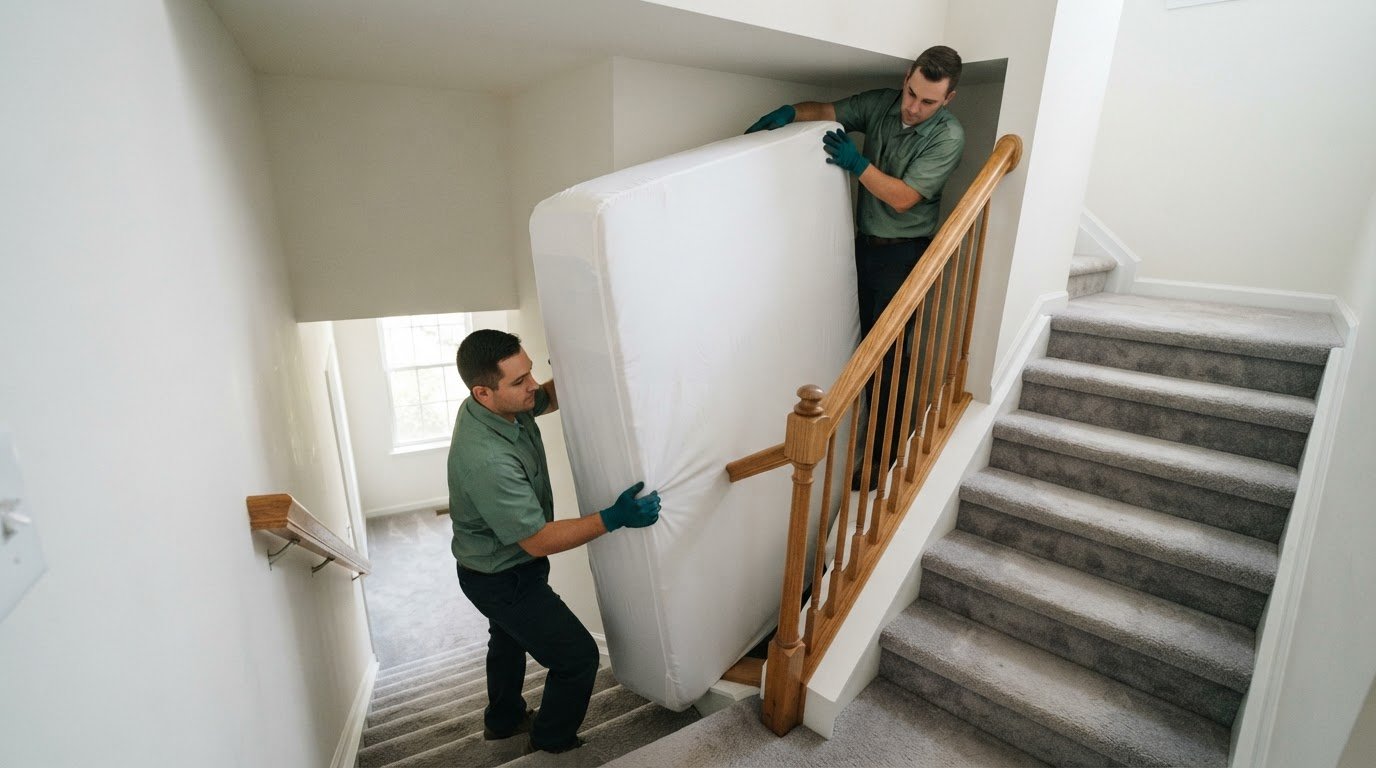
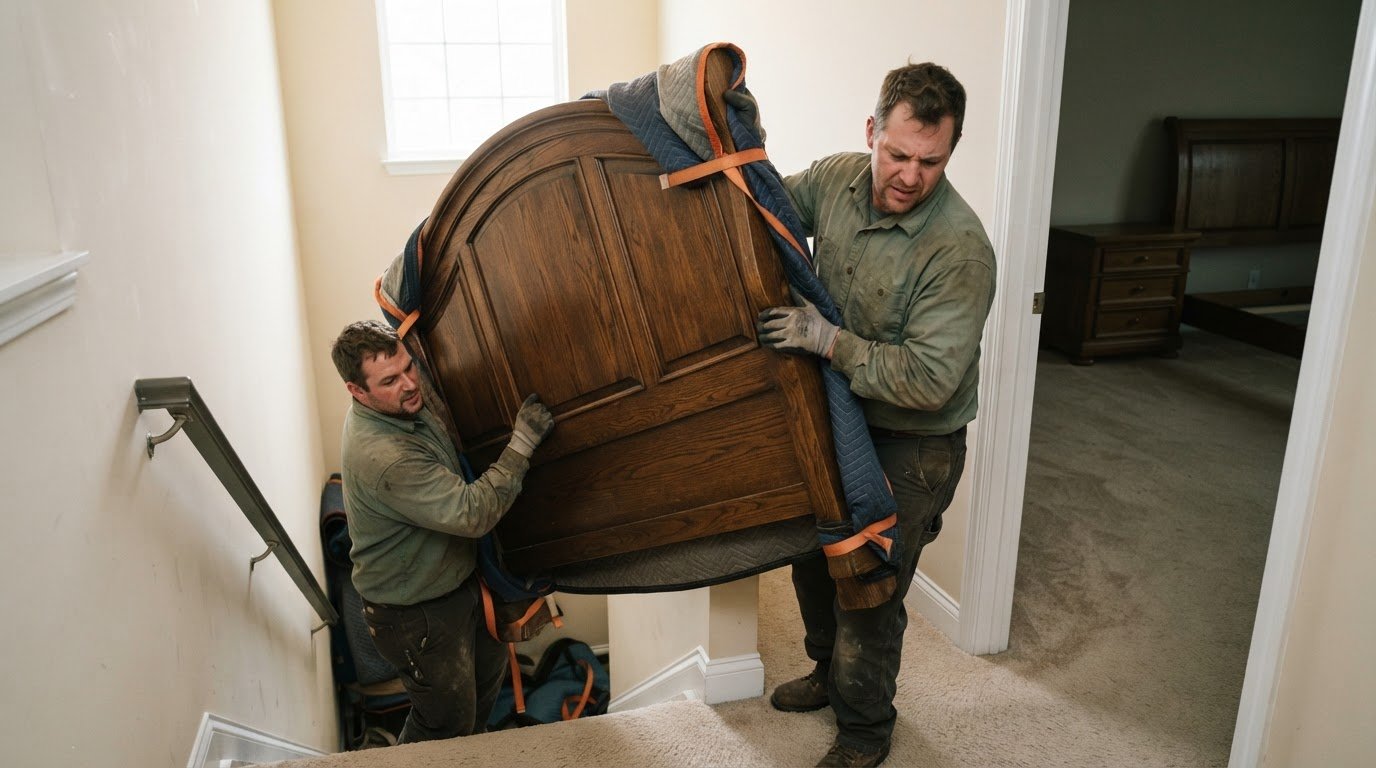
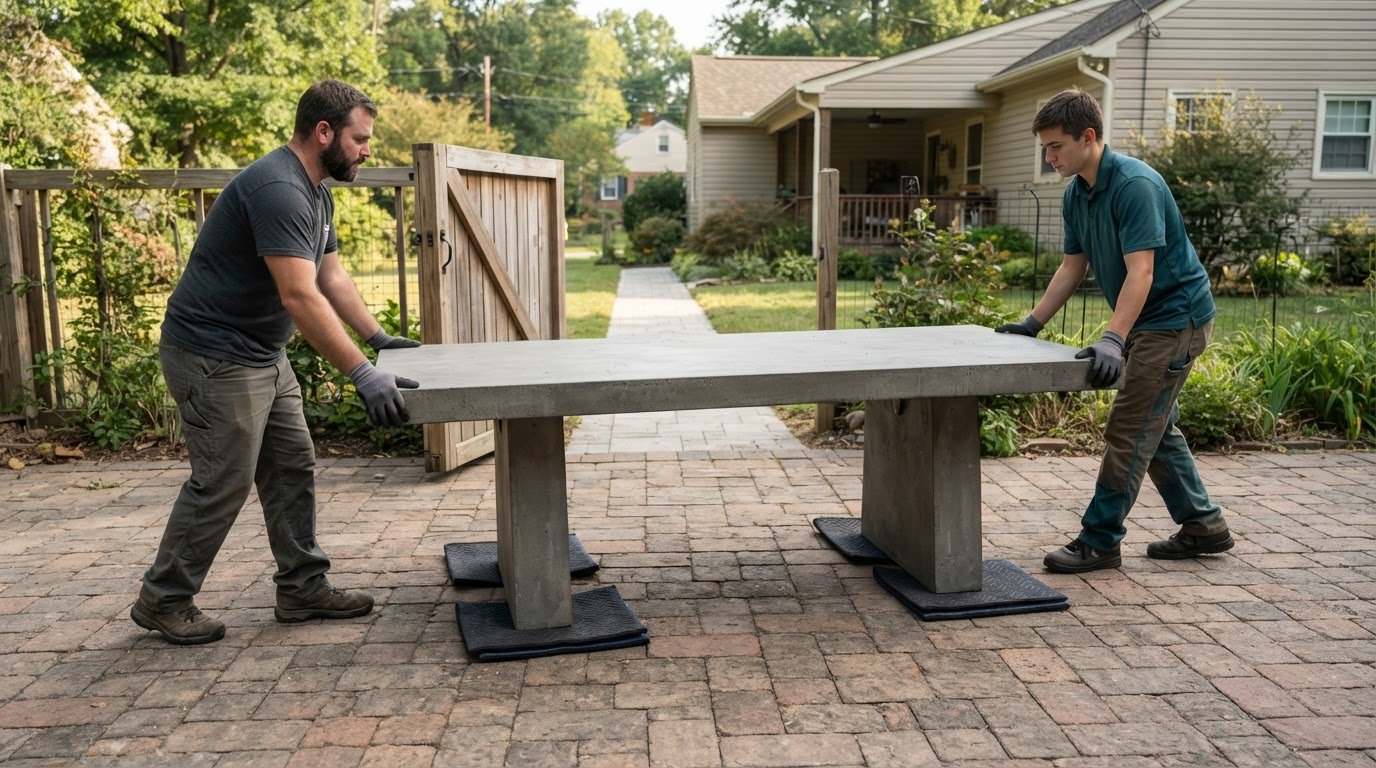
How to Move a Heavy Antique Dresser in Aldie With Its Marble Top Intact
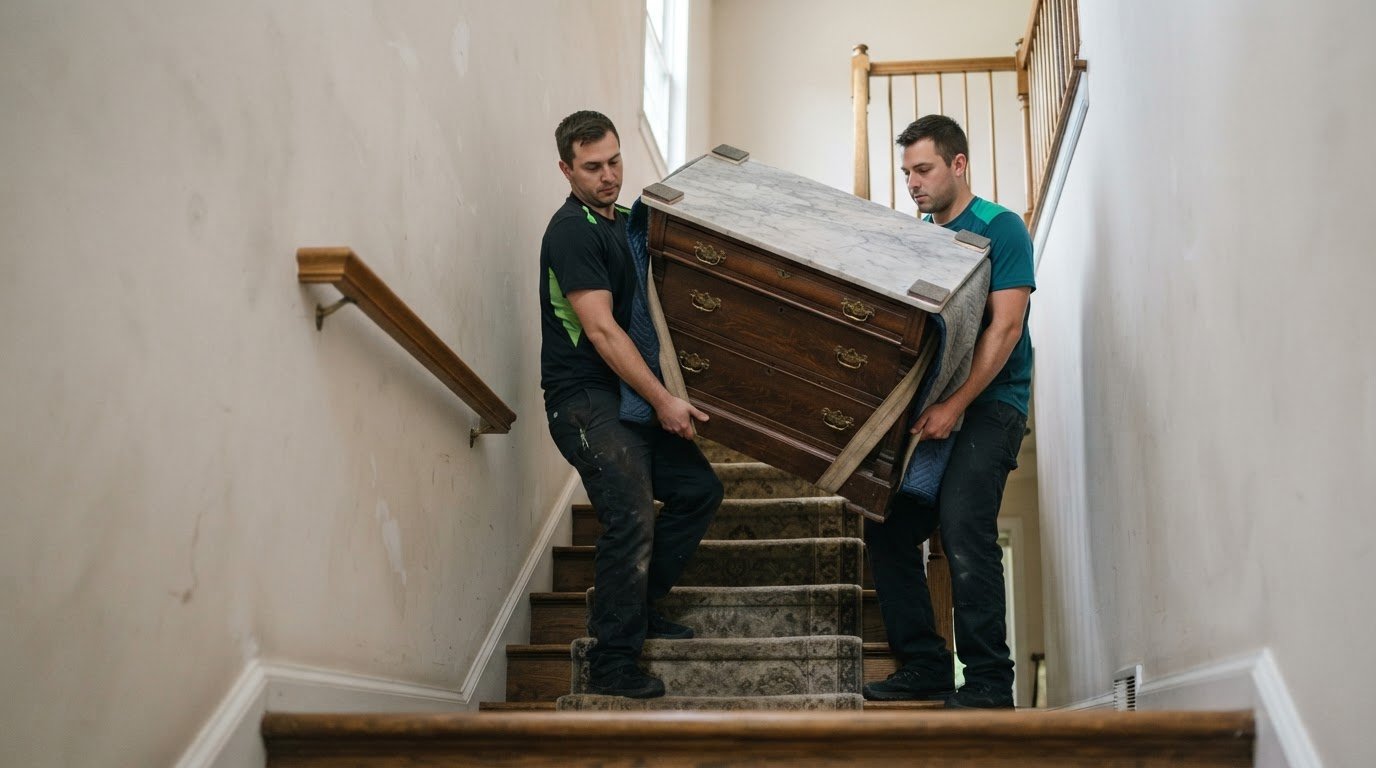
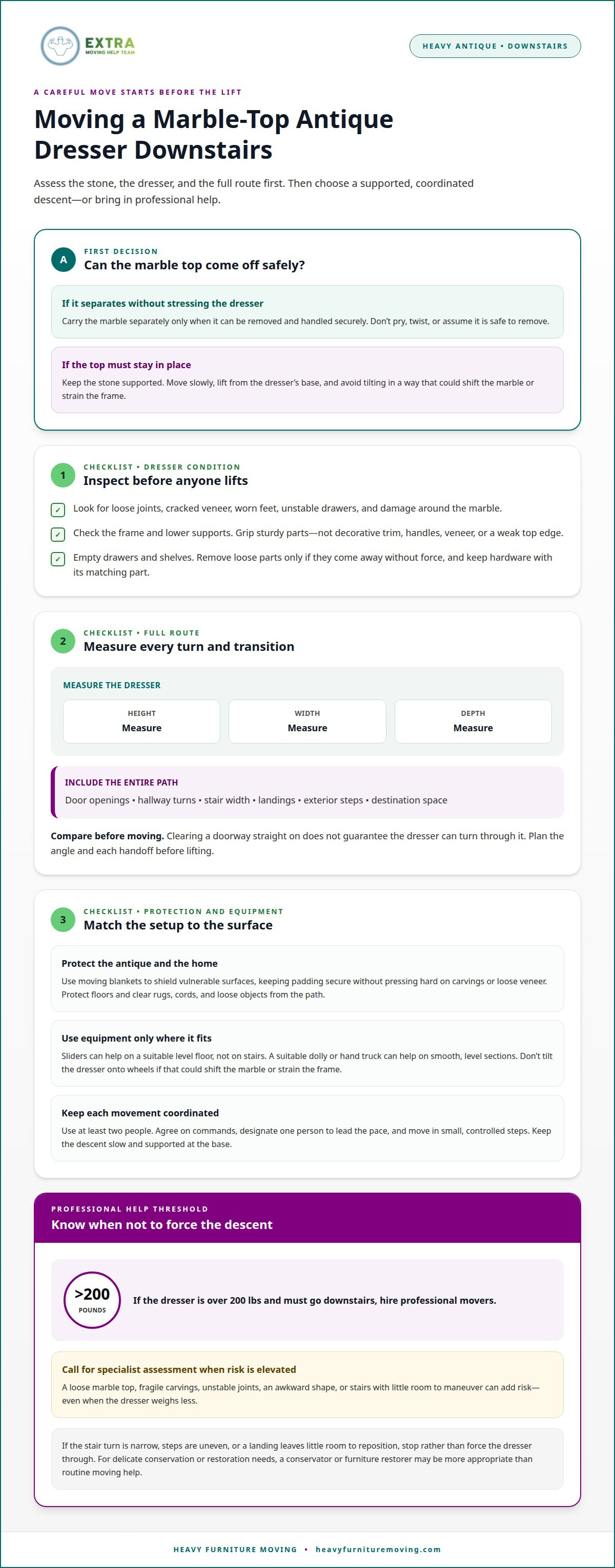
The marble top, not just the dresser’s weight, should shape the move downstairs. For moving a heavy antique dresser with its marble top intact in Aldie, first determine whether the top can be safely removed; protect and carry it separately only if it can come off without stressing the piece. If it must stay in place, keep it supported and move the dresser slowly, lifting from its base. For a dresser over 200 lbs that needs to go downstairs, hire professional movers.
It’s wise to be cautious when moving a heavy antique dresser with marble top intact in Aldie: a loose stone can shift, and tight turns or stairs leave little room to correct a mistake. This guide explains how to assess the dresser and route, protect the stone and antique finish, and plan a careful descent. You’ll also learn when the weight, shape, or stairway calls for professional help. Start by checking the dresser’s construction and the full route, then plan each lift before moving it.
Key Takeaways
- Measure the full path, including stair turns and landings, so the descent plan fits the home.
- Protect antique finishes according to their materials, and shield floors before moving the dresser.
- Use care with wrapping and disassembly; extra protection or taking pieces apart can create new risks.
- Coordinate each stair movement, and pause to adjust the plan if the route is tighter than expected.
- Some fragile antiques need a conservator, restorer, or custom crating rather than routine moving help.
When should I hire professional movers for heavy furniture?
Use at least two people to move a heavy dresser, and hire professional movers for any item over 200 lbs that must go downstairs. A marble top, awkward shape, fragile construction, or tight route adds risk even when the dresser weighs less.
-
Assess the Dresser’s Condition and Construction
Inspect the dresser before deciding how to lift it. Look for loose joints, cracked veneer, worn feet, unstable drawers, or damage around the marble top. Note whether the top appears separate from the base, but don’t assume it can be removed safely. Check the frame and lower supports, and avoid gripping decorative trim or a weak top edge.
-
Measure the Furniture and Moving Route
Measure the dresser’s height, width, and depth, then map the entire route. Include door openings, hallway turns, stair width, landings, exterior steps, and the destination space. Compare the measurements before moving. A dresser that clears a doorway straight on may not turn through it, so plan the angle and each handoff before lifting.
-
Hire Antique Furniture Specialists
Choose specialty movers if the marble is loose, the dresser has fragile carvings, its joints feel unstable, or the stairs leave little room to maneuver. A professional assessment can account for the piece’s construction and access route before lifting begins. If the dresser needs conservation or delicate restoration, a conservator or furniture restorer may be more appropriate than a routine household move.
- Match equipment to the surface and route. Furniture sliders can help across a level floor, but they won’t solve a stair descent. A suitable dolly or hand truck can help over smooth, level sections. Don’t tilt the dresser onto wheels if doing so could shift the marble or strain the frame. Moving straps also require controlled, coordinated lifting.
- Plan protection for both the finish and the stone. Moving blankets can shield vulnerable surfaces; keep padding secure without pressing hard against carvings or loose veneer. A crate may suit a delicate component that needs separate protection. Blankets, crates, and specialized equipment don’t replace a route plan or careful handling.
- Make the decision before anyone starts lifting. If the route includes a narrow stair turn, uneven steps, or a landing with little room to reposition, stop and bring in professional movers rather than forcing the dresser through. Use sliders only on suitable floor sections, and keep any descent slow, coordinated, and supported at the base.
Handling large, heavy antiques like pianos or armoires
Protect the finish before lifting an antique. Veneer, old finishes, and decorative details need careful handling throughout the move.
-
Protect Veneer and Decorative Finishes
Cover vulnerable surfaces before handling a piano, armoire, or dresser. Veneer can lift or chip when edges catch, while carved trim can break under pressure. Use moving blankets as a barrier, and position them without rubbing delicate areas. Avoid pushing furniture across hardwood; direct contact can gouge the floor and may require refinishing. Also keep finishes away from moisture, heat, and prolonged contact with plastic.
-
Manage Heavy, Top-Heavy Antiques
Stabilize the piece before lifting, especially if its upper section is heavier than its base. A tall armoire or a dresser with a marble top can shift when tilted. Remove or secure movable parts, such as loose shelves and drawers, so they don’t slide during transport. Keep the item upright where possible, and don’t use decorative rails or a fragile top as handholds. If it starts to lean, pause and reset your grip.
-
Use Safe Lifting Techniques
Lift with at least two people, and agree on commands before moving. One person should lead the pace and call each turn, stop, and set-down. Bend at the knees, keep the load close, and lift with your legs rather than your back. Grip sturdy parts of the frame, not veneer, handles, or ornament. Move together in small, controlled steps, and don’t twist while carrying a heavy armoire or piano.
- Prepare the path before lifting. Clear rugs, cords, and loose objects, then protect hardwood with floor covering. Make sure the team has room to turn without striking a wall or doorframe. At a tight turn, stop with the piece fully supported, reposition the carriers, and move only when everyone is ready. Don’t rush a landing or brace an antique against a doorframe.
- Match the protection to the route and the piece. A moving blanket can shield broad surfaces, but it won’t stabilize a loose component or make an awkward lift safe. For delicate antique furniture that needs added protection during transport, custom crating may be appropriate. If the item’s weight or shape makes lifting difficult, consider a heavy lifting moving service rather than forcing the move.
What is the Best Way to Move Antique Furniture?
Prepare the dresser, protect vulnerable surfaces, and move it with steady, coordinated handling. Keep the path dry, and shield floors, walls, and doorframes before carrying anything.
-
Prepare and Disassemble the Dresser
Empty every drawer and shelf, then photograph the dresser before packing. Remove loose parts only if they come away without force, and keep hardware with its matching component. Don’t tape drawers directly to finished wood or pack doors so tightly that their hinges strain. Use your photos to return removed parts to their original positions during reassembly.
-
Decide Whether to Remove the Marble Top
Check how the marble sits before deciding whether to remove it. Antique marble tops are often unattached, but don’t pry, twist, or assume removal is safe. If the top separates easily and can be carried securely, move it separately from the dresser. Otherwise, keep it supported and account for its added weight and risk of shifting in the moving plan.
-
Wrap and Protect Antique Surfaces
Cover marble, glass, and mirrors with suitable padding, securing it without pressure on fragile edges. Use moving blankets to shield broad finished surfaces, and leave space around carved details rather than wrapping them tightly. Some old finishes react to moisture, heat, or prolonged plastic contact. Keep the dresser dry during loading, transport, and storage, and avoid applying fresh polish or wax before wrapping.
-
Protect the Property During the Move
Lay floor runners or protective material along the path, including the stair landing. Shield doorframes and wall corners where a dresser could swing during a turn. Use white-glove handling: lift the furniture rather than drag it, communicate each movement, and stop before contact with a wall or floor. Prepare the destination space first so the antique doesn’t wait in a damp entryway.
- Review your homeowners policy for moving-related damage before moving day. Coverage depends on the policy’s terms and circumstances, so check its property and transit provisions rather than assuming every antique is covered. Photograph the dresser beforehand, including the marble, finish, and existing marks. Clear images provide a useful record if you later need to report damage.
- Keep moisture and pests in mind during the move. Check the dresser and drawers for signs of insects before packing, and don’t wrap damp furniture. For longer transport or temporary storage, choose a dry, prepared space and inspect the piece again after unloading. A careful moving service should protect both the antique and the home throughout handling, not just during the lift.
Risks of overwrapping and disassembly
Protect an antique dresser without trapping moisture, stressing old joints, or forcing parts apart. Use controlled handling, and let the piece’s condition guide each decision.
- Check the finish before choosing a wrap. Some antique finishes can react to heat, moisture, or prolonged contact with certain plastics. Keep the dresser dry, and don’t seal damp surfaces beneath plastic. Use a moving blanket as a protective layer, positioned to avoid rubbing delicate veneer or carved details during handling.
- Keep padding protective, not tight. Straps or tightly pulled wrap can press against raised carvings, loose veneer, or fragile edges. Secure blankets so they stay in place without squeezing the furniture. For example, don’t cinch a strap across a carved crest or press padding against an unstable marble top.
- Inspect joints before taking anything apart. An antique joint that hasn’t moved in 80 years may be brittle or firmly set. Don’t force a connection merely to make the dresser easier to carry. Check for movement, cracks, loose trim, and old repairs; if separation requires prying or twisting, stop and keep the section intact.
- Remove only components that come away safely. Take out drawers or shelves if they lift free without pressure, then protect and label them separately. Don’t pull on stuck drawers, decorative rails, or attached trim. Keep each removed part’s hardware together and note its original position to make reassembly straightforward.
- Avoid packing doors with tightly stuffed paper. Pressure inside an antique door can strain old hinges or hardware, especially if the door already sags. Instead, secure movable doors gently so they can’t swing during transport. Don’t tape them directly to finished wood: adhesive can mark the surface or damage a delicate finish.
- Don’t assume a marble top should come off. Many antique marble tops are unattached, but an old joint or support can still make removal risky. Don’t pry at the edges or lift from a decorative lip. Keep the top supported and the dresser movement controlled unless the piece separates without force.
- Recheck the protection before carrying the dresser. Make sure blankets haven’t slipped over a handhold, covered a loose part, or pressed against a vulnerable corner. If the piece has a fragile cabinet or unstable joint, pause rather than adding more wrap. Delicate construction may call for a custom crate or specialist handling, not tighter layers.
Moving a heavy antique dresser downstairs
Plan the descent as a sequence of controlled movements, not one continuous lift. Clear each landing, assign roles, and support the dresser throughout the stairway.
- Clear the full staircase before lifting. Remove rugs, cords, shoes, and anything that could shift underfoot. Open doors along the route and secure them so they can’t swing into the dresser. Keep each landing clear for a planned pause. A clear path gives carriers room to adjust their grip without resting the piece against a wall.
- Assign one person to lead and call each action. The other carriers should repeat or acknowledge commands before the dresser moves. Agree on simple cues such as “stop,” “lower,” and “turn.” Don’t let different people give conflicting directions. On a narrow staircase, clear commands matter more than speed.
- Grip the dresser’s sturdy base or frame, not its top edge, handles, or carved trim. Keep the marble supported and don’t use it as a handhold. Before taking the first step, check that the load feels balanced and every carrier has a secure grip. If the dresser tilts or the stone shifts, stop and set it down safely.
- Move one stair at a time, keeping the dresser under control rather than letting it slide. Coordinate each lift and lowering so one end doesn’t drop ahead of the other. At a landing, pause with the piece stable before changing direction. Don’t twist the dresser around a turn while carriers are stepping or adjusting their footing.
- Protect stair edges and nearby walls before the descent. Floor runners or suitable padding can reduce scuffs, but they must lie flat and stay out of the carriers’ way. Watch the dresser’s corners at every turn. If the staircase is tighter than expected, stop and revise the approach instead of forcing the piece through.
- Don’t use a hand truck or furniture slider on stairs as a shortcut. These tools may help on suitable level surfaces, but stairs require controlled lifting and support. A sudden shift can put uneven pressure on one corner of the dresser or marble. Keep the route clear, communicate, and don’t rush to get through a difficult turn.
- Set the dresser down on a prepared, stable surface at the bottom. Check the marble, frame, feet, and finish for movement or new damage before carrying it onward. If the weight, balance, or stair layout makes the descent difficult to control, get help moving a heavy antique dresser rather than risk forcing the route.
Heavy Furniture Moving
Heavy Furniture Moving can help when a marble-topped dresser is too heavy, awkward, or delicate to carry downstairs safely. Its heavy lifting and in-home furniture moving services are suited to moves that call for a carefully planned route and coordinated handling. Share the dresser’s size and condition, details about the marble, and the stairway layout so the move can be planned around the piece and its path.
If the stairs are tight or the dresser feels unstable, don’t force the descent. A moving team can help manage the heavy lift while protecting the home and furniture. Contact Heavy Furniture Moving to discuss help with your dresser move.
Make the Next Move With Confidence
Moving a heavy antique dresser with its marble top intact in Aldie calls for a plan that respects both the piece and the home. If the staircase, the dresser’s condition, or the stone makes the lift hard to control, getting help is a practical next step. Heavy Furniture Moving offers Movers Near Me, Exercise Equipment Moving, and Sofa Hoisting, alongside help with heavy furniture moves.
Share the dresser’s dimensions, the marble top’s condition, and the stairway details when you reach out. That gives the team useful context for discussing the move and its access challenges. Contact Heavy Furniture Moving to talk through your dresser move. With a clear plan and the right support, you can move forward with care.
Frequently Asked Questions
How do I protect floors when moving heavy furniture?
Clear grit and small debris before laying floor protection, since particles can scratch beneath a runner. Use coverings that stay flat, with no curled edges where carriers step. At a doorway, protect the threshold as well as the main walking path. On stairs, secure coverings so they won’t shift under the dresser’s weight or interfere with footing.
What types of antiques can be moved?
Antiques such as dressers, armoires, pianos, and cabinets can be moved when their structure and route allow for safe handling. A fragile joint, loose decorative piece, or unstable stone or glass component changes the plan. For example, an armoire with a weak leg needs a different grip from a solid, compact cabinet. Pieces needing preservation work may require attention from a furniture restorer or conservator before transport.
How to safely remove and transport a marble dresser top
Remove the marble only if it separates without prying, twisting, or stressing the dresser. Prepare a stable, padded place for the top before lifting, and coordinate the move to keep it level. Keep fingers clear of the edges and don’t grip a polished corner. During transport, secure the stone so it cannot slide or take pressure from other items.
What equipment is needed to move a heavy antique dresser
Equipment depends on the route and the dresser’s construction. Useful items may include moving blankets, floor protection, a suitable dolly for level surfaces, and straps that secure the load without pressing into ornament or veneer. Stairs require controlled support rather than wheels. Don’t choose equipment by weight alone: the marble’s position, the dresser’s balance, and available turning space matter too.
Antique furniture movers near Aldie VA specializing in marble tops
In Aldie, Heavy Furniture Moving provides help with furniture and heavy-item moves. If you’re moving a heavy antique dresser with its marble top intact in Aldie, share clear photos of the dresser, stone, and stair access when discussing the move. Photos help show potential challenges, including narrow turns, visible damage, and how the marble sits on the base.
How to protect a marble top and dresser during transport
Keep the marble and dresser from shifting independently during transport. Position the dresser so it cannot slide, and keep the stone clear of pressure from nearby furniture or equipment. Use padding as a buffer, not as a tight clamp over carvings or fragile edges. After unloading, check the stone’s position and the dresser’s corners before removing the protective layers.
Risks of moving a marble-top dresser intact
Moving a heavy antique dresser with its marble top intact in Aldie requires attention to balance and access. The stone can shift if the base tilts or a stair turn forces an abrupt angle, and its weight can make the dresser harder to control. Check for movement between the top and base before lifting. If the stone slides or rocks, stop and revise the handling plan.
How to measure doorways and stairs before moving a large dresser
Measure the dresser at its widest and tallest points, then compare those dimensions with each doorway and stair opening along the route. Include handrails, door hardware, and ceiling clearance, since each can reduce usable space. At turns, check the landing depth and the room needed to angle the piece. A simple sketch marking openings and changes in direction can reveal a tight spot before moving day.
Frequently Asked Questions
Clear grit and small debris before laying floor protection, since particles can scratch beneath a runner. Use coverings that stay flat, with no curled edges where carriers step. At a doorway, protect the threshold as well as the main walking path. On stairs, secure coverings so they won’t shift under the dresser’s weight or interfere with footing.
Antiques such as dressers, armoires, pianos, and cabinets can be moved when their structure and route allow for safe handling. A fragile joint, loose decorative piece, or unstable stone or glass component changes the plan. For example, an armoire with a weak leg needs a different grip from a solid, compact cabinet. Pieces needing preservation work may require attention from a furniture restorer or conservator before transport. How to safely remove and transport a marble dresser top Remove the marble only if it separates without prying, twisting, or stressing the dresser. Prepare a stable, padded place for the top before lifting, and coordinate the move to keep it level. Keep fingers clear of the edges and don’t grip a polished corner. During transport, secure the stone so it cannot slide or take pressure from other items. What equipment is needed to move a heavy antique dresser Equipment depends on the route and the dresser’s construction. Useful items may include moving blankets, floor protection, a suitable dolly for level surfaces, and straps that secure the load without pressing into ornament or veneer. Stairs require controlled support rather than wheels. Don’t choose equipment by weight alone: the marble’s position, the dresser’s balance, and available turning space matter too. Antique furniture movers near Aldie VA specializing in marble tops In Aldie, Heavy Furniture Moving provides help with furniture and heavy-item moves. If you’re moving a heavy antique dresser with its marble top intact in Aldie, share clear photos of the dresser, stone, and stair access when discussing the move. Photos help show potential challenges, including narrow turns, visible damage, and how the marble sits on the base. How to protect a marble top and dresser during transport Keep the marble and dresser from shifting independently during transport. Position the dresser so it cannot slide, and keep the stone clear of pressure from nearby furniture or equipment. Use padding as a buffer, not as a tight clamp over carvings or fragile edges. After unloading, check the stone’s position and the dresser’s corners before removing the protective layers. Risks of moving a marble-top dresser intact Moving a heavy antique dresser with its marble top intact in Aldie requires attention to balance and access. The stone can shift if the base tilts or a stair turn forces an abrupt angle, and its weight can make the dresser harder to control. Check for movement between the top and base before lifting. If the stone slides or rocks, stop and revise the handling plan. How to measure doorways and stairs before moving a large dresser Measure the dresser at its widest and tallest points, then compare those dimensions with each doorway and stair opening along the route. Include handrails, door hardware, and ceiling clearance, since each can reduce usable space. At turns, check the landing depth and the room needed to angle the piece. A simple sketch marking openings and changes in direction can reveal a tight spot before moving day.