How to Move a Granite Vanity Top in Haymarket Without Cracking It
A dolly can help move a granite vanity top a short distance, but the stone must remain upright, supported, and secured against shifting or impact. To move a heavy granite-top bathroom vanity without cracking the stone in Haymarket, use a dolly only if it keeps the slab stable along the route. Never drag the top or let it ride loose.
That distinction matters. A cart can reduce the effort of moving a heavy piece, but it won’t protect vulnerable corners or openings if the slab tips, bumps into something, or shifts. Plan for enough helpers and steady support before lifting.
This guide explains how to protect the polished face, edges, and corners, prepare the dolly and route, and inspect the stone before and after transport. You’ll also learn when a dolly is practical and when the slab’s weight, shape, stairs, or tight turns call for professional moving help.
Key Takeaways
- Protect the polished face, edges, and corners with padding, and keep protective layers between separate stone pieces.
- Choose transport equipment that suits the slab and vehicle, then plan a smooth route before moving day.
- Inspect the stone and moving gear before and after transport, paying close attention to cutouts, corners, and narrow sections.
- Consider professional moving help when the top is too large or awkward to handle safely through your home.
- A dolly or cart can help over short or challenging routes when it keeps the granite supported and secure.
Protecting polished surfaces, edges, and corners
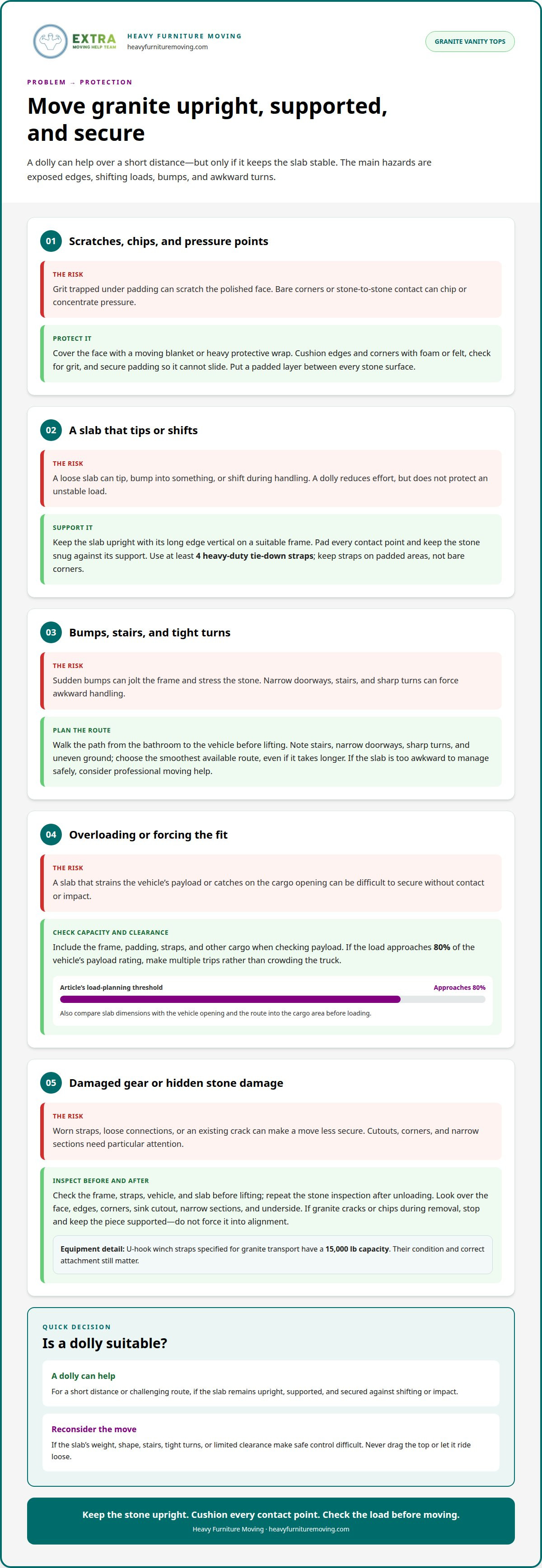
Prepare padding and straps before lifting the vanity top. Protect the polished face, edges, and corners wherever they might make contact.
-
Pad the Polished Stone
Cover the polished surface with a moving blanket or heavy protective wrap before handling. Use foam or felt where the slab meets a frame, support, or other hard surface. Wrap each slab in a moving blanket. Check that grit and loose debris aren’t trapped beneath the padding, where they could scratch the finish during the move.
-
Secure and Cushion Edges
Wrap foam or felt around exposed edges and corners, then secure the padding so it can’t slide off. Finished stone slabs need extra protection at these points because even a small chip can affect the surface and its integrity. Keep straps against padded areas, not directly across a bare corner. Check every edge before lifting and again once the slab is secured.
- Place a padded layer between every surface when moving multiple stone slabs. A blanket or foam sheet between pieces helps prevent scratches and chips from contact. Check the entire area between the slabs, not just the visible corners. Any exposed point where stone touches stone can become a pressure point during movement.
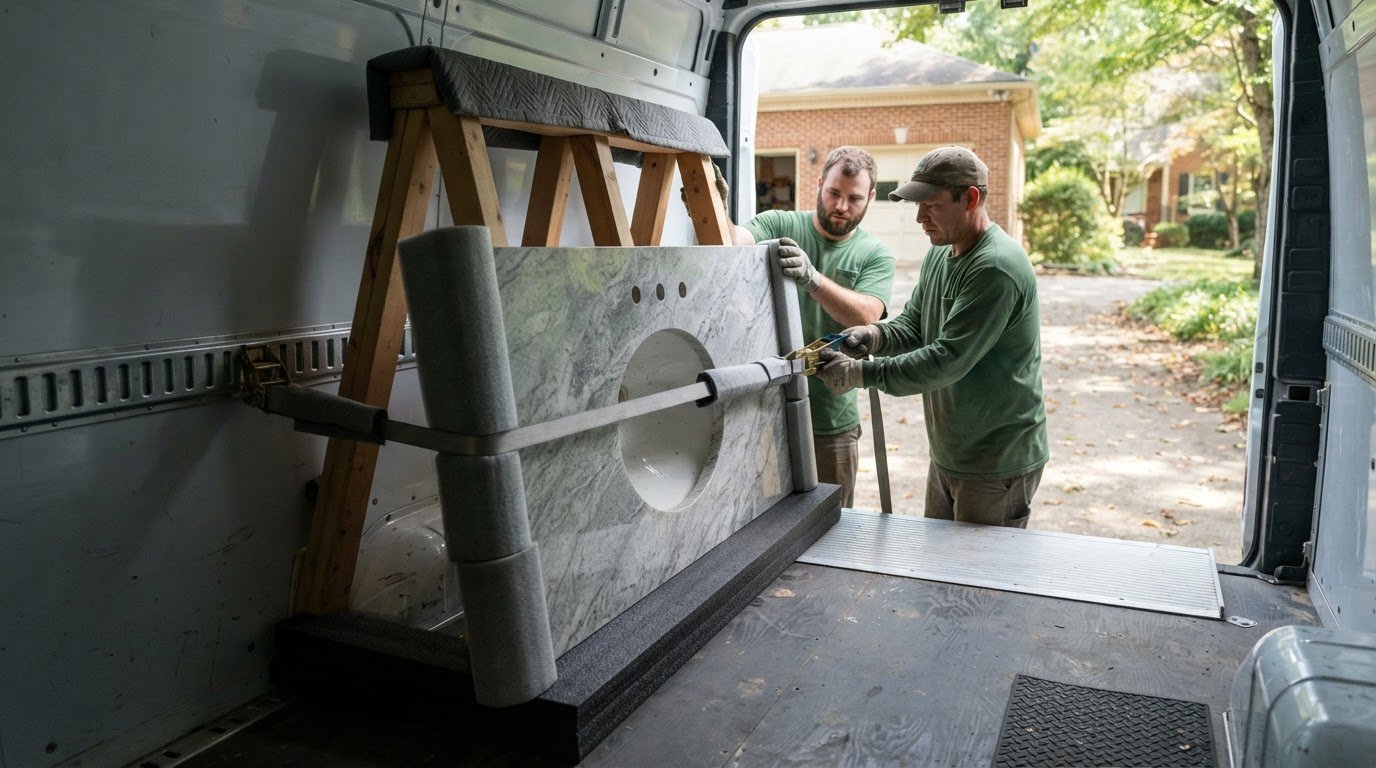
- Set the padded slab upright on a suitable transport frame, with its long edge vertical. Position padding between the stone and frame wherever they touch. Use high-quality tie-down straps that pass through the frame’s base, and keep the stone snug against its support. The frame should hold the slab steady without leaving an exposed edge against hard material.
- Bring at least 4 heavy-duty tie-down straps for the load. Arrange them so the slab remains supported instead of relying on a single strap or one contact point. If using ratchet straps, tighten them gradually and inspect how the pressure falls across the padded stone. Stop if a strap shifts, pinches an edge, or pulls the slab out of position.
- When the slab needs a brief resting place, use dense 2x4s or padded risers. Don’t set granite directly on bare concrete, tile, or uneven ground. Check that each support sits level and contacts the padded slab securely. A hard or uneven contact point can concentrate pressure, so reposition the supports before leaving the stone in place.
Choosing a suitable vehicle and planning a smooth route
Choose a vehicle that suits the slab’s size, weight, and support needs. Plan a route that limits bumps, tight turns, and sudden stops.
-
Select a Suitable Vehicle
Choose a vehicle that can carry the granite upright on a stable transport frame. Check the vehicle’s payload rating and include the frame, padding, straps, and any other cargo in the total load. If the load approaches 80% of that rating, make multiple trips instead of crowding the truck.
-
Plan a Smooth Route
Walk the path from the bathroom to the vehicle, then plan the road journey before lifting. Note stairs, narrow doorways, sharp turns, uneven ground, and rough road sections. Choose the smoothest available route, even if it takes longer. A sudden bump can jolt the frame and stress the stone, while tight corners may force awkward turns that raise the risk of damage.
-
Secure the Granite in Transit
Position the slab upright against a suitable transport frame, with padding between the stone and frame. Secure it so it cannot slide, tip, or strike the vehicle during braking or turns. Check that the straps hold the frame and slab firmly without pressing directly on unprotected corners. Distribute the load evenly and remove loose cargo that could shift into the granite.
- When practical, remove the undermount sink and faucet before moving the top. Attached fixtures add awkward weight and can catch on doorways. Force around a sink cutout or faucet opening may also stress the narrow sections of stone.
- If the granite cracks or chips during removal, stop and keep the piece supported. Don’t force it into alignment or continue carrying it as though it were intact. Note the damaged area and arrange safe handling for the separated or weakened stone.
- Compare the slab’s dimensions with the vehicle opening before loading. A proper fit lets the frame sit securely without forcing the stone against doors, walls, or corners. Check the route into the cargo area, too: a slab that fits inside may still be difficult to turn through a narrow entrance.
- Before departure, check the frame, straps, and padding again. Confirm the stone stays vertical and that no strap has loosened or shifted. Drive steadily, avoid abrupt braking, and choose a smooth road where possible. If the load or route makes control difficult, heavy lifting moving help can take the strain out of transporting a bulky piece.
Inspecting equipment and slabs before and after transport
Inspect the granite and all moving equipment before lifting. After transport, inspect the stone again, especially around cutouts, corners, and narrow sections.
-
Check Equipment and Safety Gear
Examine the A-frame, transport frame, straps, and vehicle before loading. Look for damage, wear, loose connections, or uneven contact points that could shift the countertop. U-hook winch straps specified for granite transport have a 15,000 lb capacity, but their condition and correct attachment still matter. Set aside damaged equipment instead of relying on it for the move.
-
Inspect the Slab Before and After Transport
Before lifting, inspect the granite or marble face, edges, corners, sink cutout, and any narrow bridge of stone. Note existing chips or cracks so you can distinguish them from damage after the move. Repeat the same visual check after unloading, including the underside and openings, before removing the padding or changing the slab’s position.
- Check that cutouts and narrow sections are supported. Sink openings, corners, and slim stone bridges are vulnerable during transport because they can flex or take pressure unevenly. Reinforce granite with sink or cooktop cutouts using stiffener rails or plywood plates. Make sure the reinforcement stays in place as the slab is lifted and secured, rather than slipping away from the vulnerable area.
- Assign enough helpers before moving the countertop. At least 2 people are required to move stone countertops safely, and large kitchen loads call for 3 people. Granite weighing 18-20 pounds per square foot is not manageable alone. Agree on who leads each lift and set-down, so helpers move together instead of twisting or changing the slab’s position unexpectedly.
- Keep the slab upright on an A-frame or another suitable transport frame. Lift and carry it with appropriate equipment and enough people; never drag it across the floor. Check that the frame supports the stone evenly and that the slab cannot shift. Before moving, clear obstacles that could cause a helper carrying the load to step onto uneven flooring.
- After arrival, keep the stone supported while inspecting it. Look closely at the sink cutout, corners, narrow sections, and padded contact points for fresh chips or cracks. Check the A-frame and straps for signs that the slab shifted during transport. If you find damage, stop handling it as though it were intact and keep the weakened area supported.
When Is It Better to Hire a Professional?
Choose professional help when the granite’s weight, cutouts, or route make controlled handling difficult. Assess the slab and every lift before deciding.
-
Assess the Weight and Handling Challenges
Measure the top and consider how its shape affects each lift. Stone tops can be heavy, so plan each lift carefully and get help when needed. A bathroom vanity top may be smaller, but sink openings and narrow stone sections still demand careful support. Don’t judge the job by appearance alone.
-
Consider Team Training and Safe Handling
Choose professional movers if your helpers can’t coordinate a steady lift and set-down. Decide who controls each end, who calls the movement, and where the slab will rest. A cutout can leave a narrow bridge vulnerable to flexing, so avoid twisting or changing grip mid-lift. Keep the countertop supported through every transition.
- Check the route for obstacles that could turn a manageable lift into a difficult carry. A tight bathroom doorway, stair landing, or sharp hallway turn can limit hand positions and put sudden pressure on the stone. If helpers can’t keep the slab upright and controlled through every turn, hire help rather than forcing it through.
- Consider specialist equipment when the slab is too large or heavy for the available team. A forklift or crane may be needed for stone that people cannot safely handle. The key question is whether the equipment can lift and position the granite without putting pressure on its edges, corners, or sink cutout.
- Decide whether the move involves more than lifting. Removing a vanity top, moving it through a home, and loading it for transport each require different hand positions and support. If your helpers can manage one stage but not the next, arrange professional help for the difficult handling rather than risking an uncontrolled transfer.
- Weigh the value of professional support against the specific risks in your home. Professional movers and countertop installers may have insurance coverage that offers added peace of mind when handling stone. If the slab has a visible crack, fragile cutout, or awkward route, keep it supported and don’t treat it like ordinary furniture.
Dollies, carts, lifting cups, and clamps for moving stone
A dolly or cart can help move a heavy stone top a short distance. If you’re figuring out how to move a heavy granite-top bathroom vanity without cracking the stone in Haymarket, use a cart only when it keeps the slab upright, supported, and secure against shifting or impact.
-
Choose Dollies or Carts
Choose a dolly or cart that supports the slab vertically and keeps it steady. Check that its frame and surface can support the stone without rocking or tipping. A countertop dolly can help over a short route, but it doesn’t replace support for the full slab. Don’t use a flat cart that leaves fragile granite unsupported.
- Prepare the path before rolling. Clear loose materials, rugs, and doorway obstacles that could catch a wheel or jolt the load. For a longer distance or challenging terrain, including stairs, a cart can reduce the need to carry the slab, but only if you can keep it controlled throughout the route.
- Keep the dolly moving slowly over thresholds and uneven flooring. Stop before a doorway, turn the cart and slab together, then proceed without letting a corner strike the frame or wall. If a wheel snags or the slab shifts, stop and reset the load instead of pulling harder and transferring force into the stone.
-
Use Lifting Cups and Clamps
Use lifting cups or clamps only if they suit the stone surface and hold firmly in the planned position. Place them away from sink cutouts, narrow bridges, and fragile edges. They can help control a lift, but they don’t support the entire slab or replace a stable frame. A handle or clamp alone doesn’t mean the granite is secure.
- Before lifting, check each grip point and agree on how helpers will raise and lower the top. Keep hands clear of the cart frame and set-down points. If a cup loses its hold or a clamp shifts, pause and restore stable support before anyone adjusts their grip.
- Use moving blankets or foam between the stone and any cart surface that could rub or knock against it. Keep straps snug enough to prevent shifting, but avoid unpadded pressure on corners or cutouts. Check the padding after each change in position, since a shifted blanket can leave the polished surface exposed.
- Choose carrying instead when the cart can’t fit through a turn or maintain upright support. Planning how to move a heavy granite-top bathroom vanity without cracking the stone in Haymarket means choosing equipment that suits the route, not forcing the slab through. If the load is hard to control, get help with heavy lifting before starting.
Heavy Furniture Moving: Movers Near Me
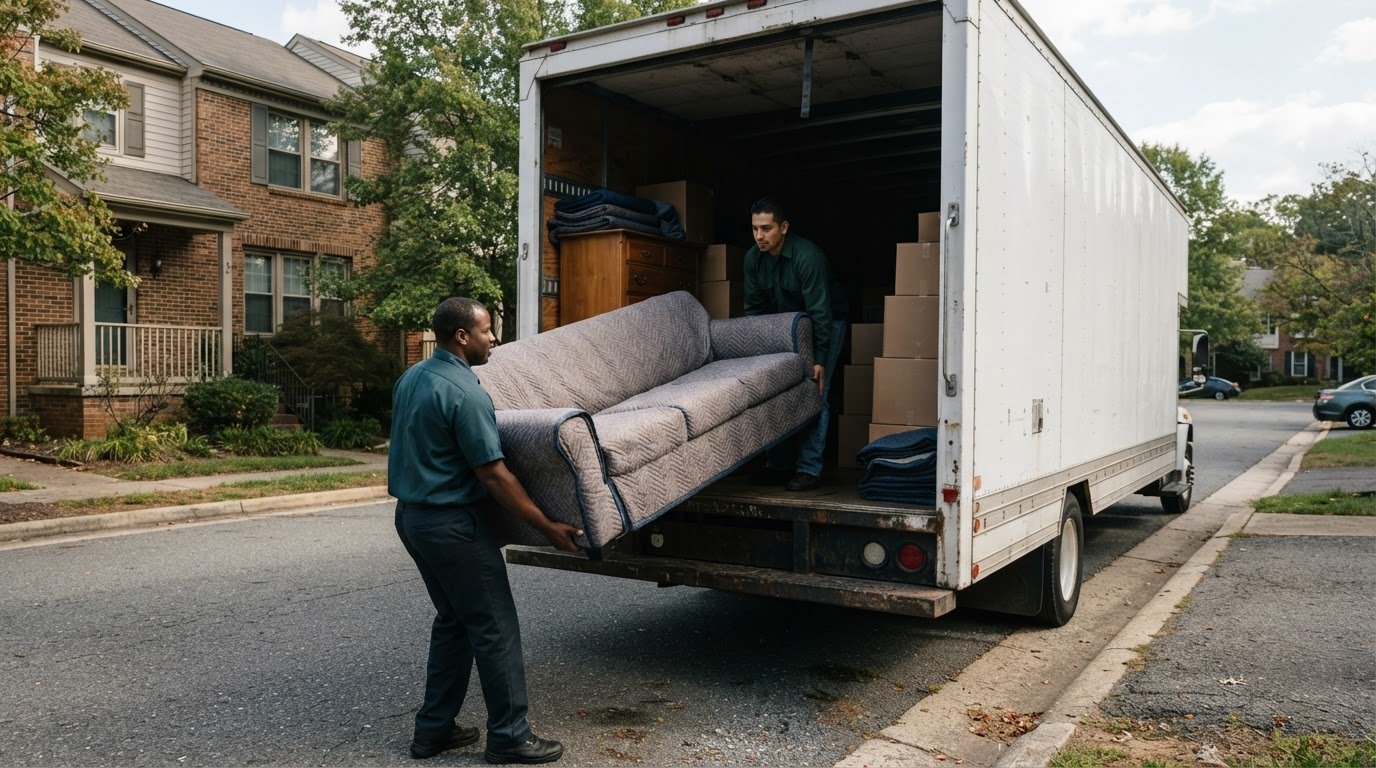
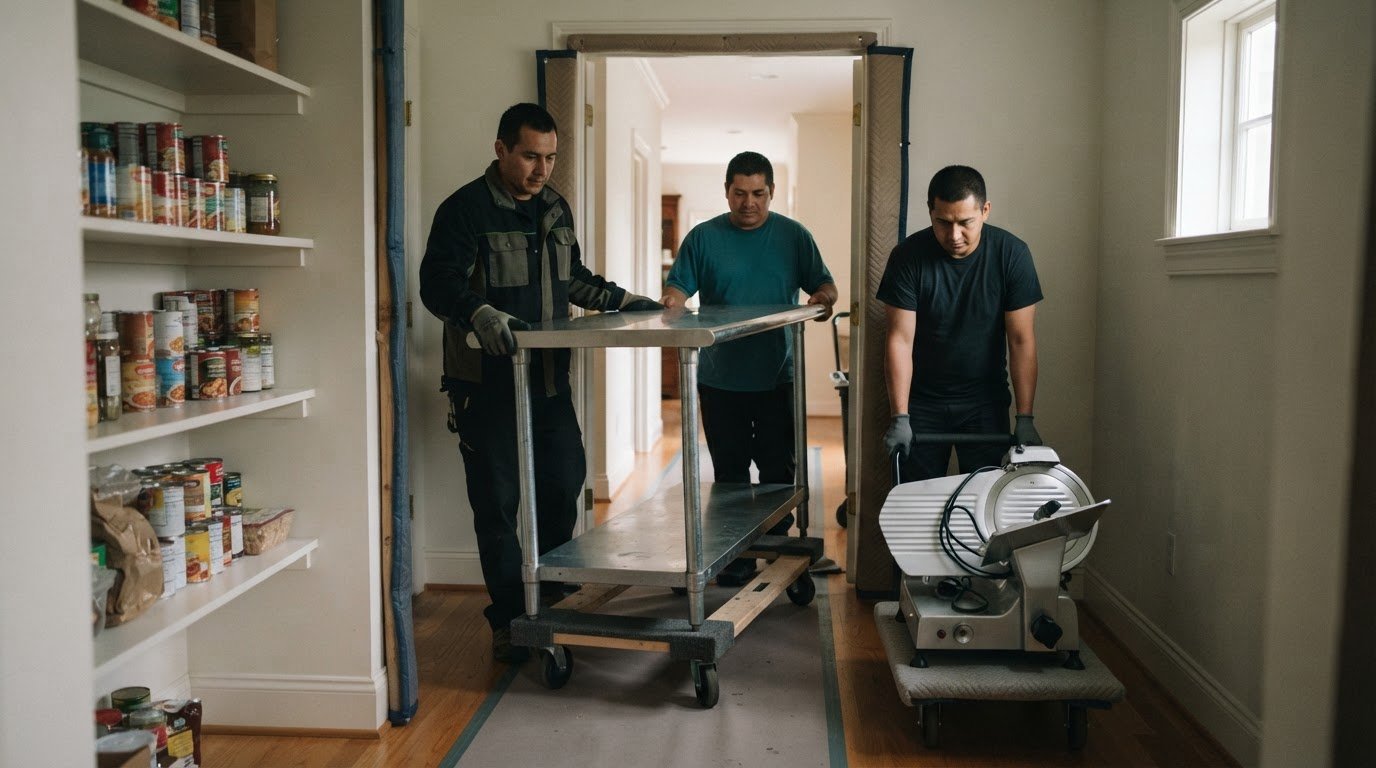
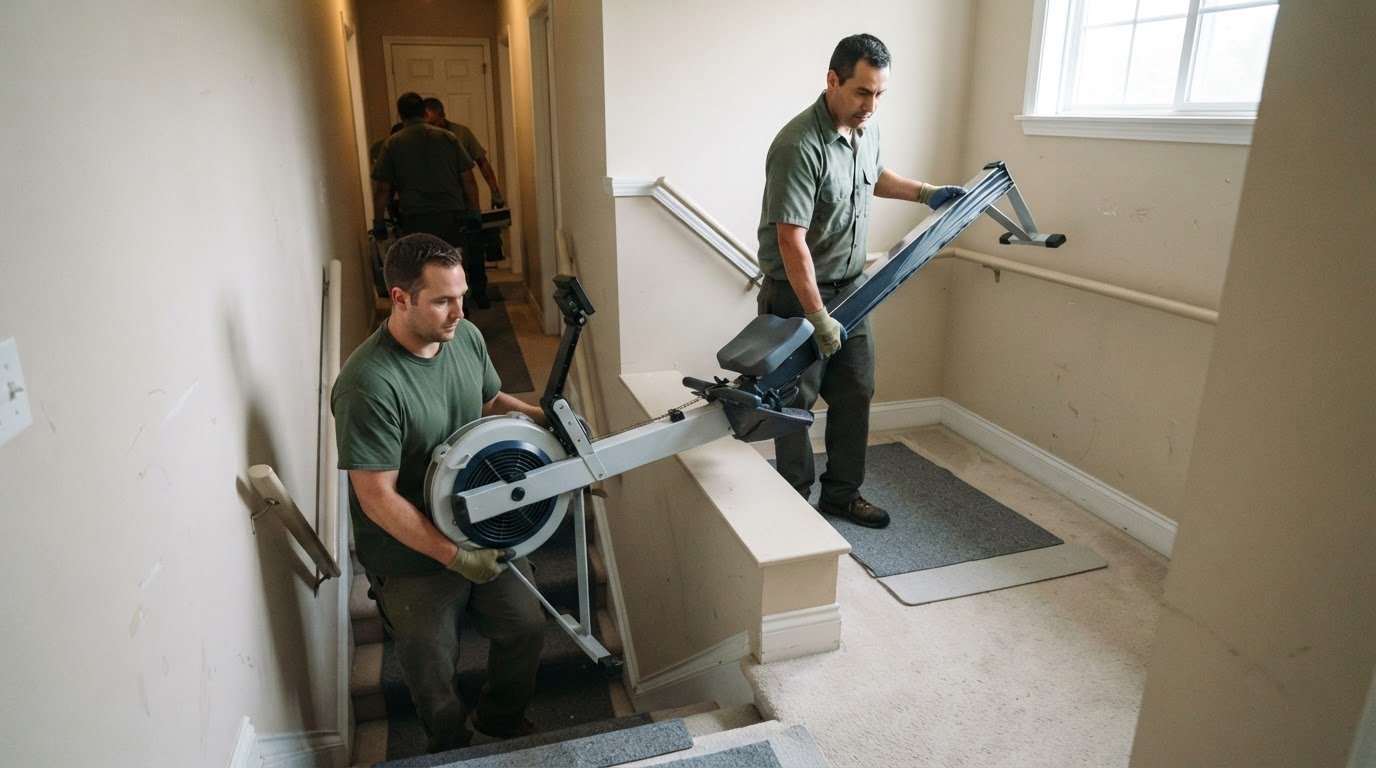
Heavy Furniture Moving provides local help moving heavy, bulky items when lifting and carrying feel difficult to manage alone. If a granite vanity top is awkward to move through a doorway or along a tight hallway, its heavy lifting moving service can help. Explain the slab’s size, cutouts, and handling needs when arranging help.
This service suits moves where the challenge is handling a heavy item inside the home. It doesn’t replace countertop installation or stone repair. If the granite is cracked, chipped, or needs fitting, those tasks call for a stone specialist.
For help with a demanding move, visit Heavy Furniture Moving.
Make the Next Move a Planned One
Before setting your move day, decide who will manage each handoff: removal from the vanity, carrying through the home, transport, and placement at the destination. Keep countertop installation separate from moving help so the stone is handled by the right person at each stage. A clear plan also tells everyone where the top is going and who is responsible for its next step.
If you’re deciding how to move a heavy granite top bathroom vanity without cracking the stone in Haymarket, focus on the part that feels hardest to manage. A narrow passage, awkward carry, or need for extra lifting help can shape your plan. You don’t have to handle every heavy move alone.
For help with the moving portion, contact Heavy Furniture Moving. Take the next step with a plan that fits your home and gives the granite careful handling from the start.
Frequently Asked Questions
Can I move a countertop with a dolly?
Yes, a dolly can help over a short distance if it keeps the countertop upright, fully supported, and secured against shifting. Check the floor and doorway transitions before loading. Stop if a wheel catches or the stone starts to tilt, then reset the load before continuing. A dolly won’t make an unsupported slab safe to roll, especially through a tight turn or over an uneven threshold.
How Should Granite Be Transported?
Transport granite upright on an A-frame or suitable stone transport frame, secured so it can’t slide or tip. For an A-frame, distribute loads evenly on both sides to improve stability. A stone transport A-frame should lean 10 degrees from vertical. Keep the vehicle route smooth and avoid abrupt movement that could jolt the slab. Check the load position before departure and after reaching your destination.
What Is the Safest Way to Carry Granite?
Carry granite vertically on its long edge, with enough people to control both ends and maintain support through each turn. Lift and lower together, using one person to call the movement so helpers move at the same pace. Keep the slab close to its intended path and pause before doorways or tight corners. Don’t drag it across the floor or change grips while it’s unsupported.
How much does a granite bathroom vanity top weigh per square foot?
Standard granite countertops weigh about 18-20 pounds per square foot. The total weight of a vanity top depends on its surface area, thickness, and cutouts, so measure the piece rather than estimating from its appearance. A sink opening changes the shape and creates narrow sections, which can affect handling even when it removes some stone. Include attached fixtures when planning the lift.
What tools and number of people are needed to move a heavy granite vanity top safely?
Use at least 2 people for a stone countertop, with 3 recommended for large kitchen loads. Prepare a suitable A-frame or transport frame, protective padding, and secure straps. A dolly can help over a short distance if it holds the slab upright and prevents movement. Assign each helper a position before lifting, and agree on who calls stops and set-downs.
How do you disconnect plumbing and remove a granite bathroom vanity top without cracking it?
Disconnect the plumbing before loosening the vanity top. Shut off the water supply, disconnect the faucet lines and drain, and catch any remaining water before removing the sink or faucet. Clear stored items from the cabinet so they don’t obstruct access. Release the top’s attachments without levering against the granite. If a fixture remains attached, its weight or a snag can stress the stone around an opening.
How should a granite vanity top be lifted, supported, and carried to prevent cracks?
Keep the top supported as you lift, turn, and set it down. Hold it vertically on its long edge, and coordinate each movement so neither end drops or twists. Avoid gripping across a sink cutout or narrow stone bridge. Use a padded, stable resting surface between carrying stages. If the slab shifts, stop and restore support before moving again.
How do you remove a granite vanity top that is glued to the cabinet or backsplash?
Release the attachment gradually instead of forcing the slab upward. Granite countertops are commonly fastened to cabinet perimeter framing with construction-grade silicone beads. Carefully separate the joints at the cabinet and backsplash, working along the attachment rather than using the stone as leverage. Support the top as the bond releases, and stop if it resists or begins to flex. Pulling hard can concentrate stress near an edge or cutout.
Frequently Asked Questions
Yes, a dolly can help over a short distance if it keeps the countertop upright, fully supported, and secured against shifting. Check the floor and doorway transitions before loading. Stop if a wheel catches or the stone starts to tilt, then reset the load before continuing. A dolly won’t make an unsupported slab safe to roll, especially through a tight turn or over an uneven threshold.
Transport granite upright on an A-frame or suitable stone transport frame, secured so it can’t slide or tip. For an A-frame, distribute loads evenly on both sides to improve stability. A stone transport A-frame should lean 10 degrees from vertical. Keep the vehicle route smooth and avoid abrupt movement that could jolt the slab. Check the load position before departure and after reaching your destination.
Carry granite vertically on its long edge, with enough people to control both ends and maintain support through each turn. Lift and lower together, using one person to call the movement so helpers move at the same pace. Keep the slab close to its intended path and pause before doorways or tight corners. Don’t drag it across the floor or change grips while it’s unsupported.
Standard granite countertops weigh about 18–20 pounds per square foot. The total weight of a vanity top depends on its surface area, thickness, and cutouts, so measure the piece rather than estimating from its appearance. A sink opening changes the shape and creates narrow sections, which can affect handling even when it removes some stone. Include attached fixtures when planning the lift.
Use at least 2 people for a stone countertop, with 3 recommended for large kitchen loads. Prepare a suitable A-frame or transport frame, protective padding, and secure straps. A dolly can help over a short distance if it holds the slab upright and prevents movement. Assign each helper a position before lifting, and agree on who calls stops and set-downs.
Disconnect the plumbing before loosening the vanity top. Shut off the water supply, disconnect the faucet lines and drain, and catch any remaining water before removing the sink or faucet. Clear stored items from the cabinet so they don’t obstruct access. Release the top’s attachments without levering against the granite. If a fixture remains attached, its weight or a snag can stress the stone around an opening.
Keep the top supported as you lift, turn, and set it down. Hold it vertically on its long edge, and coordinate each movement so neither end drops or twists. Avoid gripping across a sink cutout or narrow stone bridge. Use a padded, stable resting surface between carrying stages. If the slab shifts, stop and restore support before moving again.
Release the attachment gradually instead of forcing the slab upward. Granite countertops are commonly fastened to cabinet perimeter framing with construction-grade silicone beads. Carefully separate the joints at the cabinet and backsplash, working along the attachment rather than using the stone as leverage. Support the top as the bond releases, and stop if it resists or begins to flex. Pulling hard can concentrate stress near an edge or cutout.