How to Move a Glass Display Cabinet in Vienna, Whole or Apart
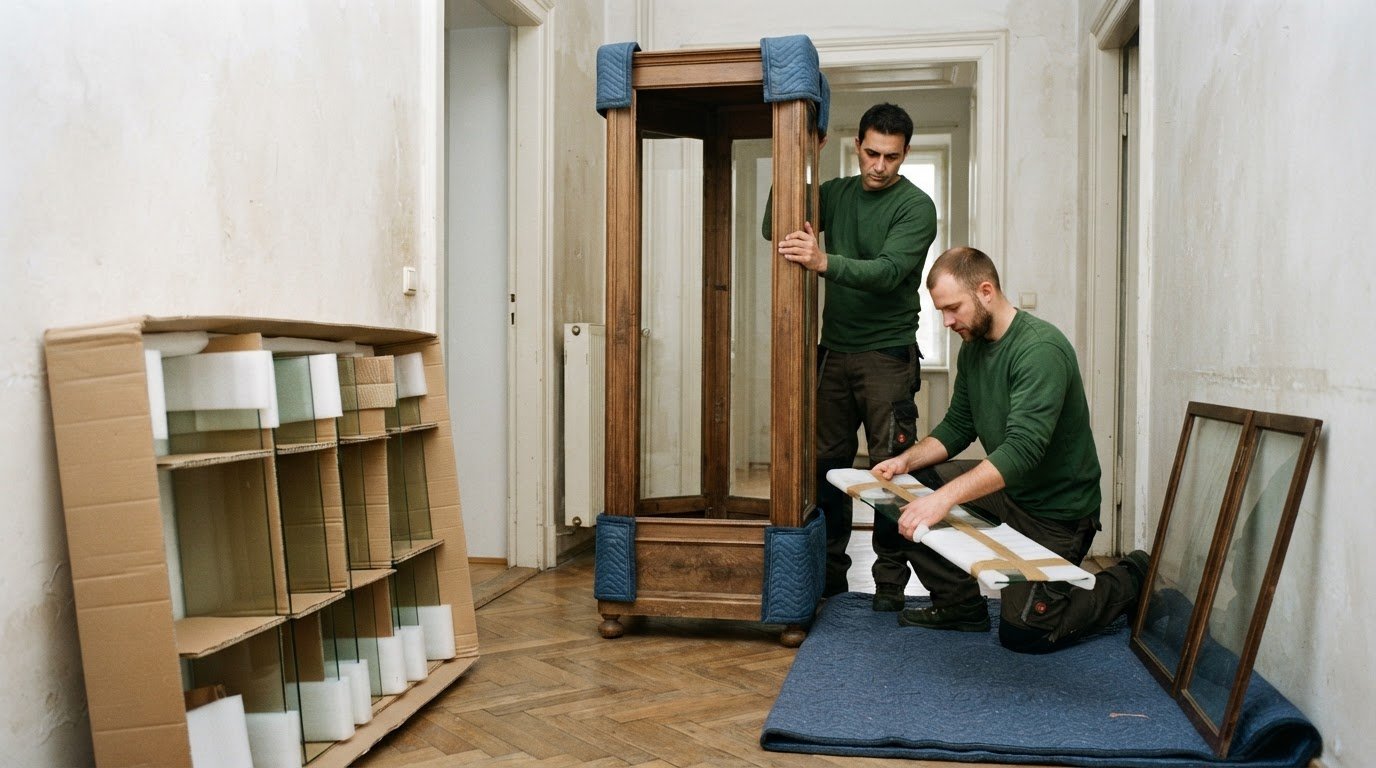
Keeping the cabinet whole isn’t always the safest option. A short, step-free route may allow you to move it assembled; stairs, tight doorways, or vehicle transport are reasons to disassemble it. Moving a large glass display cabinet without shattering shelves in Vienna starts with assessing the route, not just the cabinet’s size.
It’s understandable to worry about shelves shifting, glass cracking, or a wooden frame catching on a doorway. Careful preparation and suitable handling equipment can help protect the cabinet and the surrounding space. This guide explains how to choose between moving it assembled or disassembled, then protect and carry each part.
You’ll also learn how to cushion the glass, when a trolley may help, and how to secure shelves and panels for transport. Follow the steps in order to make a clear plan before lifting.
Key Takeaways
- Choose assembled or disassembled transport based on the route, especially stairs, narrow doorways, and vehicle travel.
- Remove and wrap loose glass shelves separately so they can’t shift against one another during the move.
- Use cushioning that protects both glass edges and the cabinet’s wooden frame without putting tape directly on delicate surfaces.
- Pick handling equipment to suit the cabinet and path, and keep the load steady as you move through tight spaces.
- Heavy Furniture Moving’s Movers Near Me service can help with heavy furniture handling when the cabinet is awkward to lift or maneuver.
Protective materials for glass and wooden frames
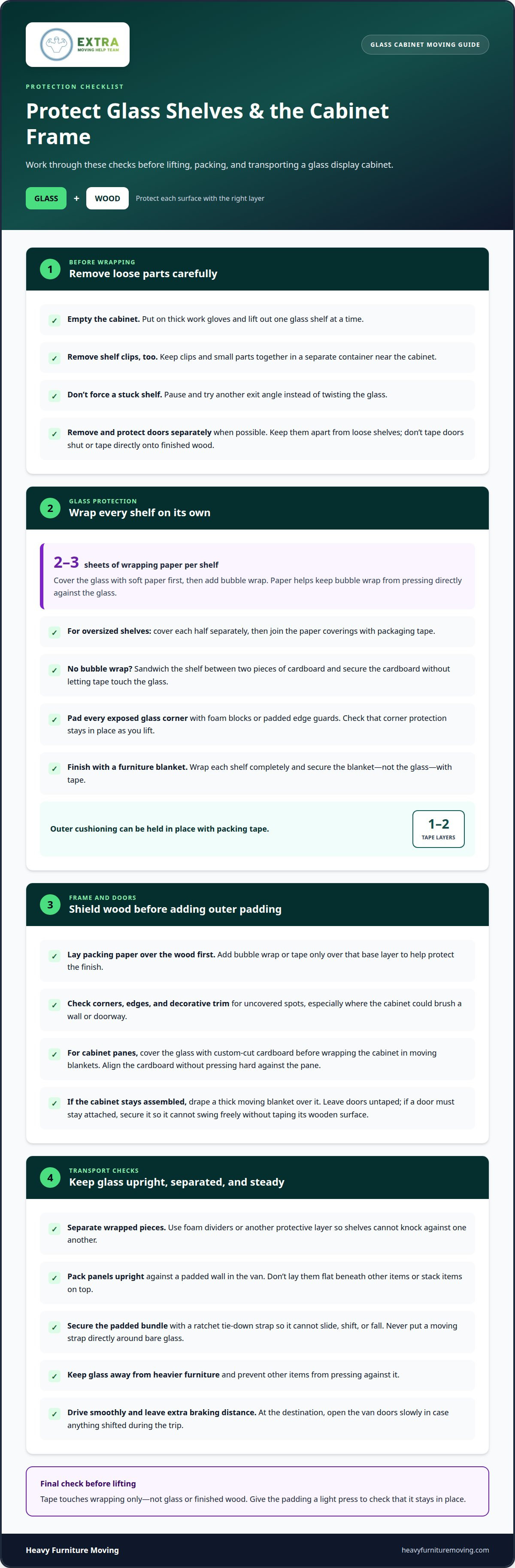
Prepare separate protection for the glass, wooden frame, doors, and loose shelves. Apply tape to the wrapping materials, never directly to glass or finished wood.
-
Remove and Protect Cabinet Doors
Remove the cabinet doors before wrapping, then cover each door with protective material. Keep them separate from loose glass shelves so they cannot strike one another during handling. Don’t tape doors shut, since adhesive can damage the wood. If a door must stay attached, secure it without putting tape on its wooden surface, and check that it cannot swing freely.
-
Add Cardboard Shelf Protection
If you don’t have bubble wrap for a glass shelf, sandwich it between two pieces of cardboard. Secure the cardboard around the shelf without taping the glass. This creates a simple protective shell and helps prevent contact with nearby objects. Keep each wrapped shelf separate instead of stacking unwrapped glass together, and mark the package clearly so it stays upright during handling.
-
Protect Glass Corners
Fit foam blocks or padded edge guards over every exposed glass corner. Corners can chip if they hit a doorway, another panel, or the floor, so check that the padding stays in place as you lift. For cabinet panes, cover the glass with custom-cut cardboard panels before wrapping the cabinet in moving blankets. Align the cardboard with the pane without pressing hard against it.
-
Wrap Glass with Paper and Bubble
Cover each shelf or panel with soft paper before adding bubble wrap. Bubble wrap pressed directly against glass can leave marks that are difficult to remove. Use two to three sheets of wrapping paper per shelf, then wrap the paper in bubble wrap. For an oversized shelf, cover each half separately and join the paper coverings with packaging tape.
-
Protect the Wooden Frame First
Lay packing paper over the wood before applying bubble wrap or tape. This base layer helps prevent scratches from adhesive and the texture of bubble wrap. Wrap the frame without pulling tape across its finish. Check corners, edges, and decorative trim for uncovered spots, especially where the cabinet might brush against a wall or doorway.
-
Finish with Blanket Padding
As a final protective layer, wrap each glass shelf completely in a furniture blanket, then secure the blanket with tape. Keep the tape on the blanket, not the glass. Use one or two layers of packing tape to hold outer cushioning around glass furniture in place. Before moving, press lightly on the padding to check that it doesn’t slide off.
Once removed, wrap each glass shelf individually in bubble wrap, towels, or blankets. If bubble wrap isn’t available, place the shelf between two pieces of cardboard and secure them without letting tape touch the glass. Padded edge protection helps guard corners, where chips and cracks can begin.
If the cabinet stays assembled, drape a thick moving blanket over it to protect the glass and frame. Leave the doors untaped, since tape can damage their wood.
Why be extra careful when moving glass shelves?
Loose glass can shift when a cabinet tilts or vibrates. Remove the shelves and clips before moving, then pack each glass piece so it cannot knock against another.
To remove shelves safely, put on thick work gloves, lift one shelf at a time, and move slowly. If a shelf catches, try a different exit angle instead of forcing it.
Wrap each glass panel separately in bubble wrap, towels, or blankets, and protect its corners. Keep tape on the wrapping, not directly on the glass.
For transport in a moving van, pack glass shelves vertically and secure them so they cannot slide, shift, or fall. Don’t lay them flat beneath other items.
-
Remove Shelves and Clips
Empty the cabinet, then remove one glass shelf at a time. Wear thick work gloves for grip and hand protection, and lift each shelf slowly from its supports. Remove the shelving clips too, so they cannot fall or rattle inside the cabinet. If a shelf won’t clear the opening, pause and try another angle. Don’t twist or force the glass.
-
Wrap and Secure Glass Panels
Wrap each removed shelf or panel individually in bubble wrap, towels, or blankets. Add padding around the corners, then check that the covering stays in place when you lift the piece. Keep glass panels upright while packing, with their broad faces protected from contact. Never loop a moving strap around a glass panel, since concentrated pressure can cause stress fractures.
- Separate each wrapped piece before packing it. Glass shelves packed together can touch when the load jolts, even if they seemed stable indoors. Use foam dividers or place a protective layer between each wrapped piece. Keep clips and other small parts together in a separate container near the cabinet, so they’re easy to find during reassembly.
- Stand wrapped shelves upright against a padded wall in the van instead of laying them flat on the floor. Secure the panels with a ratchet tie-down strap so they cannot slide, shift, or fall. Put the strap around the padded bundle, never directly around bare glass, and keep the panels away from heavier furniture.
- Load the glass where other items cannot press against it or be stacked on top. Keep the cabinet’s shelves and panels organized together, but don’t let unprotected pieces touch. Drive smoothly and leave extra braking distance to limit sudden movement. At your destination, open the van doors slowly in case anything shifted during the trip.
Professional furniture disassembly and relocation
Plan the route and decide which cabinet sections need to come apart before lifting. When moving a large glass display cabinet without shattering shelves Vienna residents rely on proper insurance coverage, which depends on your policy and whether transit damage is included. Review fragile-item exclusions and claim steps before moving day to ensure your valuable display units are fully protected.
-
Arrange Professional Disassembly
Have the cabinet’s construction assessed before removing its top, base, doors, or frame sections. A professional can identify which joints separate and which parts should stay assembled, reducing strain on the connections. Measure the cabinet and route first, including tight doorways and stairs. At each turn, a third person can check clearance while two people handle the cabinet section.
-
Separate Heavy and Glass Furniture
Keep heavier furniture well away from the cabinet in the truck. A shifting dresser or table can strike glass, even if both pieces were secure when loaded. Leave a clear gap between the cabinet and heavy items, and never place furniture on top of glass furniture. If the load cannot keep heavy pieces away, make two separate trips.
-
Use Furniture Blankets
Cover the cabinet frame with moving blankets to cushion contact with walls, doorframes, and other objects. Secure the blankets around the frame, not tightly across exposed glass. For disassembled parts, place a blanket between each layer and put the heaviest pieces at the bottom. Check that the padding hasn’t slipped before lifting or loading.
-
Separate Cabinet Sections
Separate the cabinet’s top from its base if the design allows it and the route calls for easier handling. Keep the hardware and small parts together near the matching section. This makes reassembly easier and helps prevent loose fittings from scratching the finish. Don’t force a resistant joint; use the cabinet’s existing connection points.
-
Assign Clear Roles for Transport
Assign clear roles before moving a large section. Two people should handle each cabinet section, while a third person spots on stairs or at tight doorways. The spotter watches corners, overhead clearance, and the path ahead. Pause at thresholds and turns so the carriers can adjust their grip without twisting the frame.
-
Load Parts Safely in the Truck
Load wrapped parts with moving blankets between layers, keeping the heaviest pieces beneath lighter components. Keep glass furniture separate from heavy items and prevent each section from sliding during transit. Don’t stack other furniture on the cabinet or its protected glass. At the destination, unload each part onto a clear, stable surface.
-
Reassemble with Care
Reassemble the cabinet by building the frame first, then fitting the glass panels, and finally installing the shelves. Check that every joint is seated before loading or using the cabinet. Keep the removed hardware beside its matching sections throughout the move, so fittings aren’t misplaced between the truck and the room.
Choosing whether to move a cabinet assembled or disassembled
Keep an assembled glass cabinet upright, never flat on its back. Measure the cabinet, doorways, turns, stairs, and vehicle space before lifting. A short, step-free route may suit an assembled move, while stairs, tight openings, or vehicle transport favor disassembly.
- Measure the cabinet and every part of its route before choosing how to move it. Record its height, width, and depth, then compare those dimensions with doorways, hallways, stair landings, and turns. Allow space to carry and steer it, and check the vehicle opening and interior too. A cabinet that clears a doorway straight on may not fit around a narrow hallway turn.
- Move it assembled only if the route is short and step-free, with enough room to keep the cabinet upright. Remove loose shelves and other movable parts first. Check that the doors are secured and the frame feels stable before lifting. If you must squeeze, twist, or tilt the cabinet to clear an opening, stop and reassess the route.
- Choose disassembly for stairs, tight doorways, or vehicle transport. Removing parts can make each section easier to guide around turns and reduce movement inside the cabinet. Separate the top from the base if the construction allows it. Keep the hardware beside the matching pieces, and don’t force joints that resist separation.
- Keep an assembled cabinet upright while moving it, and don’t lay it flat on its back. If it’s tilted face-forward onto a dolly, the glass door panels can bear the cabinet’s weight. Move slowly through thresholds and doorways, where a sudden bump can stress the glass. On a flat, step-free route, a padded platform trolley can help control direction.
- Use the cabinet’s weight and shape as part of the decision. China cabinets commonly weigh between 150 and 350 pounds, so plan how the load will be controlled before lifting. Two people should handle each section. On stairs or through tight doorways, add a third person as a spotter to watch clearance and call out obstacles.
- Compare the disassembled pieces with the available vehicle space before loading. Longer journeys and vehicle transport favor disassembly, since loose panels and sections can be secured separately. Keep wrapped glass upright against a padded wall and prevent it from shifting. Keep heavier furniture away from the cabinet so it cannot strike or press against the glass.
- Make the final choice based on the tightest point, not the room where the cabinet starts. A wide entry may still lead to a narrow staircase or vehicle opening. Walk the full route, identify each turn and threshold, then decide whether the cabinet can stay upright without force. If any section cannot pass safely, disassemble it before moving.
Equipment for moving a glass display cabinet
Choose equipment to suit the cabinet’s weight, glass surfaces, and route. In Vienna, moving a large glass display cabinet without shattering shelves starts with matching the tools to the tightest part of the path. At least two people should handle each section; stairs or tight doorways call for a third person to spot.
- Start with thick work gloves for a steady grip while handling glass and frame sections. Set out packing paper, foam corner blocks, cardboard, bubble wrap, furniture blankets, and packing tape before lifting. In Vienna, you can find these materials at local moving-supply or packing-supply shops. Clean, sturdy cardboard from boxes at home can also protect a shelf.
- Use a flat platform trolley for an assembled cabinet on a level route. With one person on each side, tilt the cabinet just enough to slide the trolley underneath. Keep the tilt controlled, and center the base on the platform before moving. Don’t use the trolley as a reason to force the cabinet through a narrow turn.
- Bring furniture blankets to cushion the cabinet frame and protect nearby walls or doorways. Fold the blanket over exposed edges, then secure it around the frame without pressing hard against the glass. For disassembled pieces, place a blanket between layers. Check the padding before lifting, since a loose blanket can slip and interfere with a carrier’s grip.
- Use foam blocks or padded edge guards on exposed glass corners. Cardboard panels can shield larger panes from contact, while packing paper creates a base layer between finished wood and outer wrapping. Keep tape on the paper or blanket, not directly on glass or wood. Check each corner and frame edge before carrying the cabinet.
- For vehicle transport, use a ratchet tie-down strap to secure wrapped glass upright against a padded wall. Keep the strap around the padded bundle, not bare glass, and arrange the load so panels cannot slide or fall. Leave heavier furniture away from the glass cabinet. Before departure, gently test the load for movement.
- Match the crew to the route as well as the equipment. Two people should handle each cabinet section, while a third person spots on stairs or through tight doorways. The spotter watches clearance and calls out obstacles. If you need help moving a large glass display cabinet without shattering shelves in Vienna, get help with heavy furniture lifting so the load can be handled with a clear plan.
- Lay out the equipment in the order you’ll use it: gloves and wrapping materials first, the trolley or carrying setup next, then straps for loading. Keep small tools and packing materials together instead of searching for them mid-move. A prepared kit helps each person focus on a task and keeps protective materials within reach as the cabinet moves.
Heavy Furniture Moving: Movers Near Me
Heavy Furniture Moving’s Movers Near Me service can help when a glass cabinet is awkward to lift or maneuver through your home. Choose in-home furniture movers when the challenge is carrying a heavy piece around tight corners, stairs, or doorways. Share the cabinet’s route and whether you plan to move it assembled or in separate pieces, so the moving help can suit the job.
Use the preparation steps above to remove and protect loose glass before moving day. Then leave the heavy lifting and careful handling to a capable team.
Contact Heavy Furniture Moving or visit heavyfurnituremoving.com to discuss your move.
Set Up the Next Move With Confidence
Before moving day, choose the cabinet’s final position and clear a path into that room. This gives everyone a clear destination and helps avoid carrying the cabinet around the home after unloading. Keep the route, entry points, and final placement in mind as you plan moving a large glass display cabinet without shattering shelves in Vienna.
If the cabinet feels too awkward to lift or the route includes a difficult turn, get help rather than forcing the move. Heavy Furniture Moving helps with heavy furniture moves, so you can focus on preparing the cabinet and making space for its arrival.
Contact Heavy Furniture Moving to talk through your move. With a clear plan and the right hands on the job, you can look forward to settling your display cabinet into its new place.
Frequently Asked Questions
First, decide: move it whole, or take it apart?
Move it assembled only along a short, level, step-free route; disassemble it for stairs, tight openings, or vehicle travel. Compare the cabinet’s dimensions with the narrowest doorway and the space needed to turn at each landing. A straight measurement can miss a corner that blocks rotation. If the route requires tipping or squeezing the frame, take it apart and plan where each piece will go.
What packing materials protect glass shelves during a move?
Use soft packing paper, bubble wrap, cardboard, foam corner blocks, and furniture blankets. For example, wrap a shelf in paper, add bubble wrap, then protect it between cardboard panels. Place foam dividers between wrapped shelves so they stay separate. Mark each package with its cabinet location, such as “top shelf,” and keep labels visible. Clear labels make it easier to sort the pieces without opening their protective layers.
What are the risks of moving a glass display cabinet without disassembly?
Moving the cabinet assembled can leave shelves or doors vulnerable to shifting, and a sudden bump may crack the glass. Tight turns may force carriers to tilt or twist the frame, while a loose door can swing into a wall or pane. Broken glass can create a handling hazard and damage nearby floors or furniture. Empty the cabinet and secure loose components before moving to reduce these risks.
Frequently Asked Questions
Move it assembled only along a short, level, step-free route; disassemble it for stairs, tight openings, or vehicle travel. Compare the cabinet’s dimensions with the narrowest doorway and the space needed to turn at each landing. A straight measurement can miss a corner that blocks rotation. If the route requires tipping or squeezing the frame, take it apart and plan where each piece will go.
Use soft packing paper, bubble wrap, cardboard, foam corner blocks, and furniture blankets. For example, wrap a shelf in paper, add bubble wrap, then protect it between cardboard panels. Place foam dividers between wrapped shelves so they stay separate. Mark each package with its cabinet location, such as “top shelf,” and keep labels visible. Clear labels make it easier to sort the pieces without opening their protective layers.
Moving the cabinet assembled can leave shelves or doors vulnerable to shifting, and a sudden bump may crack the glass. Tight turns may force carriers to tilt or twist the frame, while a loose door can swing into a wall or pane. Broken glass can create a handling hazard and damage nearby floors or furniture. Empty the cabinet and secure loose components before moving to reduce these risks.