How to Move a China Cabinet in Clifton, VA: A Safe Step-by-Step Guide
What’s more likely to cause trouble when moving a china cabinet: its weight, or the glass and shelves shifting inside it? If you’re figuring out how to move a china cabinet in Clifton, start with a careful assessment. A cabinet can look sturdy but still be fragile, and a tight doorway or staircase can turn a simple carry into a risky one. Before anyone lifts, empty the cabinet, protect removable parts, and check the route from start to finish.
This guide covers how to prepare the cabinet, protect its glass and shelves, measure doors and hallways, and decide whether disassembly makes sense. You’ll also learn when a do-it-yourself move may be manageable and when professional heavy-furniture help may be safer. If you ask a moving team for help, describe the cabinet, its glass components, and any stairs or tight turns. Confirm that the team can accommodate those details before arranging the move.
Key Takeaways
- Learn how to move a china cabinet in Clifton by checking its condition, weight, glass, and route before lifting.
- Prepare the cabinet by removing contents and loose parts, then protect doors and surfaces before moving.
- Use slow, coordinated movement, and never lift or guide the cabinet by its doors, shelves, or trim.
- Decide whether DIY is sensible by weighing the cabinet’s stability, handling challenges, and route through the home.
- Inspect the cabinet after the move, and ask about professional help if it is heavy or difficult to maneuver.
Before moving a china cabinet in Clifton, assess its weight, glass, and route
A china cabinet combines heavy construction with fragile glass, loose contents, and limited maneuvering room. Before deciding how to move a china cabinet in Clifton, check whether it is stable enough to handle and whether the route has enough room to pass without twisting or striking walls. Materials, frame, joints, and current condition all affect whether it can be moved intact. Don’t assume a cabinet that looks solid is safe to lift as one piece.
Before moving, inspect the cabinet, identify removable parts, measure the cabinet and the route, and confirm you have a safe way to handle it.
What to inspect on the cabinet before moving
Look for loose joints, cracked glass, unstable legs, and existing chips or scratches. Note which shelves, doors, mirrors, and decorative trim appear removable, but don’t force anything that resists. A stuck or delicate component can break if you treat it as a simple detachable part.
Photograph connections and hardware before considering disassembly, then consult the manufacturer’s guidance if available. For general preservation advice on properly handling and moving furniture, review recommendations for checking joints and securing furniture parts. If the frame is loose, the glass is damaged, or you’re unsure how a piece is attached, pause before lifting or taking it apart.
How to check the route through a Clifton home
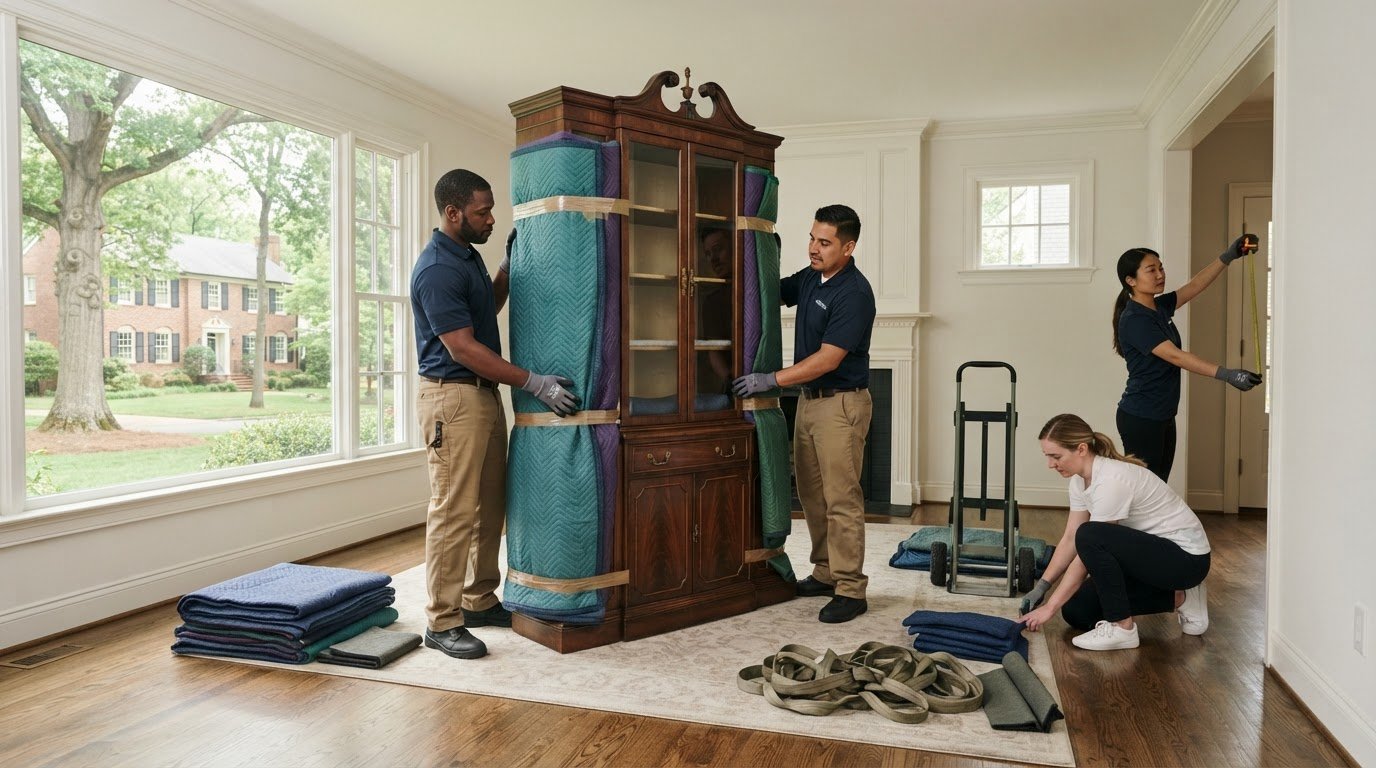
Measure the cabinet’s height, width, and depth, including trim and other protruding parts. Then measure each doorway, hallway, landing, turn, and stair section along the planned route. Check overhead clearance, floor transitions, and exterior access, too. A cabinet may fit through a doorway on paper but still be difficult to turn around a tight landing. Allow room to maneuver while keeping a steady hold.
Measure the destination area as well. Check that there’s enough room to place the cabinet and open its doors without hitting nearby walls or furniture. Move obstacles out of the path, and look for uneven transitions or other hazards underfoot.
If measurements leave little room to maneuver, the cabinet’s condition is questionable, or you don’t have the capacity to handle it safely, don’t force the move. Get advice before lifting. If you’re considering professional heavy-furniture help in Clifton, describe the cabinet, access route, stairs, and glass components, and ask whether the team can accommodate them.
How to prepare a china cabinet for moving without stressing the glass
Once you’ve assessed the cabinet and route, prepare the cabinet in order: empty it, remove only parts designed to come out, secure the doors, protect surfaces, and clear the path. Don’t leave anything inside, even for a short carry. Small shifts can turn dishes, collectibles, or loose hardware into hazards.
An empty china cabinet is easier to assess and maneuver because nothing inside can shift, fall, or add avoidable weight.
Empty and protect the cabinet’s contents and glass
Remove china, collectibles, drawers, and loose objects before handling the cabinet. Pack dishes and keepsakes separately so they can be carried and protected on their own. If a shelf lifts out easily as intended, remove it, wrap it with padding, and label it so you’ll know where it belongs. Don’t force a shelf that catches or appears fixed.
Use suitable padding to protect glass panels, and secure the padding so it can’t slip during movement. Keep it snug, not tight. Pressure against glass edges or corners can create stress, so don’t cinch straps, tape, or wrap directly across them. Avoid tape on finished surfaces, where adhesive may leave marks or damage the finish.
Secure doors and decide whether disassembly is appropriate
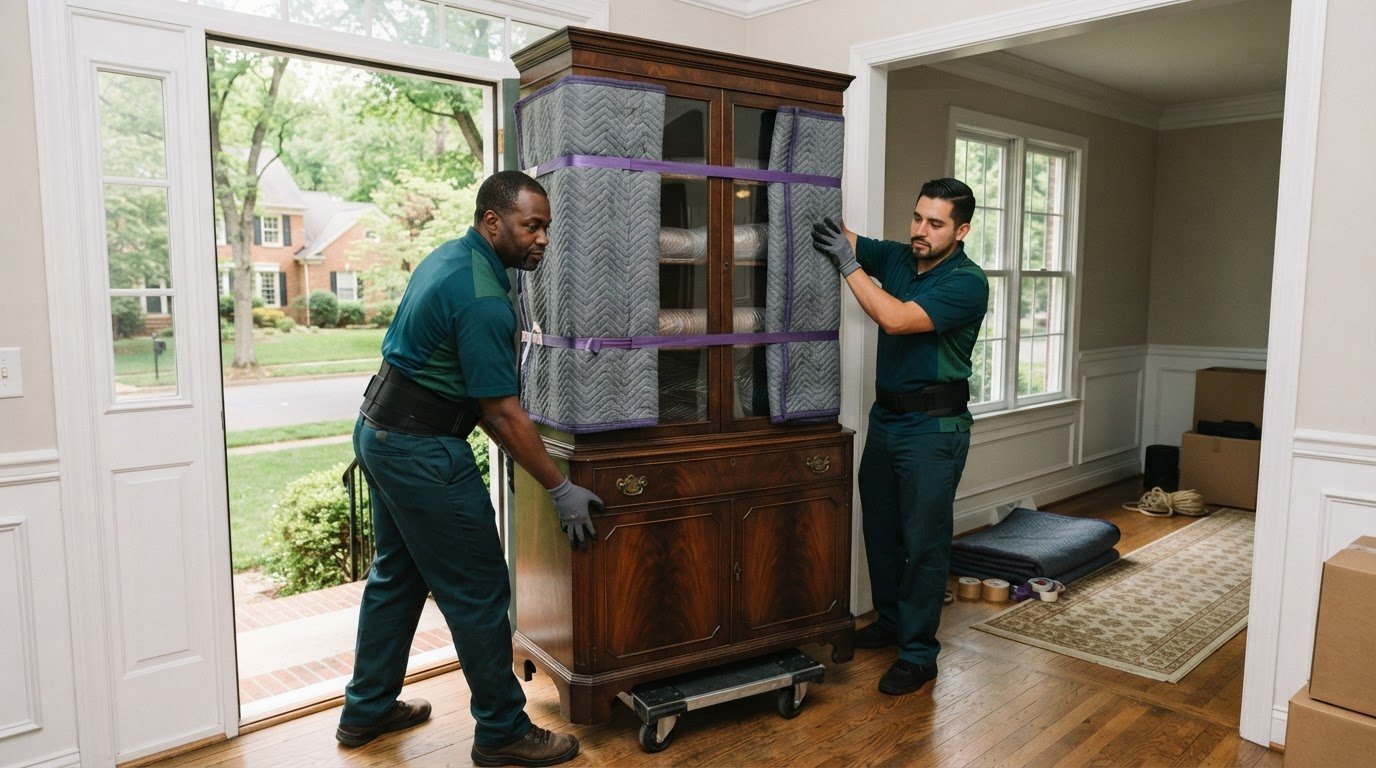
Prevent doors from swinging with soft, non-damaging ties or straps placed over protective material. Check that nothing presses on the glass or pulls against the hinges. Avoid putting tape directly on the cabinet’s finish, even if it seems like a quick way to keep a door shut.
Disassemble only parts that are clearly designed to come off and can be removed without force. Don’t remove structural components or pry at fittings that seem fixed or fragile. If the cabinet is unstable, valuable, built in, or difficult to dismantle, get professional advice before proceeding. Removing the wrong piece can weaken the frame and make the cabinet harder to move.
- Remove and separately pack all dishes, collectibles, drawers, and loose items.
- Take out only shelves or other parts that lift free easily, then wrap and label them.
- Pad glass and finished surfaces, keeping protection secure without overtightening.
- Secure doors gently, then clear obstacles from the prepared route.
If the cabinet feels too heavy or fragile to manage confidently, consider professional heavy-furniture moving help. Before arranging help, describe the cabinet, stairs or tight access, and glass components. Ask whether the team can accommodate those details.
How to move a china cabinet safely through a room, doorway, or stairs
A china cabinet can shift or twist if it’s handled by a weak point. Never lift or guide it by the doors, shelves, or decorative trim. Those parts may loosen or break, even if they look sturdy. Use only sound parts of the frame for handling, and don’t attempt the move if you can’t keep a secure, controlled hold.
If a cabinet won’t clear a doorway or turn easily, stop rather than force it. Forcing a tight fit can damage the cabinet, nearby walls, or the people handling it.
Moving the cabinet across a level floor
Clear the full route first. Remove rugs, cords, and other trip hazards, and protect floors with suitable coverings that won’t slide underfoot. Agree on simple commands before lifting, such as “stop,” “lower,” and “move,” so everyone responds at once. A spotter can watch clearances and flag obstacles, but shouldn’t be expected to catch a tipping cabinet.
Move slowly and pause before each doorway or turn. Keep the cabinet controlled, and avoid sudden changes in direction. Don’t tilt it just to make progress unless its design and condition have been assessed and the people handling it can maintain control. A furniture dolly may help across a level surface only if the cabinet is stable and secured to the dolly. If it rocks, shifts, or won’t sit securely, don’t use the dolly.
Why stairs and tight turns change the risk
Stairs and narrow landings leave less room to adjust grip or respond if the weight shifts. A cabinet can become harder to control as its angle changes, and fragile components may move or strike the frame. A turn that looks possible from one end may leave the person guiding the far side without enough room or visibility.
Reassess before approaching stairs or a tight turn. Confirm the cabinet can pass without scraping, twisting, or forcing anyone into an awkward position. Don’t start if the route requires a sudden tilt, the cabinet feels unstable, or the helpers can’t communicate clearly throughout the move. Stop and seek experienced help if you can’t keep it secure.
These limits matter whether you’re moving across one room or planning how to move a china cabinet in Clifton through a home with stairs and tight access. If you’re considering professional heavy-furniture help, describe the cabinet’s size and condition, the route, stairs or turns, and its glass components. Ask whether the team can accommodate those details before arranging the move.
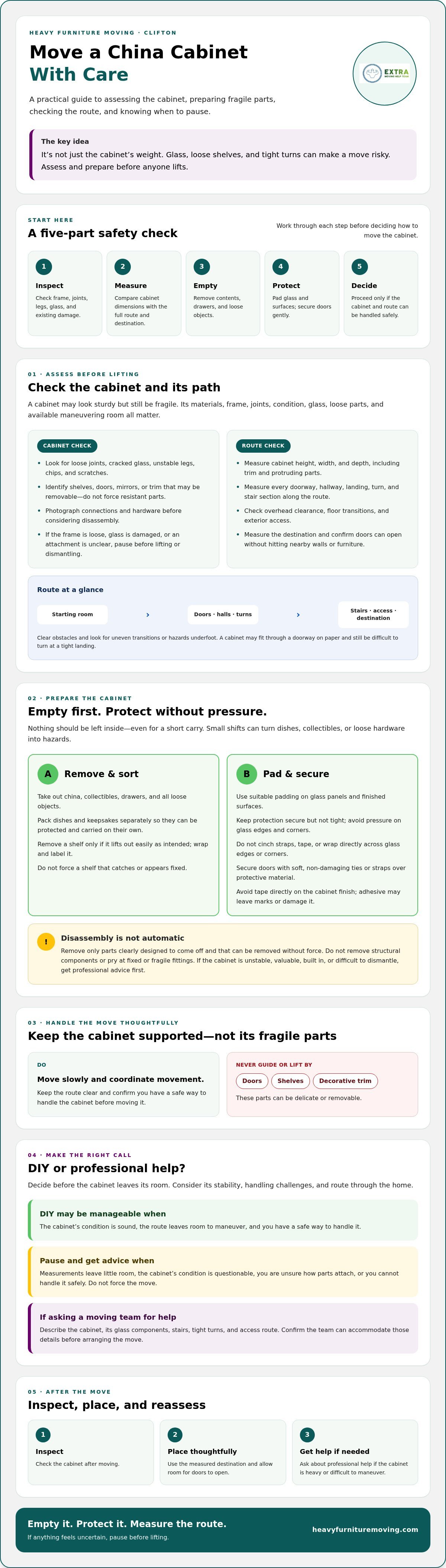
DIY or professional movers in Clifton: decide before the cabinet leaves its room
Make the decision while the cabinet is still in place. Even a one-item move can require careful planning, suitable equipment, and enough safe handling capacity. Base your choice on the cabinet’s stability, glass condition, weight, route, and the people available to move it. If any factor is uncertain, pause rather than letting momentum make the decision for you.
When a DIY move may be reasonable
A do-it-yourself move may be manageable if the cabinet is stable, its glass is intact, the route is simple and wide enough, and you have suitable equipment and capable helpers. Plan how you’ll protect floors, walls, and the cabinet, and make sure everyone understands the lifting and movement plan before starting. The key is being able to keep the cabinet controlled from pickup to placement.
If the plan depends on squeezing past a doorway, making an awkward turn, or tilting a cabinet you can’t steady, it isn’t a low-risk move. Reassess before lifting.
When to ask for professional heavy-furniture help
Consider professional help if the cabinet has fragile or damaged glass, feels heavier than you can safely handle, or contains valuable materials you’re concerned about protecting. Stairs, tight turns, built-in construction, and uncertain weight are further reasons to stop and get experienced guidance. Don’t assume a particular mover accepts china-cabinet work or handles removable glass components. Confirm those points first.
Heavy Furniture Moving serves Clifton and specializes in moving heavy, bulky household items. To ask whether the team can help with your cabinet, provide the Clifton location, cabinet dimensions, known condition, glass details, and whether the route includes stairs, narrow hallways, or tight turns. Photos of the cabinet and access points, along with measurements, can help explain the job. Confirm the team can accommodate the cabinet and its components before making arrangements.
Heavy Furniture Moving also serves Fairfax, Woodbridge, Manassas, Manassas Park, Aldie, Ashburn, Mclean, Vienna, Reston, Centreville, Chantilly, Dumfries, South Riding, Fairfax Station, Haymarket, and Gainesville. If you’re weighing how to move a china cabinet in Clifton and the lift or route feels uncertain, contact Heavy Furniture Moving about heavy-furniture help and describe the cabinet and access conditions.
After moving your china cabinet in Clifton: inspect, place, and get help
Set the cabinet on a stable, level surface before putting anything back inside. Check that it sits evenly and doesn’t rock. Leave enough clearance to open the doors fully, and make sure the cabinet won’t block a walkway, vent, or frequently used area. Look around it for hazards that could cause a bump or make the spot unsafe.
Check the cabinet before putting dishes back
Inspect the cabinet carefully in good light. Look for new cracks or chips in the glass, loose fittings, doors that have shifted, damaged joints, and marks or dents in the finish or frame. Open and close the doors gently. If anything binds, wobbles, or looks out of place, don’t load the cabinet yet.
Reinstall shelves only in their intended positions, and confirm each one sits securely before adding weight. If you spot damage, take clear photos and note what changed during the move. Loose joints, a weakened frame, or other structural concerns should be assessed by an appropriate repair professional before the cabinet is used again.
Arrange local help if the move is still ahead
If you haven’t moved the cabinet yet, share its condition and access details when asking about help in Clifton. Photos, dimensions, and information about hallways, tight turns, exterior access, and stairs can help explain what the move involves. Mention glass components and any signs of instability, too. This gives the moving team a clearer picture and lets you confirm whether it can accommodate the item.
Heavy Furniture Moving serves Clifton and specializes in heavy, bulky household items. Confirm directly whether the team can accommodate a china cabinet and its removable glass components. If professional help may be the safer choice, ask Heavy Furniture Moving about help with a heavy household move. Take your time with the inspection and planning. A careful next step is better than putting a damaged cabinet back into use or attempting a move you can’t handle safely.
Make your next move with a clear plan
Knowing how to move a china cabinet in Clifton starts with preparation, not lifting. Empty the cabinet, protect removable parts and glass without putting pressure on them, and check that the cabinet and route are safe to handle. Move slowly, communicate clearly, and stop if a doorway, turn, or staircase leaves too little room to stay in control.
If the cabinet feels too heavy, fragile, or difficult to maneuver, professional heavy-furniture help may be the safer choice. Heavy Furniture Moving serves Clifton and specializes in moving heavy and bulky household items. Ask whether the team can accommodate your cabinet and its glass components, and share its dimensions, condition, photos, and access details so the request is clear.
For support with your Clifton furniture move, ask Heavy Furniture Moving about your Clifton furniture move. With a careful assessment and the right help, you can take the next step with greater confidence.
Frequently Asked Questions
Can I move a china cabinet without removing the shelves?
Only if the shelves are fixed securely and the cabinet can be moved without them shifting. Removable shelves should usually come out, especially if they’re glass or could slide during a tilt or turn. Don’t force shelves that seem fixed. Check the cabinet’s guidance if available, and wrap and label any shelves you remove so they can be returned to their proper positions.
How do you protect the glass in a china cabinet when moving?
Use suitable padding to cushion the glass, and secure it so the protection won’t slip during handling. Don’t overtighten straps or wrap, or press against glass edges and corners. Secure doors gently with non-damaging materials, keeping tape off finished surfaces. Remove glass shelves that lift out easily, wrap them separately, and avoid moving the cabinet if its glass is cracked or unstable.
Can you move a china cabinet with dishes still inside?
No. Remove all dishes, collectibles, drawers, and loose objects before handling the cabinet. Contents can shift, strike the glass, or fall as the cabinet moves, adding risk and weight. Pack dishes and keepsakes separately. Once the cabinet is in its new position, inspect it and confirm shelves are secure before putting anything back. An empty cabinet is easier to assess and maneuver safely.
Should I disassemble a china cabinet before moving it?
Not automatically. Disassemble only parts that are designed to come off and can be removed without force. Photograph connections first and consult the manufacturer’s guidance if available. Don’t remove structural pieces or pry at delicate fittings. If the cabinet is unstable, valuable, built in, or difficult to take apart, pause and ask an appropriate professional for advice before attempting disassembly or moving it.
How many people does it take to move a china cabinet?
There isn’t a safe number that fits every cabinet. The help required depends on its weight, size, condition, route, and whether everyone can maintain a secure grip and communicate clearly. Don’t guess based on appearance or ask people to lift beyond their ability. If you can’t establish a controlled plan, especially for stairs or tight turns, stop and seek experienced help.
When should I hire movers to move a china cabinet in Clifton?
Consider professional help if the cabinet is heavy, fragile, damaged, valuable, or difficult to maneuver through stairs, narrow halls, or tight turns. Heavy Furniture Moving serves Clifton and specializes in heavy and bulky household items, but confirm whether the team accepts china-cabinet moves and handles removable glass. Share the cabinet’s dimensions and condition, photos, access details, and whether stairs are involved when asking about help.
Frequently Asked Questions
Only if the shelves are fixed securely and the cabinet can be moved without them shifting. Removable shelves should usually come out, especially if they’re glass or could slide during a tilt or turn. Don’t force shelves that seem fixed. Check the cabinet’s guidance if available, and wrap and label any shelves you remove so they can be returned to their proper positions.
Use suitable padding to cushion the glass, and secure it so the protection won’t slip during handling. Don’t overtighten straps or wrap, or press against glass edges and corners. Secure doors gently with non-damaging materials, keeping tape off finished surfaces. Remove glass shelves that lift out easily, wrap them separately, and avoid moving the cabinet if its glass is cracked or unstable.
No. Remove all dishes, collectibles, drawers, and loose objects before handling the cabinet. Contents can shift, strike the glass, or fall as the cabinet moves, adding risk and weight. Pack dishes and keepsakes separately. Once the cabinet is in its new position, inspect it and confirm shelves are secure before putting anything back. An empty cabinet is easier to assess and maneuver safely.
Not automatically. Disassemble only parts that are designed to come off and can be removed without force. Photograph connections first and consult the manufacturer’s guidance if available. Don’t remove structural pieces or pry at delicate fittings. If the cabinet is unstable, valuable, built in, or difficult to take apart, pause and ask an appropriate professional for advice before attempting disassembly or moving it.
There isn’t a safe number that fits every cabinet. The help required depends on its weight, size, condition, route, and whether everyone can maintain a secure grip and communicate clearly. Don’t guess based on appearance or ask people to lift beyond their ability. If you can’t establish a controlled plan, especially for stairs or tight turns, stop and seek experienced help.
Consider professional help if the cabinet is heavy, fragile, damaged, valuable, or difficult to maneuver through stairs, narrow halls, or tight turns. Heavy Furniture Moving serves Clifton and specializes in heavy and bulky household items, but confirm whether the team accepts china-cabinet moves and handles removable glass. Share the cabinet’s dimensions and condition, photos, access details, and whether stairs are involved when asking about help.