How to Measure a Cast Iron Clawfoot Tub and Move It Safely
A cast-iron clawfoot tub can weigh more than a few people can safely handle. Its shape and the doorway’s actual clear opening determine whether it can pass straight through or needs another route.
It’s understandable to focus on the doorway, but stairs, tight turns, and the tub’s weight can make the whole route challenging. This guide explains typical tub weights and dimensions, how to measure the tub and its path, and what to consider before moving it through the house or down stairs.
Use your measurements to plan a safe route before lifting. A narrow doorway may not be the only obstacle: each turn and stair landing matters. This guide also explains when professional heavy-lifting help can make the move more manageable.
Key Takeaways
- Measure the tub at its widest points, then compare those dimensions with the clear opening of every doorway on the route.
- Include stair turns and narrow hallways in your plan; a tub that clears the entrance may still be difficult to maneuver inside.
- Separate the tub’s empty weight from the added weight of water and account for the material and size when planning the lift.
- Protect the route and coordinate each move before lifting, especially when carrying the tub down stairs.
- Heavy Furniture Moving can help with bulky-item lifting when the tub’s weight or route makes a solo move impractical.
Measuring clawfoot tub length and width
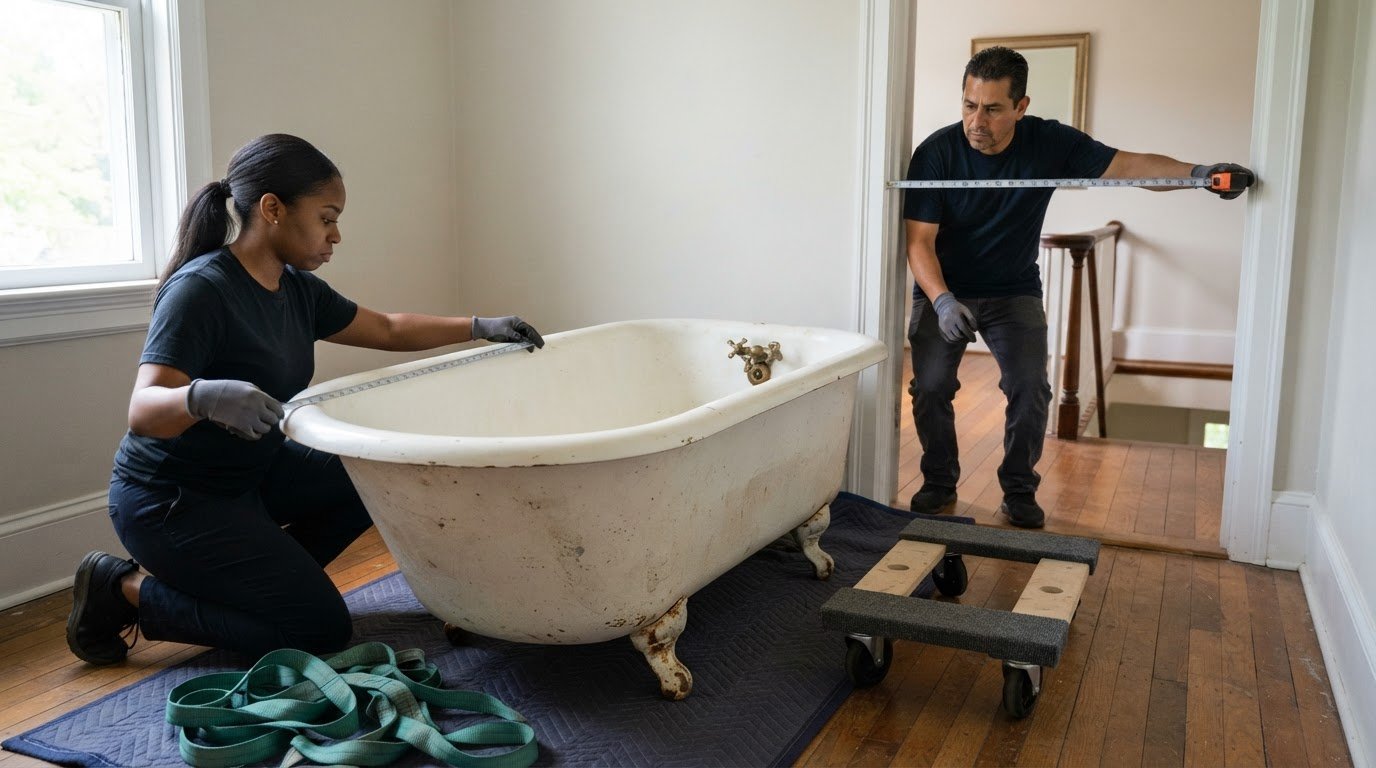
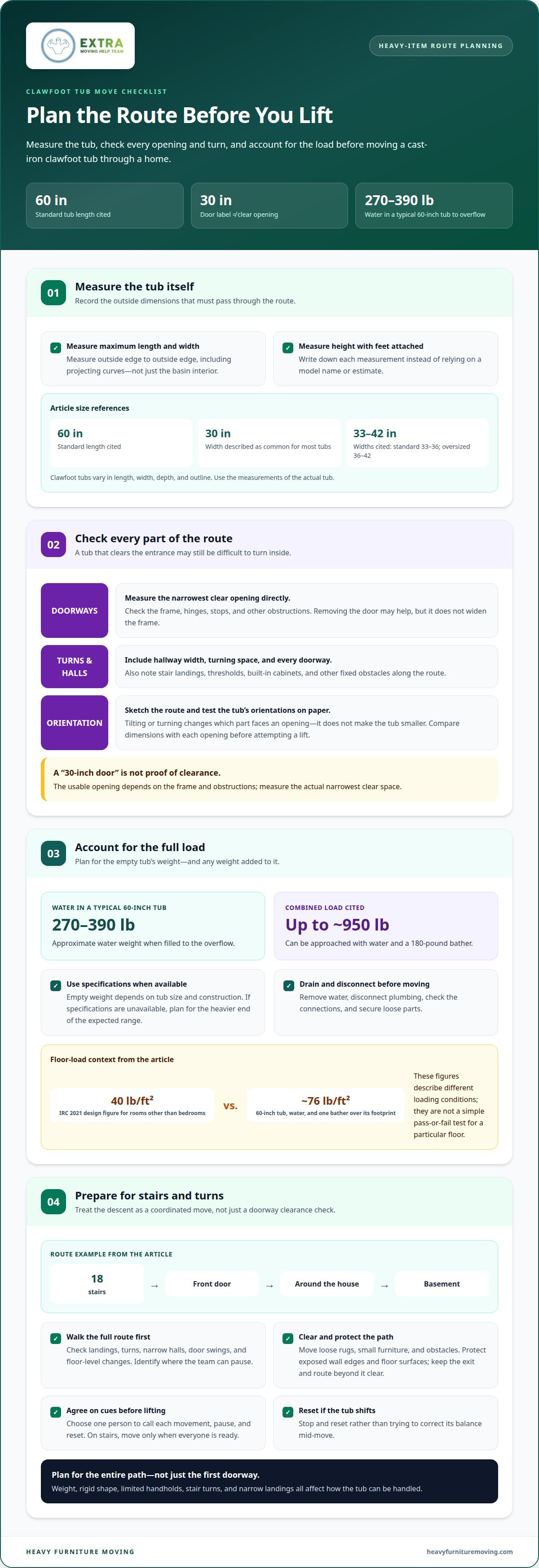
Measure the tub itself before judging a 30-inch doorway. Clawfoot tubs vary in length, width, depth, and outline, and the widest point may sit above the feet. Record the outside dimensions, not just the basin’s interior. Those measurements describe the space the tub occupies as it moves.
Use a tape measure to record the tub’s maximum outside length and width. Measure from the outer edge of one rim to the opposite edge, including any projecting curves. Then measure the tub’s height with its feet attached. Write down each measurement rather than relying on the model name or an estimate.
A standard clawfoot bathtub is 60 inches long and 33 to 36 inches wide. Most clawfoot tubs are about 30 inches wide, while oversized models can reach 36 to 42 inches. That difference matters at a narrow entrance: a nominal 30-inch door measurement doesn’t establish that the tub will pass through.
How wide is a standard 30-inch door opening after removing the door and hardware? The usable opening depends on the frame, hinges, stops, and other obstructions, so measure the narrowest clear space directly. Removing the door may help, but it doesn’t change the width of the frame itself.
Can a cast iron clawfoot tub fit through a 30-inch doorway when tilted or turned on its side? It can only pass if its dimensions and shape clear the opening in the chosen position. Turning or tilting changes which part of the tub faces the doorway, but it doesn’t make the tub smaller. Test the geometry on paper before attempting a lift.
Measure the complete route, not just the first doorway. Check the hallway width, turning space, and every doorway between the bathroom and the exit. A tub that clears an entrance straight on may not have room to rotate in a tight hall. Note thresholds, built-in cabinets, and other fixed obstacles, too.
To plan a route through a narrow doorway, record the tub’s length, widest point, and height, then measure each opening at its narrowest clear point. Sketch the route and mark turns, stairs, and tight approaches. Compare the tub’s dimensions in different orientations with each opening before deciding how it can travel.
For a tub move within a Manassas Park home, route measurements help guide the job. Disposal is separate: local waste-handling requirements depend on how the old tub is classified and collected. A moving plan does not mean the tub can be left out for disposal.
Cast-iron tub weight
A longer tub can contain more iron and be heavier to lift than a shorter model. Actual weight depends on the tub’s size and construction, so use the model’s specifications if available. If they aren’t, plan for the heavier end of the expected range.
Water changes the load dramatically. A typical 60-inch cast-iron clawfoot tub filled to the overflow can contain about 270 to 390 pounds of water. Add that water to the tub’s empty weight, and the combined load can approach 950 pounds with a 180-pound bather. Never treat a tub containing water as an empty item to move.
These considerations show why it’s not enough to guess how heavy a tub feels. Its load is concentrated in a rigid object, and its curved sides and feet affect how people can grip and control it. Stairs and narrow turns add handling challenges. Plan for the full weight of the empty tub, not an estimated share divided among helpers.
Consider the floor, too. The 2021 International Residential Code designs floors in rooms other than bedrooms for a 40-pound-per-square-foot live load. A 60-inch cast-iron tub filled with water and one bather can place about 76 pounds per square foot over its footprint. These figures describe different loading conditions, so don’t treat them as a simple pass-or-fail test for a particular floor.
Before moving the tub, drain it completely and disconnect its plumbing. Water left in the basin adds weight and may shift during the move. Check the drain and supply connections, then protect them from catching on a doorway or stair edge. Secure loose parts so they don’t become obstacles during the carry.
Use the weight estimate to judge whether the route is manageable. A heavy tub that needs to be tilted, carried around a turn, or lowered down stairs requires careful coordination. Agree on the route and each person’s role before lifting. If the tub starts to shift, stop and reset rather than trying to correct its balance mid-move.
For a tub weighing hundreds of pounds, heavy-item lifting help can be a practical option when the route or load feels beyond a household lift. The key is to plan for the tub’s empty weight and account for every added load before it moves.
Hauling the tub down stairs and out the front door
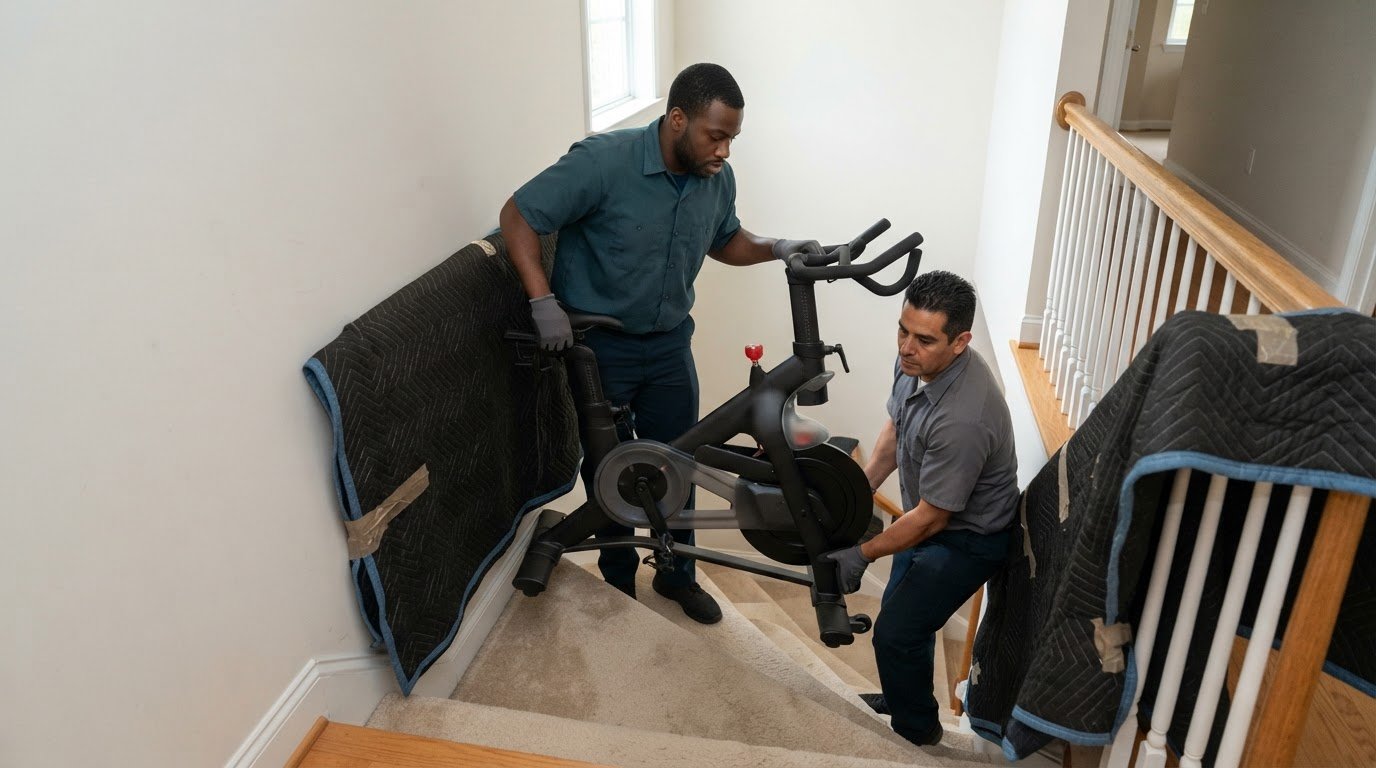
A staircase changes the move from a doorway clearance problem into a controlled descent. The tub’s weight, rigid shape, and limited handholds make each stair and turn part of the route. An old clawfoot tub was hauled down 18 stairs, out the front door, around the house, and into the basement. That route shows why planning must include the full path, not only the exit.
Before lifting, walk the route from the tub’s current position to the front door. Look for landings, turns, narrow hallways, door swings, and changes in floor level. A tub may clear a straight doorway but still be difficult to rotate at a landing. Compare the tub’s orientation at each turn with the available space, and identify where the team can pause without blocking the next move.
Prepare the path first. Move loose rugs, small furniture, and other obstacles out of the way. Protect exposed wall edges and floor surfaces where the tub could make contact. Keep the front door open and the route beyond it clear. If the tub must travel around the house, inspect that outdoor path, including the transition from the doorway to the ground.
Agree on simple instructions before anyone takes hold. Choose one person to call each movement, pause, and reset. Everyone carrying should know where the tub is going next. On stairs, move only when everyone is ready. Clear signals prevent one person from shifting the load while another is changing grip.
Take the descent in controlled stages. Keep the tub steady, move deliberately, and pause at a landing or turn when the route allows. Don’t twist suddenly to force a tight corner. If the tub’s position blocks the next step, stop and reset while it remains under control. A rushed correction can make balance harder to manage on stairs.
- At the bathroom: clear the route and align the tub for the first opening.
- At each landing: pause, check the next turn, and agree on the direction.
- At the front door: keep the threshold clear and guide the tub through without striking the frame.
- Outside: follow the pre-cleared path to the destination, such as the basement entrance.
For a tub leaving a Manassas Park home, treat the front door, stairs, and outside path as one continuous route. The 18-stair example makes the point: every transition needs room, clear communication, and a planned next move. If the team cannot hold the tub steadily through a turn, stop and reassess before continuing.
Moving a heavy cast-iron clawfoot tub through a house
Plan the route before lifting, including every doorway, corner, and stair turn. For a Manassas Park home, how to move a cast-iron clawfoot tub through a standard 30-inch doorframe depends on both the tub’s orientation and clear space along the route.
Check the feet, plumbing, and surfaces before deciding how to handle the tub. These details affect whether you can keep the move controlled from room to room.
Removing Feet and Plumbing
Removing or securing the feet and plumbing helps prevent parts from catching, shifting, or taking impact during the move. Disconnect the water supply lines and drain connection first. Check how each foot attaches, and remove it only if the fitting releases without force. Keep detached hardware together, and never use plumbing pipes as lifting points.
A projecting foot can catch on a frame, while an attached pipe can snag during a turn. For anyone planning how to move a cast-iron clawfoot tub through a standard 30-inch doorframe in Manassas Park, inspect the underside and connections before lifting. Resolve stuck fittings before the tub is in motion.
Protecting Floors, Walls, and Doorframes
Surface protection creates a buffer between the tub and floors, walls, and doorframes. Clear loose objects and rugs from the route, then cover vulnerable floor areas with flat, secure protective material. Pad exposed corners and the frame where contact could occur.
Check the protection at each turn. For example, the tub’s far end may swing toward a hallway wall as it passes through a doorway. Keep padding secure, and remove anything that slides or bunches underfoot before moving.
DIY Moving Risks and Professional Help
Moving a cast-iron tub yourself can put people, floors, and walls at risk if the load shifts. Tight turns, stairs, and a poor grip make it harder to maintain control. Stop if the tub moves unexpectedly or helpers can’t hold it steadily.
Choose equipment that can support and secure the tub, and agree on each person’s role before lifting. Professional help is a sensible choice when the route includes a difficult turn, stairs, or a lift beyond your team’s safe handling capacity.
Before moving a cast-iron clawfoot tub, measure the doorway and every stair turn because the tub cannot bend around corners. Compare each measurement with the space the tub needs along the planned route, and consider its orientation at every transition. Don’t rely on the doorway measurement alone: a turn may require a different approach from a straight passage. Plan the tub’s position before entering each narrow area, and identify any point where there isn’t enough room for the planned movement. If the measurements leave you uncertain, pause and reassess the route rather than starting the lift and trying to solve the problem while carrying the tub. Make sure everyone helping understands the intended path and where the tub must change direction. Careful measurements and a clear plan help you decide whether the route is manageable or professional help is the safer choice.
What are the dimensions and weight of a cast iron clawfoot tub?
Clawfoot tubs vary enough that the label “standard” isn’t a reliable moving measurement. Most measure 54 to 72 inches long, and a standard tub is 60 inches long and 33 to 36 inches wide. Measure your own tub at its widest outside edges, including the rim, before comparing it with a doorway or hallway.
Width ranges depend on the tub’s style. Most clawfoot tubs are about 30 inches wide, while slipper tubs range from 28 to 32 inches wide and can be 20 to 24 inches deep. Antique models are usually 24 to 32 inches wide and range from five to seven feet long. Oversized tubs can measure 72 to 80 inches long and 36 to 42 inches wide.
Length and width alone don’t show how the tub will pass through a house. A slipper tub has a raised end, and its outline can affect the space needed to turn. Small clawfoot tubs can measure 60 inches long by 30 inches wide, while large models can reach seven feet long. Check the specific tub’s longest and widest points instead of relying on a category.
An empty tub’s weight also varies by material and length. Differences in material affect handling, even when two tubs have similar dimensions.
Water adds another substantial load during use. Small clawfoot tubs hold up to 40 gallons, large tubs up to 80 gallons, and a standard tub holds between 50 and 77 gallons. A typical 60-inch cast-iron tub filled to the overflow contains about 270 to 390 pounds of water. Keep those filled-use figures separate from the empty weight used for moving.
- Length: Most models measure 54 to 72 inches; oversized tubs range from 72 to 80 inches.
- Width: Common sizes range from about 30 inches to oversized widths of 36 to 42 inches.
- Water capacity: Sizes range from small tubs holding up to 40 gallons to large tubs holding up to 80 gallons.
Use the measurements and material to map a realistic path through your home. If the tub’s weight and shape make the move difficult to manage, get help moving a heavy tub.
Height and depth add another dimension to the fit check. Small clawfoot tubs are 16 to 19 inches high, so include the feet when checking clearance beneath a counter, window, or sloped ceiling. The rim may sit higher than expected once the tub is in place, and a narrow route can make the tub harder to tilt or turn.
Depth varies too: antique clawfoot tubs range from 14 to 22 inches deep, while oversized clawfoot tubs can be up to 22 inches deep. Compare the tub’s full profile with the space where it will stand, not just its footprint. These vertical measurements can affect access, reach, and whether the tub clears obstacles along its route, even when its length and width appear manageable.
Heavy Furniture Moving: Movers Near Me
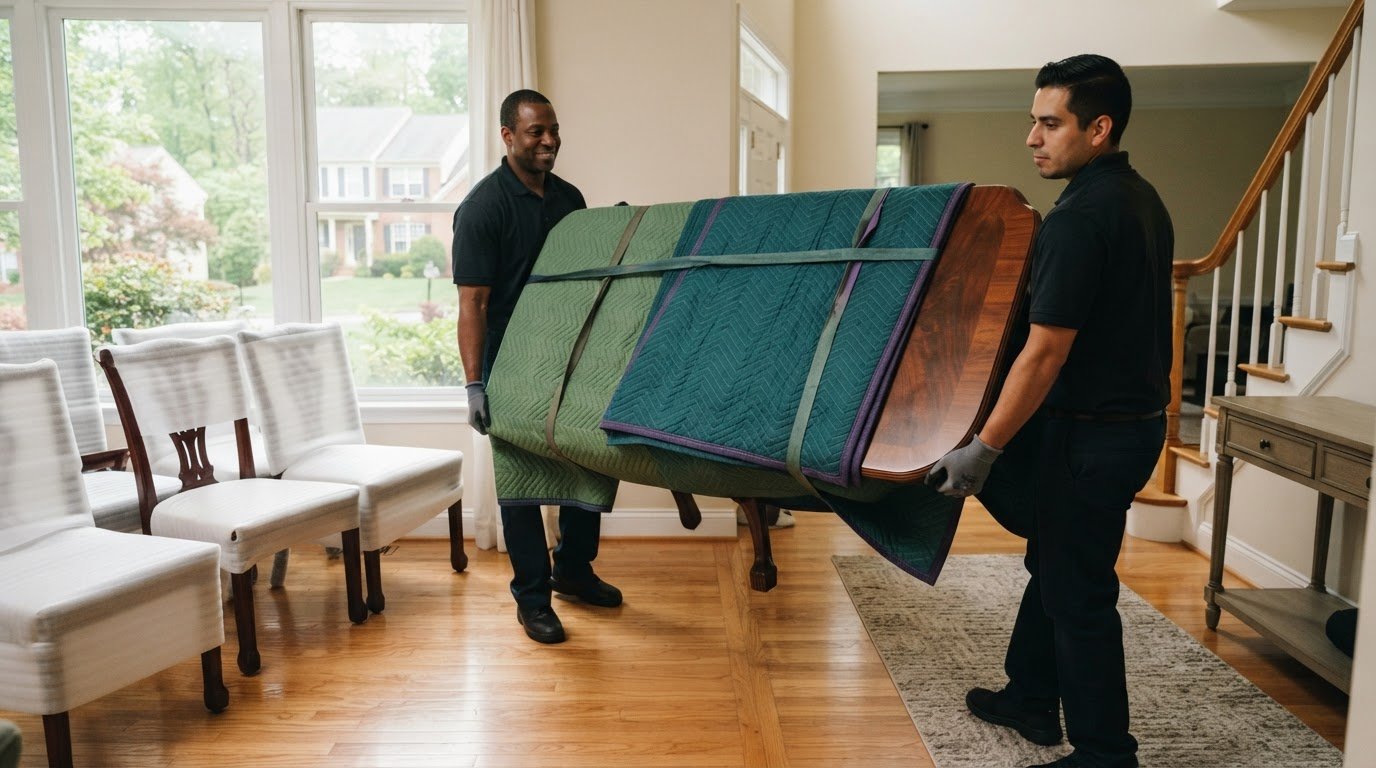
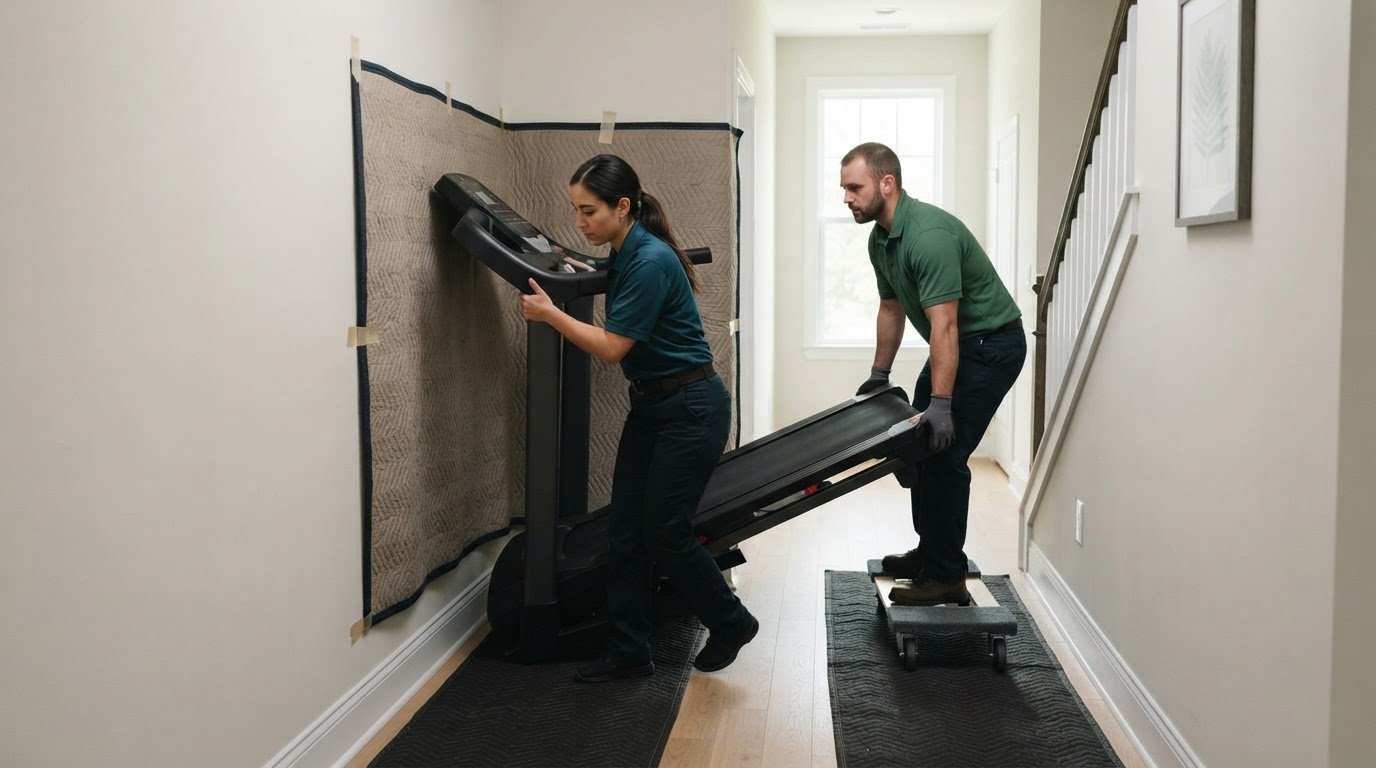
Heavy Furniture Moving provides heavy-item moving help when a tub’s weight, narrow route, or stairs make the lift difficult to manage. After measuring the tub and mapping its path, consider its heavy lifting moving service if your household team cannot safely handle the move. The team also moves challenging household items such as exercise equipment and offers sofa hoisting.
Share the tub’s dimensions, estimated weight, and route details when discussing the move. This helps the team understand the doorways, turns, and stairs involved. Contact Heavy Furniture Moving to plan your heavy-item move.
Plan the Move With Confidence
Before moving day, prepare the destination and keep the agreed route clear. Decide where the tub will rest, remove nearby obstacles, and make sure everyone involved understands the plan. A clear destination helps prevent last-minute turns or pauses while carrying the tub.
If you’re deciding how to move a cast-iron clawfoot tub through a standard 30-inch doorframe in Manassas Park, use your route measurements to explain the tight spots and stair access when arranging help. That gives the move a practical starting point and helps everyone prepare for the same path.
Heavy Furniture Moving can help with a heavy household move when the lift or route feels like too much to handle alone. Contact Heavy Furniture Moving for help and take the next step toward a more manageable move. With a clear plan and the right support, you can move forward with confidence.
Frequently Asked Questions
How much can a Clawfoot tub weigh?
Water adds substantial weight during use, so plan the move with the empty tub fully drained and treat the larger model as a particularly demanding lift.
What equipment and number of movers are needed to move a heavy cast iron bathtub safely?
Drain and disconnect the tub, clear and protect the route, and choose one person to call each movement. Everyone carrying should understand the next step and be ready before the tub shifts.
Frequently Asked Questions
Water adds substantial weight during use, so plan the move with the empty tub fully drained and treat the larger model as a particularly demanding lift.
Drain and disconnect the tub, clear and protect the route, and choose one person to call each movement. Everyone carrying should understand the next step and be ready before the tub shifts.