Hire Movers Instead of College Hunks for Fairfax Moves
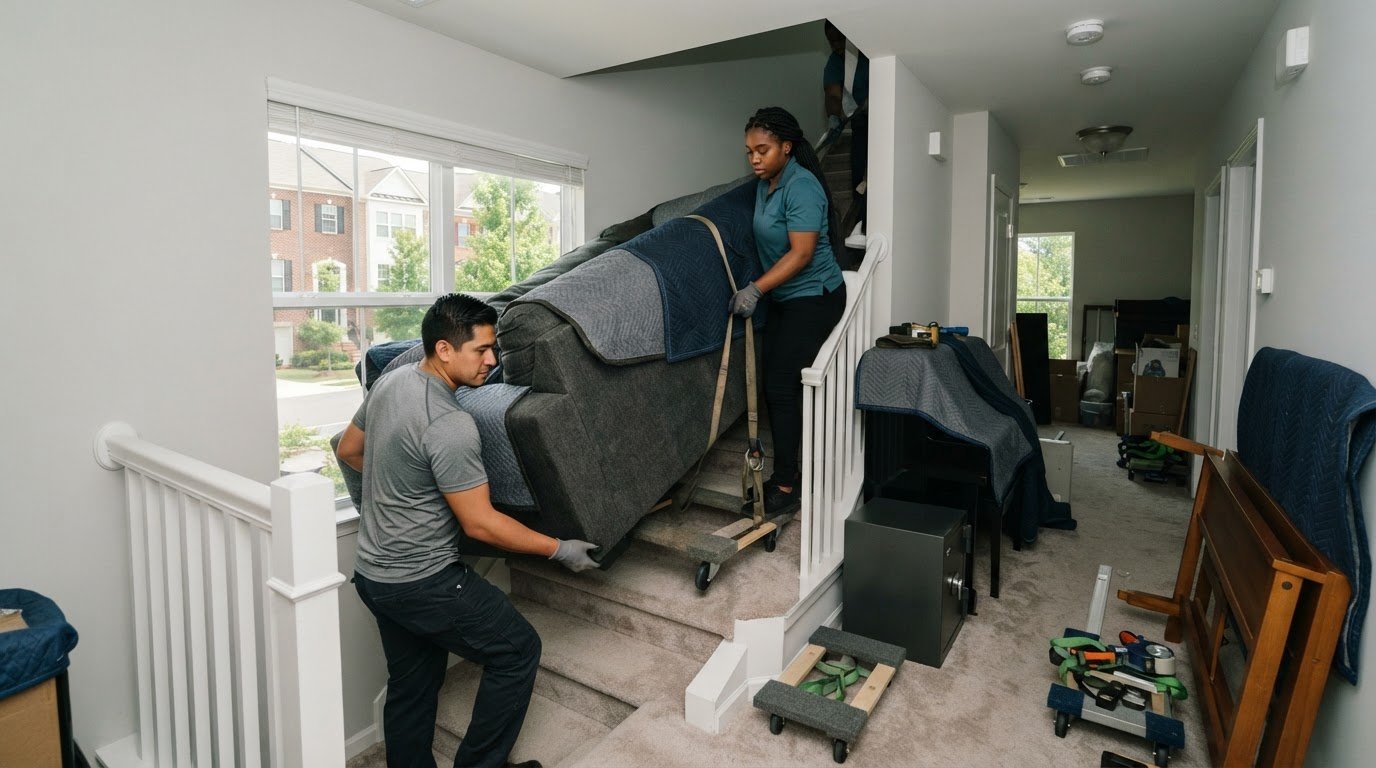
The name on the truck matters less than whether the service fits your move. To hire movers instead of College Hunks in Fairfax, compare insurance and credentials, written estimates, local reviews, the type of move, and how the crew handles furniture. A familiar brand alone won’t show you how movers will manage a tight stairway or heavy sofa.
It’s reasonable to look for a dependable crew, clear costs, and careful handling without adding stress to moving day. College HUNKS uses a franchise model, so local service can vary.
This guide explains how to compare movers for a Fairfax move, including what to ask about insurance and credentials. You’ll also see how the move type, loading and unloading, and assembly needs can shape your choice.
Key Takeaways
- Compare written estimates by what each includes, then weigh the services against your move’s actual needs.
- Look beyond a company name: franchise service levels can vary by local area, so assess the Fairfax operation you’re considering.
- Know which credentials and insurance details matter when evaluating a moving crew.
- Match the mover to your setting, whether you’re relocating a home, apartment, or commercial space.
- Plan furniture loading, unloading, and assembly around bulky or difficult-to-move pieces to make moving day smoother.
Choosing a mover based on budget and service needs
Start with the work your Fairfax move requires, then compare what each estimate includes. College HUNKS uses a franchise model, so service can vary by local area.
Budget and service fit
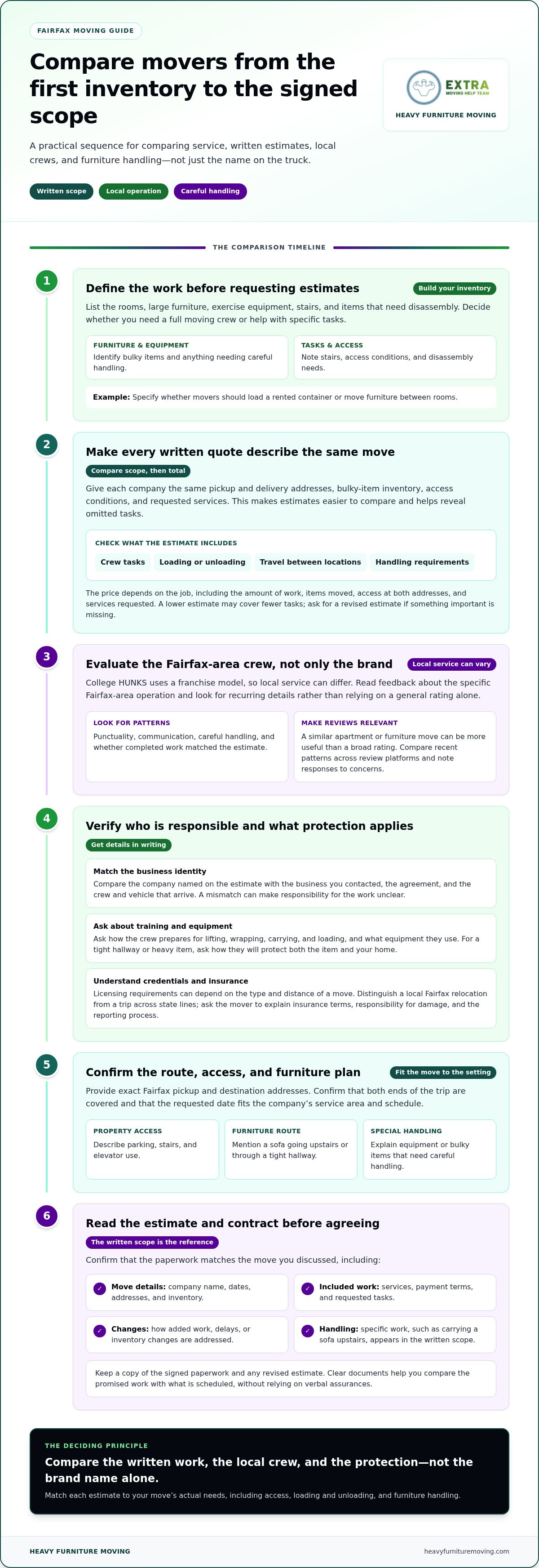
Make a short inventory before requesting estimates. List the rooms, large furniture, exercise equipment, stairs, and items that need disassembly. Decide whether you need a full moving crew or help with specific tasks, such as loading a rented container. If you plan to hire movers instead of College Hunks, compare each company’s scope of work rather than choosing by brand alone.
The price depends on the job and is provided after you request a quote. Key cost factors include the amount of work, the items being moved, access at both addresses, and the services requested. A lower estimate may cover fewer tasks, so compare what each company includes before weighing the totals.
Quality Reviews
Reviews can help you assess the local crew behind a franchise name. Read feedback about the specific Fairfax-area operation, not just the national brand. Look for recurring details about punctuality, communication, careful handling, and whether the completed work matched the estimate. A review about a similar apartment or furniture move is more useful than a general rating alone.
College HUNKS operates through franchises, so local experiences can differ. Compare recent patterns across review platforms and note whether the business responds to concerns clearly.
Comparing Moving Quotes
Request written quotes from multiple companies using the same move details. Share the same pickup and delivery addresses, bulky-item inventory, access conditions, and requested services. For example, specify whether the crew should load a container or move furniture between rooms. This makes estimates easier to compare and reduces the chance that one quote omits a task included in another.
Compare the service description with the total. Check the crew’s tasks, loading or unloading, travel between locations, and any listed handling requirements. Ask for a revised estimate if an important item or task is missing.
Contracts and Estimates
Before agreeing, read the estimate alongside the contract. Confirm the company name, move dates, addresses, inventory, included services, and payment terms. Check how the documents address added work, delays, or inventory changes. If movers will carry a sofa upstairs, that task should appear in the written scope.
Keep a copy of the signed paperwork and any revised estimate. Clear documents make it easier to compare the promised work with what’s scheduled, without relying on verbal assurances.
Service Areas and Availability
Check that the mover’s service area covers both ends of your trip. Provide the exact Fairfax pickup and destination addresses, even if they’re close together. Confirm that the complete route and requested date fit the service area and schedule. A company may cover one address but not the other, so establish coverage for the whole trip before comparing estimates.
Describe building access, parking, stairs, and elevator use, too. These details help the local team assess the job and prepare an estimate that reflects your move.
Professional training, licensing, and insurance
Credentials and insurance help you understand who will handle your belongings and what protection applies. For a Fairfax move, compare the company named on the estimate with the crew and vehicle that arrive. If they don’t match, responsibility for the work may be unclear.
Ask about crew preparation
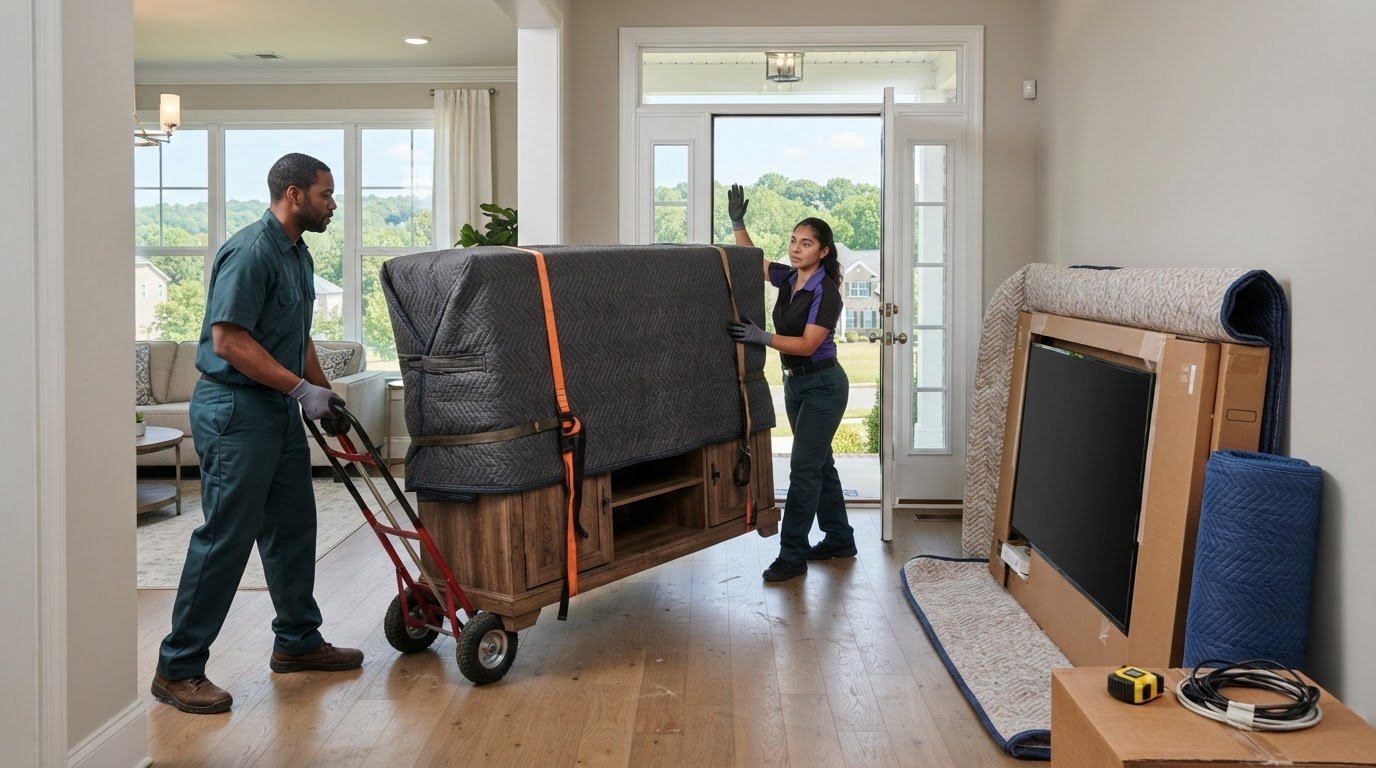
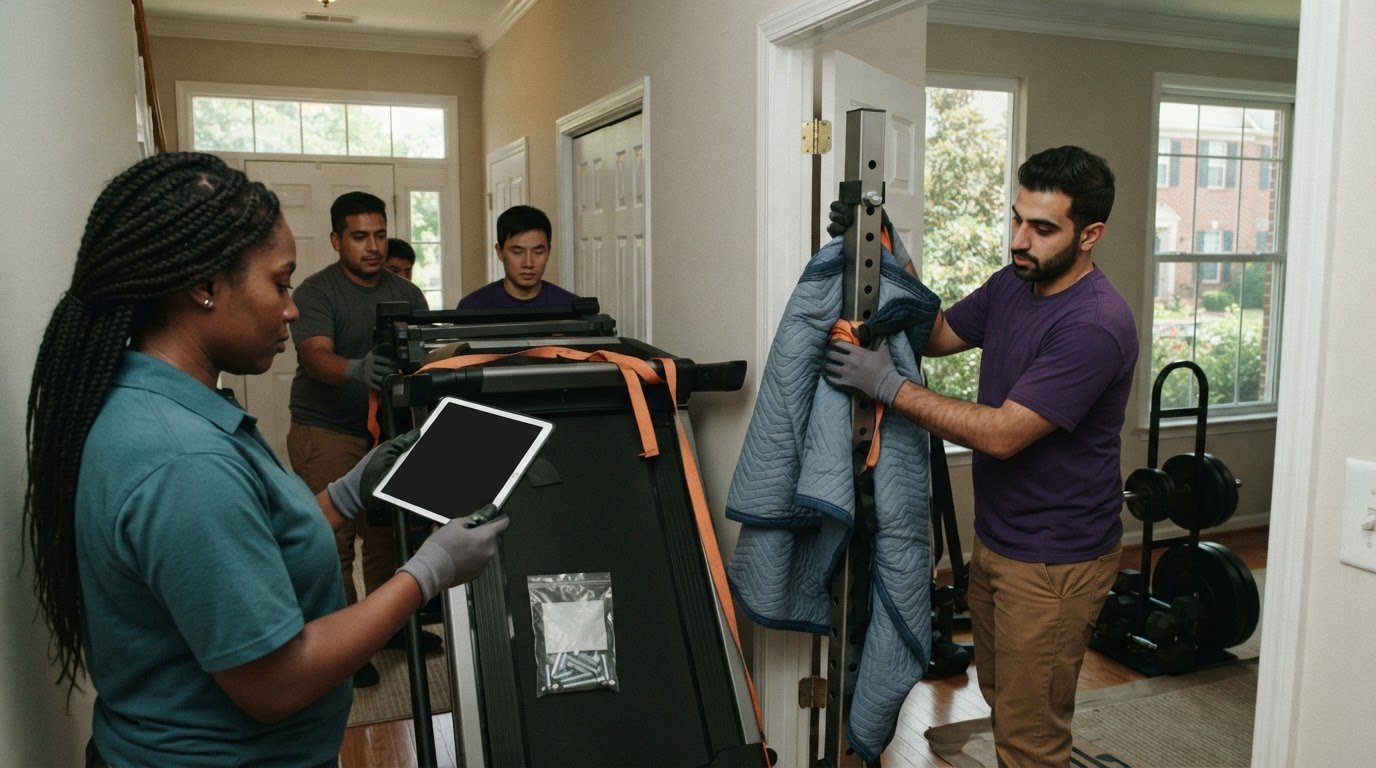
Training matters when movers carry a heavy dresser down narrow stairs or secure a treadmill in a truck. Ask how the crew prepares for those tasks and what equipment they use. Look for specific answers about lifting, wrapping, carrying, and loading, rather than a general claim of experience.
Describe a specific challenge, such as a sofa that must pass through a tight hallway or exercise equipment that needs careful handling. Ask how the crew will protect the item and your home. A useful answer should address the route, the item’s shape, and the obstacles you’ve described.
Understand licensing and insurance
Ask which business is responsible for the move, then compare its name with the estimate and agreement. Licensing requirements can depend on the type and distance of a move, so distinguish a local Fairfax relocation from a trip across state lines. Don’t assume a familiar brand identifies the contracting business.
Ask the mover to explain its insurance and damage-reporting process. Read the written terms to understand what protection applies to your belongings and what steps to take if something is damaged. For example, note how the agreement says to document a scratched table or broken lamp. Keep the estimate and signed paperwork together.
Check the details before booking
Use these steps to compare the information you receive:
- Match the business name on the estimate with the company you contacted.
- Ask who supervises the crew and how the team handles bulky or fragile items.
- Review insurance terms, responsibility for damage, and the reporting process in writing.
- Confirm the pickup and delivery addresses, route distance, and requested services.
College HUNKS Hauling Junk & Moving combines moving and junk removal under a recognizable name, but your Fairfax move still depends on the local operation and the agreement you sign. Compare its written details with other estimates, including who will do the work and what protection applies. This helps you assess the actual service, not just the brand or truck.
Residential, apartment, and commercial moves
Match the mover’s services to the property, access, and items involved. A Fairfax house move, apartment relocation, and business move can need different plans, even over a short distance.
Residential moves
For a house or townhouse move, start with the rooms and large items that need to go. List beds, sofas, appliances, and exercise equipment, then note stairs, narrow doorways, and long carries from the entrance. A sectional that must turn at a landing needs different handling from boxed kitchen items. Share these details so every estimate reflects the actual work.
Separate moving from junk removal, too. If an old dresser is being discarded while the rest of the home is moving, identify that task clearly. This helps the crew plan and prevents unwanted items from being loaded with belongings headed to your new address.
Apartment moves
Apartment access can shape the job as much as the inventory. Describe the building entrance, elevator, stairs, loading area, and distance from the door to the truck. Carrying a bed from an upper-floor unit without an elevator, for example, involves a different route than taking it directly to a ground-floor entrance.
Before moving day, review building instructions and arrange any required access with property management. Tell the moving company about elevator booking windows and loading-area restrictions. With the route details, the crew can plan to carry furniture without blocking shared hallways or damaging walls.
Commercial moves
A business relocation needs a clear inventory and a plan for keeping work items organized. List desks, chairs, file cabinets, computers, and shared equipment by room or department. Label boxes with their destinations, such as “front office” or “conference room,” to make unloading easier to direct. Keep sensitive records and personal devices separate from general furniture.
Don’t assume a residential estimate covers a commercial relocation. Describe the business address, building access, loading arrangements, and items involved. If junk removal is also needed, identify what should be removed and what must reach the new location. This keeps disposal and delivery instructions distinct.
Compare by move type
When comparing College HUNKS with another moving company, give each the same move description. Include the property type, inventory, access details, and requested tasks. Then compare the written scope, not just the company name. A quote for a house with direct access may not match an apartment move with stairs or a business relocation requiring room-by-room delivery.
Use a simple checklist: property type, bulky items, access route, loading plan, unloading destinations, and any separate junk removal. Clear details make it easier to see whether each estimate fits before you choose a crew.
Customer reviews
Use reviews to assess the moving experience, not just a company’s overall reputation. College HUNKS operates through franchises, so service can vary by local area. Focus on feedback about the Fairfax operation and moves like yours, such as an apartment relocation or a home with bulky furniture.
Prioritize relevant local feedback
Look for reviews that identify the location or describe a Fairfax-area move. A comment about movers carrying furniture through narrow stairs tells you more than praise that simply says “great service.” Compare feedback about the work you need, whether loading, unloading, or moving large items between rooms.
Check whether reviews describe moving services or junk removal. A customer reviewing a cleanout may be evaluating a different task from a household move. Consider those experiences separately when judging how a crew handles furniture, communicates, or follows the agreed plan.
Read the details, not just ratings
Look for specific descriptions of the crew’s conduct. Did reviewers mention careful handling, clear updates, arrival coordination, or confusion about what the estimate covered? A review describing movers protecting a doorway while carrying a dresser gives you a concrete detail to compare with other accounts.
Look for recurring themes across separate reviews. Several accounts describing unclear communication deserve attention, while a single complaint may not represent the whole local operation. Check the dates and details on the review platform, then compare newer and older accounts to see whether experiences appear consistent.
Assess the response and context
When a reviewer reports a problem, read the business’s public response. Look for a direct acknowledgment and a relevant explanation, not just a generic reply. If a customer says a delivery instruction was missed, for instance, consider whether the response addresses that issue. A response can’t establish what happened, but it shows how the company communicates publicly.
Apply the same approach to positive reviews. Specific praise about a crew protecting a sofa or keeping labeled boxes organized is more useful than broad compliments. Compare those details with your priorities and note whether the review describes a move like yours.
Turn review patterns into comparison points
Before choosing, write down which review themes matter for your move. Compare each company’s public feedback with those priorities and its written scope. Reviews are one decision tool, not a substitute for knowing what the crew will do.
- Prioritize local feedback about a similar move.
- Separate moving reviews from junk removal experiences.
- Compare repeated comments about communication and item handling.
- Use specific examples to guide your final comparison.
Furniture loading, unloading, and assembly
Furniture handling can make a move smooth or turn it into a series of tight squeezes and misplaced parts. Compare what each crew will do at pickup and delivery, especially for bulky pieces, rented containers, and furniture that needs disassembly.
Plan the loading work
List large items before moving day, including beds, sofas, dressers, and dining tables. Note which pieces need disassembly and which should stay assembled. A wide sofa may need a different hallway route from a boxed chair. Share doorways, stairs, and other access details so the loading plan fits the home.
For a container move, plan the placement of items. Secure heavy furniture and leave a clear path to anything that must come out first. Tell the crew which boxes or pieces are fragile and what shouldn’t have weight stacked on top. A written task list helps keep loading instructions clear from start to finish.
Make unloading easier
Assign each large piece a destination before unloading the truck or container. Label rooms with simple names such as “main bedroom” or “living room,” then add matching notes to furniture where practical. This can keep a dresser from landing in the wrong room and needing to be moved again through a crowded home.
For a U-Box or POD, decide what needs to come out first. A mattress, bed frame, and essential seating may take priority over storage pieces. Keep the walkway clear as items come out, and group hardware or detached parts with the furniture they belong to. These steps help reduce extra handling.
Include assembly in the work plan
Disassembly and assembly are distinct tasks. A bed frame may need its headboard, rails, and slats removed for transport, then reassembled at the destination. Identify the furniture that needs this work and make sure the written scope includes the requested steps. Don’t assume loading or unloading automatically includes assembly.
Before taking apart a table or shelving unit, photograph how its parts fit together. Put screws and small fittings in a labeled bag, then keep it with the matching item. Save instructions for furniture that comes with them. This makes reassembly more organized and helps prevent hardware from getting mixed up.
Compare the handling details
Compare each estimate by task, not by a broad label like “moving help.” Check whether it covers loading, unloading, moving furniture inside the home, and any requested assembly. If you need a container loaded, state that clearly. For help planning furniture loading and unloading, get help with furniture loading.
Before the crew begins, review the item list and room destinations together. Confirm which furniture stays assembled, which pieces need disassembly, and where each large item should go. Clear instructions help the crew follow the order you need.
Heavy Furniture Moving: Movers Near Me
Heavy Furniture Moving is a practical option for Fairfax moves involving bulky furniture or difficult access. Turn to the team when a sofa won’t fit through a doorway, exercise equipment needs moving, or heavy furniture needs shifting inside your home.
Services include in-home furniture moving, exercise equipment moving, and sofa hoisting. Match the help to the job: moving a treadmill differs from hoisting a sofa through an upper-floor window. Share the item, access route, and destination so the team can plan around your move.
For help with heavy furniture in Fairfax, contact Heavy Furniture Moving.
Make Your Fairfax Move Easier to Manage
Turn your comparison into a move plan. List what needs moving, what needs extra care, and what you want handled at each address. If you’re deciding whether to hire movers instead of College Hunks, let your most challenging items guide the choice. A clear plan keeps the focus on the work that matters to you.
Heavy Furniture Moving offers Movers Near Me, Exercise Equipment Moving, and Sofa Hoisting. These services suit moves involving bulky furniture, workout equipment, or a sofa that can’t pass through a doorway or stairwell. Choose help that matches your moving challenge rather than adding tasks you don’t need.
Set your move in motion with a team focused on heavy and bulky items. Contact Heavy Furniture Moving to discuss your Fairfax move. A practical plan can make the next step feel manageable.
Frequently Asked Questions
Are You Licensed and Insured?
Ask the moving company to identify the business responsible for your job and explain its licensing and insurance in writing. Request documents that match the company name on your estimate, then review the coverage and damage-reporting process. A crew’s training or uniform doesn’t establish insurance coverage. For a Fairfax move, keep the written response with your agreement and move records.
How Far in Advance Should I Book Movers?
Book once your move date and addresses are set, especially if you need a particular day or building access window. Before reserving, prepare an inventory and note stairs, elevators, parking, and large items. These details help the moving company plan the requested work. If your lease dates are still changing, organize your move information now so you’re ready when they’re set.
How Much Does It Cost To Hire Movers In Fairfax?
For a Fairfax move, the price depends on the job and is provided after you request a quote. The main cost factors include the amount of furniture, travel distance, access at each address, and requested tasks. Share your inventory and services needed so the estimate reflects the move. Compare written quotes based on the same details, since different scopes aren’t directly comparable.
Which Moving Company Should You Choose?
Choose the company whose written scope fits your move, whose terms you understand, and whose local reviews describe similar work. College HUNKS operates through franchises, so local service can vary. If you’re deciding whether to hire movers instead of College Hunks, compare the local operation and the tasks you need, such as moving bulky furniture or navigating difficult access.
What services and fees should I compare when hiring movers?
Compare the work included, such as packing, carrying, loading, unloading, furniture placement, and assembly. Check how the estimate addresses travel, stairs, long carries, bulky items, and inventory changes. Separate the tasks you need from those you don’t. For example, a rented-container move may need loading help without truck transport. Make sure the written scope matches your plan before signing.
How can I verify a moving company’s license and insurance?
Start with the company’s full legal name and the business name shown on your estimate. Ask for its licensing details and written insurance information, then compare the identifiers with relevant government records. Confirm that the documents apply to the business handling your move, not just a parent brand or another location. Keep copies of the records, estimate, and agreement together for reference.
What are the risks of hiring cheap movers, brokers, or unlicensed movers?
A low quote may leave important tasks or terms out of the written scope. With a broker, the company arranging the move may differ from the crew doing the work, making responsibility less clear. Missing or mismatched licensing and insurance information can also complicate questions about accountability or damage. Compare the contracting business, service details, and coverage documents before committing.
Which moving companies serve my city or ZIP code?
Heavy Furniture Moving serves Fairfax, Woodbridge, Manassas, Manassas Park, Aldie, Ashburn, McLean, Vienna, Reston, Centreville, Chantilly, Clifton, Dumfries, South Riding, Fairfax Station, Haymarket, and Gainesville. If you’re moving in these communities, compare the job you need with the company’s local moving services. Share both addresses and ZIP codes so the route is clear.
Frequently Asked Questions
Ask the moving company to identify the business responsible for your job and explain its licensing and insurance in writing. Request documents that match the company name on your estimate, then review the coverage and damage-reporting process. A crew’s training or uniform doesn’t establish insurance coverage. For a Fairfax move, keep the written response with your agreement and move records.
Book once your move date and addresses are set, especially if you need a particular day or building access window. Before reserving, prepare an inventory and note stairs, elevators, parking, and large items. These details help the moving company plan the requested work. If your lease dates are still changing, organize your move information now so you’re ready when they’re set.
For a Fairfax move, the price depends on the job and is provided after you request a quote. The main cost factors include the amount of furniture, travel distance, access at each address, and requested tasks. Share your inventory and services needed so the estimate reflects the move. Compare written quotes based on the same details, since different scopes aren’t directly comparable.
Choose the company whose written scope fits your move, whose terms you understand, and whose local reviews describe similar work. College HUNKS operates through franchises, so local service can vary. If you’re deciding whether to hire movers instead of College Hunks, compare the local operation and the tasks you need, such as moving bulky furniture or navigating difficult access.
Compare the work included, such as packing, carrying, loading, unloading, furniture placement, and assembly. Check how the estimate addresses travel, stairs, long carries, bulky items, and inventory changes. Separate the tasks you need from those you don’t. For example, a rented-container move may need loading help without truck transport. Make sure the written scope matches your plan before signing.
Start with the company’s full legal name and the business name shown on your estimate. Ask for its licensing details and written insurance information, then compare the identifiers with relevant government records. Confirm that the documents apply to the business handling your move, not just a parent brand or another location. Keep copies of the records, estimate, and agreement together for reference.
A low quote may leave important tasks or terms out of the written scope. With a broker, the company arranging the move may differ from the crew doing the work, making responsibility less clear. Missing or mismatched licensing and insurance information can also complicate questions about accountability or damage. Compare the contracting business, service details, and coverage documents before committing.
Heavy Furniture Moving serves Fairfax, Woodbridge, Manassas, Manassas Park, Aldie, Ashburn, McLean, Vienna, Reston, Centreville, Chantilly, Clifton, Dumfries, South Riding, Fairfax Station, Haymarket, and Gainesville. If you’re moving in these communities, compare the job you need with the company’s local moving services. Share both addresses and ZIP codes so the route is clear.