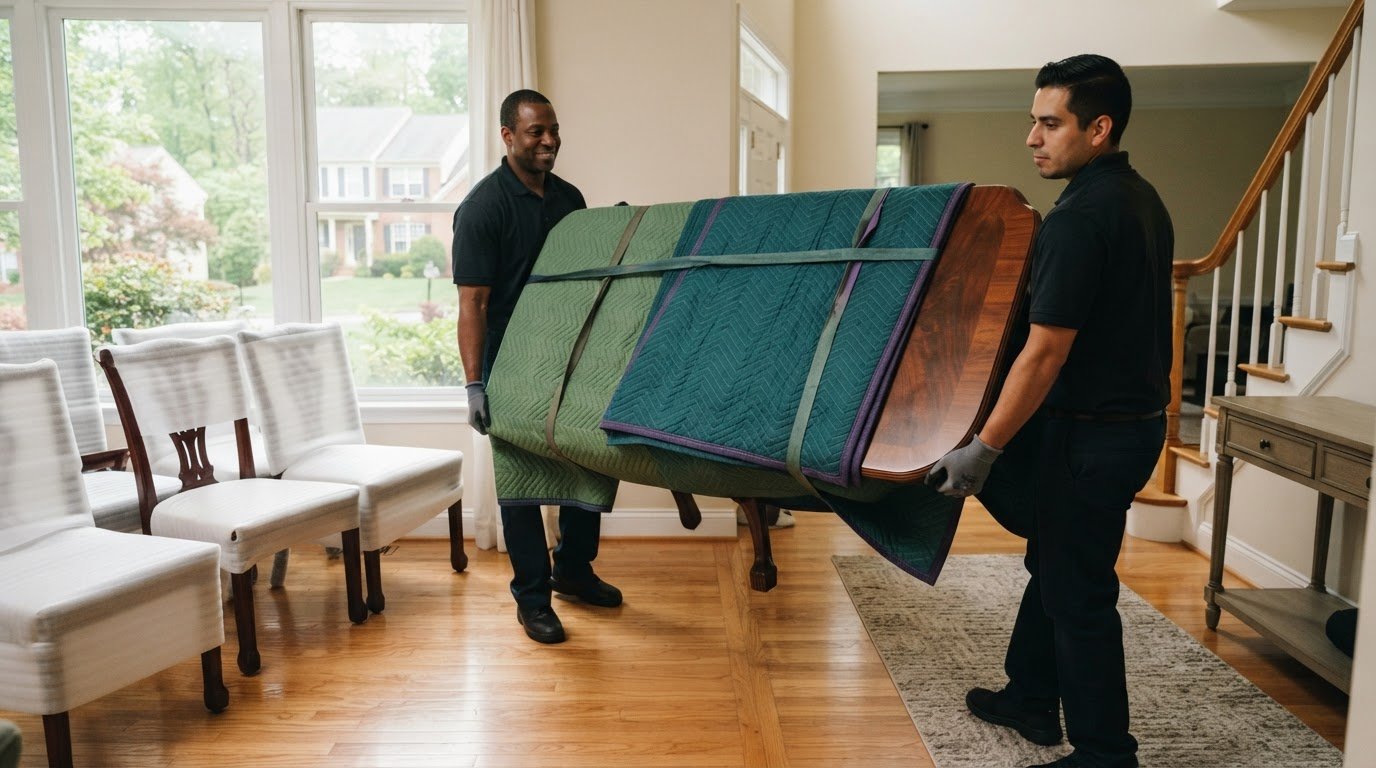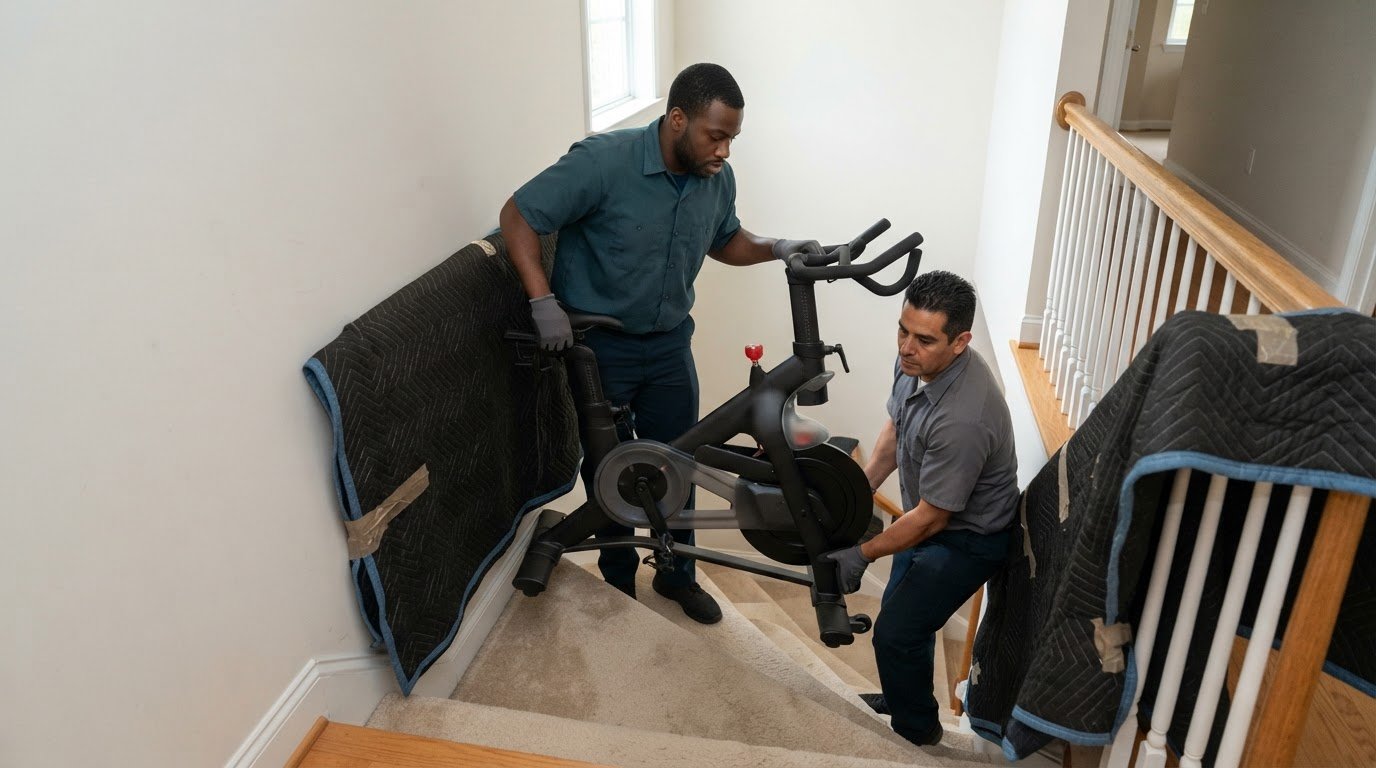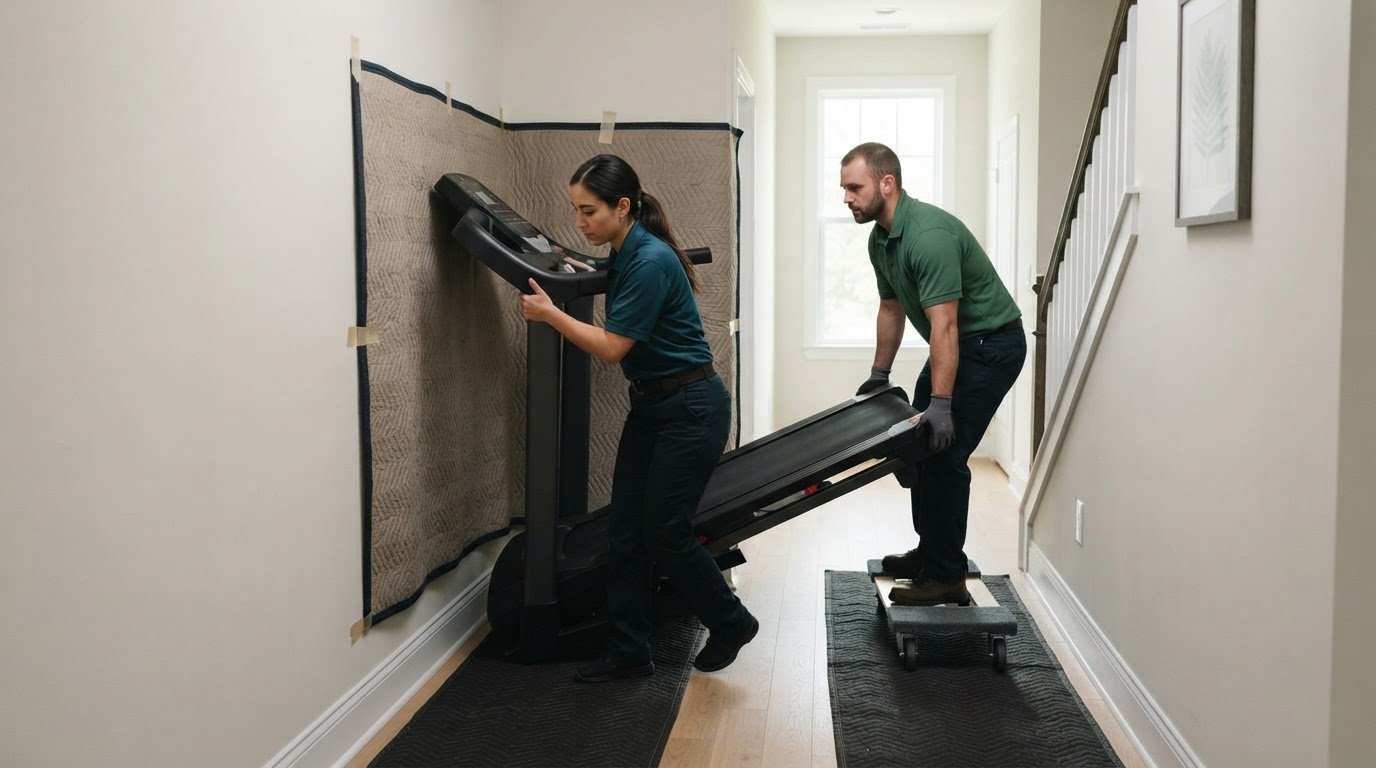
Heavy Gym Equipment Movers in Fairfax Station for Upstairs Moves
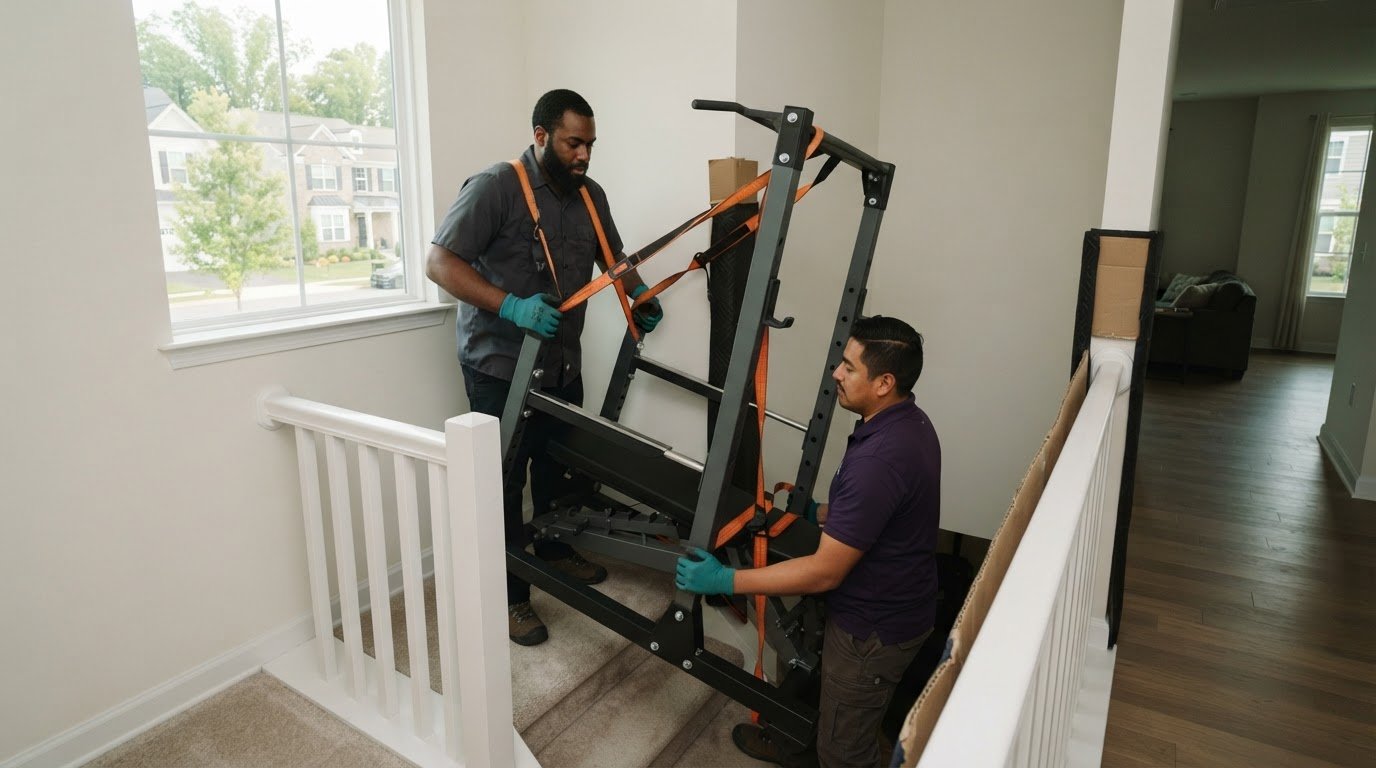
Don’t treat a power rack like ordinary furniture. For an upstairs move in Fairfax Station, choose professional movers to carry a heavy weight bench and power rack who handle exercise equipment and heavy lifting. Compare the equipment, stairway access, and included work when reviewing quotes.
A tight turn, narrow landing, or bulky frame can make an upstairs gym move a challenge. Note the equipment’s dimensions, describe the stairway, and confirm whether disassembly and reassembly are included. This guide covers what to share, how to compare estimates, and how to prepare your weight bench and rack. Planning the route and handling before lifting begins helps avoid surprises on moving day.
Key Takeaways
- Choose movers with experience handling exercise equipment and heavy lifts, and describe the upstairs route clearly.
- Share the bench and rack dimensions, equipment details, and stairway layout when requesting estimates.
- Compare quotes by the work included, not just the total, so you can understand what the move covers.
- Plan the path through doors, hallways, landings, and stairs before moving day to spot tight turns early.
- Prepare the equipment and clear the route to help make the upstairs move more organized.
Choosing a mover
Choose a mover based on the equipment, route, and handling plan, not a broad promise to move heavy items. A weight bench may have a compact frame, while a power rack can be wide, tall, and hard to turn. Describe both pieces and explain that they need to go upstairs in your Fairfax Station home. Share the stairway layout, landings, and tight corners so the entire job can be assessed.
When reading reviews and asking about availability for heavy exercise equipment movers in Fairfax Station, look for comments about gym equipment, stair carries, careful handling, and clear communication. Share your requested date, equipment details, and access information when requesting a quote.
For movers near Fairfax Station who handle fitness equipment and heavy lifting, look for experience with exercise equipment and upstairs routes. A capable mover should be able to explain how the rack’s frame and loose parts will be handled, rather than treating it like a standard box. Ask for a plan covering preparation, the route through the home, and placement upstairs. Practical details make quotes easier to compare than general claims of strength.
Use these details to assess whether the mover understands your setup:
- Equipment description: Name the bench and rack, and share their measurements if available.
- Route description: Explain the stair width, landing turns, doorways, and final room location.
- Preparation: Ask what needs to be removed or secured before the move.
- Work scope: Clarify whether the estimate covers moving one item or the full home gym.
- Communication: Look for specific answers about access and handling, not vague assurances.
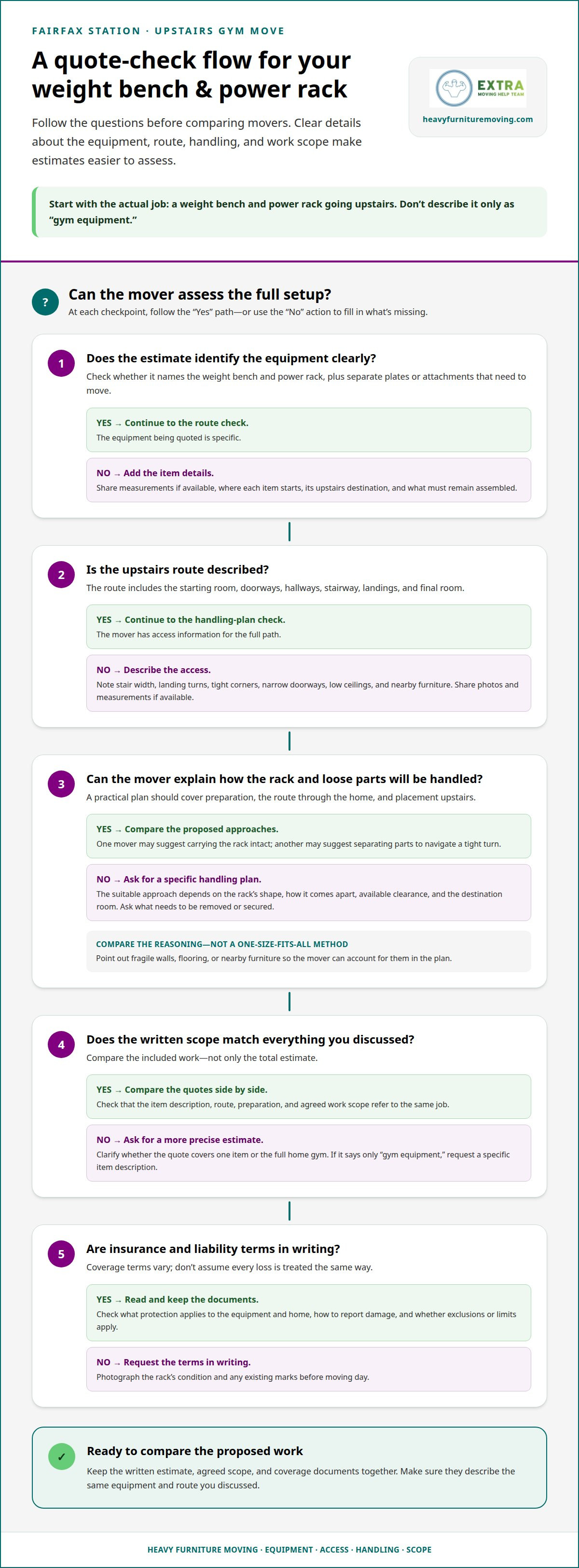
Ask for the insurance and liability coverage terms in writing before the move. Understand what protection applies to the equipment and home, how to report damage, and whether exclusions or limits apply. Photograph the rack’s condition and any existing marks before moving day. Coverage terms vary, so read the documents rather than assuming every loss is treated the same way.
Compare responses side by side. One mover may propose carrying the rack intact; another may suggest separating parts to navigate a tight turn. Neither approach fits every home. The right plan depends on the rack’s shape, how it comes apart, available clearance, and the destination room. Share photos of the equipment and stairway, and point out fragile walls, flooring, or nearby furniture. Clear details help the mover explain the approach and raise questions before the crew arrives.
Keep the written estimate, agreed scope, and coverage documents together. Make sure they describe the same equipment and route you discussed. If the quote says only “gym equipment,” request a more specific item description. A precise record helps you plan the move and compare the proposed work.
Home gym moves
Start by listing everything that needs to go upstairs. A home gym may include a power rack, weight bench, plates, bar, and attachments. Note which pieces are loose and which connect to the rack. An inventory helps keep small parts together and gives you a clear way to compare the requested work with what gets moved.
Prepare each piece according to its design and instructions. Remove weights from the bar and rack, and gather collars, pins, and bolts in a labeled container. Keep removable bench parts together. For a rack with attachments, note where each one belongs before disassembly. Don’t force a stuck connection or use a tool that could damage the equipment.
Protect and organize the gym items before they leave the room:
- Weights: Group plates by size and keep them from shifting during handling.
- Bench: Secure movable pads or attachments, and keep hardware with the bench.
- Rack: Separate loose attachments and identify the frame pieces clearly.
- Small parts: Place pins, bolts, and collars in a labeled bag or container.
- Electronics: Unplug consoles or accessories and keep cables with their equipment.
Take photos before disassembly. Images of the assembled rack and attachment positions can guide reassembly; photograph the bench’s adjustment points as well. Keep the photos with the hardware instead of relying on memory after the pieces reach the upstairs room. Include the assembly instructions if you still have them.
Plan the work around the room’s final layout. Decide where the rack and bench will go before the move begins. Clear the intended space and remove nearby obstacles. Label plates or accessories separately if they belong in another room. This lets the main equipment be positioned without sorting small items in the stairway or landing.
Before the crew arrives, make a short inventory and preparation list for your upstairs home gym move. Mark what you’ve disassembled, what remains assembled, and which parts must stay together. Share the list with photos of the equipment and its current setup. These details help tailor the handling plan to your actual items, rather than an assumed standard gym set.
If the move involves a bench or rack that needs careful handling, exercise equipment moving is a relevant service to consider. Bring your item list and preparation notes into the planning conversation, so the job can account for the full home gym.
Moving estimates and quotes
A useful estimate describes the actual move, not just “gym equipment.” For an upstairs job in Fairfax Station, list the weight bench, power rack, and any separate plates or attachments. State where each item starts and whether it is moving between rooms or levels. Include the destination room and note anything that must remain assembled. These details define the work and make separate quotes easier to compare.
Share access details just as carefully. Describe the starting room, stairway, landing, and upstairs destination. Mention sharp turns, low ceilings, narrow doorways, or nearby furniture that could affect the route. Photos can show how the rack fits in its current space and where it needs to go. If you have measurements, include the equipment dimensions and the tightest doorway or stair opening. Provide consistent details with every quote request.
The price depends on the job details. Factors include the number and size of items, stair access, travel between locations, preparation, and requested disassembly or reassembly. Moving a bench alone is a different scope from moving a bench, rack, plates, and accessories. Describe the full job before comparing totals.
Review what each estimate includes. Look for clear descriptions of the items, upstairs carry, and any preparation or assembly. If one estimate covers carrying only while another includes handling loose attachments, the totals are not for the same service. Get the scope clarified in writing so you can compare equivalent work instead of guessing from a short label.
Use this checklist when reviewing a quote:
- Items: Are the bench, rack, plates, and attachments listed accurately?
- Route: Does the scope identify the upstairs move and relevant access details?
- Preparation: Does it state whether disassembly or securing loose parts is included?
- Placement: Is the destination room or placement task described?
- Coverage: Are any stated terms for damage or liability clear in writing?
Before accepting, compare the written estimate with your inventory and photos. If you added a rack attachment after requesting a quote, update the item list. If the upstairs destination changes, share the new details. Changes to equipment or access can affect the work, so keep the description current. Save the estimate and written scope together for moving day.
For a heavy lifting move, focus on a complete, readable scope rather than choosing by the lowest total alone. A clear quote shows whether the proposed work matches your bench, rack, and upstairs route. Keep item and access details consistent across estimates for a more meaningful comparison.
Narrow hallways, doorways, and stairways
Measure the route before moving a power rack upstairs in Fairfax Station. Record the narrowest doorway, hallway, stair opening, landing, and ceiling clearance. Measure the rack in its current configuration, including parts that extend beyond the frame. A doorway may seem wide enough straight on but prevent a turn at the landing.
Permit, parking, and building-access requirements in Fairfax Station depend on the property and where a moving vehicle can stop. In a shared building, arrange access with the property manager and review posted parking instructions. At a private home, keep the driveway and entry clear.
Walk the planned path from the gym to the destination room. Open doors fully and note handles, light fixtures, railings, and furniture that reduce clearance. Photograph tight turns from both directions. If walls enclose a stair landing, the rack may need a different orientation or partial disassembly to pass without scraping surfaces.
A power rack can catch on a doorway, strike a wall, or shift awkwardly on a staircase. Movers reduce those risks by assessing the route, protecting vulnerable surfaces, coordinating the lift, and pausing when the frame needs repositioning. Clear communication matters: one person should guide each turn while the crew keeps the rack controlled.
Use this route checklist before moving day:
- Doorways: Measure the clear opening with the door open, including trim that may limit passage.
- Hallways: Note corners, wall-mounted items, and furniture that narrow the path.
- Stairs: Record the stair width, rail placement, landing shape, and overhead clearance.
- Destination: Clear a space upstairs that allows the rack to be turned and placed.
- Building access: Share entry instructions and any parking arrangements with the moving crew.
Measure usable space, not just the room. A handrail, for example, can make a stairway narrower than its wall-to-wall width. A low ceiling near a turn can limit how far the frame can tilt. Compare these constraints with the rack’s height and width, and share the tightest spots before the move.
Don’t force a frame through a questionable opening. If the rack catches, stop and reassess its angle, the route, or whether removable parts should come off. Keep children, pets, and loose equipment away from the path. A clear staircase and planned turning points give movers room to work and help prevent contact with walls, railings, and the equipment.
Weight benches and other equipment movers can handle
A home gym may include more than a weight bench and power rack. The move might also involve free weights, a barbell, rack attachments, an adjustable bench, or cardio equipment. Make a separate list for each item. Identify detachable parts and note equipment with cables, screens, or moving joints. A complete inventory helps plan the move and keep loose accessories from being overlooked.
Start packing by removing loose items. Take plates off the bar and rack, and put pins, collars, and bolts in a labeled container. Keep the hardware with the equipment it belongs to. Secure an adjustable bench’s movable sections according to its instructions. Protect exposed surfaces with suitable material, keeping tape away from upholstery, screens, and painted finishes.
Sort items by type before they leave the gym:
- Weight bench: Secure loose pads or attachments, and protect upholstery from scuffs.
- Power rack: Keep its fasteners and attachments grouped with the frame.
- Weights and barbell: Separate loose plates and secure smaller accessories.
- Cardio equipment: Unplug consoles and gather cables with the matching machine.
- Floor accessories: Bundle mats and bands so they don’t snag on other items.
A power rack needs disassembly if its assembled shape cannot pass through the available doorways, turns, or stairway. If it fits the route, it may be moved intact. Check the equipment instructions before removing parts, and organize each fastener for reassembly upstairs. Never force a joint or remove a structural part without understanding how it reconnects.
Plan how each piece will be carried and set down. An adjustable bench needs stable handling so its movable sections don’t swing. Remove projecting rack attachments if they could snag along the route. Clear the destination area and decide where the bench and rack will go before they arrive. This avoids repeatedly shifting heavy equipment across the upstairs floor.
Before the move, compare packed items with your inventory. Check that the rack hardware, bench attachments, bar, plates, and console cables are accounted for. Photograph connections before disassembly, and keep instructions with the matching equipment. These steps make it easier to identify parts after transport and prepare for setup in the new gym area.
For help planning a bench, rack, or other gym equipment move upstairs, arrange exercise equipment moving and share the equipment list and route details.
Heavy Furniture Moving: Movers Near Me
Heavy Furniture Moving offers Exercise Equipment Moving for home gym pieces that need careful handling, including weight benches and power racks. Choose this service when equipment is too bulky to carry alone or the upstairs route needs a planned lift. Share the item list, stairway details, and destination room so the job can be planned as a whole.
For a bench and rack moving together, describe what needs to be carried and whether any parts are already separated. Heavy Furniture Moving also offers Sofa Hoisting for bulky furniture access challenges and in-home furniture moving. Contact Heavy Furniture Moving to discuss your Fairfax Station equipment move.
Make Your Upstairs Gym Plan the Next Step
Finding professional movers to carry a heavy weight bench and power rack upstairs in Fairfax Station starts with a clear picture of the move. Decide how you want the finished gym space to look, then plan around that goal. A well-planned destination helps the equipment arrive ready for use, rather than simply out of the way.
Keep your equipment list and route notes handy as you move from planning to arranging help. Heavy Furniture Moving offers Movers Near Me for people who need support with a residential move. Share the key details of your upstairs gym project so the conversation can focus on the work you need.
Take the next step at a pace that feels right for your household. Contact Heavy Furniture Moving to discuss your move. Your home gym can be one step closer to its new spot upstairs.
Frequently Asked Questions
Are there professional movers in Fairfax Station, VA, for moving a weight bench and power rack upstairs?
Yes. Heavy Furniture Moving offers Exercise Equipment Moving for residential gym equipment in Fairfax Station. Share the equipment’s make or model, unusual attachments, and destination inside the home. For example, note whether the bench has an adjustable frame or the rack has a cable attachment. That helps shape the plan around your setup instead of treating every gym item alike.
What does it cost to move a weight bench and power rack upstairs in Fairfax Station?
The price depends on the job details and is provided in a quote. The estimate can reflect the items, distance between locations, stair access, and requested disassembly or reassembly. Heavy Furniture Moving uses flat rates for most single heavy items, with the price provided upfront by phone. Wrap, blankets, and straps are included on every job, with no separate line item.
What are movers’ hourly rates, minimum charges, and travel fees in Fairfax County, VA?
Heavy Furniture Moving’s hourly labor has a two-hour minimum; most single heavy items use a flat rate instead. The quote shows the work and travel costs together, so you can understand the expected total before scheduling. For a bench and rack moving between homes, provide both addresses and the upstairs access details. This gives the estimate the right context without relying on a generic hourly figure.
What details should I provide for a moving quote for a power rack and weight bench?
Share the rack and bench brand or model, approximate dimensions, and any attachments or removable parts. Include the pickup and destination addresses, destination floor, and whether the equipment is assembled. Mention access constraints, such as a shared entrance or a long walk from parking. Photos of the equipment label and current setup can clarify unusual features, such as a rack-mounted cable system or a bench with added attachments.
How should I measure stairs, landings, and doorways for moving a power rack?
Use a tape measure to record the narrowest clear opening at each doorway, stair section, and landing. Measure between obstacles, including handrails and trim, rather than from wall to wall. Note ceiling height above turns and space to pivot the rack. Compare those measurements with the rack’s assembled dimensions, then repeat for removable frame sections. Photos of tight spots can help explain the route.
Fairfax Station heavy exercise equipment movers reviews and availability
Look for reviews that mention gym equipment, stair carries, careful handling, and clear communication. Share your requested date, equipment, and access details when requesting a quote.
Frequently Asked Questions
Yes. Heavy Furniture Moving offers Exercise Equipment Moving for residential gym equipment in Fairfax Station. Share the equipment’s make or model, unusual attachments, and destination inside the home. For example, note whether the bench has an adjustable frame or the rack has a cable attachment. That helps shape the plan around your setup instead of treating every gym item alike.
The price depends on the job details and is provided in a quote. The estimate can reflect the items, distance between locations, stair access, and requested disassembly or reassembly. Heavy Furniture Moving uses flat rates for most single heavy items, with the price provided upfront by phone. Wrap, blankets, and straps are included on every job, with no separate line item.
Heavy Furniture Moving’s hourly labor has a two-hour minimum; most single heavy items use a flat rate instead. The quote shows the work and travel costs together, so you can understand the expected total before scheduling. For a bench and rack moving between homes, provide both addresses and the upstairs access details. This gives the estimate the right context without relying on a generic hourly figure.
Share the rack and bench brand or model, approximate dimensions, and any attachments or removable parts. Include the pickup and destination addresses, destination floor, and whether the equipment is assembled. Mention access constraints, such as a shared entrance or a long walk from parking. Photos of the equipment label and current setup can clarify unusual features, such as a rack-mounted cable system or a bench with added attachments.
Use a tape measure to record the narrowest clear opening at each doorway, stair section, and landing. Measure between obstacles, including handrails and trim, rather than from wall to wall. Note ceiling height above turns and space to pivot the rack. Compare those measurements with the rack’s assembled dimensions, then repeat for removable frame sections. Photos of tight spots can help explain the route.