Heavy Exercise Bike Moving in South Riding: Rates and Setup
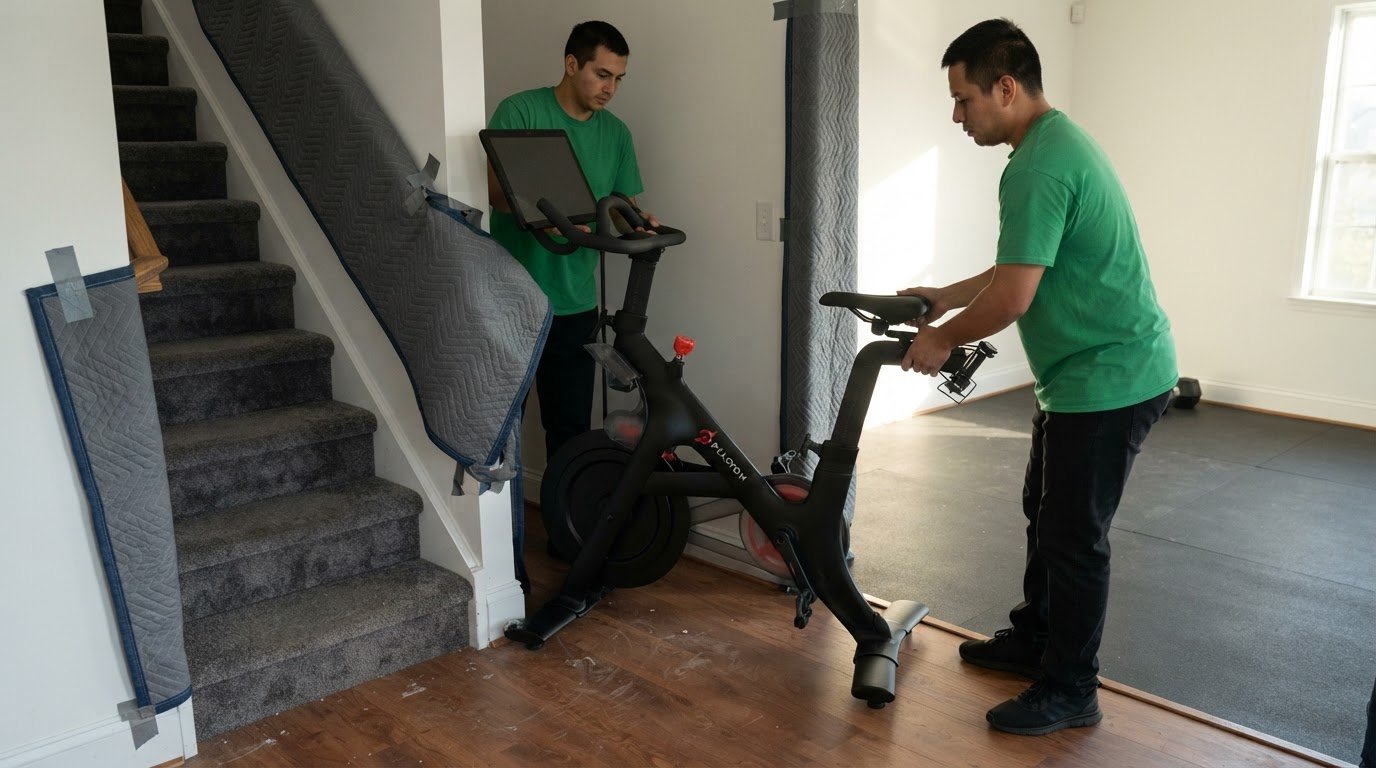
A heavy exercise bike may move intact, but disassembly and reassembly are not automatic. When hiring movers for a heavy exercise bike relocation within the same house in South Riding, ask whether standard mechanical disassembly is included and have it written into the estimate. Complex electronics or technical setup may require a qualified equipment technician.
A clear plan helps a bulky machine move safely through your home. The bike’s dimensions, route, destination, and any setup needs all shape the preparation. This guide explains what to share when arranging the move, how to assess access and placement, what affects the estimate, and when a specialized technician may be needed. Settling these details up front reduces guesswork and helps plan a safer route from one room to another.
Key Takeaways
- Learn which exercise-bike parts need careful protection and when moving the machine may call for specialized technical setup.
- See what details help shape the moving plan, including the equipment, route, destination, and work involved.
- Plan the bike’s new position around practical access and enough room to use it comfortably.
- Understand how stairs, tight turns, and doorways can affect crew needs and preparation.
- Find out what can influence hourly rates and minimum booking times for an in-home move.
Do gym equipment movers disassemble and reassemble machines?
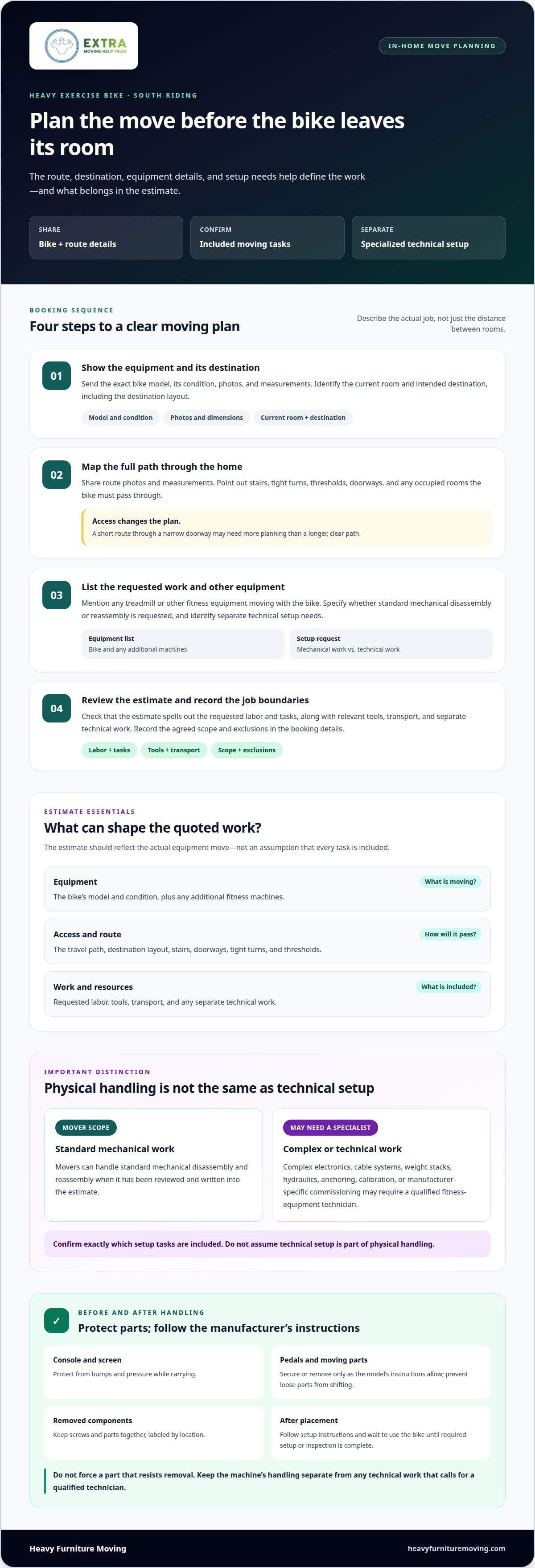
Movers can handle standard mechanical disassembly and reassembly when the work is reviewed and written into the estimate. That does not automatically include complex electronics, cable systems, weight stacks, hydraulics, anchoring, calibration, or manufacturer-specific commissioning. Those tasks may require a qualified fitness-equipment technician. For an exercise bike moving between rooms, distinguish physical handling from technical setup before planning the job.
Start with the exact equipment model and its condition. Share photos and measurements of the bike and its route so the crew can plan the work. A useful assessment covers the bike’s dimensions, travel path, and destination layout. Include nearby cardio machines if they are also moving, such as a treadmill in a basement gym or garage. These details help shape the estimate around the actual job.
Protect delicate parts before the move. Follow the manufacturer’s instructions for removing or securing detachable pieces. Shield the console and screen from knocks, and secure loose pedals or moving parts so they do not swing during handling. Keep screws and removed components together, labeled by location. Do not force a part that resists removal. After placement, follow setup instructions and wait to use the machine until any required setup or inspection is complete.
- Console and screen: Protect them from bumps and pressure during carrying.
- Pedals: Secure or remove them only as the model’s instructions allow.
- Moving parts: Keep loose components from shifting along the route.
- Reassembly: Track removed pieces and restore them according to manufacturer instructions.
For a business fitness room, create an inventory and destination plan for each machine. List the equipment and note which units need mechanical disassembly. Moving several machines into a new gym differs from relocating one household bike to an apartment or basement. Preparation depends on the equipment list, access, labor, tools, transport needs, and any separate technical work.
When comparing professional movers with fitness-equipment relocation specialists, compare the tasks listed in each estimate. Look for equipment handling, access planning, and written details about standard disassembly and reassembly. A specialist may be needed for calibration, complex electronics, or manufacturer-specific commissioning. The technical work required matters more than the machine’s label.
DIY may work for a bike with clear manufacturer instructions and an open route. Movers can plan the lift through stairs or tight turns. Avoid improvising a carry that could injure someone or damage the machine or home.
For an in-home move, read the written terms explaining responsibility if the equipment or home surfaces are damaged. Do not assume the bike and the house have identical coverage.
Move planning and booking process
When booking, describe the machine, its current room, and its destination. A bedroom-to-basement move has different access needs from moving a bike across an open first floor. Share clear photos and measurements of the equipment and route. This helps assess dimensions, travel path, destination layout, crew needs, and preparation before the estimate is finalized.
Describe the work, not just the distance. Note stairs, tight turns, thresholds, and whether the bike must pass through occupied rooms. List any other fitness equipment moving with it, such as a treadmill. Mention requested disassembly or reassembly, and identify any separate technical setup. The estimate can account for the equipment list, access, labor, tools, transport, and separate technical work.
For example, an estimate for moving one exercise bike from a bedroom to a basement should account for the route and handling. A second machine, difficult access, or separate setup changes the work involved. The estimate should spell out the requested labor and tasks, rather than implying that packing, storage, or moving other room contents is included. Equipment, access, labor, tools, transport, and separate technical work shape the quoted price.
Define the job’s boundaries before moving day. If the booking covers the bike alone, identify other items that should stay in place. The written plan should clarify exclusions and any applicable handling limits. Do not assume storage or packing is part of the move simply because those tasks could be useful. Keep the requested service focused on the equipment and agreed route.
- Send photos and measurements of the machine, route, and destination.
- Describe access, stairs, turns, additional equipment, and requested setup work.
- Review the estimate’s labor, tools, transport, and task boundaries.
- Record the agreed date, scope, and any exclusions in the booking details.
Licensing, reviews, and availability answer different questions in South Riding. Licensing concerns the mover’s stated authority for the service and location; reviews offer examples of customer experiences; booking details record the agreed date and scope. Keep these points separate from the equipment assessment and estimate.
For a move within the same home, distance alone does not describe the job. A short route through a narrow doorway can take more planning than a longer, clear path. Share route and destination details early, then use the written estimate to understand what work is included.
Treat that figure as a reference, not a quote for this equipment move. The planned route, access, requested tasks, and any separate technical work determine the estimate for the agreed job.
Destination placement and operating clearance
Choose the exercise bike’s final position before moving day. A clear destination lets the crew plan the approach, avoid blocked doorways, and place the machine where you want to use it. A corner that looks open may still leave the pedals close to furniture or put the screen in glare. Describe how you plan to use the bike, not just which room it should go in.
Start placement planning with the bike’s full footprint. Account for its base, handlebars, pedals, seat, and console in relation to nearby walls and furniture. Check the manufacturer’s instructions for model-specific placement and operating requirements. The moving team can use the destination layout to plan the carry and set-down, while you identify the preferred orientation and any nearby items that must stay accessible.
Think through a typical workout. Can you approach the seat without squeezing past a dresser? Can you get on and off without hitting a wall? Will the screen remain visible from the riding position? These checks help identify practical clearance needs without relying on a universal measurement. If the bike has movable parts, include their operating range in the plan instead of measuring only the machine at rest.
- Access: Keep the path from the entry point to the final spot clear.
- Use: Allow room to sit, stand, pedal, and reach controls.
- Surroundings: Account for doors, furniture, outlets, and nearby equipment.
- Orientation: Choose a screen direction that suits the room and workout.
Consider flooring and stability at the destination. Identify transitions between carpet, tile, or another surface, since the machine may feel different after placement. The crew should set it down without dragging it across the floor. Check that the base rests as intended and does not rock. Do not add pads or make adjustments that conflict with the manufacturer’s instructions.
Keep the console and screen clear of contact during placement. A narrow space beside a wall can put pressure on the controls as the bike is turned or lowered. The moving plan should account for these pinch points, the pedal position, and the machine’s weight distribution. A clear turning area reduces the need to twist the equipment at the destination.
Before the crew leaves, compare the bike’s final position with the agreed layout. Confirm that it faces the intended direction, doorways still open, and normal access through the room remains clear. Follow the manufacturer’s setup instructions and wait to use the bike until any required setup or inspection is complete. A final walkthrough can catch placement issues before you put the room back into use.
Measuring doors, stairs, turns, and travel paths
A bike may fit through a doorway but still be difficult to turn afterward. Measure it in the position it will travel, then compare that measurement with the narrowest clear opening along the route. Account for the door frame, trim, handles, and nearby furniture. Measuring with the door closed may not show the usable space when it is open.
For each doorway, note the clear width and height, plus any obstacle just beyond it. A hallway corner may be tighter than the doorway itself. Check whether the bike needs to pivot, tilt, or pass beside a railing. Photos from both sides help show how the opening and adjoining space work together.
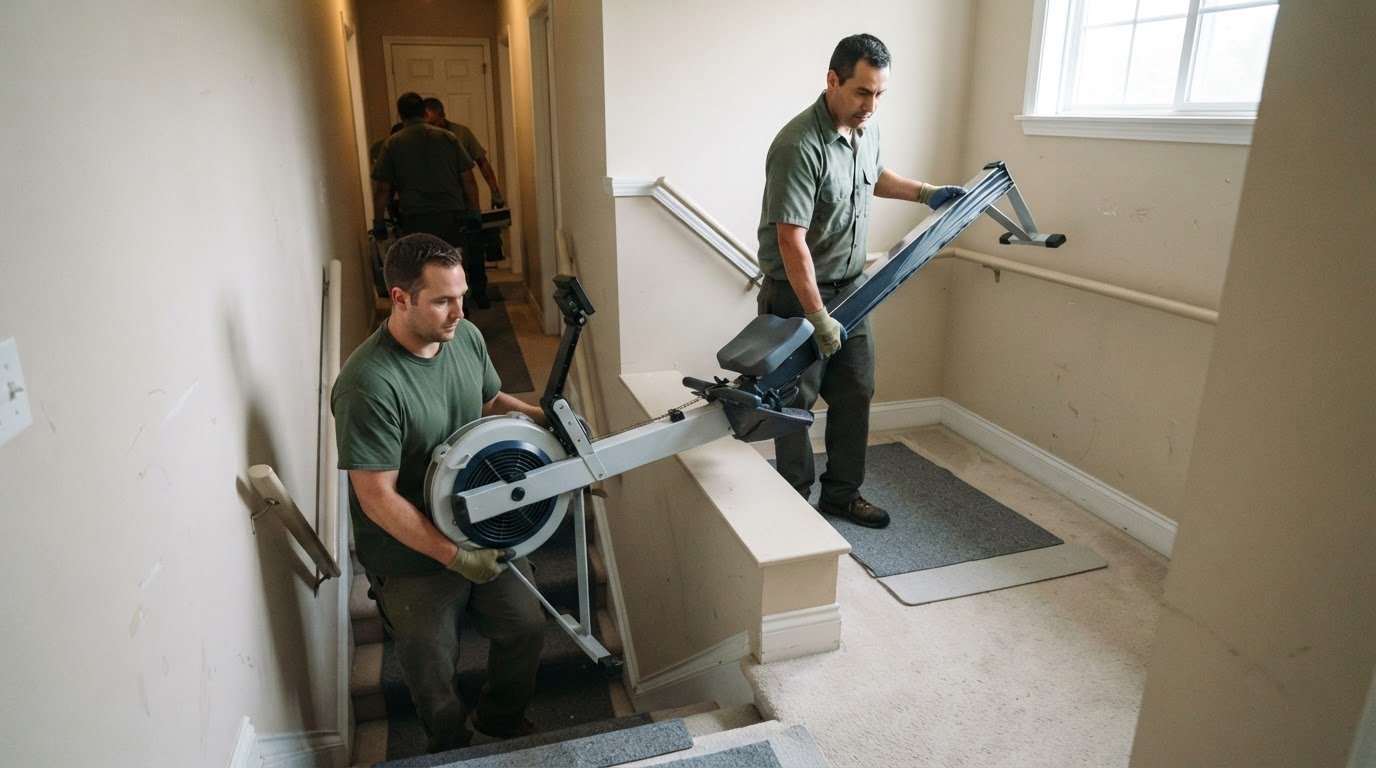
Review the stairs separately. Record their width, landing space, railing position, and overhead clearance. Look at the first step, the final step, and each turn. A bike that fits on a straight flight may not clear a landing where the crew needs to change direction. If the machine has detachable parts, follow the manufacturer’s instructions to determine whether its shape can be changed for the move.
- Doorways: Measure the narrowest usable opening and note handles or trim.
- Turns: Photograph corners, landings, and hallways from both directions.
- Stairs: Record railing placement and overhead obstacles along the full route.
- Floor path: Identify rugs, thresholds, cords, and furniture that affect access.
Walk the full route from the bike’s current position to its destination. Note where doors swing, floors change, and other furniture could block a turn. If the bike has previously passed through a particular doorway, that can help describe the route, but do not assume the setup is still the same. A moved table or new railing can change the usable space.
Send route photos and measurements along with the equipment details. They give the crew a clearer view of the handling plan before the move. If the bike will be placed on moving equipment for any part of the job, include that transition in the route description. For a move entirely inside the home, show each threshold and connection between rooms.
Even an insured mover needs a clear physical route. Insurance terms do not tell the crew whether a bike can turn at a landing or pass beside a sofa. Describe the equipment’s weight and shape, then show the tightest point. This helps distinguish a straightforward carry from a route that needs more planning.
Before moving day, clear small items from the planned route, including shoes, cords, and loose rugs. Keep doors open where needed, but do not remove fixtures or change the route without agreement. The crew can then work from actual measurements and visible access conditions, rather than assumptions based on room names.
Mover hourly rates and minimum booking times
An hourly rate and a minimum booking time are different parts of a moving estimate. The rate describes how labor is charged; the minimum sets the shortest billable booking. For a bike moving between rooms, ask how the estimate treats travel, handling, and any setup work. A short distance inside the home doesn’t automatically mean a short job. A narrow doorway, stairs, or careful turns can add labor.
The estimate can account for the equipment list, access, labor, tools, transport, and separate technical work. Moving one bike along a clear hallway requires different preparation from carrying it downstairs and reassembling parts. If the machine needs complex electronics work or calibration, that task may be separate from physical moving. Make sure each requested task appears in the written scope.
Equipment, access, labor, tools, transport, and separate technical work all shape the quoted price. No single hourly figure captures every in-home move. Share photos and measurements of the bike, the route, and the destination layout so the estimate reflects the actual work. State whether you need physical relocation only or standard mechanical disassembly and reassembly as well.
- Labor: Clarify which moving and handling tasks the estimate includes.
- Minimum: Ask how the minimum booking time applies to the planned work.
- Access: Include stairs, narrow turns, and doorways in the route description.
- Technical work: Separate physical moving from specialized setup or calibration.
- Transport: Clarify whether transport is part of the agreed move.
A minimum matters because the crew may need to reserve labor even when the move itself seems brief. A bike crossing one floor may require less handling than one moving from a basement, through a tight turn, and into a bedroom. The booking minimum is a billing condition, not a promise that every move takes the same amount of time. Read the estimate for its stated minimum and included work.
Keep the full scope clear before booking. If the crew is moving only the exercise bike, do not assume packing, other furniture, or extra machine setup is included. If the route changes or you add another item, the labor plan may change too. Share photos and route details to get an estimate for the job you actually want done.
Ready to plan careful exercise-equipment handling and review the move scope? Request a move estimate with the equipment and access details.
Heavy Furniture Moving: Movers Near Me
Heavy Furniture Moving helps South Riding households move exercise equipment within the home. Choose its Exercise Equipment Moving service when a heavy bike, basement gym, or tight route makes handling difficult. Share the machine, its current location, destination, and access details so the move can be planned around the actual task.
For an exercise bike move, focus on physical handling, access, and any separate setup needs. Standard mechanical disassembly and reassembly can be included when reviewed and written into the estimate; complex technical work may require a qualified equipment technician. Clarifying the difference sets a clear scope before moving day.
Contact Heavy Furniture Moving to plan your in-home exercise equipment move.
Make the Next Move Fit Your Routine
A successful in-home move leaves your exercise space ready for everyday use. Before booking, decide what matters most at the destination: a clear route into the room, a comfortable riding position, or keeping nearby furniture in place. That gives the move a practical endpoint, not just a new location for the bike.
If you’re hiring movers for a heavy exercise bike relocation within the same house in South Riding, let your preferred setup and required tasks guide the conversation. Heavy Furniture Moving offers Exercise Equipment Moving, along with Movers Near Me and Sofa Hoisting for relevant moving needs.
Take the next step when you’re ready. Contact Heavy Furniture Moving to discuss your exercise bike move and plan a setup that works for your home. A clear plan can make the change feel manageable, and your next workout can start in the right place.
Frequently Asked Questions
How do you handle a Peloton or similar smart bike?
We protect the bike during handling and keep its screen, controls, and power cable clear of knocks and snags. Shrink film, moving blankets, and straps are included on every Heavy Furniture Moving job. Share the bike’s model and any manufacturer instructions, especially those for removing or securing the screen. Follow the manufacturer’s directions for disconnecting power, and keep the cord clear of pedals and moving parts during the move.
What Determines Gym Equipment Moving Cost?
The estimate reflects the equipment, labor, tools, access, transport, and any separate technical work. Heavy Furniture Moving uses hourly labor with a two-hour minimum, while most single heavy items have flat-rate pricing. Stairs and landings are priced before the crew arrives. For a bike going between floors, describe the stair route and requested setup work so the quoted scope matches the job.
Do movers disassemble and reassemble heavy exercise bikes?
Heavy Furniture Moving includes disassembly and reassembly when the move calls for it. The specific work depends on the bike and its setup. Standard mechanical parts are different from calibration, complex electronics, or manufacturer-specific commissioning, which may require a qualified fitness-equipment technician. Keep the bike’s instructions available and identify any technical setup you expect, so physical moving and specialized work are not confused.
Can an exercise bike be moved upstairs or through narrow doorways safely?
Yes, the route can be planned around stairs and tight openings before the crew lifts the bike. Heavy Furniture Moving measures item dimensions, doorways, and stairs before lifting. If measurements show the item genuinely will not fit, you are not charged for a wasted trip. Share photos of the bike and the tightest doorway or landing to help identify access concerns early.
South Riding VA mover licensing, reviews, and booking availability
Licensing concerns the mover’s stated authority for the service and location, while reviews offer examples of customer experiences. Confirm availability when booking and record the agreed date and scope in the booking details.
Frequently Asked Questions
We protect the bike during handling and keep its screen, controls, and power cable clear of knocks and snags. Shrink film, moving blankets, and straps are included on every Heavy Furniture Moving job. Share the bike’s model and any manufacturer instructions, especially those for removing or securing the screen. Follow the manufacturer’s directions for disconnecting power, and keep the cord clear of pedals and moving parts during the move.
The estimate reflects the equipment, labor, tools, access, transport, and any separate technical work. Heavy Furniture Moving uses hourly labor with a two-hour minimum, while most single heavy items have flat-rate pricing. Stairs and landings are priced before the crew arrives. For a bike going between floors, describe the stair route and requested setup work so the quoted scope matches the job.
Heavy Furniture Moving includes disassembly and reassembly when the move calls for it. The specific work depends on the bike and its setup. Standard mechanical parts are different from calibration, complex electronics, or manufacturer-specific commissioning, which may require a qualified fitness-equipment technician. Keep the bike’s instructions available and identify any technical setup you expect, so physical moving and specialized work are not confused.
Yes, the route can be planned around stairs and tight openings before the crew lifts the bike. Heavy Furniture Moving measures item dimensions, doorways, and stairs before lifting. If measurements show the item genuinely will not fit, you are not charged for a wasted trip. Share photos of the bike and the tightest doorway or landing to help identify access concerns early.